Peace, Human Security and Dignity Week
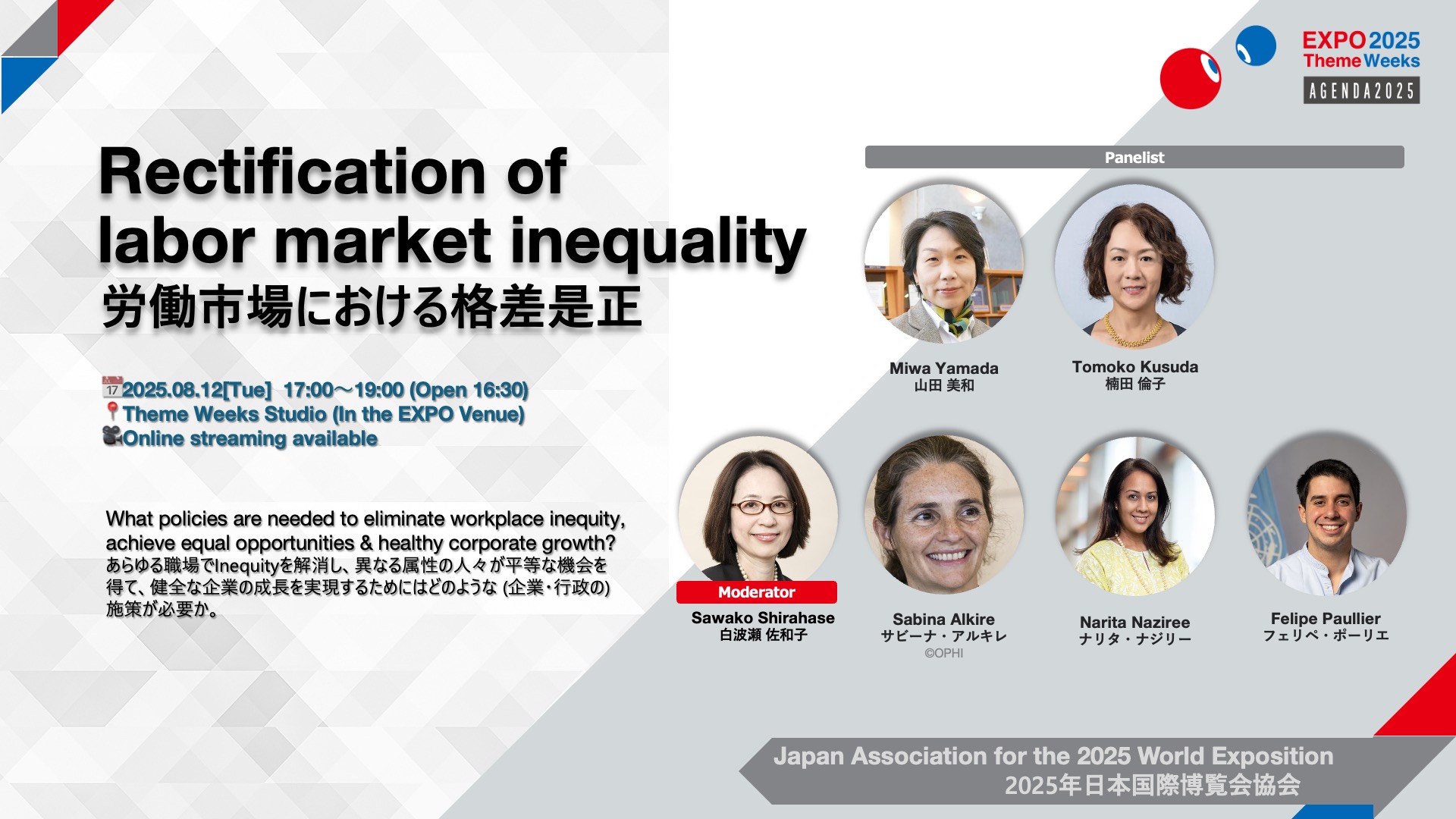
Rectification of labor market inequality
Japan Association for the 2025 World Exposition
The programme, together with the General Sponsors, explores: 'What policies are needed to eliminate workplace inequity, achieve equal opportunities & healthy corporate growth?'
Recorded video available
Discussion
- Others
| Transmission of simultaneous interpretation | Provided |
|---|---|
| Language of interpretation | Japanese and English |
-

Agenda2025
Organised Programme
-
Time and
Date of
the event -
-
2025.08.12[Tue]
17:00 ~ 19:00
(Venue Open 16:30)
-
- Venue
- Theme Weeks Studio
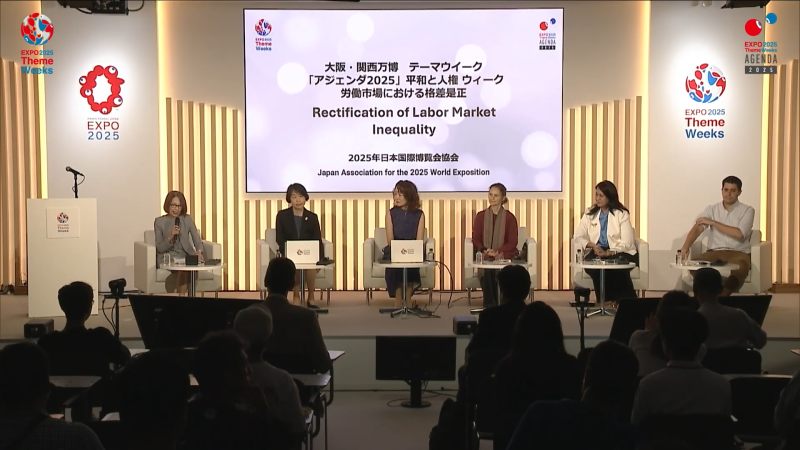
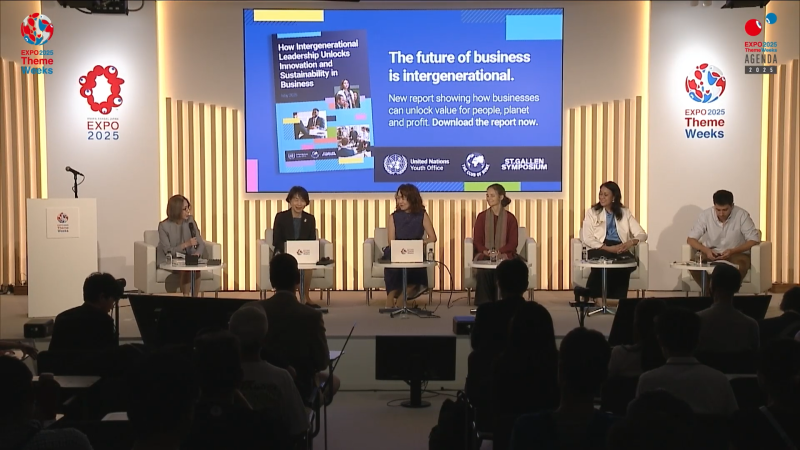
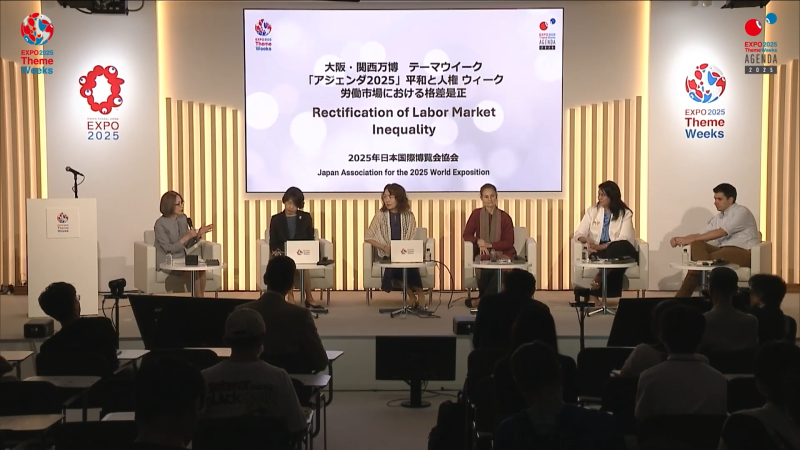
Programme details
*Subtitles: Choose “Subtitles/CC” in the “Settings” (gear
icon) at the bottom right of the YouTube video.
*Subtitles may not show with multiple languages or overlapping
audio.
The session titled “Rectification of labor market inequality”
is one of eight themes under the broader heading of “Peace,
Human Security, and Dignity.” Labor issues should be addressed
from both a growth and a human rights perspective. This
session will explore labor-related challenges through various
lenses, including corporate perspectives, business and human
rights, poverty and well-being, and the experiences of young
people. The COVID-19 pandemic made us aware of how
interconnected the world is, while also deepening global
divisions. The Sustainable Development Goals (SDGs), adopted
by the United Nations General Assembly in 2015 with a target
year of 2030, remain far from fully realized. However, two key
points emphasized in the SDGs remain particularly relevant.
First, the recognition that many challenges are shared by both
developing and developed countries, regardless of economic
status. Second, it emphasized in the SDGs is the importance of
environmental issues, which transcend national borders and are
directly connected to our shared future. Under the principle
of “leaving no one behind,” 17 goals were established, among
which inequality in the workplace remains a serious challenge
across all countries. One particularly urgent issue is human
rights within global supply chains. In Japan, the “Guidelines
for Respecting Human Rights in Responsible Supply Chains” were
adopted in
2022 (https://www.meti.go.jp/press/2022/09/20220913003/20220913003-a.pdf)【*Source:
Ministry of Economy, Trade and Industry (METI)】. In 2024, the
Ministry of Economy, Trade and Industry led discussions on
corporate responsibility and human rights due diligence. It is
no longer realistic to justify corporate profit-seeking alone;
human rights, labor rights, and the fight against inequality
have become core concerns. These issues are rooted in the need
to ensure humane working conditions and the broader protection
of workers’ rights. In this context, how are companies
specifically supporting and implementing policies that promote
diversity and safeguard the human rights of a wide range of
workers? What is the current state of well-being across
different countries? And what role should young people, who
often lack sufficient opportunities to participate in
policy-making due to their life stage or early career status,
be encouraged to play? These questions will be explored from
four key perspectives—corporate practices, business and human
rights, poverty and well-being, and the voices of youth.
Scholars, practitioners, corporate executives, and
policymakers from diverse backgrounds will actively engage in
these discussions.
Reports
【Program Summary】
In this session, “Rectification of Labor Market Inequality,”
discussions focused on how to address the widening disparities
in labor markets amid the rapid advancement of globalization
and digitalization, as well as the economic and social
transformations following the pandemic, in order to achieve a
sustainable and inclusive society. Throughout the dialogue, it
was recognized that rectifying labor market inequalities is
not a challenge for governments or corporations alone, but
requires structural transformation supported by global
cooperation and a shift in social consciousness. It was
confirmed that sustainable development depends on
institutional reform, investment in education and skills,
respect for diversity, and a commitment to inclusively
embracing young people and vulnerable groups.
【Speaker Summary: Sawako Shirahase】
Sawako Shirahase opened the session by stressing that
“rectifying labor market inequality” is directly connected to
the protection of human rights, the realization of social
justice, and the building of a sustainable future society. She
pointed out that globalization has accelerated the movement of
people, goods, and capital, expanding employment opportunities
but at the same time deepening inequalities and precarious
forms of labor. She also referred to the growing rise of
nationalism and populism in many countries, which has
undermined international cooperation and multilateralism,
highlighting the difficulty of reaching international
consensus. She presented three main points for discussion.
First, she argued that corporations, as key actors in economic
activity, must not focus solely on profit-seeking but have a
responsibility to embed respect for human rights and diversity
at the core of management. Second, she emphasized that in
developing countries high poverty rates and fragile labor
environments still persist, requiring policies that reflect
local voices and strengthened international frameworks to
protect workers’ rights. Third, she underscored the potential
of the younger generation, noting the importance of
positioning youth not merely as beneficiaries but as active
participants in decision-making. Inequalities in education and
employment, she warned, obstruct youth participation in
society and undermine long-term sustainability, making
intergenerational collaboration an urgent task. Shirahase
further stressed that to overcome challenges linked to
globalization, diverse actors—states, corporations, civil
society, and international organizations—must cooperate while
respecting differences in perspectives and values. While
diversity can complicate consensus-building, she positioned it
as a source of new value creation, arguing that the
intersection of differing perspectives generates sustainable
solutions. In closing, she reaffirmed the responsibility of
the present generation toward youth and future generations,
stressing that despite the difficulties, through persistent
effort it is possible to generate benefits that are shared
across society.
【Speaker Summary: Miwa Yamada】
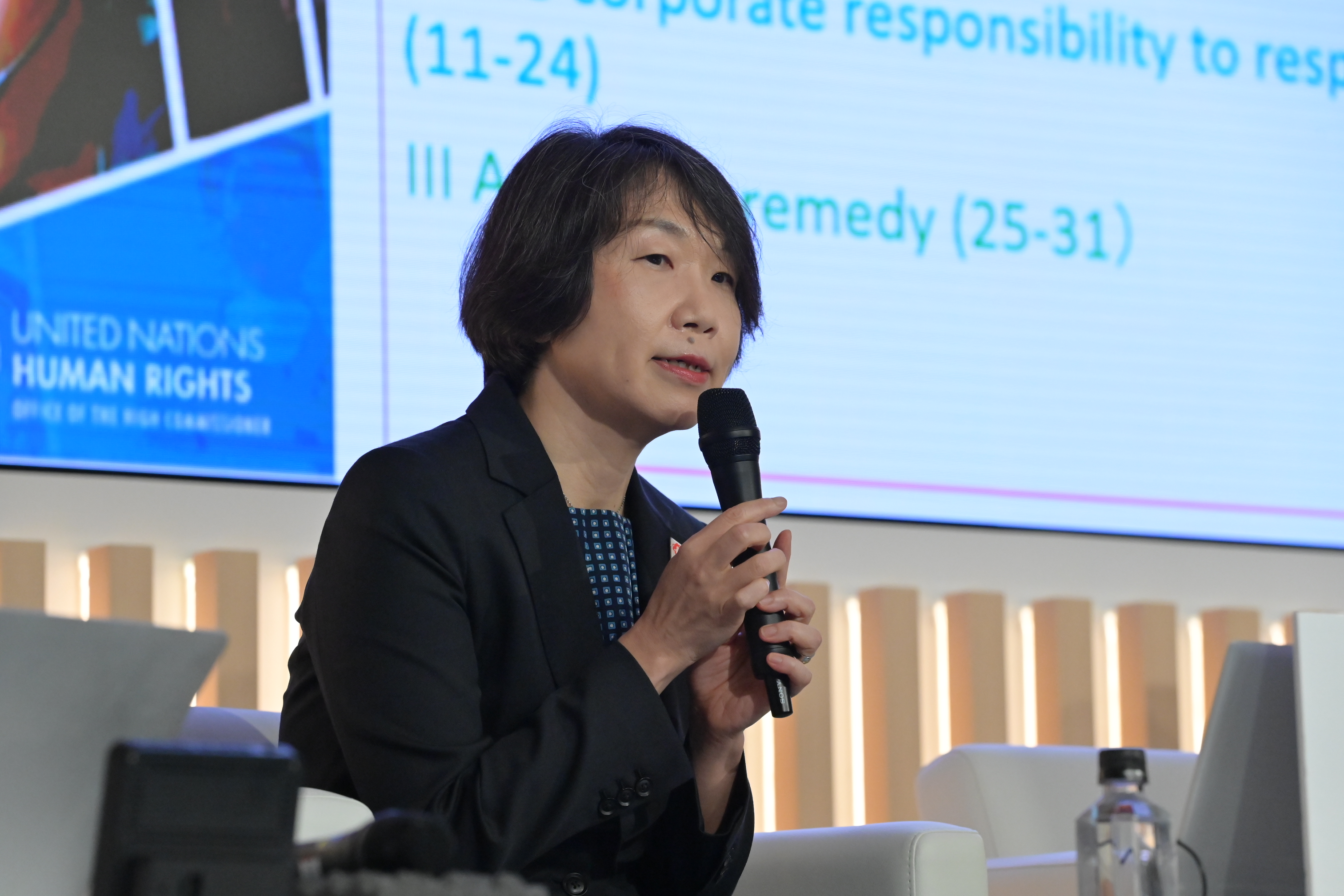
Miwa Yamada emphasized that addressing labor market inequality
requires a global perspective that links corporate activities
to human rights protection. She introduced the UN Guiding
Principles on Business and Human Rights, noting that they
clearly define the responsibilities of companies to respect
human rights, in addition to the obligations of states to
protect them. She stressed that supply chains, which span
across borders, must be the central arena for the realization
of these principles. Yamada pointed out that while
globalization has generated economic growth, it has also
enabled the proliferation of exploitative labor practices,
such as child labor, forced labor, and gender-based
discrimination. These practices are often hidden deep within
global supply chains, making transparency and accountability
indispensable. She stressed that corporations must establish
systems of due diligence to identify risks, prevent
violations, and provide remedies. In this process,
international organizations and civil society must also play
an important monitoring role. She introduced recent
developments in Japan, including the government’s issuance of
guidelines for human rights due diligence and increasing
awareness among Japanese companies regarding ESG
(Environmental, Social, and Governance) criteria. However, she
noted that implementation remains uneven, particularly among
small and medium-sized enterprises, and that further support
and guidance are required. Yamada also highlighted the
importance of protecting vulnerable workers, including
migrants and women in precarious employment. She explained
that discriminatory treatment and lack of social safety nets
often prevent these groups from escaping cycles of poverty.
She emphasized that governments and corporations alike must
ensure equal access to opportunities and decent working
conditions. Finally, Yamada stressed that rectifying labor
market inequality is not merely a matter of compliance but
also a source of competitiveness and innovation for
corporations. Companies that build trust with workers and
communities can enhance their resilience and long-term value.
She concluded by stating: “Labor rights are human rights, and
ensuring them is a shared responsibility of the global
community.”
【Speaker Summary: Tomoko Kusuda】
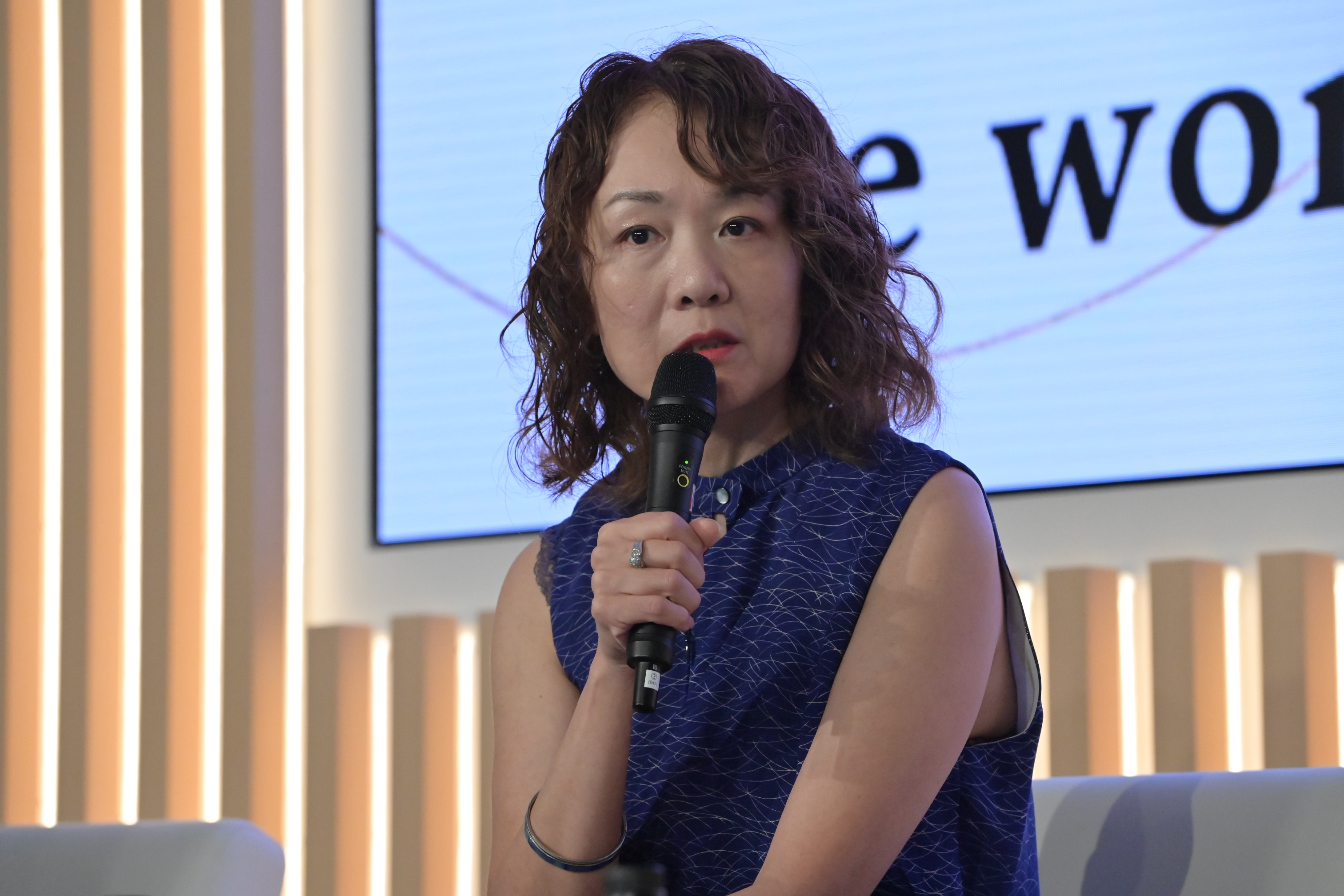
Tomoko Kusuda introduced the initiatives of L’Oréal Japan,
emphasizing the company’s long-standing commitment to
diversity, equity, and inclusion. She stated that rectifying
labor market inequality is not only a corporate responsibility
but also an essential condition for sustainable growth. She
highlighted L’Oréal’s efforts to increase the representation
of women in leadership positions. Currently, women account for
more than half of management roles within the company, a
figure significantly higher than the national average in
Japan. Kusuda explained that this achievement was made
possible through the introduction of transparent evaluation
systems, flexible working arrangements, and active support for
work–life balance. In particular, she emphasized the
importance of return-to-work programs for employees after
childcare or caregiving leave, ensuring that career
progression does not stop due to family responsibilities.
Kusuda also touched upon the significance of addressing
unconscious bias. She explained that even in organizations
with formal equality, invisible barriers persist in daily
practices and decision-making. To overcome these, L’Oréal
conducts regular workshops and training sessions to raise
awareness and foster a culture of mutual respect. Furthermore,
she explained that the company extends its commitment beyond
its own workforce, engaging with business partners and
suppliers to promote respect for human rights throughout its
supply chain. By doing so, the company aims to ensure that its
pursuit of beauty is aligned with the dignity and well-being
of people worldwide. She also stressed the link between
corporate diversity and innovation. Diverse teams, she noted,
generate more creativity and are better equipped to understand
the needs of a diverse customer base. From this perspective,
promoting diversity and inclusion is not merely a social
responsibility but a driver of competitive advantage. In
closing, Kusuda emphasized that rectifying labor market
inequality requires both systemic reform and individual
awareness. She concluded with the message that “corporate
responsibility is not separate from corporate growth; the two
advance together,” urging other companies to follow suit in
building equitable workplaces.
【Speaker Summary: Sabina Alkire】
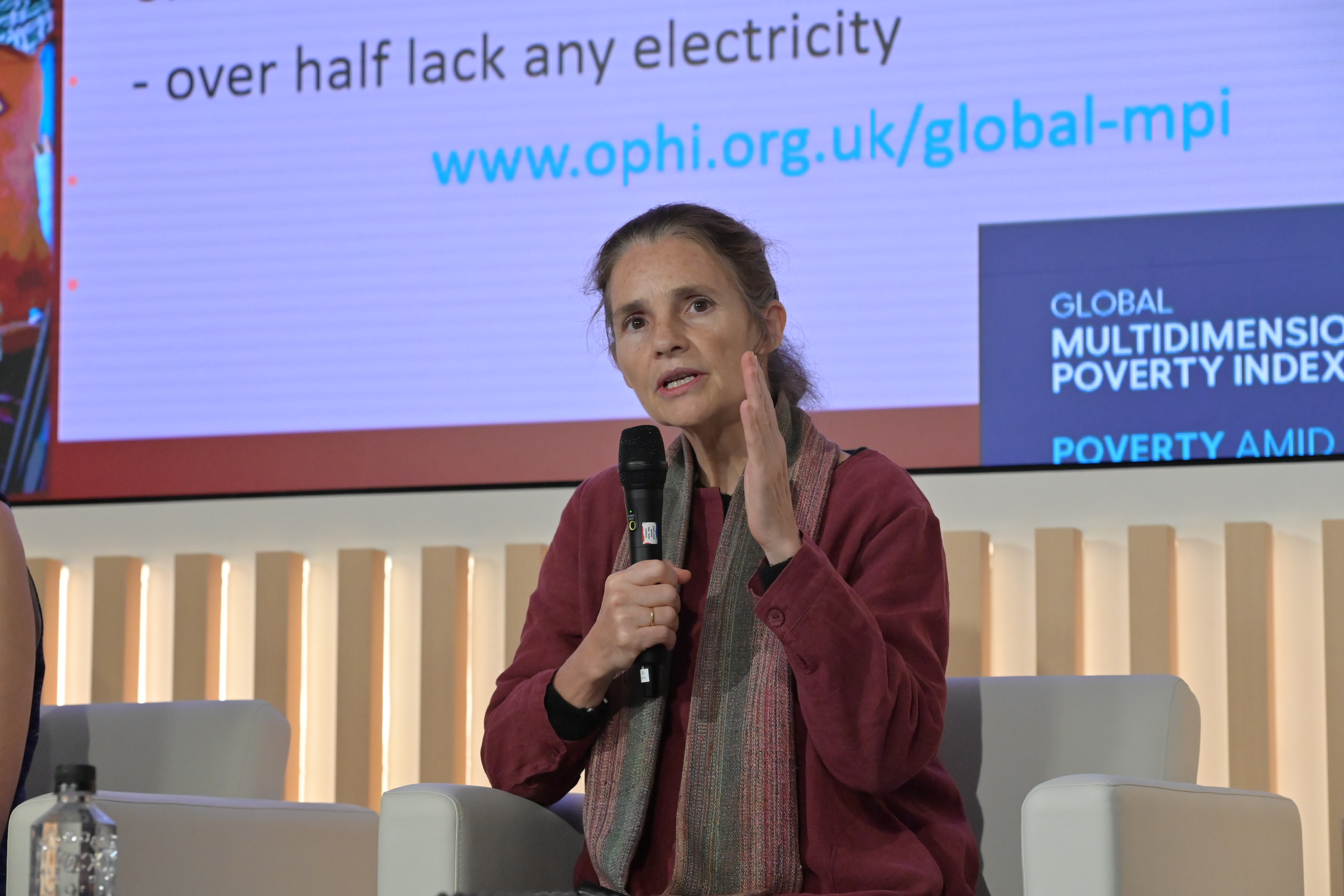
Sabina Alkire, Director of the Oxford Poverty and Human
Development Initiative (OPHI), provided an analytical
perspective on how multidimensional poverty is linked to labor
market inequality. She began by explaining that poverty cannot
be measured by income alone; it is a multidimensional
condition that encompasses education, health, housing,
employment stability, and access to social services. Labor
market inequality, she emphasized, directly exacerbates these
dimensions of deprivation. Alkire presented findings from
OPHI’s global research, showing that individuals in vulnerable
employment are disproportionately affected by overlapping
forms of poverty. For example, irregular and insecure work
often leads to limited access to education and healthcare,
while the absence of social protection leaves households at
constant risk of falling back into poverty. She argued that
unless labor market policies are designed with an awareness of
such multidimensional aspects, inequality will persist across
generations. She highlighted the importance of disaggregated
data to reveal inequalities that national averages often
obscure. For instance, while employment rates may appear to
improve at the national level, marginalized groups—such as
women, migrants, and ethnic minorities—frequently remain
excluded from stable and decent work. Accurate measurement and
targeted interventions are therefore indispensable. Alkire
also underlined the central role of education. Without equal
access to quality education, individuals are trapped in
low-paying, insecure jobs, perpetuating cycles of inequality.
She called for education policies that are closely integrated
with labor market reforms, ensuring that skills development
matches opportunities for decent work. Furthermore, she
emphasized that rectifying labor market inequality is not only
a moral imperative but also an economic necessity. Societies
that allow inequality to widen incur long-term costs in the
form of lost productivity, social unrest, and weakened
resilience. By contrast, inclusive labor markets create
multiplier effects that benefit both individuals and society
as a whole. In closing, Alkire stressed that the rectification
of labor market inequality requires cooperation across
sectors—governments, corporations, and civil society. She
concluded with the message: “Labor is not simply an economic
resource; it is the foundation of human dignity. Policies must
reflect this reality if we are to build truly inclusive
societies.”
【Speaker Summary: Narita Naziree】
Narita Naziree, Executive Vice President of Group Human
Capital at Maybank Group, provided insights into how the
financial sector can contribute to rectifying labor market
inequality through diversity, equity, and inclusion (DEI)
policies. She began by stressing that human capital is the
most critical asset of any organization, and that respecting
diversity while maximizing individual potential is
indispensable for sustainable growth. She explained that
Maybank, as a leading financial group in Southeast Asia,
operates in highly diverse societies across multiple
countries. For this reason, the bank regards “embracing
diversity” not as an option but as a necessity for
competitiveness. She introduced several initiatives, including
policies to increase the proportion of women in leadership
positions, support systems for employees returning from
parental leave, and targeted programs to nurture young
leaders. These initiatives are underpinned by a corporate
philosophy that views inclusion as an essential driver of
innovation. Naziree also emphasized the importance of
financial inclusion. By providing access to banking and
financial services to disadvantaged populations, Maybank seeks
to reduce inequalities in economic participation. For example,
microfinance programs and digital financial services have been
expanded to reach rural communities and small enterprises that
were previously excluded from mainstream financial systems.
She explained that improving access to finance directly
supports job creation, entrepreneurship, and community
resilience. Furthermore, she highlighted Maybank’s efforts to
foster a culture of continuous learning. In the face of rapid
technological change, particularly digitalization and AI, the
bank has invested heavily in reskilling and upskilling
programs to ensure that employees are not left behind. She
stressed that empowering workers with new skills is essential
to prevent digital divides from translating into new forms of
inequality. Naziree underscored that leadership plays a
decisive role in driving cultural change. Senior management
must embody values of empathy, transparency, and fairness if
DEI policies are to take root within organizations. She argued
that leaders must not only set policies but also model
inclusive behavior in their daily interactions. In conclusion,
Naziree described the rectification of labor market inequality
as “a collective endeavor that requires synergy between
corporations, governments, and communities.” She called for
cross-sector partnerships to ensure that opportunities for
dignified work are extended to all. She closed with a strong
affirmation: “Inclusion is not just a policy, but a lived
experience that must be realized in workplaces and societies
alike.”
【Speaker Summary: Felipe Paullier】
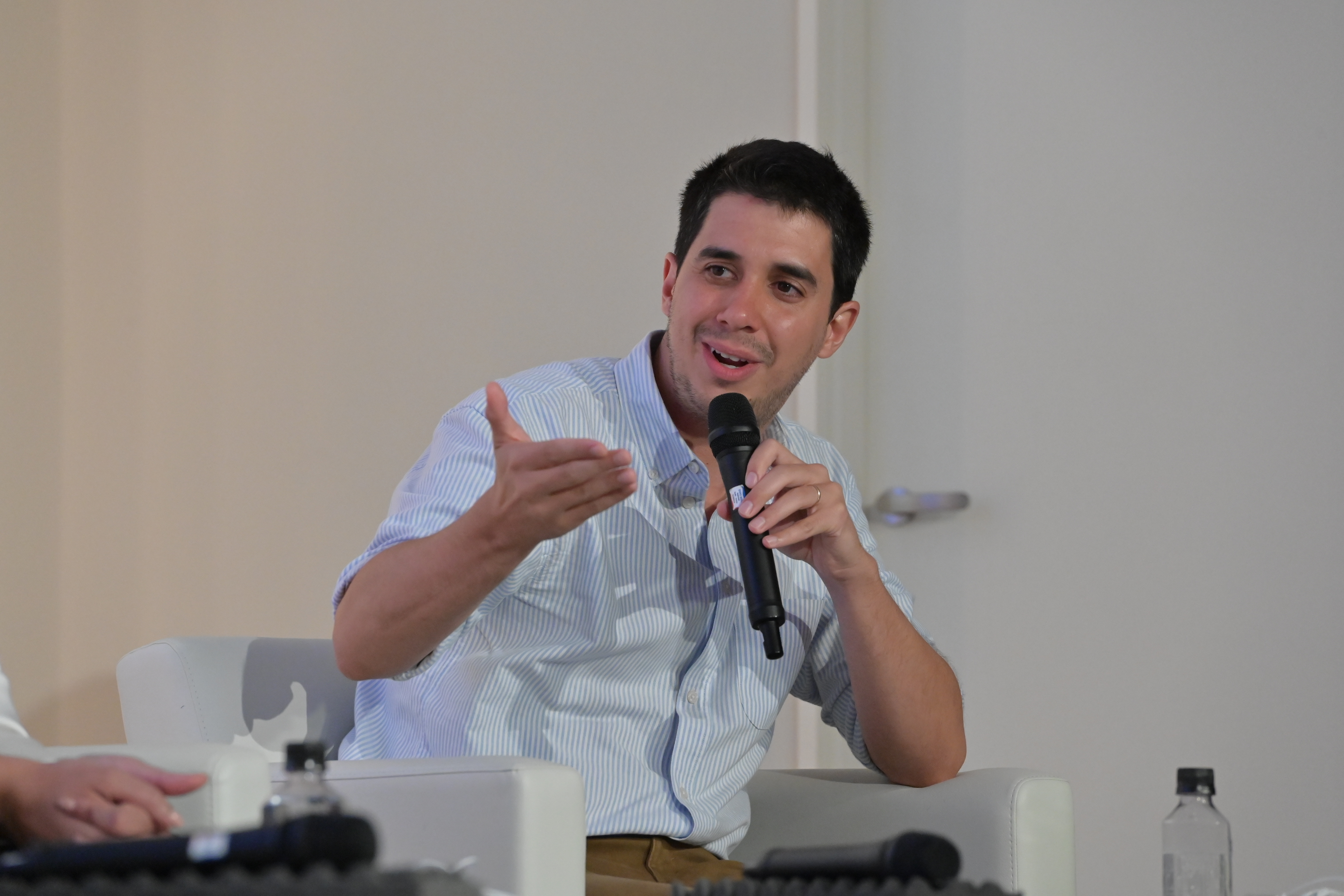
Paullier emphasized the crucial importance of youth
participation in addressing labor market inequalities.
According to United Nations statistics, the global youth
unemployment rate remains high, and in many countries the
number of NEETs (young people not in education, employment, or
training) poses a serious social challenge. He pointed out
that young women and migrant youth in particular face double
and triple layers of inequality, making them more vulnerable
to exclusion from opportunities for social participation. He
stressed that young people must be positioned not as
“recipients of support” but as “agents of change,” and that
mechanisms are essential to ensure youth participation across
all processes of education, employment, and policymaking. As
concrete examples, he introduced youth-led innovation and
entrepreneurial initiatives. In Africa and Asia, startups
leveraging digital technologies are creating jobs in local
communities, illustrating how young people are actively
engaged in solving social challenges. He also referred to the
UN’s Youth, Peace and Security agenda, underscoring the vital
role that youth play in peacebuilding in conflict-affected and
unstable regions. Furthermore, he highlighted the deep
connection between addressing youth inequality in the labor
market and education policy. Without guaranteed access to
quality education and vocational training, young people risk
being confined to precarious employment throughout their
lives. Especially in today’s era of rapid digitalization, he
noted, providing equal opportunities for acquiring new skills
is a foundation for ensuring fairness in the labor market. In
closing, he reaffirmed the message that “young people are the
protagonists shaping the future of society.” He concluded by
stating that harnessing the creativity and dynamism of youth
requires solidarity across generations and international
cooperation, expressing his hope that this session would serve
as an opportunity to advance discussions centered on young
people.
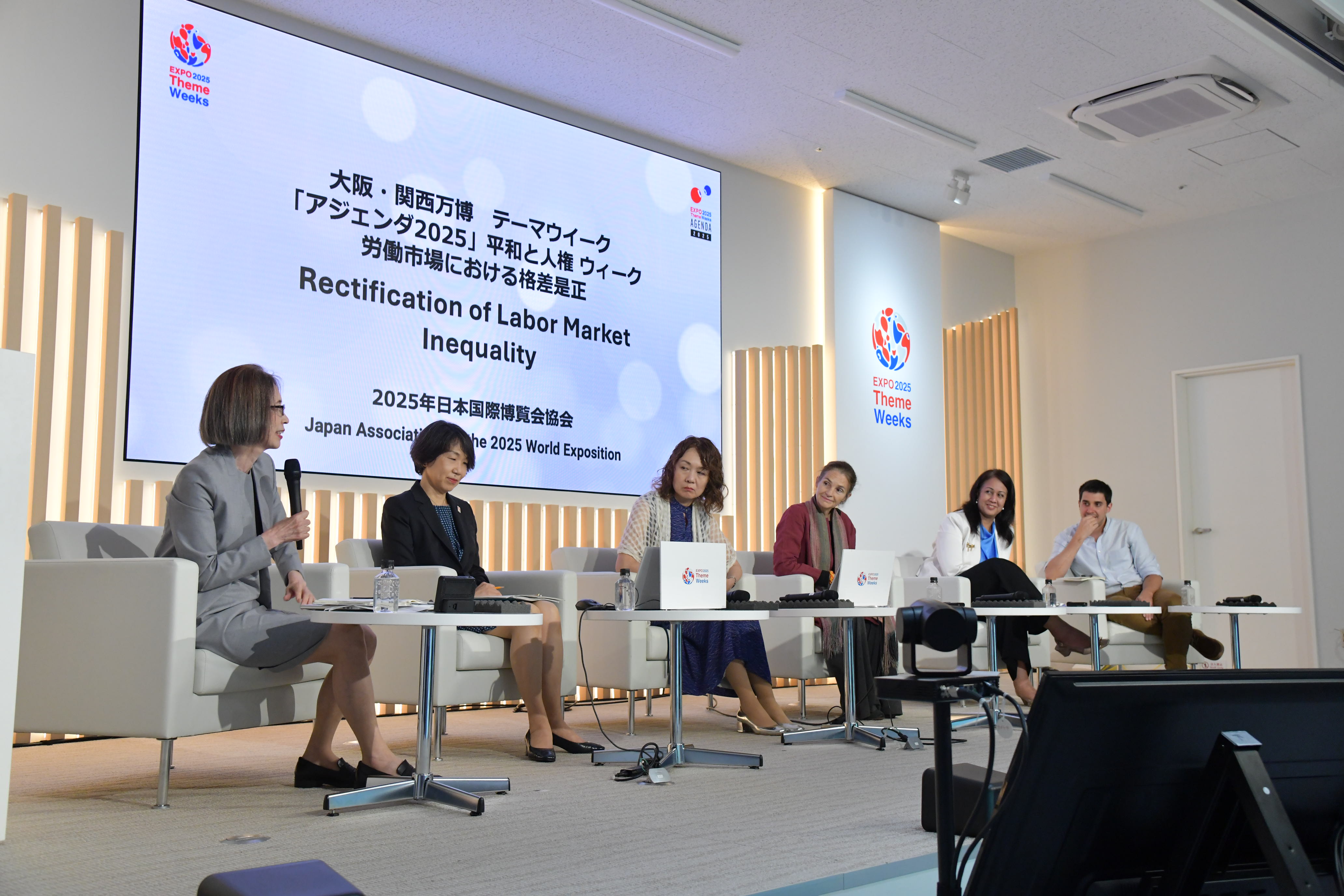
【Discussion Summary】
The discussion brought together perspectives from academia,
international organizations, the private sector, and civil
society, exploring pathways to rectify labor market inequality
from multiple dimensions. Miwa Yamada reiterated that
transparency in global supply chains is critical to ensuring
that corporate growth does not come at the expense of
vulnerable workers. She stressed that human rights due
diligence must be mainstreamed into corporate governance and
that both states and corporations share responsibility for
creating fairer labor markets. Tomoko Kusuda emphasized that
initiatives within companies can drive broader societal
change. By tackling unconscious bias and building inclusive
workplace cultures, corporations can foster innovation while
simultaneously reducing inequality. She noted that companies
must expand their influence beyond their own operations to
include business partners and supply chains. Sabina Alkire
emphasized the necessity of multidimensional analysis of
poverty and inequality. She argued that unless education,
health, and social protection are addressed in tandem with
labor issues, inequality will persist across generations. She
stressed that the design of labor policies must be
evidence-based, inclusive, and responsive to the realities of
marginalized groups. Narita Naziree introduced examples of
Maybank’s financial inclusion and reskilling programs,
highlighting the role of the financial sector in expanding
equal access to opportunities. She emphasized that building
trust and cultivating a culture of continuous learning are key
to ensuring that technological change reduces rather than
exacerbates inequality. Felipe Paullier concluded by stressing
the centrality of youth. He highlighted the importance of
intergenerational solidarity, reminding participants that
young people must be treated not as passive recipients but as
partners in shaping labor markets. Ensuring decent work for
youth, he argued, is indispensable for the sustainability of
societies as a whole. As moderator, Sawako Shirahase
summarized the dialogue by underlining that labor market
inequality is a cross-cutting issue that affects human rights,
social stability, and sustainable development. She emphasized
that overcoming inequality requires solidarity across sectors
and generations, and a shared recognition that labor rights
are inseparable from human dignity. The session as a whole
reaffirmed that rectifying labor market inequality is not only
an economic imperative but also a moral one, and that
multi-stakeholder collaboration will be essential to build
labor markets that leave no one behind.

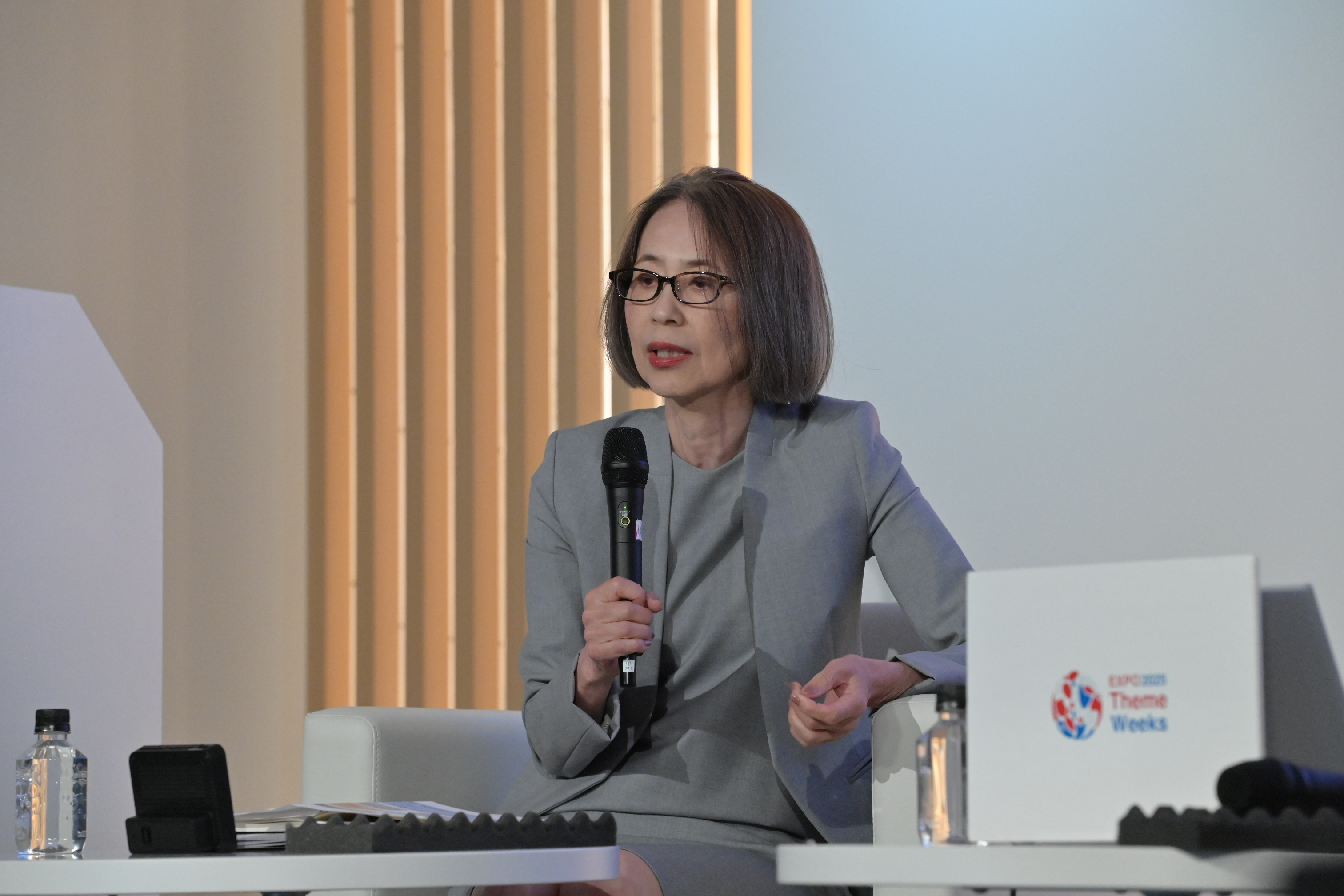
Cast
Moderator
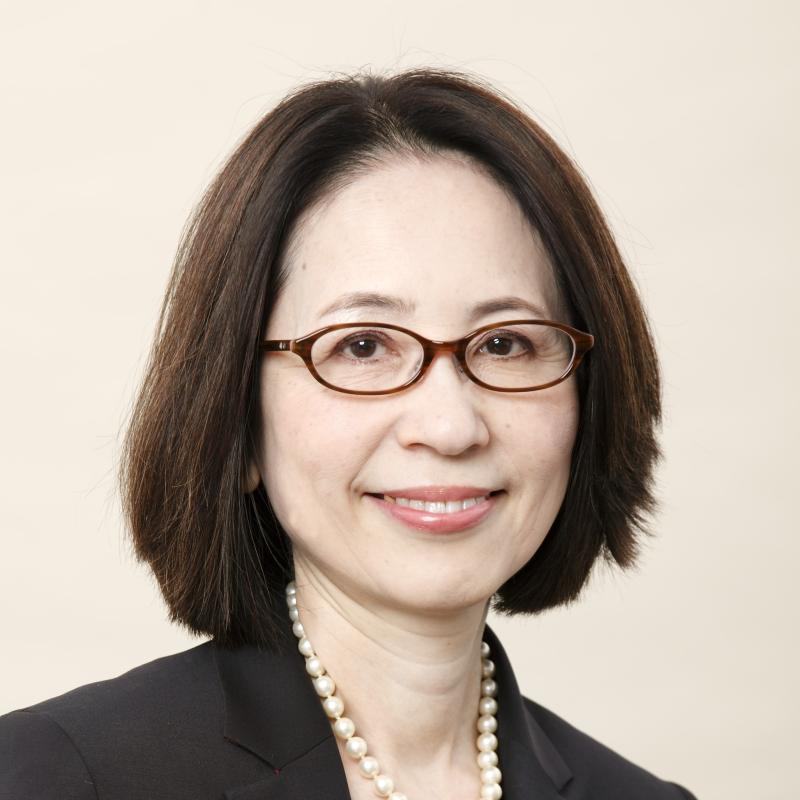
Sawako Shirahase
Senior Vice-Rector, United Nations University, United Nations Assistant Secretary-General
Project Professor at the Graduate School of Agricultural and Life Sciences, the University of Tokyo. Dr Shirahase received her DPhil in Sociology from the University of Oxford in 1997 and joined the University of Tokyo in 2006, where she became a Professor at the Department of Sociology in 2010. She served as Executive Vice President for International Affairs at the University of Tokyo from 2019 to 2021. Her special area is on social stratification, particularly from the perspectives of gender and generation. Her most recent book is Social Stratification in an Aging Society with Low Fertility: The Case of Japan (ed.)、published by Springer in 2022.
View Profile
Close
close
Speakers
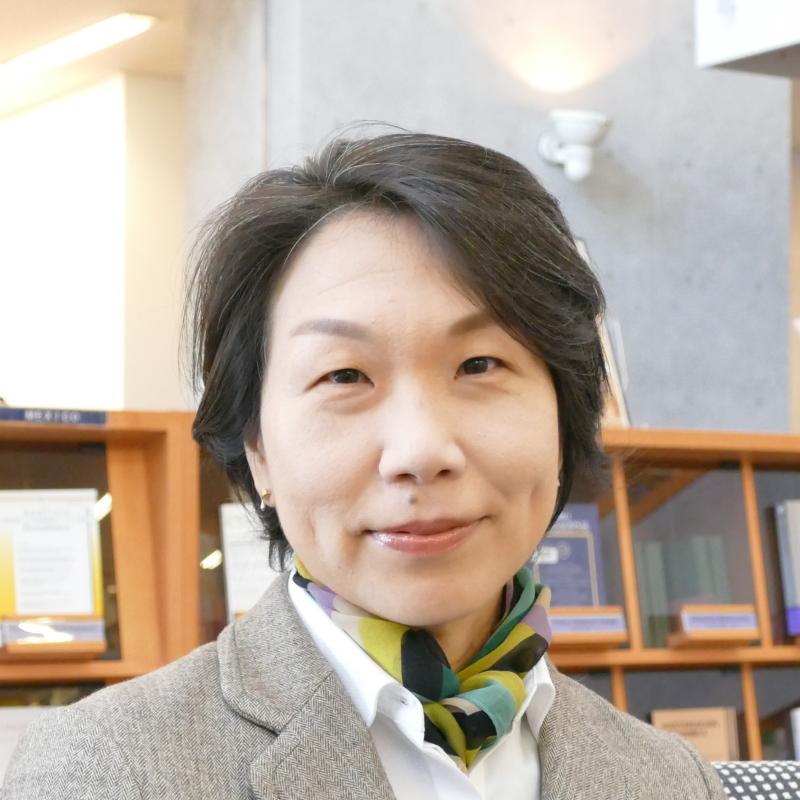
Miwa Yamada
Chief Senior Researcher, New Area Research Center, Institute of Developing Economies, Japan External Trade Organization (IDE‑JETRO)
Miwa Yamada plays a leading role in promoting the UN
Guiding Principles on Business and Human Rights in
Japan, having organized the Business and Human Rights
Policy Proposal Research Project at IDE‑JETRO since
2014.
She served as Rapporteur at the first Asia Regional
Forum on Business and Human Rights, held in Doha in
2016.
Her research focuses on the practical implementation
of the UN Guiding Principles on Business and Human
Rights; human rights risks and responsibilities in
co-financed projects involving both government and
private sectors; and policy measures on human rights
due diligence in supply chains, with particular
attention to migrant workers in Japan and other Asian
countries.
She collaborated with the ILO and OECD on the
Responsible Supply Chains Project in Asia from 2016 to
2018, and contributed to the publication of the
Japanese version of the OECD Due Diligence Guidance
for Responsible Business Conduct in 2019.
In 2022, she was a member of the Study Group on
Guidelines on Respecting Human Rights in Responsible
Supply Chains, organized by Japan’s Ministry of
Economy, Trade and Industry (METI).
Currently, she serves as a member of the Expert
Committee for the Sustainable EXPO 2025 in Osaka,
Kansai, Japan, and the Sustainable Procurement Working
Group, and chairs the Human Rights Working Group.
Recent publications include:
Towards the 2025 Revision of Japan’s National Action
Plan on Business and Human Rights (IDE‑JETRO Policy
Brief No.244, April 2025)
Business and Human Rights—How Public Procurement Can
Drive Corporate Change (IDE‑JETRO Policy Brief No.245,
April 2025)
View Profile
Close
close
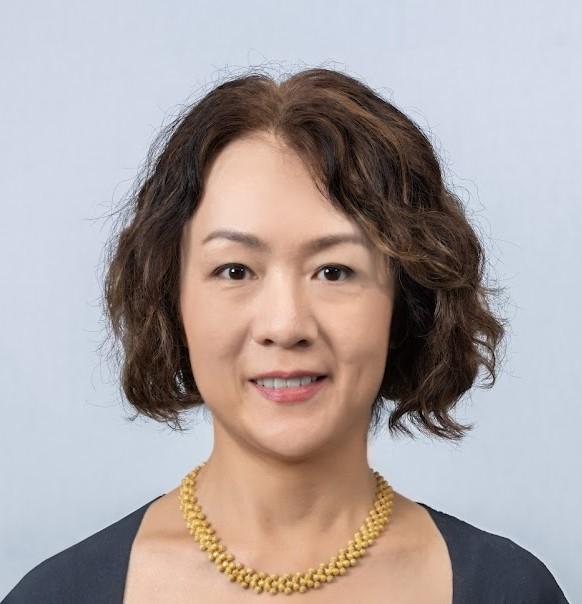
Tomoko Kusuda
Vice President, Corporate Responsibiility Director, L'Oreal Japan
Tomoko Kusuda has been with L’Oréal Japan for more than 20 years. She held positions in marketing and general management in various divisions and brands of L'Oreal Group. She was appointed as a member of Nihon L’Oreal Executive Committee in 2017, then became Vice President in 2020. Since 2022, she leads CSR and sustainability actions in Japan. She also promotes and protects Group’s values of ethics, human rights and DE&I in Japan.
View Profile
Close
close

©OPHI
Sabina Alkire
Oxford Poverty and Human Development Initiative, University of Oxford
Sabina Alkire is the Professor of Poverty and Human
Development and directs the Oxford Poverty and Human
Development Initiative (OPHI) at the University of
Oxford. Previously, she worked at the George
Washington University, Harvard University, the Human
Security Commission, and the World Bank. She has a
DPhil in Economics from the University of Oxford.
Together with Professor James Foster, Sabina developed
the Alkire-Foster (AF) method for measuring
multidimensional poverty, a flexible technique that
can incorporate different dimensions, or aspects of
poverty, to create measures tailored to each context.
With colleagues at OPHI this has been applied and
implemented empirically to produce a Multidimensional
Poverty Index (MPI). The MPI offers a tool to identify
who is poor by considering the range of deprivations
they suffer. It is used to report a headline figure of
poverty (the MPI), which can be unpacked to provide a
detailed information platform for policy design
showing how people are poor nationally, and how they
are poor by areas, groups, and by each indicator.
Sabina was elected a Fellow of the Academy of Social
Sciences in the UK 2021 and was voted one of the top
100 thinkers by Forbes magazine in 2010. She currently
is the Vincentian Chair of Social Justice 2024-25 at
St John's University, and an Ordinary Academician
on the Pontifical Academy of Social Sciences and she
is a member of the Committee for Development Policy
(CDP), a subsidiary body of the Economic and Social
Council (ECOSOC) of the UN. In 2025, Sabina and OPHI
were awarded the Scaling & Sustaining Impact award
for 'Addressing multidimensional poverty in
developing nations through measurement and policy
applications' by the University of Oxford at the
Social Sciences Impact Awards.
View Profile
Close
close
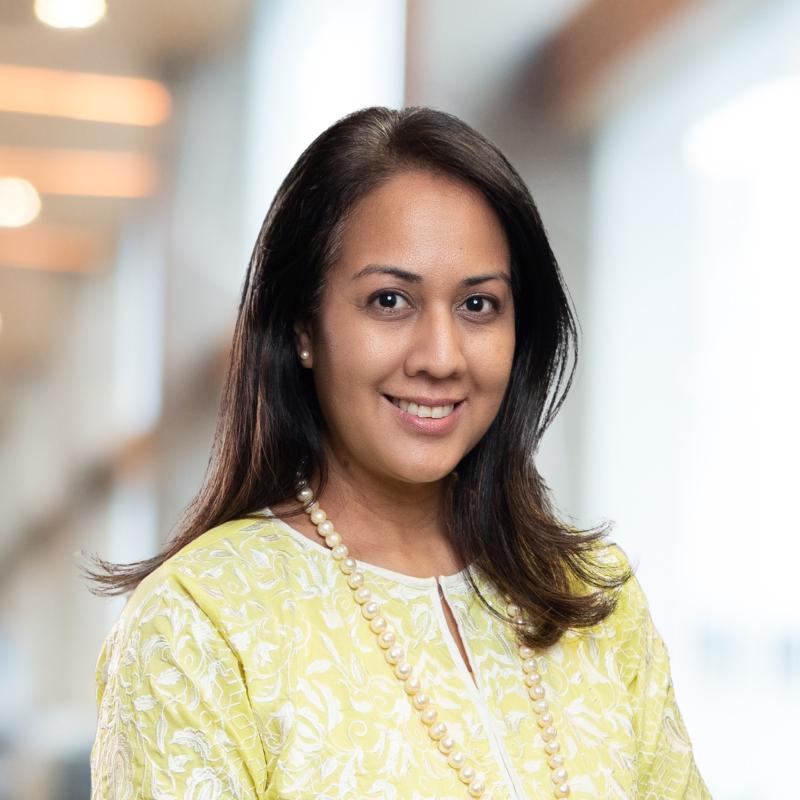
Narita Naziree
Executive Vice President, Group Human Capital, Maybank Group, Malaysia , Head, People Experience & Digital Advancement; and , Human Capital Director (Group Operations)
Narita Naziree joined the Maybank Group in 2011, and
holds a dual role as Head, People Experience &
Digital Advancement and Human Capital Director for
Maybank’s Group Operations sector. She is also the
Lead of the Maybank Women Mentor Women Council. The
focus of her current role is on developing the
workforce of the future for Maybank, elevating its
workforce of 43,000 employees for next-generation
roles, enabled with the right workplace tools &
technology.
Over the last five years, Narita has undertaken a
number of strategic roles in Group Human Capital,
covering strategy & transformation, talent
development, succession planning and business human
capital. Having been with the Group for over 10 years,
she has had several rotations, taking on roles in
Group Finance and Global Banking prior to joining
Group Human Capital.
Amongst her recent accomplishments in the area of
human capital is the development of DEIB (Diversity,
Equity, Inclusion & Belonging) initiatives under
Maybank’s Sustainability Agenda, earning national and
international recognition including the company’s
inclusion in the Bloomberg Gender Equality Index and
2023’s Star Media Group’s Positive Impact Awards (Gold
in DEI and Talent Management) in Malaysia. She also
played a key role in the development of Maybank’s
Group DEIB Policy, and it’s incorporation into
Maybank’s Group Human Rights Policy. In supporting
DEIB beyond Maybank, Narita is a member of the Women
in Business Committee under CPA Australia in Malaysia
and a member of the ASEAN Business Advisory Council
(Malaysia) DEI Taskforce.
Before undertaking her current role in Group Human
Capital, Narita was part of Maybank’s Financial
Institutions Group team under Maybank Investment Bank
Berhad where she led the client coverage team covering
Malaysian banks and non-bank financial institutions,
and was also the global relationship manager for EMEA,
South Asia and Brunei bank relationships. Prior to
this, she was Head, Group Performance Reporting &
Investor Relations at Maybank, a key portfolio in the
Group’s finance function.
As part of her extensive career in financial services,
Narita was a management consultant serving commercial
banking clients in South East Asia and the Middle East
both with PwC and KPMG.
She holds a Bachelor of Arts from Wheaton College,
United States with a double major in Economics &
International Relations and a Master of Commerce &
Economics from the University of New South Wales,
Australia and is a Fellow of CPA Australia.
View Profile
Close
close
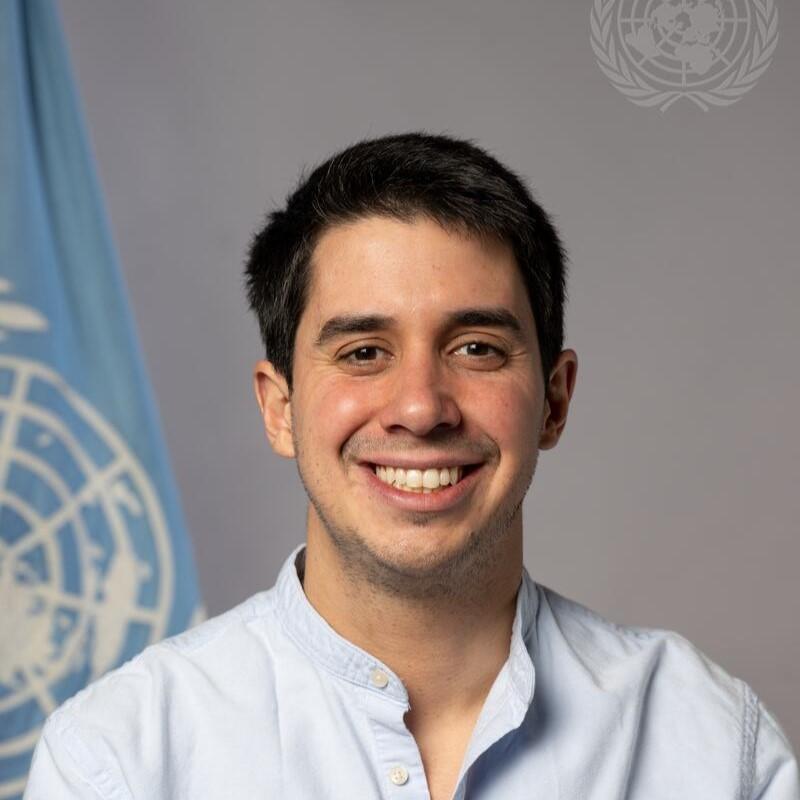
Felipe Paullier
UN Assistant Secretary-General for Youth Affairs
Dr. Felipe Paullier of Uruguay assumed his mandate as
the first-ever UN Assistant Secretary-General for
Youth Affairs in December 2023 at the age of 32. He is
the youngest senior appointment in the history of the
United Nations, and the youngest serving member of the
Secretary-General’s senior management group.
As head of the United Nations Youth Office, Mr.
Paullier leads systemwide collaboration, coordination
and accountability on youth affairs, overseeing the
UN’s efforts to strengthen meaningful youth engagement
in the areas of sustainable development, human rights,
and peace and security.
Prior to taking up his post, Mr. Paullier was the
Director General of the National Youth Institute of
Uruguay beginning in 2020, where he led efforts to
engage young people in policy-making processes at
national level. He previously served in various
political management positions at the national level.
Throughout his career, he has been a foremost advocate
for young people’s rights and the inclusion of young
people in decision-making spaces.
Mr. Paullier is a Medical Doctor by training,
specialized in pediatrics. He holds a Medical Doctor
degree from the Universidad de la Republica Oriental
de Uruguay and a Master in Business Administration
(MBA) from Universidad Católica de Uruguay.
View Profile
Close
close
Peace, Human Security and Dignity Week
Rectification of labor market inequality
The programme, together with the General Sponsors, explores: 'What policies are needed to eliminate workplace inequity, achieve equal opportunities & healthy corporate growth?'
-
2025.08.12[Tue]
17:00~19:00
(Venue Open 16:30)
- Theme Weeks Studio
OTHER PROGRAM
Peace, Human Security and Dignity Week