Peace, Human Security and Dignity Week
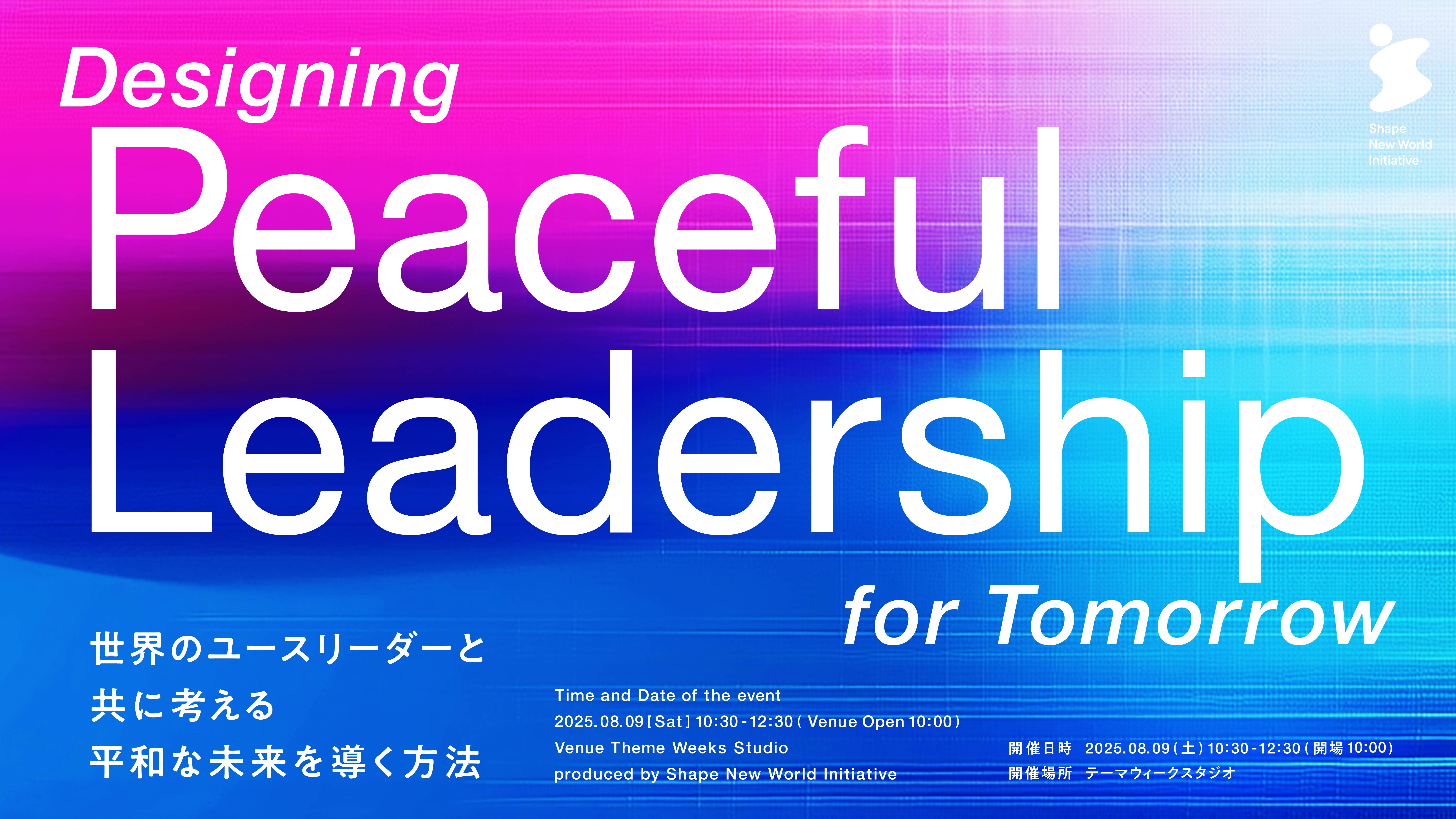
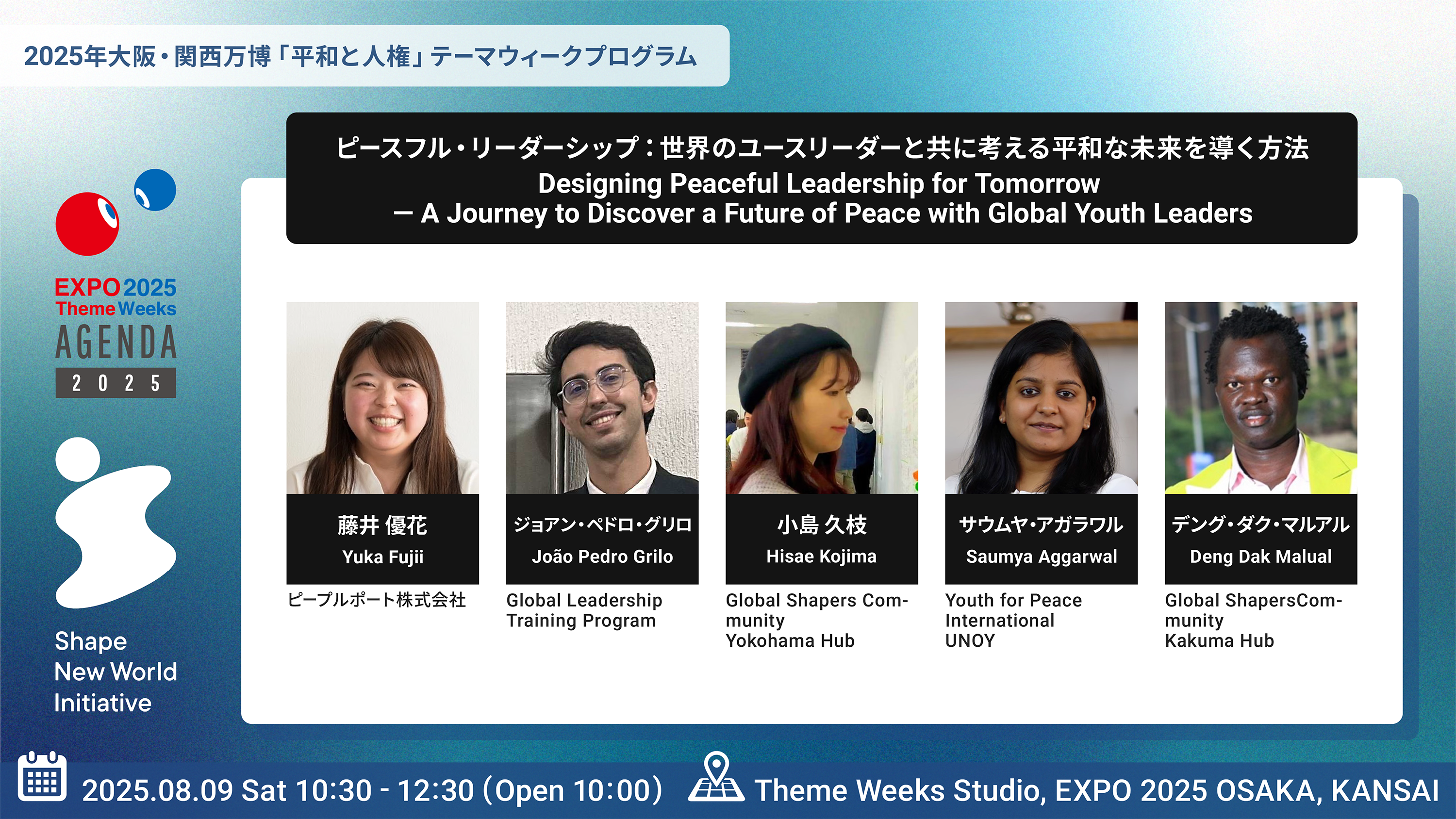
Designing Peaceful Leadership for Tomorrow — A Journey to
Discover a Future of Peace with Global Youth Leaders
Agenda 2025 Co-created Programme
Shape New World Initiative
[Hypothesis of the Future in 2050]
A peaceful society realized through “Peaceful Leadership” in
which each individual expands his/her own inner peace. We
believe that peace is something that everyone knows is
important, wishes to exist, and tries to achieve. In this
session, through the workshop, participants will realize
that they themselves are the main actors of peace, and will
experience together a place to think, feel, and embody their
individual roles for peace and the Peaceful Leadership.
Recorded video available
Discussion
- Human rights violations
- Diversity and inclusion
- peacebuilding
| Transmission of simultaneous interpretation | Provided |
|---|---|
| Language of interpretation | Japanese and English |
-

Agenda2025
Co-created Programme
-
Time and
Date of
the event -
-
2025.08.09[Sat]
10:30 ~ 12:30
(Venue Open 10:00)
-
- Venue
- Theme Weeks Studio
Programme details
*Subtitles: Choose “Subtitles/CC” in the “Settings” (gear
icon) at the bottom right of the YouTube video.
*Subtitles may not show with multiple languages or overlapping
audio.
This session will be an interactive and experiential workshop
in which participants will think, feel, and embody Peaceful
Leadership together with visitors.
No matter what country or background the visitors come from,
creating a peaceful society and taking actions that each
individual can take in his or her own place for that purpose,
in other words, demonstrating Peaceful Leadership, are
essential for realizing peace in the future, and are the
common goal of all of us living in today's society. It is
the common goal of all of us in today's society. This is
because, unfortunately, a perfectly peaceful society does not
exist today, and even if there is no visible violence or
conflict, there is structural violence that is a result of the
current structure and way of life in society.
The day will begin with the realization of this fact, followed
by the sharing of the voices of peaceful leadership from
around the world prepared in advance by the organizers, and
then the structure of the event will be implemented through
dialogue and workshops to enable visitors to create their own
peaceful leadership. This session aims to help participants
recognize that they are the main actors in bringing peace to
the future in 2050, and to discover from world leaders the
leadership styles that will enable them to fulfill their own
roles toward the realization of peace, and to continue to
explore them.
Reports
【Reflection】
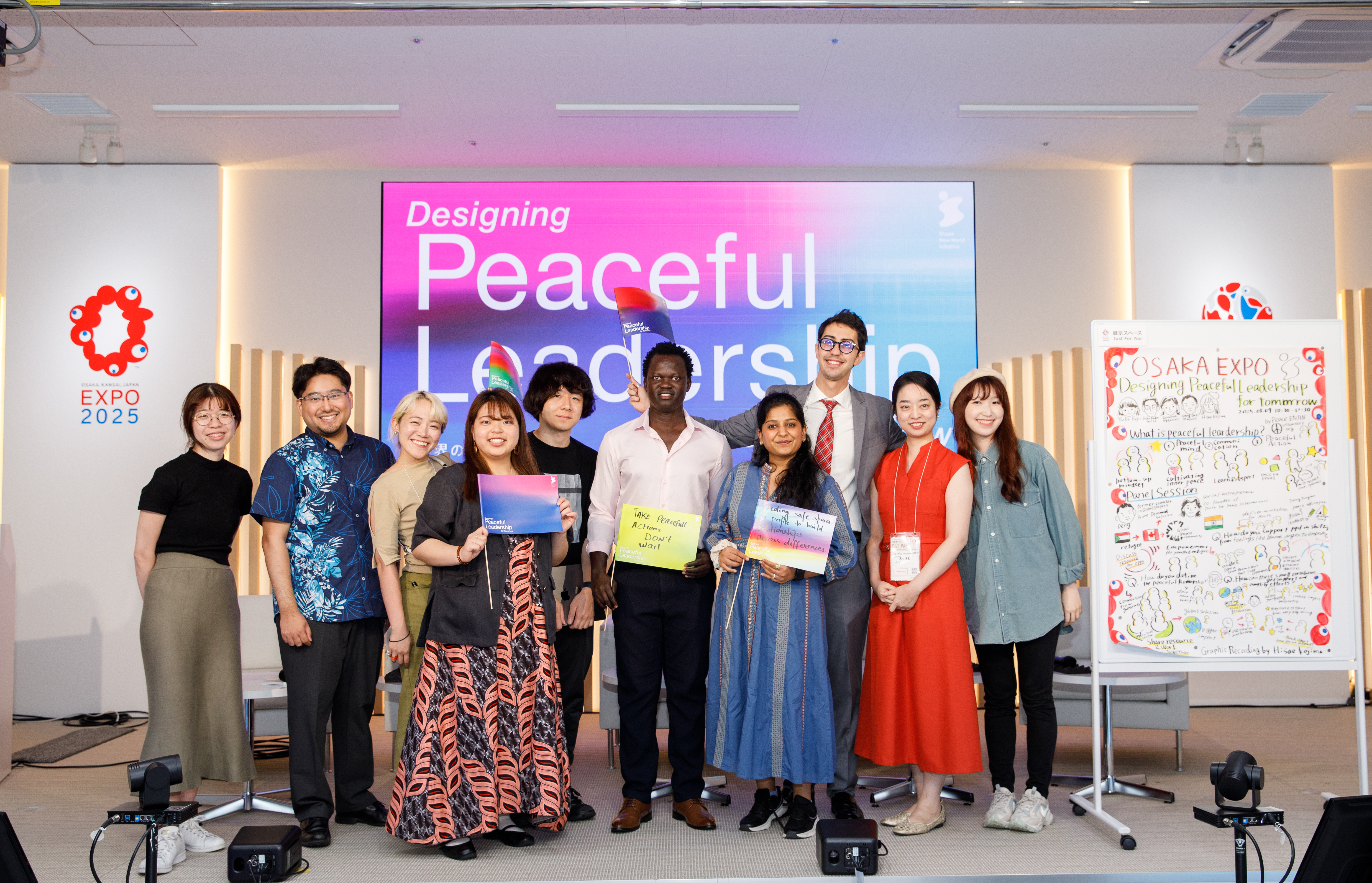
On August 9, 2025, as part of the “Peace, Human Security and
Dignity Week,” this program was organized and hosted by the
Shape New World Initiative, bringing together diverse
participants from Japan and around the world. Participants
reflected on the question, “What is peace?” and explored how
leadership grounded in empathy and inner calm can contribute
to a more just and harmonious future.
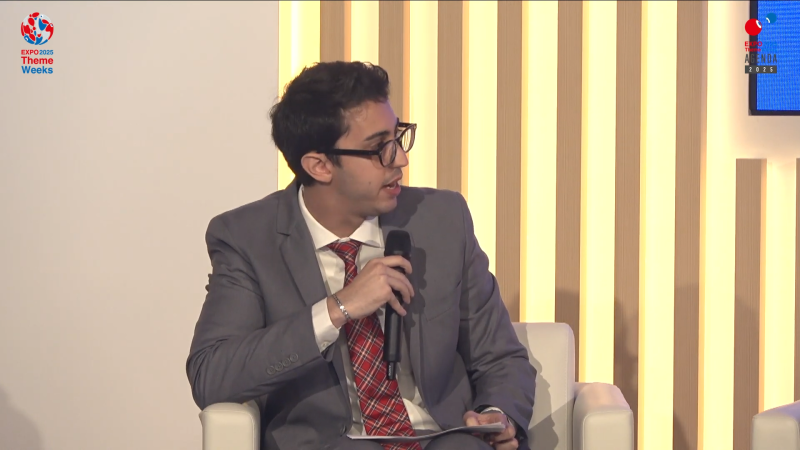
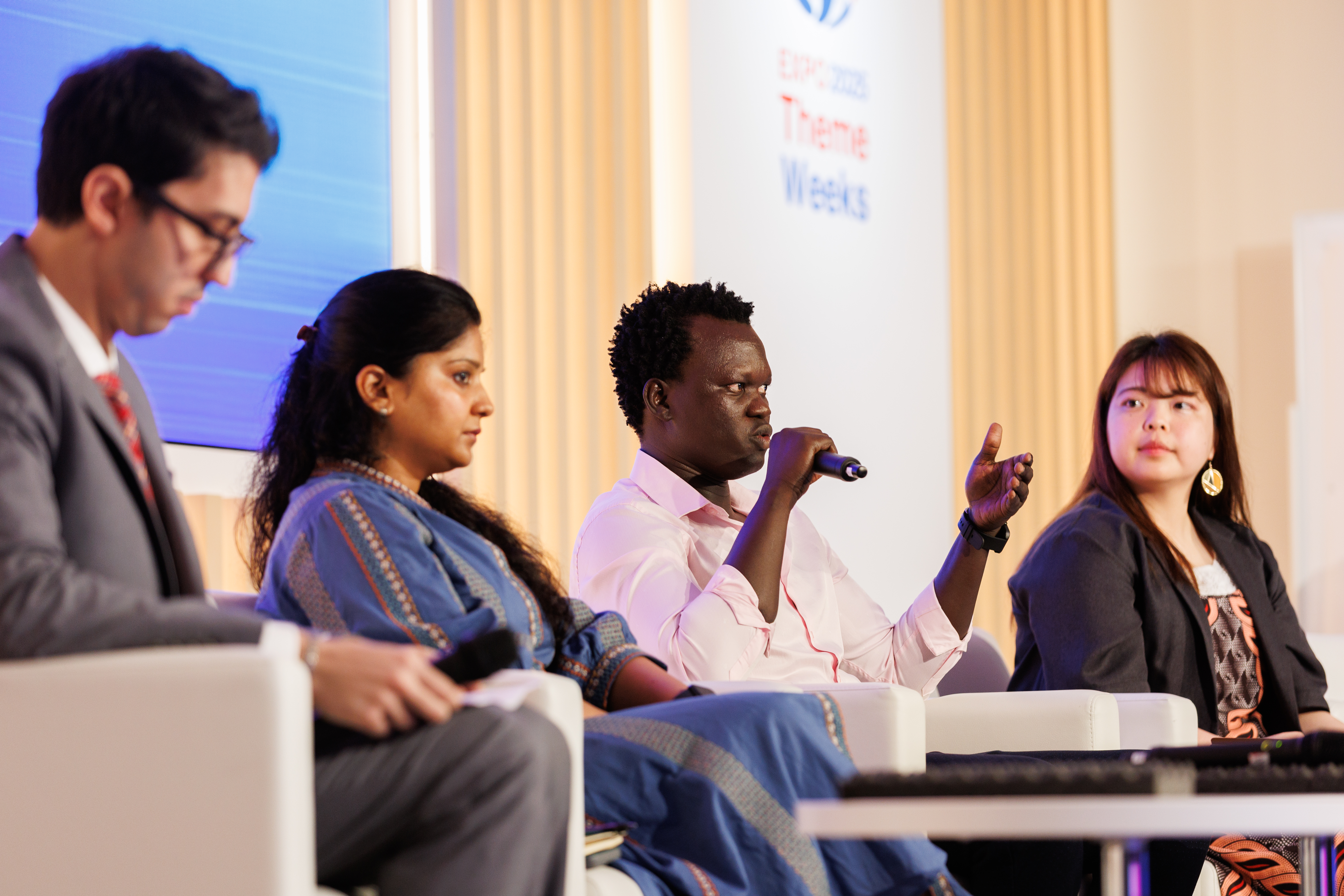
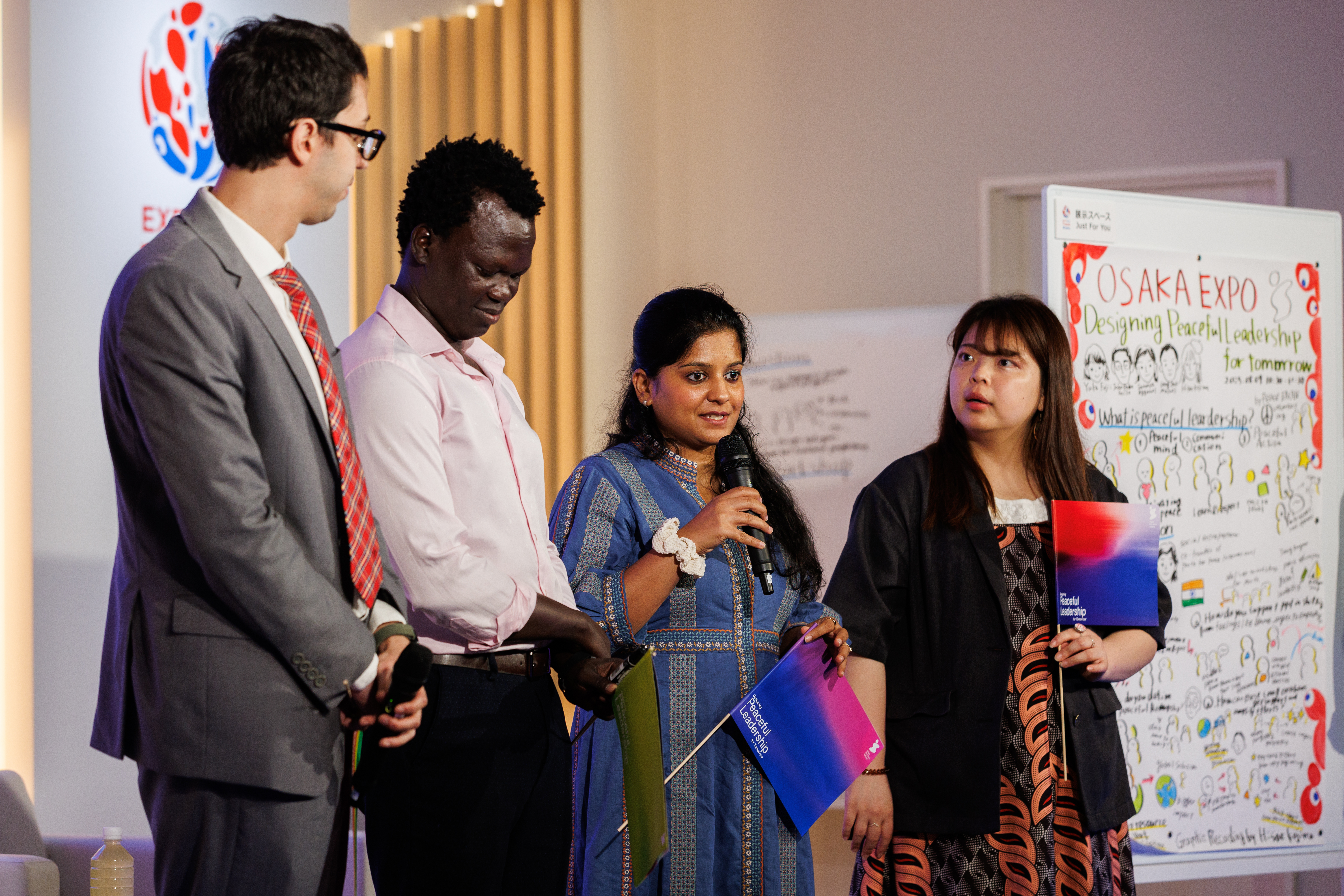
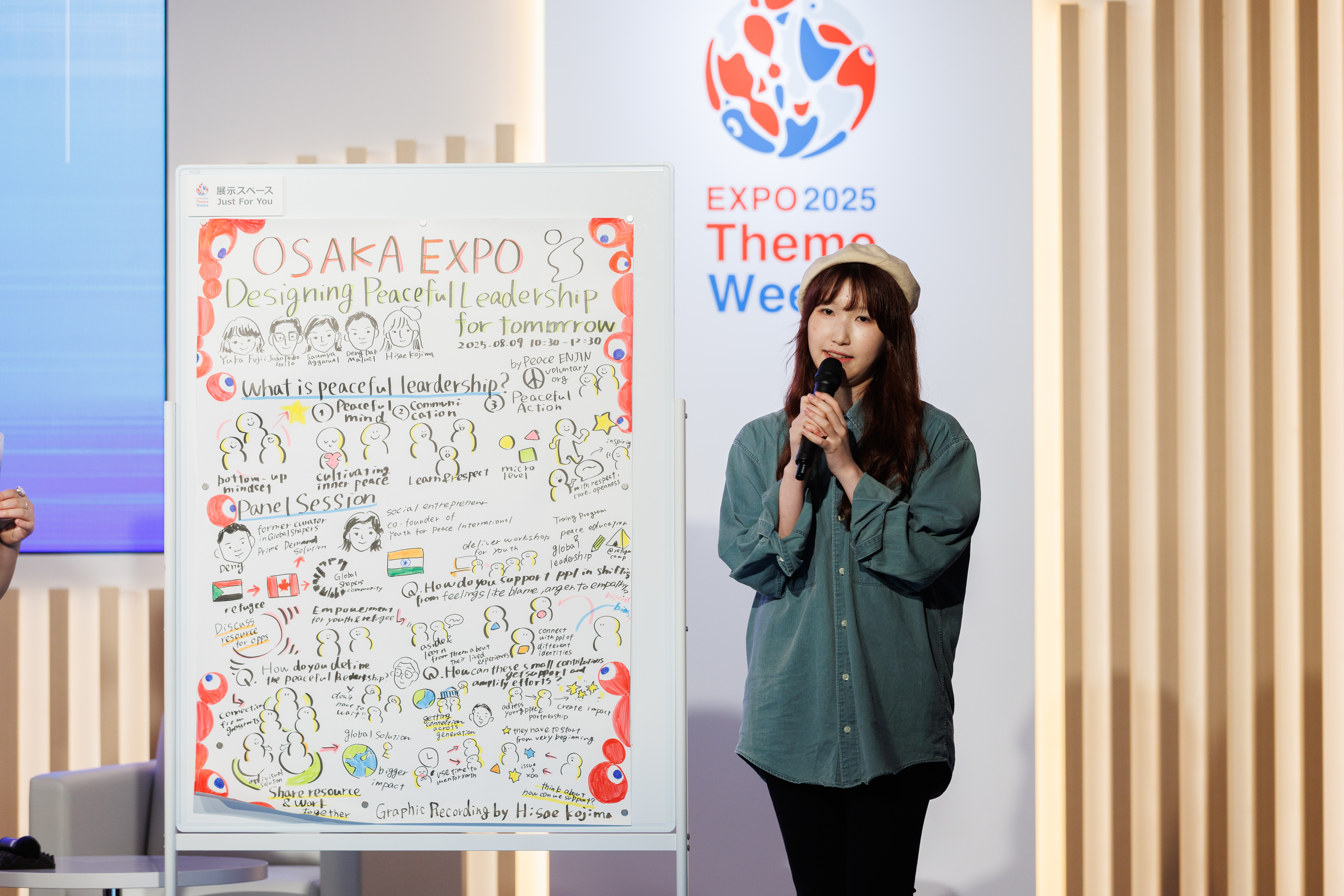
The session was moderated by Ms. Yuka Fujii from the Global
Shapers Yokohama Hub, who works to create employment
opportunities for refugees, and Mr. João Pedro Grilo from the
Osaka Hub. The content of the session was visually documented
through graphic recording by Ms. Hisae Kojima, also from the
Yokohama Hub.
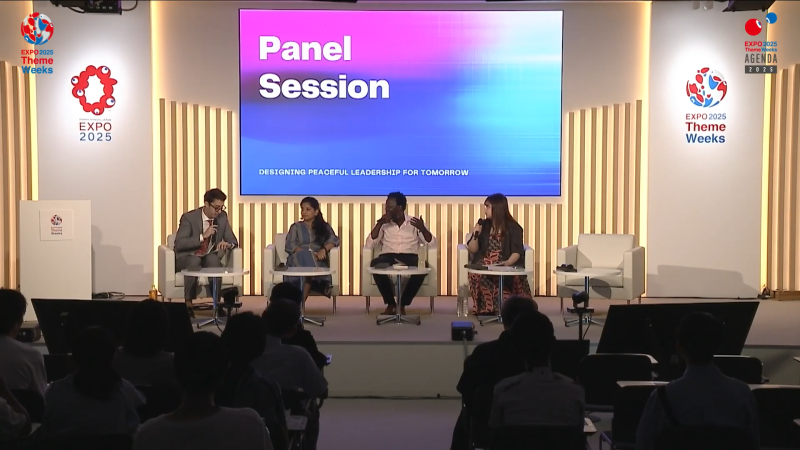
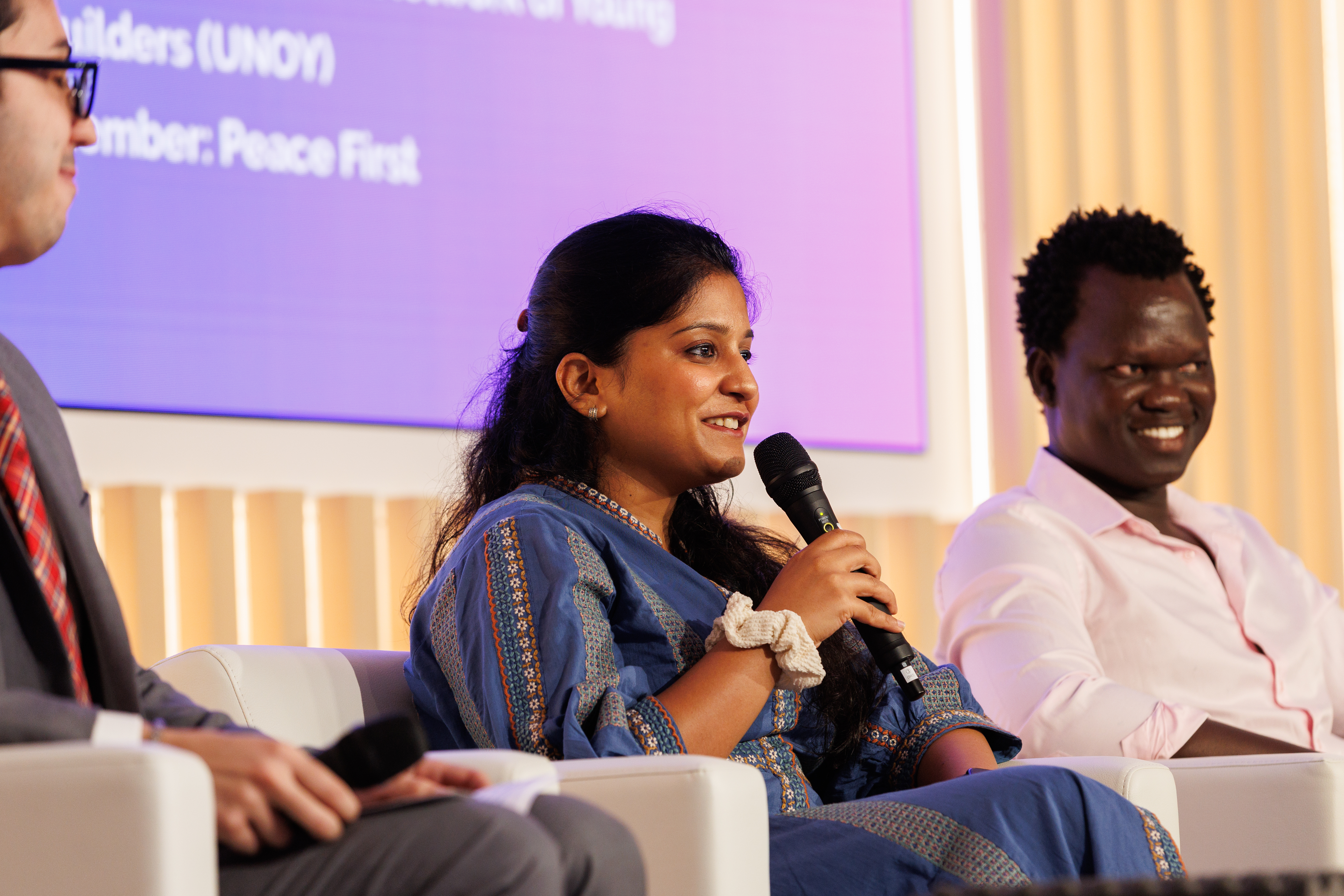
The first half of the program featured a panel discussion
based on the concept of “Peaceful Leadership” proposed by the
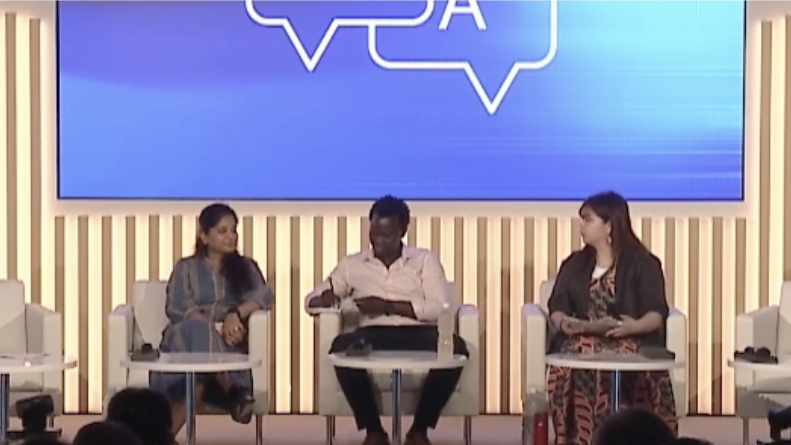
volunteer group PEACE ENJIN. Ms. Saumya Aggarwal from the
United Network of Young Peacebuilders (UNOY) shared her
experiences supporting young people who had fled conflict
zones, emphasizing that “meeting, understanding, and engaging
with people from different backgrounds as fellow human beings
is the key to transforming negative emotions into a force for
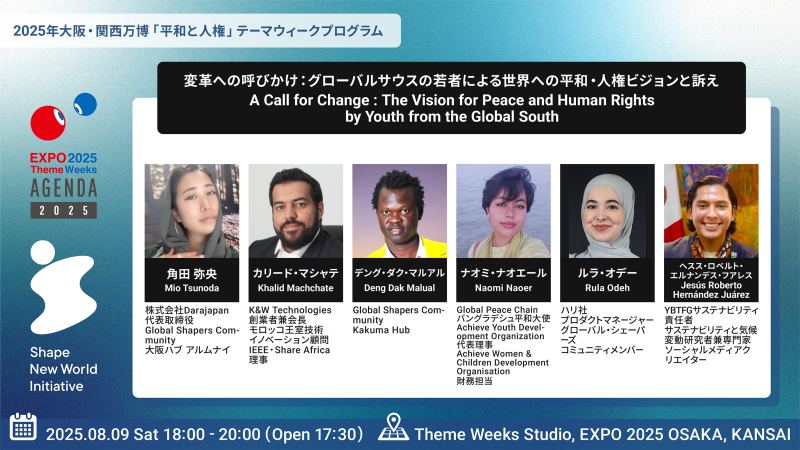
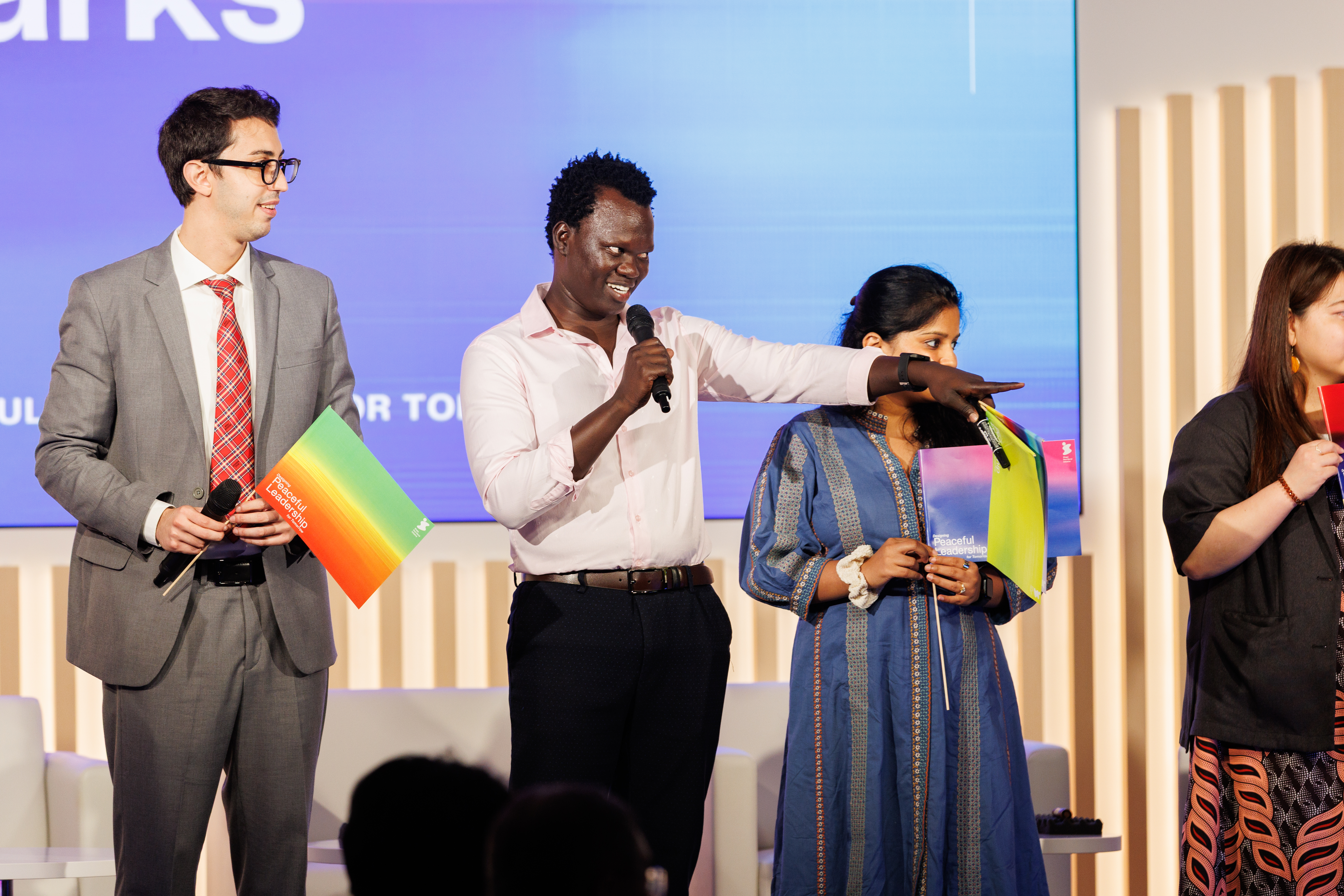
peace.” Mr. Deng Dak Malual, the Global Shapers Kakuma Hub who
grew up in the Kakuma Refugee Camp in Kenya, added, “Support
from Japan—such as sending unused computers and providing
mentors who can accompany and guide young people—can make a
significant impact.”
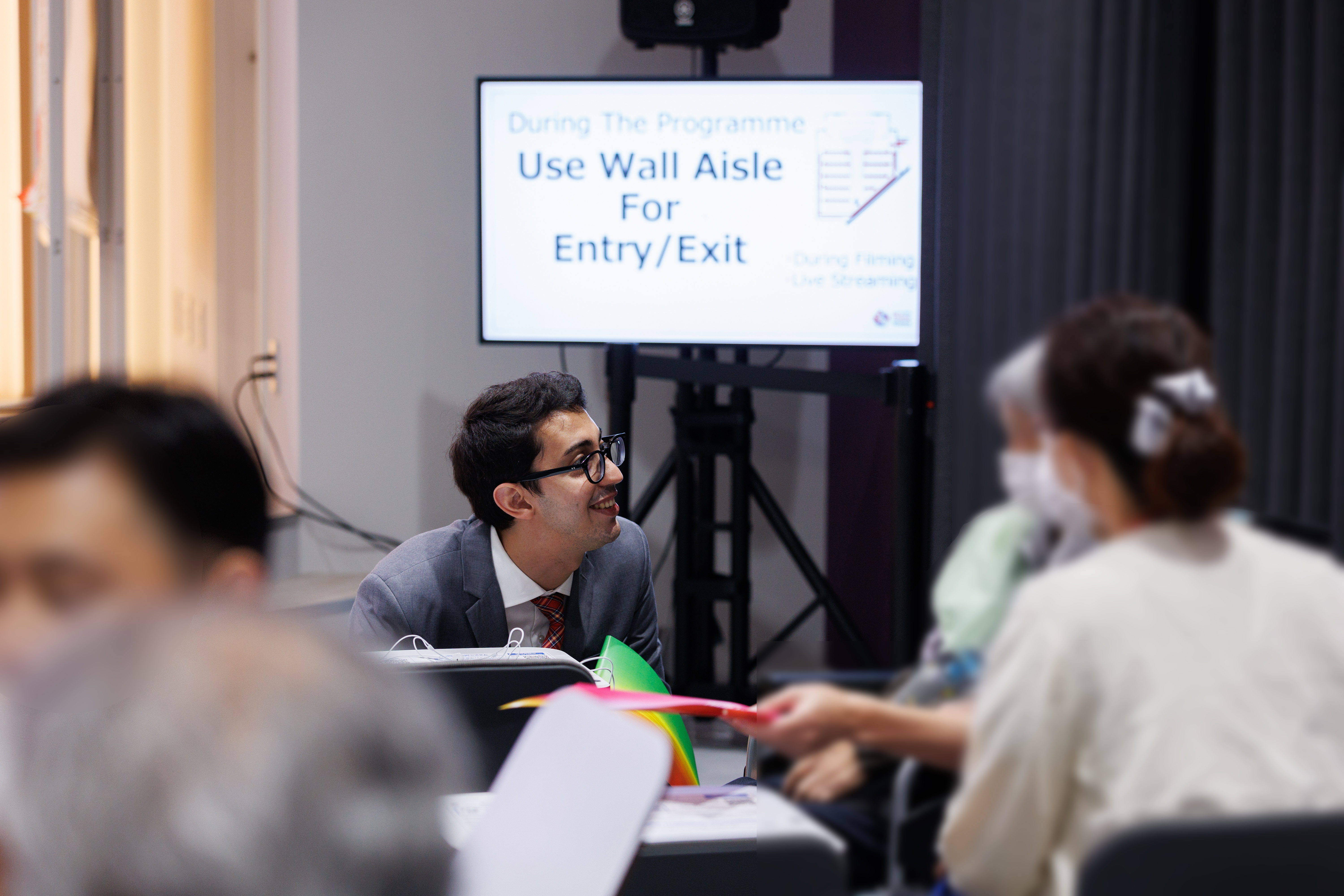
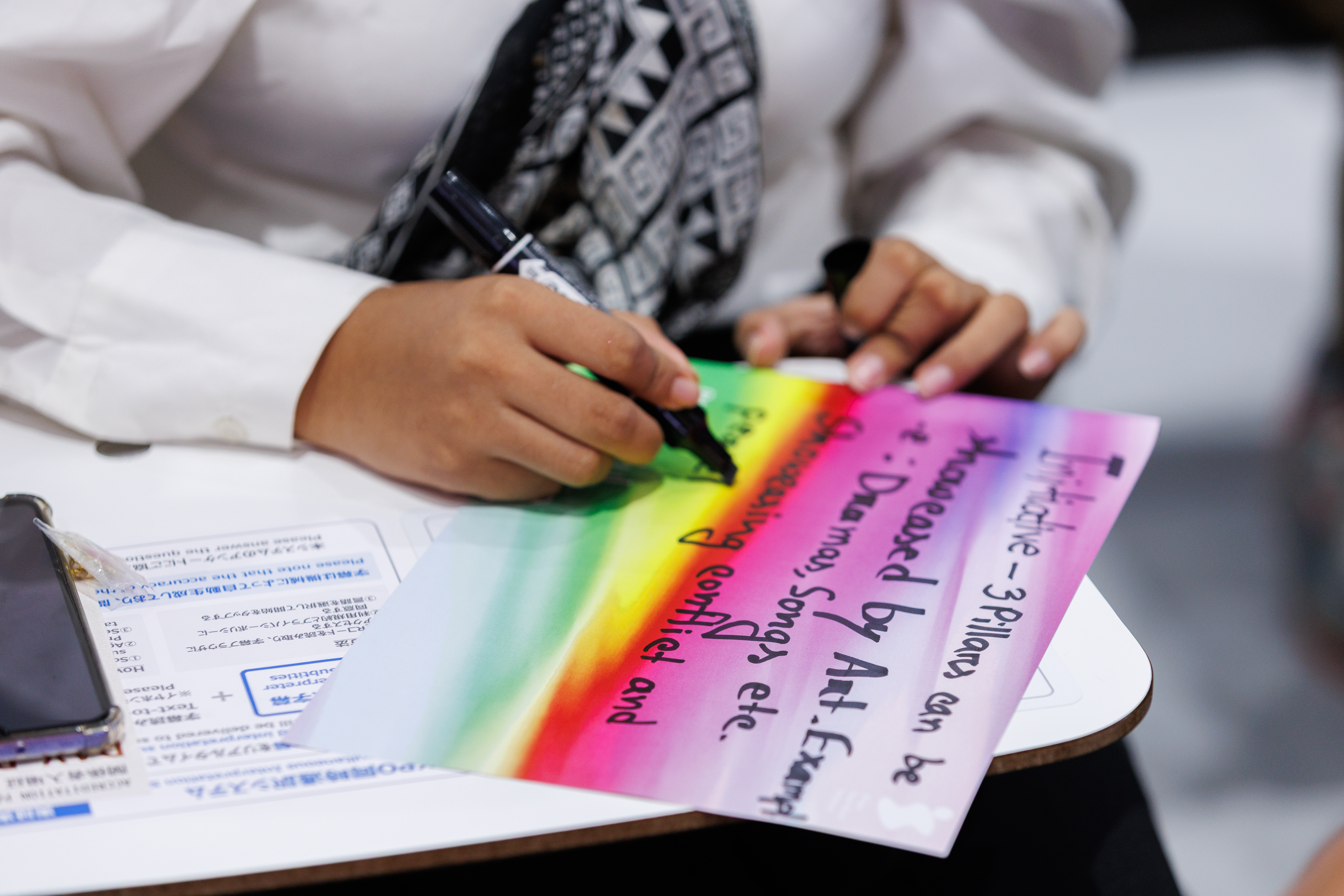
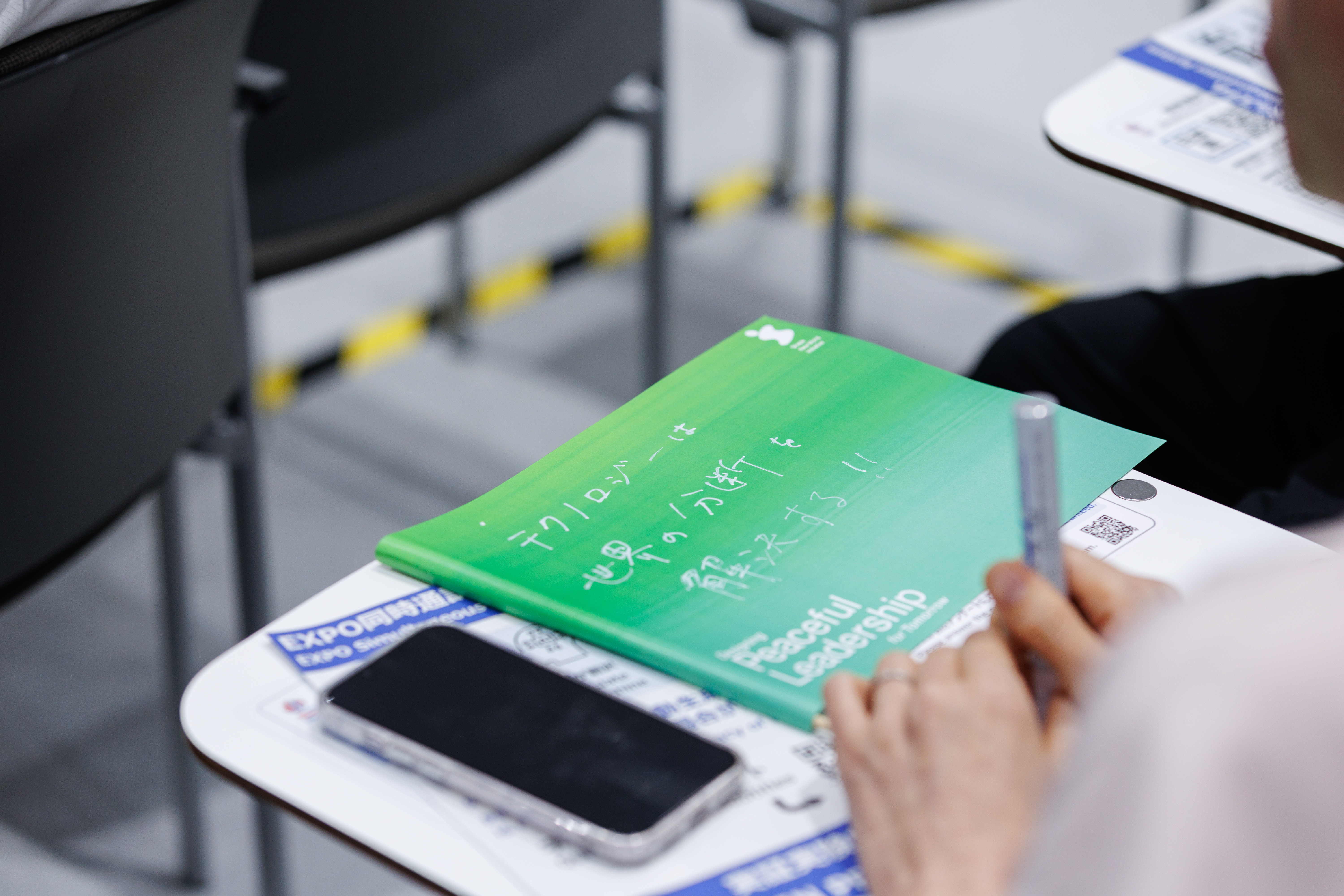
The second half featured a participatory workshop built around
the question, “What kind of peaceful leadership do you want to
declare and embody?” Participants reflected on their own
understanding of peace and shared moments when they felt most
aligned with it. From these discussions, various action
pledges emerged, such as “using technology to eliminate
division,” “choosing to trust others first,” and “creating
more spaces for dialogue.”
A particularly moving moment came when a Japanese participant
who had lived through wartime Osaka shared their personal
story. Their testimony connected the discussion to lived
history and deepened participants’ understanding of peace. At
11:02 a.m.—the exact time when the atomic bomb was dropped on
Nagasaki—the entire room observed a moment of silence,
collectively honoring the victims of war and reaffirming a
shared wish for peace.
Through this session, participants came to a shared
realization that peaceful leadership is not exclusive to those
in positions of authority, but rather an attitude and practice
that anyone can embody in everyday life. The discussion
reaffirmed the importance of dialogue, diplomacy, and soft
power over military deterrence, and underscored the message
that peace is not something to wait for—it is something to be
actively created through one’s own actions. The program
concluded with the hope that this circle of dialogue and
practice will continue to expand, inspiring new forms of
peaceful leadership around the world.
【Post EXPO Initiatives】
Through this program, we reaffirmed that Peaceful Leadership
is not something reserved only for those in positions of
authority, but rather a bottom-up approach that begins with
the everyday choices and actions of individuals. Within the
definition of Peaceful Leadership, the elements of “Peaceful
Mind,” “Peaceful Communication,” and “Peaceful Action” were
highlighted as essential. Participants shared the
understanding that peace is built through the accumulation of
small practices rooted in dialogue, empathy, and trust in
others.
We are committed to ensuring that this learning does not end
as a one-time event, and we will continue to develop the
following initiatives.
First, we will continue to cultivate networks with young
people and experts from Japan and abroad, and regularly create
spaces for dialogue and learning. In fact, following this
program, and recognizing that 2025 marks 80 years since the
end of World War II for Japan, we organized a workshop for
high school students in Hiroshima to explore actions for
peace.
Furthermore, we will strengthen collaboration with
international peace organizations such as UNOY, expand
opportunities for youth participation in Japan, and promote
peace education and dialogue-based programs. In particular, we
will work together with schools, local governments, and civil
society organizations to create environments in which young
people can think about peace for themselves and take
action.
We view peace not as a noun that we wait to be realized, but
as a verb that we actively create. We hereby commit to
expanding the circle of Peaceful Leadership—something that can
be embodied in everyday life by anyone—in the years to come.


Cast
Moderator
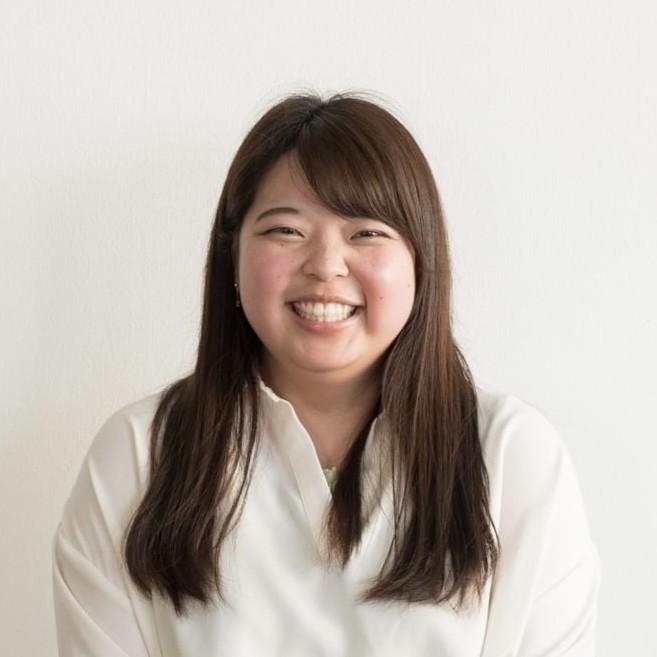
Yuka Fujii
PeoplePort Corp.
Yuka Fujii, born in Japan, is a dedicated intrapreneur
committed to creating employment opportunities for
vulnerable populations. She is currently the Director
of ZERO PC atPeoplePort Corp., an IT startup focused
on expanding employment for refugees in Japan, while
addressing climate challenges such as E-waste. With
five years of experience empowering refugees in Japan,
Denmark, Belgium, and Australia, Yuka is responsible
for rebuilding the production line and technical team
for ZERO PC’s domestic market. She also leads efforts
to create an inclusive, innovative workplace as part
of PeoplePort’s Human Resource Department.
Before joining PeoplePort, Yuka worked at BORDERLESS
JAPAN Corp., where she developed marketing strategies
for social entrepreneurs and successfully launched a
crowdfunding service that raised over 1,950,000 USD
across 350 projects. She also founded Dialogue Radio
in 2020, a platform promoting youth empowerment
through storytelling. Yuka holds a Bachelor’s degree
in English from Dokkyo University and has studied
multiculturalism, gender, and refugee issues.
View Profile
Close
close
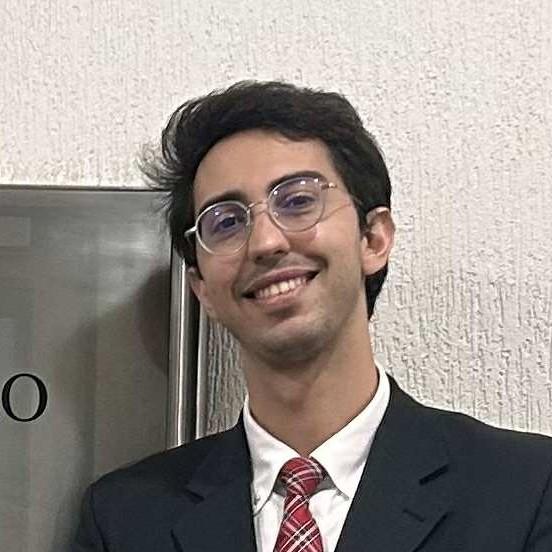
João Pedro Grilo
Global Leadership Training Program
Joao Pedro is currently an employee working at miki house at the sales department. Throughout his career, he had experience in participating and organizing youth leadership empowerment programs, such as the global leadership training program (GLTP), and also as a researcher for brazilian think tanks,such as the Getúlio Vargas Foundation(FGV).
View Profile
Close
close
Speakers
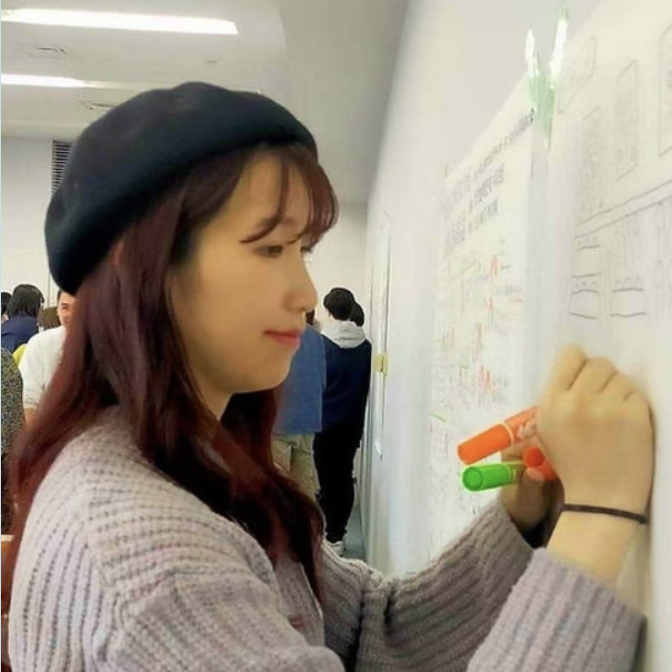
Hisae Kojima
Global Shaper Community Yokohama Hub
While working at an IT company, Hisae engages in volunteering in learning support and career education due to her interest in educational issues such as economic and opportunity gaps. Additionally, she has been a member of the Yokohama Hub of Global Shapers, appointed by the World Economic Forum, since 2020. Her lifework is graphic recording, visualizing, and summarizing discussions through drawings.
View Profile
Close
close
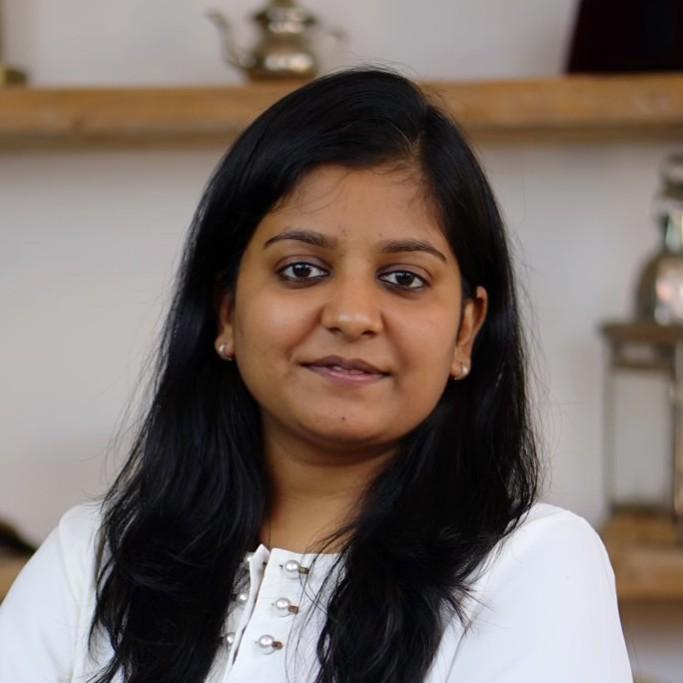
Saumya Aggarwal
Youth for Peace International/ UNOY
Saumya Aggarwal is the co-founder and CEO of Youth for Peace International working on a vision to empower youth on conflict transformation, providing rehabilitation support to Refugees and advocating for meaningful youth engagement and implementation of Youth, Peace and Security agenda. She has established a free National Mental Health Support helpline that aims to address mental health implications of pandemic in India. She currently serves as the board member of Peace First and works with United Network of Young Peacebuilder (Asia Coordinator), Seeds of Peace, GPPAC and United States Institute of Peace (YCL coordinator) to strengthen capacities of youth to build positive-peace. She has 8 years of experience in Facilitation, fundraising, project design and implementation and strategic partnership in the youth and peacebuilding field.
View Profile
Close
close
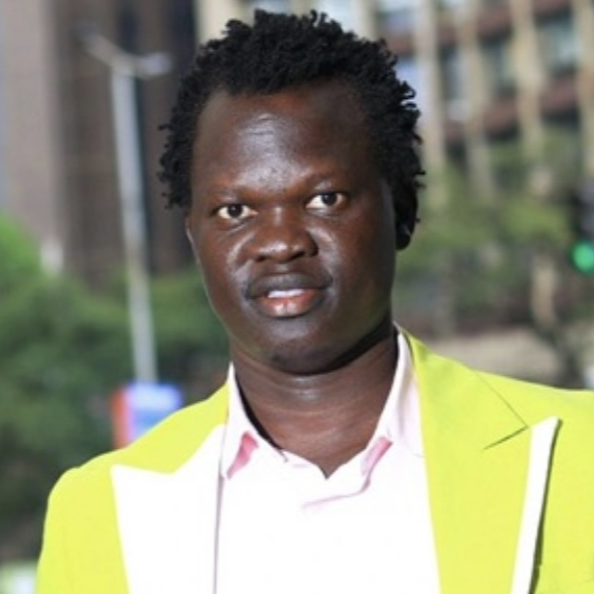
Deng Dak Malual
Global Shapers Community Kakuma Hub
Deng Dak Malual has spent the last 16 years of his life as a refugee in Kenya’s Kakuma refugee camp, where he is a member of the Global Shapers Community’s Kakuma Hub (Curator for 2020-2021). He is passionate about peace-building, business development, youth empowerment, refugee advocacy, education, and climate change. During his four-year tenure as an elected refugee community leader in Kakuma Refugee Camp, Deng worked closely with the camp management, the government of Kenya, and humanitarian actors, including refugees and the host community, to promote peaceful cohesion in the camp and empower young people through games and sports. Through this role and other engagements, Deng became an outspoken refugee advocate on issues affecting refugees. Deng is leading Prime Demand Solution, a refugee youth-led enterprise working on youth empowerment, climate change, and agricultural development in the camp and its surroundings.
View Profile
Close
close
Peace, Human Security and Dignity Week
Designing Peaceful Leadership for Tomorrow — A Journey to
Discover a Future of Peace with Global Youth Leaders
Agenda 2025 Co-created Programme
[Hypothesis of the Future in 2050]
A peaceful society realized through “Peaceful Leadership” in
which each individual expands his/her own inner peace. We
believe that peace is something that everyone knows is
important, wishes to exist, and tries to achieve. In this
session, through the workshop, participants will realize that
they themselves are the main actors of peace, and will
experience together a place to think, feel, and embody their
individual roles for peace and the Peaceful Leadership.
-
2025.08.09[Sat]
10:30~12:30
(Venue Open 10:00)
- Theme Weeks Studio
OTHER PROGRAM
Peace, Human Security and Dignity Week