Peace, Human Security and Dignity Week
Dialogue on Life
EXPO 2025 Thematic Project “Invigorating Lives” (Producer NAKAJIMA Sachiko)
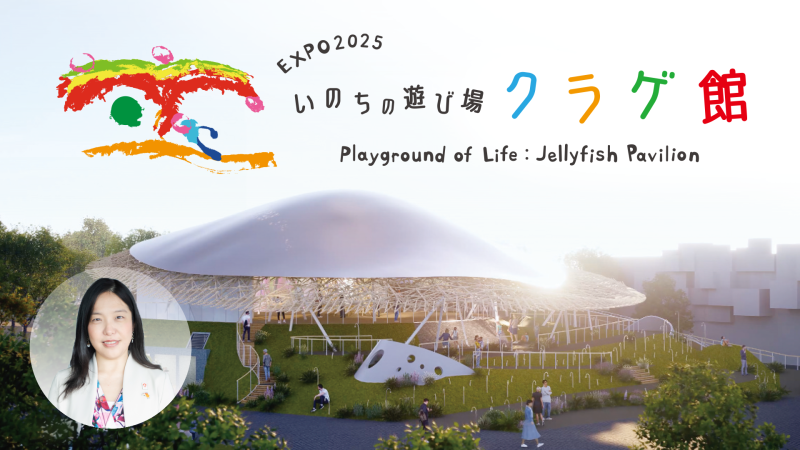
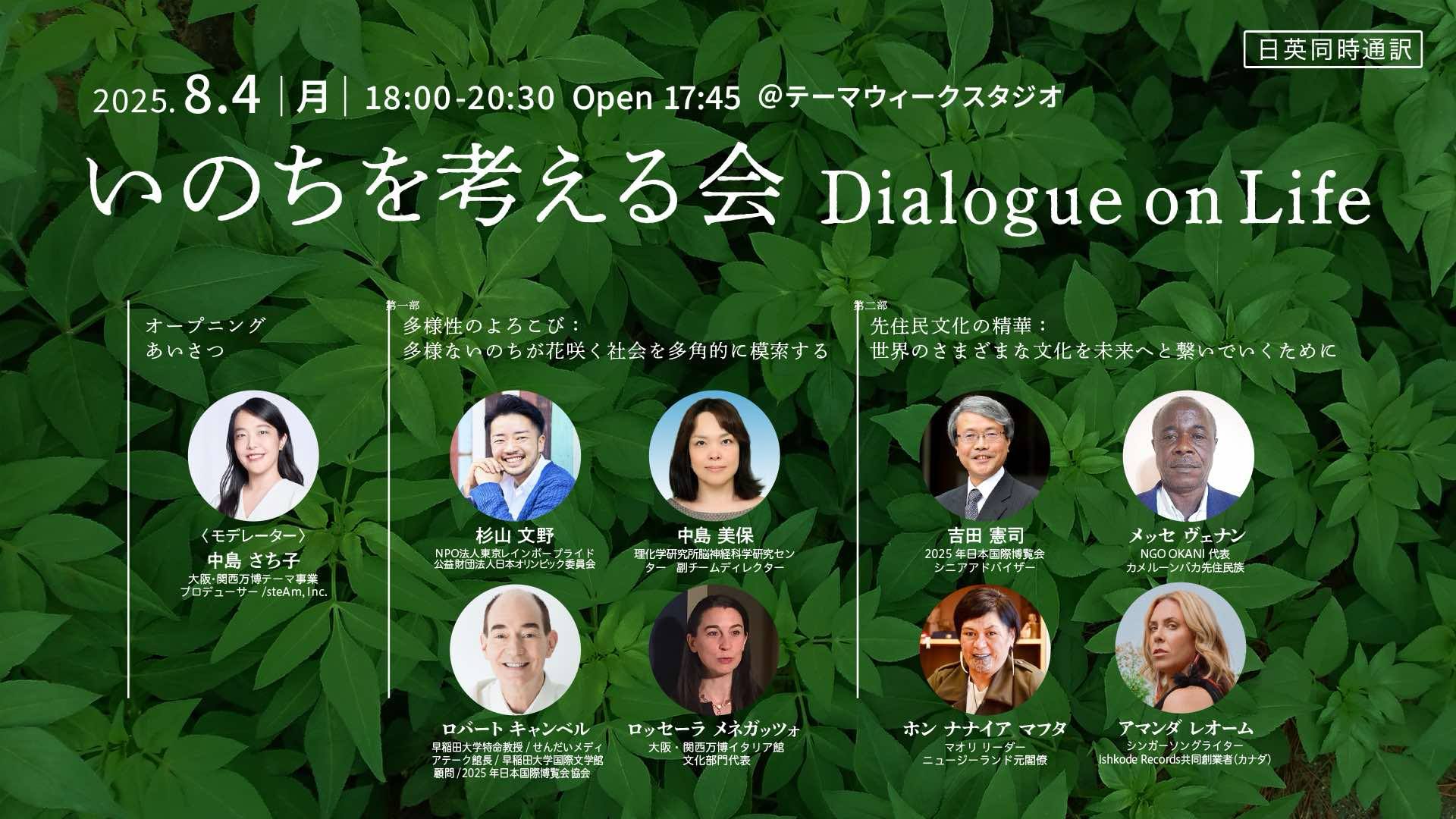
At the Jellyfish Pavilion, under the theme of “Peace and Human Rights,” we explore the sensibilities, creativity, and life-affirming power needed to live together beyond divisions. In the Japanese-language session, we engage with LGBTQ+ activists, a female neuroscientist, and others to examine issues such as gender, disability, and generational gaps from multiple perspectives. In the English-language session, we learn from Indigenous cultures including the Māori of New Zealand and the Baka people of Cameroon. Through the power embedded in festivals, performing arts, and traditional crafts, we reexamine the state of our society and corporate cultures today.
Recorded video available
Discussion
- Promotion of women's participation and advancement
- Gender equality
- Diversity and inclusion
| Transmission of simultaneous interpretation | Provided |
|---|---|
| Language of interpretation | Japanese and English |
-

Signature Programme
-
Time and
Date of
the event -
-
2025.08.04[Mon]
18:00 ~ 20:30
(Venue Open 17:45)
-
- Venue
- Theme Weeks Studio
Programme details
*Subtitles: Choose “Subtitles/CC” in the “Settings” (gear
icon) at the bottom right of the YouTube video.
*Subtitles may not show with multiple languages or overlapping
audio.
Under the theme of “Peace and Human Rights,” the Jellyfish
Pavilion explores the sensibilities, creativity, and vitality
needed to live together with distinguished guests beyond
division. In the Japanese-language session, we engage in
dialogue with the LGBTQ+ activist, the female neuroscientist,
and the scholar of Japanese culture, reflecting on the various
gaps in our society—such as those related to gender, age,
disability, and cultural background—and the questions and
hopes that emerge from them. The English-language session
introduces perspectives rooted in Indigenous cultures,
including those of the Māori (New Zealand), the Baka people
(Cameroon), Australia, and Canada, with insights from the
former director of the National Museum of Ethnology in
Japan.
Around the time of the International Day of the World’s
Indigenous Peoples on August 9, we acknowledge that conflicts
and unconscious divisions still persist worldwide, arising
from differences in race, culture, religion, politics,
disability, gender, family environments, and more. At first
glance, these issues may seem unrelated to culture—such as
festivals, performing arts, and traditional crafts—but in
fact, they share a deep connection to the dignity of life and
our collective yearning to live with meaning. Why do we sing
and dance? Through the lens of culture, the Jellyfish Pavilion
seeks to question the state of contemporary society and
corporate culture, and to explore the possibilities of
co-creation and regeneration.
Reports
【Reflection】
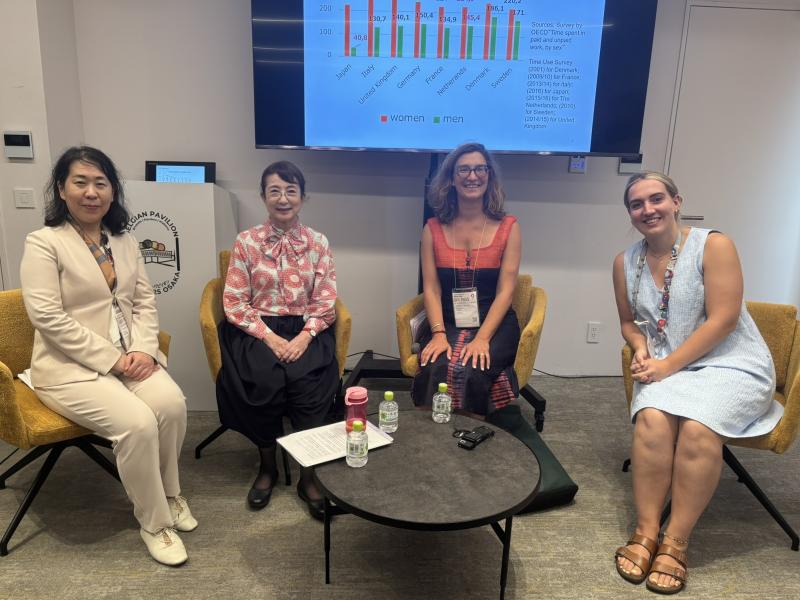
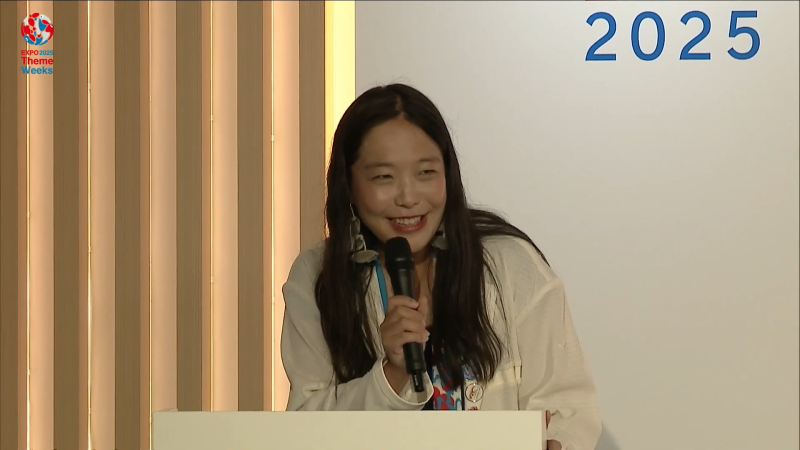
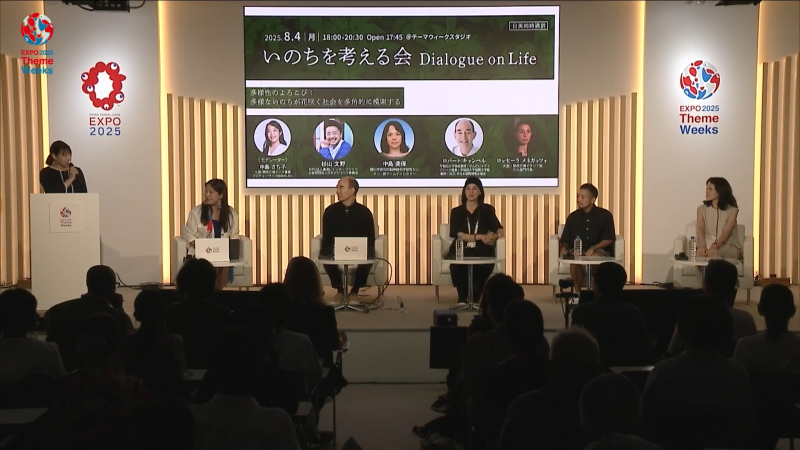
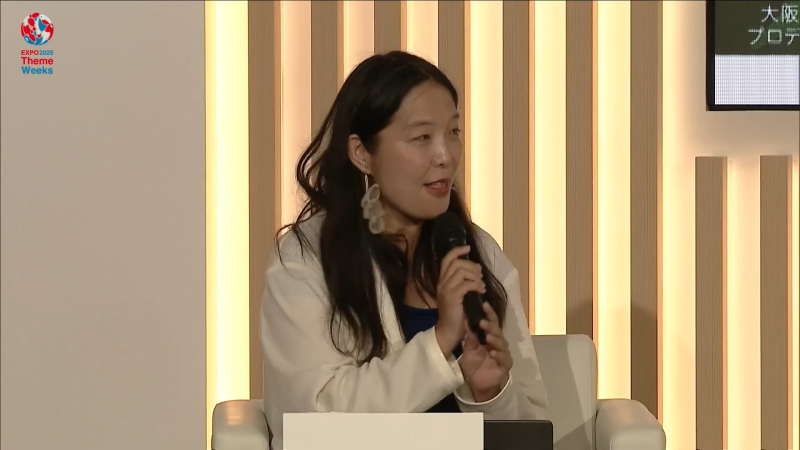
On August 4, the “Dialogue on Life” was held at the Theme Week
Studio of Expo 2025 Osaka, Kansai. This program was designed
as a space for dialogue to reflect on “life” and “creation” in
an era of division, with our representative and Expo Thematic
Project Producer, Sachiko Nakajima, serving as moderator. The
event welcomed a large audience both on-site and through
virtual streaming, attracting participants from Japan and
abroad.
In Part 1, panelists included Fumino Sugiyama (Co-Chair of
Tokyo Rainbow Pride), Miho Nakajima (RIKEN's New Research
Center for Brain Science), Robert Campbell (Specially
Appointed Professor at Waseda University, and Director of
Sendai Mediatheque, scholar of Japanese literature), and
Rossella Menegazzo (Head of Culture, Italy Pavilion). Together
they shed light on the many “gaps” in society—related to
gender, generation, disability, and cultural background—and
engaged in discussions about the challenges and, conversely,
the new hopes that may emerge from them. At times, the
speakers shared their own life experiences candidly, and the
conversation explored not only the acceptance of differences
but also how we might expand the “joy of creating
together.”
Part 2 celebrated the opening of Te Aratini “Indigenous Week”
and focused on indigenous cultures from around the world.
Speakers included Kenji Yoshida (Professor Emeritus, National
Museum of Ethnology), Messe (NGO OKANI representative, the
Baka Indigenous People of Cameroon), Amanda Rheaume
(singer-songwriter and co-founder of Ishkode Records, Métis,
Canada), and Hon. Nanaia Mahuta (Māori leader and former
Cabinet Minister, New Zealand). They introduced the “wisdom of
life” rooted in their cultures and addressed urgent issues
such as the loss of indigenous languages and the challenges of
cultural transmission. The discussion highlighted the efforts
needed to carry these traditions into the future. Professor
Yoshida posed a compelling question: “How can we pass down the
world’s rare and precious cultures to future generations?”,
which left the audience in deep reflection.
This event was held in advance of the International Day of the
World’s Indigenous Peoples on August 9. Around the world,
divisions and conflicts still exist, stemming from differences
in race, religion, culture, disability, gender, and family
environment. Through the lens of culture, the Jellyfish
Pavilion seeks to re-examine the ways society and
organizations operate, and to continue serving as a place to
explore the possibilities of co-creation and renewal. The
insights and connections gained through this dialogue will be
carried forward into our ongoing initiatives and passed on to
future generations.
【Post EXPO Initiatives】
The dialogues shared at the “Dialogue on Life” are not meant
to remain within the confines of the Expo, but rather to serve
as a starting point for ongoing development in education,
culture, and society. To that end, the Jellyfish Pavilion will
continue to advance the following concrete initiatives beyond
the Expo.
First, through the “School of the Earth’s Future,” we will
connect schools and educational institutions worldwide,
creating spaces where students can joyfully experience and
engage with Indigenous cultures and the challenges faced by
diverse minority communities. These programs will emphasize
not only the transmission of knowledge but also encounters
with peers and friends from around the globe, fostering
opportunities for mutual learning and the joy of
collaboration. In particular, with respect to the Indigenous
cultures highlighted in our dialogue—such as the Māori, the
Baka people, and the Métis of Canada—we aim to collaborate
with the National Museum of Ethnology to record and archive
languages, music, and oral traditions, and to develop programs
that allow children worldwide to engage with this diverse
wisdom.
Next, in addressing the challenges of gender in STEM fields,
we will continue to host the “STEM Gender Café” after the
Expo. These will include international dialogues held once
annually in person, along with online sessions held six times
a year, thereby expanding opportunities for women and youth to
explore across science, technology, and the arts. Beyond STEM,
we also plan to create similar platforms of dialogue in fields
such as economics, education, culture, and social welfare.
Through these efforts, we hope to nurture an international
network where people from diverse backgrounds can raise their
voices and take action together.
We will also work with Indigenous and minority communities to
promote new forms of cultural expression that utilize digital
technologies and the arts, focusing on the preservation and
transmission of culture. Our goal is not merely to archive
endangered languages and traditional performing arts as static
records, but to create mechanisms through which future
generations can experience them as “living cultures.”
Furthermore, we will collaborate not only with the education
sector but also with politics, economics, business, and civil
society to organize regular dialogue forums. These gatherings
will explore, from multiple perspectives, how to shape
societies where diverse forms of life are respected, leading
to policy proposals and practical projects.
The “Dialogue on Life” is an attempt to lay a cultural
foundation for co-creation beyond division, and passing on its
significance to future generations is our mission. Even after
the Expo, we will continue to expand this international
network that fosters cycles of co-creation and renewal, with
the goal of embedding these practices into the fabric of
future society.
Cast
Moderator
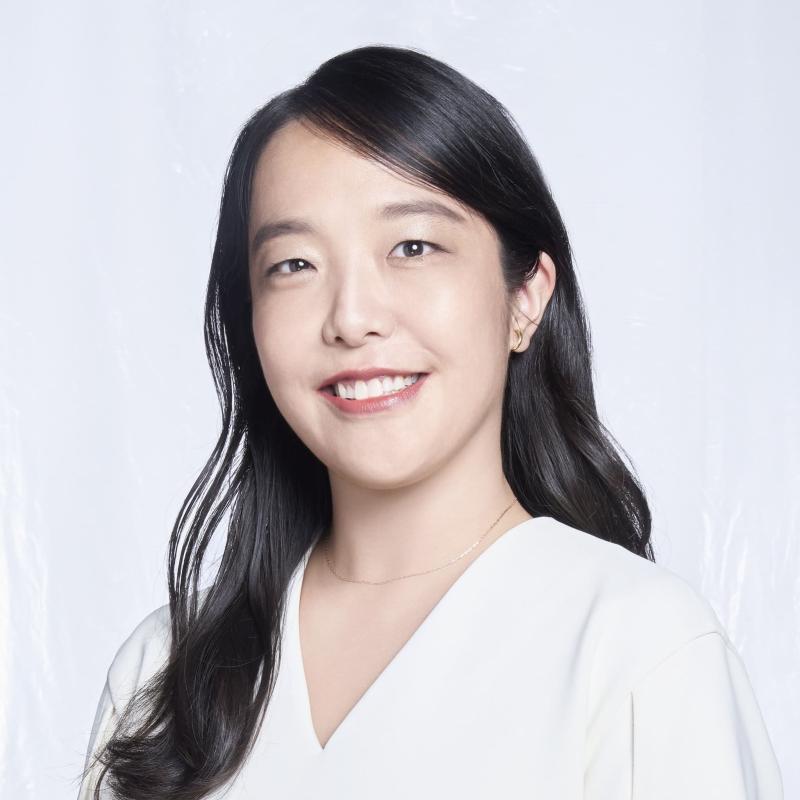
NAKAJIMA Sachiko
Thematic Project ”Invigorating Lives" (Japan Association for the 2025 World Exposition)
Musician, a mathematics researcher, and a STEAM Educator. She is also CEO of steAm, Inc.,the representative director of steAm BAND Association and a thematic project producer of Expo 2025, Osaka, Kansai, Japan. She also serves as a STEM Girls Ambassador, Cabinet Office, and project researcher of Graduate School of Mathematical Sciences The University of Tokyo. She won the gold medal as the first Japanese woman in the International Mathematical Olympiad. She passionately conducts research on art and technology as well as music, mathematics, and education.
View Profile
Close
close
Speakers
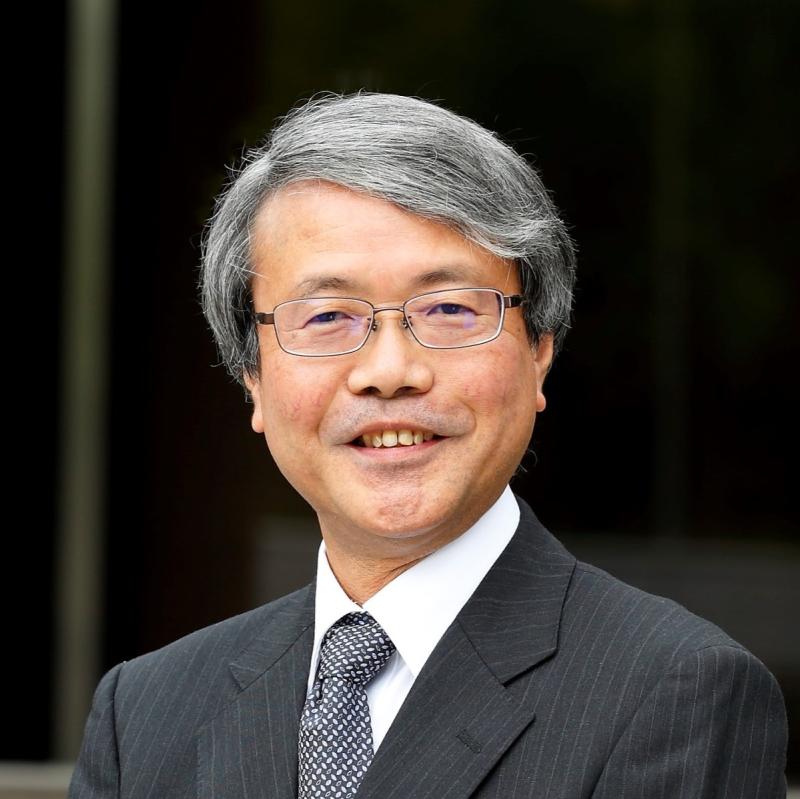
Kenji YOSHIDA
Vice President, Director and Senior Advisor of the Japan Association for the 2025 International Exposition
Kenji Yoshida is the former Director-General at the National Museum of Ethnology, Osaka, Japan, specializing in cultural anthropology and museum anthropology. He has been carrying out fieldwork on the expressive culture and cultural heritage of Southern Africa especially in Zambia. He has also been organizing various exhibitions on art and culture by networking art museums and cultural museums. His major exhibitions and publications include Discovery of Cultures (Bunka no Hakken, in Japanese) 1999, Images of Other Cultures (ed. with John Mack, exhibition catalogue) 1997, Preserving the Cultural Heritage of Africa (ed. with John Mack) 2008, Self & Other: Portraits from Asia and Europe (ed. with Brian Durrans, exhibition catalogue) 2008, Portraits of Cultures: Networking Museology (Bunka no Shohzoh, in Japanese) 2013, The Power of Images: The National Museum of Ethnology Collection (exhibition catalogue) 2014, and Searching for the Origin of Religious Belief: Spirit churches in the Southern Africa (Shukyo no Shigen wo Motomete: Nanbu Africa Seirei Kyokai no Hitobito in Japanese) 2014.
View Profile
Close
close
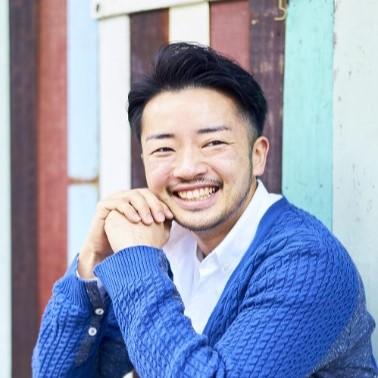
Fumino Sugiyama
Tokyo Rainbow Pride, JOC
A former member of Japan’s national women’s fencing team and a transgender man, he has been deeply involved in advancing diversity, equity, and inclusion (DEI), especially LGBTQ+ rights. He played a key role in organizing Japan’s largest pride parade and contributed to establishing Japan’s first same-sex partnership system in Shibuya Ward. Since 2021, he has also served as a board member of the Japanese Olympic Committee, promoting DEI in the world of sports.
View Profile
Close
close
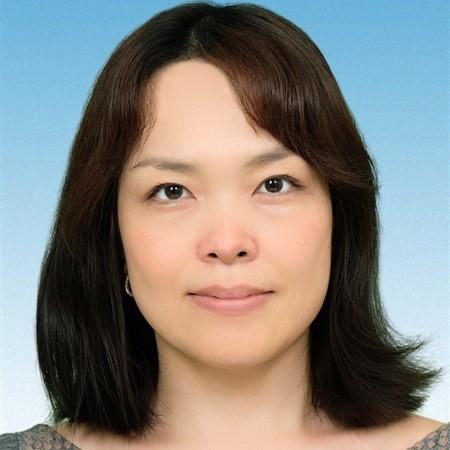
Miho Nakajima
RIKEN Center for Brain Science, Deputy Team Director
Born in Osaka, Dr. Nakajima graduated from the University of Tokyo and completed her doctoral studies at Rockefeller University (USA) in 2012. After completing her postdoctoral studies at New York University and Massachusetts Institute of Technology, she is currently a Deputy Team Director at the RIKEN Center for Brain Science. Her work aims to elucidate the neural mechanism of mental flexibility, curiosity, and creativity by combining cutting-edge cognitive behavioral experiments, molecular biology, electrophysiology, and optogenetics.
View Profile
Close
close
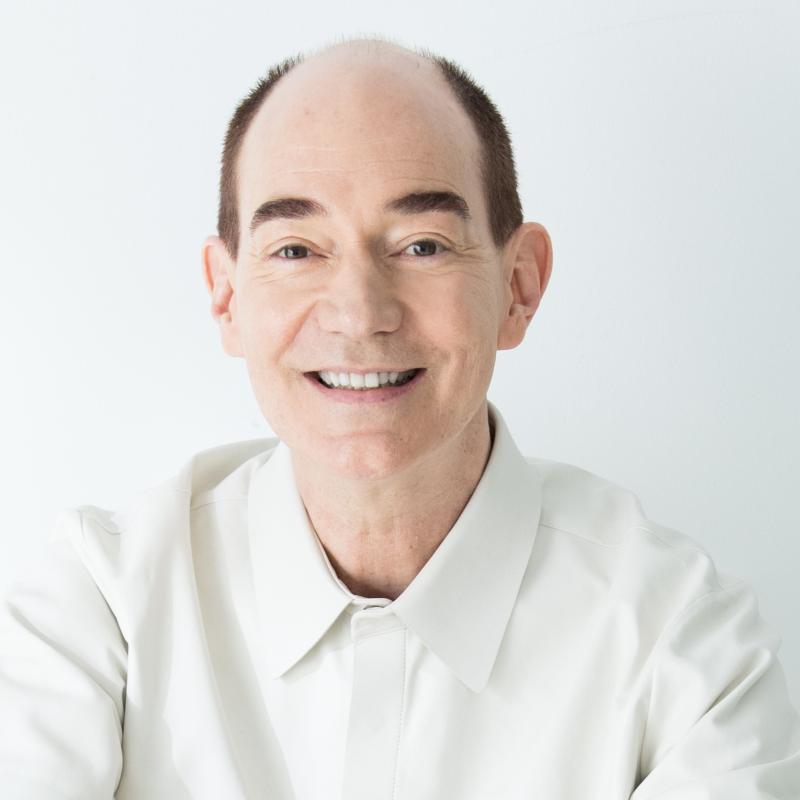
Robert Campbell
University Professor, Waseda University, Director-General of Sendai Mediatheque
Robert Campbell is a scholar of Japanese literature,
Professor Emeritus at the University of Tokyo and
former Director-General of the National Institute of
Japanese Literature (NIJL).
Born in New York City, he studied in the Departments
of Economics and Oriental Languages, University of
California, Berkeley (B.A. 1981), and in the
Department of East Asian Languages and Civilizations,
Graduate School of Fine Arts, Harvard University (M.A.
1984; Ph.D. 1992).
In addition to writing, editing and contributing to
numerous volumes on Japanese literature, art and
drama, Robert is active in the Japanese media as
television host, news commentator, newspaper
columnist, book reviewer and radio personality.
View Profile
Close
close
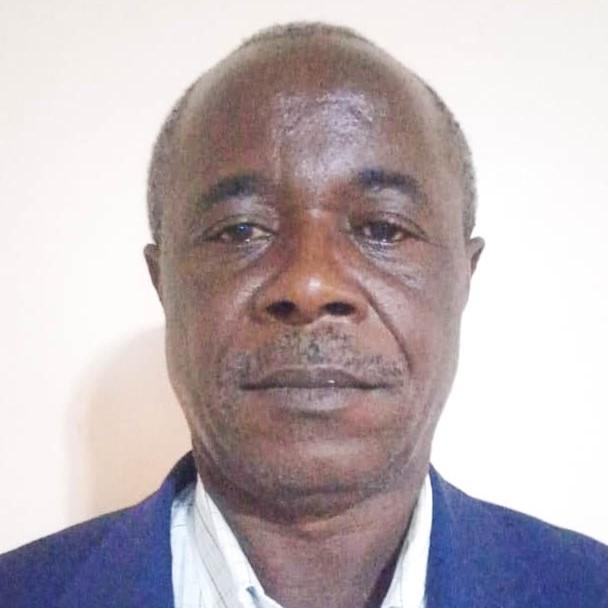
Messe Venant
Director, OKANI | Member of the Baka People, Cameroon
Mr. Messe Venant is a member of the Baka indigenous
community in Cameroon and currently serves as Director
of OKANI, a community-based NGO advocating for
indigenous rights and sustainable development.
Based in Bertoua, he is also the father of a large
family.
Following his secondary education, he studied Natural
Resource Management and Local Development at the
Pan-African Institute for Development in the Central
African region. With expertise in technical
development frameworks, he has contributed to local
and international NGO projects supporting Baka
communities.
He has participated in numerous international forums
focusing on Indigenous peoples, biodiversity, climate
change, and education. For nine years, he coordinated
the Indigenous Peoples Network for the Central Africa
region.
He is currently involved with OKANI and Gbabandi,
national platforms representing forest indigenous
peoples in Cameroon. In addition, he actively supports
the development of leadership training initiatives for
indigenous people in the country.
View Profile
Close
close
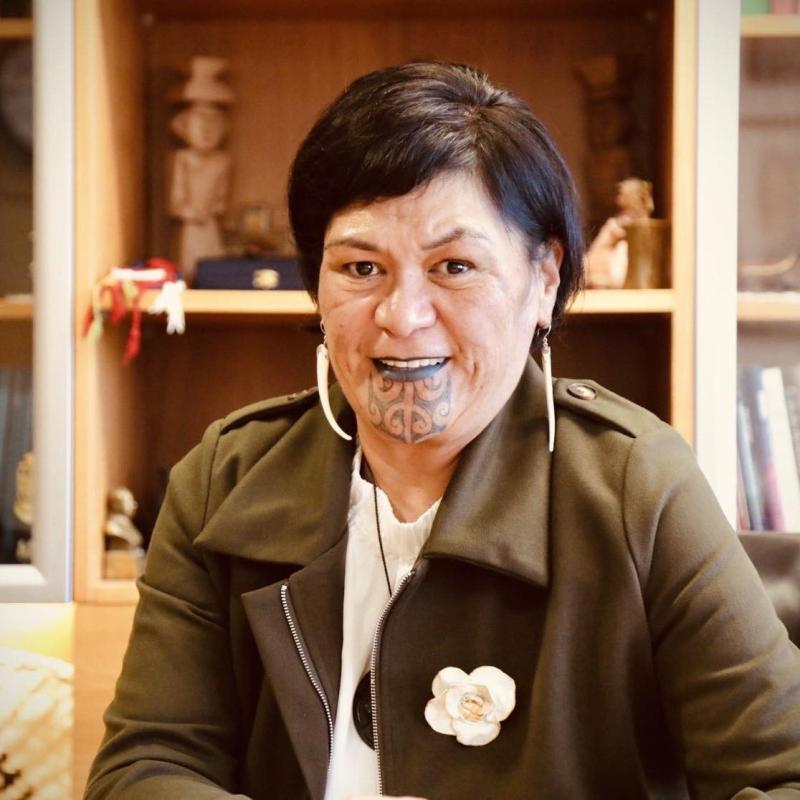
Hon. Nanaia Mahuta
Māori Leader and Former Cabinet Minister
Hon Nanaia Mahuta is a senior Māori leader and former Member of the New Zealand Parliament. She made history as the first wāhine (woman) Māori to hold the Minister of Foreign Affairs portfolio, bringing around three decades of experience in government and a deep commitment to Indigenous rights, diplomacy, and social equity. A member of the Waikato-Tainui and Ngāti Maniapoto iwi (tribes), she is guided by Māori values and has long championed the role of Indigenous knowledge in shaping a sustainable and inclusive future. Her leadership helped advance New Zealand’s role in inclusive trade, climate diplomacy, and Indigenous international engagement. Known for her advocacy on Indigenous partnerships, intergenerational wellbeing, and honouring Te Tiriti o Waitangi, she continues to be a respected voice globally. Now serving as Project Science Lead for Tauhokohoko – Indigenous Trade, Hon Mahuta continues to advance Indigenous-led solutions in global trade and sustainability bridging Indigenous wisdom with contemporary science and policy, offering insights into inclusive and future-facing systems.
View Profile
Close
close
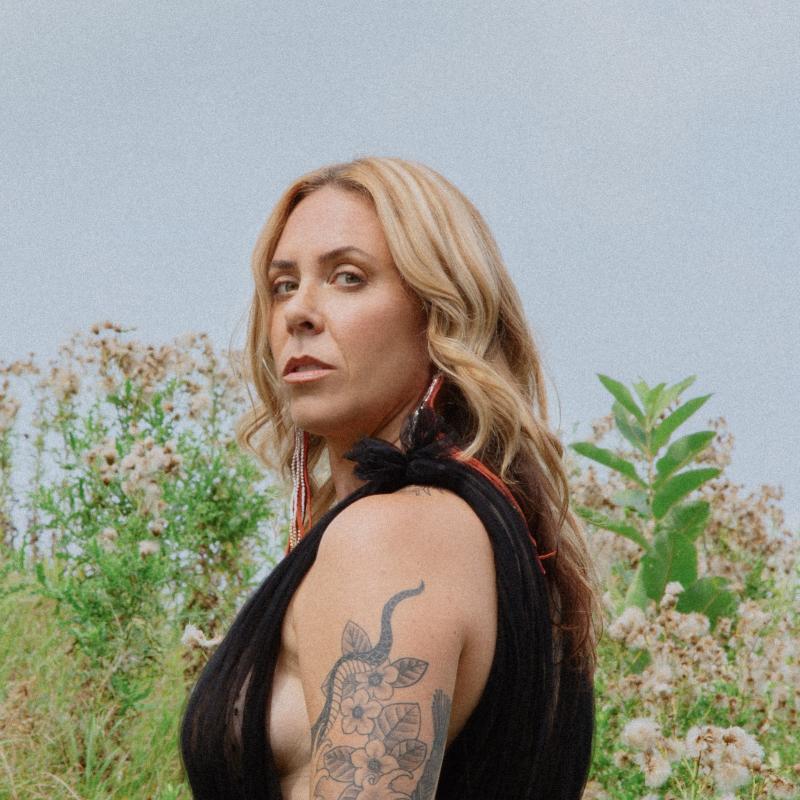
Amanda Rheaume
Singer-songwriter, Co-founder of Ishkode Records, Director of both the International Indigenous Music Summit and the Indigenous Music Office.
Amanda Rheaume is a 2025 King Charles III Coronation
Medal recipient, 2024 Spirit of Folk Award recipient,
2023 Canadian Folk Music Award winner for Indigenous
Songwriter of the Year, and Capital Music Awards’
Album of the Year honoree. With six albums released,
she’s also a key advocate for Indigenous music.
As co-founder of Ishkode Records, and Director at the
International Indigenous Music Summit, and the
Indigenous Music Office, Rheaume is dedicated to
fostering Indigenous sovereignty through music,
ensuring its stories endure and inspire.
View Profile
Close
close
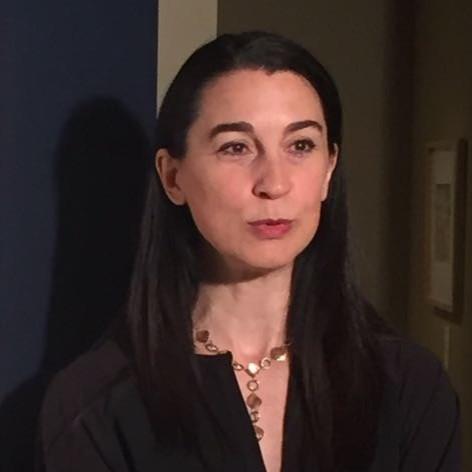
Rossella MENEGAZZO
Head of Culture, Science and Education Italy Pavilion
Associate Professor of East Asian Art History at the University of Milan since 2012 after completing her studies and Ph.D. in Oriental Studies (History of Japanese art) at Ca’ Foscari University of Venice and is Advisor of the (AAD) Advanced Art Design Course, (RCAST) Research Center for Advanced Science & Technology, The University of Tokyo. She has participated in and organised numerous international symposiums, the last ones at the University of Milan on Japanese arts and design (2108, 2022). She has curated many exhibitions and catalogues on Japanese arts, photography, and design in collaboration with major Italian and international museums and publishers. Among the main publications: IRO. The Essence of colour in Japanese Design (Phaidon 2022); WA. The Essence of Japanese Design (Phaidon 2014). Academic of the Accademia Ambrosiana, Class of Far Eastern Studies since 2018, she received the Japanese Foreign.
View Profile
Close
close
Peace, Human Security and Dignity Week
Dialogue on Life
At the Jellyfish Pavilion, under the theme of “Peace and Human Rights,” we explore the sensibilities, creativity, and life-affirming power needed to live together beyond divisions. In the Japanese-language session, we engage with LGBTQ+ activists, a female neuroscientist, and others to examine issues such as gender, disability, and generational gaps from multiple perspectives. In the English-language session, we learn from Indigenous cultures including the Māori of New Zealand and the Baka people of Cameroon. Through the power embedded in festivals, performing arts, and traditional crafts, we reexamine the state of our society and corporate cultures today.
-
2025.08.04[Mon]
18:00~20:30
(Venue Open 17:45)
- Theme Weeks Studio
OTHER PROGRAM
Peace, Human Security and Dignity Week