Co-creating Cultures for the Future Week
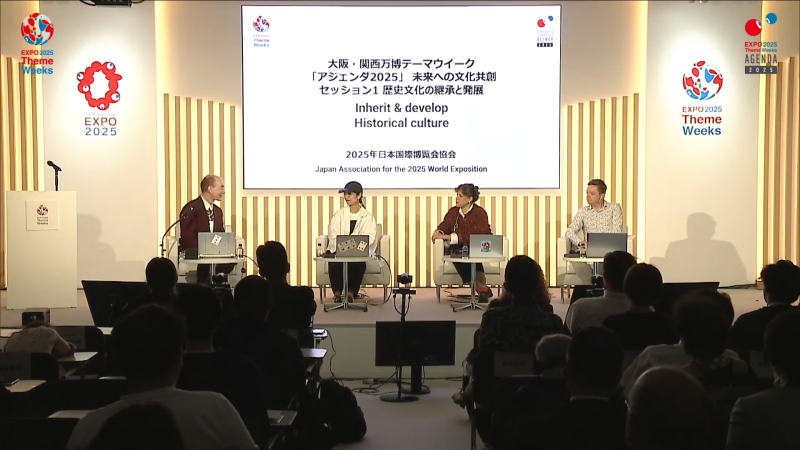
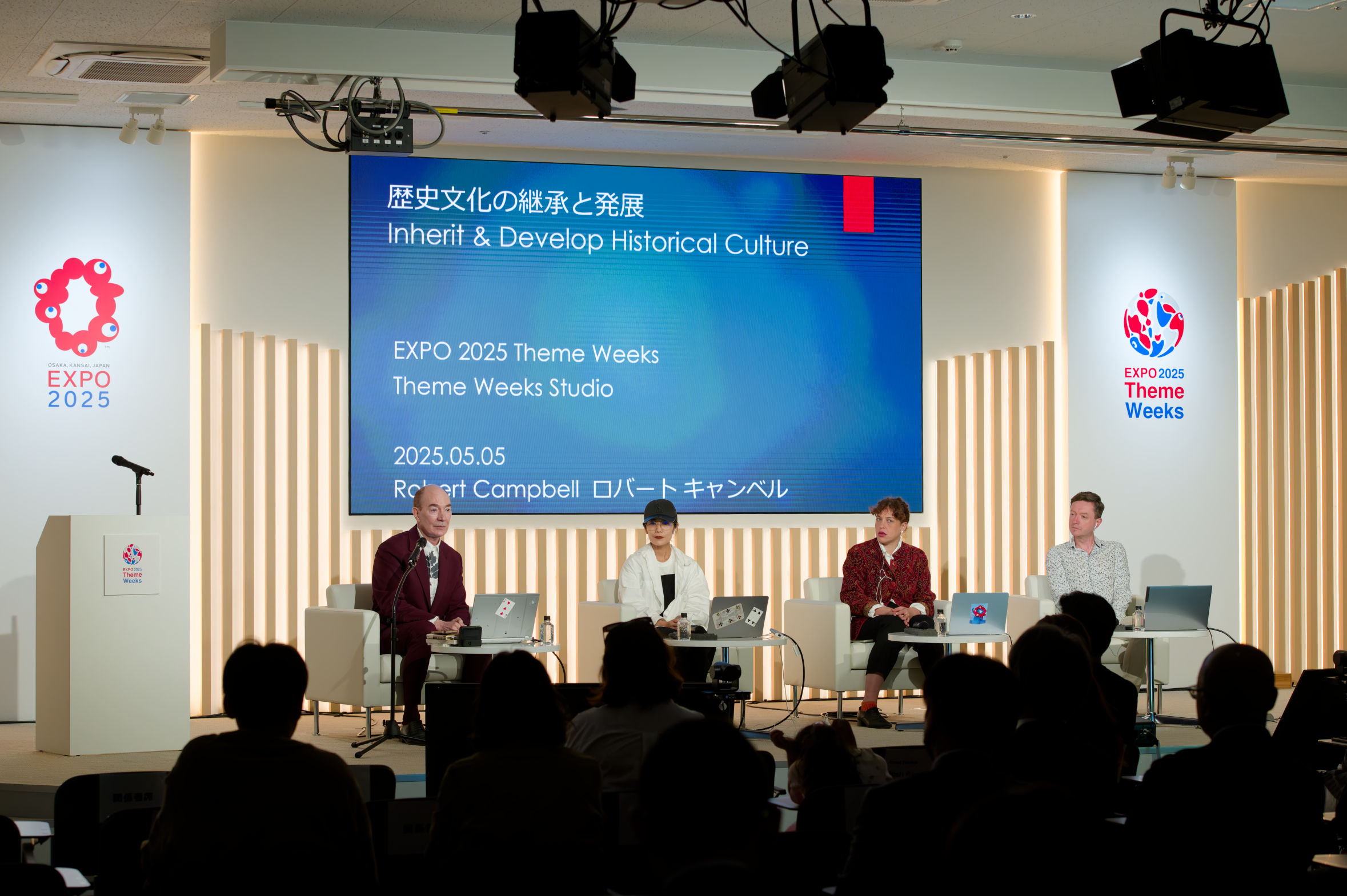
Inherit & develop historical culture
Japan Association for the 2025 World Exposition
The programme, together with the General Sponsors, explores: 'How to inherit arts, culture, and language, and connect them with public opinion, innovation, science and technology, and economic public policy to preserve them for the future'
Recorded video available
Discussion
- Others
| Transmission of simultaneous interpretation | Provided |
|---|---|
| Language of interpretation | Japanese and English |
-

Agenda2025
Organised Programme
-
Time and
Date of
the event -
-
2025.05.05[Mon]
10:00 ~ 12:00
(Venue Open 09:30)
-
- Venue
- Theme Weeks Studio
Programme details
*Subtitles: Choose “Subtitles/CC” in the “Settings” (gear
icon) at the bottom right of the YouTube video.
*Subtitles may not show with multiple languages or overlapping
audio.
Have you heard of the term ‘cultural resources’? It refers to
the totality of the diverse cultures created by human
activity, and it is a concept that aims to utilise these
resources to create a richer and more comfortable society. It
is an important concept for understanding the values and
sensibilities that we should share in order to learn about the
lives of people who lived in the past and to move forward into
the future, as well as those that have led humanity to misery.
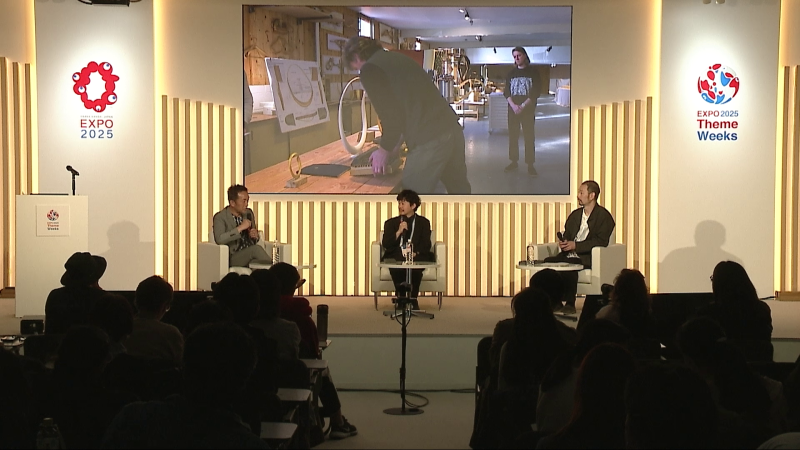
The speakers in this session are three artists who are
attracting worldwide attention for their activities in places
where societies have been shaken to the foundations by
conflict, war, natural disasters and other events. They will
discuss the significance of cultural resources in Japan,
Ukraine, Israel, the Gaza Strip and other locations and
consider their current situation. Can cultural assets and
infrastructure that have been destroyed and reduced to
fragments by disasters, and even language itself, become
effective materials for bringing out and restoring the true
nature of human beings? Can arts and crafts serve as a
‘shelter’ that links individuals and society and protects
lives in times of emergency? How can expressions born in the
midst of disasters and wars function as testimony of what
happened beyond the disaster and in later times? We will have
a lively discussion about the possibilities and challenges of
cultural resources that can be archived, restored, and passed
on in order to capture and share the changing times.
Reports
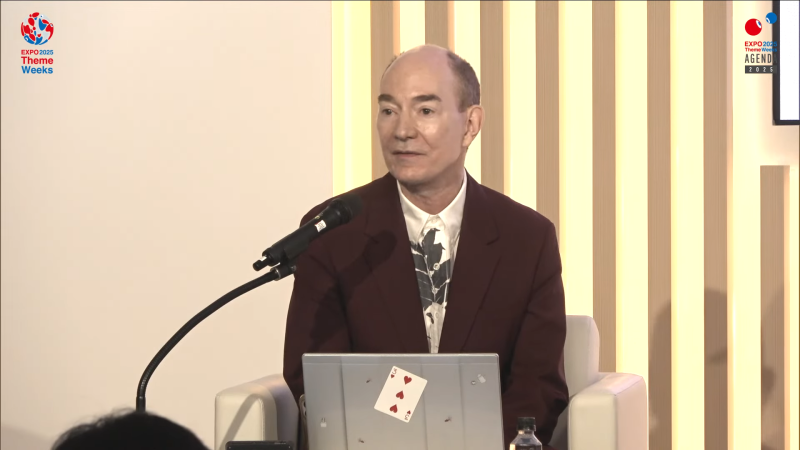
【Speaker Summary:Robert Campbell】
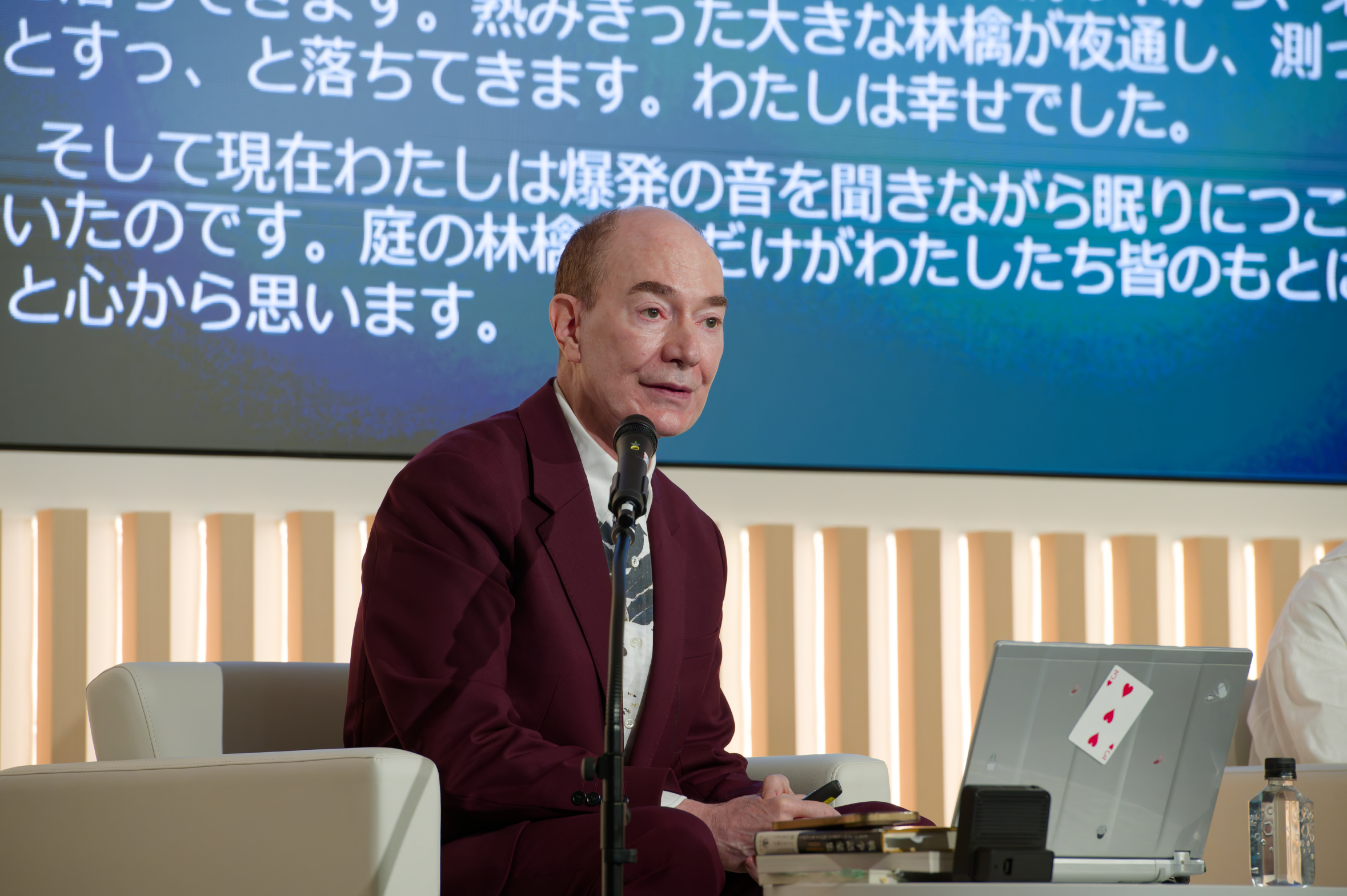
As moderator of the session, Robert Campbell opened the
discussion by exploring the multifaceted nature of
'cultural resources.' He emphasized that cultural
resources are not limited to historical buildings or
traditional performing arts; they include the traces of
people’s lives, records of daily existence, language, music,
and all forms of artistic expression. Especially in times of
crisis—such as war, disaster, or violence—these resources can
serve as catalysts for societal regeneration.
Campbell pointed out that in areas affected by disasters, for
example, creating spaces where locals can talk and express
themselves through poetry and art plays a vital role in
emotional recovery. He argued that for cultural activities to
persist even under extreme conditions, such as war or
disaster, institutional support alone is insufficient.
Instead, daily practices of cultural transmission are
essential.
Culture, he asserted, is not a static archive but a dynamic
process continuously generated through human interaction. He
called for not only the 'preservation' of archives
and records but their reinterpretation through
're-reading' and 're-performance' in
contemporary contexts. Referencing the work of poet Mosab Abu
Toha, Campbell noted that 'words are the last refuge for
refugees,' highlighting how the act of writing poetry
amidst destruction becomes a testament to life itself.
He described the sharing of words as a means to generate
empathy, turning cultural resources into bridges that connect
people. Concluding the session, Campbell emphasized that true
protection and utilization of cultural resources requires
active 'participation.' It is not just up to
government and experts; it is through individuals engaging
with, expressing, and passing on culture in their daily lives
that cultural resources become truly 'alive.' He
underscored the importance of education, systems that support
such participation, and most importantly, the foundational
freedom of expression in society.
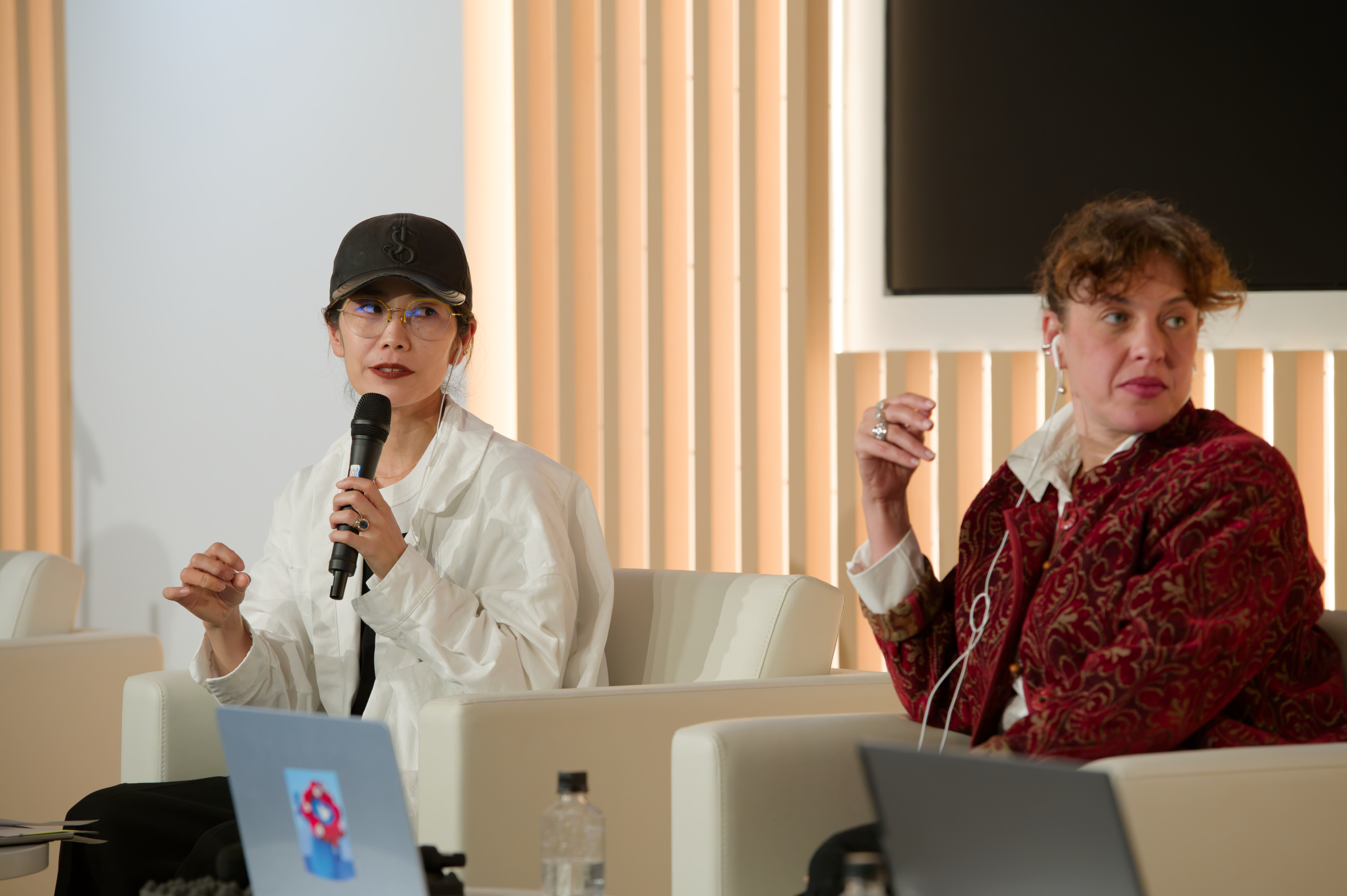
【Speaker Summary:Kei Takemura】
Kei Takemura, a contemporary artist who works between Japan
and Europe, presented a perspective on the
'reconstruction' of cultural resources. Her artworks
involve collecting broken ceramics and tiles—often damaged by
natural disasters—and stitching them together with silk thread
to create new forms. This practice is not merely about
physical repair but about breathing new life into the memories
and histories embedded within broken objects.
She described her visit to the Noto Peninsula following the
2024 earthquake, where she found fragments of lacquerware and
pottery used by local residents. These objects, she said,
reflect the very essence of daily life, containing stories of
families and traditions. By rejoining them, she sees her work
as mediating the transmission of culture to future
generations.
Takemura views the act of 'stitching' itself as
central to her practice. Rather than discarding the broken,
she sews the fragments together, a gesture that symbolizes
cultural continuity. Though silk thread is fragile, the act of
binding gives the reconstructed pieces stronger meaning than
the originals. This approach embraces loss while
simultaneously finding hope within it.
Her experience in Berlin further shaped her outlook, as she
encountered different values and tensions, prompting a renewed
appreciation for Japan’s cultural principles—such as
cherishing imperfection and the ethos of caring for objects.
Restoration, for her, is not about returning things to their
original condition but about generating new beauty that
incorporates the state of breakage. Her practice illustrates a
creative path for passing cultural resources into the future.
【Speaker Summary:Ruth Patir】
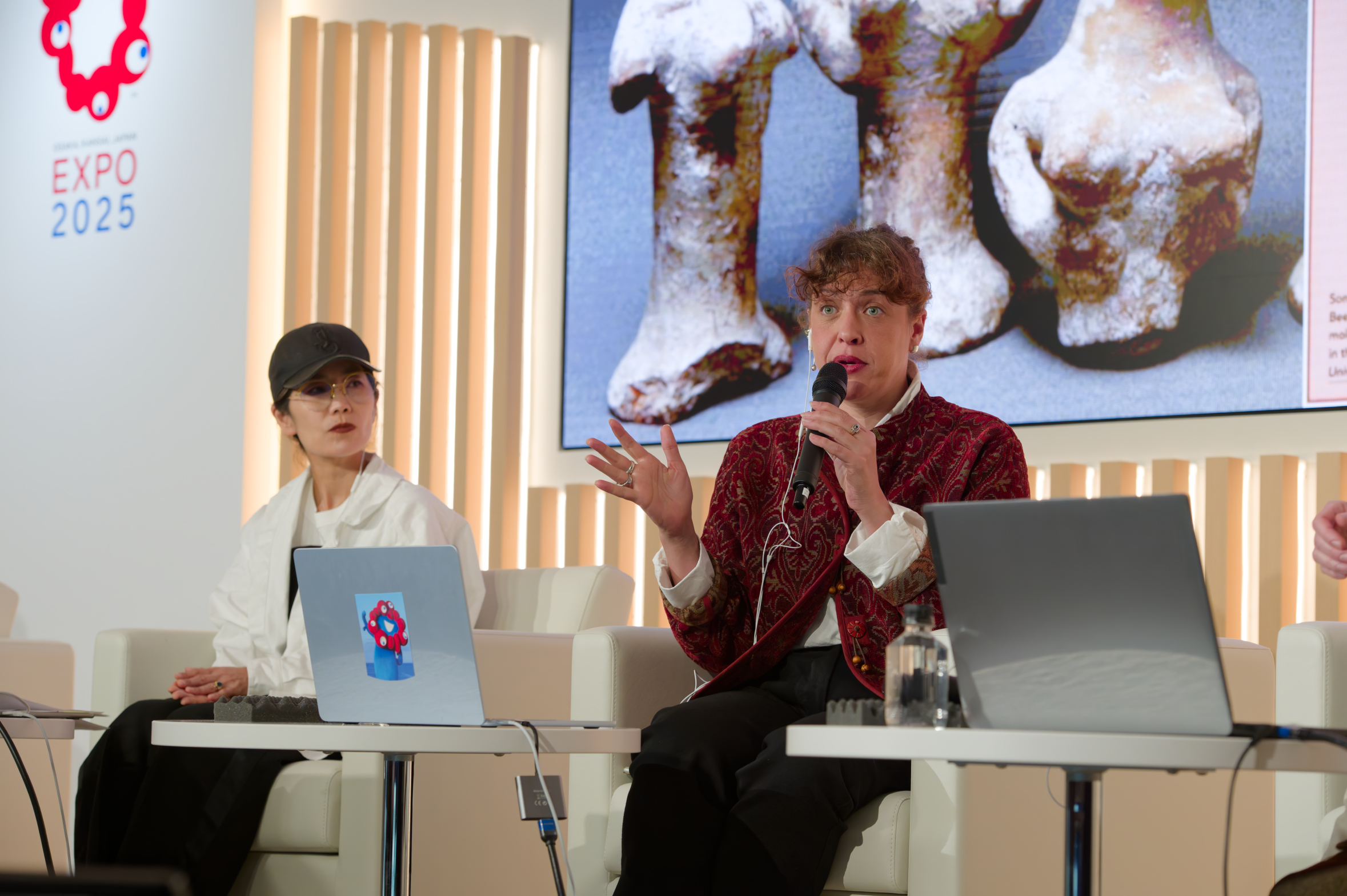
Ruth Patir, an Israeli video artist, has produced numerous
works that interrogate the relationship between social
structures—such as nation, religion, and gender—and the
individual body. In this session, she introduced works like
'Keening,' which references the ritual wailing
performed during funerals, as well as installations featuring
3D animations of ancient female figures.
Through these works, Patir seeks to weave together
'grief' and 'hope' using artistic
expression. 'Keening' symbolically represents the
visibility of individual sorrow within the collective
narrative of wartime Israel. The superimposition of ancient
goddess movements onto modern female bodies, combined with
motion capture technology, fosters a transcendent resonance
across time and space, offering viewers a visceral, embodied
experience.
She emphasized the ethical responsibilities of the artist,
particularly in contexts of war and conflict. Video art, she
argued, should not simply record but illuminate social
fissures. It must respect the physicality of its subjects
while capturing their multifaceted voices. By confronting
grand structures such as nationhood and religion through the
lens of the individual body, Patir's work also explores
new possibilities for community.
She critically yet empathetically depicted how the female body
is often co-opted by state ideologies. While modern medical
technologies like fertility treatments and surrogacy offer
personal freedom, they are also susceptible to being
appropriated for nationalist agendas. Her work challenges
these structures by reaffirming individual dignity through the
expressive body.
'Keening' evokes powerful emotional responses—not as
mere sentimentality, but as an ethical space for empathy and
solidarity. Patir's practice illustrates the critical and
poetic potential of cultural resources, showing that even in
the face of war and oppression, the flame of expression
continues to burn.
【Speaker Summary: Ostap Slyvynsky】
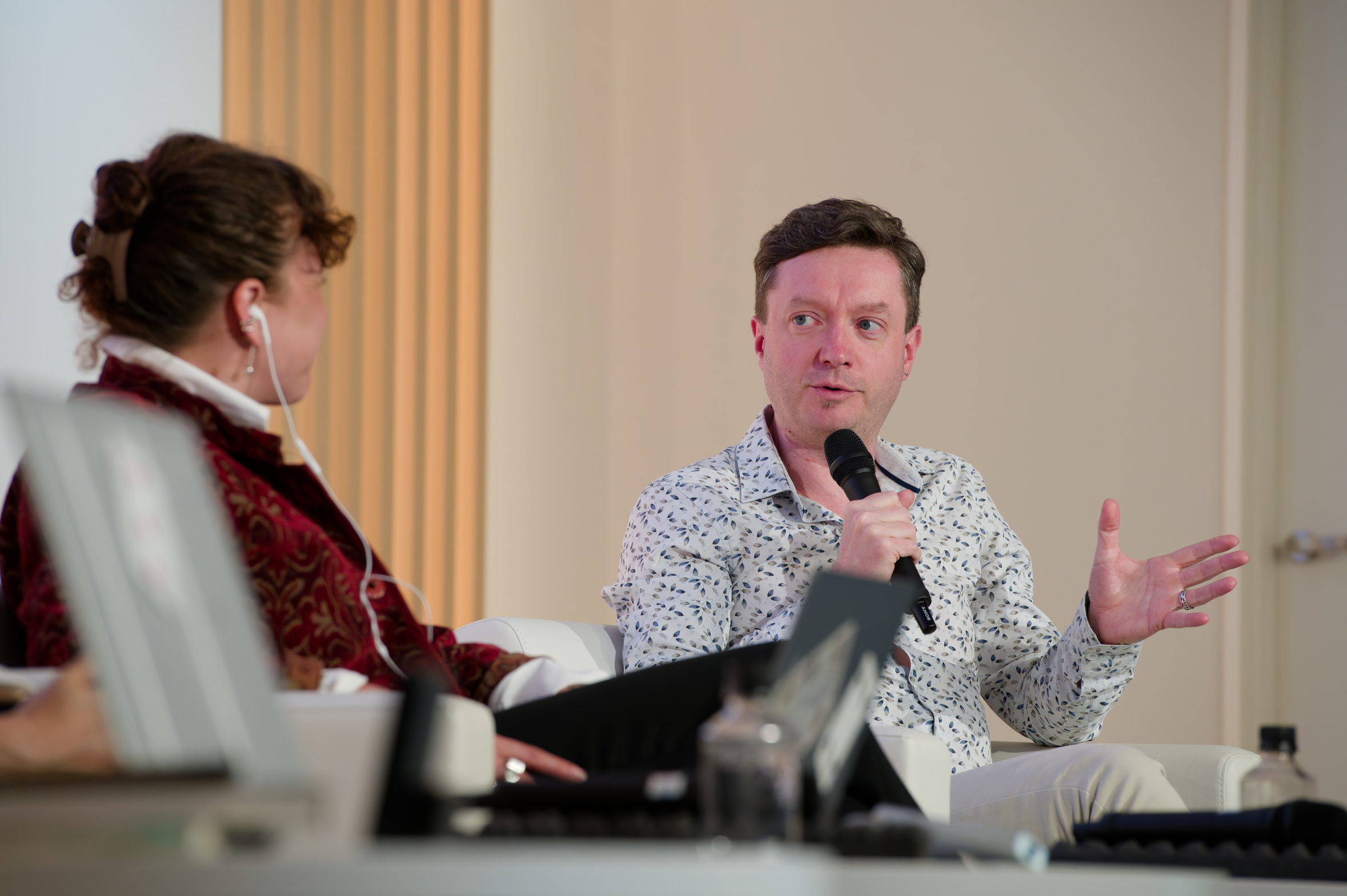
Ukrainian poet Ostap Slyvynsky reflected on the power of
language and poetry during wartime. Based in Lviv, he
continues to write while actively engaging in supporting
internally displaced persons, compiling testimonies from war
survivors. In this session, he read from his poetry collection
'War’s Vocabulary,' created from fragments of
interviews and statements, reconstructing the ‘new words’
people used to describe their war-torn realities.
He emphasized that war transforms language. Words used in
everyday life take on entirely new meanings under threat and
violence. For example, a word like 'window' might no
longer signify a view to the outside, but rather a source of
fear due to bombings. He highlighted how language contains the
trauma, resistance, and resilience of individuals.
Slyvynsky stated that poetry, by giving shape to these
emotions and voices, serves as a cultural act of resistance.
Unlike mass media narratives, which often flatten experiences
into numbers or symbols, poetry conveys ambiguity and nuance.
This quality makes it possible to preserve and pass on the
layered emotions of those living through conflict.
He also noted that language becomes a lifeline during war—not
just for communicating information, but for affirming
humanity. Even when separated from loved ones, exchanging a
few words can maintain emotional bonds. He cited examples of
people who, despite displacement, clung to books and continued
writing letters, underscoring the irreplaceable role of
cultural expression.
In closing, Slyvynsky stated that cultural resources are not
necessarily grand monuments or national legacies. They can be
fragile, transient things like a poem, a diary, or a voice.
But it is precisely in these ephemeral expressions that the
dignity and depth of human life reside. His work demonstrated
the possibility of connecting the past, present, and future
through the enduring power of words.
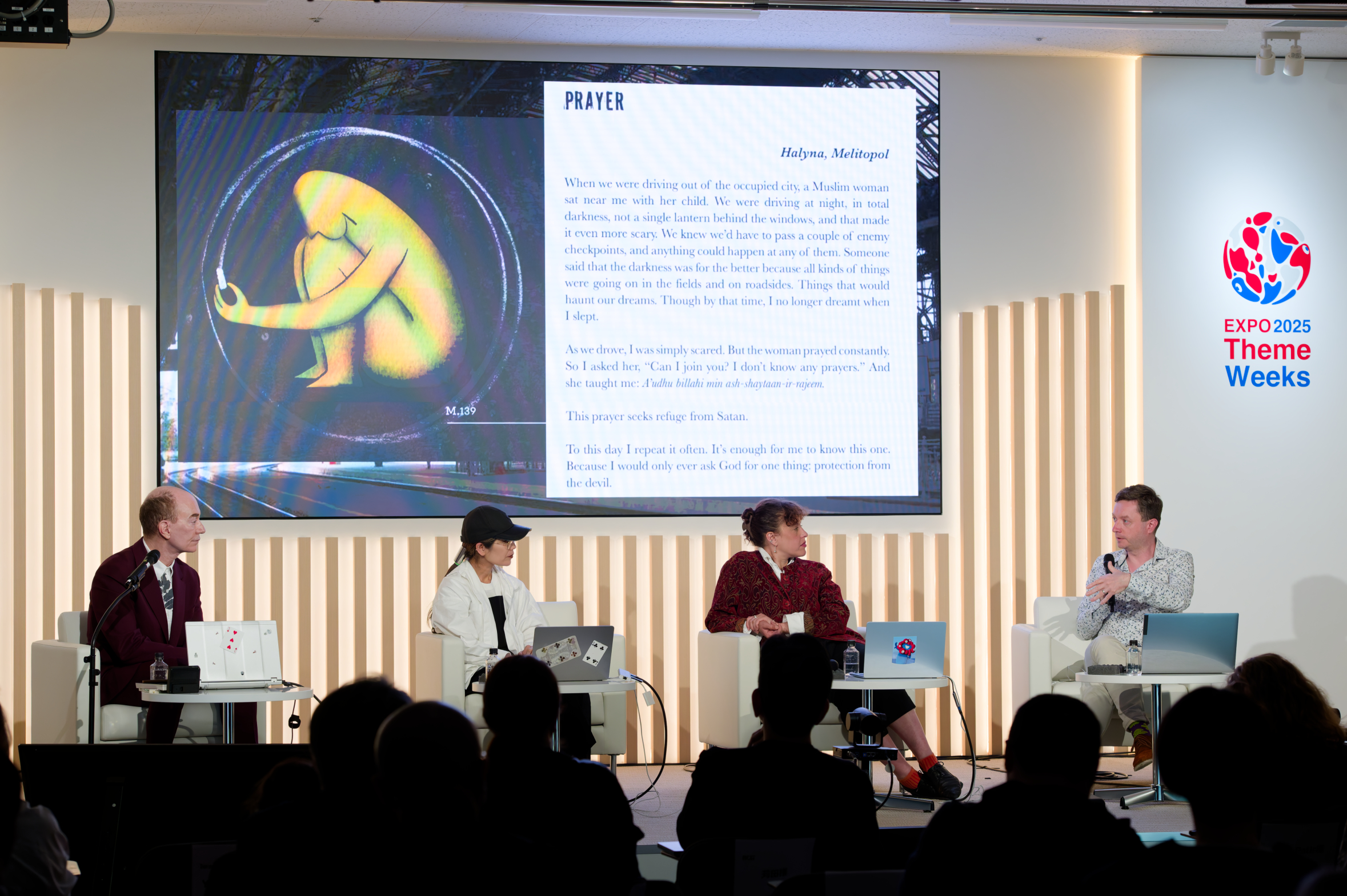
【Discussion Summary】
The concluding discussion was guided by Robert Campbell, who
emphasized the theme that cultural resources are not static
assets but dynamic tools for creating new relationships. All
three speakers shared a common understanding that culture is
not merely something inherited—it is something continuously
reshaped through human experience.
Kei Takemura reiterated that physical objects carry the traces
of daily life and can be reconnected to the present through
acts of 'mending' and 'reconstruction.'
She emphasized that culture is not something distant from
everyday life but something born through personal care and
engagement.
Ruth Patir reflected on how the female body becomes a site of
historical and ideological struggle and argued that artistic
expression helps reclaim bodily autonomy. She stated that
creating art is not just an act of resistance but a means of
dialogue with others.
Ostap Slyvynsky noted that even under the ongoing threat of
war, cultural expression—especially poetry—is essential to
affirm human dignity and to preserve the memory of
individuals. He emphasized that the continuation of culture
lies not in preservation alone but in its active
reinterpretation and re-performance.
Campbell concluded the discussion by stressing that for
culture to survive and flourish, the freedom to express, to
narrate, and to connect must be protected. He proposed that
the act of caring for language, objects, and others is itself
a powerful cultural resource that binds us together across
time and space.
Cast
Moderator
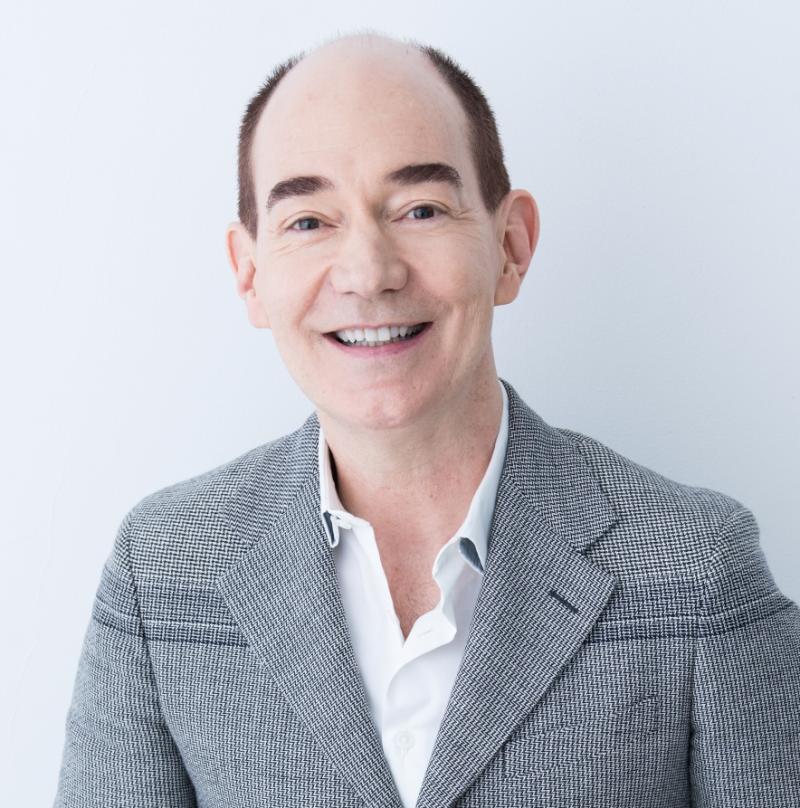
Robert Campbell
University Professor, Waseda University
Robert Campbell is a scholar of Japanese literature,
Professor Emeritus at the University of Tokyo and
former Director-General of the National Institute of
Japanese Literature (NIJL).
Born in New York City, he studied in the Departments
of Economics and Oriental Languages, University of
California, Berkeley (B.A. 1981), and in the
Department of East Asian Languages and Civilizations,
Graduate School of Fine Arts, Harvard University (M.A.
1984; Ph.D. 1992).
In addition to writing, editing and contributing to
numerous volumes on Japanese literature, art and
drama, Robert is active in the Japanese media as
television host, news commentator, newspaper
columnist, book reviewer and radio personality.
View Profile
Close
close
Speakers
©︎ Oleksandr Laskin
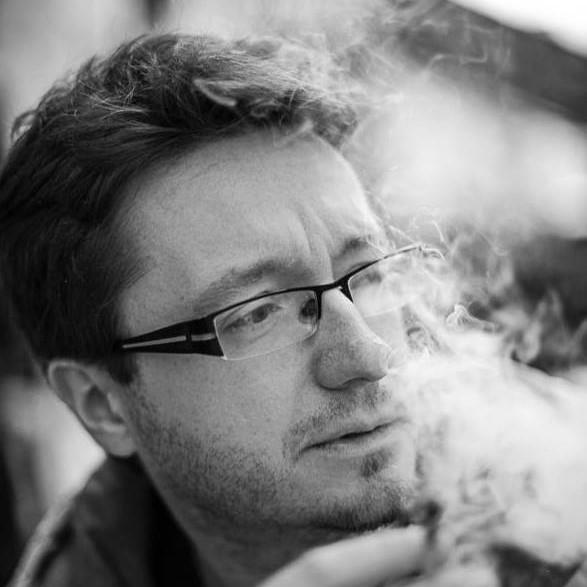
Ostap Slyvynsky
PEN Ukraine
Ostap Slyvynsky is a Ukrainian poet, translator, essayist, and scholar. He authored five books of poetry: Sacrifice of Big Fish (1998), The Midday Line (2004), Ball in Darkness (2008), Adam (2012), The Winter King (2018), as well as The Dictionary of War (2023), a documentary book based on a testimony of participants and witnesses of the Russian aggression against Ukraine. His books have been published in the USA (The Winter King, Lost Horse Press 2023), Germany, Poland, Czech Republic, Bulgaria, Slovakia, and Macedonia. He is also known for translating the works by Derek Walcott, William Carlos Williams, Charles Simic, Czesław Miłosz, Olga Tokarczuk, Georgi Gospodinov, and many others. Ostap Slyvynsky is Associate Professor at the Department of Philology, Ukrainian Catholic University (Lviv). In 2007, he earned a PhD degree in Humanities (with thesis on the silence in contemporary Bulgarian prose). The main areas of his research interests are intercultural communication, the comparative history of Slavic literatures of Central and Eastern Europe, and translation studies. He published numerous papers on comparative literature and intercultural communication. Since 2021, he is part of the international research team working on anticipation of catastrophe in Eastern European literatures before 1939. He was the editor of the bilingual Ukrainian-Bulgarian anthology Ukrainian Poetic Avant-Garde (2018), the anthology of contemporary essays The Ark Named Titanic. 20 essays about humanity of AD 2020 (2020) and the anthology of modern Ukrainian poetry Among Sirens. New poems of war (2023).Ostap Slyvynsky initiated and/or participated in several human rights actions and campaigns in Ukraine, including public actions in support of Oleg Sentsov (2018–2019) and Solidarity Words, a campaign in support of Crimean Tatar journalists illegally imprisoned in the occupied Crimea and Russian Federation (since 2021).Since 2015, he collaborated with fellow artists and writers on several performances and media projects: Preparation (2015), The Winter King (2018), Windows Opened (2021), Return Is (Im)possible (2023).Ostap Slyvynsky was the first program director of the International Literary Festival in Lviv in 2006–2007. In 2016–2018, he organized the public discussion platform Stories of Otherness (the series of public interviews with writers, intellectualists and civic activists who suffered from different kinds of social exclusion). Since 2021, he organizes PEN Ukraine’s festival Propysy (The Writings) aimed at novice authors. He was elected the Vice President of PEN Ukraine in 2022.
View Profile
Close
close
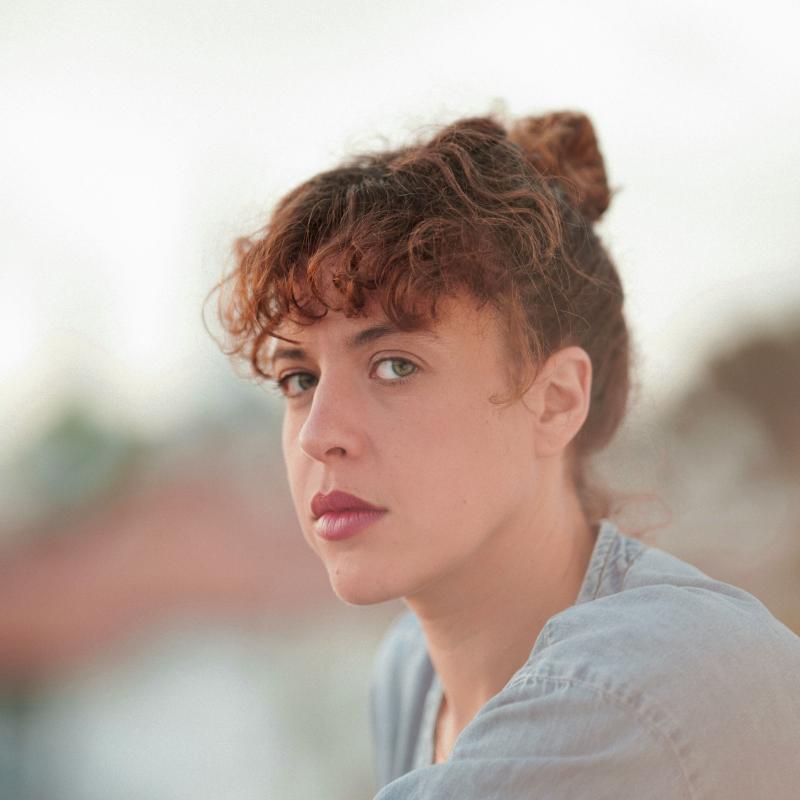
©Goni Riskin
Ruth Patir
Artist
Artist Ruth Patir fuses documentary with
computer-generated imagery in a quest to expand the
possibilities of realism. Her works often begin with
the artist’s autobiography, and gradually open up to
address larger societal issues, such as the politics
of gender, technology, and the hidden mechanisms of
power.
Patir is a Professor for experimental film at the
Bezalel Academy and at Sapir College in Sderot. She
received her MFA in New Genres from Columbia
University in New York (2015) and her BFA from the
Bezalel Academy of Art and Design in Jerusalem (2011).
In 2023 Patir was the artist chosen to exhibit at the
Israeli pavilion for the 60th edition of the Venice
Biennial. However as long as there was no cease fire
and hostage release agreement the artist and curators
chose that the exhibit would remained in a perpetual
state of pause until the biennials closing. Her
previous shows include Gwangju Biennial, Israel
Museum, Tel Aviv Museum of modern art, OnCurating
projects Zurich, the Center for Contemporary Art in
Tel Aviv Yafo, Hamidrasha Gallery Tel Aviv Yafo, New
Director New Film at MoMa, The Jerusalem Film Festival
and Danspace Projects in New York.
View Profile
Close
close
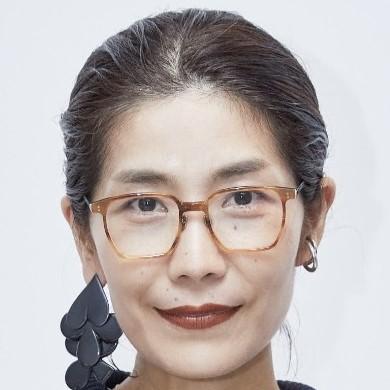
©Sang Hun Lee
Kei Takemura
Contemporary artist
Born in Tokyo in 1975, Takemura graduated from the Tokyo University of the Arts, Department of Painting, majoring in oil painting. She completed her graduate studies at the same university and the Free University of Berlin, where she studied at the Faculty of Liberal Arts, and lived in Berlin from 2000 to 2015. She currently lives and works in Takasaki. For Takemura, the act of embroidery is intended to create a state of "what if," sublimating lost things and fragments of memories into a more concrete existence. She has expanded her field of activities while gaining international acclaim, including solo exhibitions such as "How Can It Be Recovered?" at Maitland Regional Art Gallery (Sydney, 2020), "Floating on the river" at the National Museum of Modern Art, Kyoto (Kyoto, 2021), "15th Sydney Biennale" (2005), "Yokohama Triennale" (2020), and "Does the Future Sleep Here?" at the National Museum of Western Art (Tokyo, 2024).
View Profile
Close
close
Co-creating Cultures for the Future Week
Inherit & develop historical culture
The programme, together with the General Sponsors, explores: 'How to inherit arts, culture, and language, and connect them with public opinion, innovation, science and technology, and economic public policy to preserve them for the future'
-
2025.05.05[Mon]
10:00~12:00
(Venue Open 09:30)
- Theme Weeks Studio
OTHER PROGRAM
Co-creating Cultures for the Future Week