Co-creating Cultures for the Future Week
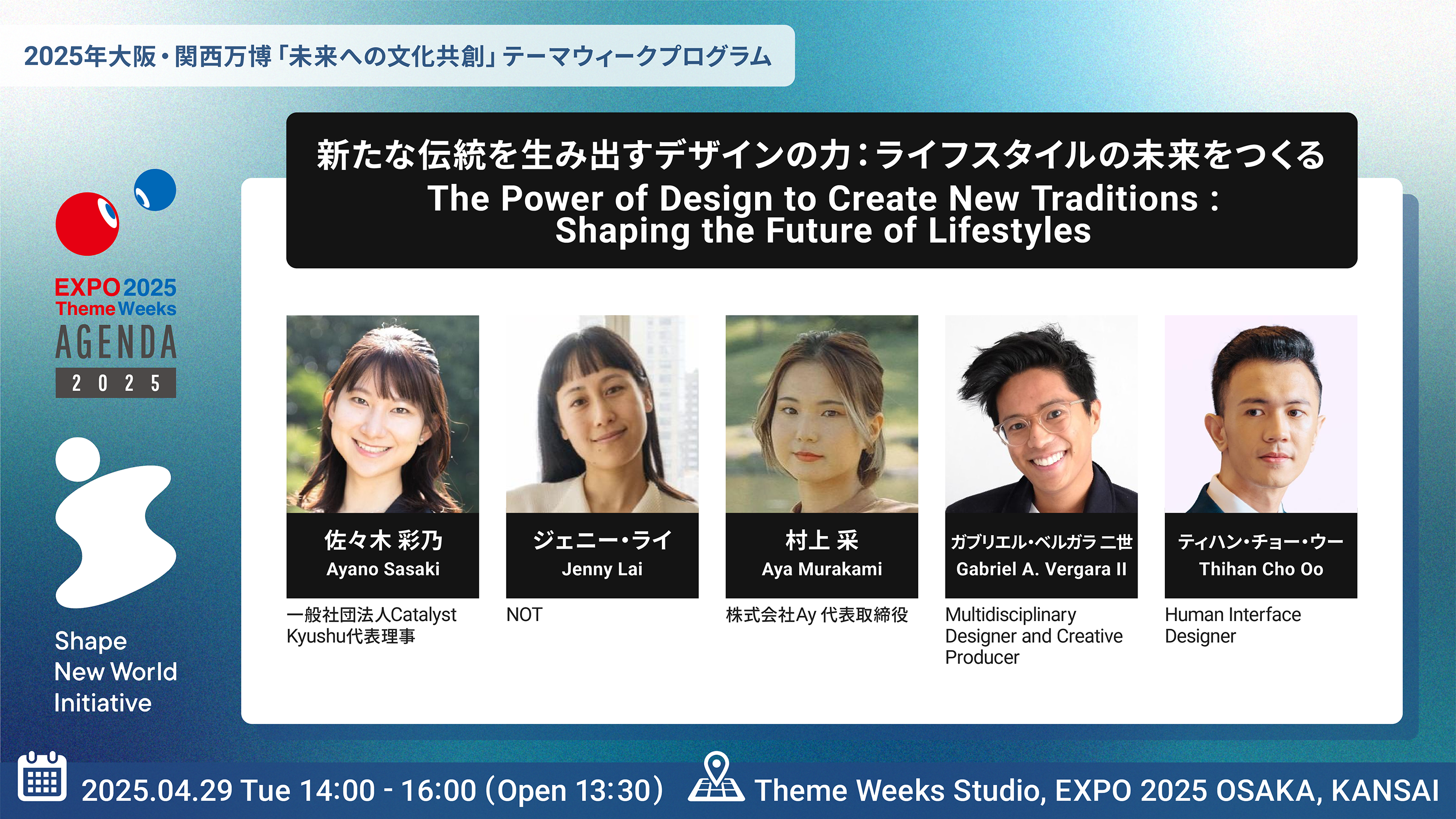
The Power of Design to Create New Traditions: Shaping the
Future of Lifestyles
Agenda 2025 Co-created Programme
Shape New World Initiative
[Hypothesis for the Future in 2050]
A future where everyone can freely design their own lives
and cultures.
Our lifestyles encompass a wide range—from fashion to UX
design. While they are rooted in traditions based on
ergonomics and history, they are constantly evolving in
response to social changes and technological advancements.
In this program, we will explore the future of lifestyles in
collaboration with leading young creators.
Recorded video available
Discussion
- Art
- Cultural arts
- Local community revitalisation
| Transmission of simultaneous interpretation | Provided |
|---|---|
| Language of interpretation | Japanese and English |
-

Agenda2025
Co-created Programme
-
Time and
Date of
the event -
-
2025.04.29[Tue]
14:00 ~ 16:00
(Venue Open 13:30)
-
- Venue
- Theme Weeks Studio
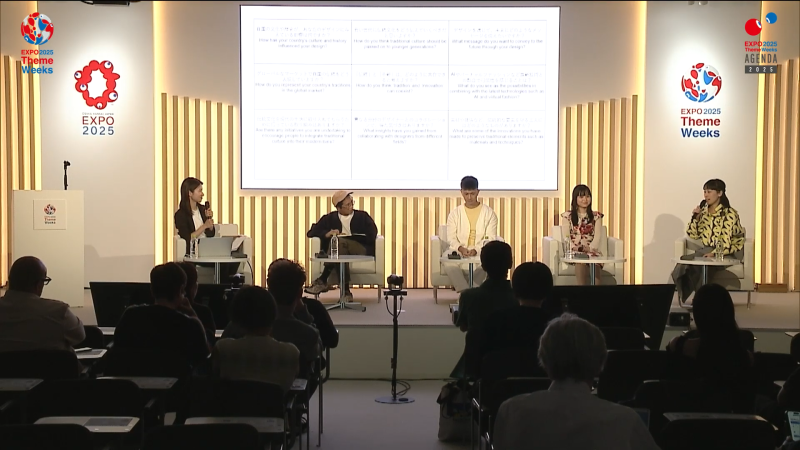
Programme details
*Subtitles: Choose “Subtitles/CC” in the “Settings” (gear
icon) at the bottom right of the YouTube video.
*Subtitles may not show with multiple languages or overlapping
audio.
When we consider the essence of lifestyle as “self-expression
and mutual understanding” and “the design of everyday
surroundings,” its scope stretches from fashion to smartphone
apps. In an era of rapidly advancing digital technologies and
shifting environments, what are the things that change—and
what are the things that remain unchanged? We will engage in
discussions with a diverse group of creators, including a
fashion designer who leads the world with original ideas, an
entrepreneur who upcycles traditional Japanese kimonos, a
creative producer who spans research and development, and a
designer specializing in smartphone app UX. Together, we will
explore how we can design the future of “lifestyle.”
Reports
【Reflection】
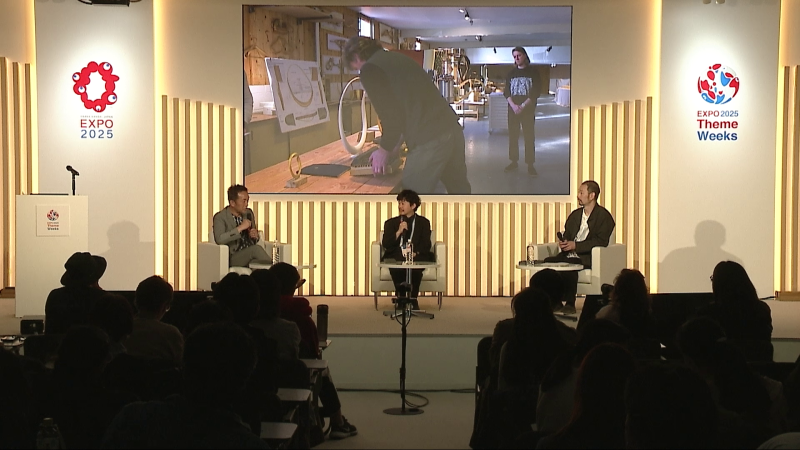
In this programme, ‘The Power of Design to Create New
Traditions: Shaping the Future of Lifestyle,’ discussions were
held with creators from various fields on how to design future
lifestyles amid rapidly changing social environments and
technological innovations, and how traditional culture will be
reconstructed in the process.
Speakers included fashion designers, kimono upcycling
entrepreneurs, UX designers, and creative producers, who
shared their perspectives on ‘what changes’ and ‘what remains
unchanged,’ as well as the ‘fusion of tradition and
innovation.’ Even seemingly disparate fields such as fashion
and application design were found to share common questions at
their core, such as ‘self-expression and understanding others’
and ‘creating systems to enrich daily life.’
Particularly impressive were the practices that connected
traditional values and crafts with contemporary issues and
lifestyles. For example, the reinterpretation of kimonos and
the ‘reweaving’ technique through upcycling, as well as
projects that respect regional culture and history while
proposing new uses, were introduced. These practices were
highly evaluated as realistic approaches toward creating
future-oriented traditional culture, rather than mere
nostalgia.
Overall, this programme served as an important forum for
dialogue, presenting the rediscovery of culture rooted in
everyday life and the possibilities of creative
reinterpretation. It is hoped that this will serve as a
starting point for the further development of new forms of
cultural co-creation through lifestyle.
【Post EXPO Initiatives】
What became clear through this programme was that the key to
designing future lifestyles is not simply pursuing trends, but
rather how to engage with elements such as history, culture,
and region. Based on this insight, the organisers and speakers
have developed plans to pursue various initiatives after the
Expo.
First, it was confirmed that collaborative projects connecting
regional culture and contemporary design will be continuously
developed. Examples include product development through the
upcycling of kimonos and traditional crafts, workshops in
collaboration with local creators, and ‘reinterpretation of
tradition’ through cultural exchange with overseas creators.
These are not mere events, but rather initiatives that
rediscover the value of regional resources and lead to
proposals for sustainable lifestyles.
Second, the development of young creators and the formation of
networks are also important goals. The speakers emphasised
that individual expression is directly linked to the
reconstruction of culture and society. To develop this idea,
the creation of a co-creation platform for the next generation
of creators and design education initiatives in collaboration
with schools and universities are also being considered.
Thirdly, attempts to expand cultural activities through
integration with technology are also being considered. By
utilising digital technology and UX design expertise, we will
explore ways to participate in culture beyond physical
constraints through the archiving of regional culture, online
dissemination, and the design of new user experiences.
These initiatives are not intended to be temporary, but rather
aim to establish mechanisms for continuously co-creating
culture. We believe that a cycle of practice rooted in
dialogue is the foundation for building future lifestyles, and
we plan to continue our activities while expanding
collaboration across various fields.
*Part or all of this report was generated by AI.
Cast
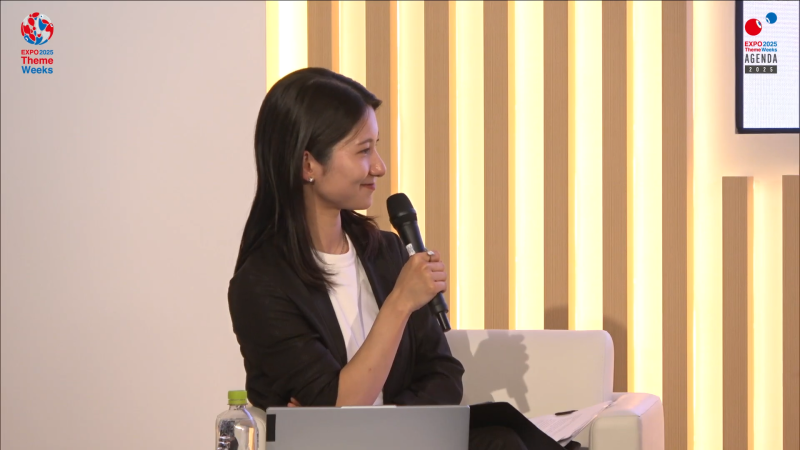
Moderator
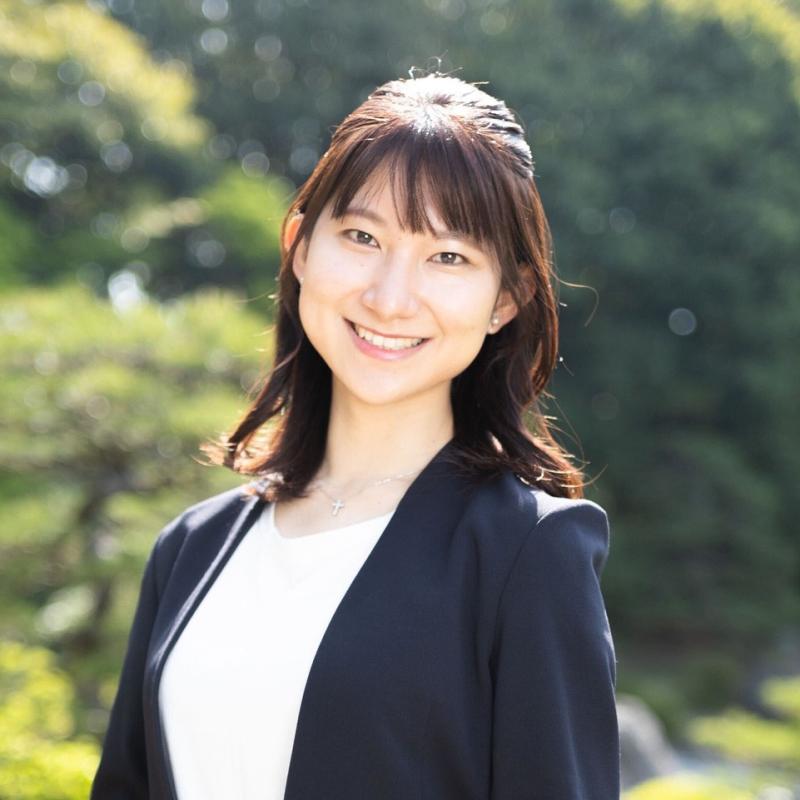
Ayano Sasaki
Representative Director, Catalyst Kyushu (General Incorporated Association)
With the vision of transforming Kyushu into “the Switzerland of Asia,” they connect Kyushu and the wider world through business and talent exchange. After graduating from Kyushu University, they earned a master’s degree in International Relations from the Schwarzman Scholars program at Tsinghua University. Following three and a half years at Boston Consulting Group (BCG), they founded Catalyst Kyushu. They also serve as Curator of the Global Shapers Community Fukuoka, spearheading diverse initiatives to ensure a sustainable and prosperous Kyushu for future generations.
View Profile
Close
close
Speakers
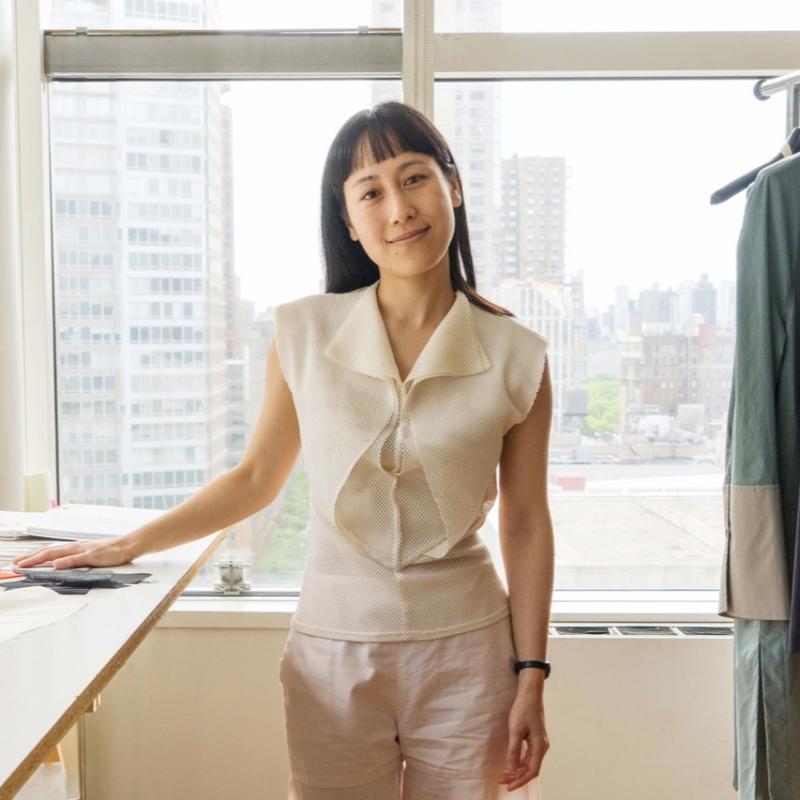
Jenny Lai
NOT
Jenny Lai is a graduate of the Rhode Island School of Design and has built her career working globally, from Amsterdam to Mexico City to South Africa. She cultivated her craft through guidance under acclaimed fashion brands such as Viktor & Rolf, Boudicca, Bibhu Mohapatra, and Carla Fernandez. In 2011, she founded her independent fashion brand, NOT, where she creates innovative designs that inspire playfulness, individuality, and confidence. Jenny is also passionate about designing custom performance-wear for world-renowned musicians and dancers, pushing the boundaries of interdisciplinary performance.
View Profile
Close
close
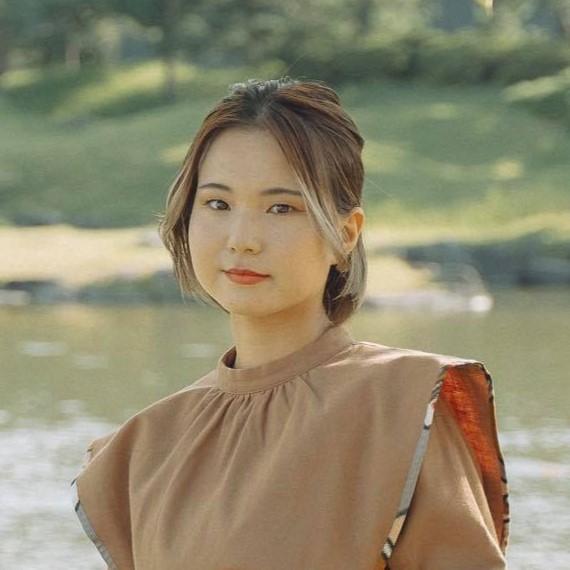
©Aya MURAKAMI
Aya Murakami
Ay inc.
Driven by a passion for African studies, she has been involved in organizing and managing entrepreneurship development programs and even launched her own venture, selling clothing made by women in Congo. In 2019, she founded her apparel brand, Ay. Today, with a mission to "reweave culture," she leads Ay, a cultural brand dedicated to embracing, unraveling, and reshaping Japanese traditions. Her work includes developing clothing and accessories made from upcycled Meisen kimonos and products that integrate local traditional crafts.
View Profile
Close
close
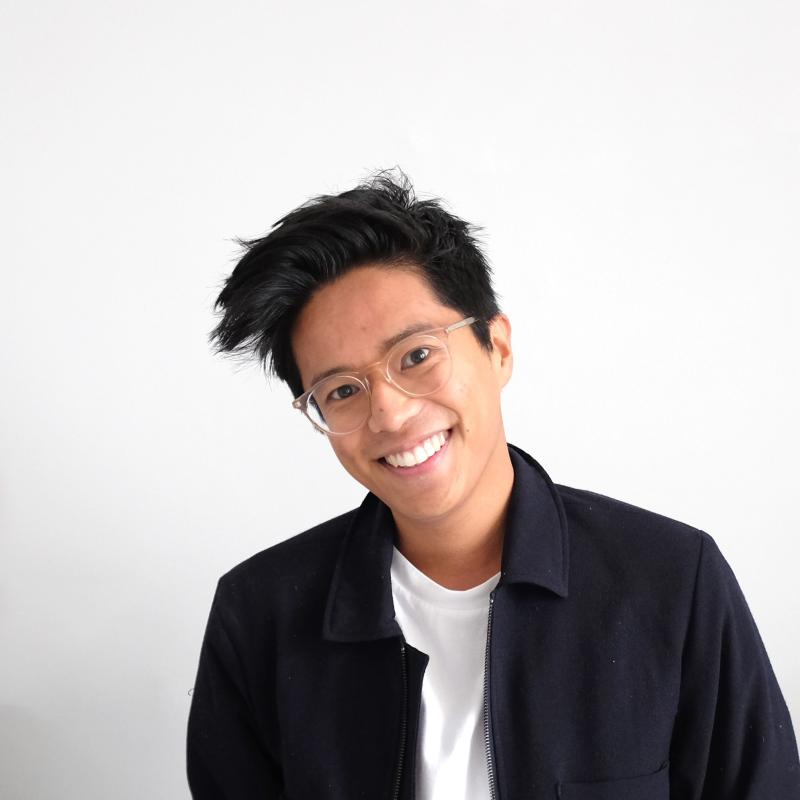
Gabriel A. Vergara II
Multidisciplinary Designer and Creative Producer
Gabriel Vergara II is a multidisciplinary designer, creative producer, and design manager with over a decade of experience, including education at Central Saint Martins. His work has been exhibited internationally, and he has collaborated with award-winning studios such as Pentagram, Google ATAP, AfroditiKrassa, and Yuri Suzuki on projects for brands like Disney Imagineering, IKEA, LUMA Arles and Audi. He currently consults as a creative producer at Google Arts & Culture, partnering with global institutions and leading artists and designers on emerging tech and culture.
View Profile
Close
close

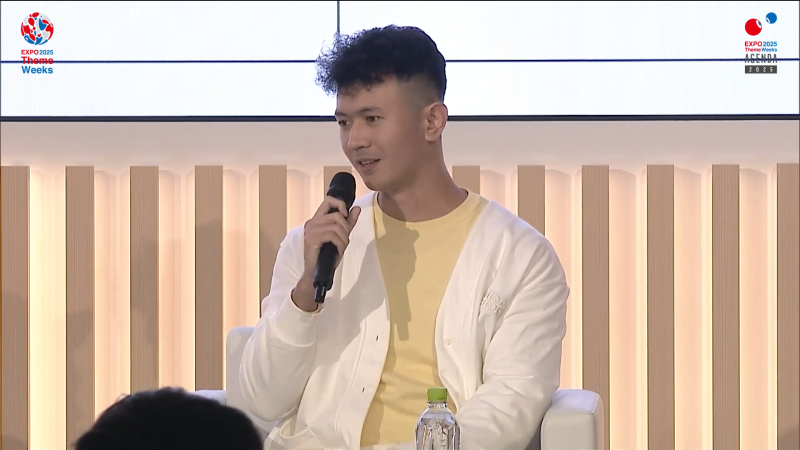
Thihan Cho Oo
Human Interface Designer
Meet Thihan, a talented designer from Myanmar with a deep passion for crafting elegant digital products and creating innovative user interactions. His love for typography and visual design enables him to deliver holistic experiences that seamlessly combine beauty and functionality. Thihan began his design journey in the advertising industry before transitioning into digital product design. He is currently the Lead Product Designer at TikTok (Singapore), where he leads the design of payment-related features within the TikTok app. Before joining TikTok, he spent five years at Grab as a Lead Product Designer, focusing on FinTech innovations. During his tenure at Grab, Thihan played a pivotal role in launching several successful products across Southeast Asia for Grab Financial Group. He later joined an experimental tech division within Grab Financial Group, leading the design of groundbreaking products like Earn+ (an investment platform) and Grab’s Web3 wallet. Beyond his core responsibilities, Thihan contributed to the evolution of the Grab Design System and spearheaded AI-driven tech innovations. A natural collaborator, Thihan thrives in cross-functional environments, always pushing boundaries to create impactful and innovative user experiences.
View Profile
Close
close
Co-creating Cultures for the Future Week
The Power of Design to Create New Traditions: Shaping the Future
of Lifestyles
Agenda 2025 Co-created Programme
[Hypothesis for the Future in 2050]
A future where everyone can freely design their own lives and
cultures.
Our lifestyles encompass a wide range—from fashion to UX
design. While they are rooted in traditions based on
ergonomics and history, they are constantly evolving in
response to social changes and technological advancements. In
this program, we will explore the future of lifestyles in
collaboration with leading young creators.
-
2025.04.29[Tue]
14:00~16:00
(Venue Open 13:30)
- Theme Weeks Studio
OTHER PROGRAM
Co-creating Cultures for the Future Week