Co-creating Cultures for the Future Week
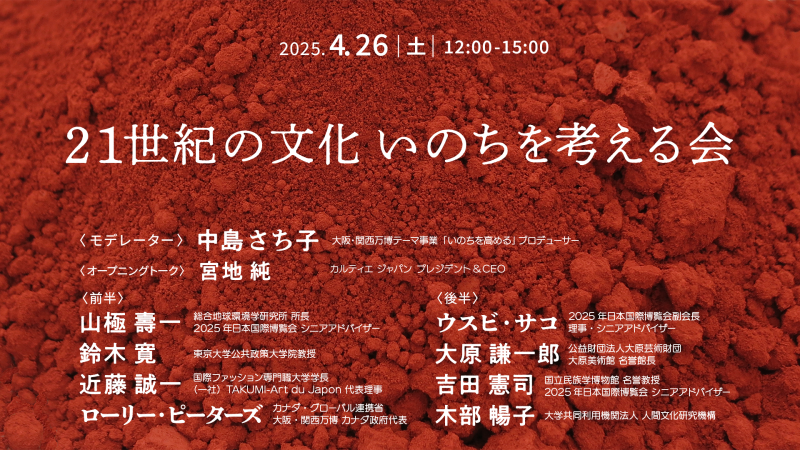
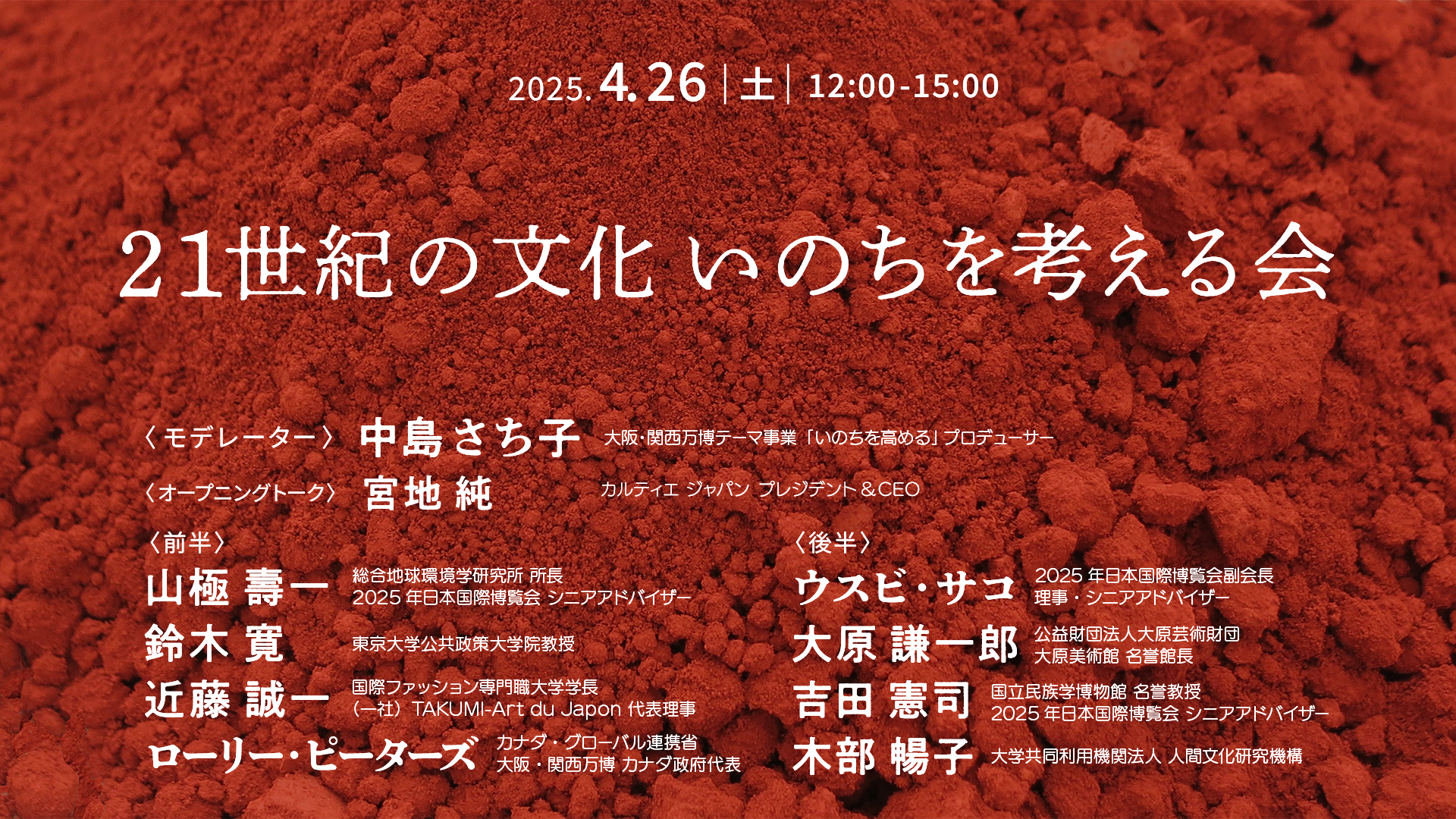
“Culture for the 21st Century: Reflections on Life”
"Why is humanities knowledge necessary in the age of
AI? What does it mean to live?"
EXPO 2025 Thematic Project “Invigorating Lives” (Producer NAKAJIMA Sachiko)
Why is the Humanities Knowledge Necessary in the AI Era?
As part of "21st Century Culture: The Society for
Thinking About Life," two sessions will be held.
The second session, "Why is the Humanities Knowledge
Necessary in the AI Era?", examines the importance of
humanities knowledge in the AI era through discussions on
the future of museums, local culture, and traditional
performing arts.
Recorded video available
Discussion
- Why is the Humanities Knowledge Necessary in the AI Era?
| Transmission of simultaneous interpretation | Provided |
|---|---|
| Language of interpretation | Japanese and English |
-

Signature Programme
-
Time and
Date of
the event -
-
2025.04.26[Sat]
13:40 ~ 14:55
(Venue Open 11:30)
-
- Venue
- Pavilion
- 「WA」space Women's Pavilion
Programme details
*Subtitles: Choose “Subtitles/CC” in the “Settings” (gear
icon) at the bottom right of the YouTube video.
*Subtitles may not show with multiple languages or overlapping
audio.
Why is the Humanities Knowledge Necessary in the AI Era?
As part of "21st Century Culture: The Society for
Thinking About Life," two sessions will be held.
The second session, "Why is the Humanities Knowledge
Necessary in the AI Era?", examines the importance of
humanities knowledge in the AI era through discussions on the
future of museums, local culture, and traditional performing
arts.
Reports
【Reflection 】
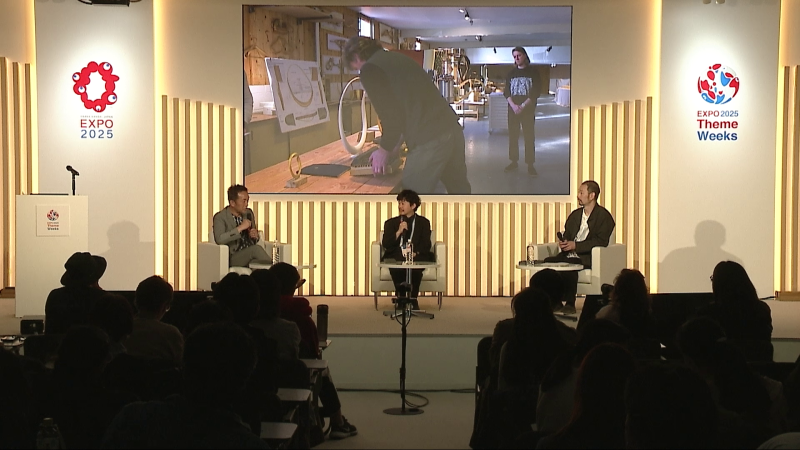
In this session, titled “Why is humanities knowledge necessary
in the age of AI?”, four speakers took the stage: Kenichiro
Ohara, Vice President, Director and Senior Advisor of the
Japan Association for the 2025 International Exposition; Usubi
Sako, Vice President, Director and Senior Advisor of the Japan
Association for the 2025 International Exposition; Kenji
Yoshida, Honorary Professor at the National Museum of
Ethnology; and Nobuko Kibe, Director of the National Institute
for the Humanities. The discussion was moderated by Sachiko
Nakajima. Humanities knowledge was defined as “foundational
knowledge about humanity,” with emphasis placed on the
importance of multicultural understanding, cultural and
artistic literacy, critical thinking, and face-to-face
dialogue. Mr. Sako stated that the ability to ask questions is
the core of humanities knowledge in the AI era, and emphasized
the importance of providing young people with “experiences of
shock and transformation” through the Expo as a place for
dialogue. Mr. Yoshida cited the example of mask culture, which
visualizes the otherworldly, and stated that while AI is a
device that leads to answers, humans have the ability to ask
questions and shape the unknown. Mr. Kibe pointed out the
current situation where the value of the humanities is being
lost, using the example of activities to preserve endangered
languages and dialects, and introduced efforts to root
humanistic knowledge in everyday life. Throughout the
discussion, the need to nurture humans' unique cultural,
critical, and creative abilities became clear, even amid the
efficiency and convenience brought by technological
advancements.
【Post EXPO Initiatives】
After the conference, it is important to continue
disseminating the “value of humanistic knowledge” shared in
this session in society and education, and to link it to
concrete activities. First, educational programs and workshops
aimed at cultivating the “ability to ask questions” raised by
the speakers should be developed in schools, communities, and
online, providing opportunities for people of all ages to
participate. Second, in collaboration with cultural
institutions such as the Ohara Museum of Art, the National
Museum of Ethnology, and the National Institute for the
Humanities, we should hold traveling exhibitions and events
that allow people to experience multicultural understanding
and different perspectives, thereby reducing the cultural gap
between urban and rural areas. Third, we should publish
cultural resource conservation activities such as the
preservation of endangered languages and dialects in the form
of multilingual, video, and digital archives, thereby
expanding the foundation for international cultural exchange
and joint research. Furthermore, by utilizing the network
created at the Expo and continuing online international
dialogue programs where young people from different countries
and regions discuss common themes, we can nurture human
resources who can demonstrate human creativity even in the AI
era. Through these efforts, it is hoped that the Expo's
philosophy of “Designing a Future Society Where Life Shines”
will continue to thrive in cultural, educational, and social
activities even after the Expo period.
Cast
Moderator
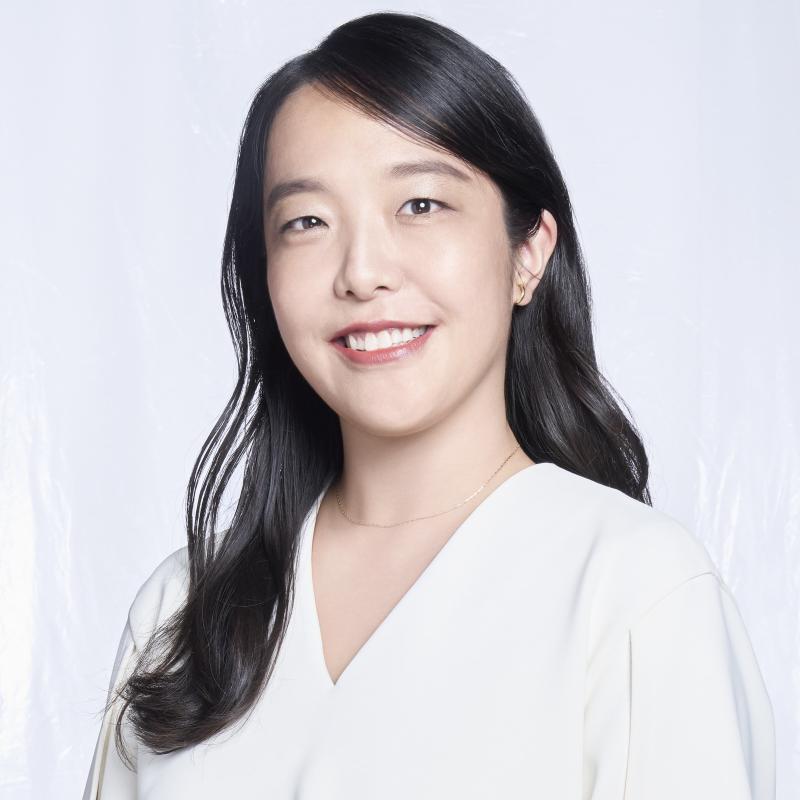
NAKAJIMA Sachiko
Thematic Project ”Invigorating Lives" (Japan Association for the 2025 World Exposition)
Musician, a mathematics researcher, and a STEAM Educator. She is also CEO of steAm, Inc.,the representative director of steAm BAND Association and a thematic project producer of Expo 2025, Osaka, Kansai, Japan. She also serves as a STEM Girls Ambassador, Cabinet Office, and project researcher of Graduate School of Mathematical Sciences The University of Tokyo. She won the gold medal as the first Japanese woman in the International Mathematical Olympiad. She passionately conducts research on art and technology as well as music, mathematics, and education.
View Profile
Close
close
Speakers
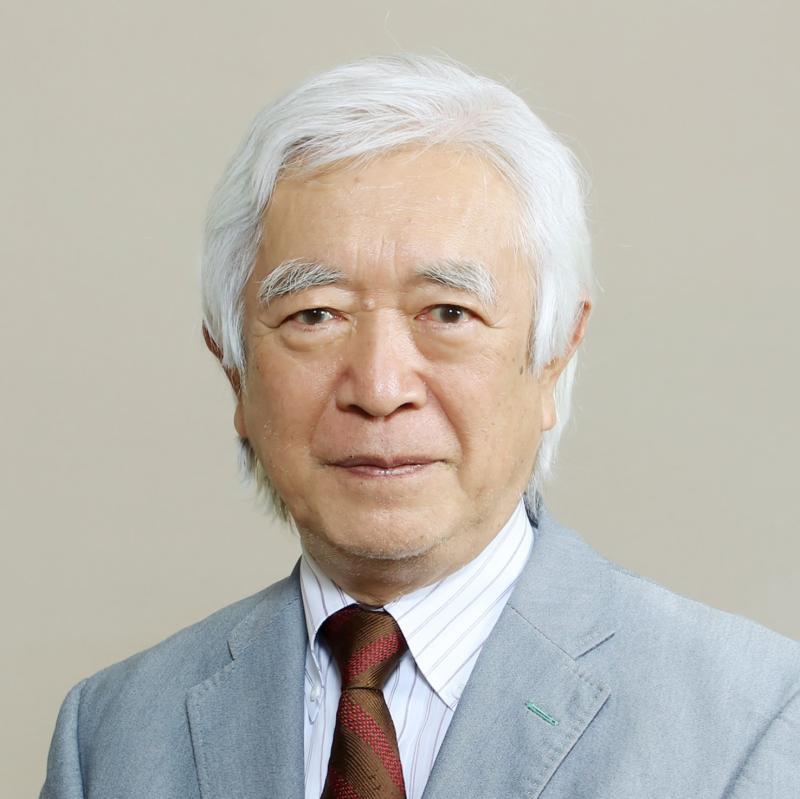
Kenichiro Oohara
Honorary Director, Ohara Museum of Art, Ohara Cultural Foundation
Born in Kobe City in 1940, raised in Kurashiki and
Kyoto. Graduated from the University of Tokyo and
completed coursework for a doctoral program at Yale
University Graduate School. Formerly served as Vice
President of Kuraray Co., Ltd. and Senior Managing
Director of Chugoku Bank, Ltd.
As the Representative Director and Chairperson of
”Japan Forum for the Cultivation of Insight from the
Humanities”, he advocates for the importance of
"humanities knowledge," which plays a
critical role in ensuring societal stability in the
21st century, and actively works to promote its
dissemination.
View Profile
Close
close
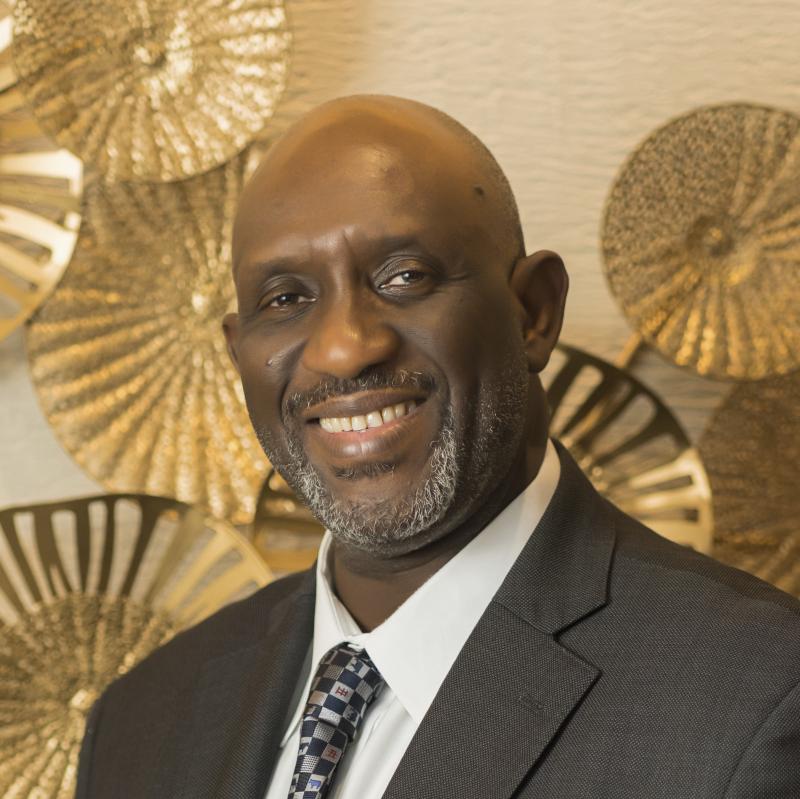
Pr. Oussouby Sacko
Vice President, Director and Senior Advisor of the Japan Association for the 2025 International Exposition
Born in Mali, Dr. Oussouby SACKO is a full time
Professor of Architecture at the Human Environmental
Design Program, Faculty of Design, and the Graduate
School of Design (Architecture) in Kyoto Seika
University.
He got a Master degree and a Doctor Degree of
Engineering in the field of Architecture and
Architecture Planning from the Graduate School of
Engineering at Kyoto University, Japan. He has served
as the Dean of the Faculty of Humanities and Social
Sciences at Seika University from 2013 to 2017, and
President of Kyoto Seika University from 2018 to 2022.
He has conducted research on the relationship between
society and architecture from a variety of angles,
including the "revitalization of machiya
townhouses in Kyoto" and "community
revitalization," and has advocated a society that
recognizes diverse values from familiar perspectives
in daily life.
His major publications include "「Kore kara no
Sekai」wo ikiru kimi ni tsutaetaikoto" and
"Afurika shusshin Sako gakucho, Nihon wo
kataru".
View Profile
Close
close
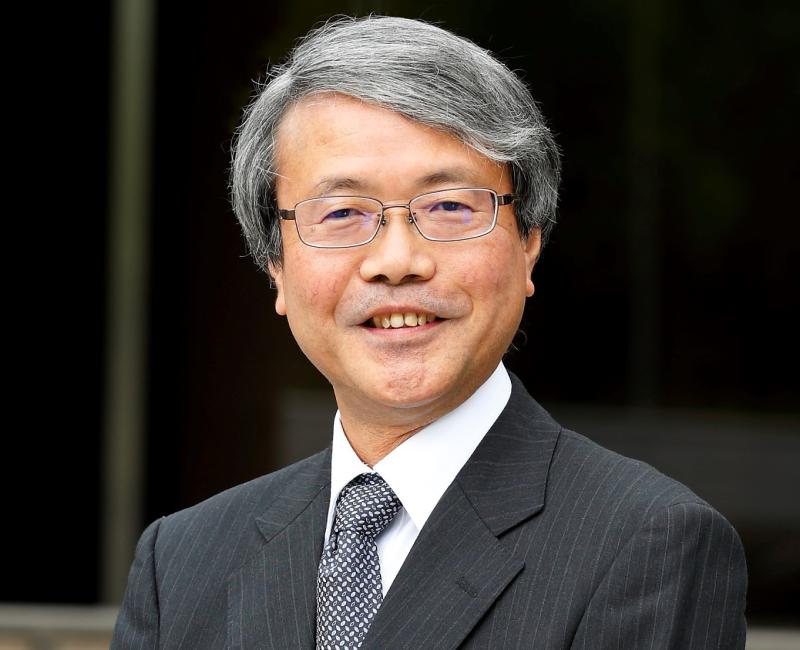
Kenji YOSHIDA
Vice President, Director and Senior Advisor of the Japan Association for the 2025 International Exposition
Kenji Yoshida is the former Director-General at the National Museum of Ethnology, Osaka, Japan, specializing in cultural anthropology and museum anthropology. He has been carrying out fieldwork on the expressive culture and cultural heritage of Southern Africa especially in Zambia. He has also been organizing various exhibitions on art and culture by networking art museums and cultural museums. His major exhibitions and publications include Discovery of Cultures (Bunka no Hakken, in Japanese) 1999, Images of Other Cultures (ed. with John Mack, exhibition catalogue) 1997, Preserving the Cultural Heritage of Africa (ed. with John Mack) 2008, Self & Other: Portraits from Asia and Europe (ed. with Brian Durrans, exhibition catalogue) 2008, Portraits of Cultures: Networking Museology (Bunka no Shohzoh, in Japanese) 2013, The Power of Images: The National Museum of Ethnology Collection (exhibition catalogue) 2014, and Searching for the Origin of Religious Belief: Spirit churches in the Southern Africa (Shukyo no Shigen wo Motomete: Nanbu Africa Seirei Kyokai no Hitobito in Japanese) 2014.
View Profile
Close
close
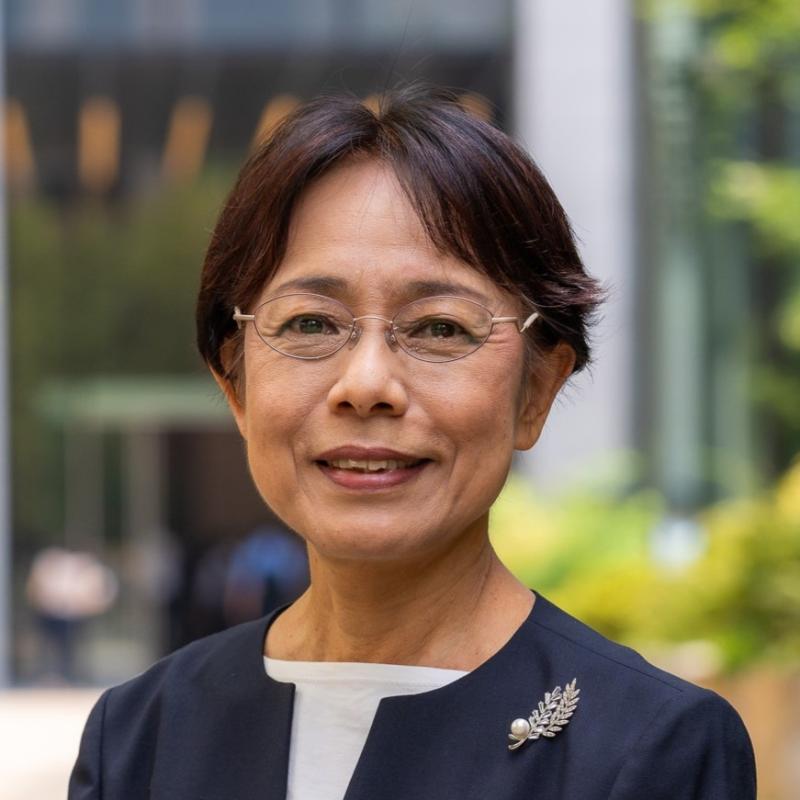
Nobuko KIBE
President National Institutes for the Humanities
View Profile
Close
close
Co-creating Cultures for the Future Week
“Culture for the 21st Century: Reflections on Life”
"Why is humanities knowledge necessary in the age of AI?
What does it mean to live?"
Why is the Humanities Knowledge Necessary in the AI Era?
As part of "21st Century Culture: The Society for
Thinking About Life," two sessions will be held.
The second session, "Why is the Humanities Knowledge
Necessary in the AI Era?", examines the importance of
humanities knowledge in the AI era through discussions on the
future of museums, local culture, and traditional performing
arts.
-
2025.04.26[Sat]
13:40~14:55
(Venue Open 11:30)
- Pavilion
OTHER PROGRAM
Co-creating Cultures for the Future Week