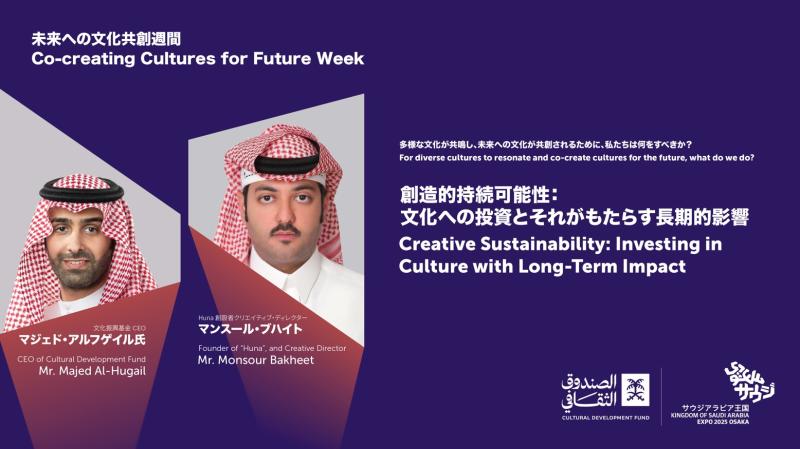
Co-creating Cultures for the Future Week
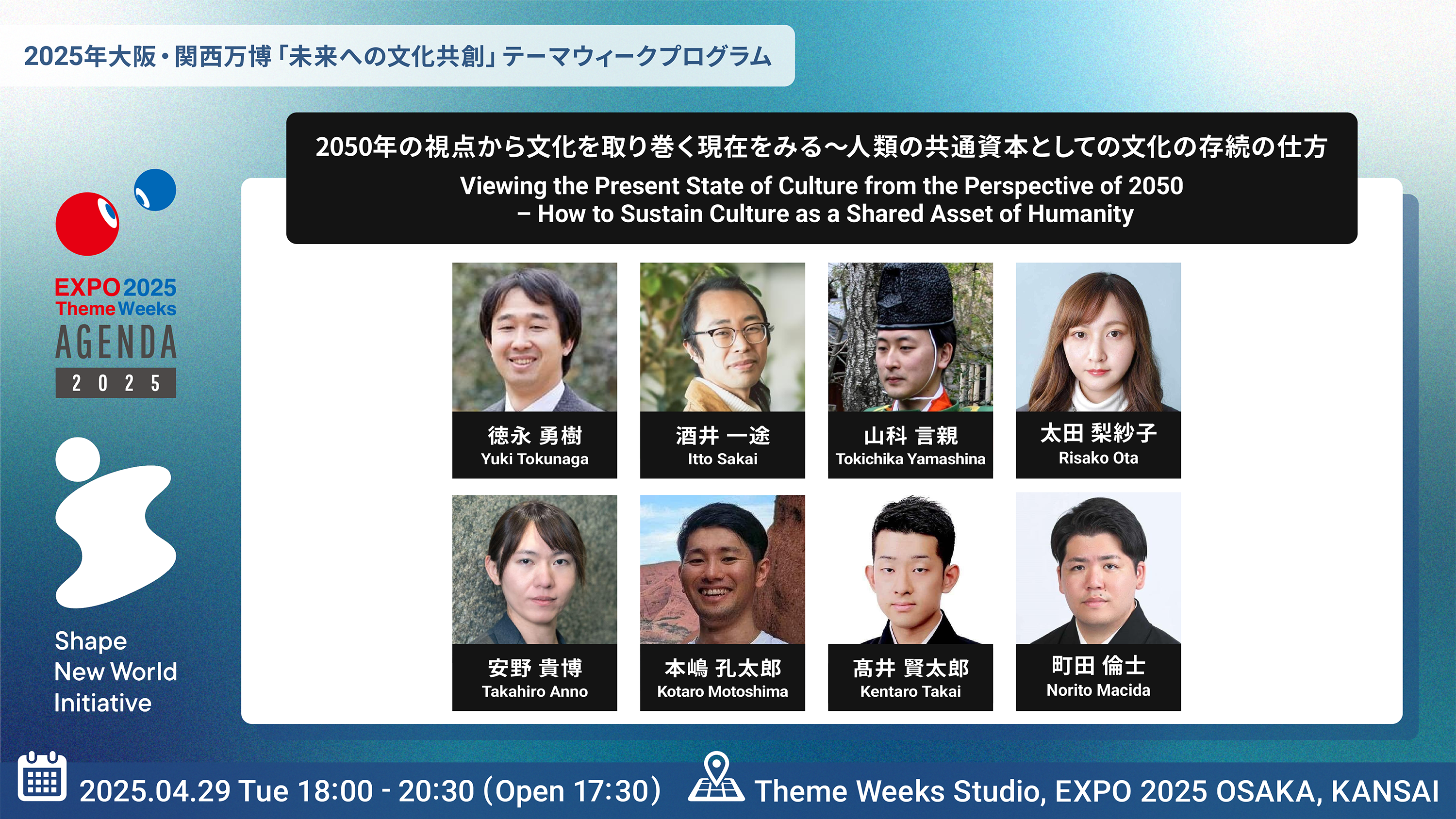
Viewing the Present State of Culture from the Perspective of
2050 – How to Sustain Culture as a Shared Asset of
Humanity
Agenda 2025 Co-created Programme
Shape New World Initiative
[Hypothesis of the Future in 2050]
Culture is nurtured over a long period, yet, like the
natural environment, it can be lost in an instant, often
irreversibly. In the past few decades, growing awareness of
environmental issues has served as a positive precedent.
Similarly, culture must be viewed not merely as an isolated
survival issue but as a shared asset of humanity. We must
make conscious choices now to preserve it for future
generations.
Recorded video available
Discussion
- Nature Positive
| Transmission of simultaneous interpretation | Provided |
|---|---|
| Language of interpretation | Japanese and English |
-

Agenda2025
Co-created Programme
-
Time and
Date of
the event -
-
2025.04.29[Tue]
18:00 ~ 20:30
(Venue Open 17:30)
-
- Venue
- Theme Weeks Studio
Highlights
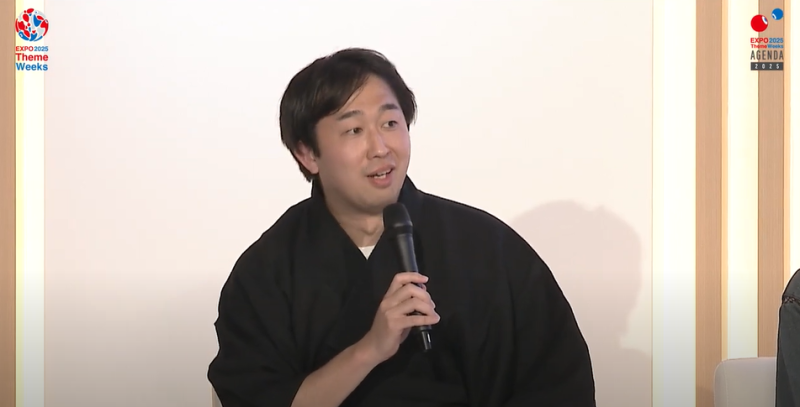
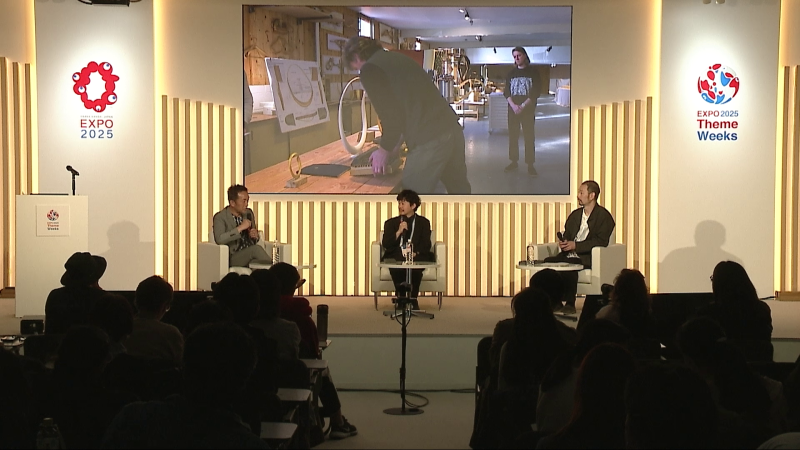
00:02:58 Part 1 | Tokichika Yamashina × Risako Ota × Yuki Tokunaga: Culture as a Living Resource for the Future — How Materials and Human Practices Shape a New Vision of Cultural Sustainability
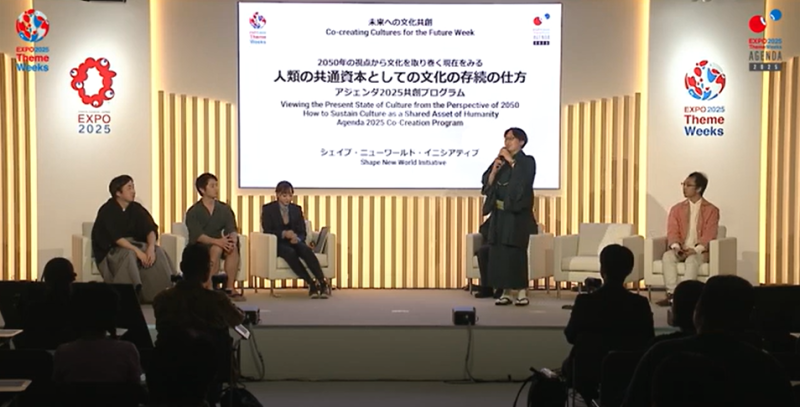
00:55:42 Part 2 | Tokichika Yamashina × Kentaro Takai × Norito Machida: Live Performance of Ryukyu Dance “Hamachidori” and Ryukyu Koto “Genjibushi”
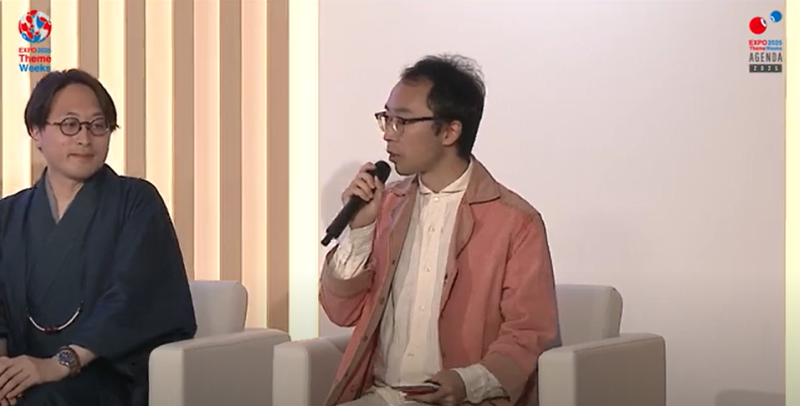
01:28:39 Part 3 | Takahiro Anno × Kotaro Motoshima × Itto Sakai: Preserving Culture as a Living Memory Through AI and Community — Raising Flags, Amplifying Marginal Voices, and Cultivating Space for Cultural Continuity
Programme details
*Subtitles: Choose “Subtitles/CC” in the “Settings” (gear
icon) at the bottom right of the YouTube video.
*Subtitles may not show with multiple languages or overlapping
audio.
For example, environmental pollution was once treated as a
localized issue, not recognized as a national or global
concern. Looking back 20 years to the Kyoto Protocol's
enactment and the Expo 2005 in Aichi, public awareness of
environmental issues rapidly increased, and today,
environmental consciousness has become part of everyday life.
Now, how do we perceive culture? Various cultural practices,
once deeply integrated into daily life and rituals, are now
being treated as isolated problems, on the verge of
disappearing. This issue is not confined to one country; with
the progression of globalization, humanity is facing an
unprecedented cultural crisis on a broad scale. Whether
tangible or intangible, addressing cultural challenges as
individual, specific issues is no longer sufficient. What is
needed is a broader awareness among people and a
transformation in behavior to preserve culture.
By 2050, we aim to look back at the present as a turning point
when awareness of culture as a universal issue began to grow.
Just as environmental issues are now widely recognized, we
seek to make culture a subject of collective consciousness and
action, ensuring its preservation for future generations.
Reports
【Reflection】
This symposium offered a multifaceted exploration into how
culture can be passed on to future generations—not as a mere
form or fossilized tradition, but as a living current that
carries spirit, thought, and intention. Rather than enclosing
culture within the walls of preservation born from fear, a
shared vision emerged: one of openness and flow, where
boundaries between inside and outside are porous, inviting a
wider range of people into participation and encouraging the
diversification of both the bearers and the contexts of
tradition.
What stood out most were active gestures: raising a flag that
signals intent and meaning; leaving room for play, ambiguity,
and spontaneity; and creating shared spaces where people can
engage side by side. In the world of traditional arts and
skills, it is not enough to inherit forms or techniques. What
matters is a continuous return to the deeper questions—Why has
this endured? What has been cherished through its passage?—and
connecting those questions to personal experience and
affection. Spiritual continuity, it was noted, is not enforced
through doctrine or rule, but passed on through voluntary
engagement and a felt sense of belonging—through the quiet
conviction that I am allowed to be here, I care about this.
A more open approach to cultural transmission must move beyond
the closed, often opaque frameworks of traditional
apprenticeship. It must make space for the articulation of
tacit knowledge, and for networked relationships across
disciplines and generations. Technologies such as AI and
digital tools for visualization, alongside new methods for
community architecture and consensus-building, were proposed
as instruments for bringing the elusive dimension of “spirit”
into shared and visible domains—making it part of the cultural
commons.
From intimate communities of 150 to expansive projects
spanning regions or generations, it is the act of raising
meaningful flags, welcoming diverse participants, and crafting
environments that allow for fluidity and creative pause that
breathes life into the transmission of cultural spirit.
Emotional resonance, unexpected encounters, and deep-rooted
attachments—elements that often escape rational
frameworks—were also acknowledged as vital forces that can
sustain and propel cultural initiatives. Institutional
support, the intelligent use of AI to mediate and expand
communication, and platforms for cross-generational,
cross-disciplinary dialogue were among the tools envisioned to
nourish and carry forward this shared spirit.
In the end, the transmission of culture is not merely the
handover of skills or information. It is a human practice
woven through relationship and the co-discovery of meaning. To
pass on both form and spirit requires cultivating spaces and
cues that invite involvement, embedding culture as a rich and
meaningful option within the fabric of society, and treating
the very act of transmission as a process open to renewal and
reinvention.
【Post EXPO Initiatives】
To ensure the continuity of this dialogue and translate it
into actionable projects, we will continue to hold meetings
with a fluid and evolving circle of participants. The first
session welcomed Takahiro Shiramizu, founder of Unagi no
Nedoko, and focused on the following key initiatives:
1. Building a Cultural Co-Creation Ecosystem Centered on a
“Grand Requiem for the Vanishing”
Traditional Japanese craftsmanship, once sustained by a
symbiotic relationship with nature, has lost its cyclical
vitality in the wake of modernization, resulting in isolated
and declining industries. Rather than simply protecting these
individual cultures or crafts, this initiative proposes an
overarching ecosystem anchored by the evocative theme of a
“Grand Requiem for the Vanishing.” This ecosystem aims to
reweave connections across diverse cultural and industrial
domains.
Such a framework could take shape as revivals of ancient
festivals, journeys retracing regional roots, or
reinterpretations of lost techniques. At the heart of this
vision lies a compelling and unifying goal—a “Great Intention”
capable of rallying people beyond the boundaries of religion
or tradition. One example is the revitalization of the Kyoto
Imperial Palace (Gosho Okoshi) as a cultural hub, inviting new
collaborations and economic value creation. Another is
exploring large-scale narratives, such as the “Reconstruction
of Edo Castle,” to inspire public imagination and attract
long-term patrons.
Rather than focusing on specific crafts or schools of
technique, the theme remains intentionally open and
playful—drawing inspiration from projects like the Pokémon and
Craft exhibition, which invited joyful participation across
generations. In this way, a lasting community emerges
organically through shared curiosity and affection.
2. Cultivating Communities through the Cycle of Hare and Ke
The sustainability of the ecosystem depends on a deliberate
circulation between hare (extraordinary moments of
celebration) and ke (everyday life rooted in local
relationships and creative practice). The process begins with
the staging of compelling public events (hare) to spark
connection, leading to the formation of communities that
continue engaging in place-based, everyday cultural creation
(ke).
This cycle—moving between peak experiences and daily
rhythms—has the potential to draw in visitors, learners, and
collaborators from near and far. It lays the groundwork for
building momentum through community-led investments and
collective narratives. From there, a roadmap can be developed
to guide capital investment in infrastructure and future
programming.
Initial projects will be launched on a small, tangible scale,
carefully selecting sites and communities that align with the
spirit of the initiative. The next meeting will invite
individuals who could serve as organizers or hubs connecting
multiple communities, and will delve deeper into possible
concrete projects. Alongside new initiatives, there is also
potential to participate in existing festivals or events under
the shared theme of “requiem,” further expanding the
network.
3. Archiving and Creating New Value through Digital
Technology
To transmit endangered cultural traditions to future
generations, the project will actively explore digital
archiving. Movement-based practices such as dance or
craft-making can be documented and transformed into public
learning resources by contributing to foundational AI training
datasets. Even cultures at risk of disappearance could one day
be learned from through AI, enabling the transmission of
knowledge across time.
High-quality digital archives may also serve as creative
assets for fields such as animation or CG film production,
opening up new channels of income and relevance for
traditional practices in contemporary media. In this way, the
preservation of intangible heritage becomes not only an act of
remembrance but a seedbed for new stories and shared futures.
Cast
Moderator
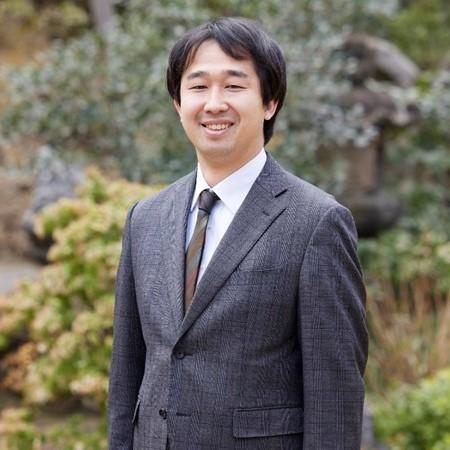
Yuki Tokunaga
the Research Center for Advanced Science and Technology Open Laboratory for Emergence Strategies (ROLES) of the University of Tokyo/Juchi Golf Co.,ltd
Born in 1990, graduated from Waseda University with a degree in Political Science and Economics. After working as an English and Russian interpreter, joined Mitsui & Co., Ltd., where responsibilities included steel product export operations. Later pursued graduate studies and was seconded to the Mitsui Global Strategic Studies Institute. Resigned from Mitsui & Co. at the end of July 2024. At Juchi Golf Co., Ltd., is granted full flexibility in terms of duties, location, and working hours, allowing for a focused commitment to cultural research in Japan and around the world.
View Profile
Close
close
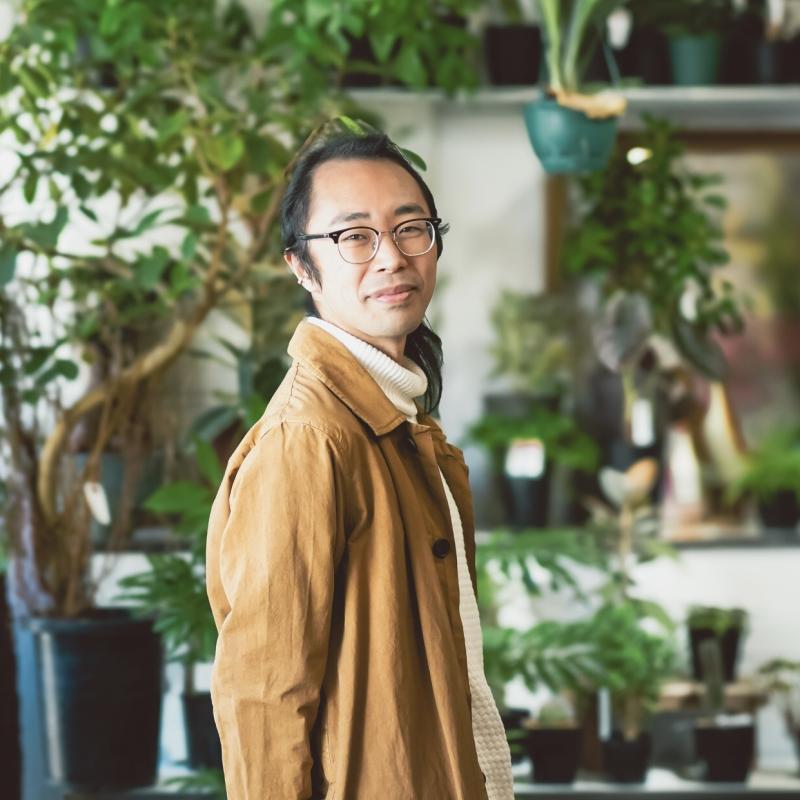
Itto Sakai
Coordinator
Born in Tokyo in 1992, currently residing in Toyooka City, Hyogo Prefecture. Engages in cross-disciplinary work related to local culture, art, and crafts, creating interview-based articles. Served as an interviewer, writer, and editor for the Cultural Tourism Research Team, a project commissioned by the Agency for Cultural Affairs in 2021, conducting interviews with individuals involved in culture, tourism, and community development across Japan.
View Profile
Close
close
Speakers
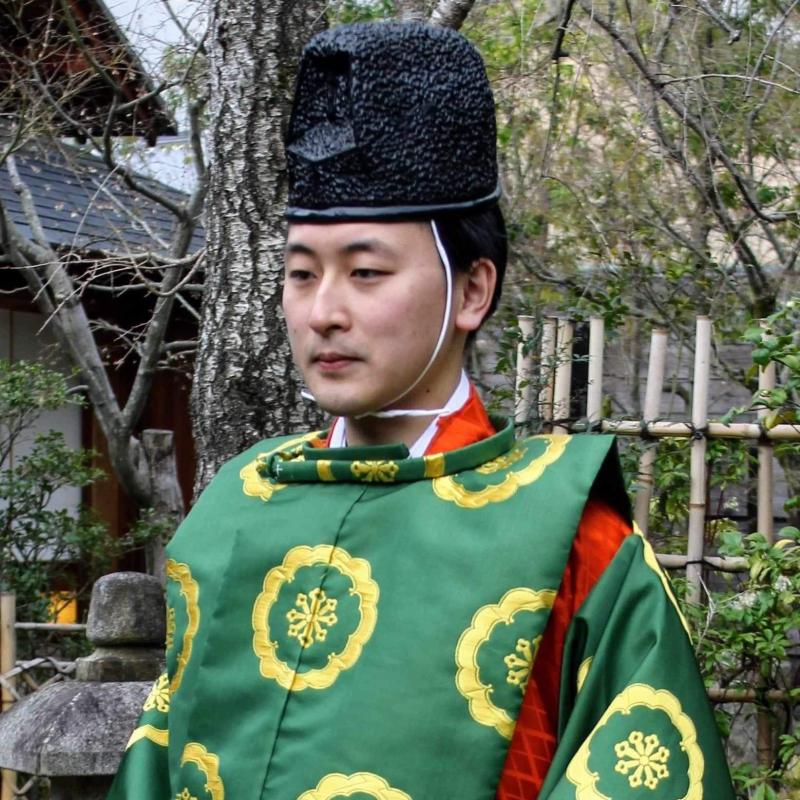
Tokichika Yamashina
A representative director of the Yamashina Courtly Culture Institute and a researcher at the Center for the Study of Court Culture, Doshisha University.
A young master of the Yamashina School of Emon-do.He is the 30th successor of the House of Yamashina (a former court noble family), which has passed on the preparation and wearing of court costumes from generation to generation. He has served as a costume ararnger for the three imperial festivals of Kasuga, Kamo, and Ishimizu, as well as for the Imperial Ascending Ceremony in 2019. He is committed to promoting the tradition and dissemination of court culture by organizing and supervising lectures and exhibitions around the country, and serving as an advisor to companies and government agencies.
View Profile
Close
close

Risako Ota
Kobe University (Doctoral student)
Japanese art historian, born in Kyoto in 1994. Specializes in early modern and modern Kyoto painting. Also studies film costumes. “What Played a Role in the Generation of Japanese Cartoon Films: From the Perspective of Kenzo Masaoka and Modern Painting in Kyoto” (in “Manga/Manga/MANGA: From the Perspective of Human Literature”)etc. Doctoral student at Kobe University. Eldest daughter of Toru Ota, the fourth generation head of the confectionery company, Oimatsu.
View Profile
Close
close
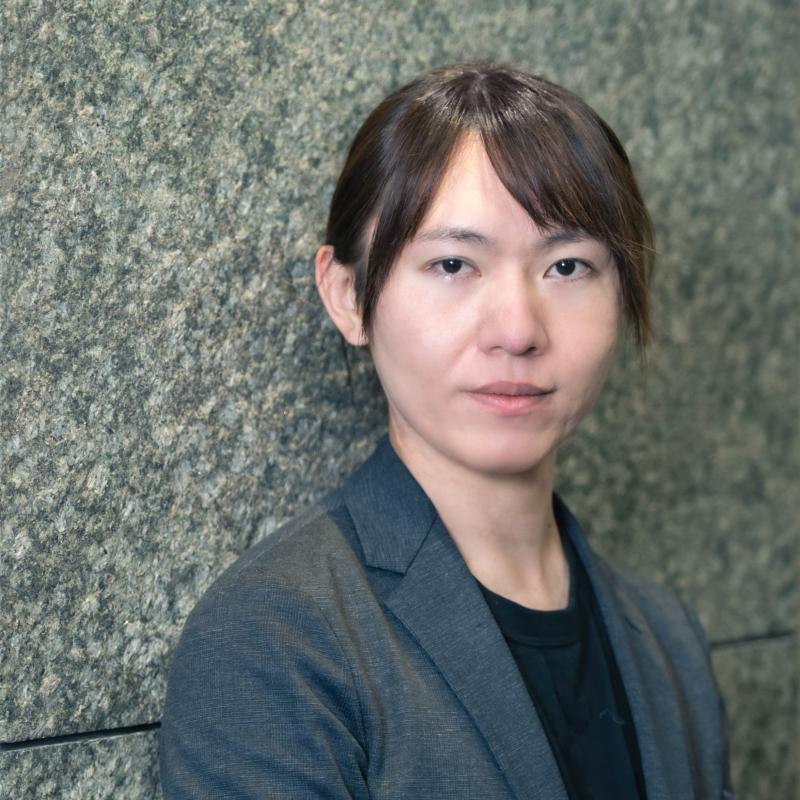
Takahiro Anno
Management Machine, Inc. CEO
AI engineer, entrepreneur, and science fiction writer.
Graduated from the Matsuo Laboratory at the University
of Tokyo. After working for a foreign consulting firm,
he founded two AI startup companies. He is involved in
transforming social systems through digital
technology. He is a member of the Science Fiction
Writers of Japan.
He is running for the Tokyo gubernatorial election in
2024, and is practicing interactive elections using
AI.
View Profile
Close
close
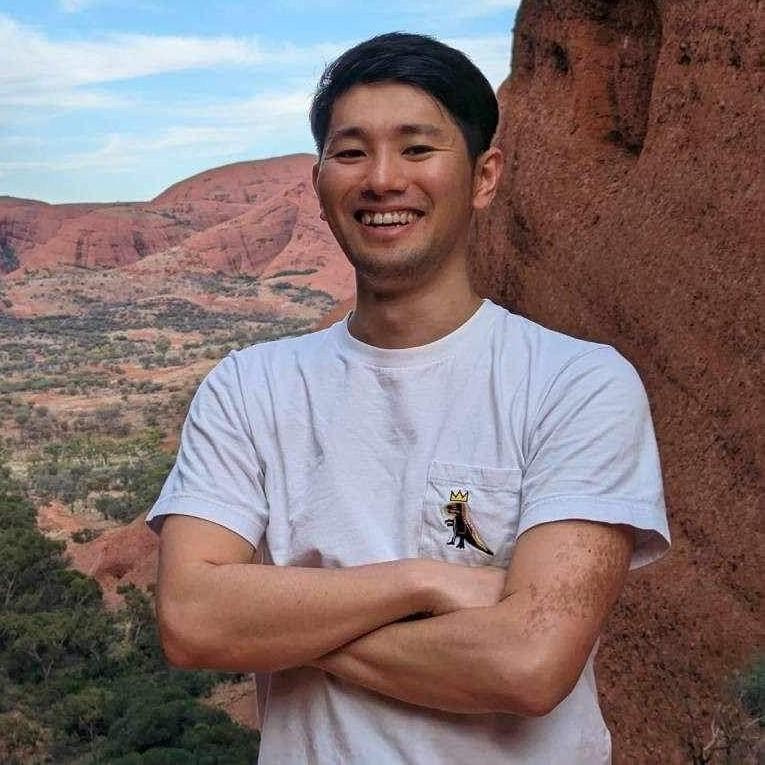
Kotaro Motoshima
RULEMAKERS DAO/Japan DAO Association/Co-creation DAO/1 million people DAO/AiHUB Co-Founder/Lawyer
Engaged in projects utilizing DAO, a next-generation purpose-driven online community, across various fields and regions. Recently relocated to Shikoku and involved in building ecosystems for the social sector and traditional crafts. Also works as a social coordinator, mobilizing people and systems toward specific visions, including creating cycles of mutual aid and collaboration, and leading projects like Ise Jingu/Ainu × Art × Startup.
View Profile
Close
close
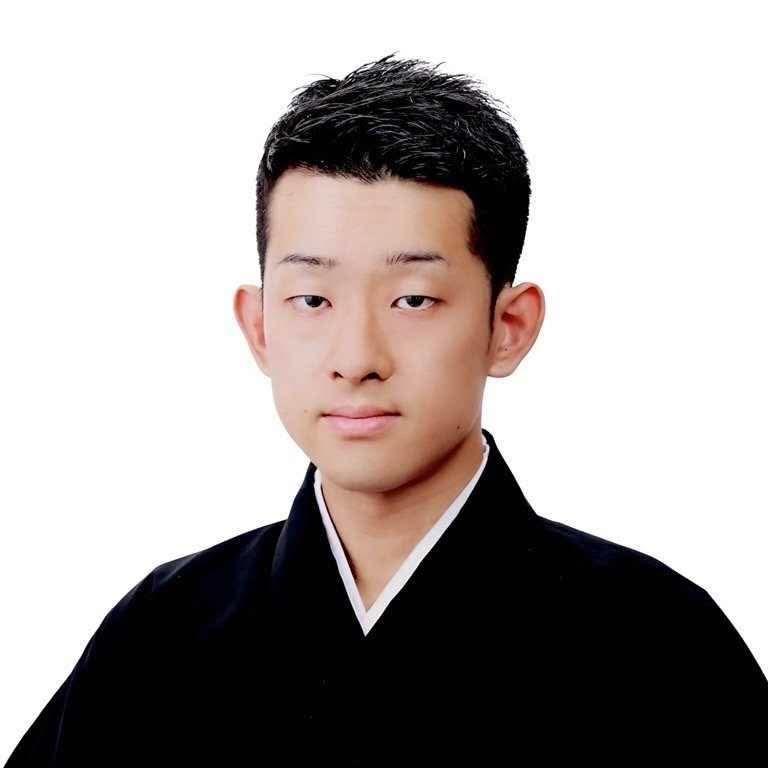
Kentaro Takai
Ryukyu dance/Kumiodori Kyoto Tamaki-ryu Toshifu Rimi no Kai
Trained under Wakana Nakama and Toshimi Ashimine, and graduated from the Graduate School of Music and Performing Arts at Okinawa Prefectural University of Arts, specializing in Ryukyu Dance and Kumiodori. Recipient of the highest prize in the Ryukyu Dance category at the Ryukyu Classical Performing Arts Competition by Ryukyu Shimpo. Completed the fifth-term Kumiodori training program at the National Theatre Okinawa. Actively involved in performances, including those by the National Theatre Okinawa, as well as workshops and efforts to promote Kumiodori both in Okinawa and beyond.
View Profile
Close
close
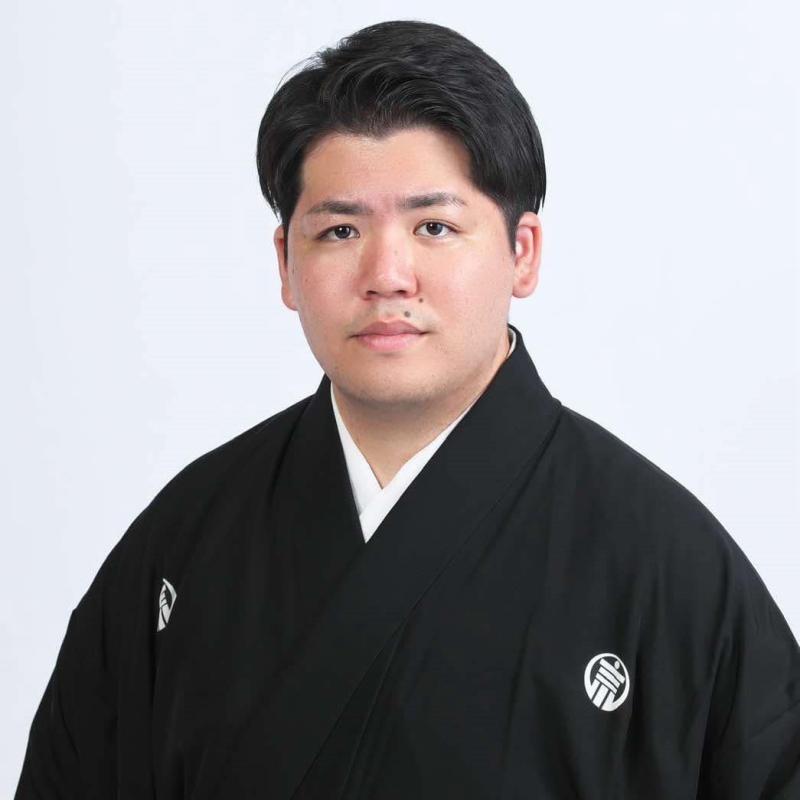
Norito Macida
Ryūkyū Koto Music, Kumi Odori Jikata
Affiliated with Ryūkyū Sōkyoku Kōyōkai and Ryūkyū Koten Ongaku Tansui-ryū Hozonkai. Studied under Teruko Yamauchi. A childhood love of Eisa led her to pursue the path of traditional performing arts. After deepening her knowledge of Ryukyuan literature and China-Ryūkyū relations at the Department of Languages and Cultures of the Ryukyus and Asia, Faculty of Law and Letters, University of the Ryukyus, she advanced to the graduate program (Master’s course) at the Okinawa Prefectural University of Arts. During the Kumi Odori Training Program at the National Theatre Okinawa, she received instruction in Kumi Odori and Ryukyuan dance music and in Ryūkyū koto from a faculty that included Living National Treasures. Subsequently, she was certified as a transmitter of these arts by the General Incorporated Association Dentō Kumi Odori Hozonkai. Currently, she actively participates in stage productions both in and outside Okinawa, including performances organized by the National Theatre Okinawa. She was awarded the highest prize in the Koto category at the 53rd Ryūkyū Shimpō Ryukyuan Classical Performing Arts Competition.
View Profile
Close
close
Co-creating Cultures for the Future Week
Viewing the Present State of Culture from the Perspective of
2050 – How to Sustain Culture as a Shared Asset of Humanity
Agenda 2025 Co-created Programme
[Hypothesis of the Future in 2050]
Culture is nurtured over a long period, yet, like the natural
environment, it can be lost in an instant, often irreversibly.
In the past few decades, growing awareness of environmental
issues has served as a positive precedent. Similarly, culture
must be viewed not merely as an isolated survival issue but as
a shared asset of humanity. We must make conscious choices now
to preserve it for future generations.
-
2025.04.29[Tue]
18:00~20:30
(Venue Open 17:30)
- Theme Weeks Studio
OTHER PROGRAM
Co-creating Cultures for the Future Week