Co-creating Cultures for the Future Week
Proposals for a Sustainable Society Realized by ‘Global Citizen’, Water and Watershed for All Lives
Japan Institute of Eventology
Japan Institute of Eventology which explores the
significance, methods, and effectiveness of events, has
promoting three TEAM EXPO 2025 Co-Creation Challenges based
on the participation and collaboration of "Global
Citizens" with GISPRI (Global Industrial and Social
Progress Research Institute), a general incorporated
foundation that is the successor to Expo 2005 Aichi,
Japan.
This program will be presenting the results of discussions
project on the theme of "Water and Watersheds for All
Lives," which has been carried out with the
participation of various regions, educational institutions,
NGOs and NPOs.
Recorded video available
Discussion
- Historical heritage
- Local community revitalisation
- Others
- Global Citizens
| Transmission of simultaneous interpretation | Provided |
|---|---|
| Language of interpretation | Japanese and English |
-

Track Programme
-
Time and
Date of
the event -
-
2025.05.06[Tue]
13:30 ~ 15:30
(Venue Open 13:30)
-
- Venue
- Theme Weeks Studio
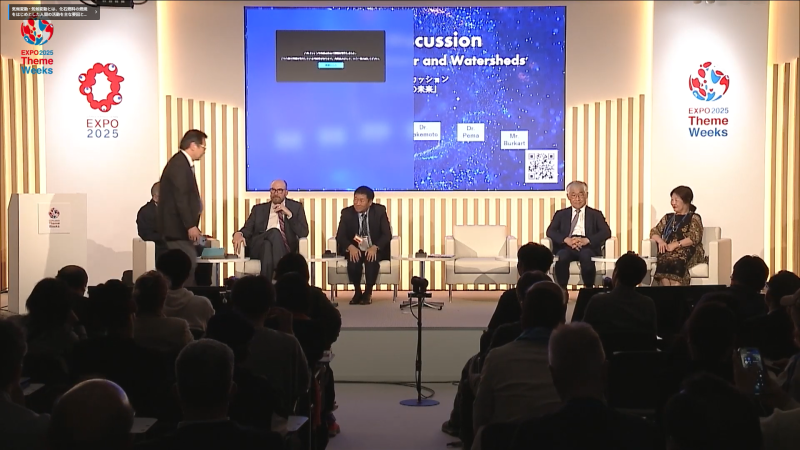
Programme details
**Subtitles: Choose “Subtitles/CC” in the “Settings” (gear
icon) at the bottom right of the YouTube video.
*Subtitles may not show with multiple languages or overlapping
audio.
Japan Institute of Eventology which explores the significance,
methods, and effectiveness of events, has promoting three TEAM
EXPO 2025 Co-Creation Challenges based on the participation
and collaboration of "Global Citizens" with GISPRI
(Global Industrial and Social Progress Research Institute), a
general incorporated foundation that is the successor to Expo
2005 Aichi, Japan.
All of the Co-Creation Challenges we have promoted contribute
to achieving the SDGs, which are the goals of Expo 2025 Osaka,
Kansai, Japan, and inherit the important concept of
"citizen participation" realized at Expo 2005 Aichi,
Japan.
The Program will hold "The EXPO 2025 Global Citizen Forum
on Water and Watersheds for All Lives" (organized by: the
Promotion Committee for the Global Citizen Forum on Water and
Watershed; co-organized by: the Japan Institute of Eventology,
GISPRI (Global Industrial and Social Progress Research
Institute), RCE Chubu, and the Chubu University International
ESD/SDGs Center) to showcase the results of three years of
dialogue forums that have been promoted in Aichi, Osaka, and
Tokyo. At the forum, experts from international organizations
and other sectors will be invited to discuss approaches to
building a sustainable society with a focus on water and
watersheds.
Reports
【Reflection】
This project has, over a three-year period beginning in fiscal
year 2022, convened a series of forums in Japan’s three major
metropolitan areas—Aichi-Nagoya (Chubu region), Osaka (Kansai
region), and Tokyo (Kanto region). These forums have brought
together a wide range of stakeholders for ongoing dialogue.
Each of these cities is located on a large bay and is
surrounded by an expansive watershed area.
Through dialogue conducted during the three-year series of
forums, we have identified key issues and discussed
collaborative solutions under three principal themes: (1)
Water and the Environment, (2) Water and Primary Industries,
and (3) Water and Culture. These discussions reaffirmed the
fundamental importance of water in sustaining life and the
understanding that human beings, supported by nature, are
inherently part of ecosystems centered on watersheds—or
water-regions.
Particularly emphasized was the necessity of adopting an
integrated approach to sustainability challenges—centered on
water—by using the watersheds, especially those river basins
flowing into enclosed coastal seas, as a basic unit of
analysis and action. The project also explored a
multidimensional conception of water-regions, not only as an
aggregation of multiple river basins but also as
three-dimensional spaces including groundwater systems. This
perspective incorporates both the "River Water Cultural
Sphere" and the "Well Water Cultural Sphere,"
and proposes a new direction for future society: the creation
of sustainable regional models that respect ecological and
cultural diversity.
The theme of Expo 2025 Osaka, Kansai, Japan is “Designing
Future Society for Our Lives.” Its sub-themes are: “Saving
Lives,” “Empowering Lives,” and “Connecting Lives.” The key
achievement of this forum lies in its ability to make an
international proposal that both aspires to the creation of a
“Water-Region Civilization” and contributes to “Designing
Future Society for Our Lives.” This was accomplished by
initiating efforts to address priority issues aligned with the
three sub-themes of the Expo, with a particular focus on water
as the source of life and the water-region as the foundation
of human habitation. These efforts are grounded in the spirit
of “Nature’s Wisdom,” the guiding theme of Expo 2005 Aichi,
Japan. The project proposes initiatives that align with the
three sub-themes of the Expo and offer specific pathways
toward a sustainable future:
Connecting Lives: Designing settlement patterns and land use
in water-regions
Saving Lives: Strengthening inter-regional collaboration
within watersheds to enhance resilience and adapt to the
climate crisis.
Empowering Lives: Promoting human resource development and the
transmission of water-related cultural heritage to realize a
sustainable future society.
【Post EXPO Initiatives】
The “Water-Region Civilization” advocated by this project
represents a new civilizational perspective aimed at building
a sustainable society in which humans and nature coexist
harmoniously, grounded in the Japanese spirit of Jinen—which
sees humans and nature as inseparable. Moving forward, it is
essential to translate this vision into reality by
implementing the outcomes of prior dialogues in practical
contexts and progressively advancing social design tailored to
the unique characteristics of each water-region.
In particular, the watersheds of multiple rivers flowing into
enclosed water bodies (water-regions) are to be recognized as
spatial and social units, and their interconnections—from
upstream to downstream, from urban areas to agricultural,
mountainous, and fishing communities, and from surface water
to groundwater— should be addressed and managed in a
comprehensive and systematic manner.
In order to "connect all lives," this initiative
promotes the exchange of natural, human, and material
resources distributed across urban and rural areas, while
fundamentally reexamining settlement patterns and land use.
Through these efforts, adaptation to the climate crisis and
resilience against disaster risks will be strengthened,
enabling the establishment of regional cooperation frameworks
that “save lives.”
Moreover, by respecting the diverse water cultures within
water-regions—namely, both the river-based cultural sphere and
the well-based cultural sphere—and by promoting the
transmission of locally rooted knowledge and techniques, as
well as the development of human resources, we aim to foster
future generations who are capable of understanding all forms
of diversity and contributing to a society grounded in
coexistence and dedicated to peacebuilding. In doing so, this
approach ensures cultural sustainability that “empowers
life.”
In light of this vision, we seek to carry forward the spirit
of “Nature’s Wisdom,” the theme of Expo 2005 Aichi, Japan, and
dynamically develop our proposal as a living legacy that
embodies the theme of Expo 2025 Osaka, Kansai, Japan:
"Designing Future Society for Our Lives." Through
this endeavor, we aim to advance international policy dialogue
and the sharing of knowledge, while disseminating a new vision
of civilization based on river basin regions on a global
scale. Domestically, by rotating forums across various
water-regions and publishing related materials, this
initiative aims to develop into a nationwide movement. Through
this comprehensive set of activities, the project aspires to
establish a sustainable and inclusive social model that looks
beyond the post-SDGs era toward a future 100 years hence.
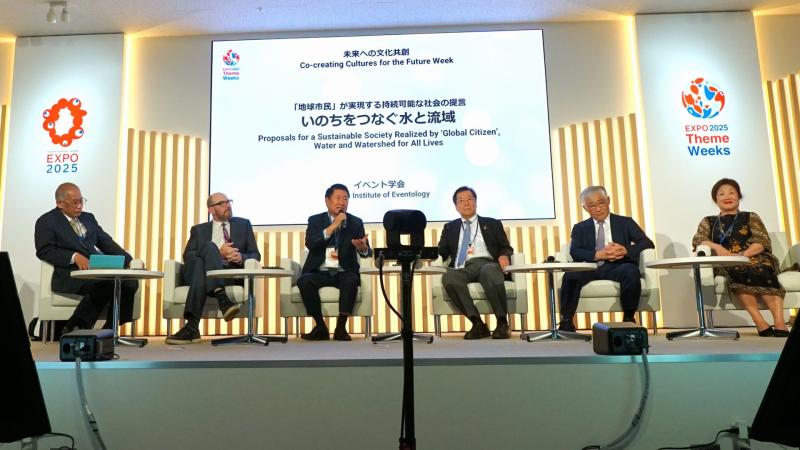
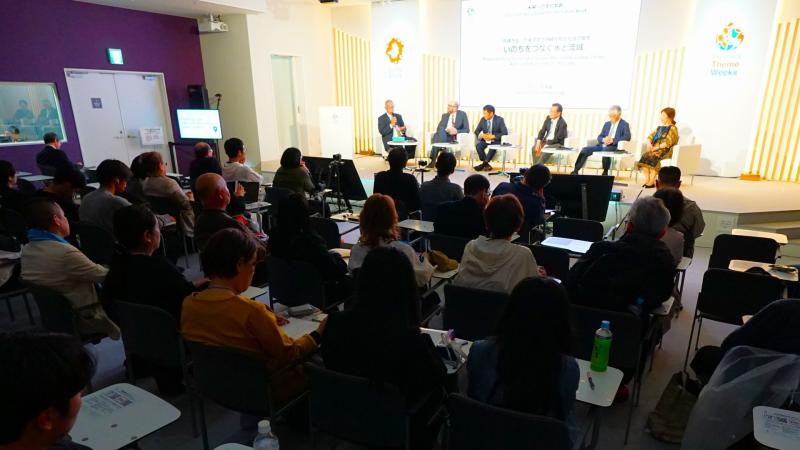
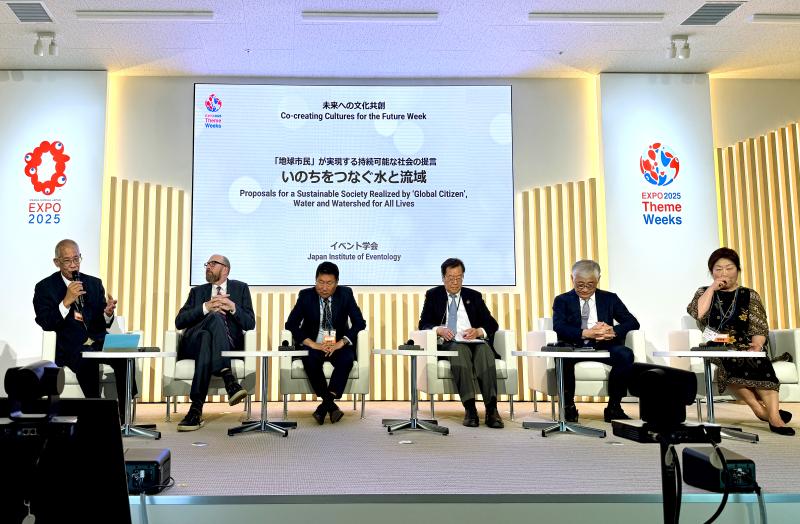
Cast
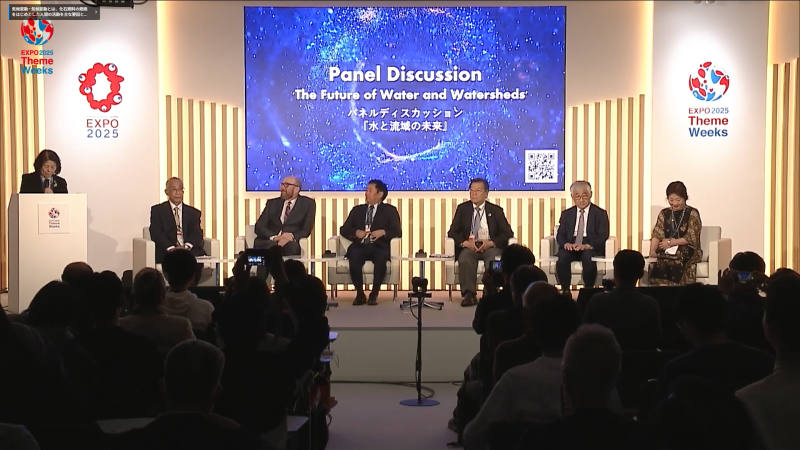
Moderator
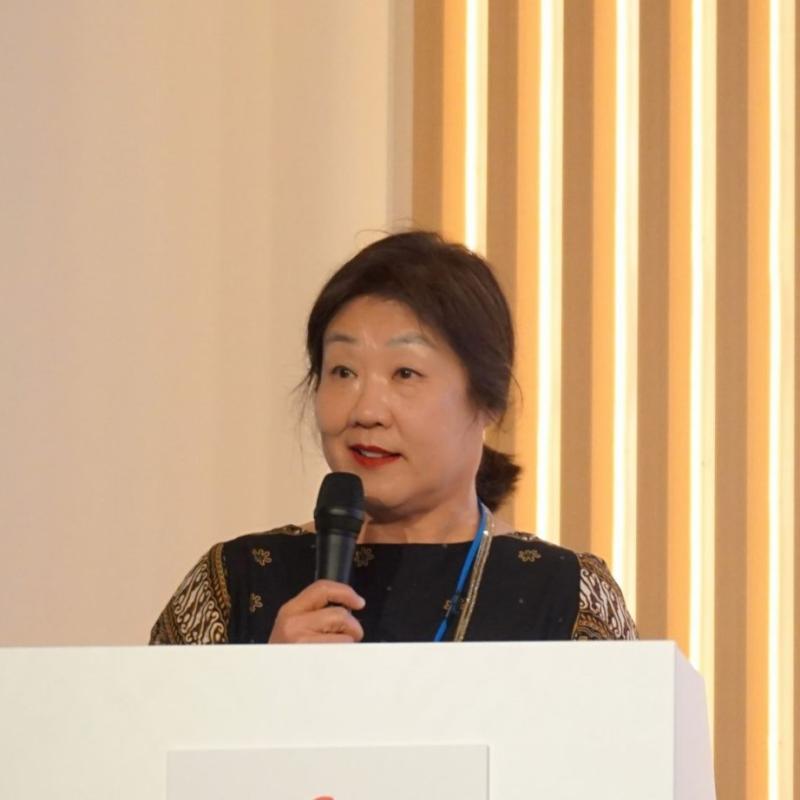
Hye-sook PARK
Professor Emeritus (former Vice-Chancellor) of Mie University
A Steering Committee Member of RCE Chubu, The first Director of WHO Centre for Environment and Health in Asia and the Pacific (WHOACE)
View Profile
Close
close
Speakers
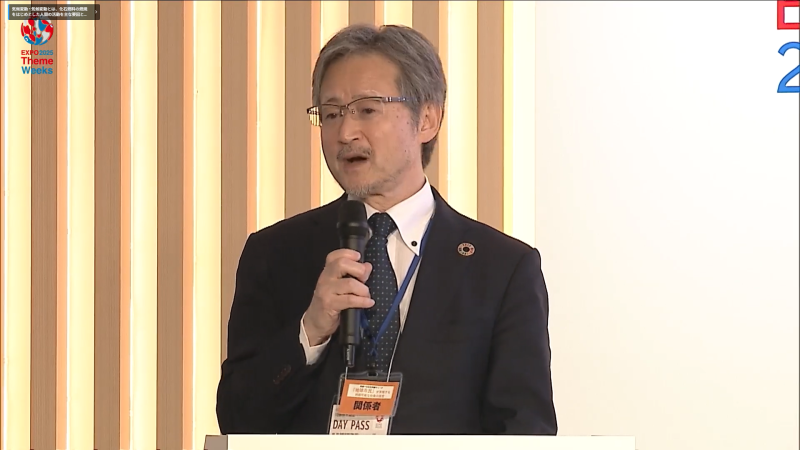
Hiromichi Fukui
Director of Chubu Institute of Advanced Studies, Chubu University
Chairperson of the Global Citizen Forum on Water and Watersheds for All Lives Project Promotion Committee
View Profile
Close
close
Pema Gyamtsho
Director General of the International Centre for Integrated Mountain Development (ICIMOD)
Former Minister of Agriculture and Forestry, Kingdom of Bhutan
View Profile
Close
close
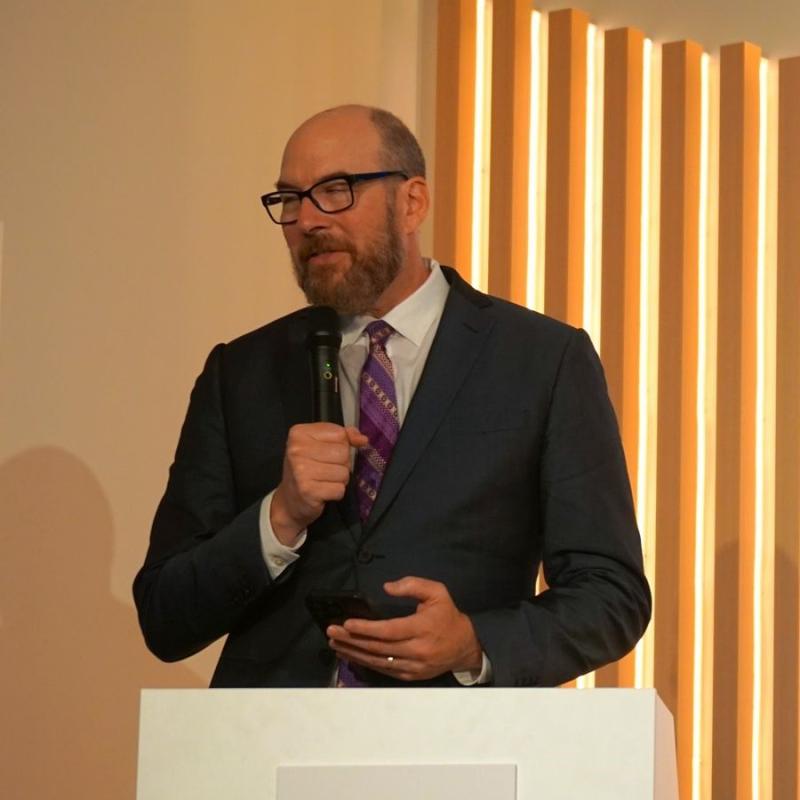
Karl Burkart
Co-Founder and Deputy Director, One Earth
the former Director of Science & Technology at the DiCaprio Foundation
View Profile
Close
close
Jaehyang So
Chair of the TEC (Technical Committee) and member of the Steering Committee, Global Water Partnership (GWP)
Former senior official at the World Bank Group in infrastructure, water, urban development and etc.
View Profile
Close
close
Toshio Koike
Director,International Centre for Water Hazard and Risk Management (ICHARM), Public Works Research Institute (PWRI)
Professor Emeritus, University of Tokyo
View Profile
Close
close
Kazuhiko Takemoto
President, International Lake Environment Committee (ILEC)
President, Overseas Environmental Cooperation Centre (OECC),President of ICLEI (Local Governments for Sustainability) Japan
View Profile
Close
close
Kenzo Hiroki
Professor, National Graduate Institute for Policy Studies (GRIPS)
Coordinator of the High-level Experts and Leaders Panel on Water and Disasters (HELP)
View Profile
Close
close
Co-organiser
Global Industrial and Social Progress Research Institute (GISPRI)
RCE Chubu (Regional Centre of Expertise on Education for Sustainable Development)
International ESD/SDGs Center, Chubu University
Co-creating Cultures for the Future Week
Proposals for a Sustainable Society Realized by ‘Global Citizen’, Water and Watershed for All Lives
Japan Institute of Eventology which explores the significance,
methods, and effectiveness of events, has promoting three TEAM
EXPO 2025 Co-Creation Challenges based on the participation
and collaboration of "Global Citizens" with GISPRI
(Global Industrial and Social Progress Research Institute), a
general incorporated foundation that is the successor to Expo
2005 Aichi, Japan.
This program will be presenting the results of discussions
project on the theme of "Water and Watersheds for All
Lives," which has been carried out with the participation
of various regions, educational institutions, NGOs and NPOs.
-
2025.05.06[Tue]
13:30~15:30
(Venue Open 13:30)
- Theme Weeks Studio
OTHER PROGRAM
Co-creating Cultures for the Future Week