Co-creating Cultures for the Future Week
Symposium and workshop in contribution to "A society where everyone can have access to sanitary products in the toilet!"
University of Osaka MeW Project
As a significant step toward gender equality, Osaka University's UNESCO Chair MeW Project, which has been addressing the issues of "ensuring menstrual dignity" and "providing free menstrual products," will hold a symposium as part of a global movement.
Recorded video available
Discussion
- Local community revitalisation
- Cool Japan
- Cocreation of gender-equal society and culture
| Transmission of simultaneous interpretation | Not provided |
|---|---|
| Language of interpretation | Japanese and English |
-
Track Programme
-
Time and
Date of
the event -
-
2025.04.28[Mon]
16:30 ~ 19:30
(Venue Open 16:00)
-
- Venue
- Pavilion
- Women’s Pavilion “WA” Space
Programme details
*Subtitles: Choose “Subtitles/CC” in the “Settings” (gear
icon) at the bottom right of the YouTube video.
*Subtitles may not show with multiple languages or overlapping
audio.
The symposium will begin with an overview of global trends in
the movements on menstrual health and hygiene (MHH) followed
by a presentation on the MeW project’s initiative to create a
system where "everyone has access to menstrual products
in toilets." This presentation will be followed by a
discussion, incorporating questions from the audience, about
designing a future society that promotes menstrual well-being.
This symposium will look into local examples of menstrual
issues, which have been historically stigmatized, and discuss
local interventions in light of global trends, as a concrete
step toward gender equality and the empowerment of women.
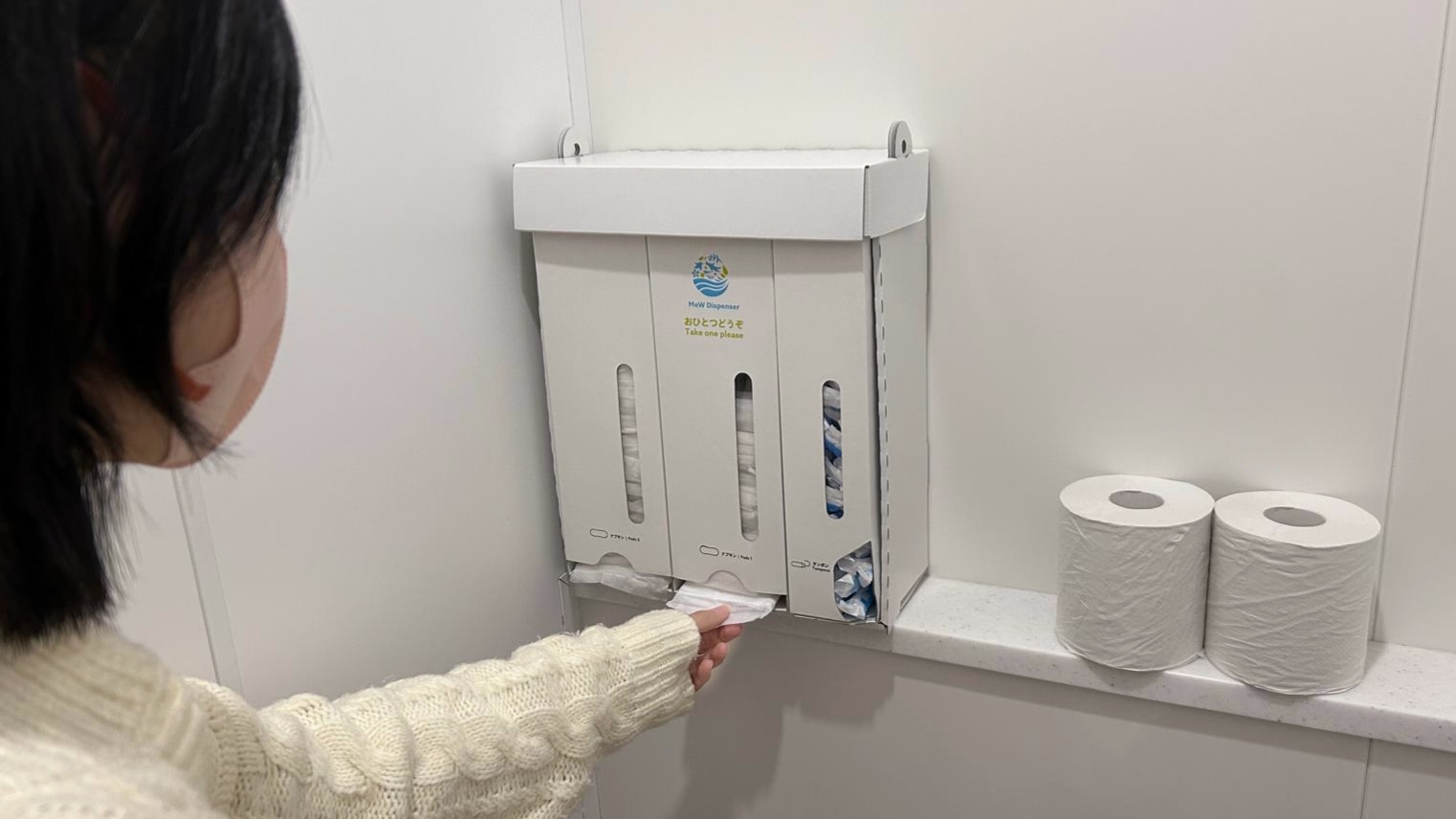
Osaka University MeW project, in collaboration with private
sectors, has developed an eco-friendly cardboard dispenser for
free access to menstrual products in toilets. Our dispensers
have been diffused to educational institutions and local
governments.
In the workshop after the symposium, attendees will have the
opportunity to experience assembling the dispenser, providing
a hands-on opportunity to reflect on universal design that
supports menstrual well-being. The MeW project is expanding
its network to other universities and organizations, with the
goal of fostering a dialogue on creating a future society
where menstrual products are accessible in public spaces.
Reports
【Reflection】
The symposium, themed “Designing a Future Society of Menstrual
Wellbeing,” featured a multifaceted discussion, comparing
international trends with domestic initiatives. At the
beginning of the symposium, the spread of the global movement
on menstruation was introduced, and it was shared that
menstrual hygiene management (MHM) is a social issue that has
attracted attention in the SDGs as well. The MeW Project is
working to create a system that allows anyone to receive
menstrual products in the bathroom free of charge.
The project has developed environmentally friendly cardboard
dispensers and installed them in educational institutions and
municipalities. In a questionnaire survey, many users
responded that they would prefer to receive the dispensers in
private cubicles, and many said that the dispenser would help
them calmly cope with sudden periods and provide them with a
sense of empathy and security.
The importance of menstrual support in times of disaster was
also mentioned, and in fact, dispensers were installed and
monitored in the areas affected by the Noto Peninsula
earthquake in 2024. Through these activities, the importance
of building a society where everyone can receive necessary
items not only in normal times but more so in emergency
situations was demonstrated.
On the other hand, various issues were also identified in the
dissemination of the dispensers, such as budgets, securing
installation sites, and opposition from the perspective of
gender equality. Therefore, more and more awareness-raising
activities through events and education, as well as ingenuity
in institutional design, will be required in the future.
This symposium was a major step toward removing the stigma
associated with menstruation and sharing the concept of
installing menstrual products in toilets as "the norm for
the future.” The symposium provided an opportunity for each
participant to consider this issue from his or her own
perspective and become involved in the co-creation of a future
society.
After the symposium, a workshop was held with visitors’
participation. In the first part of the workshop, participants
were divided into groups to discuss the “seven most common
reasons” for opposition to the new installation of free
menstrual products in toilets. Various ideas were raised, and
hints were suggested for the future spread of these ideas to
society at large and to their own immediate communities.
The second part of the workshop consisted of a “Senryu”
session on the subject of menstruation. Each participant -
those who had experienced menstruation and those who had not -
created a diverse set of Senryu, which were met with a variety
of comments such as, "I see!“ and ”Indeed!" were
heard from each group. It was a valuable opportunity to deepen
understanding of menstruation while having fun talking about
it.
【Post EXPO Initiatives】
The first initiative for the future is to further promote the
use of MeW (Menstraul Wellbeing) dispensers. The University of
Osaka already installed dispensers on all of its campuses,
with 264 units currently in operation. We would like to
further spread the use of the dispensers more widely and make
the concept of free menstrual products in toilets a default
service through the “installation of dispensers”.
In addition, efforts to deepen understanding and empathy
regarding menstruation will also be continued. Specifically,
the project is considering providing opportunities to deepen
understanding of menstruation through workshops for university
faculty and staff and menstruation classes for the general
public, and to widely communicate the philosophy and
objectives of the menstrual product provision project. In
order to foster a place where people can think and talk about
menstruation in a cheerful manner, plans are also being made
to hold events such as this one, where people can compose
menstrual Senryu.
Continued development is also planned for support in times of
disaster. In the disaster-stricken areas, there are many
foreign as well as Japanese evacuees, and designing universal
dispensers that take into account language barriers and
differences in cultural backgrounds is a future challenge. In
addition, the design of disaster toilets and trailers must
also incorporate menstrual friendly features.
In the future, it is expected that the understanding of
menstrual wellbeing will be further deepened through further
networking with other universities, high schools, and local
governments, as well as through collaboration with private
companies and NPOs. We will continue our daily and sustainable
efforts to realize a society where menstrual products are part
of a default service just as toilet paper has become so.
Co-creating Cultures for the Future Week
Symposium and workshop in contribution to "A society where everyone can have access to sanitary products in the toilet!"
As a significant step toward gender equality, Osaka University's UNESCO Chair MeW Project, which has been addressing the issues of "ensuring menstrual dignity" and "providing free menstrual products," will hold a symposium as part of a global movement.
-
2025.04.28[Mon]
16:30~19:30
(Venue Open 16:00)
- Pavilion
©大阪大学MeWプロジェクト
OTHER PROGRAM
Co-creating Cultures for the Future Week