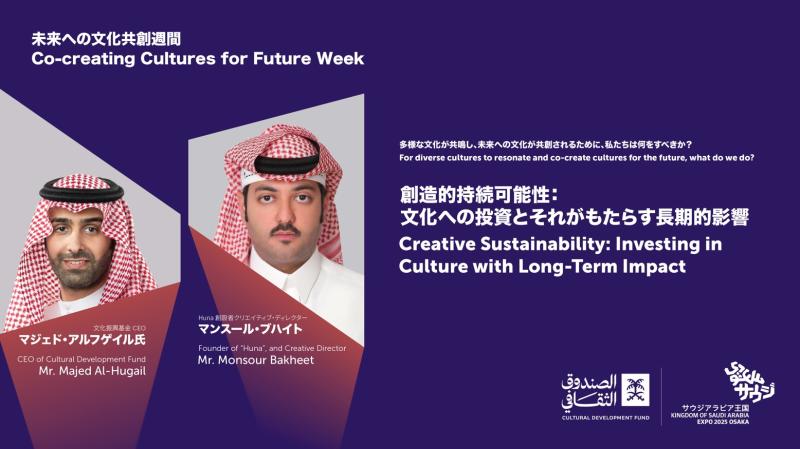
Co-creating Cultures for the Future Week
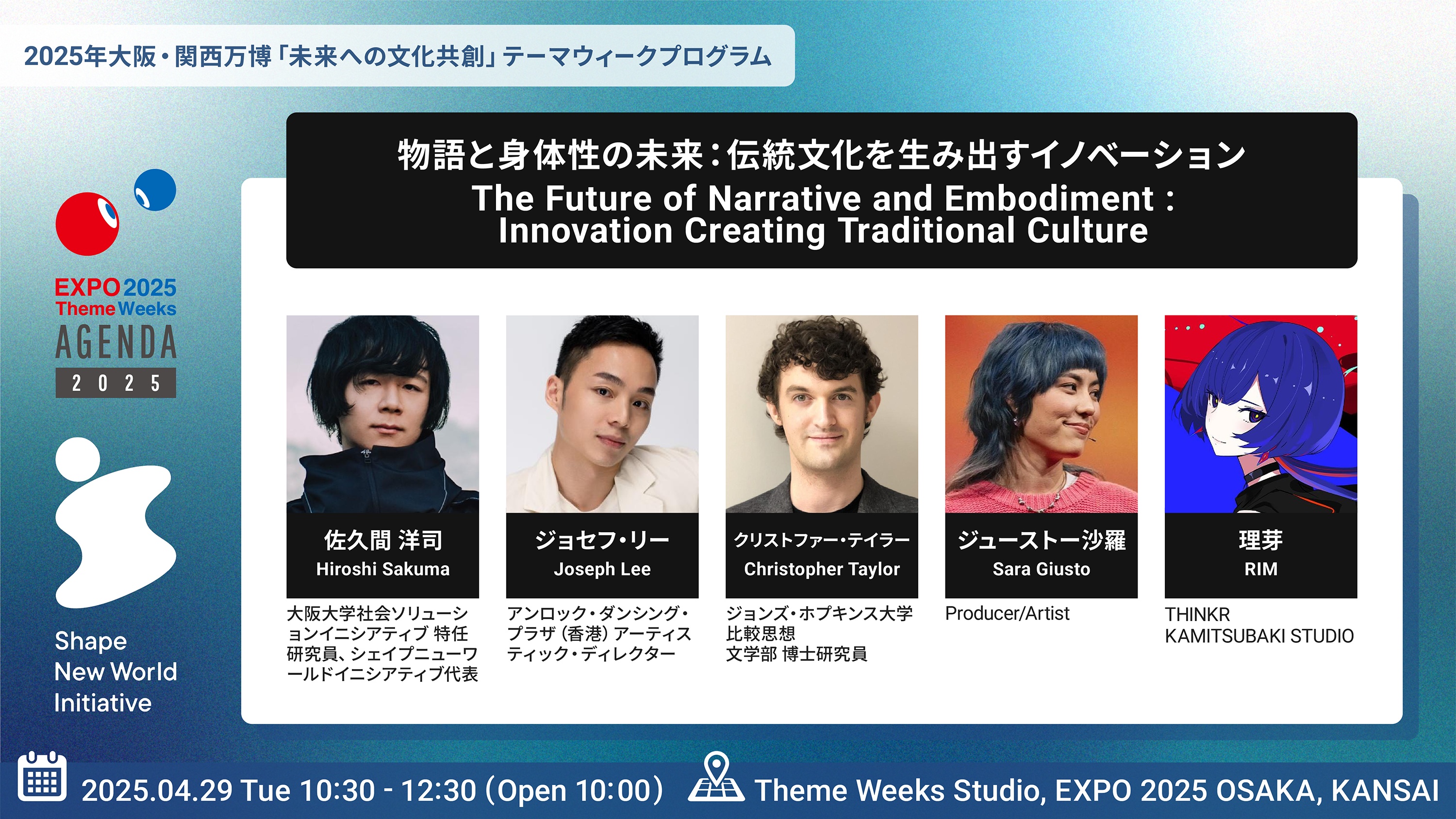
The Future of Narrative and Embodiment: Innovation Creating
Traditional Culture
Agenda 2025 Co-created Programme
Shape New World Initiative
[Hypothesis of the Future in 2050]
A future where innovations that extend the human body
transform our narratives into traditional culture.
Throughout history, we have created traditional culture
through the act of preserving memories as stories. Starting
from this idea, we will explore “new forms of traditional
culture” generated by cutting-edge technologies and
contemporary art. In particular, we will focus on
“embodiment” and “innovation” through a panel discussion to
consider the future of cultural co-creation toward 2050.
Recorded video available
Discussion
- Cultural arts
- Music
- Manga and anime
| Transmission of simultaneous interpretation | Provided |
|---|---|
| Language of interpretation | Japanese and English |
-

Agenda2025
Co-created Programme
-
Time and
Date of
the event -
-
2025.04.29[Tue]
10:30 ~ 12:30
(Venue Open 10:00)
-
- Venue
- Theme Weeks Studio
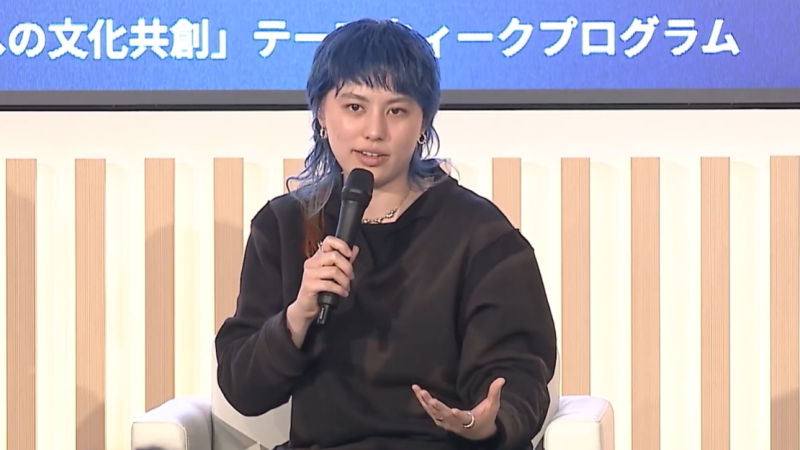
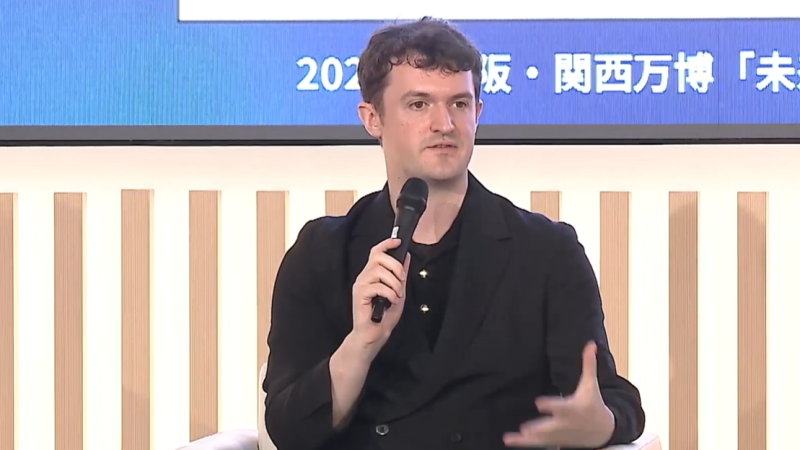
Programme details
*Subtitles: Choose “Subtitles/CC” in the “Settings” (gear
icon) at the bottom right of the YouTube video.
*Subtitles may not show with multiple languages or overlapping
audio.
Media has long recorded our stories as extensions of the human
body. Stories captured in various forms—from performances to
artworks—are eventually passed down as traditional culture.
When we view traditional culture through the lens of
“recording stories,” what role might innovation in technology
and contemporary art play in the future? In this program, we
will invite emerging artists, producers, and researchers
active in fields such as contemporary dance, virtual humans,
media art, and animation. Together, we will examine the
differences between entertainment and traditional culture, the
moments when stories are recorded through embodied experience,
and how technologies that extend the body will shape the
process of “cultural co-creation” in 2050.
Reports
【Reflection】
In this programme, ‘The Future of Narrative and Physicality:
Innovation that Creates Traditional Culture,’ participants
reflected on how the practice of recording memories and
stories through the body has been sublimated into traditional
culture, and discussed the possibilities of creating new
culture through cutting-edge technology and contemporary
art.
Participants included developers of virtual humans,
contemporary dance choreographers, film media researchers,
media artists, and virtual singers, among others, representing
a diverse range of fields. Each shared their perspectives on
the intersection of ‘physicality’ and ‘narrativity.’ During
the discussion, questions were raised about how technological
extensions of the body influence methods of expression and
reception, and where the boundary between entertainment and
traditional culture lies.
Particularly striking was the perspective that ‘stories become
tradition when recorded through the body.’ The opinion was
shared that bodily expression through technology has the
potential to lead to the construction of a new reality, rather
than simply being a virtual experience. There was also lively
dialogue among the participants, with many concrete visions
for the future of culture through co-creation being presented.
This programme was not merely an introduction to artistic
expression, but also a forum for sharing important questions
about how to connect the ‘process’ of creating culture to the
future. It was a meaningful session that served as a starting
point for future dialogue and practice.
【Post EXPO Initiatives】
Through this dialogue programme, the organisers and speakers
developed a strong desire to take further practical steps
towards the future of expression accompanied by physicality
and narrative. In particular, the hypothesis that the fusion
of technology that extends the body and storytelling as a
method of cultural recording will lead to the creation of new
traditional culture has been positioned as a starting point
for future activities.
As post-expo initiatives, the first step is to utilise the
network formed among the speakers to launch international
joint research and art projects. Examples include hybrid works
combining virtual humans, contemporary dance, and visual
expression, as well as projects to visualise ‘stories of the
body’ using archival technology.
In addition, as an activity to deepen cooperation with the
local community, plans are underway to hold ‘body and story
workshops’ for young people in collaboration with local
educational institutions and cultural facilities. These
activities are not limited to mere outreach, but aim to
co-create with the next generation who will carry the culture
of the future.
Furthermore, the establishment of a ‘cultural co-creation
archive’ is being considered, which will accumulate the
knowledge gained through dialogue and make it publicly
available to everyone. The goal is to create a foundation for
knowledge sharing not only within Japan but also with
researchers and artists overseas.
These initiatives aim to go beyond the Expo as a mere event
and to establish a creative cultural process in everyday life.
We plan to continue exploring new forms of cultural
co-creation through dialogue and practice, using technology,
physicality, and storytelling
*Part or all of this report was generated by AI.
Cast
Moderator
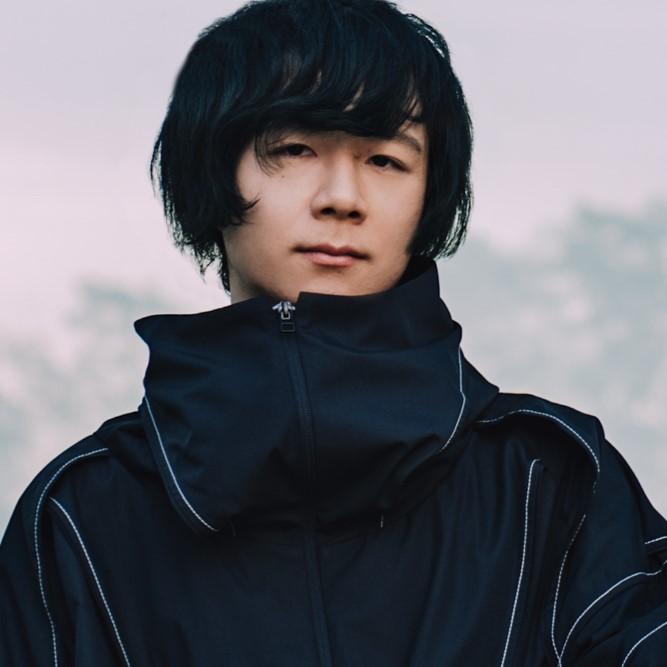
Hiroshi Sakuma
Specially Appointed Researcher at the Social Solutions Initiative, Osaka University, Head of the Shape New World Initiative
Born in 1996. Mr. Sakuma has been engaged in the research on the new form of communication using avatars and agents at Osaka University. At Expo 2025 Osaka, Kansai, Japan, he is in charge of the exhibition "Future Virtual Being" as a director of Osaka Pavilion. He is also a principal investigator of the research on the design of future societies, a joint research project between Osaka University and the Japan Science and Technology Agency. In addition to his current position as a chairperson of Shape New World Committee, Osaka Chamber of Commerce and Industry and he is also a member of Science Fiction and Fantasy Writers of Japan. In 2021, he was appointed as a team leader for a research study on the Moonshot Research and Development Program. He was selected as one of the Forbes 30 Under 30 Japan 2023 and is a recipient of the Minister of Education, Culture, Sports, Science and Technology Award of the Japan Open Innovation Prize.
View Profile
Close
close
Speakers
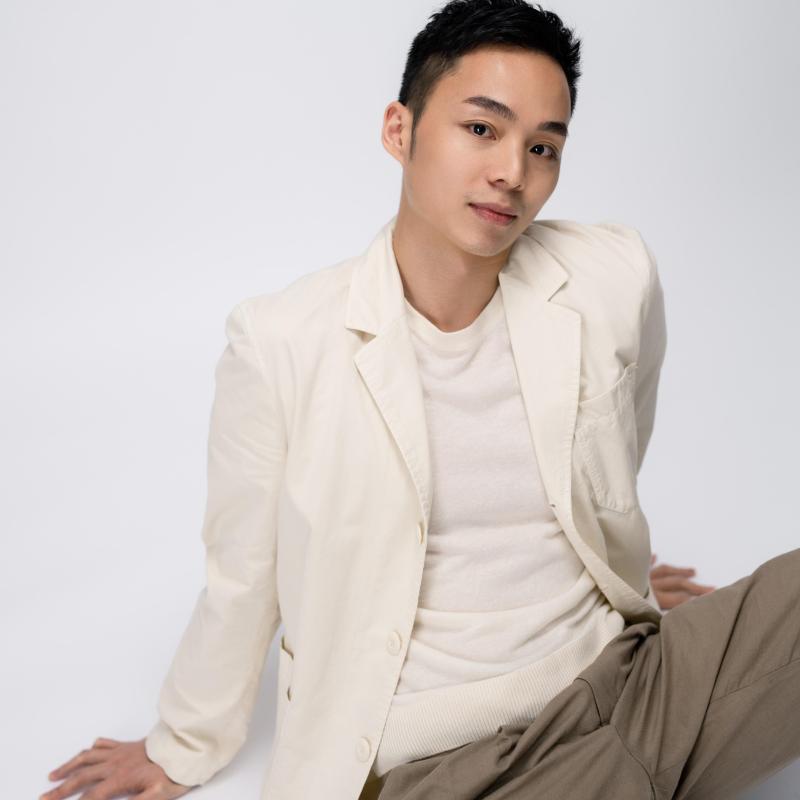
Joseph Lee
Artistic Director, Unlock Dancing Plaza (HK)
Joseph Lee is a choreographer, performer, and performance curator based in Hong Kong. Lee graduated from the Chinese University of Hong Kong and The Place, London Contemporary Dance School and was appointed as the Artistic Director of Unlock Dancing Plaza in 2022. Lee’s curatorial work focuses on the unheralded aspects of the local contemporary dance culture, such as the production, archive, and dissemination of knowledge in the creative process, the dialogue between cross-cultural contexts and cross-artistic mediums, such as residency-based dance festivals #DANCELESS complex, and Unlock Body Lab: Open Research Week of the co-learning platform, etc., in an attempt to broaden the creation perspective on the body as the main medium. His recent curatorial project #DANCELESS complex 2026 attempts to create a translocal network for contemporary performance within Asia Pacific to raise the visibility and sustainability of the artists in this region. Lee is active in creating works around pop culture, queer body, physical labor, and the overlap and gap between dance and its images. Lee’s choreographic works have been toured in the UK, Germany, Japan, Australia, South Korea, Shanghai, and Beijing, and his video works has been selected and screened at prestigious experimental film festival such as EXiS in Seoul, Image Forum Festival in Japan and South Taiwan Film Festival and so on. Lee is the recipient of the Award for Young Artist presented by the Hong Kong Arts Development Council in 2017.
View Profile
Close
close
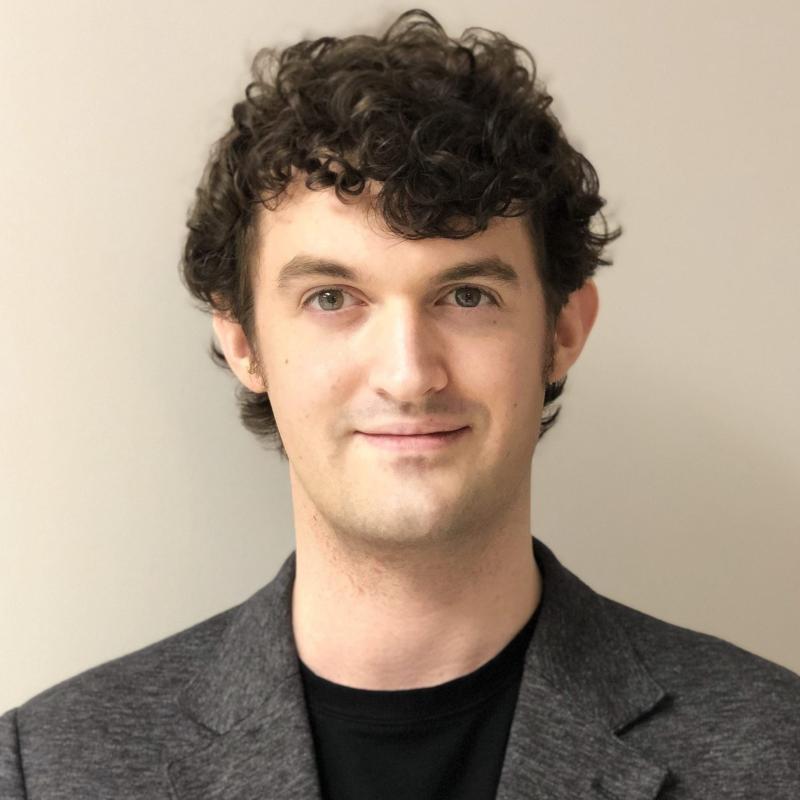
Christopher Taylor
Postdoctoral Research Fellow, Department of Comparative Thought and Literature, Johns Hopkins University
Prior to his postdoctoral appointment at The Department of Comparative Thought and Literature, Chris was a Blakemore Freeman Fellow in 2020-2021, a Japan Society for the Promotion of Science visiting research fellow at the University of Tokyo in 2021-2022, and, most recently, an AGHI graduate research fellow in 2023-2024. Chris completed his PhD in Comparative Thought and Literature with a certificate in film and media at Johns Hopkins University and holds a BA in Philosophy from Yale University. His current project investigates the production of novel concepts of artificial humanity—human-constructed humans—and animacy in 20th-century Japan. His comparative research interests focus on the history and theory of animated media (broadly conceived) in relation to modernism, visual culture, world cinema, and the history of technology.
View Profile
Close
close
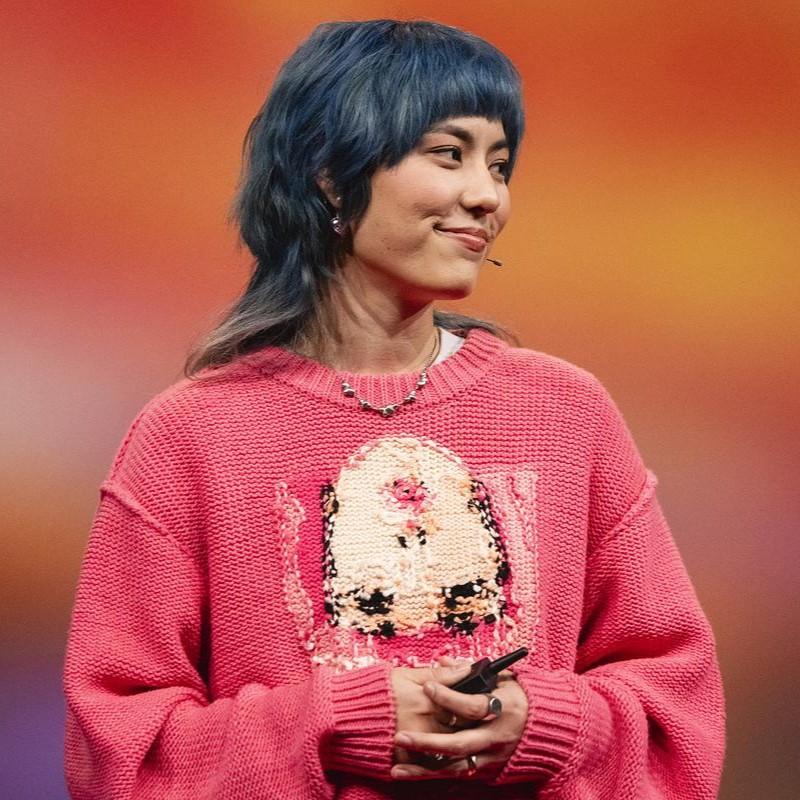
Sara Giusto
Producer/Artist
Born in 1995 in Fukuoka, Japan. Spent ages 8 to 18 living in Canada and Hawaii. Returned to Japan for university and graduated from Musashino Art University in 2018 with a degree in Oil Painting. After working as a curator at an art gallery, joined Aww Inc. in 2020, a company specializing in virtual humans. Selected as a Forbes JAPAN 30 UNDER 30 honoree in the Science, Technology & Local category in 2023. In April 2024, gave a TED Talk titled “The Rise of Virtual Humans — and What They Mean for the Future” at TED Conferences.
View Profile
Close
close
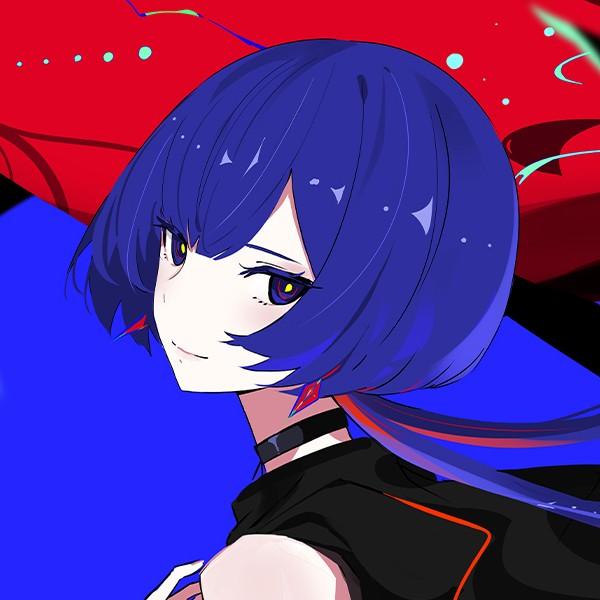
RIM
THINKR, KAMITSUBAKI STUDIO
A girl with enigmatic eyes who likes to sing Japanese, English, and Korean songs. With a mysterious voice that combines transparency and luster, she is a next-generation virtual singer with the potential to cross genres and borders.
View Profile
Close
close
Co-creating Cultures for the Future Week
The Future of Narrative and Embodiment: Innovation Creating
Traditional Culture
Agenda 2025 Co-created Programme
[Hypothesis of the Future in 2050]
A future where innovations that extend the human body
transform our narratives into traditional culture.
Throughout history, we have created traditional culture
through the act of preserving memories as stories. Starting
from this idea, we will explore “new forms of traditional
culture” generated by cutting-edge technologies and
contemporary art. In particular, we will focus on “embodiment”
and “innovation” through a panel discussion to consider the
future of cultural co-creation toward 2050.
-
2025.04.29[Tue]
10:30~12:30
(Venue Open 10:00)
- Theme Weeks Studio
OTHER PROGRAM
Co-creating Cultures for the Future Week