Necessities of Life: Food, Clothing and Shelter Week
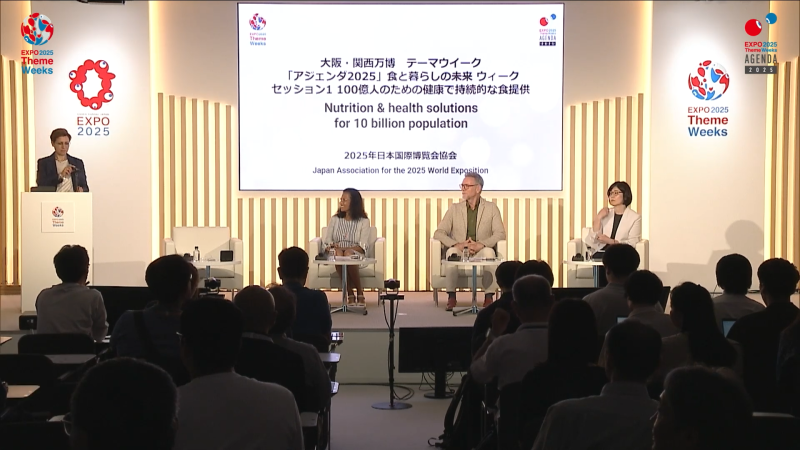
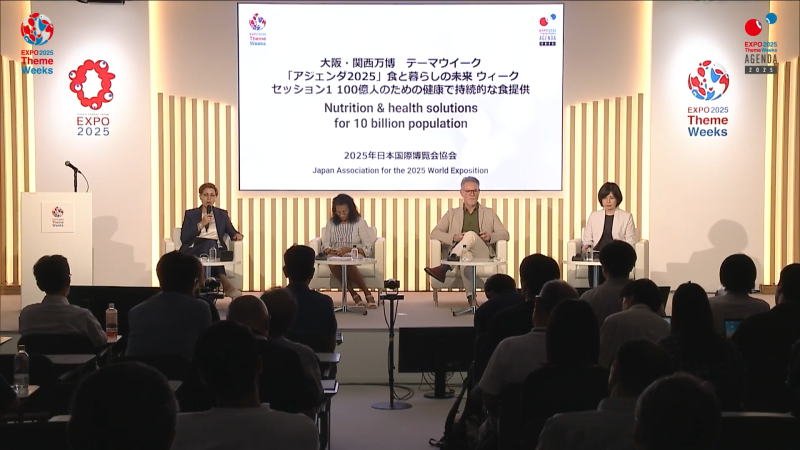
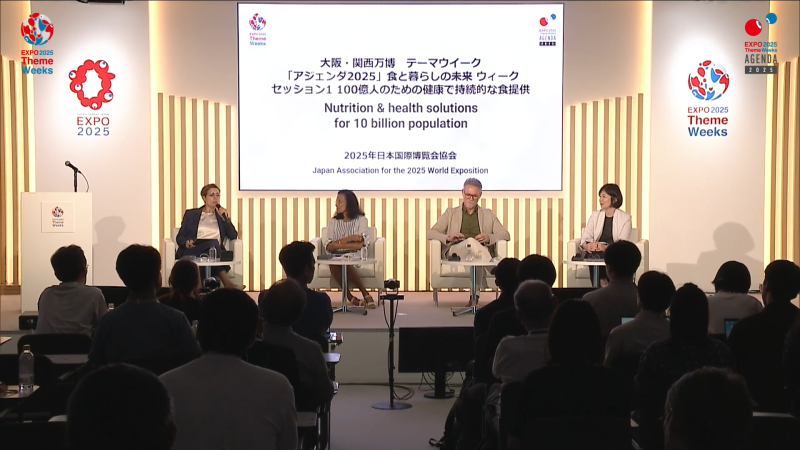
Nutrition & health solutions for 10 billion population
Japan Association for the 2025 World Exposition
The programme, together with the General Sponsors, explores: 'How can we ensure that the 10B population can access and afford nutritious food produced within planetary boundaries?'
Recorded video available
Discussion
- Others
| Transmission of simultaneous interpretation | Provided |
|---|---|
| Language of interpretation | Japanese and English |
-

Agenda2025
Organised Programme
-
Time and
Date of
the event -
-
2025.06.16[Mon]
10:00 ~ 12:00
(Venue Open 09:30)
-
- Venue
- Theme Weeks Studio
Programme details
*Subtitles: Choose “Subtitles/CC” in the “Settings” (gear
icon) at the bottom right of the YouTube video.*Subtitles may
not show with multiple languages or overlapping audio.
How can we provide nutritious food to a global population
expected to exceed 10 billion – without breaching planetary
limits? This dynamic session will tackle one of the most
urgent and complex challenges of our time: transforming our
food systems to deliver health, equity, and sustainability for
all.
Drawing from global and Asian experiences, the session will
unpack the root causes of today’s food system challenges –
from food loss, waste, and ecosystem degradation to
malnutrition and rising chronic disease. Panelists will
explore the interlinked issues of unsustainable production,
inequitable access, and unhealthy consumption patterns.
In a two-part discussion, we’ll first examine systemic
barriers – such as climate impacts, supply chain disruptions,
and lack of consumer awareness – before shifting to solutions.
These include regenerative agriculture, dietary shifts,
circular value chains, policy innovation, and tech-enabled
consumer engagement.
Participants will hear real-world insights from business,
civil society, and science, and learn about emerging
innovations that are helping to reshape the future of food.
This is a must-attend session for anyone seeking to understand
– and accelerate – the shift to a food system that works for
people and planet alike.
Reports
<Programme Summary>
At Expo 2025 Osaka, Kansai, the Theme Week initiative presents
diverse approaches to global issues. During the 'Future
of Food and Living Week,' the programme titled
'Nutrition & Health Solutions for 10 Billion
Population' explored how to design a sustainable and
inclusive food future amidst challenges such as population
growth, climate change, and nutritional inequality.
Participants from international organizations, food companies,
academia, and civil society gathered to discuss broad topics
including food system reform, the balance between nutrition
and health, ensuring access to food, and the ethical and
cultural dimensions of eating. A key focus was on redefining
food not merely as a source of energy, but as central to human
dignity, community formation, and harmonious living with
nature.
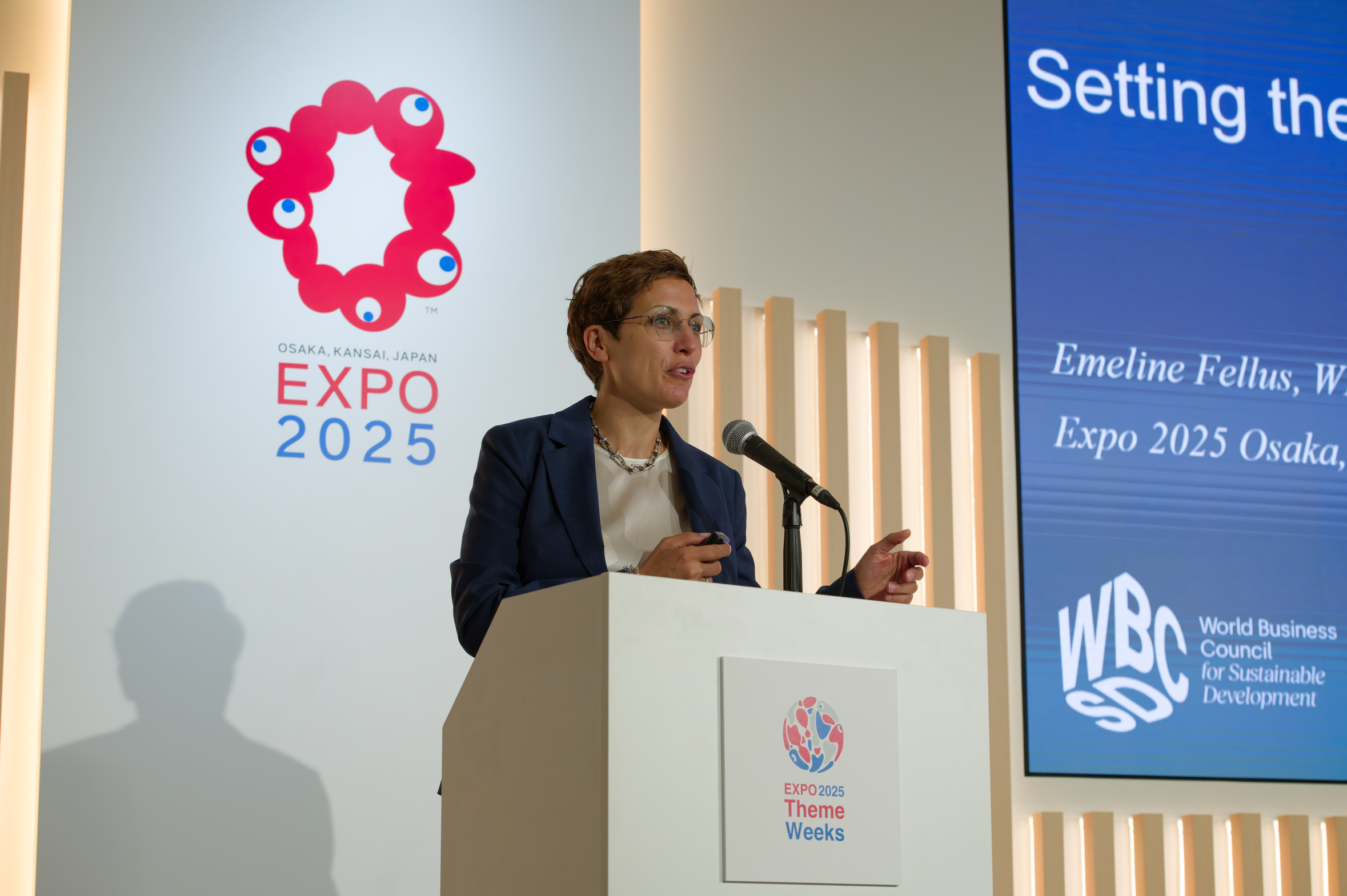
<Speaker Summary: Emeline Fellus>
Emeline Fellus, Senior Director of Agriculture and Food at
WBCSD, opened the session by raising critical questions about
the future of food systems in a world of 10 billion people.
She pointed out that the current global food system is
reaching its limits environmentally, socially, and
economically, highlighting the dual crises of climate change
and nutritional disparity. Fellus emphasized the urgency of
redesigning the system with sustainability, inclusiveness, and
resilience at its core. She introduced WBCSD’s efforts to
align global companies across the food value chain and create
platforms involving farmers, consumers, and governments.
Noting that 'transformation cannot be achieved
alone,' she stressed the importance of collaboration and
evidence-based policymaking to ensure transparency and trust.
She concluded by underscoring that the future of sustainable
food depends on the decisions and actions of every individual
and expressed hope that this dialogue would spark new
cross-sectoral partnerships.
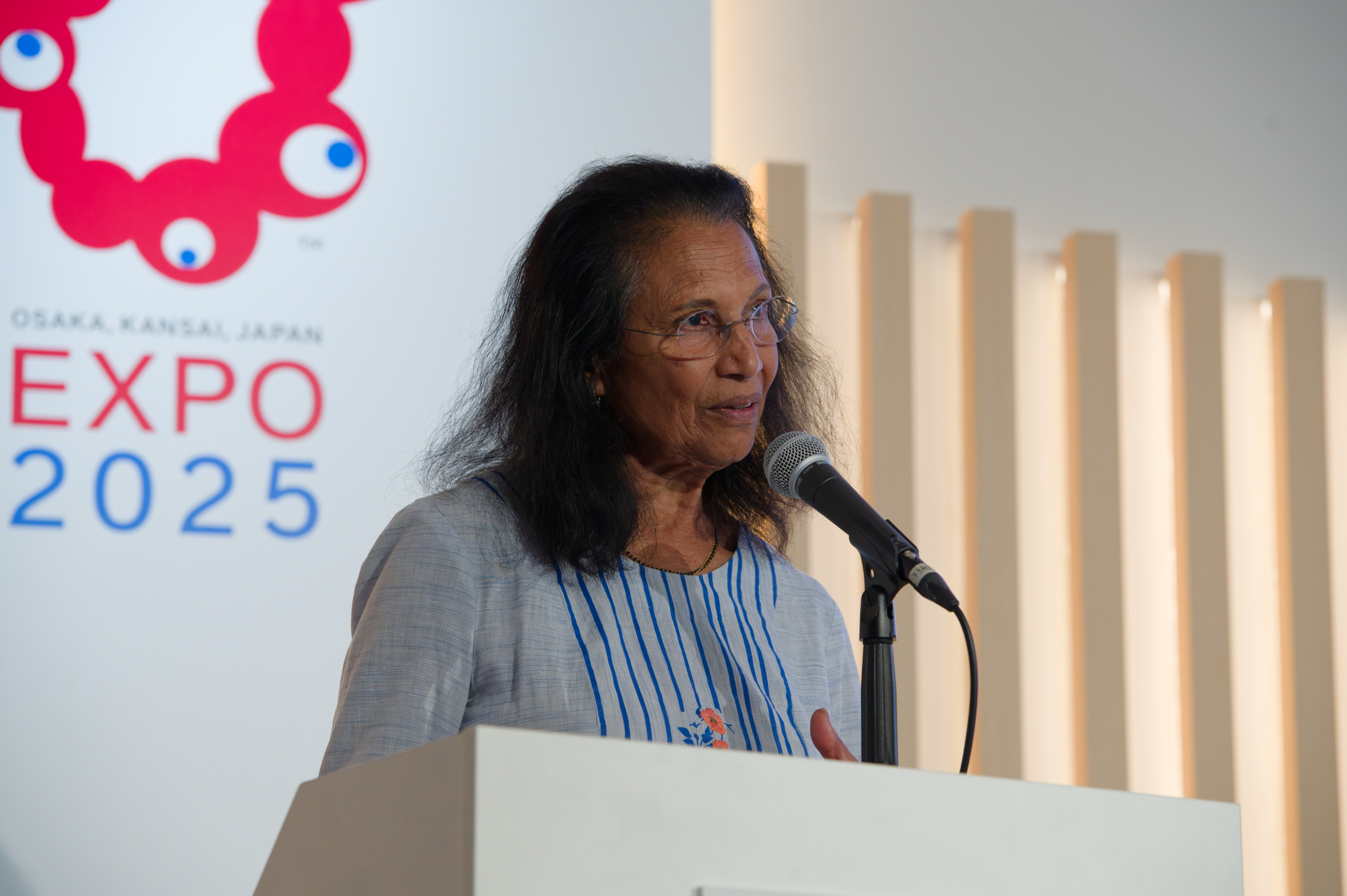
<Speaker Summary: Shakuntala Haraksingh Thilsted>
Shakuntala Haraksingh Thilsted, Director at CGIAR, highlighted
strategies connecting science, policy, and on-the-ground
practice to improve nutrition and sustainable food supply,
especially in developing countries. She stressed the
nutritional value of aquatic resources, especially small-scale
fisheries and inland aquaculture, as essential to the health
and livelihoods of communities in South Asia and Africa.
Thilsted noted that fish, rich in proteins, vitamins,
minerals, and fatty acids, are key to child development and
women's health, but often underrepresented in policy
frameworks. Her projects incorporate local women and farmers,
promoting nutrient-rich fish breeding, simple cooking
techniques, and inclusion in school meals. She emphasized that
such actions support gender equity, education, and community
resilience, advocating for a fusion of international science
and traditional knowledge. She concluded by calling for global
collaboration in reforming food systems centered on nutrition,
emphasizing the need to respect diverse ingredients and food
cultures.
<Speaker Summary: Joao Campari>
Joao Campari, Global Leader at WWF International, spoke about
the urgent need for a transition to nature-based food systems.
He noted the current system’s role in worsening climate
change, biodiversity loss, and water depletion, as well as
increasing malnutrition and health inequities. Campari
stressed that the mass production-consumption model is no
longer viable for a population nearing 10 billion and
advocated for Nature-based Solutions (NbS). WWF promotes
redesigning agricultural practices, sustainable fisheries, and
zero-deforestation supply chains. He emphasized the necessity
of policy reform and financial redesign, stating that the
private sector is a solution partner, not a risk. He also
highlighted the importance of consumer education, promoting
plant-based diets, reducing food waste, and choosing seasonal
and local foods. Campari concluded by encouraging hope through
grassroots efforts and emphasized the global responsibility to
future generations.
<Speaker Summary: Kaori Ono>
Kaori Ono, Executive Officer at AJINOMOTO, discussed corporate
initiatives for achieving sustainable and healthy food.
AJINOMOTO leverages amino science to address nutrition, reduce
food loss, and lower environmental impact. Ono highlighted the
triple burden of undernutrition, lifestyle diseases, and
environmental strain, calling for a paradigm shift. The
company visualizes regional nutrition data to develop tailored
products, especially for Africa and Asia, addressing
'hidden hunger' by fortifying seasonings and instant
foods. She emphasized balancing health with 'joy of
eating,' where scientific flavor design improves eating
behaviors. To reduce food loss, the company improves
manufacturing, logistics, labeling, and consumer education.
Ono concluded that sustainability is core to business and
called for public-private and global collaboration, stating,
'Every meal contains the health of the Earth and its
people.'
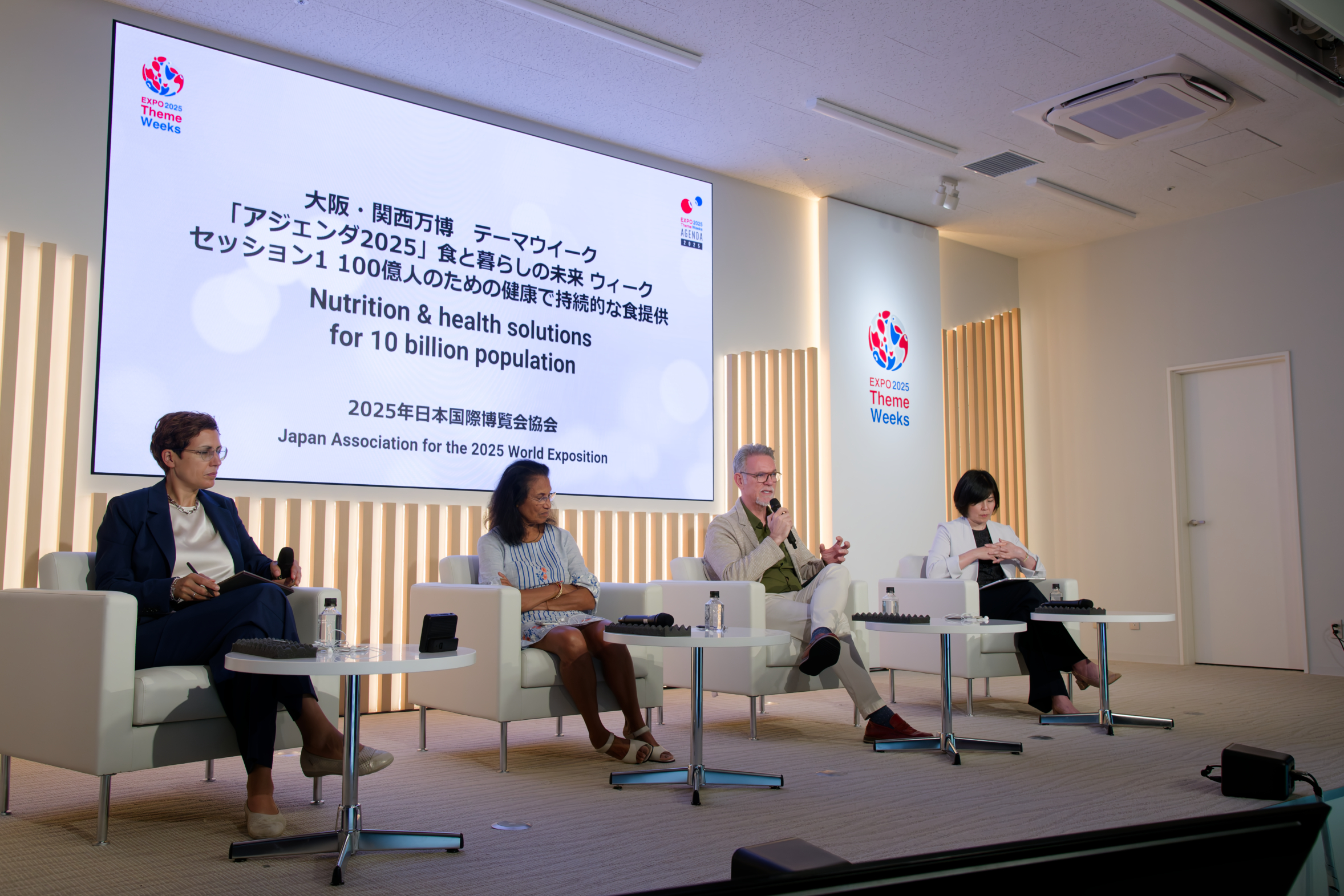
<Discussion Summary>
In the discussion session, panelists exchanged ideas on
building sustainable food systems for a population of 10
billion. Moderator Fellus identified common challenges:
multi-stakeholder collaboration, consumer awareness, and
policy alignment. Campari emphasized institutional reform and
financing mechanisms, while Ono stressed behavioral science in
product design to influence consumer choices toward
sustainability. Thilsted reiterated the need to refocus food
systems on nutrition, especially by supporting aquatic
resources and smallholder farmers. All panelists agreed on the
critical role of education in promoting food and environmental
literacy. Fellus concluded by noting that transformation
requires both grassroots action and global policy, and that
local innovations can drive global change. The session
reaffirmed the importance of strategies and collaboration to
simultaneously pursue health, environmental sustainability,
and social inclusion through food.
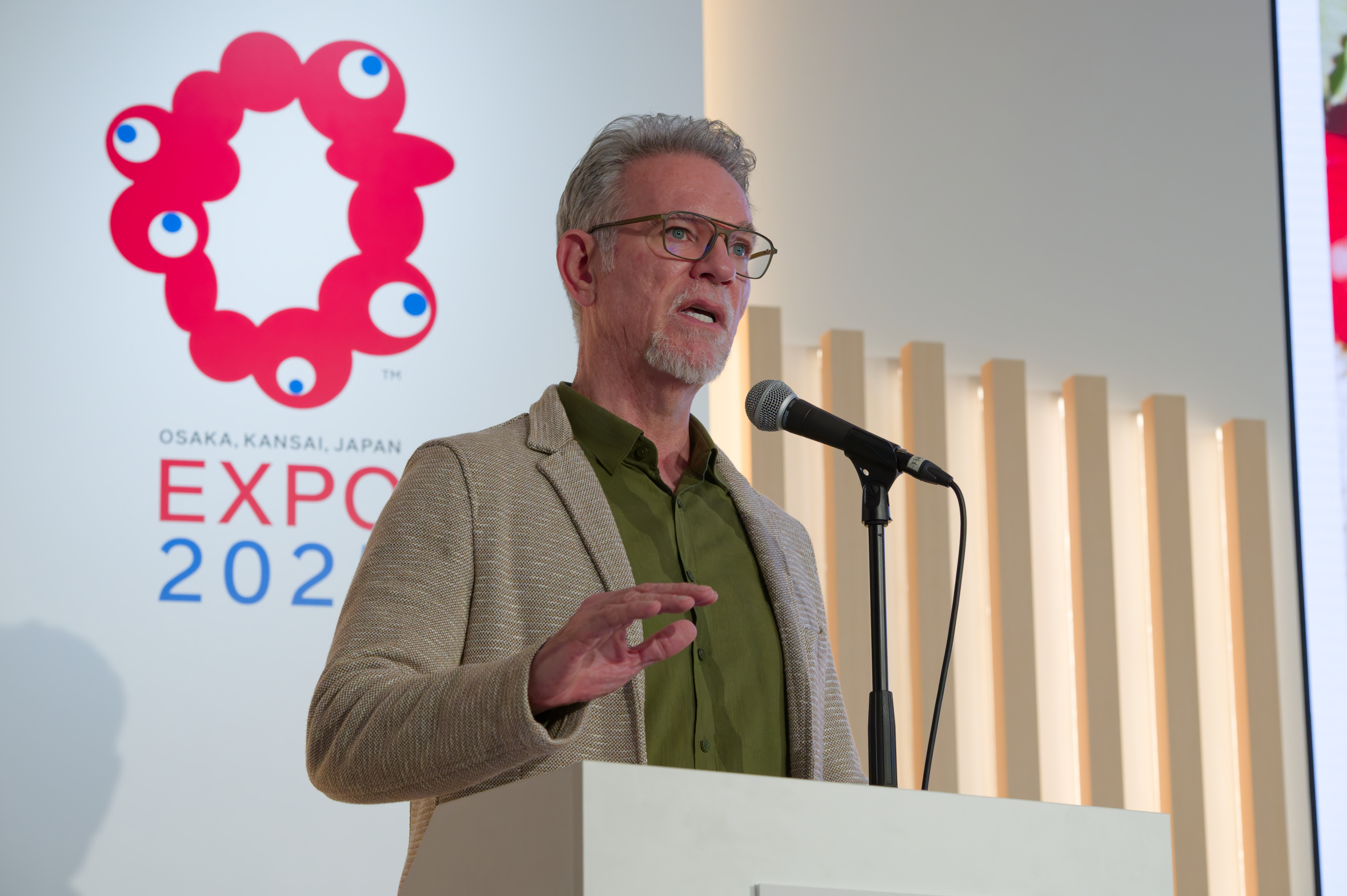
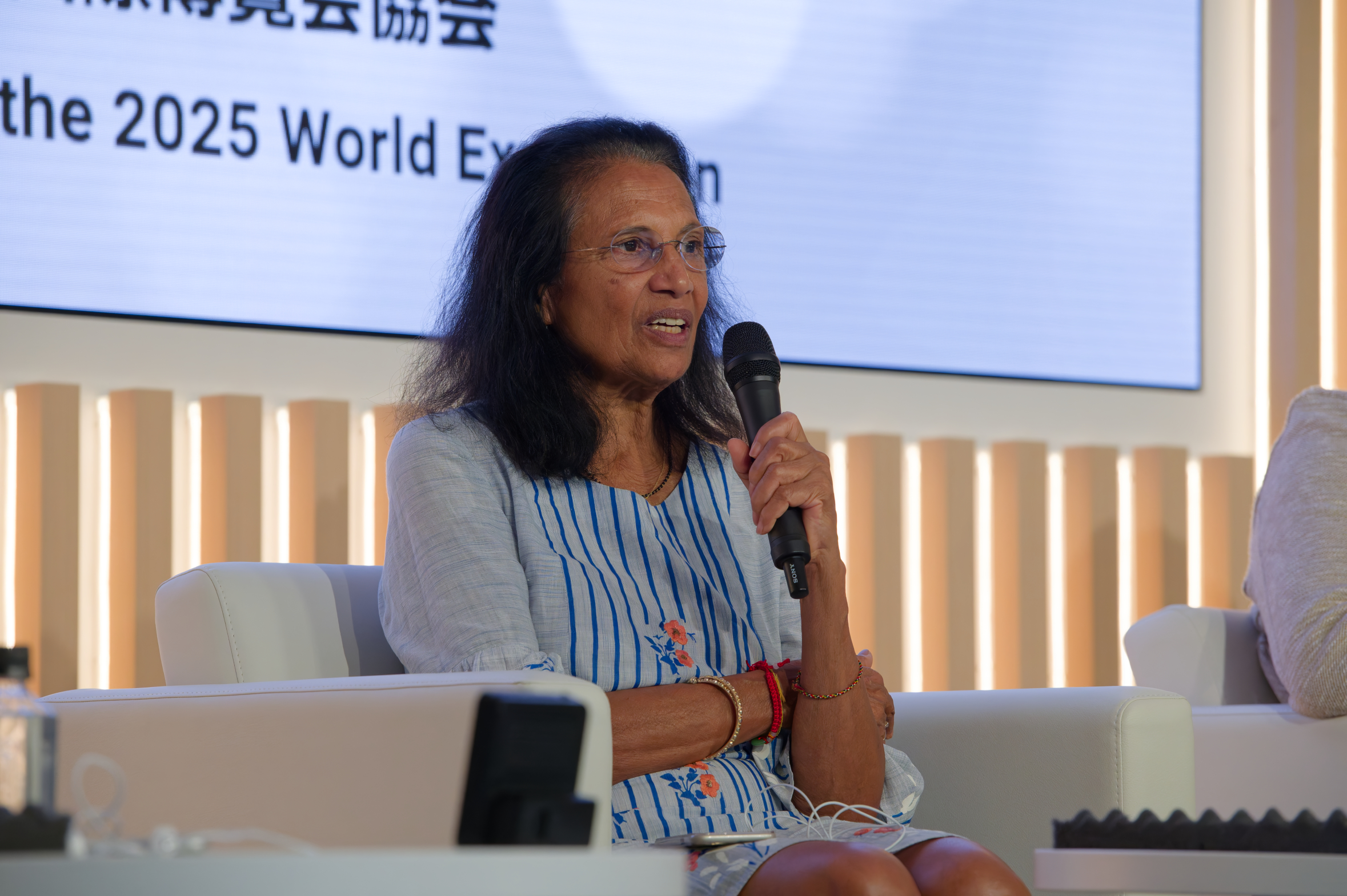
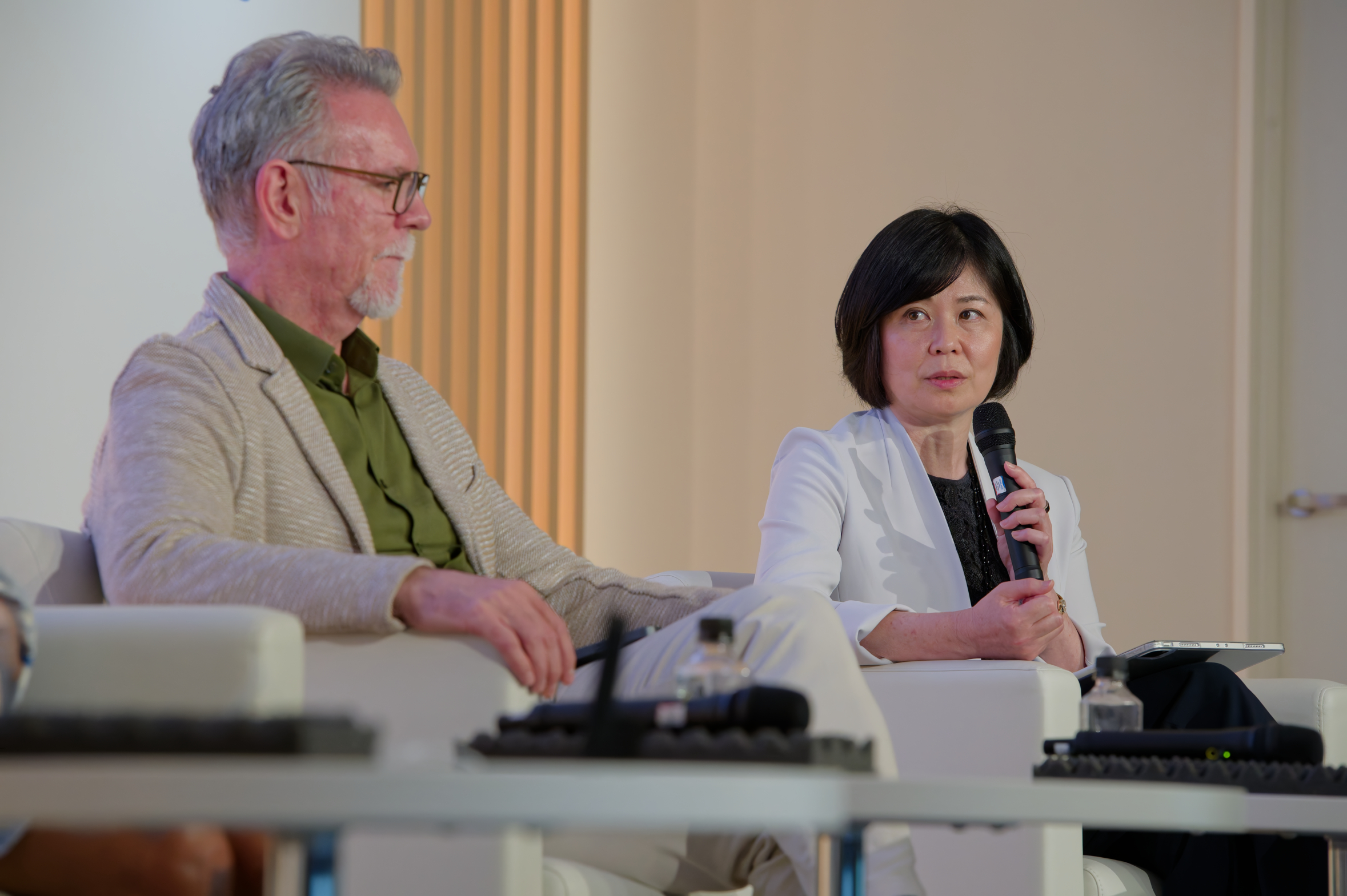
Cast
Moderator

©WBCSD
Emeline Fellus
Senior Director, Agriculture and Food at the World Business Council for Sustainable Development (WBCSD)
Emeline Fellus is Senior Director, Agriculture and
Food at the World Business Council for Sustainable
Development (WBCSD). She leads the organisation’s
agriculture and food pathway, which includes 60+
companies and nearly 30 team members. She is a member
of WBCSD’s Extended Leadership Group, as well as a
member of The Beans is How Board, Regen10’s High Level
Advisory Group and the World Benchmarking Alliance’s
Expert Review Committee.
Prior to joining WBCSD, Mrs Fellus worked with the
Sustainable Agriculture Initiative (SAI) Platform for
14 years. She helped build the organization, which
grew from 3 founding companies to nearly 100 members
when she left. In SAI Platform, Mrs Fellus endorsed
several roles including Coordinator, Head of Learning
and Implementation, and Deputy General Manager. During
that time, she also supported Nestlé’s Sustainable
Agriculture team in their water-specific strategy.
Before then, Mrs Fellus worked for two years as
Associate Economic Affairs Officer at the Economics
and Trade Branch (ETB) of the United Nations
Environment Programme (UNEP).
Emeline Fellus is an agronomist, with a major in
natural resources’ economics and policies.
She also graduated from the Yale School of Management
& ESADE Business School – WBCSD LEAP
Sustainability Program, Executive Education.
View Profile
Close
close
Speakers
Joao Campari
Global Leader Food and Agriculture Practice WWF International & Chair Action Track 3 UN Food Systems Summit
Joao is Global Leader of WWF's Food Practice, in charge of the Network´s efforts to enhance the sustainability of food systems worldwide. He leads a team that co-designs, with WWF's country offices and external partners, solutions that deliver nature-positive production, sustainable diets and reduction of food loss and food waste. Concurrently with his role at WWF, Joao has served as Chair of Action Track 3 of the UN Food Systems Summit, leading the Summit's work on nature-positive food production systems. Prior to WWF, Joao held the position of Special Environmental and Sustainability Advisor to Brazil´s Minister of Agriculture. Joao has held technical and executive positions in multilateral and bilateral agencies (World Bank, UNDP and DFID), in the federal government of Brazil (Ministry of the Environment and Ministry of Agriculture) and has advised national and sub-national governments (in Brazil, Argentina, Bolivia and Paraguay) on the design and implementation of regional development policies, combining socio-economic rural development with conservation. For thirteen years, Joao worked for The Nature Conservancy as Program Director in Latin America, Executive Director in Brazil and Lead Economist for the Global Lands program. Joao holds a bachelor´s degree in international relations and economics, a master’s degree in economics, a Ph.D. in environmental economics and has graduated from the General Management Program at the Harvard Business School. He has published two books on the economics of tropical deforestation and, in 2014, he was nominated among the top 100 Brazilian leaders in the agricultural sector for the disruptive work conducted on agriculture and conservation. Joao serves on the sustainability advisory and steering boards of NGOs, global agri-food platforms and companies, and the Global Futures Council on Food System Innovation of the World Economic Forum.
View Profile
Close
close
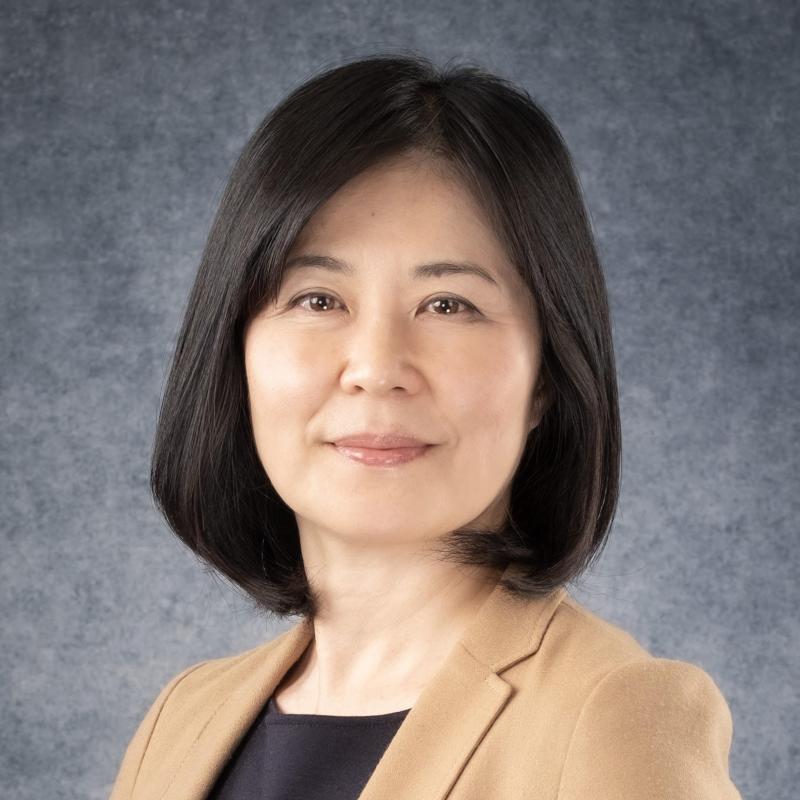
Kaori Ono, PhD.
Executive Officer, General Manager, Sustainability Development Department, Corporate Division, AJINOMOTO CO., INC.
She has extensive experience in the fields of health and nutrition, particularly in physiological research and product development of amino acids, and is an expert in regulatory affairs of nutrition and food. She has been fond of trekking and cycling since she was a child, and has a strong passion for the global environment and issues related food and nutrition. After serving as the head of sustainability while stationed in Europe, she has devoted herself to the cause, and is currently energetically promoting the simultaneous creation of social value and economic value at the head office.
View Profile
Close
close
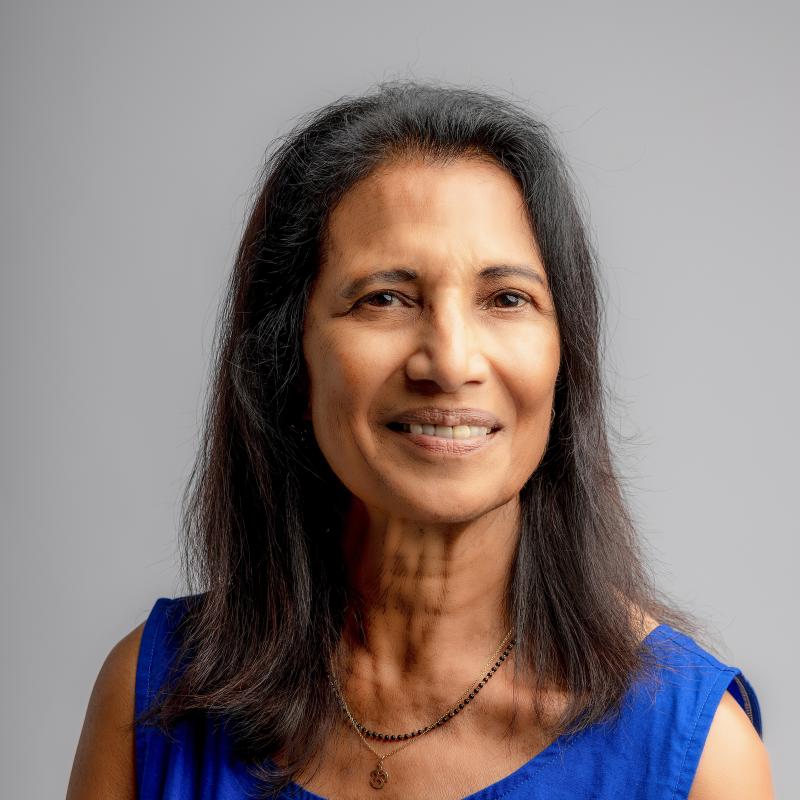
Shakuntala Haraksingh Thilsted
Director for Nutrition, Health and Food Security Impact Area Platform, CGIAR
Shakuntala Haraksingh Thilsted is the Director for Nutrition, Health and Food Security Impact Area Platform, CGIAR. She was awarded the 2021 World Food Prize for her ground-breaking research and landmark innovations in developing holistic, nutrition-sensitive approaches to aquatic food systems. She was awarded the 2021 Arrell Global Food Innovation Award for research innovation. She is the Chair of the Scientific Advisory Committee (SAC) of the UN Food Systems Coordination Hub. She was a member of the Steering Committee of the High Level Panel of Experts on Food Security and Nutrition (HLPE) of the United Nations Committee on World Food Security (CFS) and Vice Chair of the UN Food Systems Summit 2021: Action Track 4 - Advance Equitable Livelihoods. In 2022, Shakuntala was appointed co-chair of the EAT-Lancet 2.0 Commission. Shakuntala holds a PhD from the Royal Veterinary and Agricultural University, Denmark. She holds Honorary Doctorates from the Swedish University of Agricultural Sciences and The University of the West Indies.
View Profile
Close
close
Necessities of Life: Food, Clothing and Shelter Week
Nutrition & health solutions for 10 billion population
The programme, together with the General Sponsors, explores: 'How can we ensure that the 10B population can access and afford nutritious food produced within planetary boundaries?'
-
2025.06.16[Mon]
10:00~12:00
(Venue Open 09:30)
- Theme Weeks Studio

OTHER PROGRAM
Necessities of Life: Food, Clothing and Shelter Week