Necessities of Life: Food, Clothing and Shelter Week
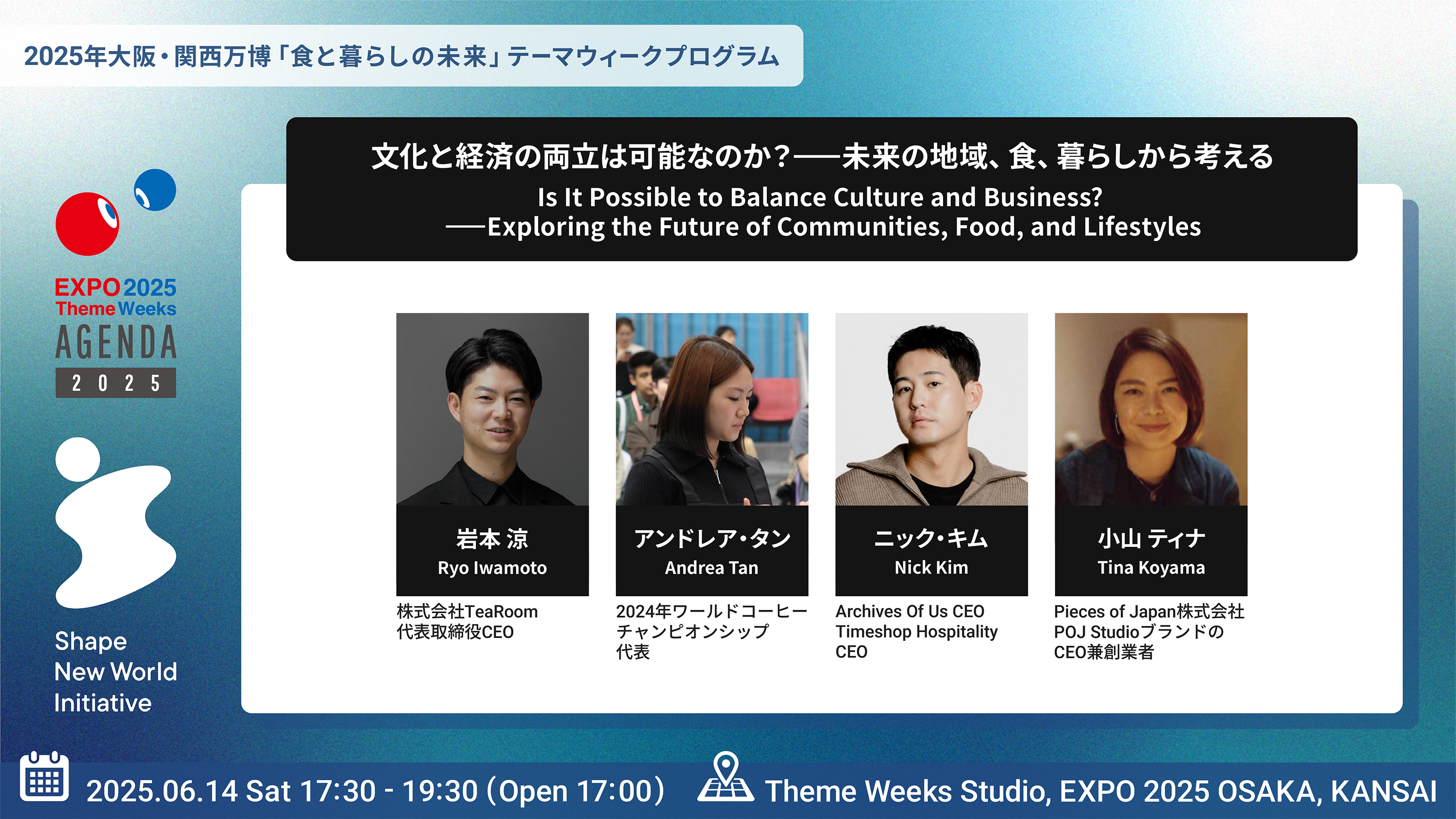
Is It Possible to Balance Culture and Business? — Exploring
the Future of Communities, Food, and Lifestyles
Agenda 2025 Co-created Programme
Shape New World Initiative
[Hypothesis of the Future in 2050]
What does the future of our communities, food, and
lifestyles look like in 2050? Will efficiency lead to a loss
of local identity and commodification? This talk gathers
experts to discuss how we can balance culture and business,
exploring the future we truly desire.
Recorded video available
Discussion
- Food culture
- Food education
- Ethical consumption
| Transmission of simultaneous interpretation | Provided |
|---|---|
| Language of interpretation | Japanese and English |
-

Agenda2025
Co-created Programme
-
Time and
Date of
the event -
-
2025.06.14[Sat]
17:30 ~ 19:30
(Venue Open 17:00)
-
- Venue
- Theme Weeks Studio
Programme details
*Subtitles: Choose “Subtitles/CC” in the “Settings” (gear
icon) at the bottom right of the YouTube video.
*Subtitles may not show with multiple languages or overlapping
audio.
Around the world local shops are disappearing, replaced by
large franchises. Local produce is discarded if it doesn’t
meet strict standards, with distribution causing environmental
concerns. As we look toward 2050, food, community, and
lifestyle must be considered together. This session gathers
forward-thinking leaders to discuss the balance of culture and
business, exploring how we can sustain local traditions while
addressing global challenges.
Reports
【Reflection】
This talk session was a valuable opportunity for us to engage
in a multi-faceted discussion on the theme, "Is It
Possible to Balance Culture and Business?" with esteemed
experts active on a global scale. A significant achievement
was our ability to delve deeply into the concept of the
"Culturepreneur"—individuals who create business
while respecting culture, rather than solely pursuing economic
efficiency.
The speakers shared a collective sense of urgency regarding
the local cultures and traditional crafts that are at risk of
being lost amidst the tide of globalization. At the same time,
they presented a hopeful perspective: younger generations are
leveraging technology and social media to rediscover the value
of traditional culture and establish viable business models
around it.
We also received an important insight that a physical venue
like the Osaka-Kansai Expo plays a crucial role in fostering
inspiration and human connection in a digital society. The
observation that social media can, on one hand, undermine
craftsmanship by demanding efficiency, while on the other,
serve as a powerful tool to amplify the stories and passions
of creators, provided us with a vital perspective for
reconsidering the new relationship between culture and
business.
We believe that this session was a great success in fostering
a shared understanding that preserving culture is essential
for maintaining identity and purpose. We are confident that we
were able to provide concrete hints and a clear direction for
the next generation on how to integrate traditional values
into modern business models.
【Post EXPO Initiatives】
The theme of "balancing culture and business" that
emerged from this session is a crucial issue that we intend to
continue addressing after the Expo. Based on the discussion,
we plan to promote the following initiatives.
First, we will build a sustainable platform and community
where global "Culturepreneurs," including the
speakers from this session, can continue to collaborate. This
will serve as a foundation for sharing knowledge from
different cultures and fields, and for creating new
co-creation projects.
Next, we plan to provide opportunities for artisans and
business owners—the custodians of traditional crafts and local
industries—to learn the mindset and skills of a
"Culturepreneur." Specifically, we intend to
organize workshops and mentorship programs focused on digital
marketing and brand storytelling to build a support system
that enables them to thrive in the global market.
Furthermore, we will launch specific projects aimed at
rebuilding distribution systems that are more mindful of local
culture and the environment. We are considering conducting
pilot programs for new business models that do not rely on
large-scale distribution, such as systems that complete the
entire process from production to consumption within a local
area, or models that utilize non-standard produce.
Through these initiatives, we aim to translate the issues
discussed in this session into concrete actions, thereby
accelerating the movement towards creating a better society
for 2050.
*Part or all of this report was generated by AI.
Cast
Moderator
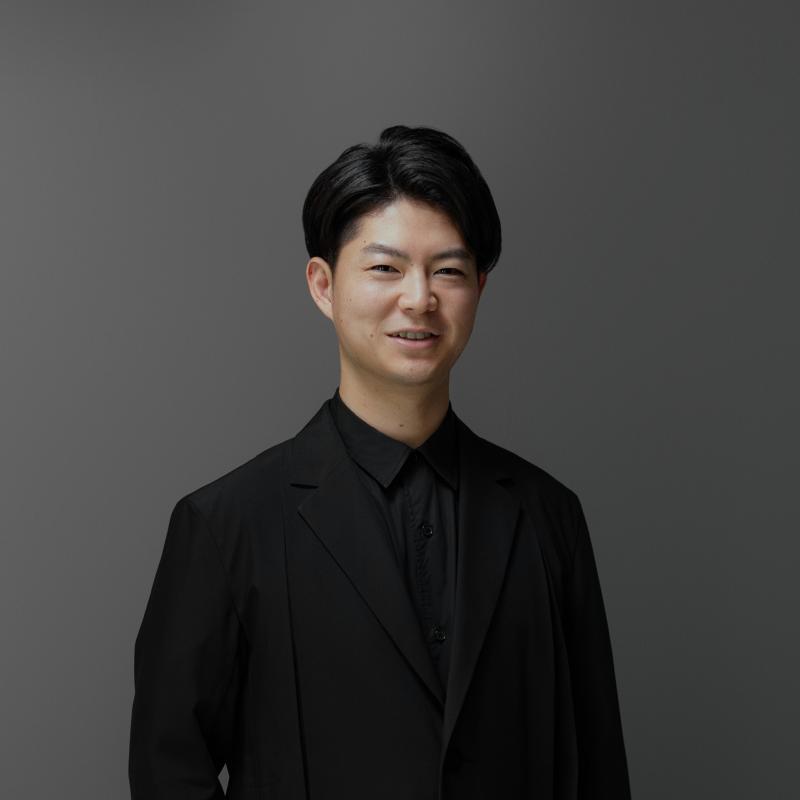
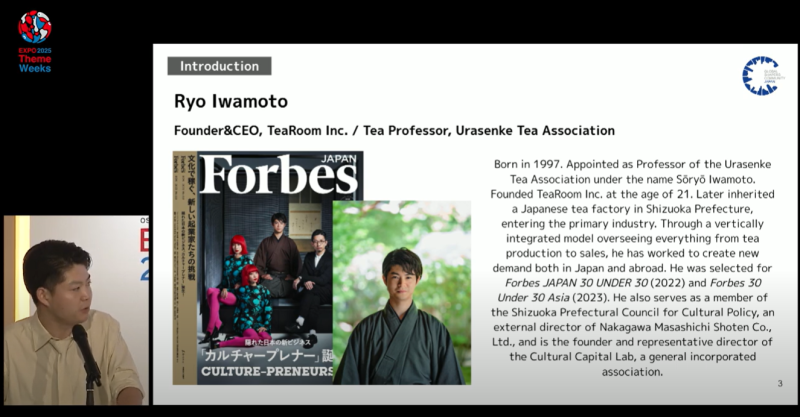
Ryo Iwamoto
CEO of TeaRoom Inc.
Japanese tea master and entrepreneur, recognized for his work in both the cultural and business sectors. serving as the Founder & CEO at TeaRoom Inc., an external director at Nakagawa Masashichi Shoten, and Chairman of the Cultural Capital Lab.
View Profile
Close
close
Speakers
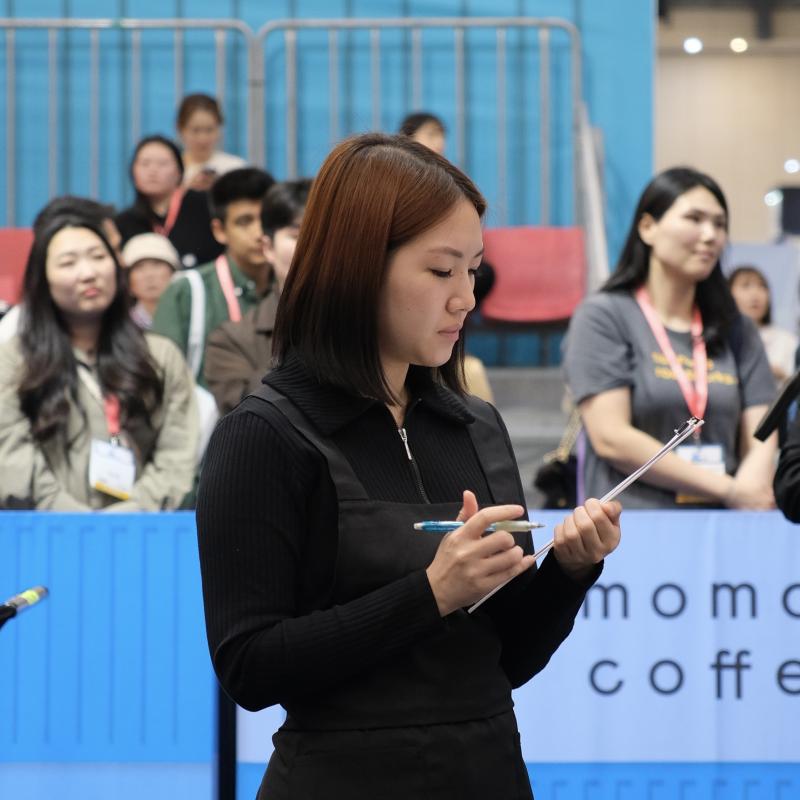
Andrea Tan
World Coffee Championships Representative 2024
Andrea is the first National Brewers Cup champion of
Singapore at the age of 20 and has since made a name
for herself in the World of Coffee after transitioning
to be a judge for Championships. She subsequently
qualified as the youngest WCC Representative. As a
Representative, she judges World Championships and
oversees the running of competitions by sanctioned
Competition Bodies.
In her daily job, she works with coffee at every part
of the supply chain. Starting with sourcing and
fermentation profiling at farm level, roasted coffee
quality control at production level, and finally,
coffee brewing ideology through courses she conducts
or coordinates.
Andrea believes that education and working with
intention will be the key to respecting the hard work
of every person along the coffee supply chain and lift
up the industry.
View Profile
Close
close
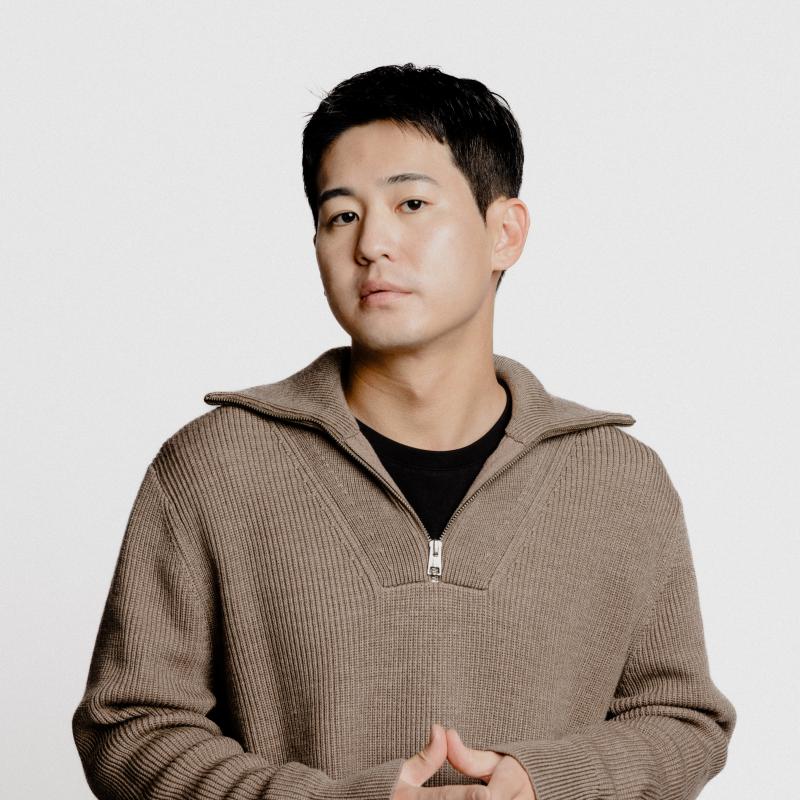
Nick Kim
CEO of Archives Of Us and Timeshop Hospitality
Nick Kim is the CEO of Archives Of Us, a specialty coffee shop in Los Angeles, known for "Archives Of Us Matcha" with growing wholesale partnerships and e-commerce platform. Additionally, they lead Timeshop Hospitality, a company managing F&B ventures and offering consulting services in branding and hospitality. They have played a key role in shaping trends in U.S. cafe culture and their work bridges the gap between cultural authenticity and modern business strategies.
View Profile
Close
close
Tina Koyama
CEO and founder of POJ Studio (Pieces of Japan Co., Ltd)
A designer by trade with roots in Japan. Serves as a bridge between worlds: Japan and the West, digital and analog, traditional and modern living. Leading the research & development of culturally embedded products, she drives new business initiatives that bring traditional Japanese goods and experiences to those who appreciate them.
View Profile
Close
close
Necessities of Life: Food, Clothing and Shelter Week
Is It Possible to Balance Culture and Business? — Exploring the
Future of Communities, Food, and Lifestyles
Agenda 2025 Co-created Programme
[Hypothesis of the Future in 2050]
What does the future of our communities, food, and lifestyles
look like in 2050? Will efficiency lead to a loss of local
identity and commodification? This talk gathers experts to
discuss how we can balance culture and business, exploring the
future we truly desire.
-
2025.06.14[Sat]
17:30~19:30
(Venue Open 17:00)
- Theme Weeks Studio
OTHER PROGRAM
Necessities of Life: Food, Clothing and Shelter Week