Necessities of Life: Food, Clothing and Shelter Week
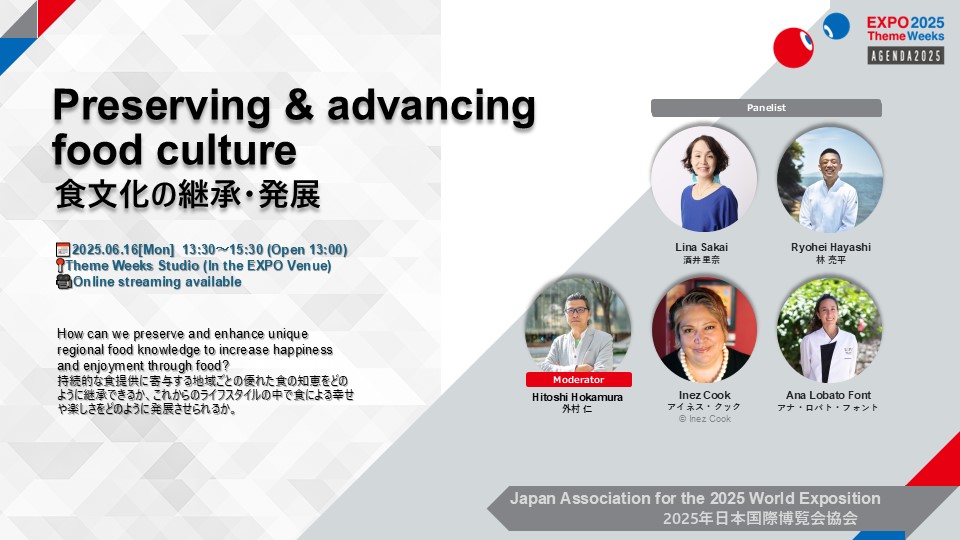
Preserving & advancing food culture
Japan Association for the 2025 World Exposition
The programme, together with the General Sponsors, explores: 'How can we preserve and enhance unique regional food knowledge to increase happiness and enjoyment through food?'
Recorded video available
Discussion
- Others
| Transmission of simultaneous interpretation | Provided |
|---|---|
| Language of interpretation | Japanese and English |
-

Agenda2025
Organised Programme
-
Time and
Date of
the event -
-
2025.06.16[Mon]
13:30 ~ 15:30
(Venue Open 13:00)
-
- Venue
- Theme Weeks Studio
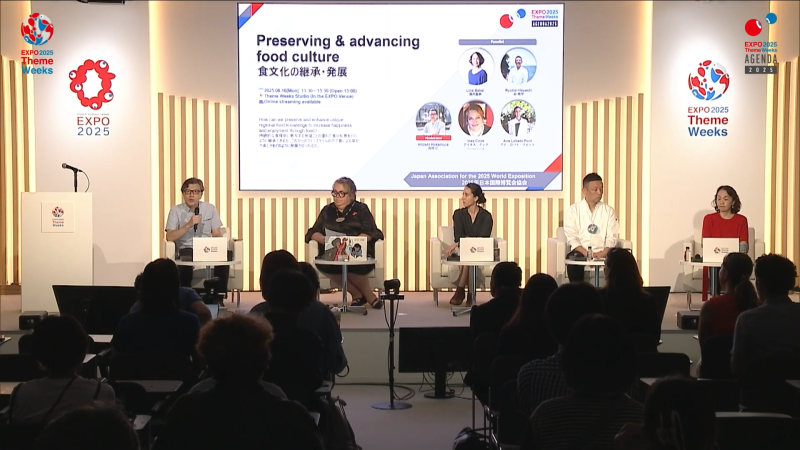
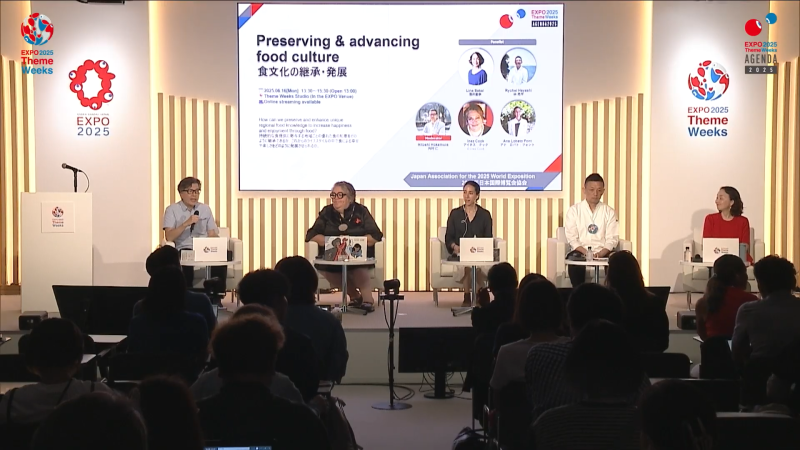
Programme details
*Subtitles: Choose “Subtitles/CC” in the “Settings” (gear icon) at the bottom right of the YouTube video.*Subtitles may not show with multiple languages or overlapping audio.
Reports
<Programme Overview>
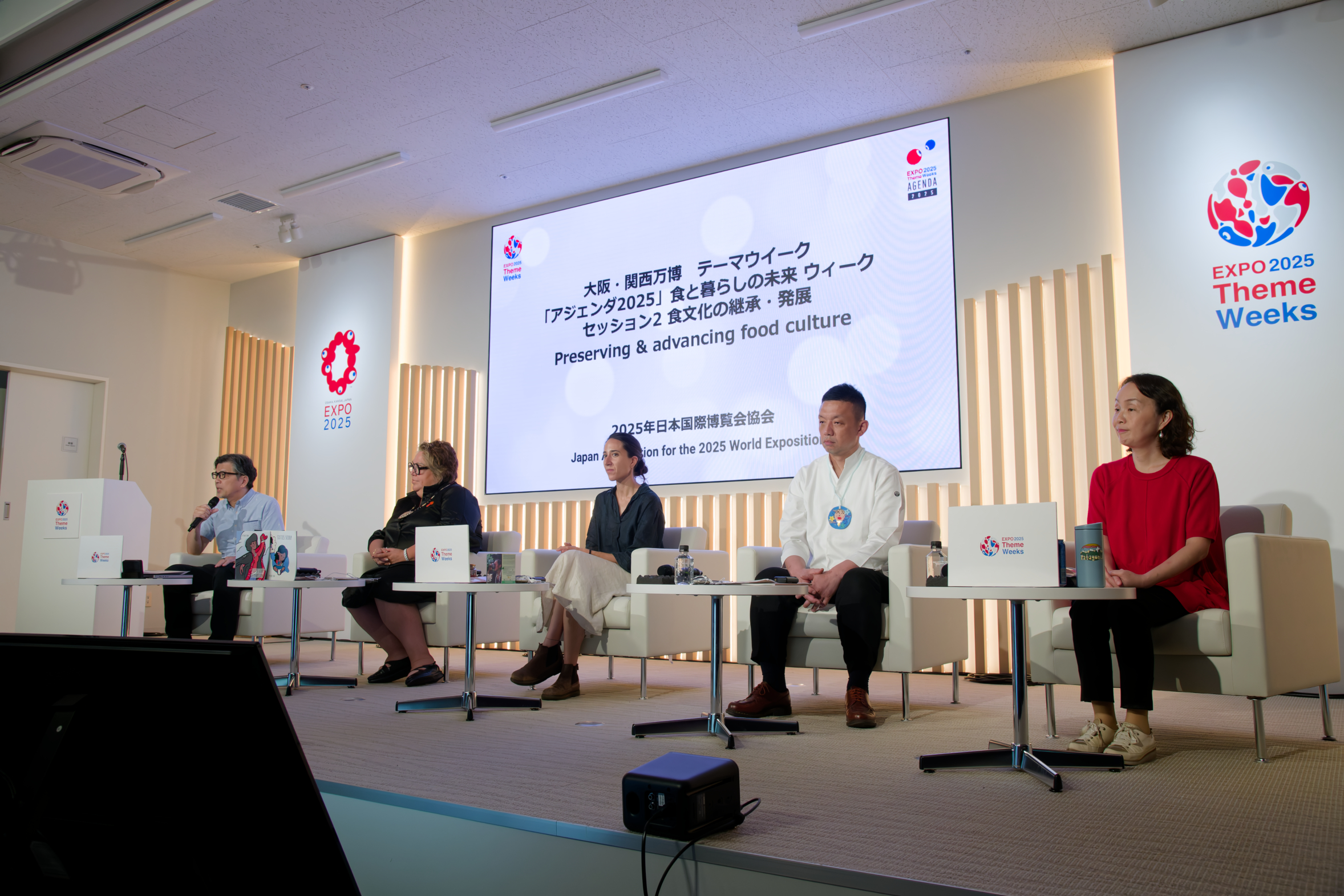
The Programme titled “Preserving & Advancing Food Culture”
was held on June 16, 2025, as part of the “Necessities of
Life: Food, Clothing and Shelter Week” during the Osaka-Kansai
Expo Theme Weeks. This session brought together experts to
discuss Japan’s traditional food culture and its transmission
to future generations, as well as the role and value of food
in contemporary society from diverse perspectives. Topics
included the formation of communities through food,
sustainability, health, and education, highlighting the
multifaceted significance of food culture. The session served
as an opportunity to reconsider the future of food as a form
of culture in modern society.
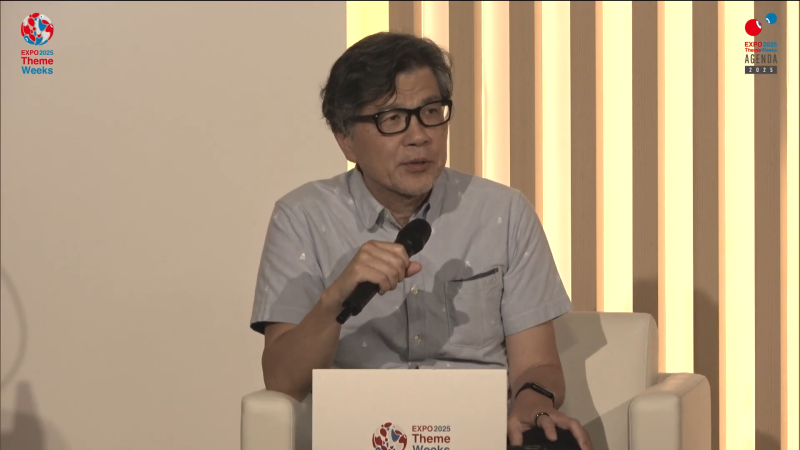
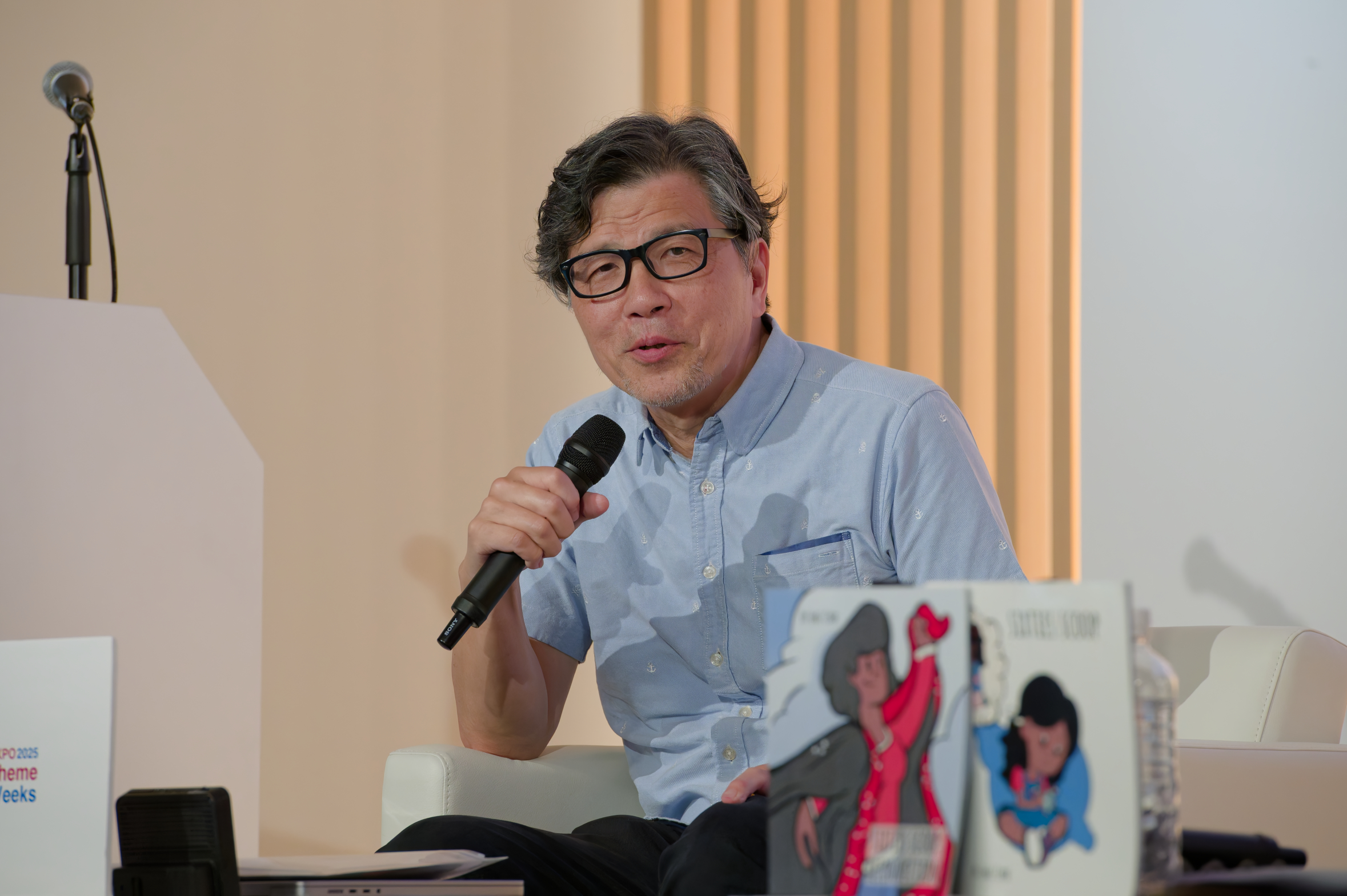
<Speaker Summary – Hitoshi Hokamura>
Hokamura, an expert in food tech, offered a broad perspective
on the current challenges and future outlook of food culture.
He began by stating, “Food is culture—it is an interface
connecting society and individuals.” He emphasized that
technological innovation influences more than just
convenience; it also transforms values and lifestyles. In the
face of global challenges like climate change and food crises,
ensuring the sustainability of food systems has become a key
issue. He argued for a move away from mass production and
consumption and promoted efforts to reconstruct food systems
rooted in natural cycles such as fermentation and plant-based
ingredients—not merely as technologies but as cultural
transformations.
Hokamura also advocated for the reevaluation of local
gastronomy based on regional ingredients, techniques, and
wisdom within a global context. Japan’s fermentation culture
and local cuisine, he said, should be rediscovered for their
inherent value. He emphasized the importance of co-creating
new food culture models through dialogue with food
practitioners worldwide. Highlighting the role of younger
generations, he called for education and technology to help
pass down values. Hokamura concluded by expressing hope that
this session would serve as a platform to rediscover the
diversity and strength of food culture and inspire
collaborative innovation.
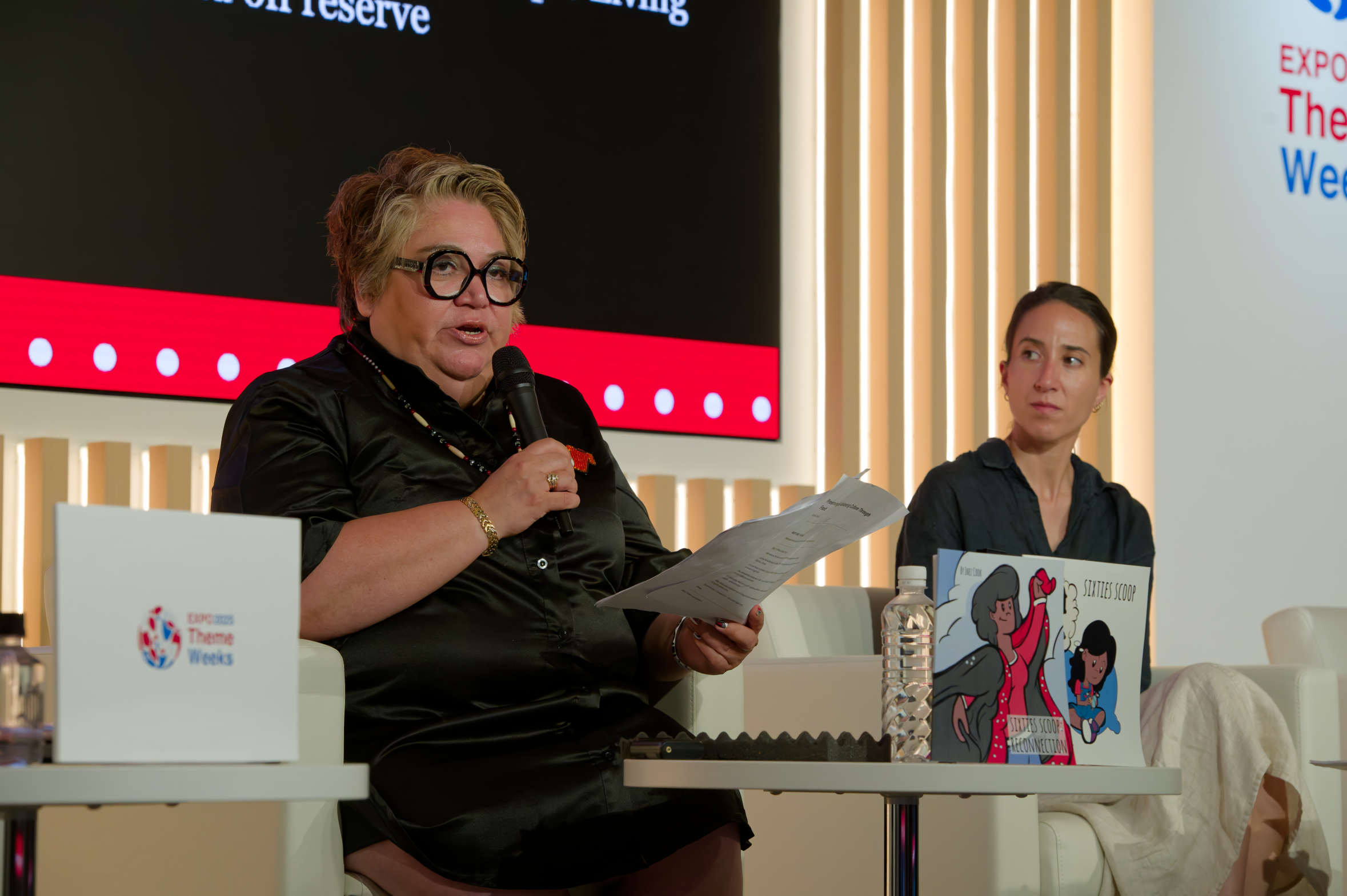
<Speaker Summary – Inez Cook>
Indigenous entrepreneur Inez Cook, based in Vancouver, Canada,
shared her personal experiences and deep connection to her
cultural roots through cuisine. She recounted the past when
she had to hide her Indigenous background and said, “Through
Food , I was able to reconnect to my culture.” Her dishes go
beyond mere replication of traditions—they are a contemporary
translation of almost-lost heritage, passed on to future
generations.
Cook creates new forms of Indigenous cuisine by blending
traditional ingredients and methods with modern sensibilities
and technology. Her restaurant uses local ingredients like
venison, salmon, and berries, incorporating storytelling to
convey the cultural and historical context behind the food.
She values collaboration with Indigenous communities in
gathering and preparing ingredients and sees food as both
healing and educational.
She noted that her work influences both younger generations
and non-Indigenous communities, insisting that food has the
potential to “break down walls and build bridges.” For Cook,
Food is a cultural aspect that heals wounds, restores dignity,
and fosters hope for the future. She concluded by stating,
“Chefs are storytellers of culture,” and emphasized that a
spirit of coexistence and mutual respect through food is
essential to building a sustainable and diverse society.
<Speaker Summary – Ana Lobato Font>
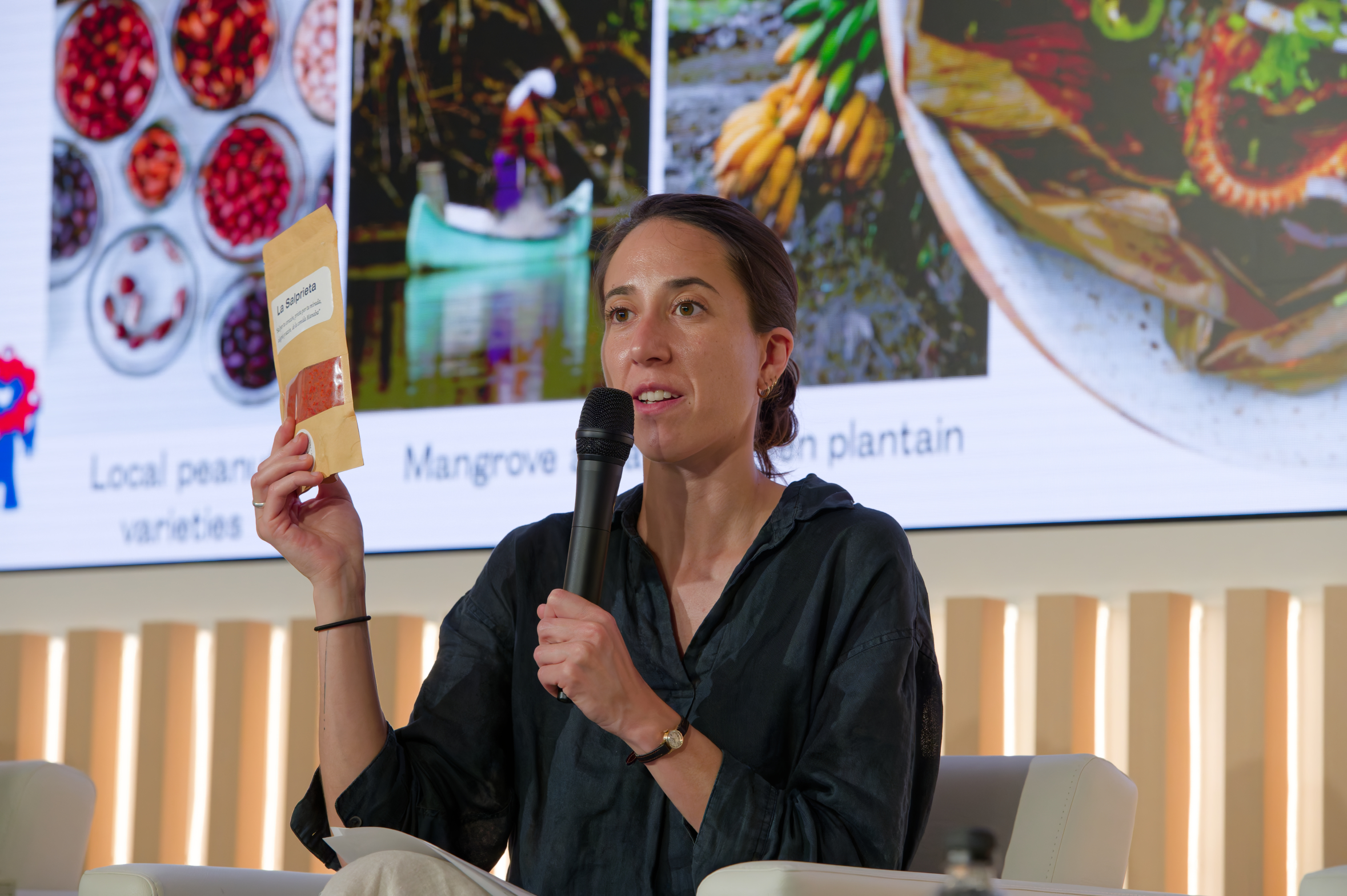
Ana Lobato Font, who engages in food research and education at
San Francisco de Quito University, spoke about sustainable
food culture practices and their educational value in the
Andean region of South America. She explained that in
Indigenous communities, food is not just about nutrition—it’s
a spiritual activity rooted in coexistence with nature and
community connections.
At her university, Font works with local farmers to revive
traditional ingredients and pass down low-impact farming and
cooking methods. She expressed concern that while food
globalization is progressing, local knowledge and food culture
are being lost. “Local gastronomy is the key to protecting the
future,” she declared.
She highlighted how food reflects a region’s climate, history,
and ethnicity, and how rediscovering this can boost both
sustainability and cultural diversity. Font’s Programme
encourages students to learn with their bodies through farming
and market research, realizing that food culture acts as a
“dialogue device” between people and nature. She also shed
light on women’s roles in preserving food culture, noting that
everyday cooking traditions have been handed down through
generations by women and form a body of female knowledge. Font
concluded by urging that rebuilding a sustainable relationship
between culture and nature through food can contribute to
solving global challenges.
<Speaker Summary – Ryohei Hayashi>
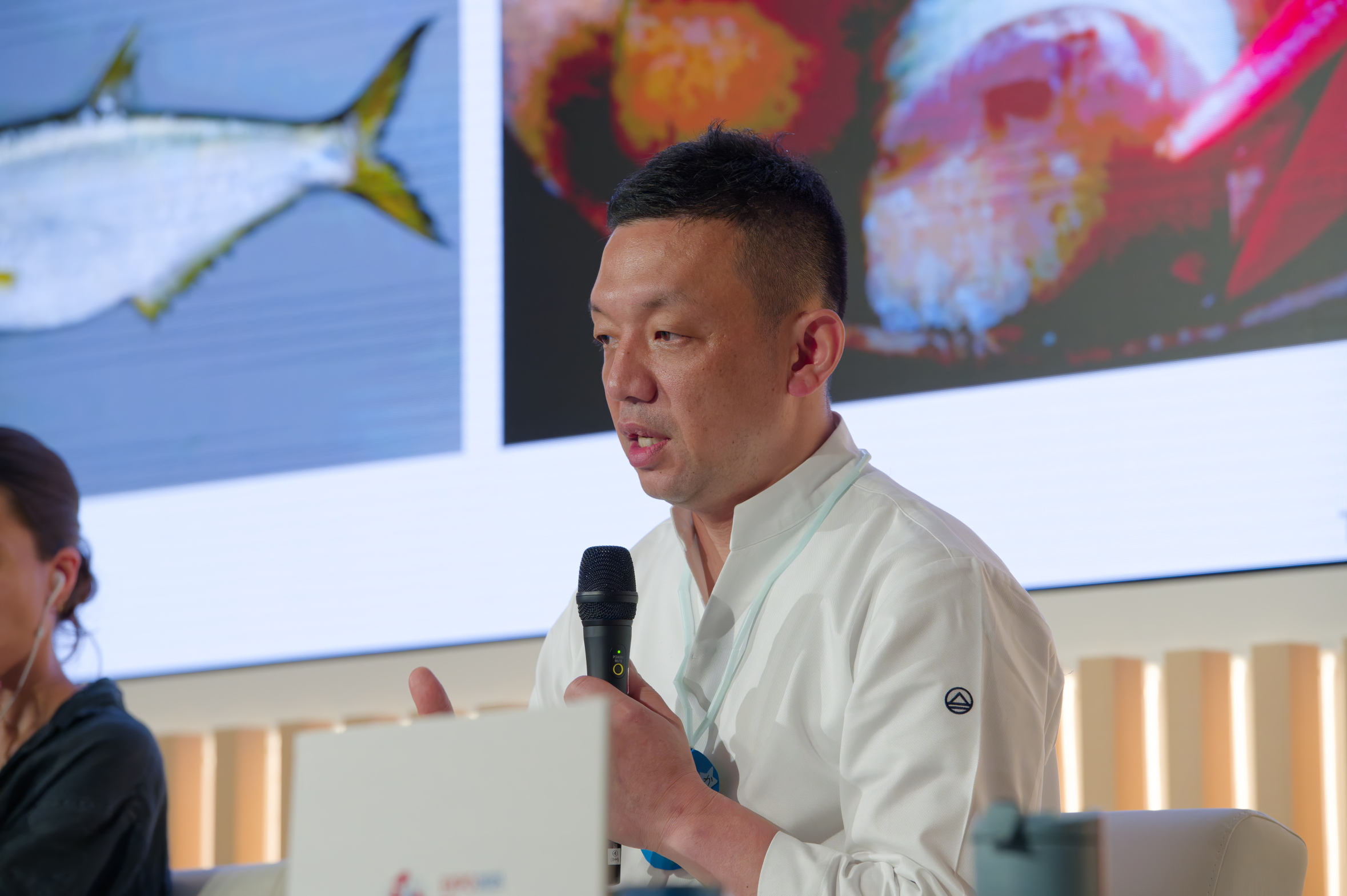
Chef Ryohei Hayashi, owner of the Japanese restaurant
TENOSHIMA, reflected on his culinary journey and spoke on
balancing preservation and innovation in food culture. After
training at the prestigious Kyoto restaurant Kikunoi, he
opened his own place, inheriting the Japanese culinary spirit
of “reflecting the seasons” and deep respect for
ingredients.
Hayashi stressed the need for flexibility in responding to
changing food environments and values, stating that preserving
tradition also requires “the courage to question it.” At
TENOSHIMA, he uses seasonal ingredients from Setouchi islands
to express the region’s climate and history on the plate. His
approach is more than just local production for local
consumption; it’s about reconnecting people, land, and
food.
He emphasized dialogue with producers and delivering the
stories behind the ingredients to diners as crucial to
preserving food culture. Hayashi is also dedicated to training
young chefs and believes that “conveying philosophy, not just
technique, is a chef’s duty.” Modern chefs, he said, must
reflect on their social and environmental responsibilities,
always asking what their dishes communicate to society. He
concluded by stating that the delicacy and depth of Japanese
cuisine, along with the spirit of passing it on, can offer
valuable insights to global food culture and that the
preservation of food culture lies in daily practice.
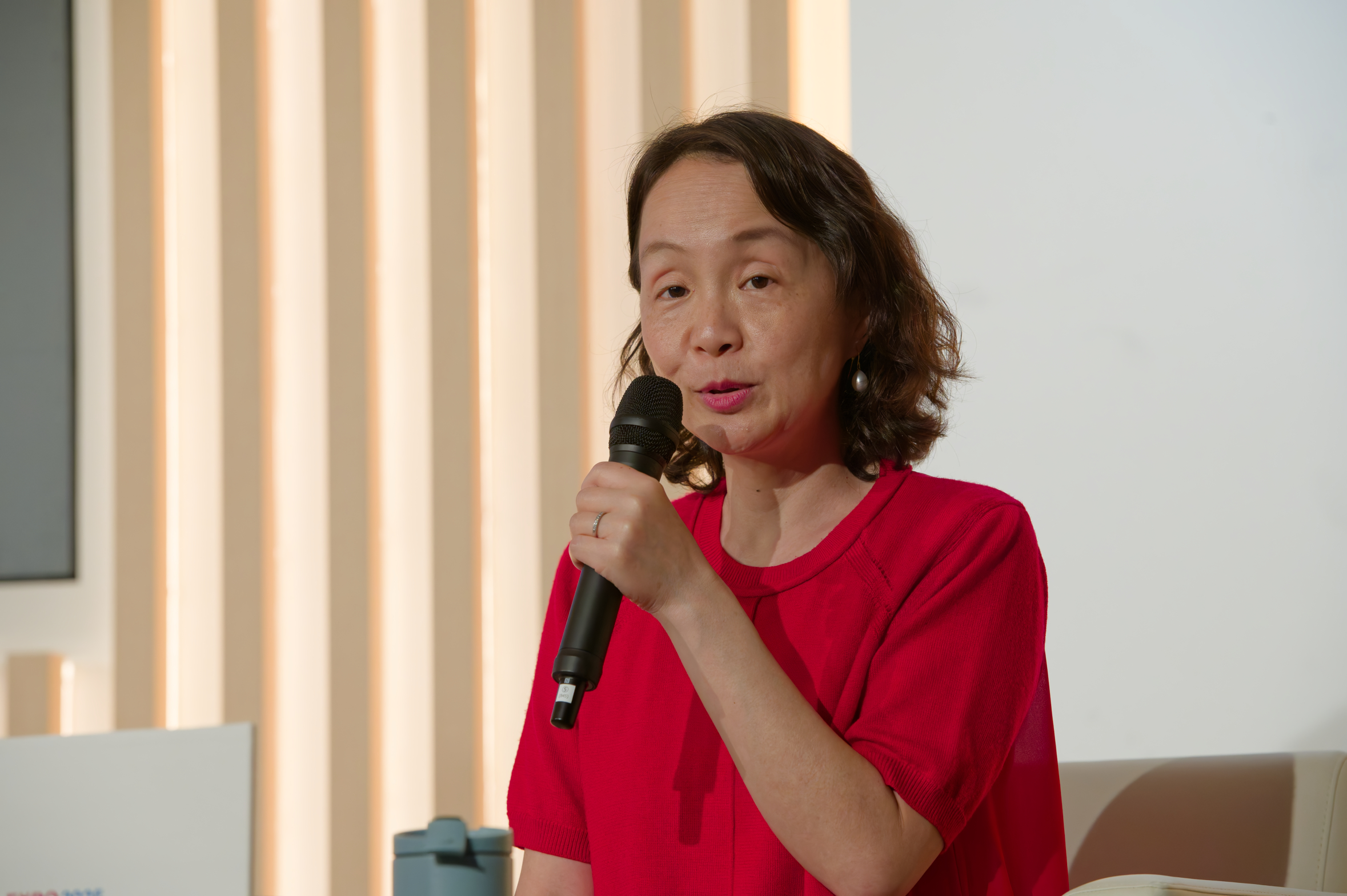
<Speaker Summary – Lina Sakai>
Lina Sakai, fouder and CEO of Fermenstation Co., Ltd, spoke
about her efforts to build a circular economy through
fermentation. Formerly engaged in M&A work, developed an
interest in utilizing unused resources and began studying
fermentation and microorganisms. In the course of her studies,
she started in Ōshū City, Iwate Prefecture, by focusing on the
use of fallow rice fields as an underutilized resource. Today,
her activities have expanded beyond fallow fields to encompass
a wide range of unused resources, such as food residues.
At Fermenstation, the company she leads, fermentation
technologies have been developed to convert raw materials—such
as residues from manufacturing processes at food and beverage
factories, including coffee grounds, rice bran, and
non-standard food products—into fermented seasonings, flavored
alcohols, and more. She explained that this initiative not
only addresses the utilization of underused resources but also
contributes to the local economy, employment, and community
building.
She stressed fermentation’s “power to connect” people,
microbes, and communities, framing it as a way to reexamine
human coexistence with nature. She advocated a perspective of
“learning from microbes.” Through partnerships with
businesses, governments, and farmers, her company is building
a regional circular model. Sakai expressed a desire to pass on
fermentation’s value not only as a technology but as a
cultural heritage. Even on a small scale, she believes
fermentation has the power to drive social change and
reaffirmed her commitment to co-creating new food culture and
society with microbes.
<Summary of the second half of the session>
The second half of the session centered around the shared
theme of “How can we preserve and advance food culture for
future generations?” Moderator Hokamura emphasized a recurring
theme among the speakers: reconnecting with society and nature
through food, a movement unfolding globally.
Sakai highlighted how fermentation appeals to both the
emotional and rational senses, providing an intuitive entry
point to understanding coexistence with nature, and advocated
for experiential education. Hayashi expressed concern about
the growing gap between food producers and consumers and
proposed storytelling to enhance sensitivity to food.
Cook reiterated the importance of cultural regeneration
through food and emphasized the need to create environments
where younger generations can embrace their roots. Font spoke
of education rooted in local food cultures as a way to build
“relationships,” not just knowledge, with cooking as a conduit
between people and the land.
The discussion also touched on themes such as the transition
away from mass production and consumption, the reevaluation of
local knowledge, and rediscovering the wisdom upheld by women
and Indigenous communities. Hokamura concluded, “Talking about
food is talking about how we live,” emphasizing that
technological advancement and cultural enrichment must go hand
in hand. Each speaker’s unique practices converged into a
shared vision of food culture’s inclusiveness, circularity,
and creativity—pointing the way to new societal values for the
future.
Cast
Moderator
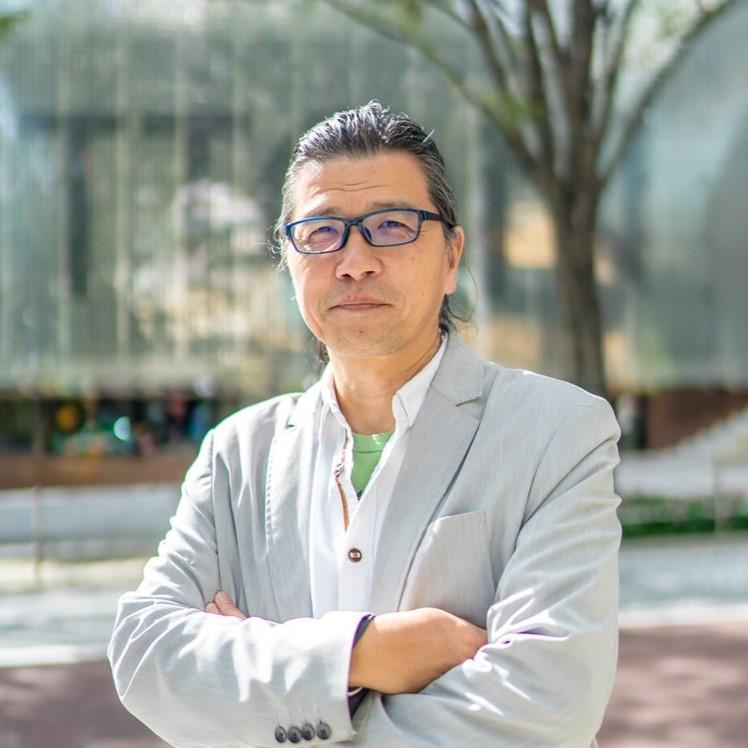
Hitoshi Hokamura
Investor, Food Tech Evangelist
After working in strategy and market development at Bain and Apple, Hiroshi Hokamura moved to Silicon Valley in 2000 and co-founded a tech startup, raising $12M in funding and selling the company. While serving as Chairman of Evernote Japan since 2010, he has been involved in the early days of food tech in Japan and then founded the food tech co-creation program Food Tech Studio - Bites! He also co-founded SKS Japan, the first food tech conference in Japan, and published “Food Tech Revolution” with his colleagues from Nikkei BP. He is currently an advisor to many startups including Scrum Ventures, All Turtles, mmmhmm, etc. He is a mentor at Basque Culinary Center's incubation facility “LABe” and an advisor to Gastronomy Innovation Campus Tokyo. Advisor of Gastronomy Innovation Campus Tokyo. He is also a visiting professor at Kyoto University of the Arts. Graduated from engineering of the University of Tokyo. MBA from IMD, Switzerland.
View Profile
Close
close
Speakers

Lina Sakai
Founder and CEO, Fermenstation Co., Ltd.
Lina Sakai is the Founder & CEO of Fermenstation. She started her career in financial institutions (Fuji Bank and Deutsche Bank) in Tokyo and spent more than 10 years in finance, corporate planning, and M&A. Lina's curiosity to make use of resources that had not been effectively utilized drove her to study fermentation and biotechnology, leading to the founding of Fermenstation in 2009. She is passionate about utilizing micro-organisms to build a circular economy. Lina holds a degree from the Department of Brewing and Fermentation Science at the Tokyo University of Agriculture. She has also graduated from the International Christian University.
View Profile
Close
close
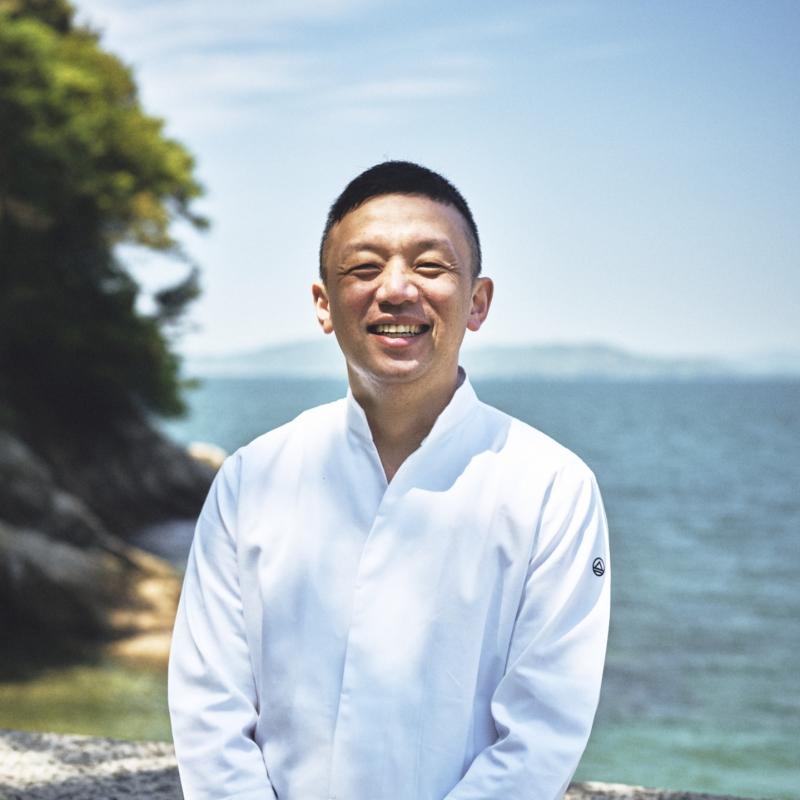
Ryohei Hayashi
TENOSHIMA Owner/Chef
Born in Marugame, Kagawa prefecture in 1976 and raised
in Tamano City, Okayama Prefecture.
After graduating from Ritsumeikan University, he
started to work in Kikunoi.
In 2011 Shanghai World Expo Japanese restaurant
Murasaki head chef, Kikunoi vice chef.
In 2015 chef in Kikunoi restaurant in Tokyo.
Ryohei worked with Mr. Yoshihiro Murata who has 7
Michelin stars for 17 years. He was responsible for
developing Singapore Airline in-flight menu, JR West
"MIZUKAZE" in-train menu. He cooked at the
international conference and prime minister's
oficial dinner. And he worked for events of Japanese
cuisine in more than 17 countries. He worked hard with
Kyoto Prefecture to create a system for foreigners who
want to learn Japanese cuisine.
A Japanese chef Academy regular member and Chefs for
the blue member.
Received one Michelin star annually since 2019.
View Profile
Close
close
©Inez Cook
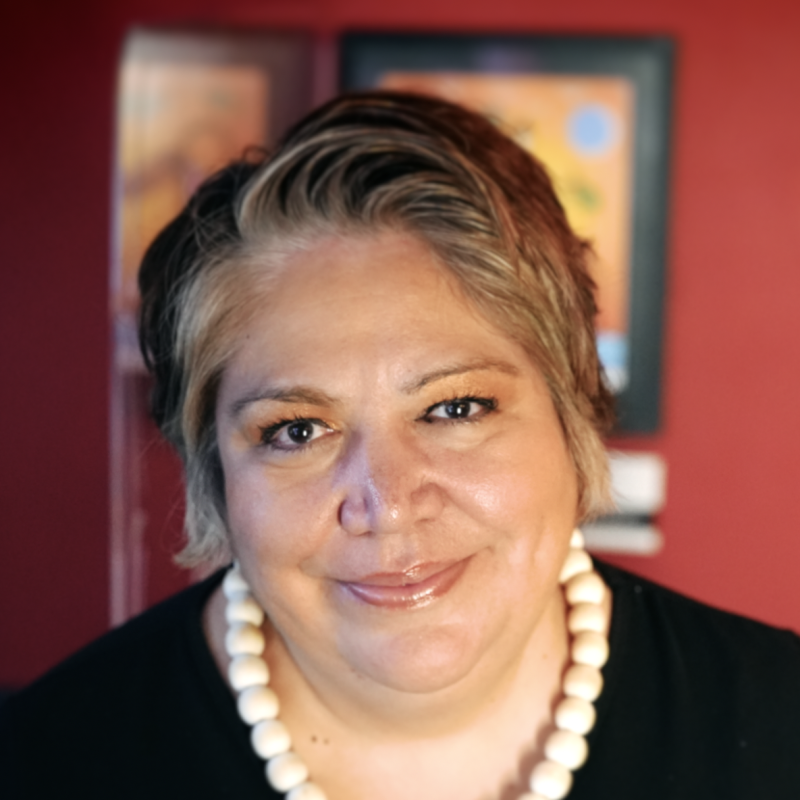
Inez Cook
Restauranteur & Author
Inez Cook is a proud member of the Nuxalk (Pronounced as New-Halk ) Nation and grew up in Vancouver BC. She is the cofounder and owner of the award winning Salmon n’ Bannock Bistro in downtown Vancouver as well as the owner of Salmon n’ Bannock on the Fly at Vancouver International Airport departures, which is the first Indigenous restaurant at a Canadian airport. Inez recently retired from a 33 year flying career which has afforded her opportunities to live all over the world and celebrate international cultures. She always dreamt of taking people on a journey and finally came full circle and is taking people of her very personal journey within. She also is the author of the books "The Sixties Scoop" & "Sixties Scoop: Reconnection”, sharing her personal story. Acknowledging the Traditional Coast Salish Territories of the Musqueam, Squamish and Tsleil-Waututh. (šxʷməθkʷəy̓əmaɁɬ təməxʷ, Skwxwú7mesh-ulh Temíx̱w and səl̓ilwətaɁɬ təməxʷ respectively)
View Profile
Close
close
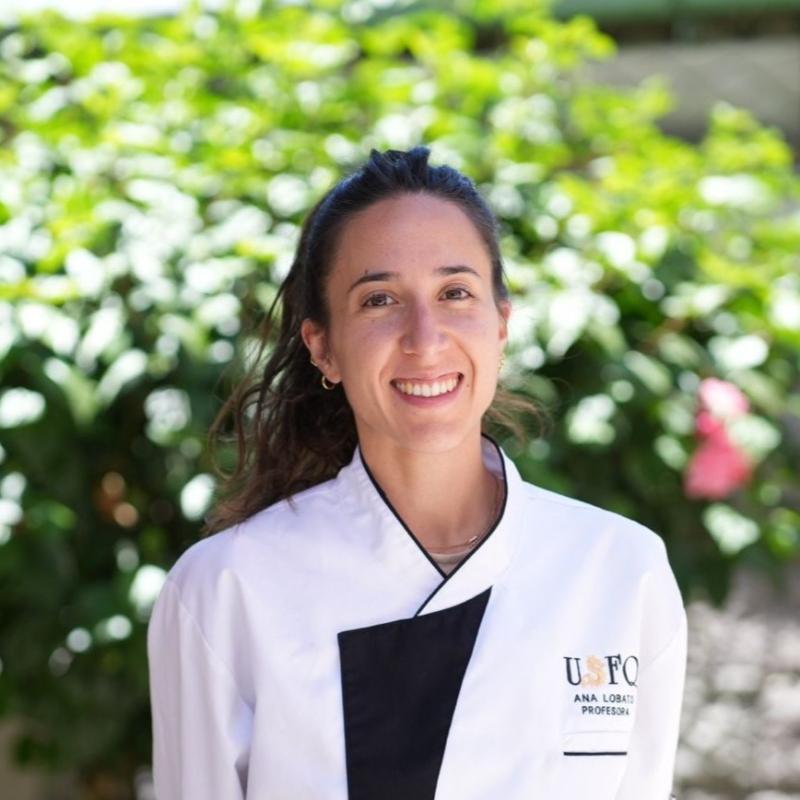
Ana Lobato Font
San Francisco de Quito University / Head of gastronomic research and development,
Ana Lobato is a professor and the Head of Gastronomic
Research and Development at Universidad San Francisco
de Quito. Her work focuses on culinary research, food
innovation, and sustainability. She fosters
collaborations between academia, local communities,
and the food industry and develops projects that
explore Ecuadorian ingredients and new applications,
local food heritage and foster socioeconomic
development.
As the co-founder and partner at Clara Restaurant,
ranked #88 on Latin America’s 50 Best Restaurants and
awarded ‘Latin America’s One to Watch 2024’, Ana is
responsible for menu research and development. They
work with local producers, dishes and techniques to
create a unique experience based on local
knowledge.
She moved to Ecuador from Spain to create and
coordinate “Sabores de Ecuador: Food Tech para la
Innovación Alimentaria" focus on creating an
ecuadorian network of culinary labs, located at the
coast, the Andes, and the Amazon regions of Ecuador,
to promote food innovation, research, and development
of new products to recover endangered varieties.
Ana holds a degree in Gastronomy and Culinary Arts
from the Basque Culinary Center and a Master’s in Food
Development and Innovation from the University of
Barcelona.
View Profile
Close
close
Necessities of Life: Food, Clothing and Shelter Week
Preserving & advancing food culture
The programme, together with the General Sponsors, explores: 'How can we preserve and enhance unique regional food knowledge to increase happiness and enjoyment through food?'
-
2025.06.16[Mon]
13:30~15:30
(Venue Open 13:00)
- Theme Weeks Studio
OTHER PROGRAM
Necessities of Life: Food, Clothing and Shelter Week