Necessities of Life: Food, Clothing and Shelter Week
Handmade textiles of India-sustainability through darning-Sashiko and Kantha
India
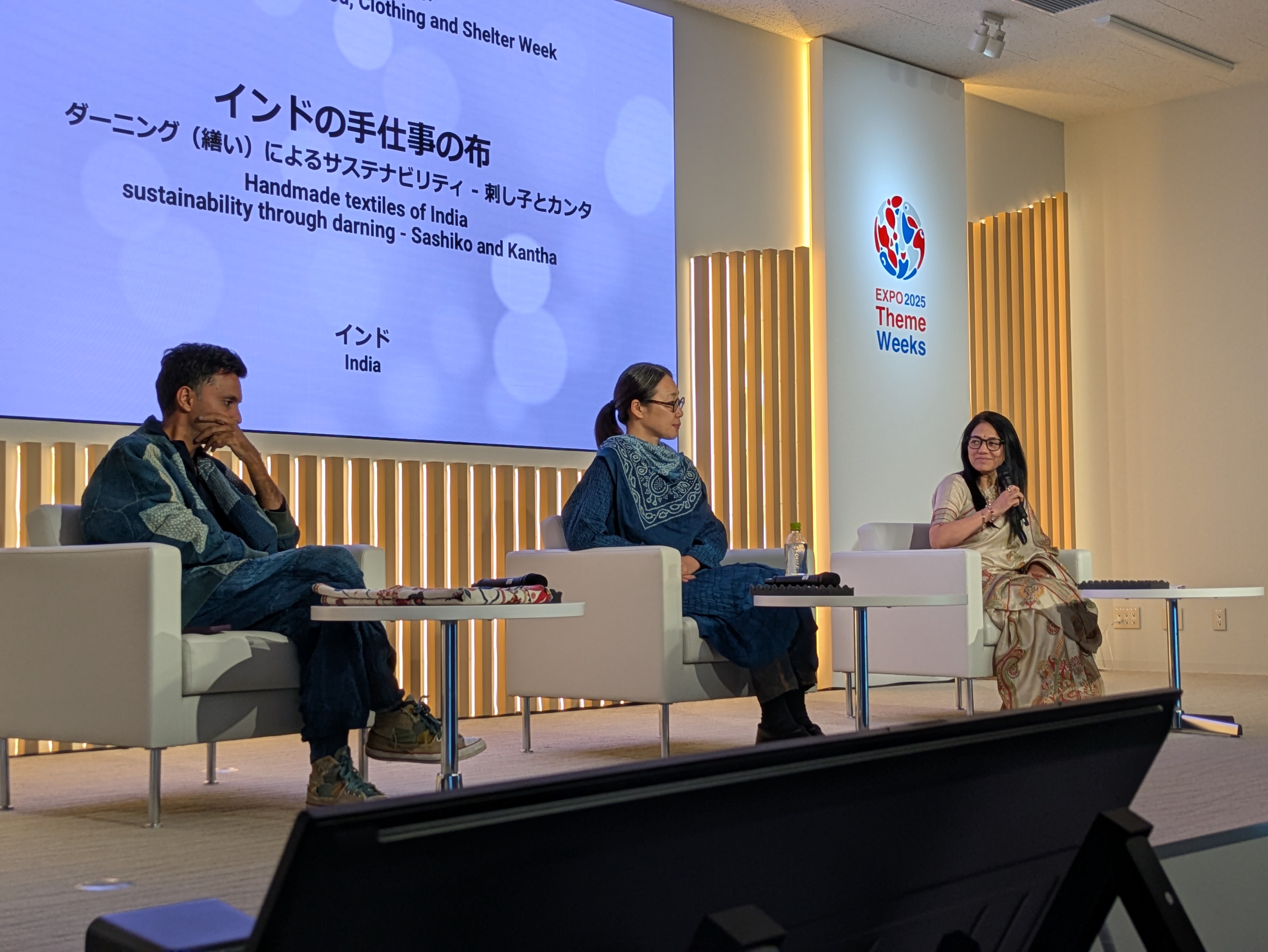
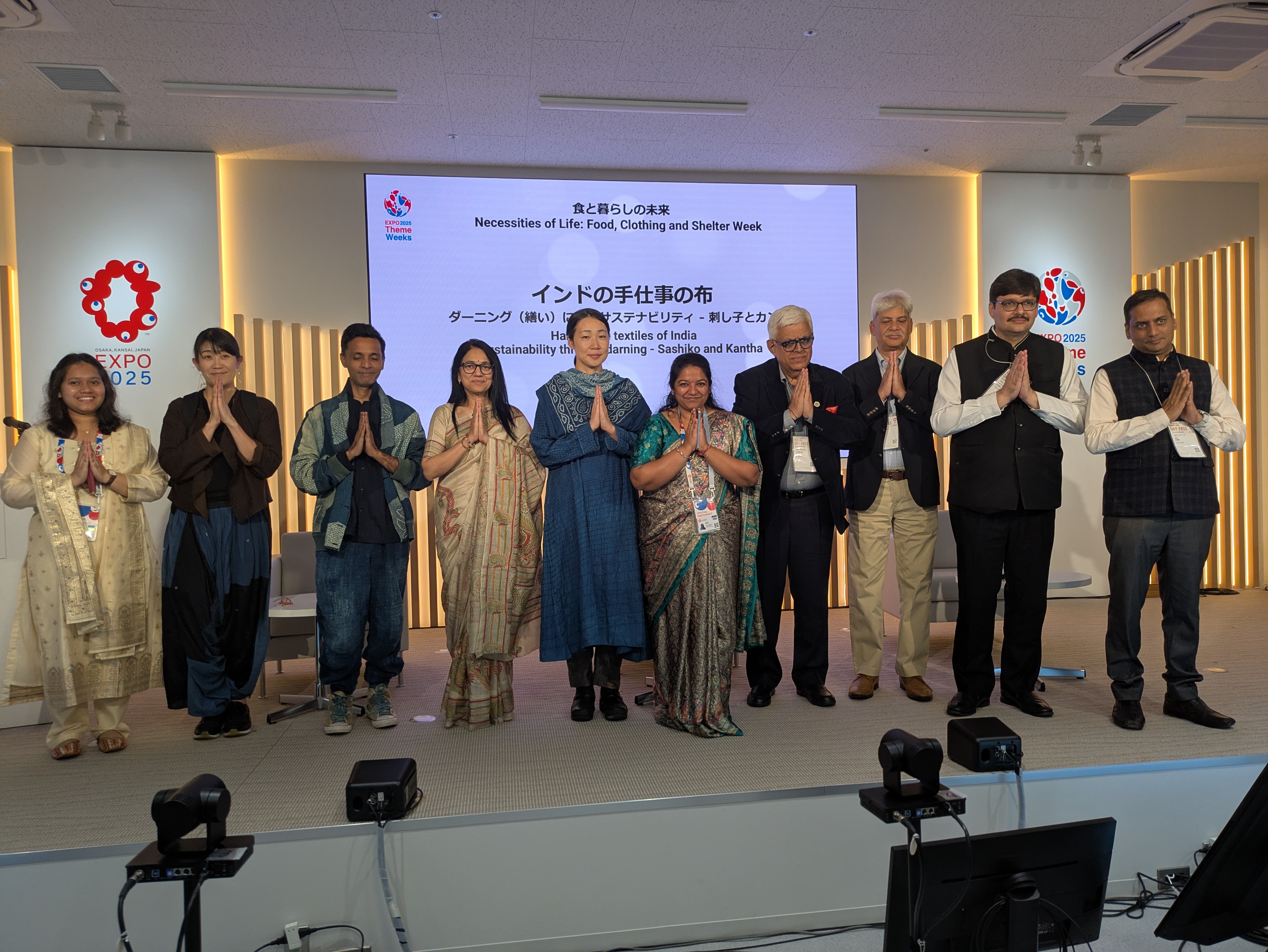
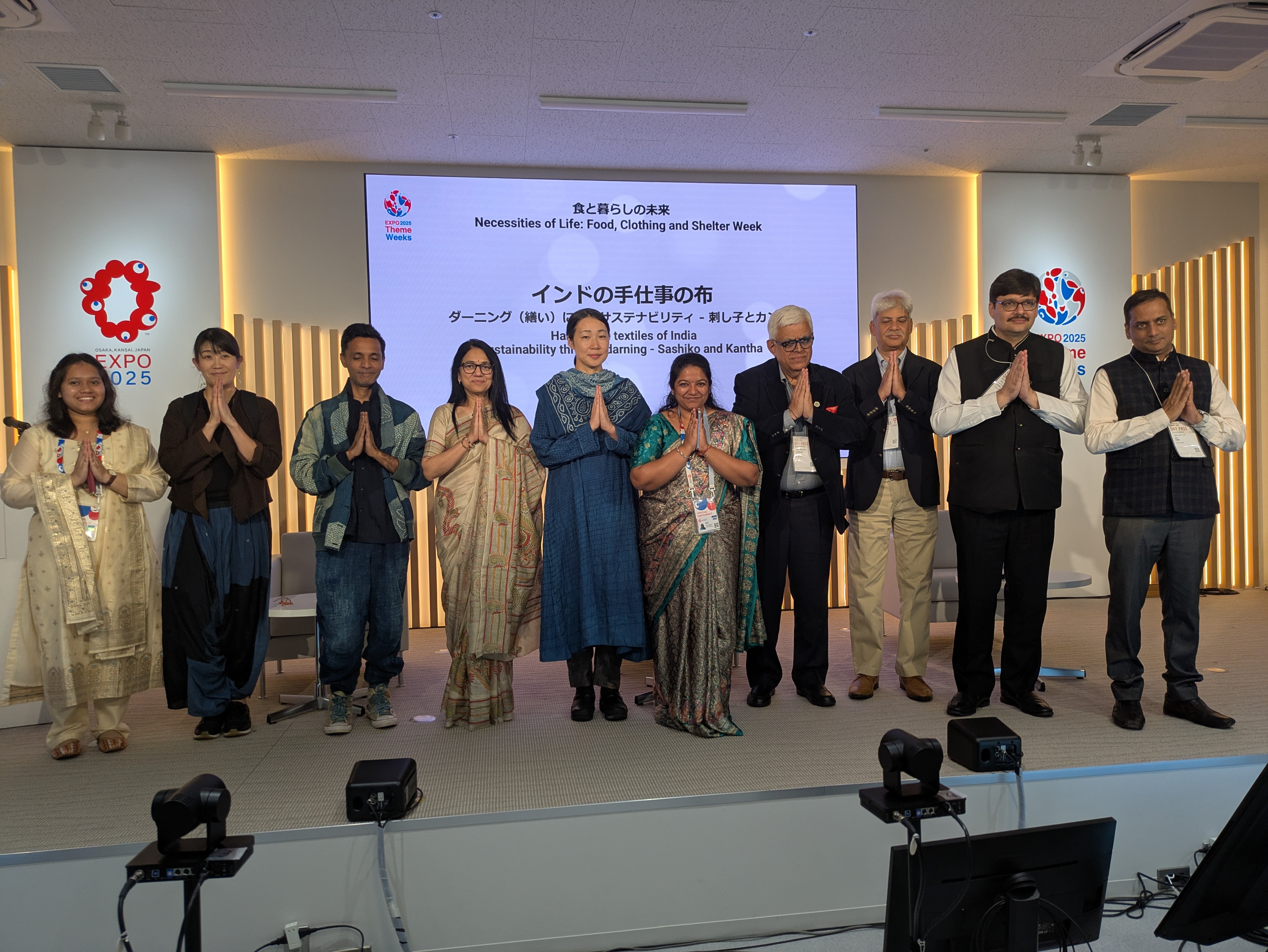
A panel discussion on handmade textiles of India and Japan, focusing on Sashiko and Kantha, explored the cultural significance, techniques, and contemporary relevance of these traditional embroidery styles.
Recorded video available
Discussion
| Transmission of simultaneous interpretation | Provided |
|---|---|
| Language of interpretation | Japanese and English |
-

Track Programme
-
Time and
Date of
the event -
-
2025.06.12[Thu]
10:00 ~ 12:30
(Venue Open 09:30)
-
- Venue
- Theme Weeks Studio
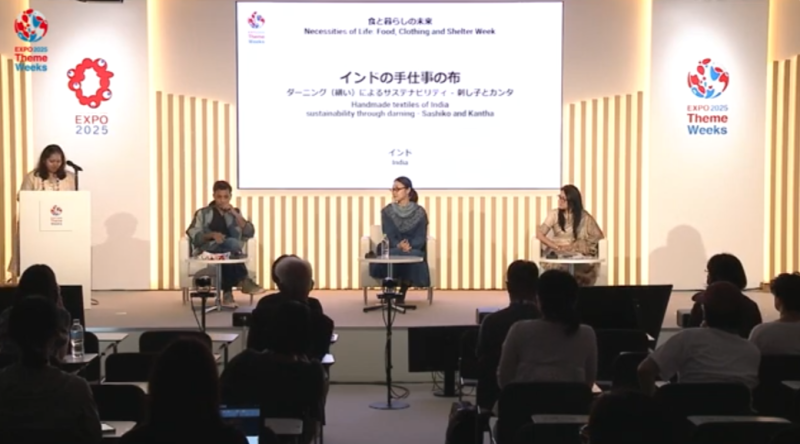
Programme details
*Subtitles: Choose “Subtitles/CC” in the “Settings” (gear
icon) at the bottom right of the YouTube video.
*Subtitles may not show with multiple languages or overlapping
audio.
Sashiko, a Japanese stitching technique, originated as a
method of reinforcing fabric and creating warmth, using simple
running stitches in geometric patterns. Kantha, from India,
involves layering old fabrics and stitching them together with
intricate, often narrative-based designs.
Experts discussed how both traditions emerged from
sustainability practices, their evolution into contemporary
fashion and design, and the role of artisans in preserving
these crafts. The session highlighted cross-cultural
influences and the need for innovation while respecting
heritage.
Reports
【Reflection】
This panel discussion, titled "Handmade Textiles of India
– Sustainability through Darning – Sashiko and Kantha,"
explored the cultural and sustainable significance of
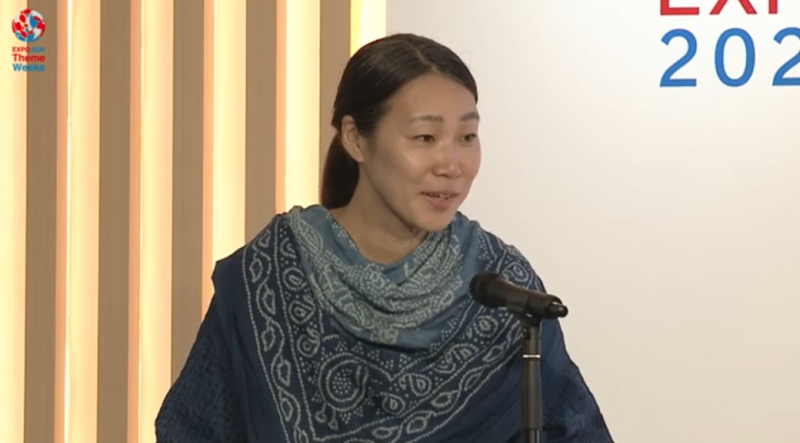
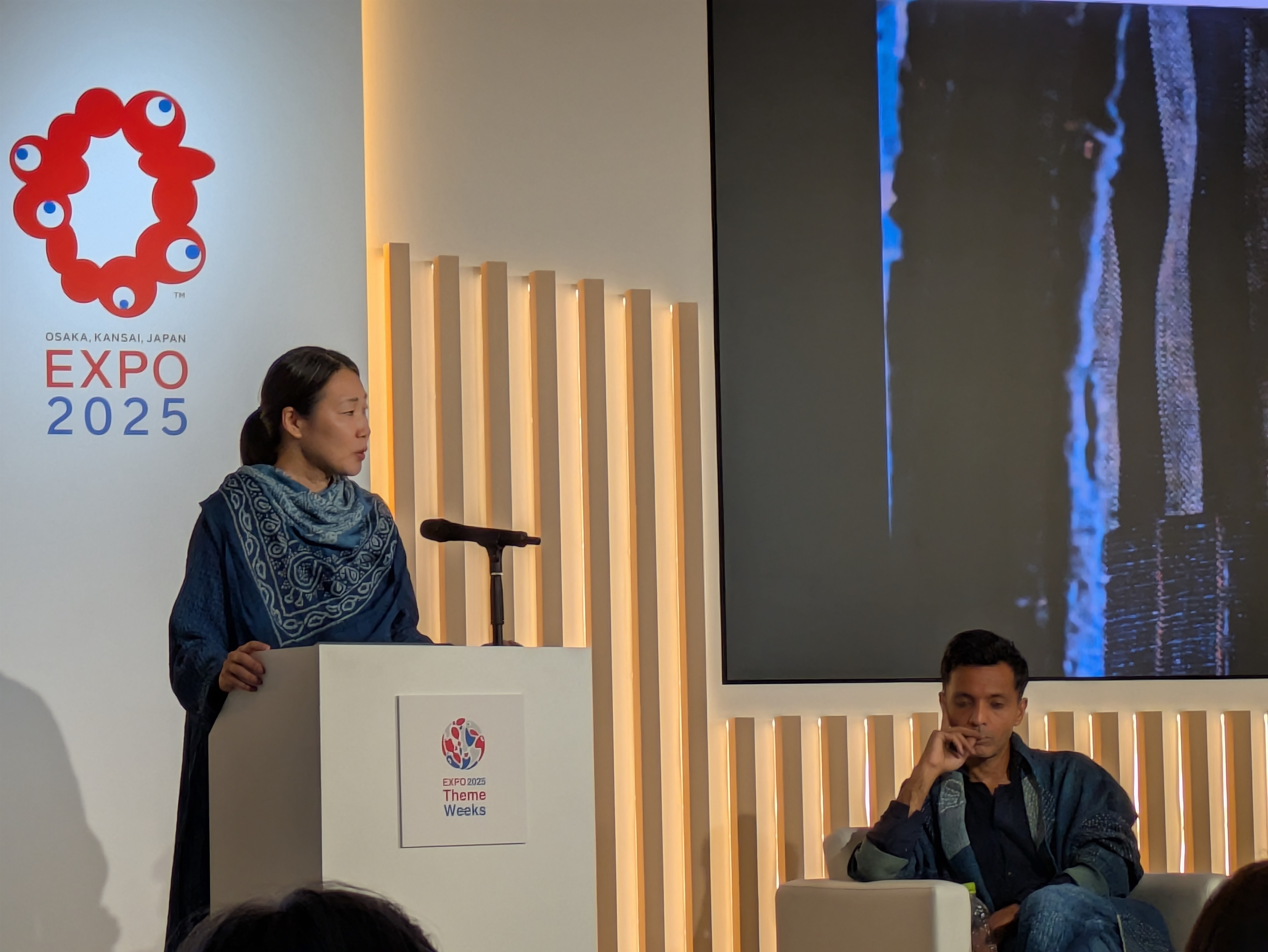
traditional embroidery practices in Japan and India. Ms. Fumie
Kobayashi, President of CALICO, emphasized the deep-rooted
philosophy and historical evolution of Japanese textile
culture. She explained how Sashiko, a traditional mending
technique, emerged from necessity and Buddhist ethics, using
natural fibers and layered stitching to enhance warmth and
durability, particularly in northern Japan.
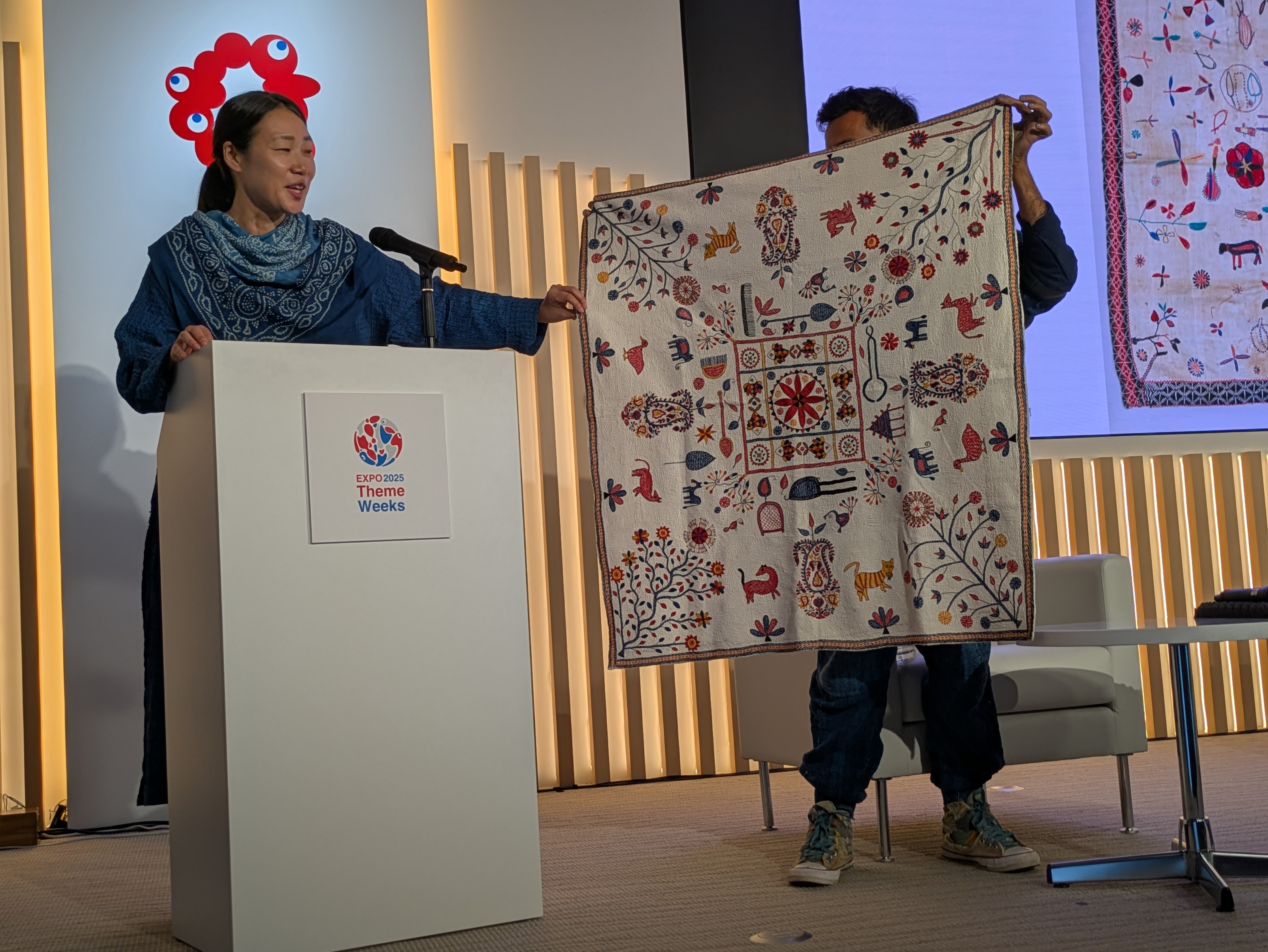
She also highlighted striking parallels with India’s Kantha
tradition, where reused fabrics are embroidered with personal
or family stories, showing the shared values of reuse,
respect, and storytelling through fabric. She also showcased
beautiful kanthas from the collection of Ms Hiroko Iwatate
from Iwatate Folk art Museum at Tokyo.
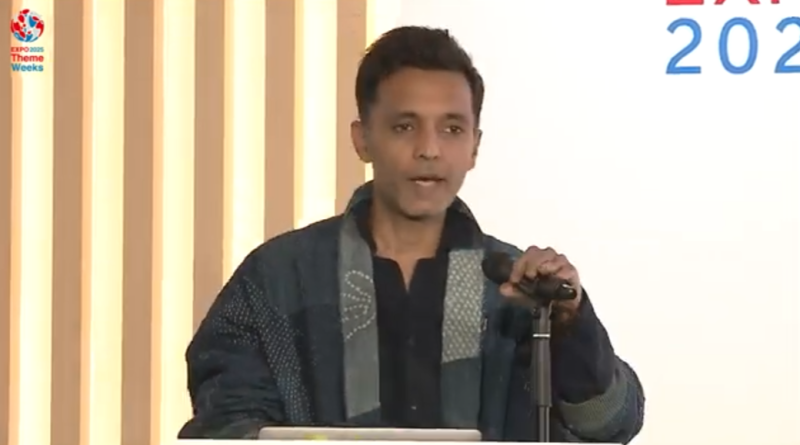
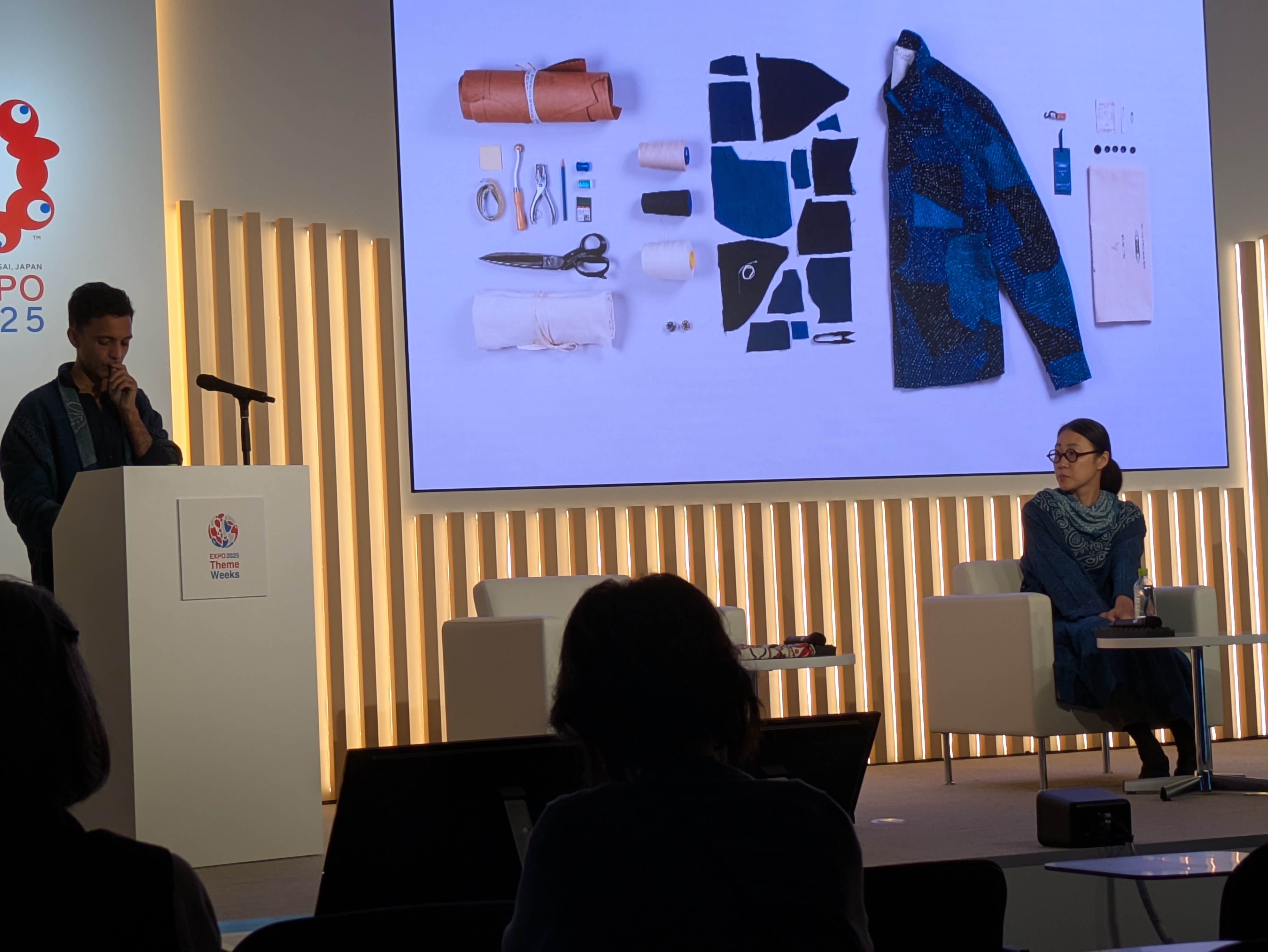
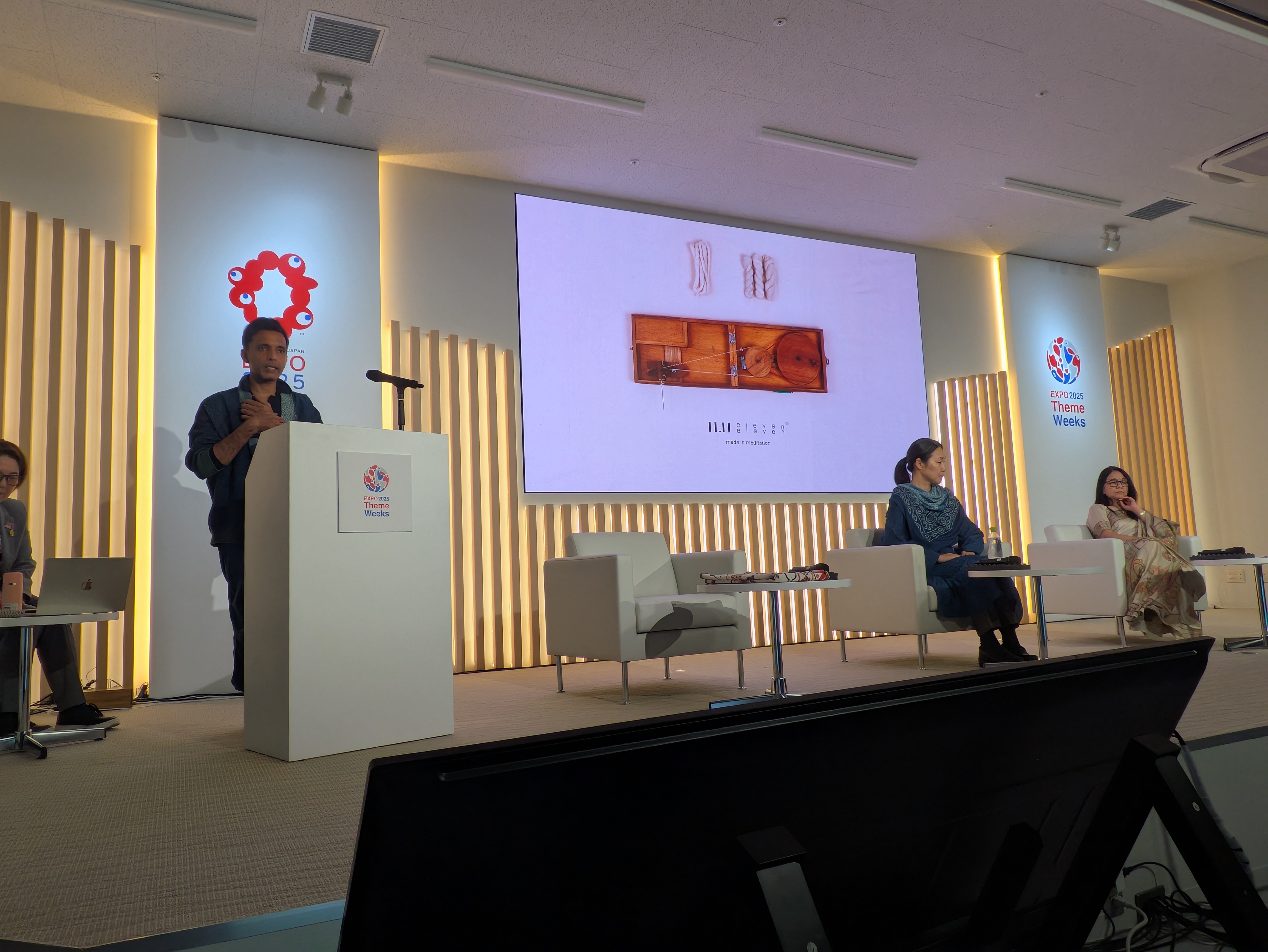
Mr. Shani Himanshu, co-founder of the fashion brand 11.11,
presented a contemporary approach to sustainable fashion
rooted in Indian craft traditions. His work incorporates
indigenous handweaving, plant-based dyes, and zero-waste
production methods. The brand also implements NFC chips to
provide transparency from artisan to product.
He showcased how embroidery practices across India, especially
from the Kutch region, such as the Rabari and Mutwa
communities, are reinterpreted in modern fashion. His
philosophy centers on minimalism, reuse of surplus materials,
and celebrating India’s rich textile heritage in everyday
wear. He gave examples of how they make use of all left over
fabrics to create textile art.
Ms. Shubhra, Trade Advisor at the Ministry of Textiles,
Government of India apprised the audience about the efforts
made by the Government of India to attain sustainability in
textile sector. She talked about the Panipat Cluster and also
the deep rooted Indian sustainable practices of darning,
mending and recycling textiles. She also talked about the
similarities in Indian and Japanese culture, and the beauty of
mending seen in Sashiko and Kanthas.
Together, all the three speakers illustrated how textiles
function not merely as material objects but as vessels of
narrative, cultural memory, and ethical practice.
Sustainability here is portrayed not only as a technique but
as a holistic, value-driven framework connecting past and
present.
【Post EXPO Initiatives】
Envisaged by the Ministry of Textiles
Following the insightful panel at Expo 2025 on “Handmade
Textiles of India – Sustainability through Darning – Sashiko
and Kantha,” India is poised to further expand its commitment
to sustainable textile practices and the preservation of
traditional crafts. Mr. Shani Himanshu, co-founder of the
fashion brand 11.11, outlined several forward-looking
initiatives that will shape India's post-Expo trajectory
in the textile and fashion sectors.
One of the primary focuses will be the continued development
of sustainable fashion rooted in indigenous Indian practices.
The brand 11.11, known for integrating traditional techniques
such as handloom weaving, natural dyeing, and hand embroidery
into contemporary design, plans to further scale its
production while maintaining environmental responsibility.
Their innovations, including the use of NFC chips for
traceability from artisan to product and a strict zero-waste
policy, are set to be expanded. These approaches not only
appeal to environmentally conscious global consumers but also
create systems that recognize and reward artisan labor with
greater transparency and dignity.
The government and private sector stakeholders intend to
support the traditional communities through training, digital
access, and global showcasing opportunities, ensuring that
these traditions continue to thrive in a rapidly changing
world.
Moreover, inspired by the cross-cultural dialogues that took
place during Expo 2025, particularly with Japanese artists and
researchers, India aims to establish long-term cultural
exchanges and collaborations. This includes organizing joint
exhibitions, skill-sharing workshops, and educational
residencies between Indian and Japanese textile artisans.
Such initiatives are envisioned not only as platforms for
creative exchange but also as a means to foster mutual respect
and understanding of each nation’s deep-rooted textile
philosophies.
A central theme in India’s post-Expo initiatives is the
redefinition of textiles as carriers of cultural narrative
rather than mere commodities. Through embroidery techniques
like Kantha and Sashiko, cloth becomes a medium for
storytelling, memory, and spiritual reflection. By promoting
these values globally, India seeks to champion a form of
sustainability that transcends material efficiency and
includes ethical, emotional, and historical dimensions.
In essence, India’s post-Expo vision is one of inclusivity,
sustainability, and cultural integrity. The initiatives aim to
position India not only as a hub of textile excellence but
also as a leader in ethically-driven creative industries. This
vision promises to contribute significantly to international
cultural diplomacy, economic empowerment for rural artisans,
and the evolution of a fashion industry rooted in respect, for
materials, makers, and traditions alike.
Cast
Speakers

Shani Himanshu
Founder of the clothing label 11.11
Fashion Designer
View Profile
Close
close
Shubra
Trade Advisor, Ministry of Textiles, Government of India
View Profile
Close
close
Fumie Kobayashi
President Calico LLC
View Profile
Close
close
Co-organiser
National Institute of Fashion Technology, New Delhi, India
Necessities of Life: Food, Clothing and Shelter Week
Handmade textiles of India-sustainability through darning-Sashiko and Kantha
A panel discussion on handmade textiles of India and Japan, focusing on Sashiko and Kantha, explored the cultural significance, techniques, and contemporary relevance of these traditional embroidery styles.
-
2025.06.12[Thu]
10:00~12:30
(Venue Open 09:30)
- Theme Weeks Studio
OTHER PROGRAM
Necessities of Life: Food, Clothing and Shelter Week