Necessities of Life: Food, Clothing and Shelter Week
Building a Better Tommorow: Youth and Women in Agribusiness
United Republic of Tanzania
The talk session will focus Youth and Women engagement in the Agriculture sector which articulate interventions aimed at increasing the value and productivity of agricultural production, employment creation, expanding the diversification of products and strengthening the value chains in the agricultural sector and creating favourable environments for the private sector to engage profitably in production and export of agricultural products. It is also aligned with the livestock and fisheries sub-sectors. It will contribute to the achievements of the sustainable development goals (SDGs) 1 (No poverty), 2 (Zero Hunger), 5 (Gender equality), 8 (Decent work and economic growth) and 13 (Climate Action).
Recorded video available
Discussion
- Others
- Others
- Others
- Gender equality, Social inequality, Poverty
| Transmission of simultaneous interpretation | Not provided |
|---|---|
| Language of interpretation | English |
-

Track Programme
-
Time and
Date of
the event -
-
2025.06.06[Fri]
14:00 ~ 16:30
(Venue Open 13:30)
-
- Venue
- Theme Weeks Studio
Programme details
*Subtitles: Choose “Subtitles/CC” in the “Settings” (gear
icon) at the bottom right of the YouTube video.
*Subtitles may not show with multiple languages or overlapping
audio.
The upcoming event talk session will spotlight the critical
role of youth and women engagement within the agricultural
sector. This session will articulate strategic interventions
designed to bolster the value and productivity of agricultural
output, foster significant employment opportunities, and drive
the diversification of agricultural products. A core focus
will be on strengthening agricultural value chains and
cultivating an environment conducive to profitable private
sector engagement in both agricultural production and export.
The scope extends to encompass vital contributions from the
livestock and fisheries sub-sectors, recognizing their
integral role in a holistic agricultural development
agenda.
This session is meticulously aligned with several key
Sustainable Development Goals (SDGs), demonstrating a
commitment to global development objectives. By addressing
youth and women's involvement in agriculture, it directly
contributes to SDG 1 (No Poverty) by enhancing livelihoods and
income generation. Furthermore, it supports SDG 2 (Zero
Hunger) through increased food production and improved food
security. The emphasis on women's engagement is central
to achieving SDG 5 (Gender Equality), empowering women as
active participants and beneficiaries in the agricultural
landscape. The creation of decent work and economic growth
within the sector directly feeds into SDG 8 (Decent Work and
Economic Growth). Lastly, by promoting sustainable
agricultural practices and resilient value chains, the session
implicitly supports SDG 13 (Climate Action), fostering
adaptation and mitigation efforts within the sector. This
comprehensive approach underscores the transformative
potential of empowering youth and women in agriculture for
sustainable development.
Reports
【Reflection】
Tanzania is actively working to create a brighter future for
its youth and women in agribusiness through a program called
"Building a Better Tomorrow." This initiative was
featured at the Theme Weeks Studio during the EXPO 2025 and
aims to bring more opportunities and support to these key
groups in the agricultural sector.
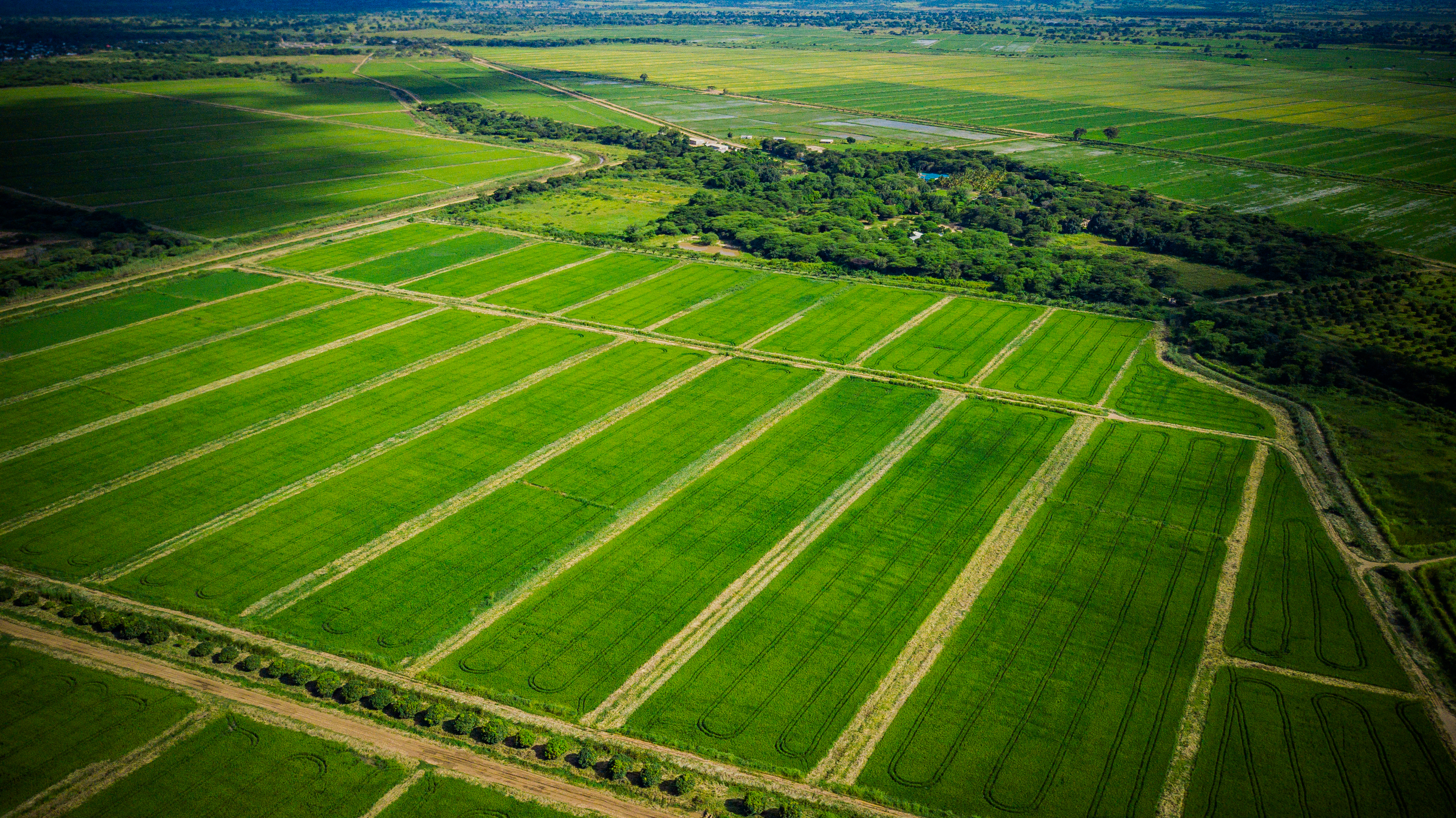
The agricultural industry plays a crucial role in Tanzania’s
economy, and the government recognizes the potential it holds
for creating jobs and boosting exports. With a favorable
climate, fertile land, and diverse natural resources, Tanzania
is well-positioned for growth in agriculture, livestock, and
fisheries. The country has a rich biodiversity and an
extensive coastline, which allow for various agricultural
activities, including crop production and aquaculture.
One of the key focuses of this initiative is to empower youth
and women, who have often faced challenges in accessing
resources and opportunities in agribusiness. The government is
committed to fostering an environment where these groups can
thrive by providing better access to education, training, and
resources. This involves modernizing agricultural practices
and promoting commercial farming to increase productivity and
sustainability.
The initiative encourages partnerships between the government,
private sector, and other stakeholders to support agribusiness
development. These partnerships can help with technological
transfer, create joint ventures, and provide capacity-building
programs. By collaborating with different sectors, Tanzania
aims to enhance its agricultural practices and improve the
livelihoods of those involved.
In addition, the program seeks to improve infrastructure and
regulatory frameworks. This means developing better roads,
storage facilities, and market access, which are vital for
increasing efficiency and reducing waste in agriculture. The
goal is to create a supportive ecosystem where young people
and women can easily engage in agribusiness and make it a
viable career choice.
Another important aspect of the initiative is raising
awareness about the potential of Tanzania’s agricultural
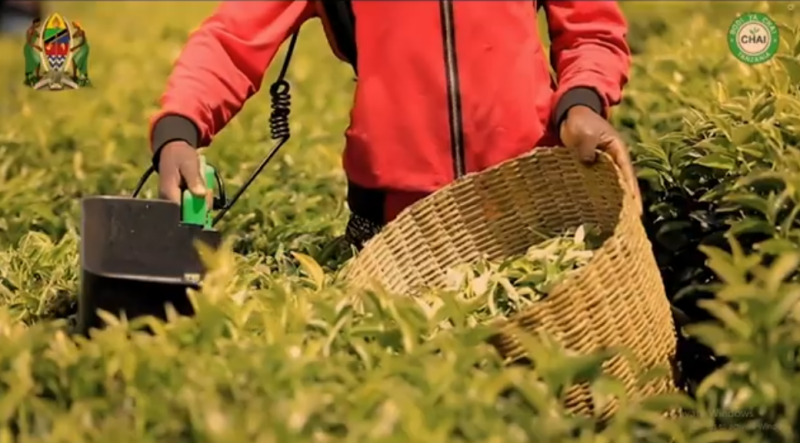
products. For example, Tanzanian tea is celebrated for its
quality and flavor, cultivated in ideal conditions that
contribute to its unique characteristics. By promoting such
products on international platforms, Tanzania hopes to attract
more investors and buyers, which in turn can create more jobs
and improve local economies.
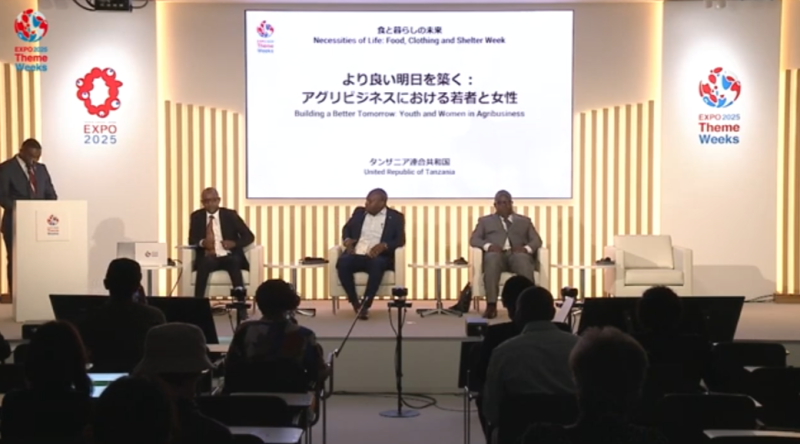
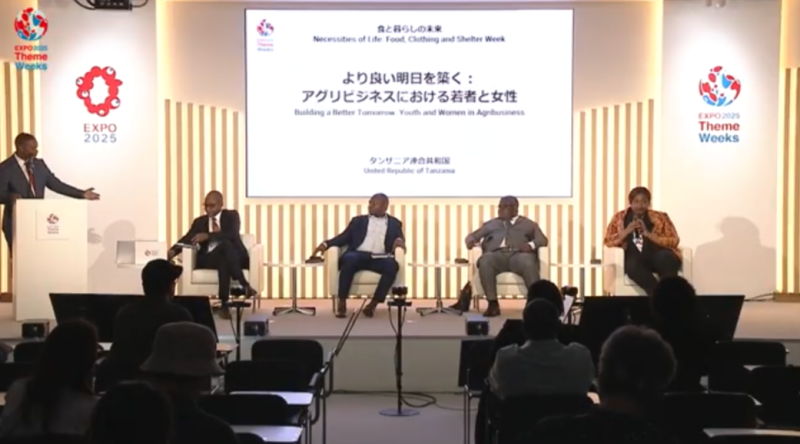
The event at EXPO 2025 encouraged dialogue among local and
international stakeholders to explore collaborative projects
and business opportunities. It emphasized on the need for
investments in agriculture and livestock that consider
sustainability and the future of food systems. The discussions
aimed at establishing meaningful connections that can lead to
long-lasting partnerships and shared prosperity.
Overall, Tanzania’s "Building a Better Tomorrow"
initiative reflects a strong commitment to building a
sustainable agricultural sector that includes youth and women.
Through improved support, infrastructure, and partnerships,
Tanzania is paving the way for a more prosperous future,
ensuring that everyone can contribute to and benefit from the
agribusiness landscape. By fostering an environment of
empowerment and opportunity, Tanzania seeks to create a more
resilient agricultural sector that can thrive now and, in the
years, to come.
Also, Tanzania has a project focusing on the involvement of
women in the livestock sector by providing capital incentive
whereas the women are loaned cows and paying for milk. This
project aims at ensuring food sustainability.
【Post EXPO Initiatives】
After EXPO 2025, Tanzania plans to take several decisive
actions to strengthen its agribusiness sector, particularly
focusing on empowering youth and women. The insights gained
and partnerships established during the expo will serve as a
foundation for future initiatives.
First, Tanzania aims to build on the discussions held at the
expo to enhance collaborations with international investors,
businesses, and organizations. By fostering these
partnerships, the country hopes to attract investments that
can significantly enhance agricultural productivity and
innovation. Targeted outreach to the private sector will be a
crucial part of this strategy, encouraging more Japanese and
other global firms to engage in Tanzanian agribusiness.
Second, the government plans to implement initiatives that
focus on improving infrastructure, such as better roads,
storage facilities, and market access. This will facilitate
the movement of agricultural products, reduce post-harvest
losses, and connect farmers directly to markets. Additionally,
enhancing the regulatory framework is crucial to simplifying
the processes for young entrepreneurs and women in
agribusiness.
Third, Tanzania will prioritize capacity-building programs,
including training and education for youth and women. These
programs will aim to equip them with the skills necessary for
modern agricultural practices and business management,
enabling them to start and grow their agribusiness
ventures.
Lastly, the country will promote the continued awareness of
its agricultural products on international platforms,
positioning them as quality offerings in global markets. By
leveraging the momentum from EXPO 2025, Tanzania aims to
create a sustainable agribusiness ecosystem that not only
boosts the economy but also ensures food security and empowers
its communities. Through these actions, Tanzania is committed
to fostering lasting change and prosperity in the agriculture
sector.
Cast
Moderator

SELEMANI SHABANI CHILLO
Marketing Manager of the Tea Board of Tanzania
Selemani Shabani Chillo, CPB (T), MBA is a Marketing
specialist and a Certified Professional Banker holding
a Master of Business Administration in Corporate
Management (MBA-CM) from Mzumbe University, Certified
Professional Banker from the Tanzania Institute of
Bankers with a Bachelor of Banking and Finance from
the Institute of Finance Management.
He serves as the Marketing Manager of the Tea Board of
Tanzania responsible for developing the marketing
strategies to enhance the growth of the Tea industry
in Tanzania for both Domestic and International
Markets.
Selemani served as the Head of Marketing & Public
relations, Business Development Executive and a
Marketing officer of various organizations in the
private Sector. For the past 8 years, he has been
doing business consultancy to companies dealing with
Agribusiness, Healthcare, Mining and Insurance.
Selemani was Crowned by the Tanzania Marketing Science
Association (TMSA) as the Best Young Marketer of the
year, after exceptional performance in the field of
Marketing in 2024.
View Profile
Close
close
Speakers

Beatrice John Banzi
Director General of the Tanzania Tea Board (TTB)
Beatrice John Banzi is a distinguished horticulturist
and an experienced leader in agricultural development,
currently serving as the Director General of the
Tanzania Tea Board. With nearly two decades of
dedicated experience, she is renowned for building
resilient food systems and empowering youth and women
through innovative technology.
Holding a Master's in Rural Development from
Sokoine University of Agriculture, Beatrice's
career includes significant leadership roles at the
Ministry of Agriculture, where she served as Assistant
Director in Crop Production and Regional Agriculture
Advisor. She has championed the promotion and
diversification of tea, transforming its perception
and attracting smallholder farmers, leading to
improved production and industry advancement.
View Profile
Close
close

Nyasebwa Enock Chimagu
Director General of the Tanzania Official Seed Certification Institute (TOSCI) and chairs the Executive Committee of the Desert Locust Control Organisation for Eastern Africa.
Nyasebwa Enock Chimagu is a seasoned agricultural
professional with over two decades of experience in
planning, implementing, and transforming agricultural
programs across Tanzania and the broader EAC, SADC,
and AU regions. He holds an M.Sc. in Agriculture and a
B.Sc. in Agriculture Education from Sokoine
University, alongside an M.Sc. in Economics from the
Open University of Tanzania.
Currently, Mr. Chimagu serves as the Director General
of the Tanzania Official Seed Certification Institute
(TOSCI) and chairs the Executive Committee of the
Desert Locust Control Organisation for Eastern Africa
(DLCO-EA). His extensive career includes significant
contributions as Director of Crop Development at the
Ministry of Agriculture and various roles in local
government, fostering sustainable agriculture, value
chain development, and market access for key Tanzanian
crops.
View Profile
Close
close

Primus Kimaryo
The Director General of the Tanzania Coffee Board (TCB)
Primus Kimaryo is the Director General of the Tanzania
Coffee Board (TCB), bringing extensive expertise and
leadership to the country’s coffee sector. Prior to
this role, he served as the Director of Coffee Quality
and Promotions at TCB and as the Marketing Manager for
the Association of Kilimanjaro Specialty Coffee
Growers (KILICAFE).
Mr. Kimaryo has also held influential positions on
international and regional platforms, including
serving as Chairman of the Projects Committee at the
International Coffee Organization (ICO) and Chairman
of the Tanzania Chapter of the African Fine Coffees
Association (AFCA).
He holds a Master’s Degree in Coffee Economics and
Science from the University of Udine, Italy, and an
MBA in Marketing from Mzumbe University, Tanzania.
With over two decades of experience, Mr. Kimaryo has
developed a deep passion for coffee across the entire
value chain—from enhancing farming prosperity to
driving value addition and market development.
View Profile
Close
close

SADDY KAMBONA
The Director General of the Tanzania Sisal Board
Saddy H. Kambona is a distinguished lawyer and public
servant, holding a Master's in Commercial and
Corporate Laws. With over two decades in public
service, he began his career in 2001, serving as a
Senior/Principal Legal Officer in various Tanzanian
government institutions, shaping legal frameworks and
policy.
Since his 2020 appointment as Director General of the
Tanzania Sisal Board, he has dramatically revitalized
the sisal subsector, boosting production from 36,000
to 61,000 tons annually. His leadership has attracted
significant investment, fostering economic growth and
ensuring the sisal industry's sustainable future.
View Profile
Close
close

Stanley Nelson Mnozya
The Director General of the Tanzania Tobacco Board (TTB)
Stanley Nelson Mnozya, holding an MBA, MA-DS, and BSc
Agron., serves as the Director General of the Tanzania
Tobacco Board (TTB). In this role, he leads the
regulation and development of Tanzania's tobacco
industry, emphasizing sustainability, profitability,
and ethical practices within tobacco farming. He
actively promotes adherence to agricultural best
practices, timely payments, and fair treatment for
farmers.
A strong advocate for environmental stewardship,
Mnozya champions reforestation efforts and the use of
alternative energy in tobacco cultivation. He is also
a Board Member of the Tobacco Research Institute of
Tanzania (TORITA), overseeing research crucial for
seed development and improved production. His
leadership is marked by a commitment to innovation,
win-win business models, and balancing economic
interests with environmental well-being and farmer
welfare.
View Profile
Close
close
Necessities of Life: Food, Clothing and Shelter Week
Building a Better Tommorow: Youth and Women in Agribusiness
The talk session will focus Youth and Women engagement in the Agriculture sector which articulate interventions aimed at increasing the value and productivity of agricultural production, employment creation, expanding the diversification of products and strengthening the value chains in the agricultural sector and creating favourable environments for the private sector to engage profitably in production and export of agricultural products. It is also aligned with the livestock and fisheries sub-sectors. It will contribute to the achievements of the sustainable development goals (SDGs) 1 (No poverty), 2 (Zero Hunger), 5 (Gender equality), 8 (Decent work and economic growth) and 13 (Climate Action).
-
2025.06.06[Fri]
14:00~16:30
(Venue Open 13:30)
- Theme Weeks Studio
OTHER PROGRAM
Necessities of Life: Food, Clothing and Shelter Week