Health and Well-being Week
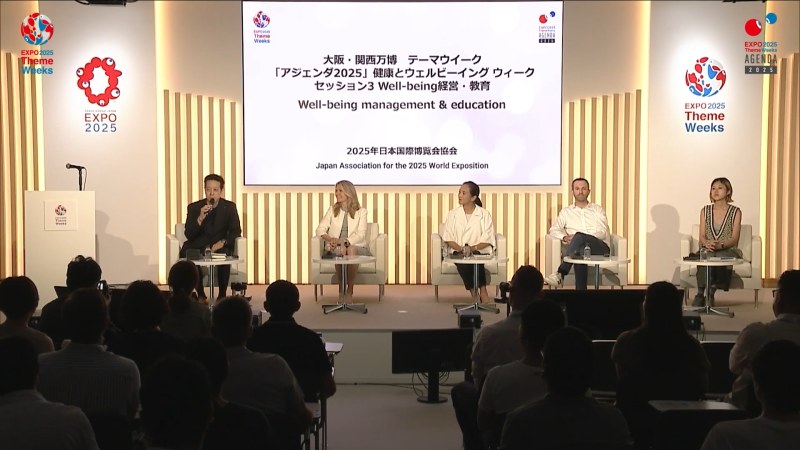
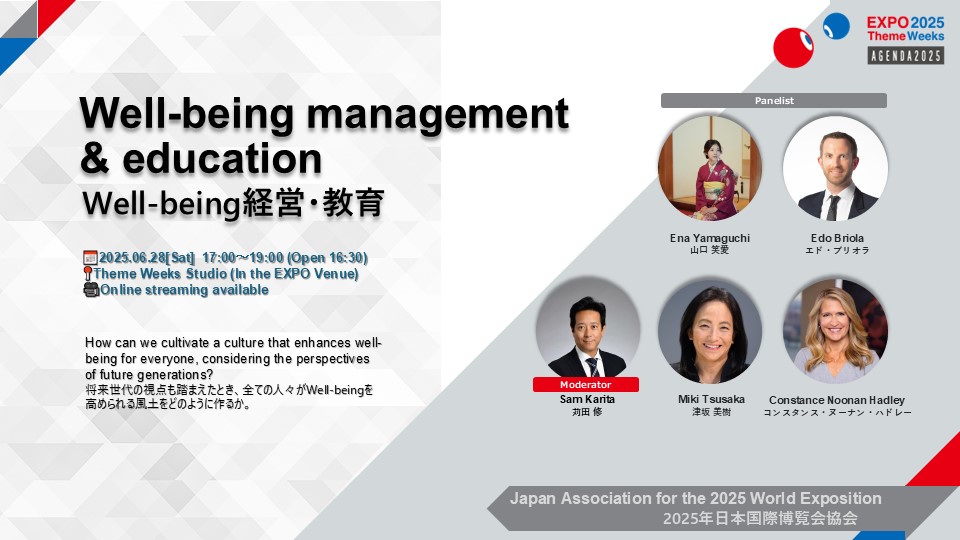
Well-being management & education
Japan Association for the 2025 World Exposition
The programme, together with the General Sponsors, explores: 'How can we cultivate a culture that enhances well-being for everyone, considering the perspectives of future generations?'
Recorded video available
Discussion
- Others
| Transmission of simultaneous interpretation | Provided |
|---|---|
| Language of interpretation | Japanese and English |
-

Agenda2025
Organised Programme
-
Time and
Date of
the event -
-
2025.06.28[Sat]
17:00 ~ 19:00
(Venue Open 16:30)
-
- Venue
- Theme Weeks Studio
Programme details
*Subtitles: Choose “Subtitles/CC” in the “Settings” (gear
icon) at the bottom right of the YouTube video.
*Subtitles may not show with multiple languages or overlapping
audio.
A workplace environment where employees can engage in their
daily work with both physical and mental well-being, as well
as a sense of fulfillment and joy, leads to high performance.
This panel discussion will explore key success factors and
best practices for building a strong organization through
innovative and thorough management strategies that enhance
employee well-being. It will also consider effective
approaches to education that foster individuals with a strong
sense of self-efficacy.At the same time, in preparation for
major transformations in the future, there is a need to
further innovate well-being-centered management. We aim to
explore how to create work environments that enable employees
of diverse generations and values—including the senior
generation in an era of declining birthrates and aging
populations—to collaborate effectively. Furthermore, we seek
to examine new ways for humans to create value and rediscover
joy in work in a world where generative AI, AI agents, and
robotics technologies are transforming how work can be done.
Reports
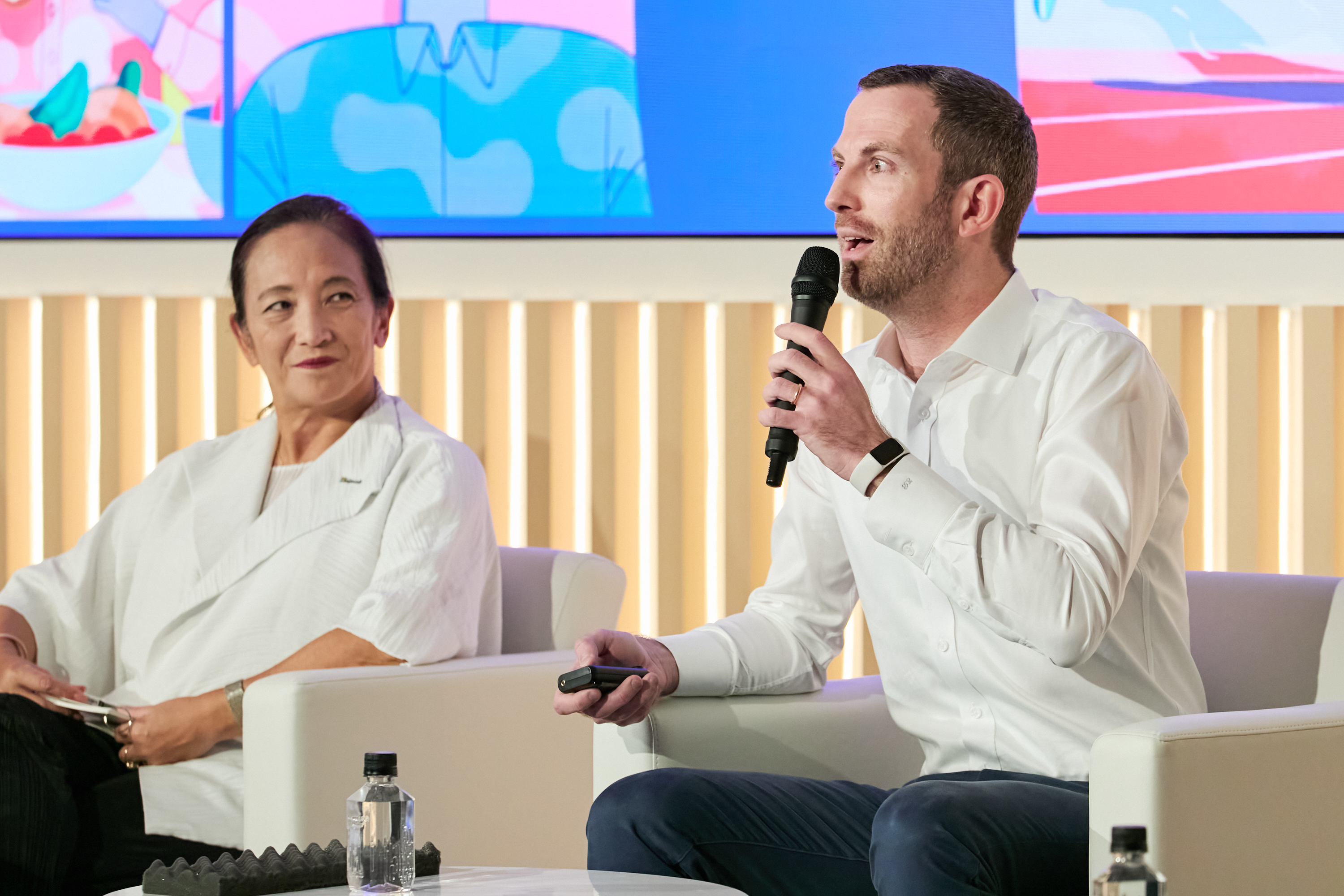
【Program Summary】
This session, "Well-being management &
education," was held on June 28, 2025, as part of the
"Health and Well-being Week." Amid the rapid change
and growing complexity of social and economic structures,
integrating individual well-being with the sustainability of
organizations and society is an urgent challenge in every
field in the 21st century. This program brought together
practitioners and researchers from diverse fields such as
management, technology, social design, and youth values to
examine multidimensional approaches to building new societies
and organizations based on well-being. The concept of
"health" no longer belongs solely to the realm of
medicine but should be treated as a comprehensive theme in all
system designs, including education, working styles, urban
planning, and technological development. The core questions of
this session were: "What is well-being?" and
"How can it be measured, institutionalized, and
implemented?" Each panelist presented solutions based on
their initiatives and research. Specific and practical
discussions unfolded, including the need for social design
that considers new values sought by Generation Z and
Generation Alpha—such as empathy, diversity, and
self-fulfillment—the roles of technologies like AI and cloud
computing, redefining loneliness and connection, and
institutionalizing psychological safety and flexible working
styles. Through dialogue among the panelists, a shared
understanding emerged that the essence of well-being lies in
"the quality of human relationships." A
"human-centered" perspective, which cannot be fully
complemented by systems or tools alone, was strongly
emphasized. It was also confirmed that not only companies and
government agencies but also educational institutions and
young people themselves must actively participate as a driving
force to socially implement well-being. This session was more
than a mere sharing of ideals; it was the first step in making
well-being a common language for future society and connecting
it to concrete actions. The sight of panelists with diverse
backgrounds discovering common values together symbolized the
"Designing Future Society for Our Lives" vision of
EXPO 2025 and provided important insights for future social
transformation.
【Speaker Summary: Sam Karita】
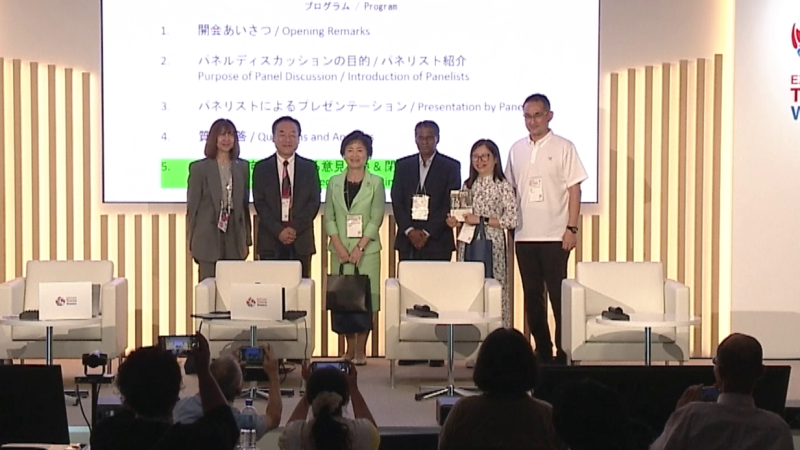
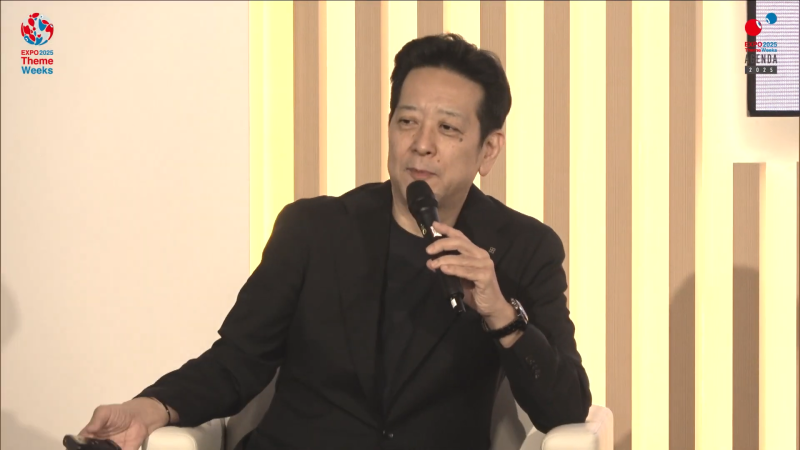
Sam Karita, as the moderator of the panel discussion,
skillfully drew out each panelist’s insights and added his own
reflections on the multifaceted significance and future
prospects of well-being management. At the outset, he stated
that the concept of well-being goes beyond simple
"health" or "comfort" and is positioned at
the intersection of "individual purpose" and
"organizational sustainability," making it a core
theme in management. Drawing from his long experience in
management consulting, Karita pointed out that pursuing
well-being not only has short-term effects such as improved
employee satisfaction and reduced turnover but also leads to
medium- and long-term outcomes such as innovation, enhanced
corporate brand value, and increased social trust. He
emphasized that in today’s complex and unpredictable world, it
is essential to foster a resilient organizational culture
where each employee can establish their own well-being and
flexibly adapt to change. He also highlighted a common keyword
emerging from the panelists’ statements: "rebuilding
connections." Whether addressing loneliness,
psychological safety, or youth engagement, "relationships
with others" are crucial, and companies must consciously
design and support these relationships. Even in utilizing
technology, he noted the importance of balancing the use of AI
and data to visualize and strengthen connections with
maintaining human touch. Karita discussed the introduction of
well-being management in Japanese companies, analyzing that
unlike Western countries, "individual happiness" is
less likely to be recognized as a management issue. He
stressed the need to incorporate factors such as
"meaningful work" and "self-fulfillment"
into management indicators, as these directly impact talent
acquisition and international competitiveness. He further
emphasized the importance of an ecosystem approach,
collaborating with education, government, and healthcare
rather than relying solely on individual companies. In
closing, Karita stated, "Well-being is not a concept with
a 'correct answer.' That is why it is necessary to
engage in ongoing dialogue with people from all walks of life
and to search together," appealing for continued
collaboration among companies, society, and individuals to
evolve well-being.
【Speaker Summary: Edo Briola】
Edo Briola spoke concretely about the significance of
well-being in corporate management and how to put it into
practice, drawing on Unilever’s initiatives. The company
places the World Health Organization’s (WHO) definition of
health—"Health is a state of complete physical, mental,
and social well-being and not merely the absence of disease or
infirmity"—at the center of its management philosophy.
Based on this, Unilever develops approaches for employees,
consumers, and communities. For employees, flexible working
arrangements and mental health support programs have been
introduced, contributing to improved satisfaction and
retention rates. For consumers, the company emphasizes
promoting healthy lifestyles rather than simply providing
products. This includes encouraging healthier choices through
product packaging and advertising and disseminating
information on improving diets and reducing environmental
impact. These initiatives enhance corporate brand value and
build social trust. Unilever also focuses on community
engagement, contributing beyond the company framework through
initiatives such as nutrition education programs for children
and health workshops for local residents. Briola stressed that
the most critical factors in promoting well-being are "a
consistent corporate culture" and "genuine
commitment from management." Success depends on whether
initiatives are rooted in everyday corporate activities rather
than being one-off campaigns. He also touched on the
challenges and importance of nurturing shared values while
engaging with employees from diverse cultural backgrounds in a
global company. He concluded with a strong message:
"Sustainable corporate growth cannot be considered
separately from employees’ well-being," linking
well-being management directly to corporate
competitiveness.
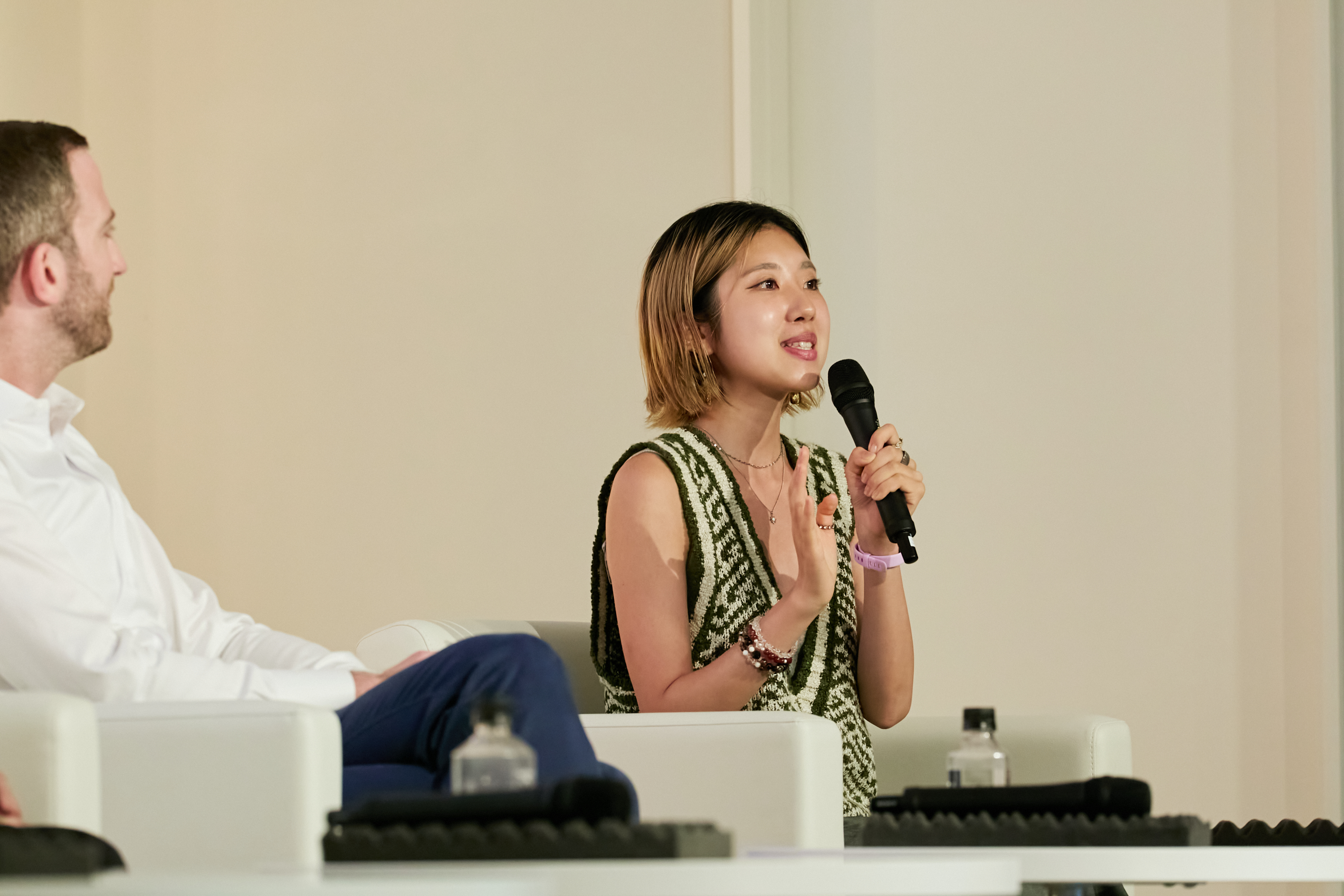
【Speaker Summary: Ena Yamaguchi】
Ena Yamaguchi spoke from the perspective of younger
generations about how they perceive well-being and practical
approaches to realizing it. She emphasized that for Generation
Z and Generation Alpha, "self-fulfillment,"
"connection," and "respect for diversity"
are at the core of well-being, and it is essential to build
societies, educational systems, and workplaces that support
these values. Through her platform "u-en-me" she has
been promoting self-expression through art and design,
strengthening social connections through empathy. She also
addressed the mental health challenges faced by today’s youth,
highlighting the importance of delivering the message,
"You don’t have to try so hard" and "You are
fine as you are." Especially in digital spaces such as
social media, stress and loneliness from comparisons with
others are prevalent and threaten individual well-being. She
stressed the need to build communities where people can feel
safe to talk both online and offline and to spread educational
programs that encourage self-acceptance. Yamaguchi called on
companies and governments to create opportunities for young
people to participate proactively. In corporate well-being
initiatives, for example, it is not enough to simply provide
employee benefits; it is important to include young
generations’ opinions in a co-creation process. She spoke
about her own experience serving as a member of the
"Future Generation Advisory Board," stating that
young people’s involvement in decision-making leads to the
social implementation of well-being. She closed with a strong
appeal: "A society where each individual’s well-being is
realized will ultimately become stronger, more flexible, and
full of empathy," calling for collaboration among
individuals, companies, governments, and educational
institutions to build such a future.
【Speaker Summary: Miki Tsusaka】
Tsusaka began by introducing Microsoft’s mission: “to empower
every person and every organization on the planet to achieve
more.” She explained that her decision to join the company was
not driven by its products, but rather by the leadership of
its CEO Satya Nadella and his promotion of a growth mindset.
She resonated deeply with Microsoft’s cultural shift from
being “know-it-all” to “learn-it-all.” She then introduced the
company’s internal well-being indicator, “Thriving.” In the
Japan subsidiary, about 3,000 employees take part in a survey
every six months, and the results are instantly analyzed by
AI. In addition, globally, around 2,500 employees are asked
daily, “How are you feeling today?” The performance
measurement is designed to evaluate not only individual
contributions but also how employees have contributed to the
work of others and how they have built on others' ideas
and efforts, thereby fostering teamwork. The latest survey
highlighted “the use of cutting-edge technologies,”
and“positive human relationships,” as key factors that enhance
happiness. Tsusaka stated that organizations should focus less
on ROI and more on ROT (Return on Time), stressing that AI is
a tool to help people devote time to what they truly want to
do. She pointed out that the introduction of GitHub Copilot
has not only improved efficiency but also raised engineers’
job satisfaction by 75–80%. Managers, too, have been freed
from repetitive coordination tasks and spent their time to
actually do. On the topic of well-being, she expressed her
support for the idea of “life-work blend” rather than strict
separation, emphasizing the importance of creating systems
that accommodate diverse needs rather than applying uniform
solutions. Microsoft’s hybrid work model is one such example,
and above all, she stressed that “listening to people’s
voices” is indispensable. She further emphasized that the use
of AI should aim at growth, not staff reduction. She
introduced the “Code Without Barriers” program, which
Microsoft supports women to acquire AI skills and improve
employment opportunities. At the same time, she warned that
the deployment of AI agents requires a framework of
Responsible AI and that, at this stage, a cautious approach is
essential. Quoting the motto of the girls’ school founded by
her grandmother—“Respect, Love, and Trust”—she stated that
these remain universal values supporting human dignity, even
in the age of AI. Finally, she underlined that the educational
field also needs both AI literacy and transformation: “The way
we learn and the way we teach will change, but it will be a
change for the better、I believe.”
【Speaker Summary: Constance Noonan Hadley】
At the start of her presentation, Dr. Constance (Connie)
Noonan Hadley asked the audience to consider what their
organization was designed to produce. She encouraged leaders
to consider making their organizations engines for well-being,
drawing upon the U.S. Surgeon General's framework. She
highlighted the benefits of worker well-being for individuals,
organizations, and societies, and underscored the urgency of
changing the way we work to achieve these benefits. Building
on decades of research among social scientists and
practitioners, Dr. Hadley described the different ways that
employee well-being has been defined and tested. She suggested
employers consider at least four components of employee
well-being: physical, mental, social, and financial. Her
research has primarily focused on social health at work, that
is, the dynamics of positive work relationships and
collaboration. Strong social connection among coworkers has
been shown to lead to higher employee engagement, job
satisfaction, productivity, and overall organizational
performance. Other aspects of employee well-being have
similarly been shown to benefit not only employees but the
companies for which they work. Dr. Hadley made a call to
action to the audience, encouraging them to act to improve
well-being at work amid economic, social, and technological
changes. For example, Dr. Hadley shared insights on the ways
that artificial intelligence (AI) may influence loneliness at
work. In a recent study, she finds that some people report
that generative AI is alleviating their work loneliness as it
feels like they are talking to another person. Yet others
worry that AI is distancing them even further from human
contact and connection. She emphasized that action is needed
to influence the outcome of technology usage in organizations,
as well as to address other factors such as generational
shifts and mental health trends. She concluded by offering
actionable steps that people and organizations can take to
promote employee well-being, including adopting new
measurement tools, adapting workflows, encouraging use of
employee support programs, and shaping public policy. By
becoming an engine for well-being, organizations can influence
not only their own workforce and bottom line but also promote
greater stability and prosperity around the world.
【Discussion Summary】
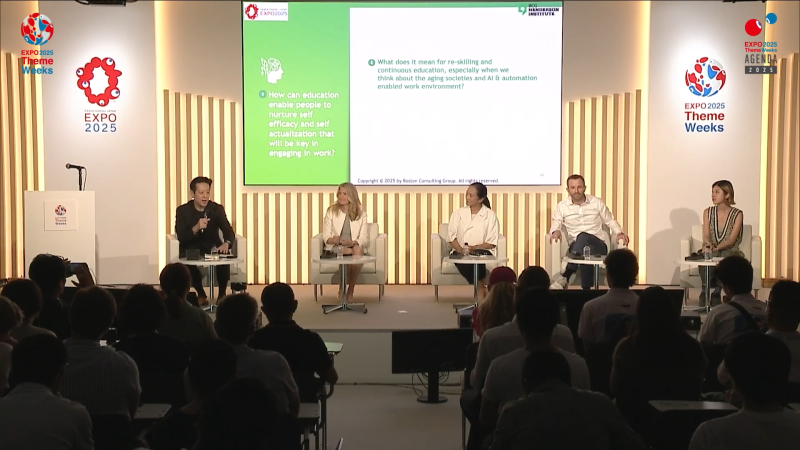
In the latter half of the session, an active exchange of
opinions took place on the challenges and prospects for
"socially implementing well-being management." Under
the facilitation of Karita, multifaceted issues such as
technology, systems, culture, and generational gaps were
explored. The first topic was balancing privacy and
technology. Tsusaka acknowledged the usefulness of visualizing
employees’ conditions using AI and cloud technologies but
stressed that ethical frameworks and careful design are
indispensable in data utilization. Hadley emphasized that
technology is a "tool to supplement relationships"
and "cannot replace human connection." There was
consensus that a human-centered design approach is necessary
without over-reliance on technology. The second issue was
generational differences in values. Yamaguchi explained that
the well-being sought by younger generations is characterized
by "empathy," "freedom," and
"self-expression," which differ from traditional
corporate cultures and management styles. She advocated for
providing opportunities for young people to participate in
decision-making as a bridge between companies and the next
generation. Briola responded by introducing Unilever’s
bottom-up projects led by young employees, explaining that
fostering a culture of "listening" enhances
organizational flexibility and innovation. The panelists also
discussed cultural differences in perceptions of well-being.
Drawing on the experiences of global companies like Unilever
and Microsoft, they shared the need to respect cultural
diversity while striving to find common values. Karita noted
that in Japan, promoting well-being management requires not
only corporate initiatives but also policy support and
collaboration with education, highlighting the importance of
redesigning the intersection of "working" and
"living" across society as a whole. Finally, the
panelists identified "addressing loneliness,"
"empowerment," and "co-creation" as key
themes. There was a shared understanding that well-being is
not only an issue for individual companies or individuals but
also challenges the very fabric of society. The importance of
"thinking and acting together" was emphasized, and
the session demonstrated that dialogue among people with
different positions and expertise can open up new
possibilities.
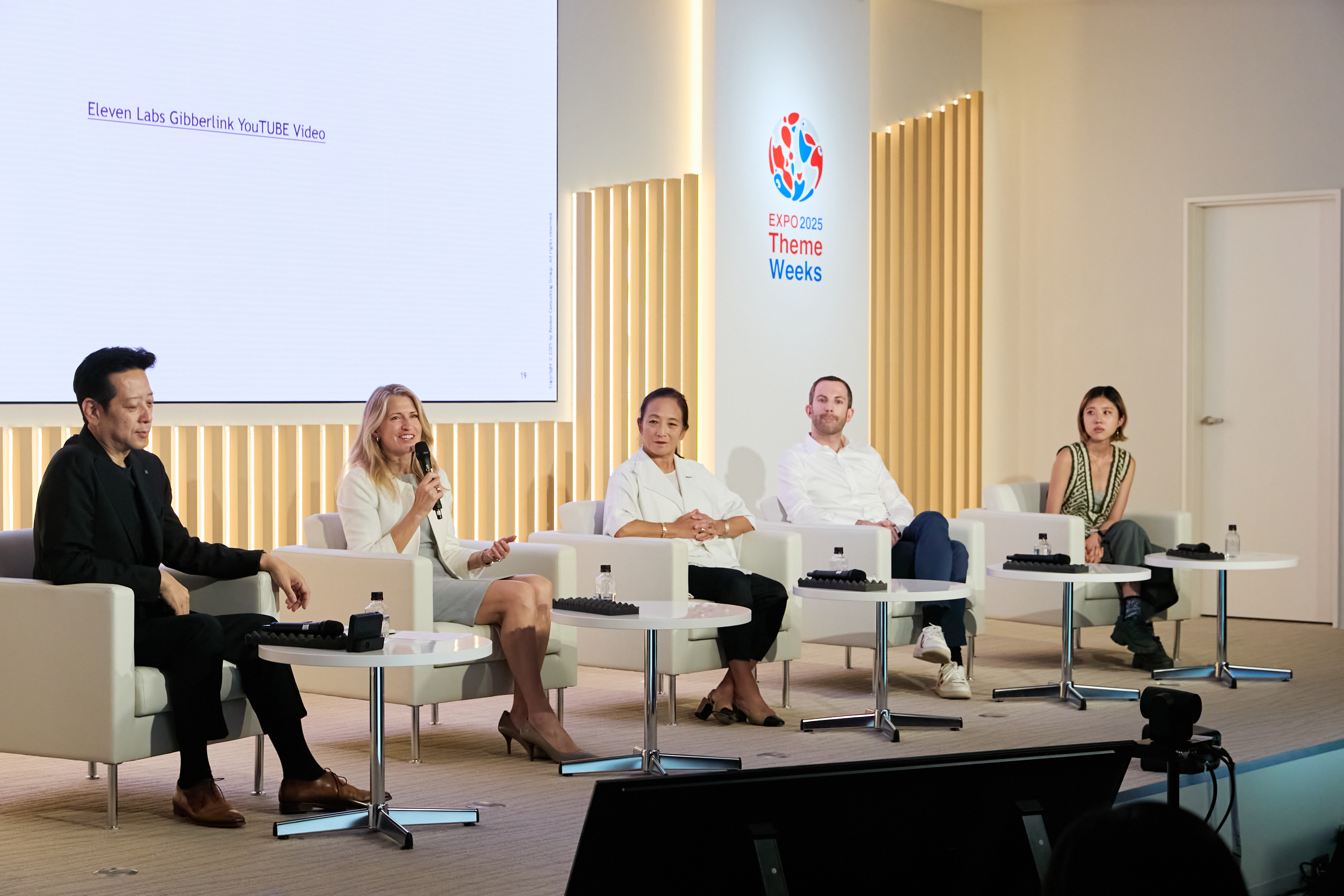
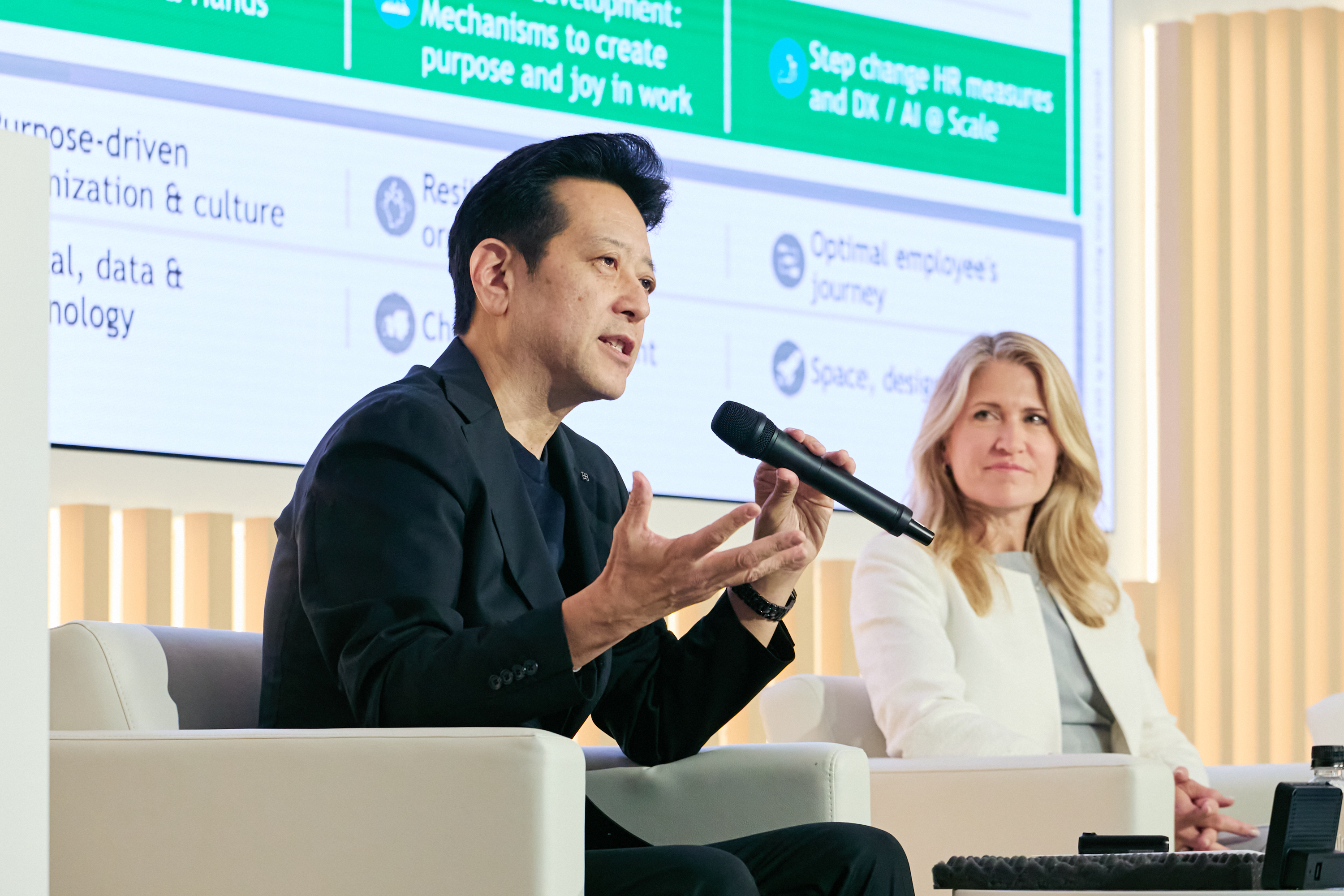
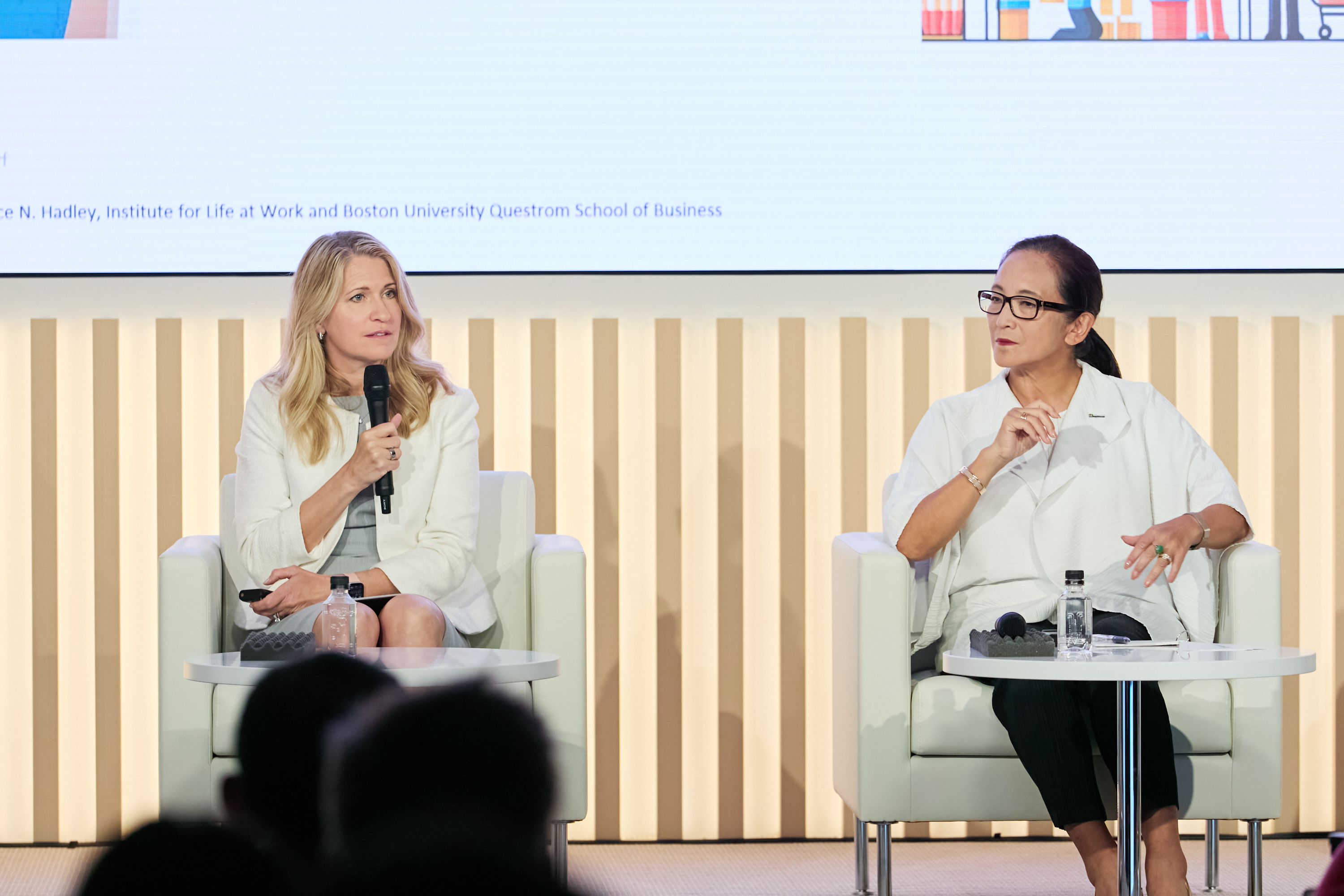
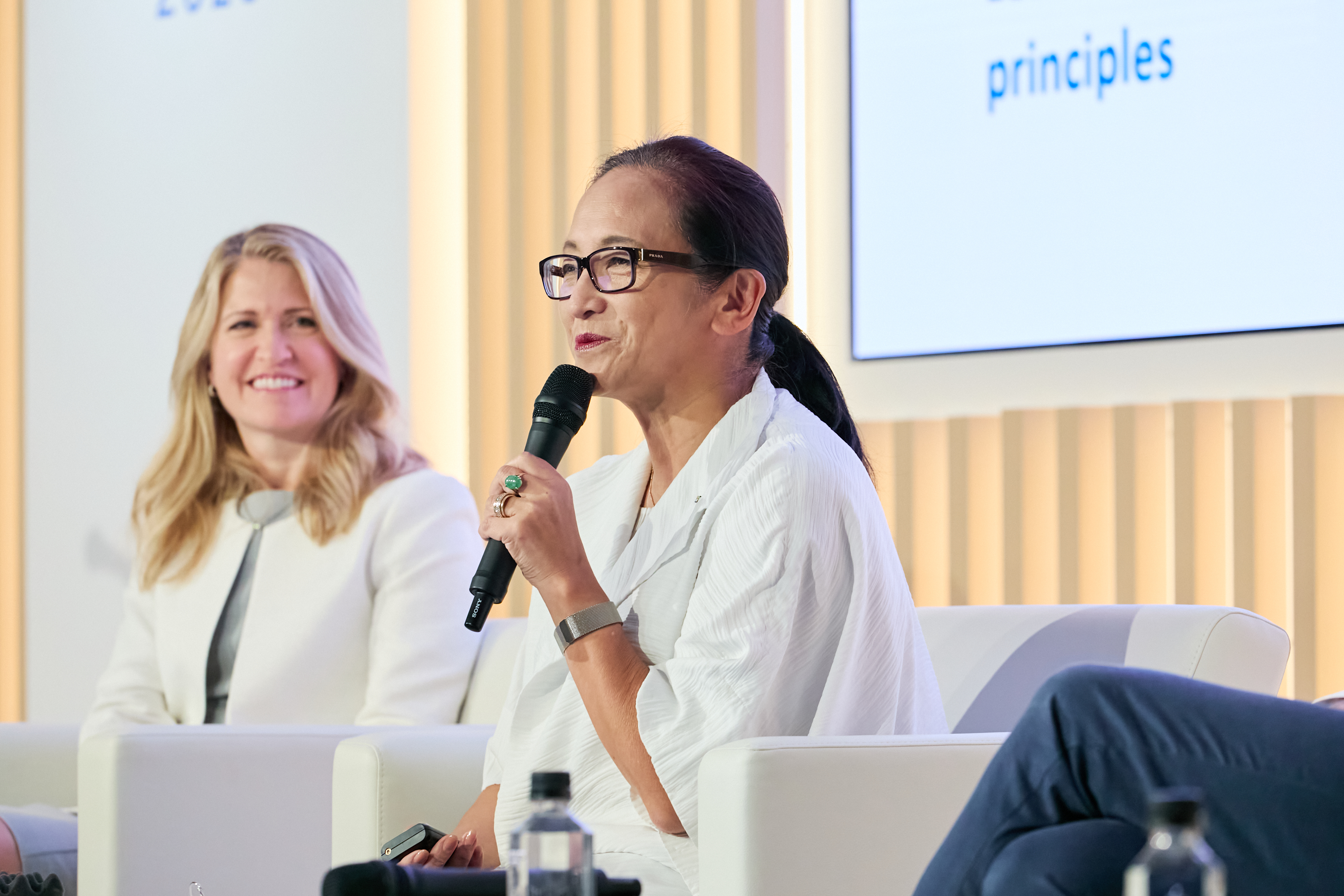
Cast
Moderator
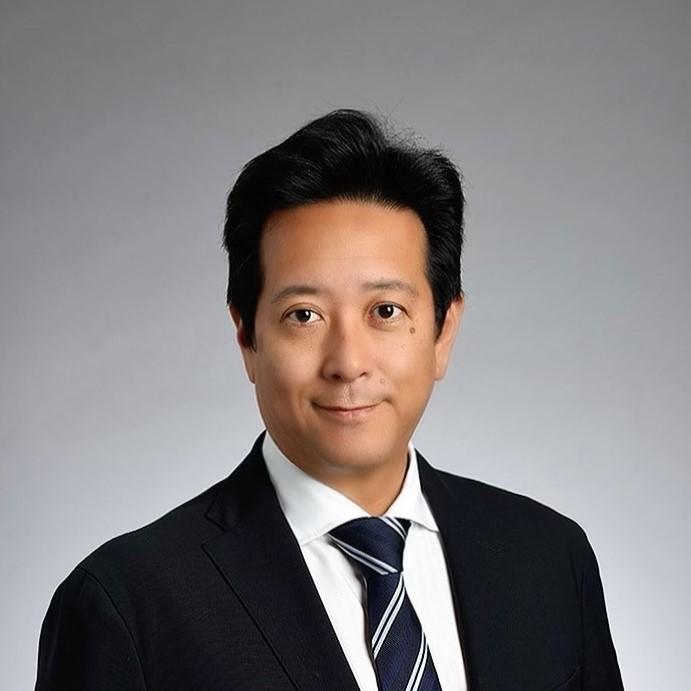
Sam Karita
Boston Consulting Group Managing Director & Senior Partner
He is BCG Henderson Institute (BHI) Japan Lead, and named Global BHI Fellow for his pioneering thought leadership. He provides consulting to top management of leading corporations in various industries such as Healthcare, Consumer goods, Media, Entertainment on multiple agenda including Strategy, Innovation, DX, Productivity Enhancement and M&A.
View Profile
Close
close
Speakers
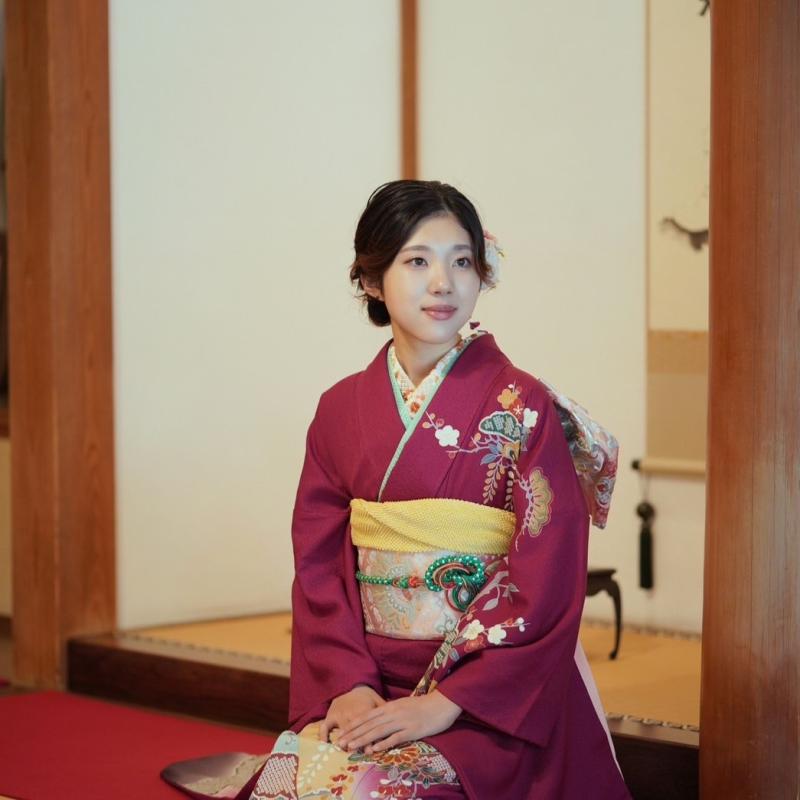
Ena Yamaguchi
2024 Future Generation Advisory Board Member, Member of the first group of the youth community sponsored by the "Sustainable Brands Japan", Kimono remake Brand "U-Enme," Founder & Designer
Born in 2005. She grew up in Tokyo and moved to California, USA when she was in the fifth grade. After returning to Japan, she entered Kaetsu Ariake Junior and Senior High School, graduated from the project department. Then entered the Faculty of International Liberal Studies at Sophia University in April 2024 and Minerva University in September of the same year. In order to pursue sustainability and the appeal of Japan culture to people around the world, started the kimono remake brand "U-Enme" from February 2024. In addition to conducting educational workshops related to well-being at Sustainable Brands Japan, also launched a crowdfunding campaign to enter Minerva University, asking investors to invest in the project, and has succeeded to raise 3 million yen for her tuition fees.
View Profile
Close
close

Edo Briola
Unilever Japan Customer Marketing K.K. Representative Director & President and Head of Carver Korea
Edo was appointed to current role from September 2024. He has been at Unilever for 12 years and he has worked in a variety of general management, strategy and marketing roles across the United Kingdom and Japan. Our mission for employee health and wellbeing is to add healthy years to the lives of our people, unlocking untapped human potential for our business and our world. Edo looks forward to taking part in the discussion around the important theme of Wellbeing management and education, and share some of Unilever's initiatives for our employees and society.
View Profile
Close
close
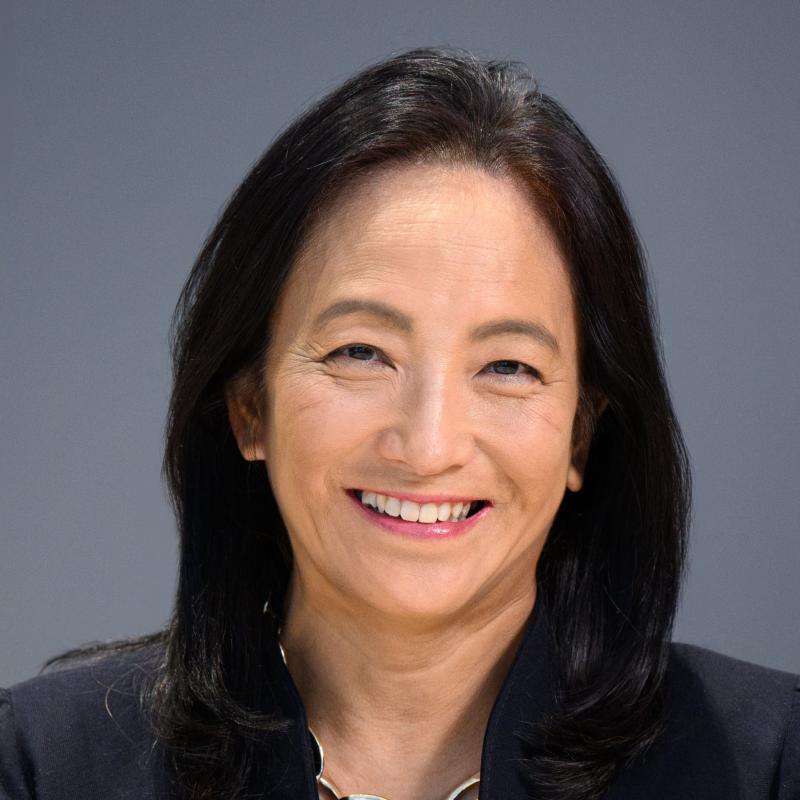
Miki Tsusaka
Representative Director and President, Microsoft Japan
Miki Tsusaka is the Representative Director and
President of Microsoft Japan. Appointed in February
2023, she leads Microsoft’s engagement with customers,
and business partners and is responsible for all
product, solution, service, and support offerings in
Japan.
Under her leadership, she focuses on enabling the
acceleration of Japan's digital transformation
through Microsoft’s global and local expertise of our
leading productivity and platform solutions. She will
also build and reinforce Microsoft’s reputation in
Japan as a trusted partner for individuals,
organizations, and governments.
Prior to joining Microsoft Japan, she was a Senior
Partner and Managing Director at Boston Consulting
Group (BCG), where she worked for clients in a wide
range of industries in Japan and overseas, helping
them develop and implement growth strategies, improve
profitability, redesign organization, and promote
digital transformation. She established strategic
consulting groups specializing in marketing, sales and
pricing strategy development and led the expansion of
BCG's service areas. As for BCG’s operation, she
has been a member of the Executive Committee for two
three-year terms and served as Chief Marketing Officer
(CMO) as well.
Tsusaka holds a Bachelor of AB, Government and East
Asian Studies from the Harvard University, and an MBA
degree from the Harvard Business School. She was
recognized by Fortune as among the 100 most powerful
women in the world and in Asia in 2024.
View Profile
Close
close
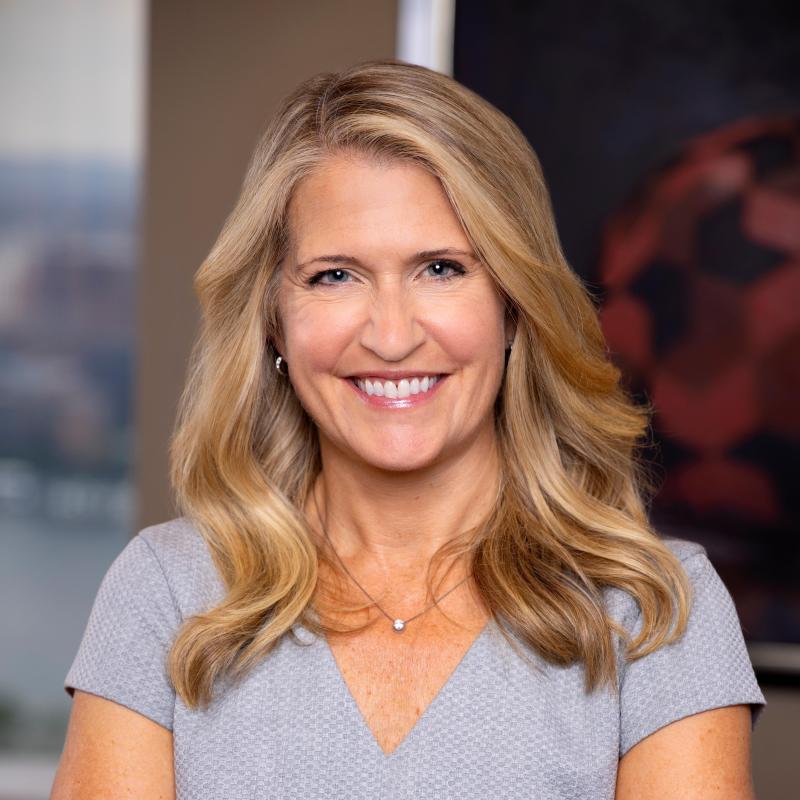
Constance Noonan Hadley
Founder, Institute for Life at Work; Research Associate Professor, Boston University Questrom School of Business
Dr. Constance (Connie) Noonan Hadley is an
organizational psychologist whose goal is to support a
rich and fulfilling life at work for all employees.
She is the founder of the Institute for Life at Work
and a research associate professor at the Boston
University Questrom School of Business. She holds a
PhD in organizational behavior from Harvard
University, an MBA from Wharton, and a BA from
Princeton University.
Her research has been published in leading academic
journals, Harvard Business Review, and MIT Sloan
Management Review. She is regularly interviewed for
media outlets such as The Wall Street Journal,
Financial Times, The New York Times, Bloomberg, Axios,
Fast Company, and Forbes.
Dr. Hadley was selected as a member of the Thinkers50
Radar Class of 2024 to recognize her rising global
influence as a management scholar. She also serves on
the Board of Trustees for MGB McLean Hospital, a
leader in behavioral and mental health.
View Profile
Close
close
Health and Well-being Week
Well-being management & education
The programme, together with the General Sponsors, explores: 'How can we cultivate a culture that enhances well-being for everyone, considering the perspectives of future generations?'
-
2025.06.28[Sat]
17:00~19:00
(Venue Open 16:30)
- Theme Weeks Studio
OTHER PROGRAM
Health and Well-being Week