Health and Well-being Week
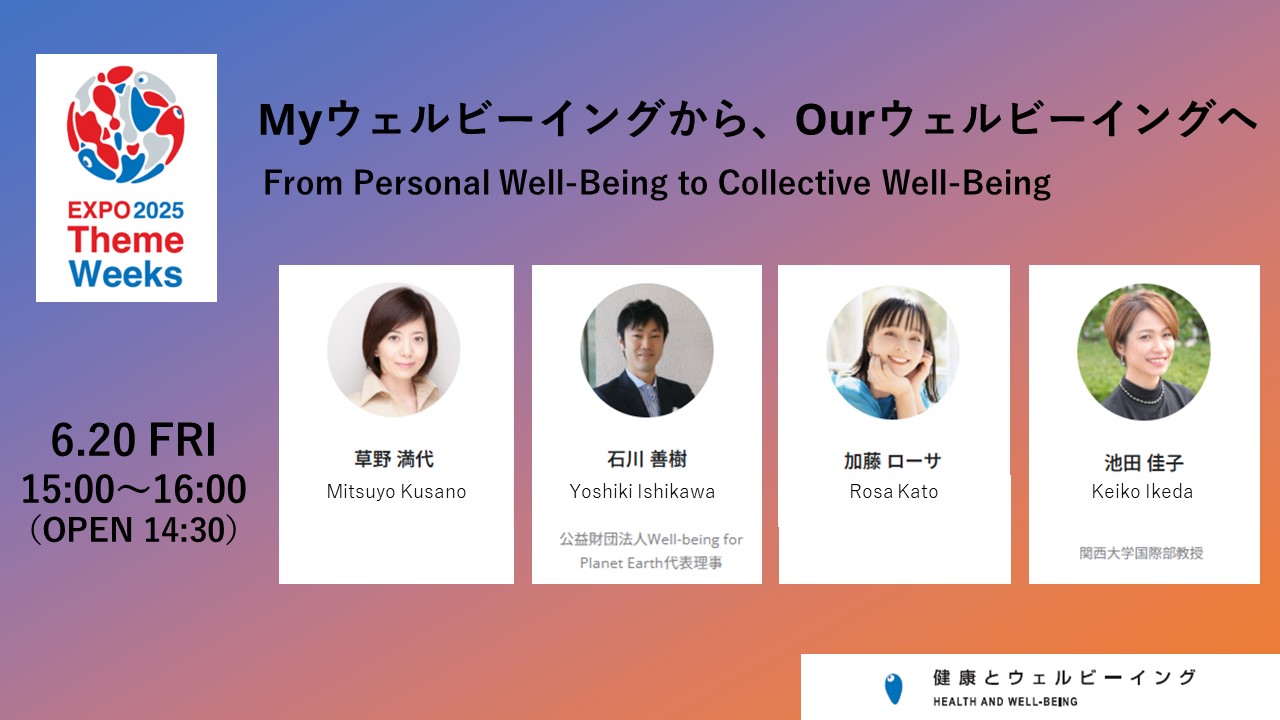
Health and Well-Being: From Personal Well-Being to Collective Well-Being
DMG MORI CO., LTD.
Various values have spread in society, and diversity is widely accepted today, allowing each of us to seek happiness. As ideas of happiness expand, we reflect on the importance of not only personal well-being to improve one's lifestyle but also collective well-being, which is possible through human interaction.
Recorded video available
Discussion
- Well-being
- Healthy life expectancy
- Mental health
| Transmission of simultaneous interpretation | Provided |
|---|---|
| Language of interpretation | Japanese and English |
-

Agenda2025
Participation Programme
-
Time and
Date of
the event -
-
2025.06.20[Fri]
15:00 ~ 16:00
(Venue Open 14:30)
-
- Venue
- Theme Weeks Studio
Programme details
*Subtitles: Choose “Subtitles/CC” in the “Settings” (gear
icon) at the bottom right of the YouTube video.
*Subtitles may not show with multiple languages or overlapping
audio.
Accepting diversity, being considerate of others, and
understanding each other is considered to be of utmost
importance for society’s future.
Among such trends, well-being based on altruistic human
connection, which Japanese people have valued since ancient
times, may play an important role.
In this program, together with experts, we will discuss how to
incorporate personal well-being aimed at improving one's
lifestyle and collective well-being obtained through human
interaction into society.
To improve collective well-being and accept diversity, it is
also necessary to promote diversity and inclusion (DEI). We
will reflect on health and well-being from gender, global, and
DEI perspectives and communicate it to the world.
Reports
【Reflection】
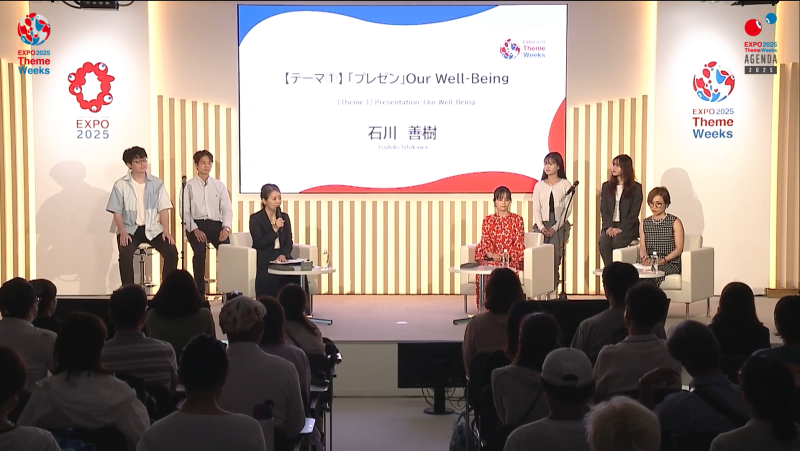
We held three theme sessions, moderated by Mitsuyo Kusano,
under the overarching theme of "Collective experience
enhances our sense of happiness." The first session
featured a video presentation on collective well-being by
Yoshiki Ishikawa. Ishikawa emphasized that non-verbal
communication (e.g., eating, exercising, singing, dancing, or
holding festivals) nurtures organizational and collective
ties. With speakers Rosa Kato and Keiko Ikeda of Kansai
University, Ishikawa shared perspectives regarding how
non-verbal communication creates a sense of unity and
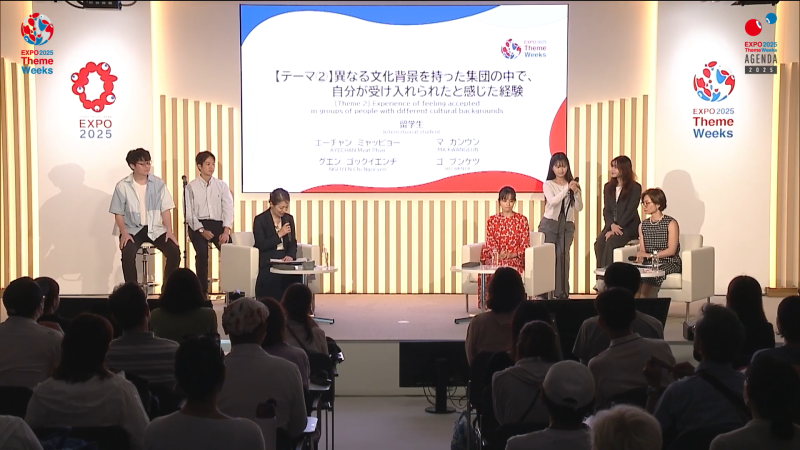
therefore collective happiness. In the second session themed
"Collective experience deepens organizational and
collective ties," four foreign students in Japan
presented their experiences of feeling accepted in groups of
people with different cultural backgrounds. They talked about
topics such as "being accepted as a person," "a
sense of unity and complementarity in group work,"
"approaching others or being approached," and
"getting used to a language and being able to hold a
conversation." The students shared opinions with each
other, agreeing that collective experience deepens
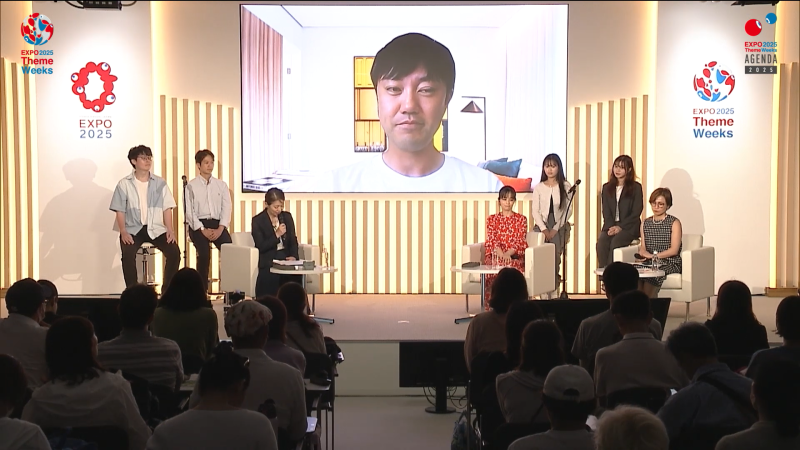
organizational and collective ties. In the final session, the
speakers affirmed that a special collective experience like
Expo 2025 Osaka, Kansai, Japan provides a good example of how
the non-verbal aspects of a festival can nurture collective
well-being, and that collective participation enhances the
shared sense of happiness. They also talked about the
importance of being considerate of individuals who feel
uncomfortable with such collective actions, discussing both
the benefits (i.e., a sense of happiness) and risks of
collective experience. In doing so, they delivered a message
about how collective experience nurtures a sense of belonging
and happiness as part of collective well-being.
【Post EXPO Initiatives】
When developing this program for the sessions, we found it
necessary to define a global theme. As diversity,
consideration of others, and mutual understanding are
currently highlighted as important factors for future society,
the program theme considered how we can incorporate collective
well-being, which can be obtained by human-to-human connection
as important well-being based on Japan's long-valued
altruistic mindset, into society, alongside personal
well-being to improve one's life. As more than half of
the world population is said to be up to the age of 30, we
included four foreign students in Japan among the session
speakers. This was made possible through the assistance of
Keiko Ikeda of Kansai University, who was also a speaker.
Furthermore, we invited students to be part of the audience,
with the aim of nurturing their awareness and behavior in
future actions through the collective experience of attending
the sessions. We also provided workers with the opportunity to
view the sessions for the same purpose. Below are some of the
comments from the audience (students and workers) shared in
the post-session survey:
・ I learned this word for the first time today. I'll
remember it as a keyword for the future.
・ I want to spend more time with others to increase
collective well-being around me.
・ As an exchange student, it was a valuable experience to
learn about this theme from Japanese perspectives.
・ It was a valuable experience to hear the real voices of
(foreign) students.
・ I want to give my company a suggestion about the well-being
gained from spending time together.
・ A global event like the Expo is an effective way to share
the concept of well-being.
・ As a person working in human resources, I want to provide
better small group experiences to enhance collective
well-being.
・ I learned that well-being is about considering fulfillment
from life and work, instead of lifestyle, and better
conditions for all and not only for yourself, to live
better.
Moreover, we encouraged the audience (students and workers) to
communicate the Association's official page (which
features the program details) together with their opinions.
These sessions in the “Theme Weeks“ program at Expo 2025
Osaka, Kansai, Japan strengthened understandings of collective
well-being and inspired positive future actions to promote it
through collective experience. We believe this will become a
legacy.
Cast
Moderator
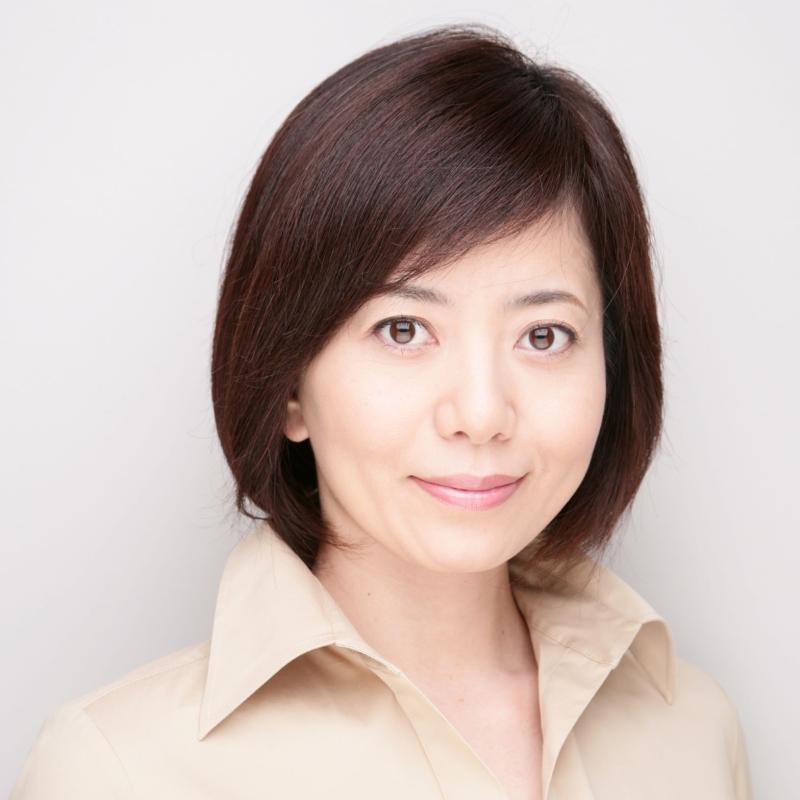
Mitsuyo Kusano
Mitsuyo Kusano is a freelance TV presenter, formerly working for NHK, where she was a presenter for the live coverage of the Lillehammer Winter Olympics Opening Ceremony, field presenter for the Atlanta Summer Olympics, and one of the program hosts for the annual Kohaku Utagassen Song Festival. After leaving NHK, she became a co-anchor for TETSUYA CHIKUSHI NEWS23. Currently, she is Auditor of the Japan Sport Association and a board member of the Jin-Bun-Chi forum.
View Profile
Close
close
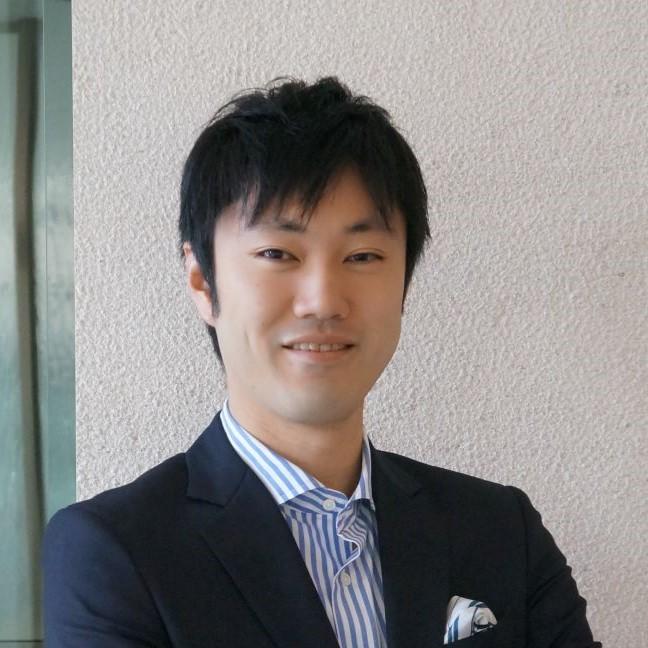
Yoshiki Ishikawa
Founder, Well-being for Planet Earth Foundation
Yoshiki Ishikawa has a Ph.D. in Medicine and is an
expert in preventive medicine.
Born in Hiroshima Prefecture in 1981, he graduated
from the University of Tokyo's Faculty of Health
Sciences and Harvard T.H. Chan School of Public
Health. He earned his doctorate (medical) from Jichi
Medical University. He serves as Founder of the
Well-being for Planet Earth Foundation.
He works on a long-term vision to cover up to the
sixth great-grandchildren (the eighth generation),
with the theme of “What is it that people live in
harmony with Planet Earth?”
View Profile
Close
close
Speakers
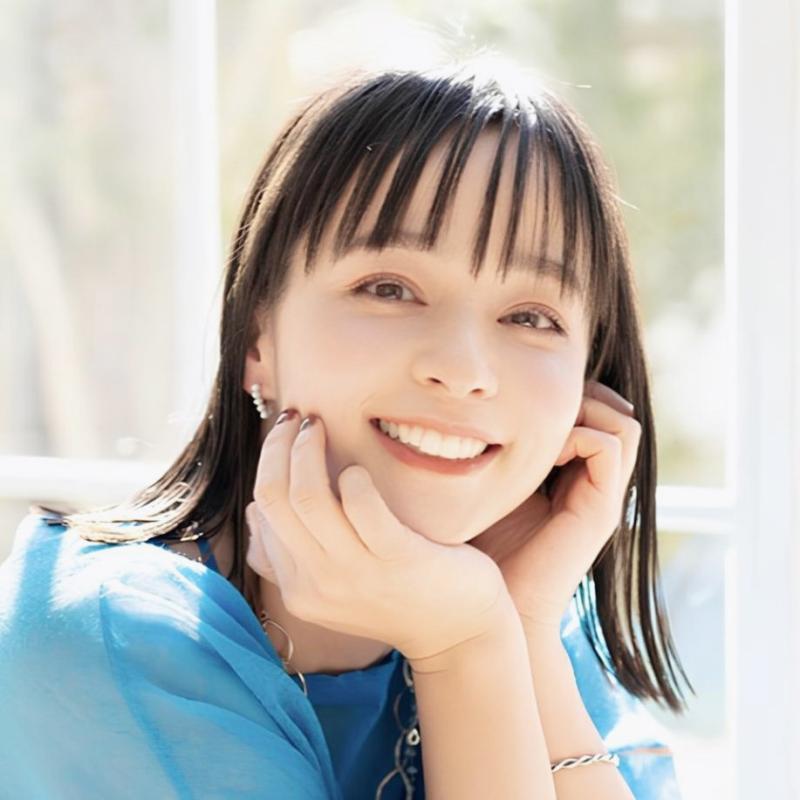
Rosa Kato
Rosa Kato began working as a fashion model when she
was a tenth grader.
She made her debut as an actress in “Tokyo Tower,” a
film released in January 2005.
Currently, she is a mother of two.
View Profile
Close
close
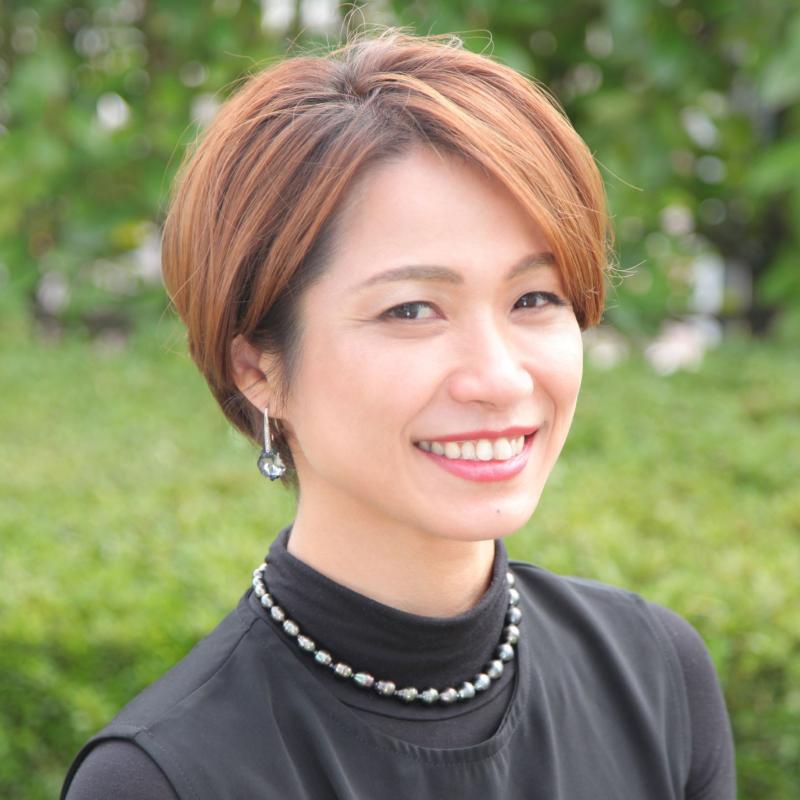
Keiko Ikeda
Professor, Kansai University Division of International Affairs
Keiko Ikeda is Professor at Kansai University Division
of International Affairs, Vice-Director for Institute
for Innovative Global Education (IIGE), and Executive
Project Lead for JIGE (Japan hub for Innovative Global
Education) (Inter-University Exchange Project
2023-2027).
Area of expertise: international education,
conversation analysis, and linguistics.
In 2022, she was a member of the Council for the
Creation of Future Education.
She is engaged, among others, in the preparation of a
proposal for the globalization of education for human
resource development in a global society.
View Profile
Close
close
Health and Well-being Week
Health and Well-Being: From Personal Well-Being to Collective Well-Being
Various values have spread in society, and diversity is widely accepted today, allowing each of us to seek happiness. As ideas of happiness expand, we reflect on the importance of not only personal well-being to improve one's lifestyle but also collective well-being, which is possible through human interaction.
-
2025.06.20[Fri]
15:00~16:00
(Venue Open 14:30)
- Theme Weeks Studio
OTHER PROGRAM
Health and Well-being Week