Health and Well-being Week
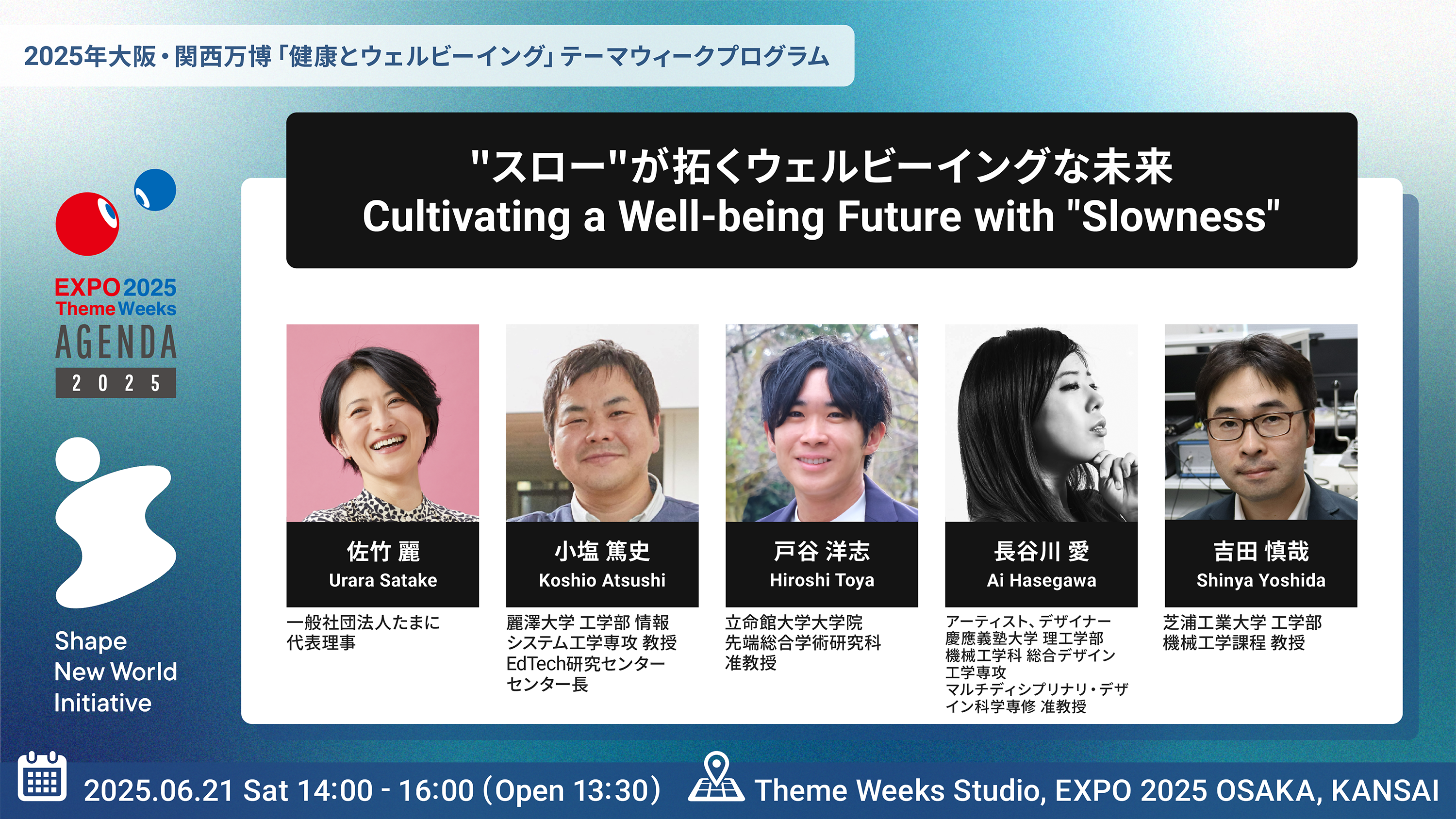
Cultivating a Well-being Future with "Slowness"
Agenda 2025 Co-created Programme
Shape New World Initiative
[Hypothesis of the Future in 2050]
A future where slowness cultivates the richness of life
amidst accelerating change.
As scientific advances promise extended healthy lifespans,
we face unprecedented rates of social transformation with
overwhelming intensity and amplitude within a single
generation. This session explores new social paradigms and
human-technology relationships for 2050, taking
'slowness' as principle concepts.
[Related Report]
Multifaceted Investigation for Future Society Design
“Shape New World Project”
https://www.shapenewworld.com/project
Recorded video available
Discussion
- Well-being
- Healthy life expectancy
- Slow System/Creativity
| Transmission of simultaneous interpretation | Provided |
|---|---|
| Language of interpretation | Japanese and English |
-

Agenda2025
Co-created Programme
-
Time and
Date of
the event -
-
2025.06.21[Sat]
14:00 ~ 16:00
(Venue Open 13:30)
-
- Venue
- Theme Weeks Studio
Highlights
00:14:56 Many of us probably feel we have to put up with being treated dismissively as human beings, just to get through life.
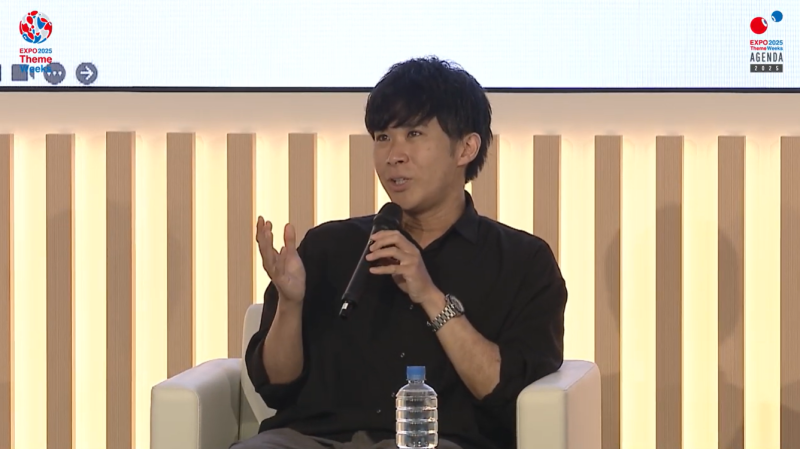
01:30:00 Not optimization that homogenizes diverse things into one, but adaptation where different things can coexist while staying different.
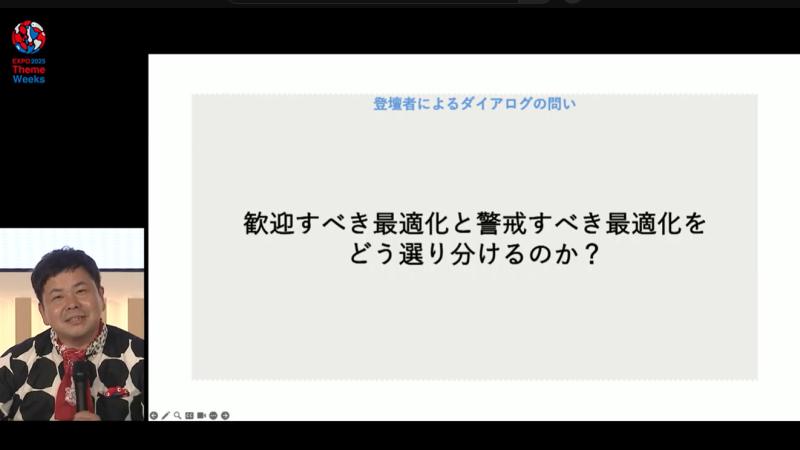
01:32:58 The optimization we should pursue isn't narrow or short-term—it takes a broader, longer view, and people, including themselves, genuinely understand and believe it will likely be good.
Programme details
*Subtitles: Choose “Subtitles/CC” in the “Settings” (gear
icon) at the bottom right of the YouTube video.
*Subtitles may not show with multiple languages or overlapping
audio.
As scientific advances promise extended healthy lifespans, we
face unprecedented rates of social transformation within a
single generation. In this era of exponential growth in both
information and choices and dramatic societal acceleration, we
will experience changes with overwhelming intensity and
amplitude throughout our extended lives. These transformative
shifts pose significant challenges to our health and
well-being.
How can we cultivate a healthy and well-being-focused future
in such an era? Through our research in 2023-2024, we have
identified 'slowness' as crucial concepts for
navigating this future.
This session explores new social paradigms and
human-technology relationships for 2050, taking these concepts
as guiding principles to navigate this transformative age.
Reports
【Reflection】
Although it was only a two-hour session, we believe that the
most essential aspects of what we wanted to convey through the
Shape New World Initiative "Health and Well-being"
research report were successfully communicated to
participants.
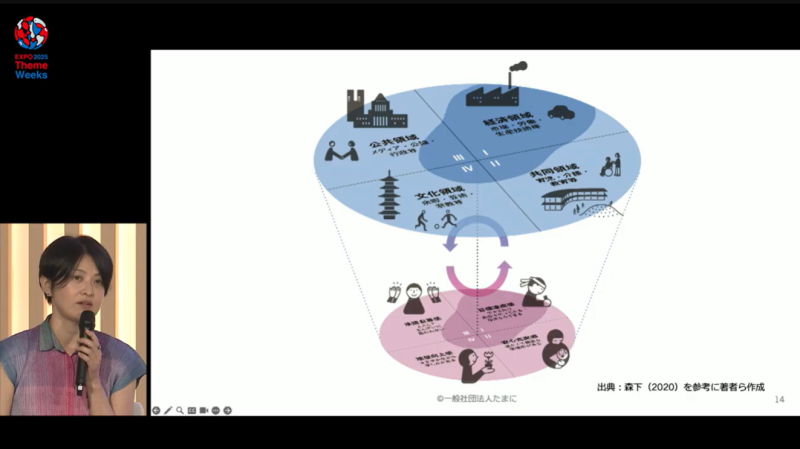
Using the four-dimensional correlation framework, we
visualized the structural problem of extreme expansion in the
economic domain (Dimension I) and shrinkage in other domains
in contemporary society, developing multifaceted discussions
about the significance of "slowness" in an
accelerating society. We do not wish to halt progress. Rather,
we welcome desirable changes and evolution. However, we aspire
to build a future optimized not for maximizing economic
growth, but for a society where people are respected as human
beings—in other words, a future optimized for individual and
societal well-being.
To achieve this, at the societal level, we need to establish
comprehensive frameworks that include ethical verification and
social dialogue to ensure that evolving technologies are
introduced in ways that contribute to well-being. At the
individual level, we need to secure space for people to engage
in other dimensions of activity commensurate with productivity
gains from science and technology. Such constraints and
mechanisms that promote "slowness" become
essential.
Each panelist presented diverse approaches from their
specialized perspectives that contribute to the required
"slowness." Toya explained what "smart"
means and its dangers from the perspective of technology
theory in contemporary thought, proposing
"carefulness." Koshio presented possibilities of
slow technology through AI with memory capabilities. Hasegawa
offered questions about the future through speculative design
using artificial wombs. Yoshida presented visions of a healthy
longevity society from the perspective of in-body device
technology and the current reality where increased
productivity leads to more tasks rather than creating
space.
Building on the framework outlined in our report, it was also
a significant achievement of this session to present
participants with perspectives that allow them to maintain a
certain distance from assumptions such as "we must keep
up with accelerating technological evolution (there are no
other options)" and fixed ideas that "smartification
and optimization should always be pursued and are inherently
good."
【Post EXPO Initiatives】
After the session, we received an insightful email from one of
the participants who had also cooperated with us through
interviews during the report writing process.
The email included statements such as "One of the real
pleasures of the Expo lies in panelists and participants
coming together to deeply consider the future" and
"The act of designing future society should not be left
to a few specialists, but it is important for diverse people
living in society to maintain awareness of issues and actively
engage." These words made us realize that the direction
we aimed for in this session had certainly reached the
participants.
There was also the observation that "in the current world
of technology, there are aspects where some tech libertarians
pursue their ideal society and push forward
unilaterally." This recognition perfectly aligns with the
structural problems of acceleration through capitalism and
informatization discussed in our report, and we renewed our
awareness of the importance of forming networks with people
who can share such problem consciousness.
As for future initiatives, we would like to gradually expand
our network while upholding the concept of
"slowness" and continuously engage in discussions to
connect this to more sophisticated theoretical construction
and practical proposals.
Based on such dialogues and the insights gained from this
session, we will advance the writing of academic papers and
general-audience books to more broadly disseminate the vision
of a well-being future opened up by "slowness" to
society. In particular, we will likely accumulate further
research and practice regarding current situation analysis
using the four-dimensional correlation framework and specific
measures for social implementation of balancing-type
structures.
Additionally, from the perspective of "future
ethics" that we could not sufficiently introduce during
this session, we hope to utilize speculative design as a
balancing-type structure embedded in society and work toward
making dialogue opportunities based on such virtual future
visions a part of everyday life.
Cast
Moderator

Urara Satake
Representative Director, General Incorporated Association Tamani
Representative Director of General Incorporated Association Tamani and Project Assistant Professor at the Graduate School of System Design and Management (SDM), Keio University. As a researcher, she specializes in developing well-being social systems through multi-perspective and dynamic systems thinking approaches. Satake graduated from Hokkaido University's Faculty of Agriculture and completed her master's degree at Keio SDM. After working as a book editor and communication director for a medical startup, and serving as a visiting scholar at the University of Cambridge, she has been in her current roles since 2021. At Keio SDM, she facilitates research, development, and implementation of regional subjective well-being indicators for Japan's Digital Garden City Nation. At Tamani, she focuses on human resource development based on systems thinking and design thinking, while fostering community connections through art and reciprocal activities.
View Profile
Close
close
Speakers
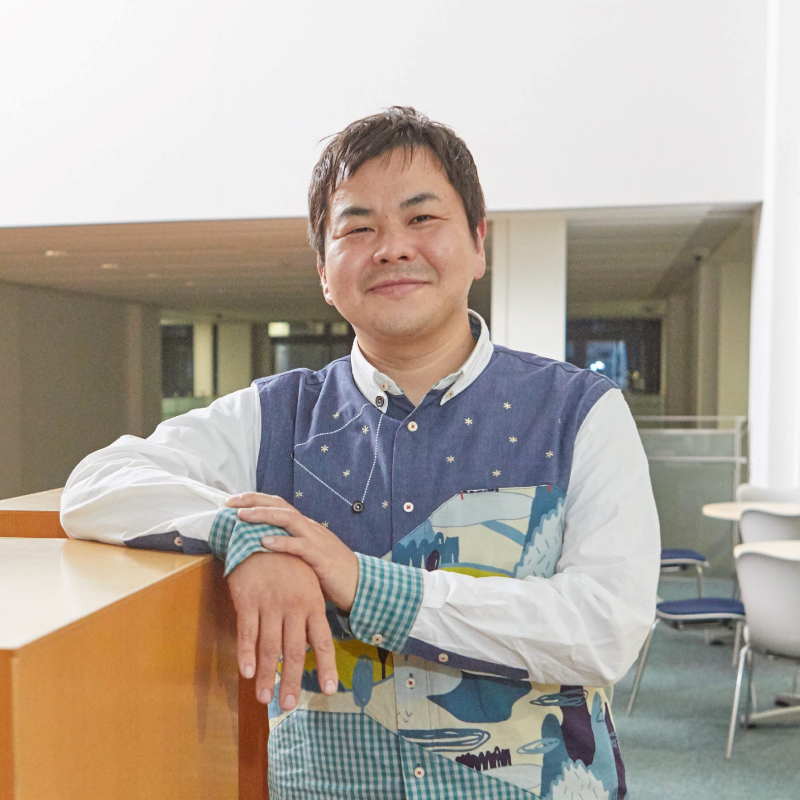
Koshio Atsushi
Professor, Faculty of Engineering and Director of EdTech Research Center Reitaku University
With a background in data science and artificial intelligence research, he works as a researcher and entrepreneur to enhance human capability using digital technologies such as AI and metaverse. He specifically conducts research and development of IT and AI in fields closely related to humans, such as healthcare and education, implementing "Kind digital and AI" that care people closely and "slow systems" that emphasize humanity and creativity. He concurrently serves as Project Associate Professor at the Graduate School of Interdisciplinary Information Studies, The University of Tokyo, CTO of HYPER CUBE Inc., CEO of Four H Inc., and CSO and Board Member of PICORE Inc.
View Profile
Close
close
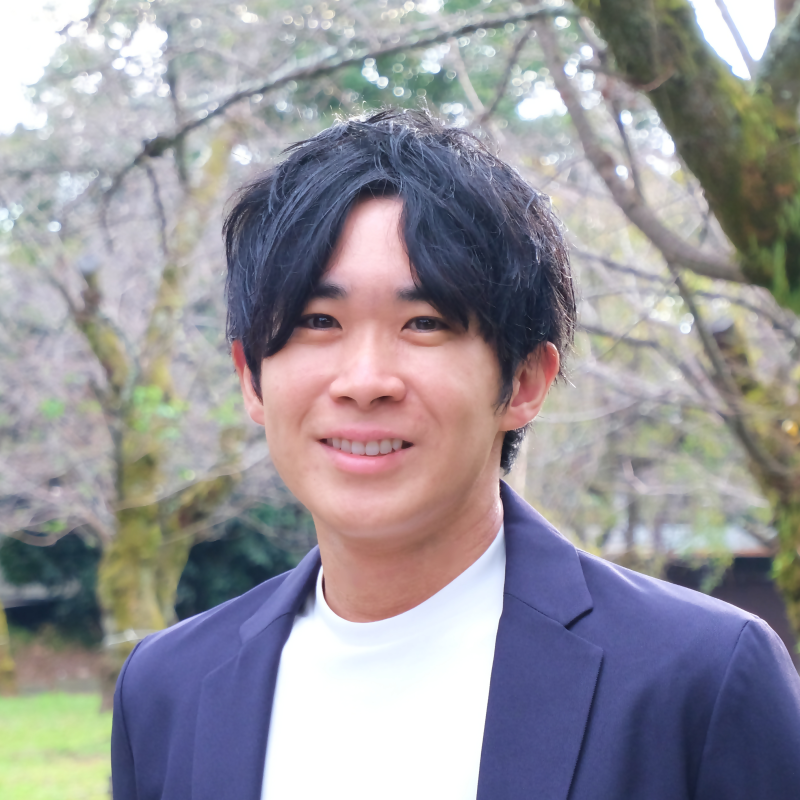
Hiroshi Toya
Associate Professor at Graduate School of Core Ethics and Frontier Sciences, Ritsumeikan University
Ph.D. in Literature from Osaka University. Specializes in philosophy and ethics. His research focuses on the ethics of technology in society, with a particular emphasis on the study of contemporary German thought. His publications include Future Ethics (Shueisha), The Evil of Smart: On Technology and Violence (Kodansha), and many others.
View Profile
Close
close
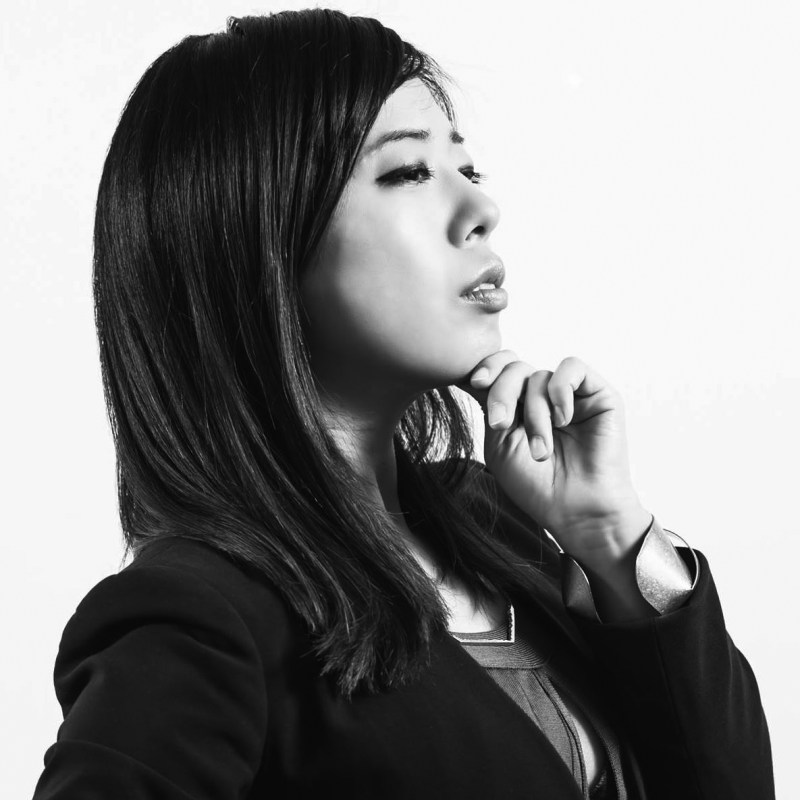
Ai Hasegawa
Artist / Designer / Associate Professor, School of Integrated Design Engineering, Keio University
Artist and designer. Ai Hasegawa produced many works
putting emphasis on subjects relating to technology
and people with employing techniques such as Bio Art,
Speculative Design and Design Fiction. She obtained
degree of MA in 2012 from Design Interactions Course,
Royal College of Art in Britain; worked as researcher
at Design Fiction Group, MIT Media Lab from 2014 to
fall of 2016; took degree of MS in 2016; serving as
Project Researcher at The University of Tokyo since
April 2017 ; won Excellence Award at Work Art Division
in 19th Japan Media Arts Festival for her work titled
"(Im)possible Baby, Case 01: Asako &
Moriga"; hold exhibitions within and outside
Japan including at MORI ART MUSEUM and Ars
Electronica. Ai published a design education book
“Revolutionary20XX”.
Exhibited at "Mind Temple" MoCA Shanghai,
Ars Electronica "RADICAL ATOMS" 2016,
National museum Design in Kulturhuset Stadsteatern
Sweden, Milano Salone Italiy, Science Gallery Dublin ,
Taipei Digital Arts Center and so on.
View Profile
Close
close
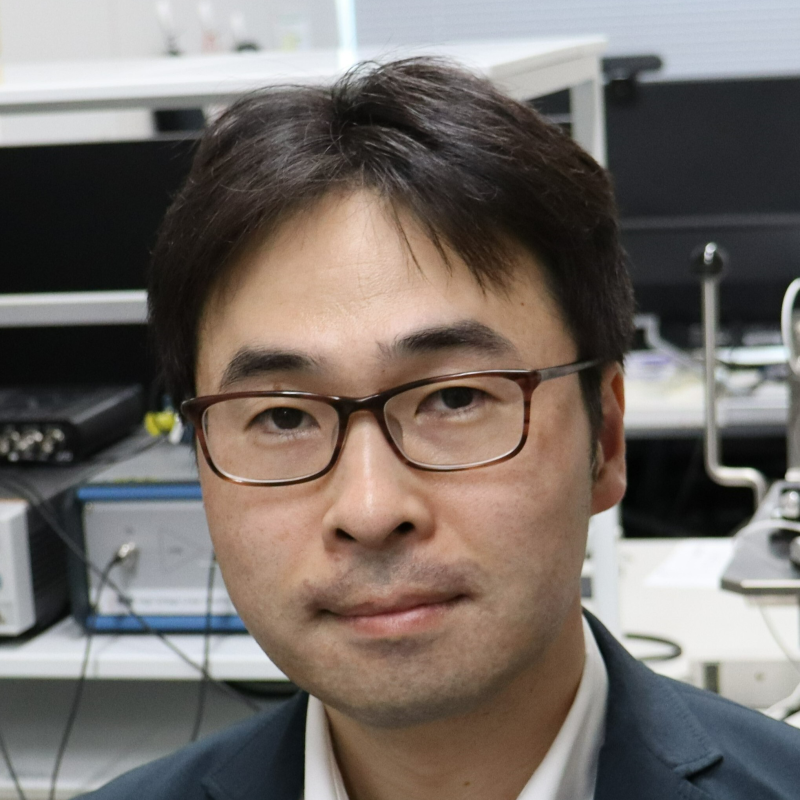
Shinya Yoshida
Professor, Department of Engineering Science and Mechanics, Shibaura Institute of Technology
He completed the Graduate School of Engineering at
Tohoku University in 2008. (Dr. Eng). He has been
Associate Professor at the Faculty of Engineering,
Shibaura Institute of Technology from April 2022, and
selected as a "Nice Step Researcher" by
National Institute of Science and Technology Policy
(NISTEP) for his outstanding contributions to science
and technology in 2022.
His specialties are microfabrication and
microelectromechanical systems (MEMS). He is currently
focusing on research and development of medical
devices such as miniature ultrasound imaging devices
and ingestible devices.
View Profile
Close
close
Health and Well-being Week
Cultivating a Well-being Future with "Slowness"
Agenda 2025 Co-created Programme
[Hypothesis of the Future in 2050]
A future where slowness cultivates the richness of life amidst
accelerating change.
As scientific advances promise extended healthy lifespans, we
face unprecedented rates of social transformation with
overwhelming intensity and amplitude within a single
generation. This session explores new social paradigms and
human-technology relationships for 2050, taking
'slowness' as principle concepts.
[Related Report]
Multifaceted Investigation for Future Society Design
“Shape New World Project”
https://www.shapenewworld.com/project
-
2025.06.21[Sat]
14:00~16:00
(Venue Open 13:30)
- Theme Weeks Studio
OTHER PROGRAM
Health and Well-being Week