Health and Well-being Week
The Future of Healthcare: Transportable Surgical and Medical Pods for the World’s Most Vulnerable
Australia
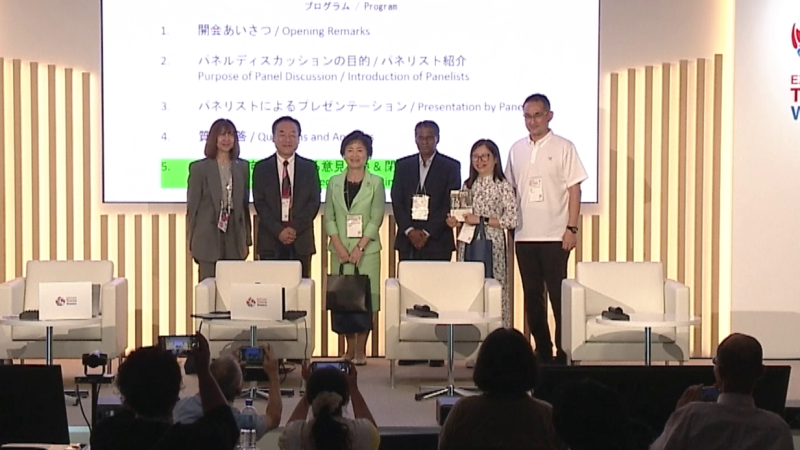
Panel discussion with leading Australian researcher in healthcare.
Recorded video available
Discussion
- Measures against infectious diseases
- Well-being
- Healthy life expectancy
| Transmission of simultaneous interpretation | To be determined |
|---|---|
| Language of interpretation | To be determined |
-

Track Programme
-
Time and
Date of
the event -
-
2025.06.26[Thu]
11:00 ~ 11:45
(Venue Open 10:45)
-
- Venue
- Pavilion
- Australia Pavilion
Programme details
*Subtitles: Choose “Subtitles/CC” in the “Settings” (gear
icon) at the bottom right of the YouTube video.
*Subtitles may not show with multiple languages or overlapping
audio.
How can we deliver emergency care to people when hospitals are
inaccessible or destroyed? SABRN’s modular LifePods are
designed to be rapidly deployable, digitally connected, and
vehicle-agnostic solutions that can be air-dropped, driven, or
shipped into disaster zones. Designed for extreme
environments—from flood-affected villages to conflict-ravaged
cities—these Pods would act as mobile hospitals, surgical
units, and isolation zones to save lives and build resilience
in vulnerable communities. In this presentation, Professor Abe
Chandra shares SABRN’s global vision, and outlines the
partnerships and innovations helping to drive the future of
scalable, equitable healthcare delivery.
Reports
【Reflection】
This programme featured a panel discussion led by Professor
Abhirash Chandra, a leading Australian researcher, on the
development and future prospects of the mobile modular medical
pods known as "SABRN," designed to address the
challenges of disaster and remote-area healthcare.
Currently, over half of the world’s population lacks adequate
access to healthcare services, with particularly severe
challenges faced in disaster zones, conflict areas, and remote
locations. In response, the SABRN pods have been engineered as
rapidly deployable, transportable medical units capable of
functioning as operating theatres and isolation zones,
deployable by land, sea, or air.
The pods incorporate advanced safety features to manage
chemical, biological, radiological, and nuclear (CBRN) risks.
The programme also highlighted practical training for medical
professionals utilising VR, AR, and 3D printing technologies.
Notably, the remote guidance system enables expert support in
environments with limited communications, such as disaster
sites.
It was also revealed that multinational collaboration is
progressing on both technological development and the
establishment of community-based disaster healthcare systems.
The project, currently at Technology Readiness Level 5,
received high praise for its innovative efforts, including
future ambitions for space medicine and AI-driven autonomous
pods.
Overall, this programme provided a valuable opportunity to
showcase new possibilities for medical provision in disasters
and remote areas, emphasising SABRN’s commitment to realising
healthcare as a human right.
【Post EXPO Initiatives】
Following the programme, the SABRN project will continue to
strengthen multinational partnerships while advancing
technological development and conducting further validation
trials. Particular emphasis will be placed on collaboration
with regional disaster prevention communities, such as Japan’s
"BOKOMI," to enhance community-centred disaster
healthcare systems.
Ongoing training for medical personnel, utilising VR, AR, and
remote guidance systems, will support the development of
skilled responders capable of immediate intervention in
disaster and remote settings, thereby improving the quality
and speed of healthcare delivery.
Looking ahead, the project aims to realise AI-enabled
autonomous medical pods, suitable for space medicine and
extreme environments. These initiatives are intended to reduce
healthcare disparities and promote equitable access to medical
services worldwide.
Furthermore, by establishing cost-effective mass production
methods, the project seeks to expand deployment to low- and
middle-income countries and remote regions, contributing to
the creation of a sustainable global healthcare system.
Leveraging the insights and international partnerships gained
through the Expo programme, the SABRN project will continue to
deliver innovative solutions at the forefront of healthcare.
Cast
Speakers

Professor Abhilash (Abe) Chandra
Founder and Managing Director of the SABRN Group of Companies, Adjunct Industry Professor at the University of South Australia’s Future Industries Institute
Professor Abhilash (Abe) Chandra is a Vascular, General and Military Surgeon, as well as an academic. He is the Founder and Managing Director of the SABRN Group of Companies and is an Adjunct Industry Professor at the University of South Australia’s Future Industries Institute. He has had over two decades of service in the Australian Army—including roles as infantry, medic, medical officer, and trauma surgeon. Through SABRN, he is developing compact, transportable and scalable medical and surgical Pods to help deliver advanced healthcare and emergency response capability to communities affected by natural and man-made disasters in remote, austere, hostile, and overwhelmed environments. His work is trying to shape a future where healthcare can be made available and affordable, especially for underserved communities. His objective is to enable healthcare to reach anyone, anywhere—regardless of infrastructure, geography, or threat.
View Profile
Close
close
Health and Well-being Week
The Future of Healthcare: Transportable Surgical and Medical Pods for the World’s Most Vulnerable
Panel discussion with leading Australian researcher in healthcare.
-
2025.06.26[Thu]
11:00~11:45
(Venue Open 10:45)
- Pavilion

OTHER PROGRAM
Health and Well-being Week