The Future of Community and Mobility Week
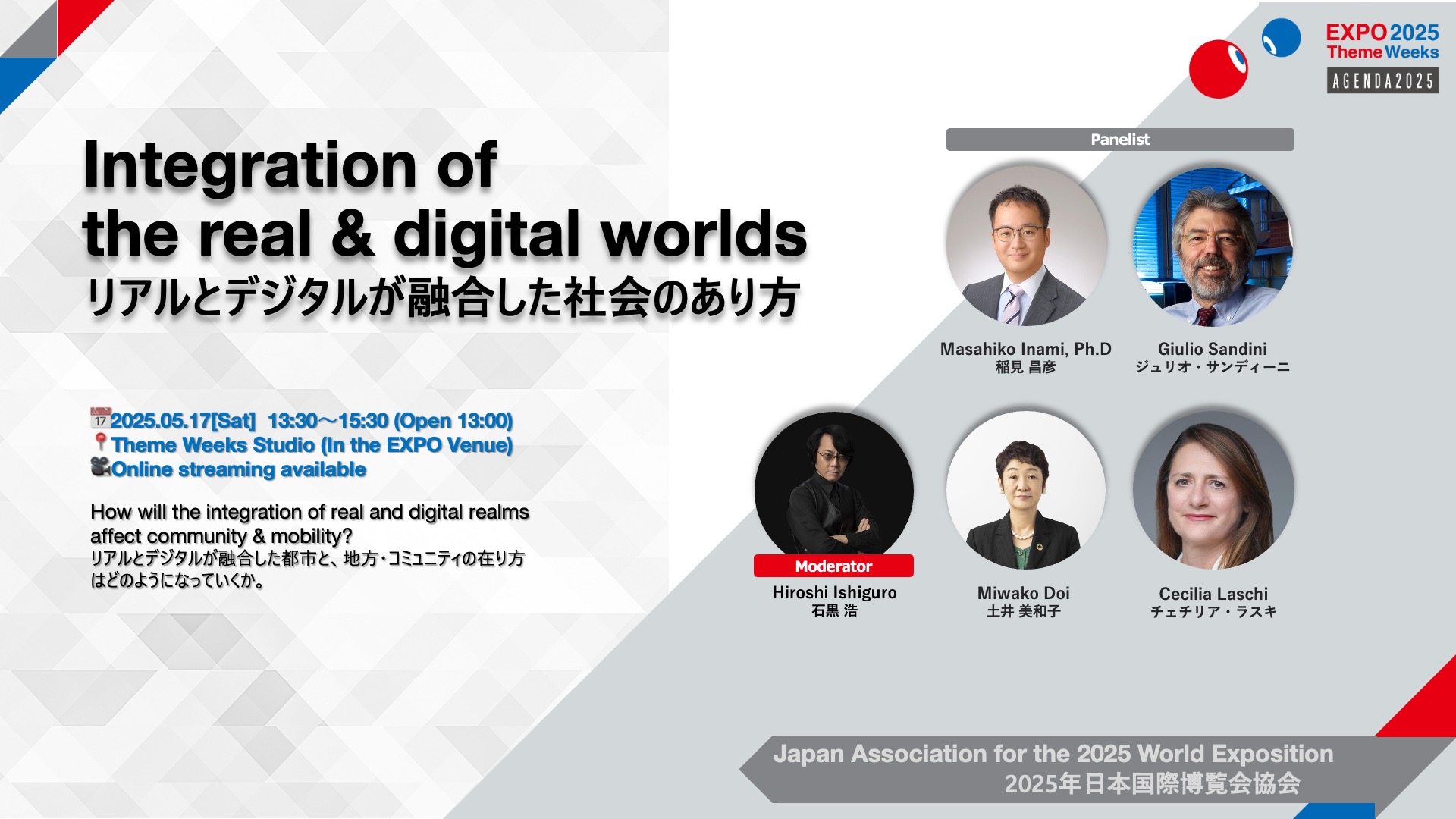
Integration of the real & digital worlds
Japan Association for the 2025 World Exposition
The programme, together with the General Sponsors, explores: 'How will the integration of real and digital realms affect community & mobility? (Social participation through avatars/humanoids)'
Recorded video available
Discussion
- Others
| Transmission of simultaneous interpretation | Provided |
|---|---|
| Language of interpretation | Japanese and English |
-

Agenda2025
Organised Programme
-
Time and
Date of
the event -
-
2025.05.17[Sat]
13:30 ~ 15:30
(Venue Open 13:00)
-
- Venue
- Theme Weeks Studio
Programme details
*Subtitles: Choose “Subtitles/CC” in the “Settings” (gear
icon) at the bottom right of the YouTube video. *Subtitles may
not show with multiple languages or overlapping audio.
In several countries around the world, not just in Japan, the
issues of population decline and labor shortages are becoming
increasingly severe. To address these challenges, avatars that
enable people to engage freely beyond the constraints of time
and space are essential. This discussion will explore how
avatars are being accepted globally and how they will shape
the future of society.
Reports
【Session Summary】
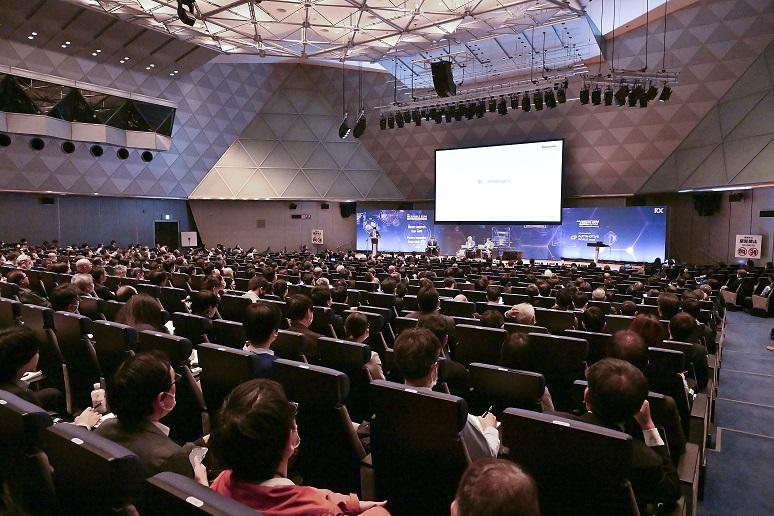
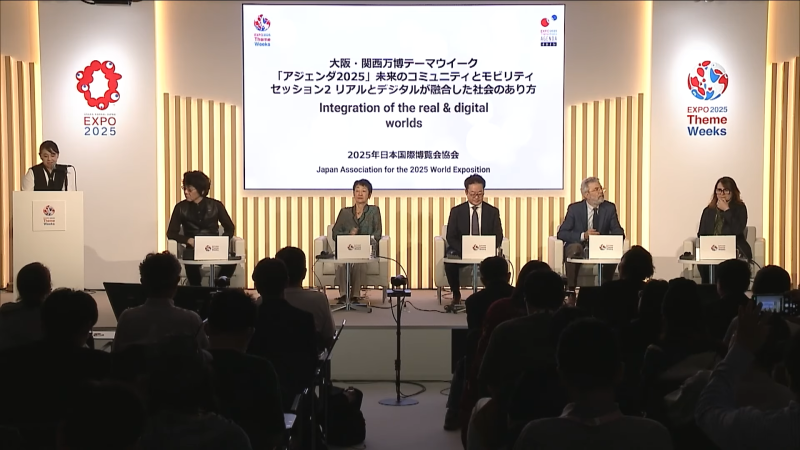
Held on May 17, 2025, the session “Integration of the real
& digital worlds” was part of the “Future of Community and
Mobility” theme week at Expo 2025 Osaka-Kansai. This session
brought together cutting-edge discussions across avatar
technology, physical augmentation, soft robotics, AI, and
cognitive science, focusing on how the integration of real and
digital spaces is transforming human existence and the
structure of society.
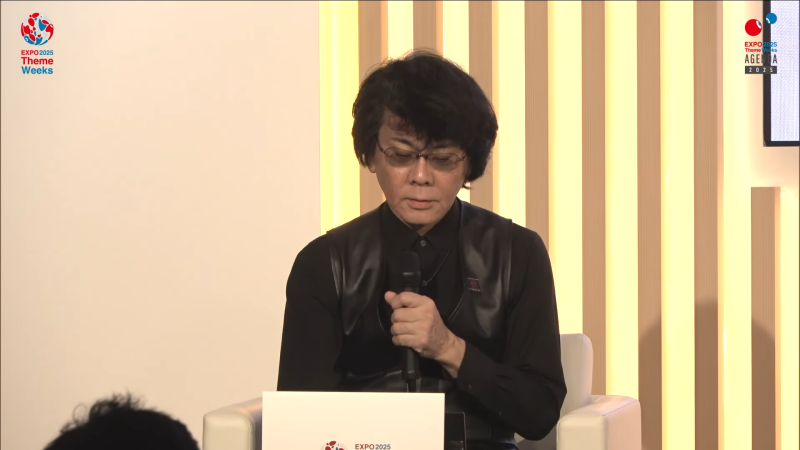
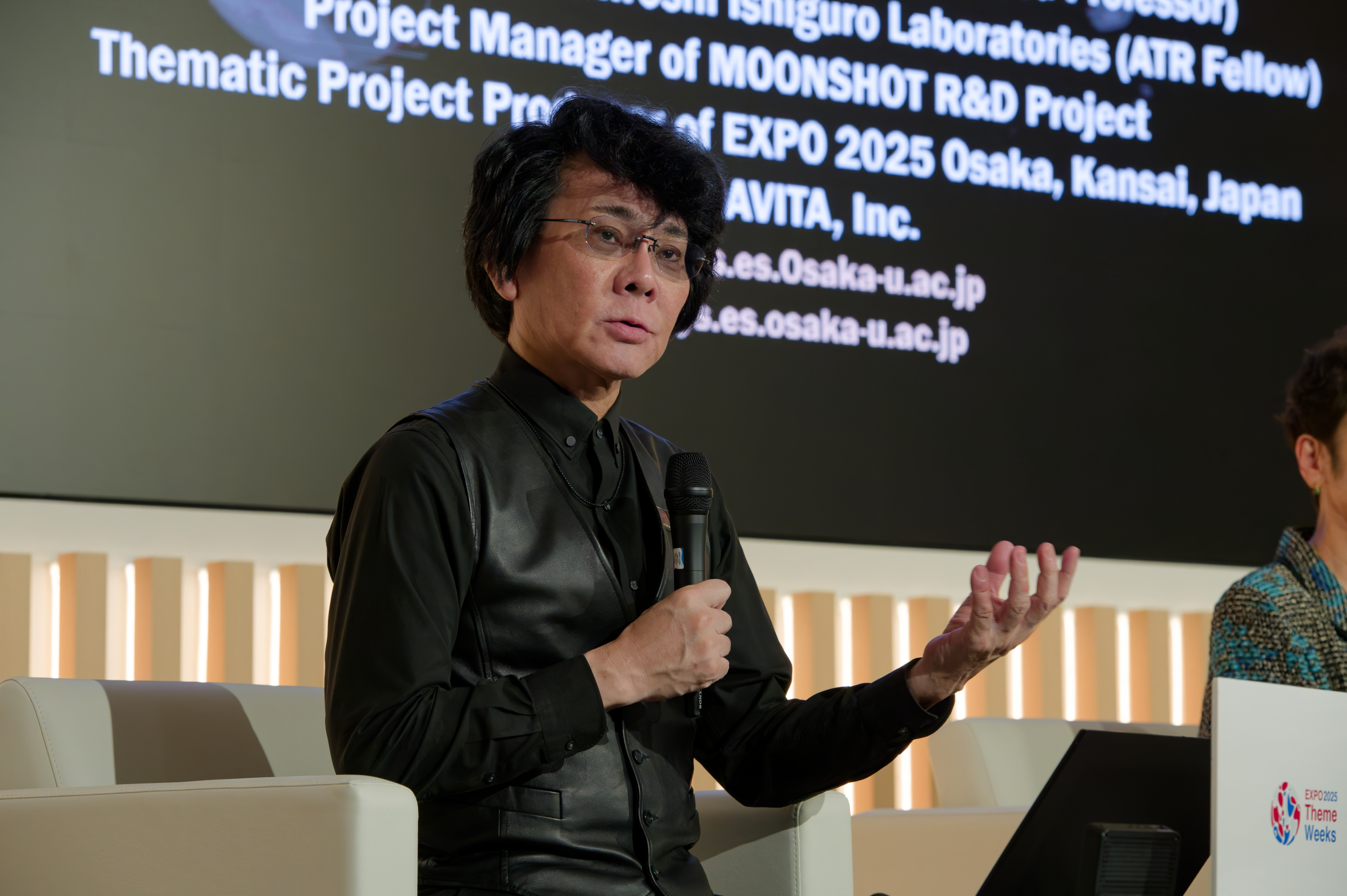
Moderator Hiroshi Ishiguro (Osaka University) introduced the
potential for overcoming physical, spatial, and temporal
limitations through the development and implementation of
cybernetic avatars. He also touched upon the notion of
"self-continuity" via avatars, suggesting that
android technology could one day preserve one’s personality
and sensibilities even after death.
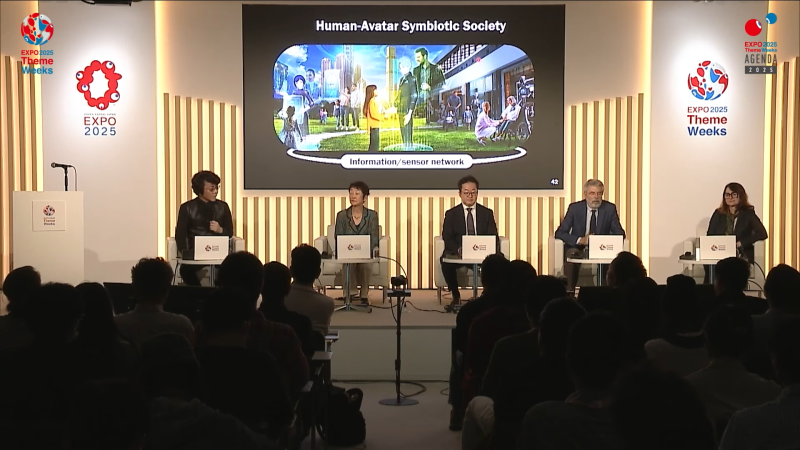
The session presented a range of interdisciplinary
perspectives that questioned the relationship between
technology, society, and human identity. It underscored that
avatar technologies are not merely about utility, but serve as
a central axis in an ongoing philosophical and cultural
transformation.
【Speaker Summary: Hiroshi Ishiguro】
Hiroshi Ishiguro, a pioneering researcher in avatar-based
human augmentation, introduced the trajectory of his
two-decade research and his vision for future society.
Ishiguro advocates for a “cybernetic avatar society” that
enables people to act freely beyond the limits of body, brain,
space, and time. He envisions new social structures created
through semi-autonomous avatars integrated with AI.
His presentation traced the evolution of avatar
technologies—from remotely operated avatars to “Geminoid”
androids capable of autonomous communication and expression.
Notably, he discussed the development of androids that
replicate his own memories, personality, and speech
patterns—technology aimed at leaving a “copy of oneself” for
the future. This touches not only on labor replacement, but
also challenges ethical notions surrounding death and social
identity.
Ishiguro presented social experiments using avatars, such as
interactions between kindergarteners and seniors during the
pandemic, remote clerks in convenience stores, and customer
service agents in the insurance sector. These examples
demonstrated how avatars empower those with limited mobility
or social interaction opportunities to participate in society,
even contributing to employment and regional revitalization.
He proposed a model of the human as a “multi-bodied being,”
where avatars act as extensions of the self. Ishiguro
emphasized the importance of “fashion” and “play” in shaping
how avatars are socially accepted, suggesting that aesthetic
diversity and expressive flexibility will be key to building a
broader avatar culture.
He also discussed how Japanese culture, with its openness
toward non-human entities, could take international leadership
in shaping the avatar-integrated society. Through his
reflections, Ishiguro raised a profound question: “What does
it mean to be human?” His presentation offered a compelling
blueprint for designing the society of tomorrow.
【Speaker Summary: Miwako Doi】
Miwako Doi discussed the transformative potential of avatar
technologies through the lens of Moonshot R&D initiatives
she is a sub program director. Using a backcasting
approach—designing solutions from a future ideal—she presented
a vision for 2050, where human society is liberated from the
constraints of body, brain, space, and time.
Opening with reflections on her long-standing work in natural
language processing, IoT, and wearable technology, Doi traced
how these innovations have enriched everyday life. She then
introduced the Moonshot Goal 1 initiative, focusing on seven
core avatar research projects. Among them is the
"symbiotic avatar" promoted by Hiroshi Ishiguro,
envisioning a society where humans and avatars coexist.
Doi emphasized the role of avatars in enabling social
participation for older adults, persons with disabilities, and
those unable to travel. She even proposed a future where
avatars could embody the personality and memories of deceased
individuals, enabling “posthumous participation” in society—an
ethically provocative and imaginative concept.
She also highlighted how avatar labor could enhance well-being
and cognitive engagement, fostering inclusion. At the same
time, she called for robust policy frameworks, including
systems for avatar authentication and international guidelines
to ensure trust and reliability.
Concluding her remarks, Doi stressed that cybernetic avatars
are not simply tools for labor substitution, but mechanisms
for reimagining human presence itself. Her presentation
seamlessly bridged future-oriented vision with pragmatic
institutional design, pointing toward a future where
technology and humanity evolve together.
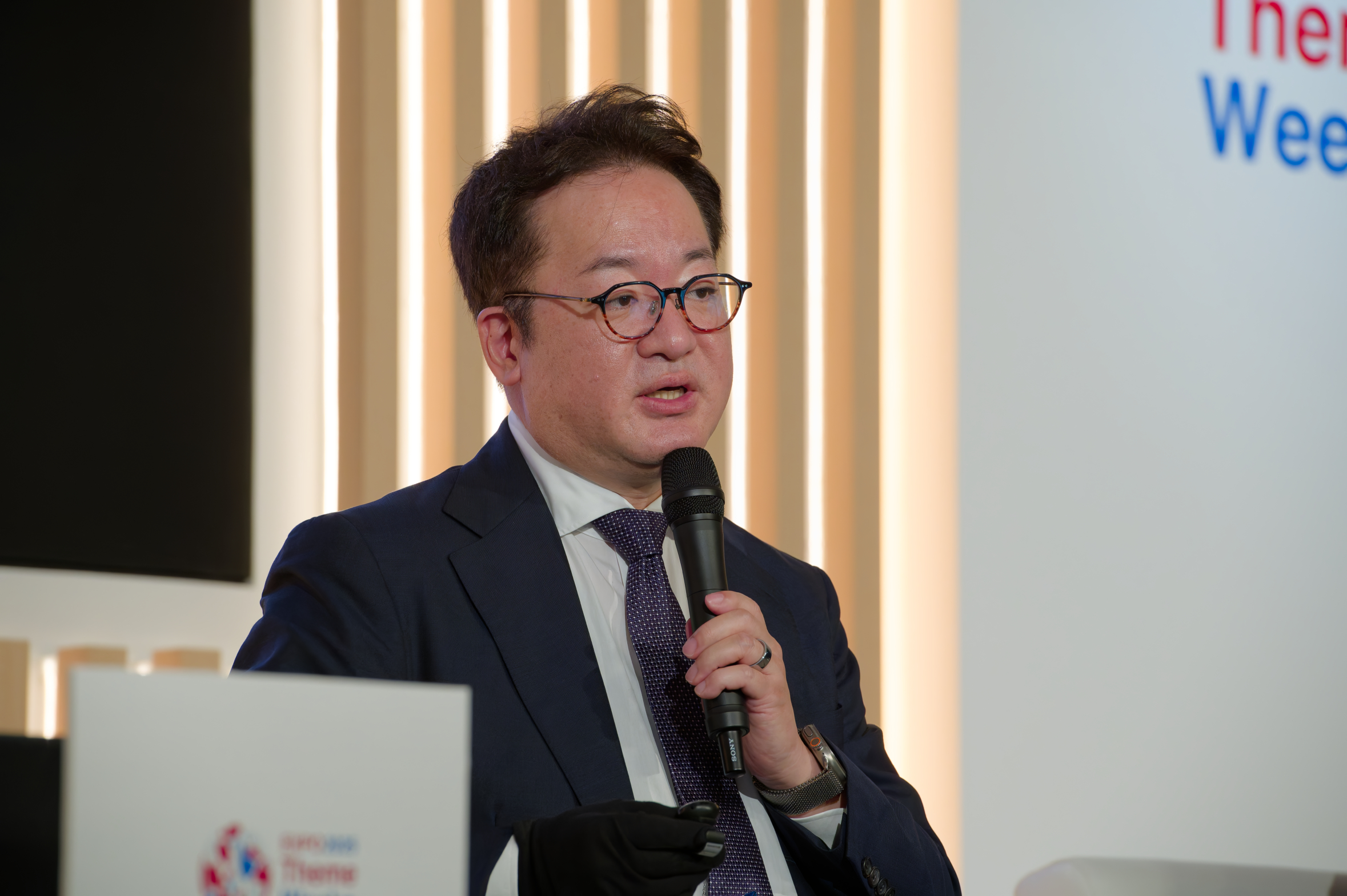
【Speaker Summary: Masahiko Inami】
Masahiko Inami shared insights from his research on human
augmentation, focusing on how technology can reconstruct and
expand human physicality and perception. His lab has developed
unconventional interfaces such as robotic “superhuman” body
parts—including a sixth finger and wing-like appendages—as
well as robotic faces capable of reshaping human expressions.
Framing these projects as efforts to “redesign the human
body,” Inami argued that the body should not be seen merely as
a biological constraint but as a modifiable platform for
expression. For instance, technologies like a sixth finger can
enhance not only motor skills but also creativity and
emotional expression, unlocking new human potentials.
He emphasized the importance of designing interactions where
humans remain in control. “Implicit interaction”—technology
that supports human intentions without explicit commands—is
key. For this, AI capable of understanding sensory and
behavioral context becomes essential.
Inami proposed that in a future society enabled by cybernetic
avatars, the assumption of “one body, one mind” may no longer
hold. People could operate multiple avatars simultaneously or
share embodiment and perception with others, raising
philosophical and ethical questions about selfhood and
accountability.
He also noted how technologies like the metaverse and
generative AI allow individuals to construct and customize
their environments and bodies. Self-expression in such a world
is no longer limited to appearance, but extends to the design
of entire experiences. Humans, he suggested, are increasingly
becoming “creative agents” rather than mere recipients of the
world.
In conclusion, he stressed that avatars and augmentation
should not be limited to welfare or labor support. By
embracing “play” and “fashion,” these technologies can become
embedded in everyday culture. His presentation illuminated a
future where technology redefines the human condition,
enabling greater freedom and creativity.
【Speaker Summary: Giulio Sandini】
Giulio Sandini, drawing from his extensive work in humanoid
robotics and cognitive neuroscience, explored how cybernetic
avatars can reshape our understanding of cognition and
interaction. Beginning with his early studies on visual
perception and eye movement control, Sandini explained how
modeling human visual systems laid the foundation for natural
human-robot interaction. His subsequent research fused
robotics and neuroscience in a bidirectional approach:
designing robots based on human understanding and using robots
to study human cognition. Through experiments with humanoid
robots, he revealed how uniquely human traits like empathy,
embodiment, and cognitive development are deeply rooted in
social contexts.
Sandini introduced the compelling concept of a “Cognitive
Twin,” in which avatars, while evolving from the long term
goal of autonomy, build long-term relationships with users,
gradually learning their thought patterns, behaviors,and
memories. Over time, these avatars could become “cognitive
companions” that foster deeper mutual understanding and act
more like friends than tools.He stressed the need for
interdisciplinary integration in avatar development—not only
engineering, but also AI, robotics, cognitive science, ethics,
and social sciences. For industry, he emphasized the
importance of “human-centered design,” where functionality
must be balanced with cultural and social adaptability.
Looking ahead to global deployment, Sandini highlighted the
importance of accommodating cultural differences in gestures,
language, and expectations. He advocated for international
standardization and flexible design to ensure transparency and
explainability of avatar behavior, which is essential if
avatars are to become a universal cognitive interface. In
closing, Sandini stated, “Avatars are not merely imitations of
human intelligence—they are mirrors that deepen our
understanding of ourselves.” His remarks underscored the
societal and philosophical significance of cybernetic avatars,
not just as technical achievements but as tools for
introspection and empathy.
【Speaker Summary: Cecilia Laschi】
Cecilia Laschi spoke on the future of avatar technologies and
embodied intelligence, informed by her research in soft
robotics and neuro-robotics. Opening with an overview of her
work on biomimetic robots—particularly those inspired by the
movements and structures of soft-bodied animals like
octopuses—Laschi introduced the concept of “embodied
intelligence,” where cognition emerges through physical
interaction with the environment.
She emphasized how the structural flexibility of soft bodies
simplifies control mechanisms and enhances responsiveness to
the environment. This principle, drawn from evolutionary
biology, informs the design of avatars and assistive robots
that interact seamlessly with humans and surroundings.
Laschi also shared her work in developing assistive
technologies for aging societies, such as a soft robotic arm
used in Singapore hospitals to gently lift elderly patients.
Beyond functionality, she stressed the ethical dimension of
robotics—machines should preserve dignity and emotional
well-being, not merely deliver physical assistance.
Importantly, she urged a shift in perspective—from
“compensating for bodily limitations” to “creating new kinds
of bodies.” Avatars, in her view, can surpass prosthetics and
become extensions or reimaginings of human capability.
Multi-armed avatars or remotely controlled bodies redefine
what it means to inhabit a single body.
Laschi envisioned a society where humans, robots, and avatars
share responsibilities and build mutual understanding. Rather
than being mere proxies, avatars should become collaborative
members of communities, active in fields like education,
welfare, and urban planning.
In her closing remarks, she stated, “We are not only
augmenting bodies—we are at the stage of redesigning society
itself.” Her vision reflected a deep integration of scientific
insight and ethical awareness, proposing avatars as agents of
cultural transformation and inclusive coexistence.
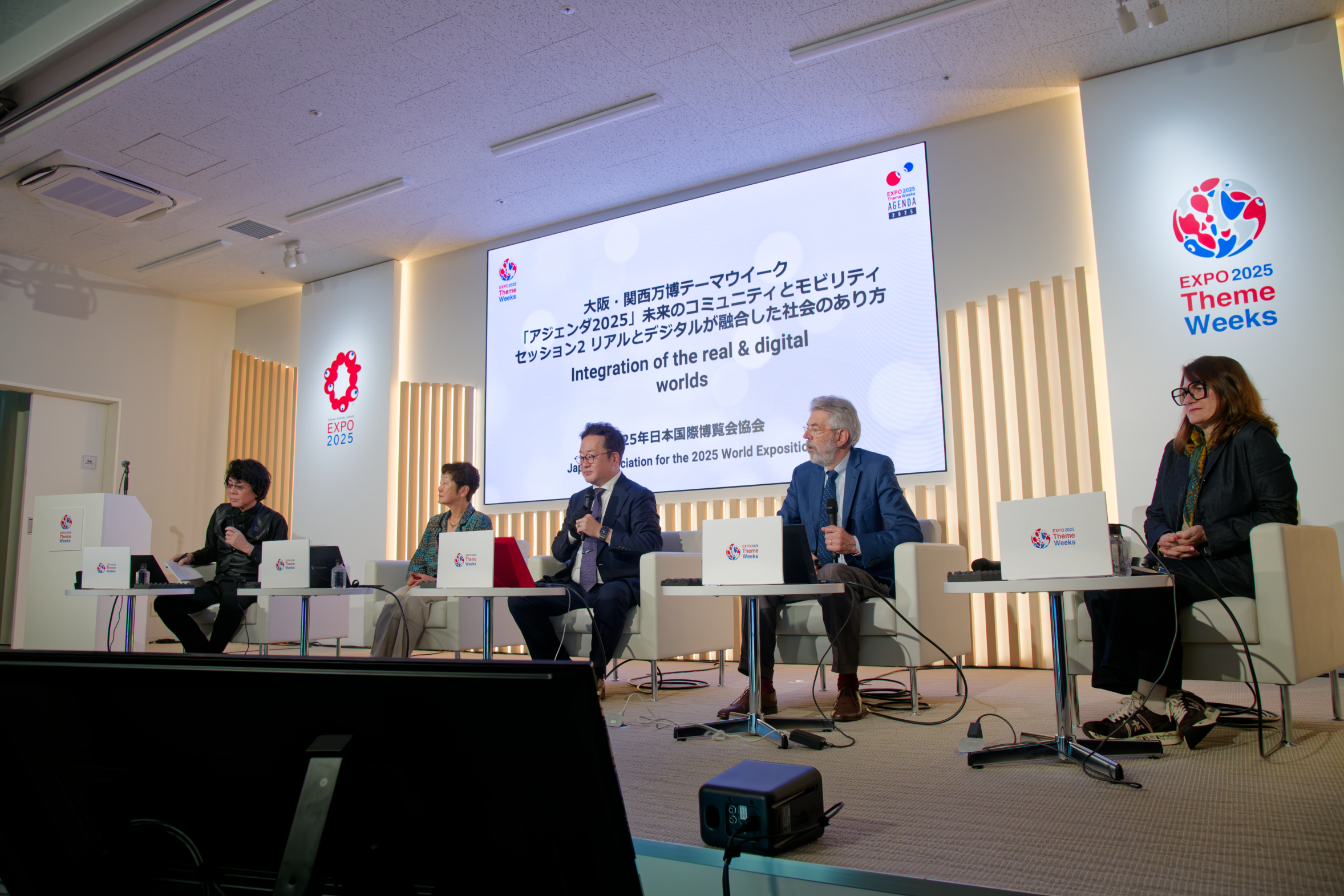
【Discussion Summary】
The session concluded with a panel discussion featuring all
speakers, centering on essential questions such as: “How
should cybernetic avatars be implemented in society?” and “How
will technology impact human identity and social structure?”
Hiroshi Ishiguro reiterated the idea that avatars can help
create a society unconstrained by body, brain, space, or time,
conceptualizing humans as “multi-bodied beings.” Masahiko
Inami emphasized integrating elements of play and fashion into
avatar culture to ensure it is embraced by everyday society.
He suggested that reaching children and creative industries
could facilitate the social acceptance of these technologies.
Miwako Doi highlighted avatars as a means of enabling
dignified social participation for individuals facing
physical, cognitive, or geographical challenges. She stressed
the need for ethical and institutional frameworks—including
authentication systems and international standards—to support
social implementation.
Giulio Sandini argued that cybernetic avatars must evolve from
tools addressing the long-term goal of autonomous partners
that achieve mutual understanding and express emotional
relationship. He introduced the concept of “Cognitive
Twins,”where avatars learn from users to become empathetic
companions. Realizing this visionrequires interdisciplinary
collaboration grounded in a deep understanding of human
cognition.
Cecilia Laschi emphasized the embodied and societal dimensions
of avatars, calling for their design not as secondary actors
but as collaborative members of society. In fields like
healthcare and caregiving, ethical flexibility and design
inclusivity are critical to ensuring harmonious human-robot
coexistence.
A shared theme emerged: the real and digital are not
opposites, but complementary. Technologies like the metaverse,
AR, and multi-location avatars are dissolving the boundaries
between physical and virtual realities. This evolution prompts
a fundamental redefinition of the self.
In closing, Ishiguro remarked, “We are not changing society
through technology—we are rebuilding society by questioning
what it means to be human.” The discussion reaffirmed that
avatars are not just technological products, but social and
philosophical entities embedded in evolving human values.



Cast
Moderator

Hiroshi Ishiguro
Professor of Department of Systems Innovation, Osaka University, Visiting Director of ATR Hiroshi Ishiguro Laboratories
Visiting Director of ATR Hiroshi Ishiguro Laboratories His research interests are interactive robotics, avatar, and android science. Geminoid is an avatar android that is a copy of himself. In 2011, he won the Osaka Cultural Award. In 2015, he received the Prize for Science and Technology by the Minister of Education, Culture, Sports, Science and Technology. He was also awarded the Sheikh Mohammed Bin Rashid Al Maktoum Knowledge Award in Dubai in 2015. Tateisi Award in 2020.
View Profile
Close
close
Speakers

Masahiko Inami, Ph.D
Special Advisor to the President for The University of Tokyo, Deputy Director / Professor for Advanced Science and Technology
Masahiko Inami, Ph.D.
Special Advisor to the President for The University of
Tokyo, Deputy Director / Professor for Advanced
Science and Technology
Dr. Masahiko Inami took up his current position as
professor at the University of Tokyo after working at
the University of Electro-Communications and Keio
University.
His interests include “JIZAI body editing technology,”
the Augmented Human, and entertainment engineering.
He has received several awards, including TIME
Magazine’s “Coolest Invention of the Year” award and
the Young Scientist Award and Research Category Award
from the Ministry of Education, Culture, Sports,
Science, and Technology (MEXT).
He is also a director of the Information Processing
Society of Japan, a director of the Virtual Reality
Society of Japan, and a member of the Science Council
of Japan.
His latest book is called “Theory of JIZAI Body"
(Springer, 2023).
View Profile
Close
close

Giulio Sandini
Istituto Italiano di Tecnologia Robotics, Brain and Cognitive Sciences Unit
Giulio Sandini is Founding Director of the Italian
Institute of Technology where in 2006 established the
department of Robotics, Brain and Cognitive Sciences.
As Assistant Professor at the Scuola Normale in Pisa
and Visiting Researcher at the Neurology Department of
the Harvard Medical School he investigated visual
perception, sensorimotor coordination in humans and
technologies for Brain Activity Mapping to study
children with learning disabilities. In 1996 he was
Visiting Scientist at the Artificial Intelligence Lab
of MIT.
As a professor of bioengineering at the University of
Genova in 1990 he founded the LIRA-Lab (Laboratory for
Integrated Advanced Robotics) which, with a focus on
developmental robotcs, was to become the birthplace of
a family of humanoid robots including the “open
source” iCub platform which, designed within the
EU-funded collaborative project RobotCub, has later
become a reference humanoid platform of the Italian
Institute of Technology.
Giulio Sandini research activity is characterized by
an engineering approach to the study of natural
intelligent systems with a focus on the design and
implementation of embodied artificial systems to
investigate the development of human perceptual, motor
and cognitive abilities.
View Profile
Close
close

Miwako Doi
Auditor, Nationatil Institute of Information and Communications Technology, Vice President for Data Strategy and Co-Creation, Tohoku University Executive Director, NARA Institute of Science and Technology
She received her B.E. and M.E. and Ph.D. degrees in
1977, 1979 and 2002 from the Univ. of Tokyo. She
joined Toshiba in 1979 and has been a researcher of
human interface technology and involved in developing
a portable Japanese word processor, a machine
translation system, a CG chip for video games, a
pedestrian navigation system for mobile phones, and so
on over 35 years.
She is an invited professor of Osaka University, Guest
Professor of Tokyo University of Agriculture and
Technology, Guest Professor of Osaka University of
Arts, Sub Project Director of Moonshot Goal1 and
others.
She got 28prizes: the Grand Prize of Tateishi
Prize, the Commendation for Science and Technology by
the Minister of Education, Culture, Sports, Science
and Technology, Award of the Minister of Internal
Affairs and Communications, the Achievement Award, the
Society Activity Contribution Award, the Best Author
award from the Information Processing Society of
Japan, a prize of National Commendation for Invention,
and so on. She authored and co-authored 13 books, over
300 patents, over 300 technical papers on multimedia
information system, human interface design, and so on.
She had been members of Ministry of Land,
Infrastructure, Transport and Tourism - Transport
Safety Commission, Ministry of Internal Affairs and
Communications - Independent Administrative Agency
Accuracy Evaluation Committee, Information and
Communications Council Committee, Ministry of
Education, Culture, Sports, Science and Technology -
University Establishment and Corporation Committee,
Science and Technology Policy Council Committee, and
so on.
View Profile
Close
close

Cecilia Laschi
Provost's Chair Professor, National University of Singapore
Cecilia Laschi is Provost’s Chair Professor at the
National University of Singapore, Director of Advanced
Robotics Centre (ARC) and Co-Director of CARTIN –
Centre for Advanced Robotics Technology and
Innovation. She is on leave from Scuola Superiore
Sant'Anna, Italy, The BioRobotics Institute. She
graduated in Computer Science at University of Pisa
and received a Ph.D. in Robotics from University of
Genoa. She received an Honorary Doctorate from the
University of Southern Denmark, Odense.
Cecilia Laschi is best-known for her research in soft
robotics, an area that she pioneered and contributed
to develop at international level. She uses a
bioinspired approach starting from the octopus as a
model for robotics. She explores marine applications
of soft robots and their use in the biomedical field,
specifically in eldercare.
She is Editor-in-Chief of Bioinspiration &
Biomimetics and Specialty Chief Editor of Soft
Robotics in Frontiers in Robotics & AI. She is
Editorial Board member of Science Robotics, IEEE
Robotics & Automation Letters, International
Journal of Robotics Research, and the Intelligent
Robotics and Autonomous Agents (IRAA) Series of MIT
Press. She serves as evaluators for the EC (incl. ERC
programme), HFSP and national research agencies.
She is IEEE Fellow and member of AAAS, I-RIM (Italian
Institute of Intelligent Machines) and GNB (Italian
National Group of Bioengineering). She is member of
the IEEE Robotics & Automation Society (RAS),
where she was elected twice as AdCom member and
co-founded the Technical Committee (TC) on Soft
Robotics. She founded and chaired the 1st IEEE-RAS
International Conference on Soft Robotics (RoboSoft)
in 2018, serving now in its Steering Committee. She
was Co-Chair of Gordon Research Conference on Robotics
2024 and Program Chair of the IEEE/RSJ International
Conference on Intelligent Systems – IROS in 2018 and
in 2024. She co-founded the spin-off company RoboTech,
in edutainment robotics.
View Profile
Close
close
The Future of Community and Mobility Week
Integration of the real & digital worlds
The programme, together with the General Sponsors, explores: 'How will the integration of real and digital realms affect community & mobility? (Social participation through avatars/humanoids)'
-
2025.05.17[Sat]
13:30~15:30
(Venue Open 13:00)
- Theme Weeks Studio
OTHER PROGRAM
The Future of Community and Mobility Week