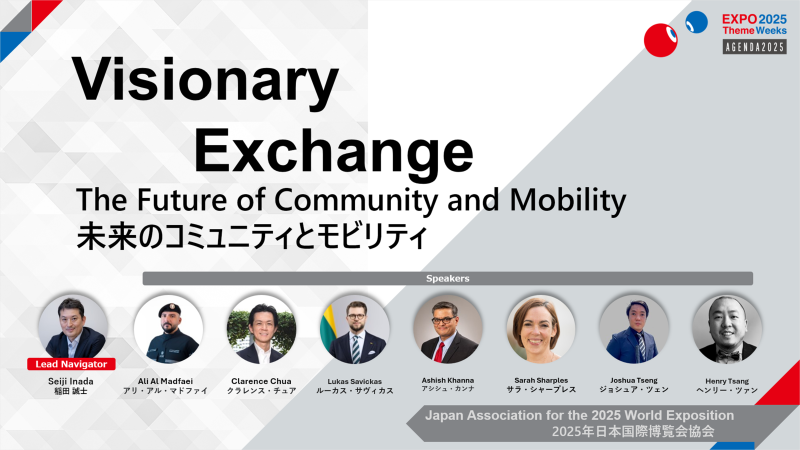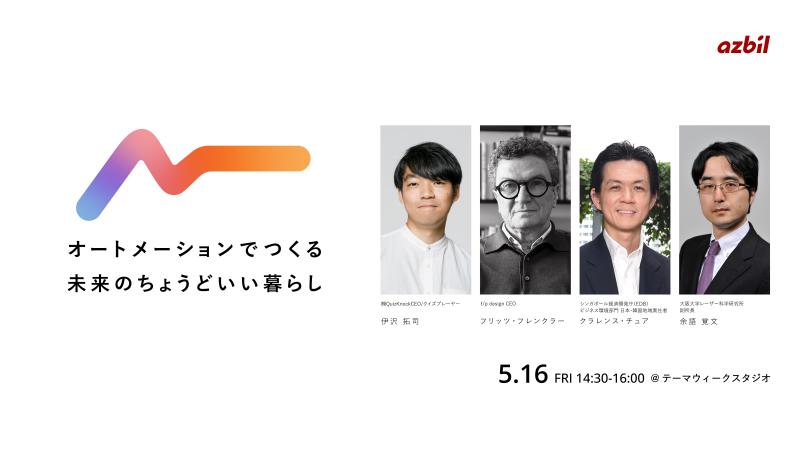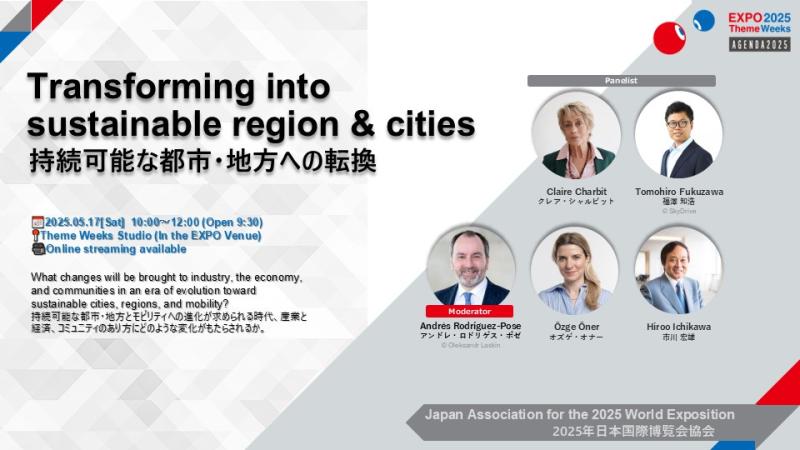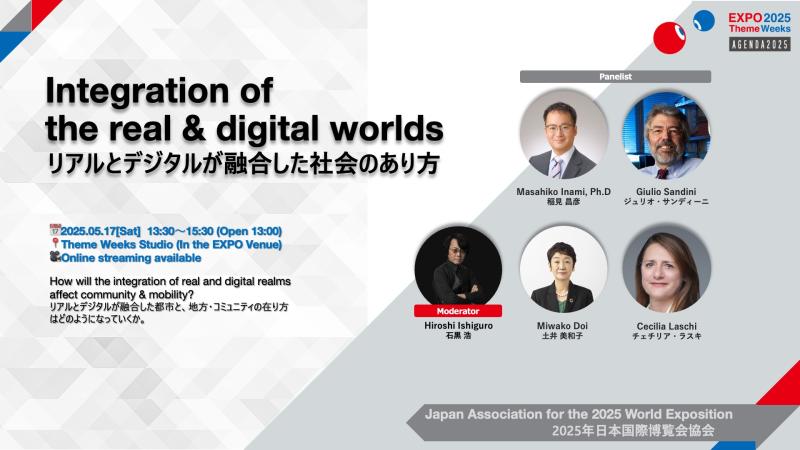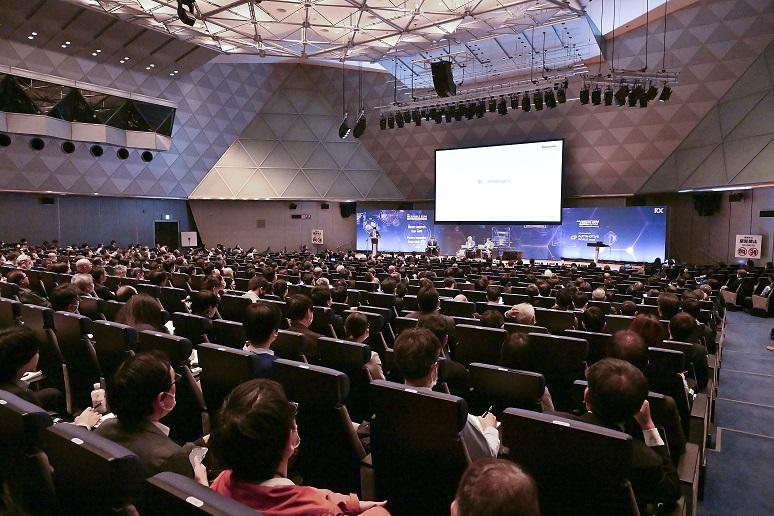
The Future of Community and Mobility Week
Maximizing the impact that the SCMaglev Chuo Shinkansen delivers
Central Japan Railway Company
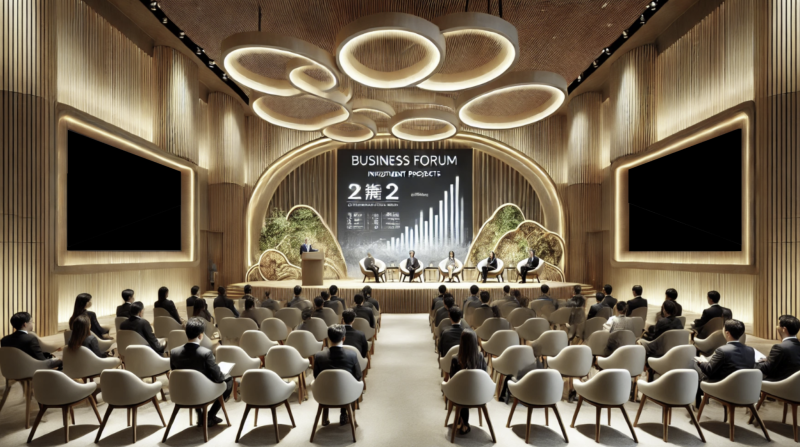
In this program, experts will discuss what is needed to maximize the economic impact of HSR projects, based on the example of Tokaido Shinkansen in Japan. The program also will examine the social impact of the SCMaglev Chuo Shinkansen project, such as CO2 emission reduction and redundancy to manage major disasters such as earthquakes. This is aimed at exploring HSR's potential as a solution to social issues many countries will face in the future.
Recorded video available
Discussion
- Others
| Transmission of simultaneous interpretation | Provided |
|---|---|
| Language of interpretation | Japanese |
-

Agenda2025
Participation Programme
-
Time and
Date of
the event -
-
2025.05.21[Wed]
10:30 ~ 12:00
(Venue Open 10:00)
-
- Venue
- Theme Weeks Studio
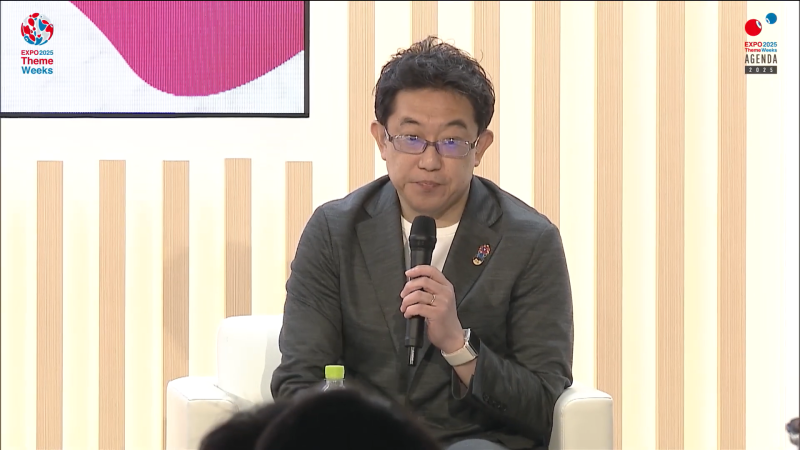
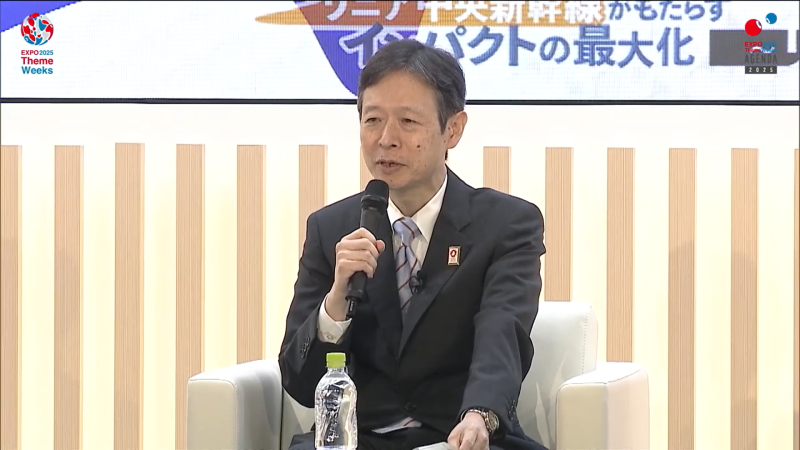
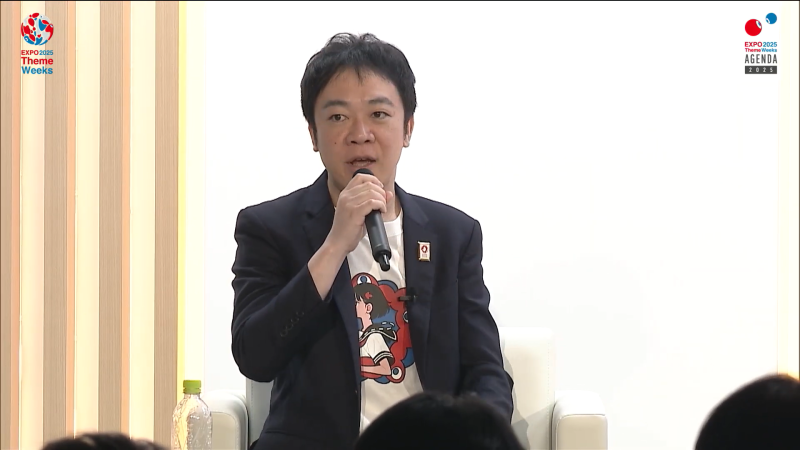
Programme details
*Subtitles: Choose “Subtitles/CC” in the “Settings” (gear
icon) at the bottom right of the YouTube video.
*Subtitles may not show with multiple languages or overlapping
audio.
The launch of SCMaglev Chuo Shinkansen will link the three
major metropolitan areas in Japan in just one hour to shape a
"Super Mega Region." It will herald new lifestyles
and work styles that combine high-speed transport with digital
technology, and lay the foundation for generating dynamic
innovations and new cultures, thereby reinforcing Japan's
international competitive edge to drive the nation's
growth. In addition to these direct economic impacts, the
SCMaglev Chuo Shinkansen is also expected to reduce risks
associated with climate change and urban resilience. In
particular, regarding climate change, the SCMaglev Chuo
Shinkansen will provide a new form of transportation with
excellent environmental performance, while facilitating the
modal shift (from cars and airplanes to HSR) previously
thought to be physically impossible. By this, dramatic
socio-economic development will be achieved while mitigating
CO2 emission, which could become the world's model case
in building a decarbonized society. Against this background,
diverse stakeholders will be brought together for a forum to
amass far-reaching insight in order to draw out the impact of
the SCMaglev Chuo Shinkansen to the maximum extent.
Reports
【Reflection】
In this program, experts from industry, government, and
academia, including President Niwa of Central Japan Railway
Company, gathered to discuss the significance of the upcoming
opening of the Chuo Shinkansen (SCMaglev). The project is
expected to greatly invigorate Japan’s economy and society,
bringing transformative impacts. Discussions were structured
around four major themes, exploring the broad and multifaceted
implications of the SCMaglev’s launch:
Creating a Dual Artery for Disaster Resilience
The Chuo Shinkansen, alongside the existing Tokaido
Shinkansen, will form a dual transportation artery connecting
Tokyo, Nagoya, and Osaka. This redundancy is a critical
measure against large-scale disasters such as the anticipated
Nankai Trough earthquake. Enhancing resilience to such risks
is a global priority, and the Maglev is seen as a pioneering
initiative in strengthening urban resilience.
Economic Impact of a Unified Mega-Region
With travel time between Tokyo, Nagoya, and Osaka reduced to
about one hour, a mega-region of approximately 66 million
people will emerge. This integration is expected to unlock
vast economic potential, positioning the region as a global
hub for innovation and attracting international attention.
Environmental Benefits Alongside Economic and Social Growth
The Maglev emits only about one-third the CO₂ of airplanes,
making it a low-impact transportation option. Despite its
high-speed advantage, it maintains strong environmental
performance. The project is praised as a global model that
achieves the “triple win” of improved convenience, reduced
environmental burden, and profitability.
Shaping the Future of Transportation Networks
The launch of the Maglev is anticipated to catalyze organic
regional connectivity through integration with high-speed rail
and expressway networks. This could mark a turning point in
redefining Japan’s national structure. Strategic investment in
Japan’s world-class mobility systems is seen as a path to
enhancing the country’s global competitiveness.
The event also saw active participation from younger
generations, highlighting the importance of engaging future
leaders in shaping the society of tomorrow. Overall, the
program served as a valuable opportunity to share the vision
and potential of the Chuo Shinkansen and to initiate a new
phase of social design for the next generation.
【Post EXPO Initiatives】
To continue sharing the significance of the Chuo Shinkansen’s
launch and the possibilities it brings for future society, we
are carrying out a range of initiatives following the
event.
The program was covered by multiple media outlets, including
television, newspapers, radio, and magazines. These reports
helped deliver the event’s content to a wider audience and
served as a catalyst for increasing public interest in the
future envisioned by the Chuo Shinkansen.
In addition, a video featuring highlights from the event is
scheduled to be released on JR Central's official YouTube
channel in late June 2025. Through this online platform, we
aim to share the program’s content with those who were unable
to attend in person.
Cast
Moderator

Yurina Takiguchi
Economic anchor
Graduated from the University of Tokyo. Active as an economic newscaster for Cent Force, serving as an outside director for SBI Shinsei Bank and other companies she is also the CEO of Globe Eight Co., Ltd., which she founded, and the producer of the video media "Academia Cross." Member of the Advisory Board of the Faculty of Engineering at the University of Tokyo. 2012 World Economic Forum Young Global Leaders.
View Profile
Close
close
Speakers
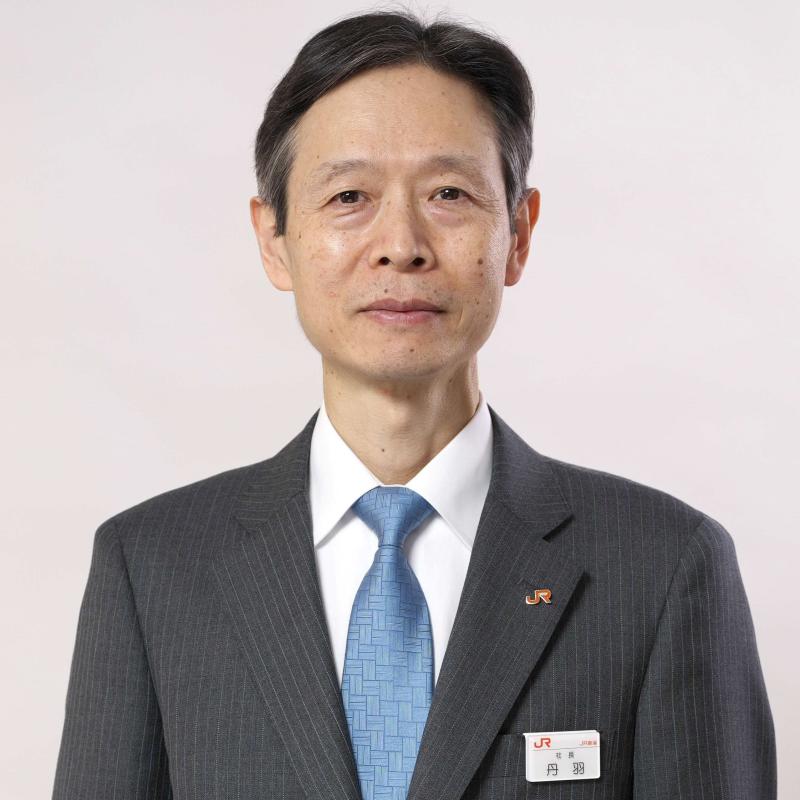
Shunsuke Niwa
President and CEO, Central Japan Railway Company
1989: Graduated from the Faculty of Law at the University of Tokyo and joined Central Japan Railway Company. 2016: Executive Officer and Director of Public Relations. 2019: Director, Executive Officer and Head of Corporate Planning. 2020: Director, Managing Executive Officer and Head of Corporate Planning. 2022: Executive Vice President and Representative Director. 2023: President and Representative Director (current position).
View Profile
Close
close
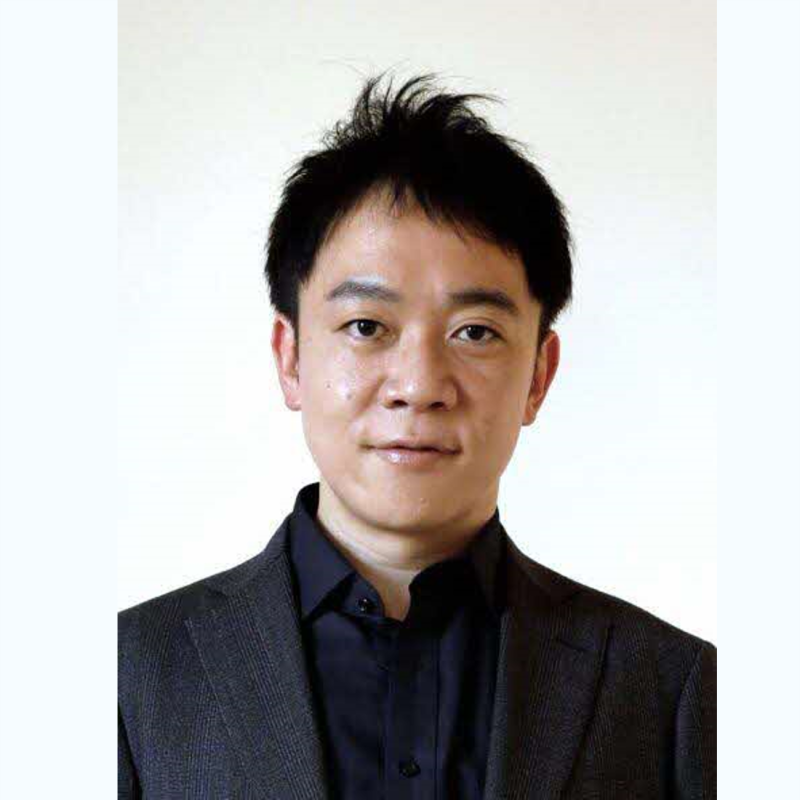
Shinpei Kato
President and CEO of Tier IV, Inc.
He received his PhD in Engineering from Keio University in 2008. After working as a researcher at Carnegie Mellon University and the University of California, he became an associate professor at Nagoya University in 2012, and since 2016 has been leading the field of computer science as an associate professor at the University of Tokyo. He currently serves as President and CEO of Tier IV, Inc., which he founded in 2015, as well as Chairman of the Board of The Autoware Foundation, a general incorporated association founded in 2018, and as a specially appointed associate professor at the University of Tokyo.
View Profile
Close
close
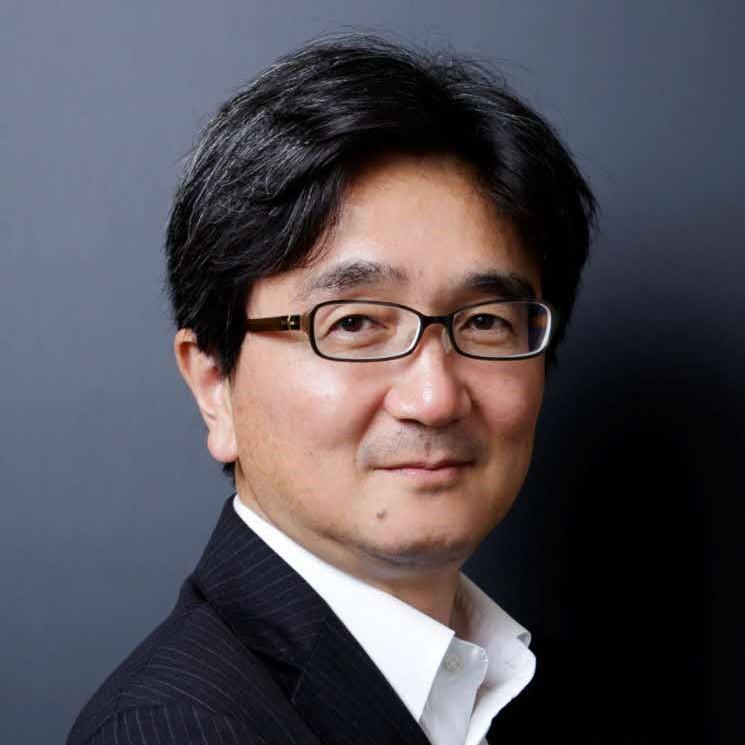
Hiroyuki Morikawa
Professor, Graduate School of Engineering, The University of Tokyo
Graduated from the University of Tokyo in 1987, and became a professor at the University of Tokyo Graduate School in 2006. He has been engaged in research on Internet of Things/Big Data/DX, wireless communication systems, and information society design, etc. He has served as Chairman of the Communications and Information network Association of Japan (CIAJ) from 2022. He has served as President of the Institute of Electronics, Information and Communication Engineers (IEICE), Chairman of the Information and Communications Council of the Ministry of Internal Affairs and Communications, and Vice-Chairman of the OECD Digital Economy Policy Committee.
View Profile
Close
close

Fujiyo Ishiguro
Chief of Japan and Chief Representative Officer, World Economic Forum
She has over 20 years of experience in cross-border
and startup management. She began her career in
overseas sales and marketing at Brother Industries,
and later served as the manager responsible for new
business development at Swarovski Japan. Her first
startup was a consulting firm focused on high-tech in
Silicon Valley, where she facilitated partnerships
between U.S. startups and major Japanese corporations.
After participating in the MBO of U.S.-based Netyear
Group, she relocated the headquarters to Japan and, as
CEO, led the company to a public listing in the
Japanese market.
She has held numerous public positions, serving as a
committee member for the Ministry of Economy, Trade
and Industry, the Cabinet Office, and the Ministry of
Foreign Affairs.
She holds a bachelor's degree in economics from
Nagoya University and an MBA from Stanford University.
View Profile
Close
close
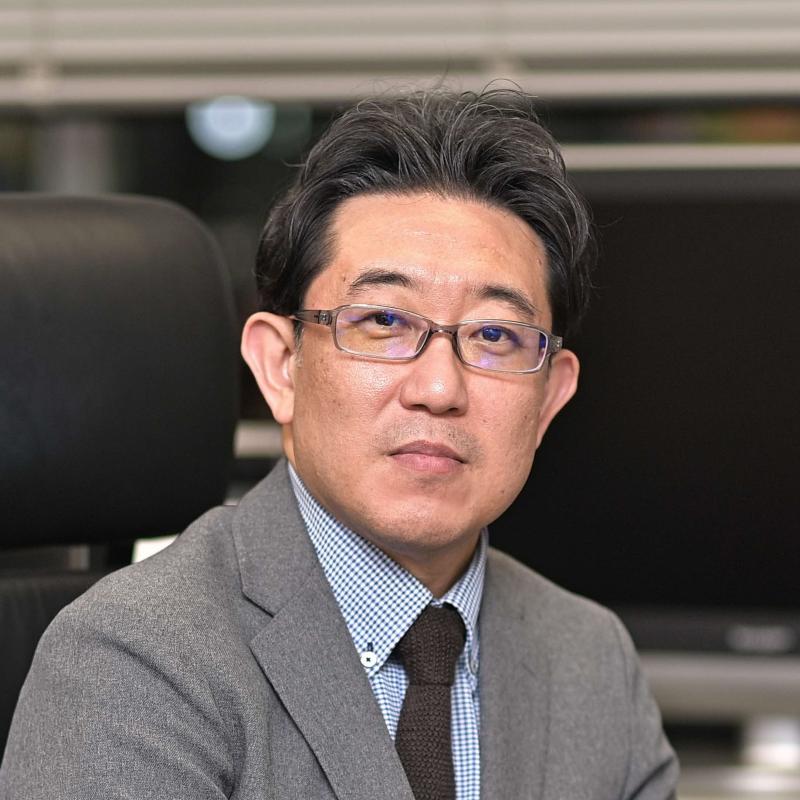
Jingo Kikukawa
Director-General, Innovation and Environment Bureau, Ministry of Economy, Trade and Industry
After graduating from Kyoto University, he joined the Ministry of International Trade and Industry (MITI) in 1994. Engaged in trade, environment, and economic security policies. He served as Counsellor at the Delegation of Japan to Geneva (Chairman of the WTO/TBT Committee in 2013), Director of the Finance Division, Small and Medium Enterprise Agency, Secretary to the Minister of State for Economic Revitalization, Director of the Information Industry Division, Counselor to the Cabinet, and Deputy Director General of the Minister's Secretariat before assuming his current position. He holds a master's degree from Columbia University, U.S.A., is a visiting professor at Aoyama Gakuin University, and is a U.S. Certified Public Accountant.
View Profile
Close
close
The Future of Community and Mobility Week
Maximizing the impact that the SCMaglev Chuo Shinkansen delivers
In this program, experts will discuss what is needed to maximize the economic impact of HSR projects, based on the example of Tokaido Shinkansen in Japan. The program also will examine the social impact of the SCMaglev Chuo Shinkansen project, such as CO2 emission reduction and redundancy to manage major disasters such as earthquakes. This is aimed at exploring HSR's potential as a solution to social issues many countries will face in the future.
-
2025.05.21[Wed]
10:30~12:00
(Venue Open 10:00)
- Theme Weeks Studio
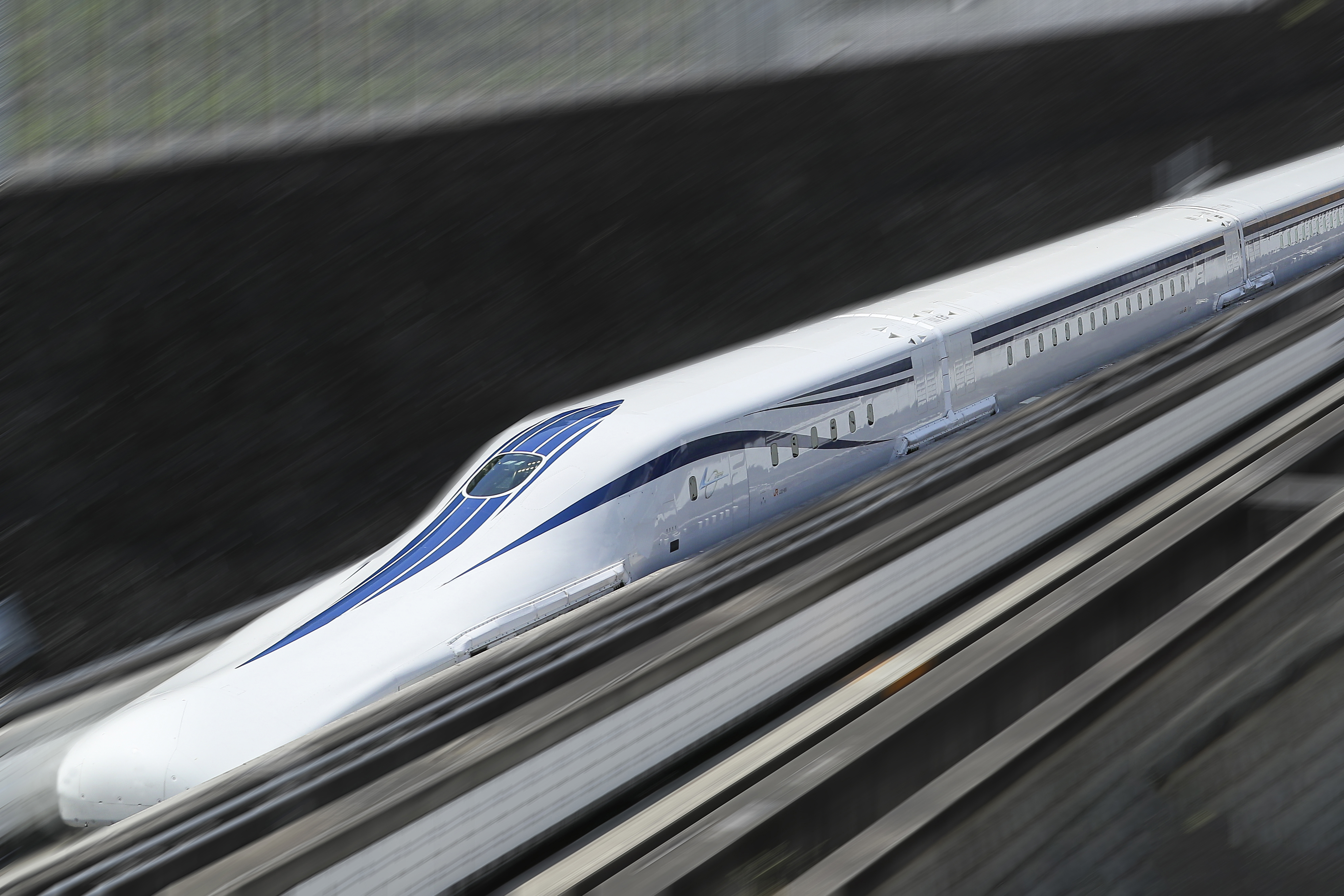
© 2025 Central Japan Railway Company
OTHER PROGRAM
The Future of Community and Mobility Week