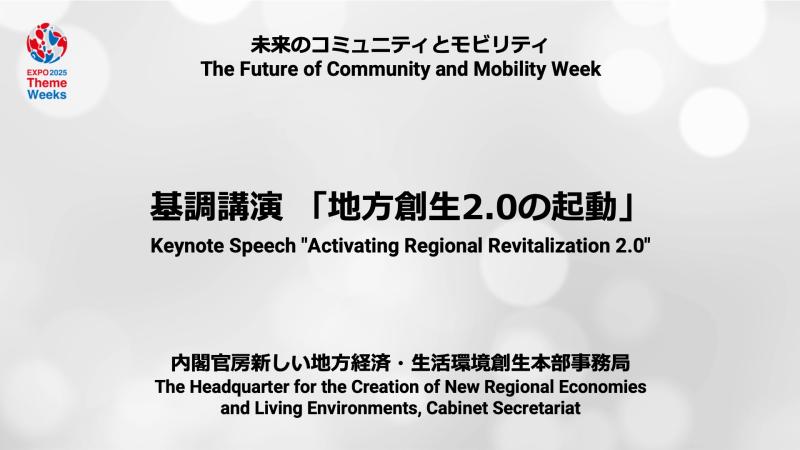
The Future of Community and Mobility Week
Blueprint for Future Cities "2050": Designing
Future Society for Our Lives
Agenda 2025 Co-created Programme
Shape New World Initiative
[The Vision for 2050]
A world where urban data supports our lives and fosters
diverse and creative human activities. In a future where
data utilization continues to advance, how can we harness
human creativity and diversity? Moreover, how can we achieve
a balance between efficiency and the harmonious integration
of "data" and "human values"? This
session will explore the potential of data in city-making
while envisioning the cities of the future.
Recorded video available
Discussion
- Smart cities
- EV/FCV
- Digital garden cities
| Transmission of simultaneous interpretation | Provided |
|---|---|
| Language of interpretation | Japanese and English |
-

Agenda2025
Co-created Programme
-
Time and
Date of
the event -
-
2025.05.24[Sat]
18:00 ~ 20:00
(Venue Open 17:30)
-
- Venue
- Theme Weeks Studio

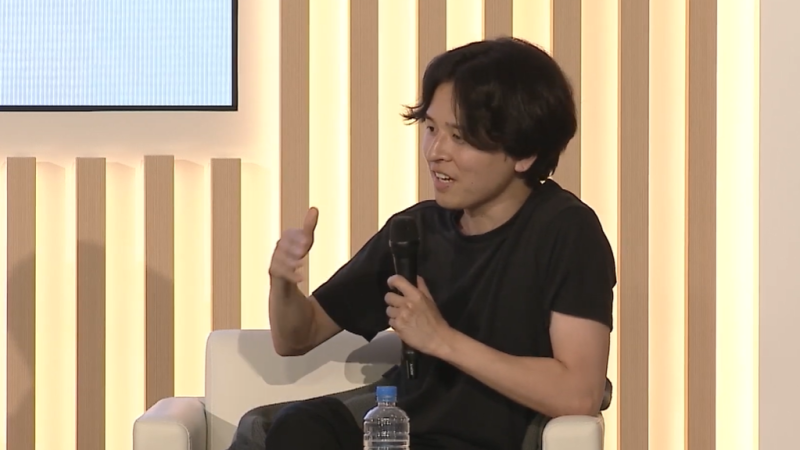
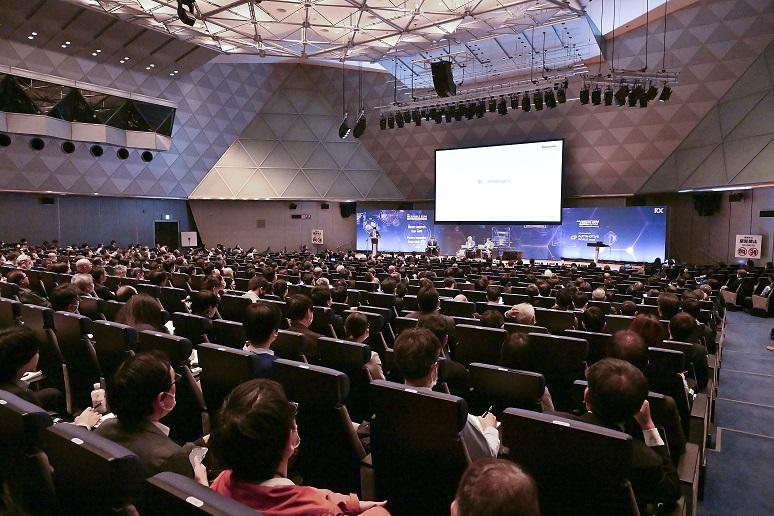
Programme details
*Subtitles: Choose “Subtitles/CC” in the “Settings” (gear
icon) at the bottom right of the YouTube video.
*Subtitles may not show with multiple languages or overlapping
audio.
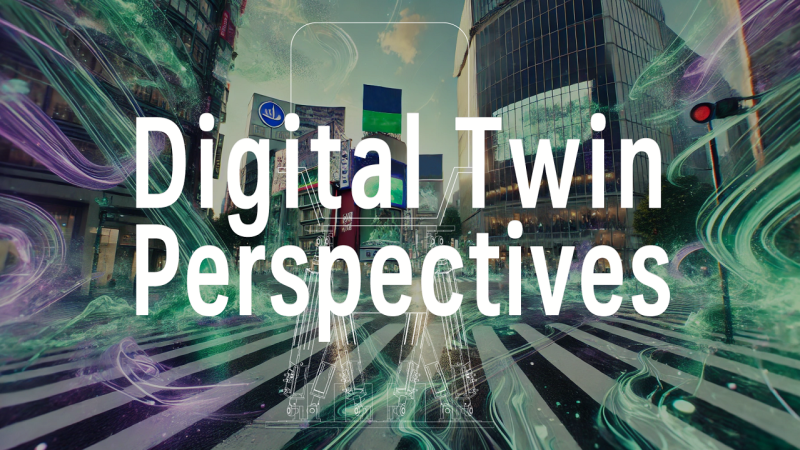
Concepts such as "smart cities" and "digital
rural cities" highlight the significant role that data
utilization has played in urban planning. However, as urban
development progresses, it is becoming increasingly important
to consider how to coexist with values that are difficult to
quantify, such as the everyday scenery of our lives and
cultural activities, rather than focusing solely on
efficiency.
By 2050, the question of how urban data should be utilized
will require a fresh discussion. The challenge will be not
only to improve efficiency but also to reflect the emotions
and connections of the people living in these cities. In this
session, experts and practitioners in urban data will be
invited to explore the current state, challenges, and
potential of data utilization in urban spaces.
The discussion will also delve into how to create cities that
support human activities through the effective use of data. A
key focus will be on how data can be leveraged to draw out the
creativity and diversity of communities. Ultimately,
participants will engage in discussions about how to realize
the "co-creation process between data and humanity"
in the cities of 2050, aiming to envision a future urban
landscape where human well-being and technological advancement
coexist.
Reports
【Reflection】
In this programme, ‘Blueprint for Future Cities in 2050: When
City Data Supports Our Lives,’ discussions were held with
various experts on how the utilisation of data supports
human-centred lifestyles and creative activities when
considering the future of cities.
Speakers included experts in urban space analysis,
practitioners of green architecture, and entrepreneurs
addressing climate change and gender issues, who shared
practical insights from their respective perspectives on
topics such as smart cities, digital rural cities, ESG, AI,
and global shapers.
Particularly impressive was the positive vision that
‘data-driven urban design’ is not merely a pursuit of
efficiency, but can coexist with human emotions and cultural
activities. Examples of inclusive urban development that
utilise sensor technology and digital twins to capture the
‘voiceless voices’ of cities were introduced, attracting
strong interest from the audience.
In addition, presentations by speakers from emerging Asian
countries such as Kazakhstan and Indonesia on environmentally
friendly architecture and data-driven urban development
provided a valuable opportunity to gain a global perspective
through comparison with initiatives in Japan. In particular,
the discussion on bridging policy formation and technology
related to climate change was sharp from the perspective of
the younger generation, and there were lively questions from
the audience.
Overall, this programme was very meaningful in that it
envisioned the future of cities not solely from a
technological perspective, but in conjunction with humanity.
The dialogue between speakers from different fields and
cultures, who resonated with each other, resulted in a
multi-layered and insightful programme befitting an
international event such as the Expo.
【Post EXPO Initiatives】
Taking this dialogue programme as an opportunity, the
organisers and speakers clarified their plans to develop
concrete initiatives to evolve the use of data in cities into
a human-centred and sustainable form. The following activities
are being considered for the future.
First, strengthening the network connecting young
international leaders and urban planning practitioners, and
conducting demonstration experiments that leverage that
network. Some of the speakers in this programme are already
collaborating with the World Economic Forum (WEF) and
advancing projects in their regions, and joint research and
demonstration projects in collaboration with Japanese cities
and regions are being planned. For example,
citizen-participatory urban development using urban data and
climate-responsive infrastructure design linked to
environmental monitoring are being considered.
Second, the programme will expand into education and outreach
activities. Workshops and academies targeting junior high and
high school students and university students are planned to
foster data literacy and a sense of ownership in urban
development. These educational activities will not only
nurture future urban leaders but also serve as an important
foundation for changing the awareness of the general
public.
Thirdly, creative projects that connect data with culture and
sensibility will be implemented. New urban experiences using
technology, such as art installations using urban
visualisation technology and soundscapes that express the
‘atmosphere’ of the city, are being considered. This approach
seeks to reconstitute data not as mere numbers, but as
information that touches the emotions of residents.
Going forward, it is essential to implement these initiatives
to make the ‘co-creation process between data and humanity’ in
cities a reality. To achieve this, a new foundation for urban
innovation is needed, where government, private sector,
citizens, and researchers collaborate across boundaries,
fostering dialogue and practical action. This programme has
provided significant insights and possibilities as the first
step toward this goal.
*Part or all of this report was generated by AI.
Cast
Moderator
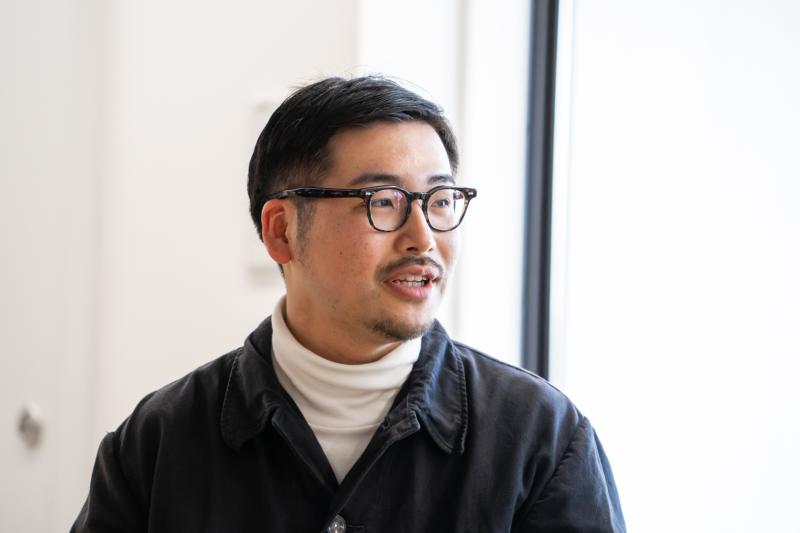
Tomokazu IWABUCHI
UrbanixCo., Ltd. . Kyushu University
Born in Fukuoka in 1996. CEO of Urbanix Co., Ltd. Currently enrolled in the doctoral program at the Urban Design Laboratory, Kyushu University. Selected for the Next-Generation Researchers Challenging Research Program. Previously worked and engaged in smart city initiatives and inter-city collaborations.
View Profile
Close
close
Speakers

Soma Suzuki
Spatial Pleasure Co., Ltd.
Born 1993, Osaka. While studying physical engineering at Kyoto University, he moved around Australia, Boston and South America for three years. After graduation, he studied urban spatial analysis as a master's student at the Institute of Spatial Analysis, University of London (UCL Bartlett School), and founded Spatial Pleasure in May 2019.
View Profile
Close
close

Dana Shukirbayeva
Founder of FOREST HERO | Co-Founder of Qala AI | WEF Global Shapers
Dana Shukirbayeva is ESG Professional and Impact Entrepreneur, Founder of Climate Action Initiative Central Asia NGO, Climate Adviser and Sustainability Consultant. Dana is Forbes 30 under 30, UN Youth Advisory Board Member and the winner of COP28 Women Climate Entrepreneurs Pitch Competition, she is the alumna of Cartier Women's Initiative Academy 2023, WiSER (Masdar Initiative) Pioneer 2024 and Curator of Global Shapers Hub in Astana, Kazakhstan (World Economic Forum Initiative).
View Profile
Close
close

Irvan A. Sutiono
WEF Global Shaper,Jakarta Hub
Born in Jakarta in 1994. Head of Innovation and Asset Management at PT Anantagraha Jaya Mandiri, a local, Indonesian construction firm. Manages its real estate portfolio while spearheading the local construction company's transition to green construction practices to minimize environmental impact and maximize energy efficiency. World Economic Forum’s Global Shapers, and served as an official delegate representing the global youth at the World Economic Forum Annual Meeting 2023 in Davos, Switzerland.
View Profile
Close
close
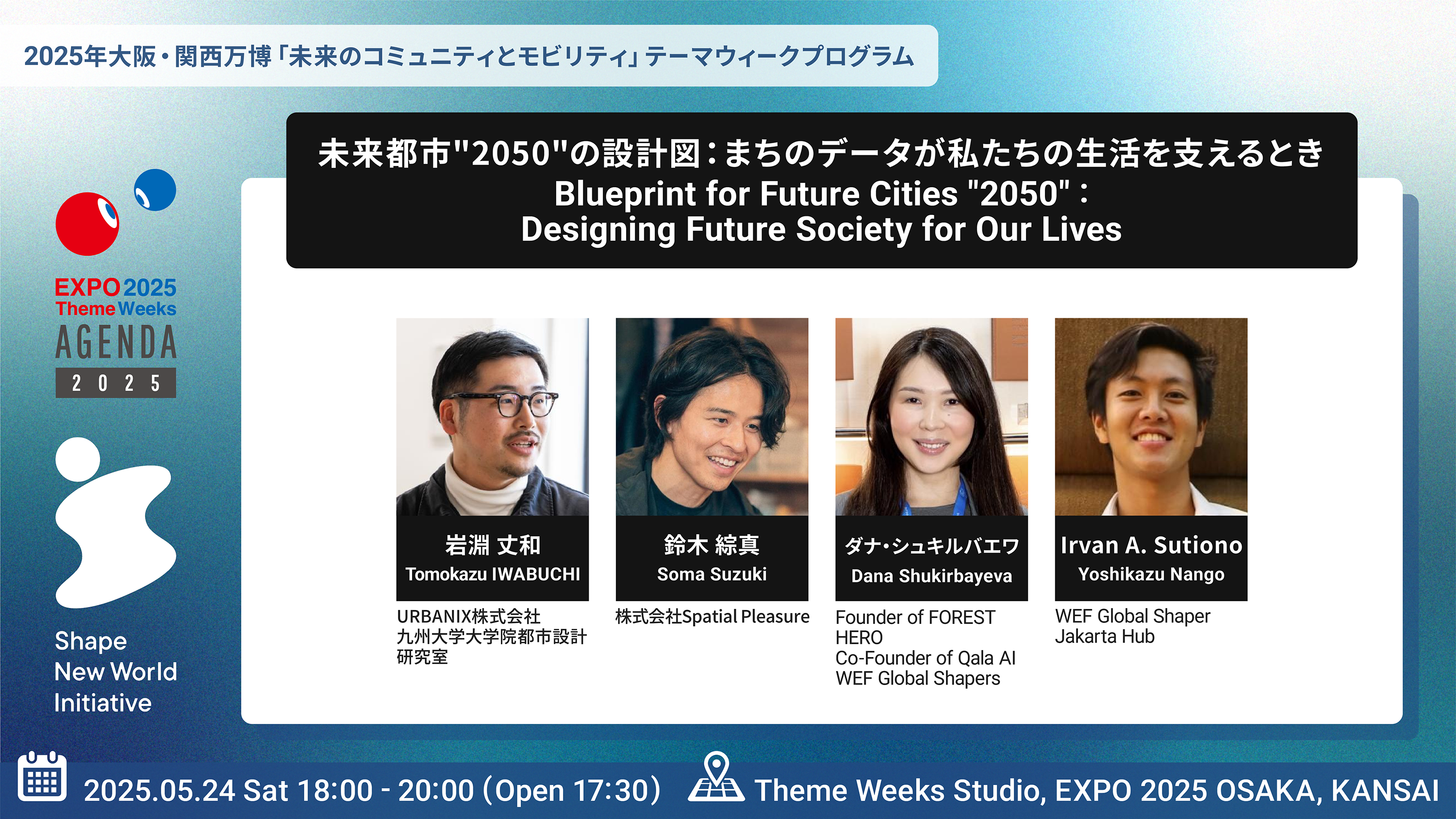
The Future of Community and Mobility Week
Blueprint for Future Cities "2050": Designing Future
Society for Our Lives
Agenda 2025 Co-created Programme
[The Vision for 2050]
A world where urban data supports our lives and fosters
diverse and creative human activities. In a future where data
utilization continues to advance, how can we harness human
creativity and diversity? Moreover, how can we achieve a
balance between efficiency and the harmonious integration of
"data" and "human values"? This session
will explore the potential of data in city-making while
envisioning the cities of the future.
-
2025.05.24[Sat]
18:00~20:00
(Venue Open 17:30)
- Theme Weeks Studio
OTHER PROGRAM
The Future of Community and Mobility Week