The Future of Community and Mobility Week
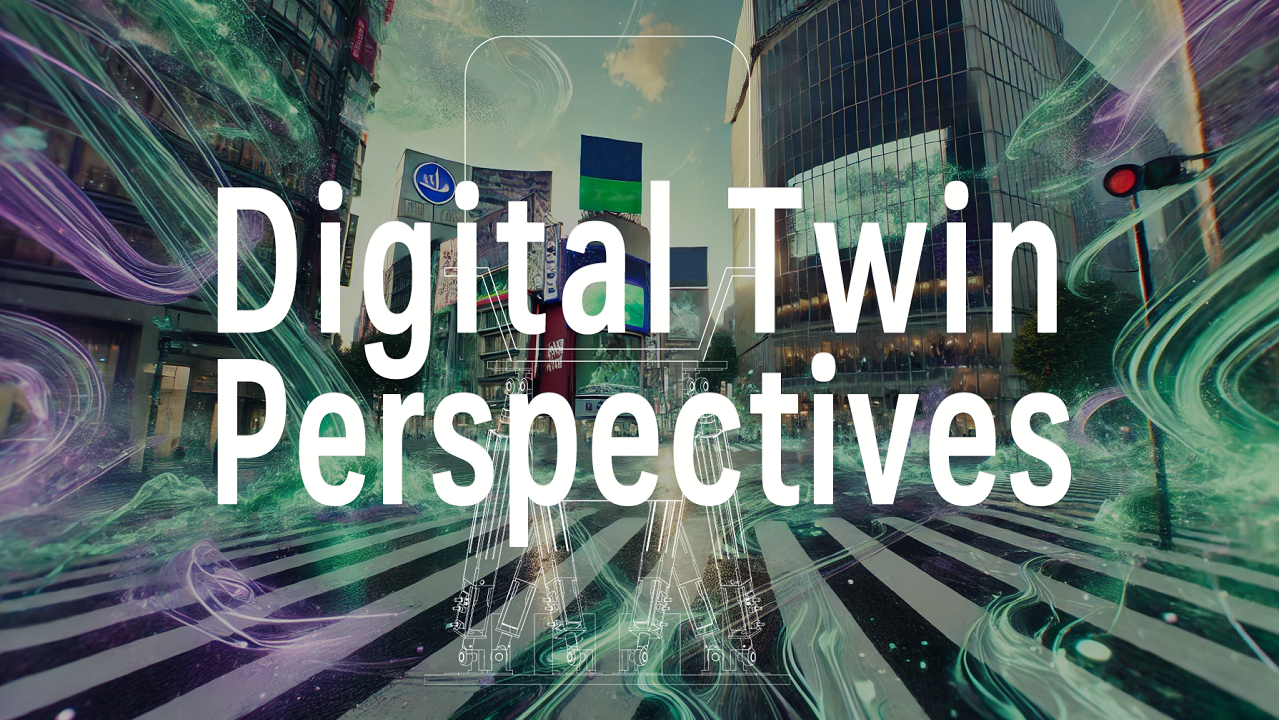
Digital Twin Perspectives - Real and Virtual City Futures
Ministry of Land, Infrastructure, Transport and Tourism (MLIT)
Develop a spatial experience device that combines a Head
Mounted Display (HMD) that provides an immersive VR
experience and a chair that allows visitors to experience
vibration and gravity.
Integrate 3D city models (PLATEAU) and 3D models of the Expo
site to provide visitors with a new driving experience that
moves between virtual and real space.
Recorded video available
Exhibition
- Smart cities
- Metaverse
- Digital garden cities
| Transmission of simultaneous interpretation | Not provided |
|---|---|
| Language of interpretation | Japanese |
-
Track Programme
-
Time and
Date of
the event -
-
2025.05.20[Tue]
15:00 ~ 20:00
(Venue Open 15:00)
-
2025.05.21[Wed]
2025.05.23[Fri]
10:00 ~ 20:00
(Venue Open 10:00)
-
2025.05.24[Sat]
10:00 ~ 18:00
(Venue Open 10:00)
-
- Venue
- Others (Inside Venue)
- GALLERY WEST
Programme details
**Subtitles: Choose “Subtitles/CC” in the “Settings” (gear
icon) at the bottom right of the YouTube video.
*Subtitles may not show with multiple languages or overlapping
audio.
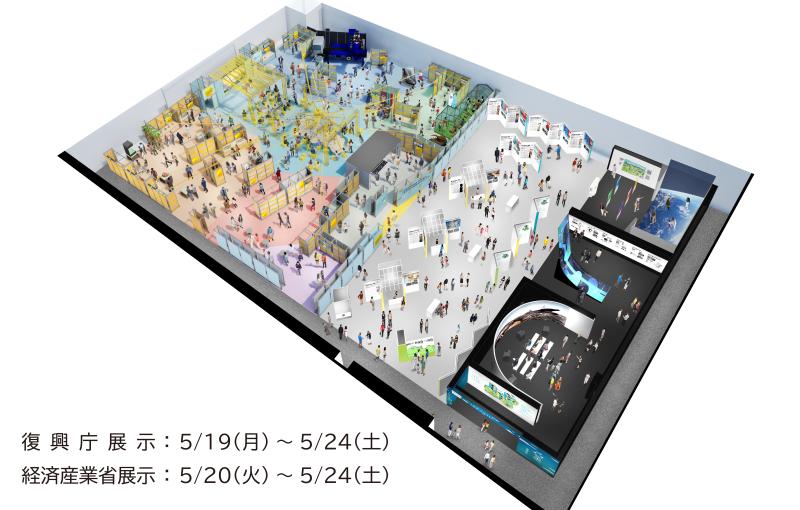
Develop a spatial experience device that combines a Head
Mounted Display (HMD) that provides an immersive VR experience
and a chair that allows visitors to experience vibration and
gravity.
Integrate 3D city models (PLATEAU) and 3D models of the Expo
site to provide visitors with a new driving experience that
moves between virtual and real space.
Other exhibits related to PLATEAU will also be presented.
Reports
【Reflection】
In this program, the Ministry of Land, Infrastructure,
Transport and Tourism (“MLIT”) showcased Japan’s digital
technologies by featuring immersive VR devices built on the 3D
city models promoted under Project PLATEAU, and by presenting
use cases that leverage these models.
Project PLATEAU advances the development, utilization, and
open-data release of 3D city models to drive digital
transformation in urban planning and support the realization
of human-centered city development.
All exhibits were aligned with the Theme Week titled “The
Future of Communities and Mobility: What is a community where
we can live as we are?” and provided opportunities to engage
with visitors.
Exhibition Room 1: Immersive Installation within 3D City
Models
Visitors experienced a new sense of urban mobility through a
“driving experience” that seamlessly merged PLATEAU’s 3D city
models with the 3D model of the Expo site, allowing them to
transition between virtual and real environments. This
experience offers a new form of bodily perception enabled by
digital technology. It also serves as an opportunity to gain
fresh insights into the concept of “the city”—insights that
cannot be fully grasped through physical space
alone—demonstrating the potential future of communities and
mobility.
Exhibition Room 2: Use Case Exhibition by PLATEAU Partners
Through three showcases—a demonstration of unmanned-robot
operations and autonomous-driving simulations, a
community-design experience using XR technology, and a
large-scale evacuation simulation—participants explored new
forms of future mobility, intuitive engagement in urban
planning, and new approaches to urban disaster resilience.
On the day of the exhibition, a diverse audience—from children
to seniors, both domestic and international—visited the
displays and shared feedback such as “It was fascinating,” “I
was amazed by the realism of the city models,” and “I felt a
glimpse of the future.” Questions and comments regarding the
use case exhibits by PLATEAU partners were lively, providing
valuable insights into audience expectations and concerns
around digital-twin technologies for cities.
Through this exhibition, the MLIT believes it successfully
showcased the potential of digital-twin technologies and their
applications in innovative urban development to both domestic
and international audiences. Moving forward, MLIT will
continue advancing the development, utilization, and open-data
release of 3D city models to realize urban environments that
are accessible and comfortable for all.
【Post EXPO Initiatives】
Project PLATEAU has reached its sixth year since its launch,
and the coverage of its 3D city models has expanded to
approximately 250 municipalities nationwide. At the same time,
diverse use cases have been developed across both public and
private sectors, and social implementation is underway. In
fiscal year 2025, Project PLATEAU will continue to drive
full-scale social implementation through its initiatives.
For details on the fiscal year 2025 initiatives, please refer
to the following press release:
https://www.mlit.go.jp/report/press/toshi03_hh_000167.html
The latest information on Project PLATEAU is posted on the
official website. Please take a look:
https://www.mlit.go.jp/plateau/
The Future of Community and Mobility Week
Digital Twin Perspectives - Real and Virtual City Futures
Develop a spatial experience device that combines a Head
Mounted Display (HMD) that provides an immersive VR experience
and a chair that allows visitors to experience vibration and
gravity.
Integrate 3D city models (PLATEAU) and 3D models of the Expo
site to provide visitors with a new driving experience that
moves between virtual and real space.
-
2025.05.20[Tue]
15:00~20:00
(Venue Open 15:00)
-
2025.05.21[Wed]
10:00~20:00
(Venue Open 10:00)
-
2025.05.24[Sat]
10:00~18:00
(Venue Open 10:00)
- Others (Inside Venue)
OTHER PROGRAM
The Future of Community and Mobility Week