The Future of Community and Mobility Week
"RESILIENT SETTLEMENT: PREVENTION AND RECONSTRUCTION LESSONS LEARNED FROM JAPAN AND CROATIA" (panell discussion)
Republic of Croatia
The resilience of settlements to natural disasters is key to
reducing long-term damage and ensuring faster recovery. This
workshop explores strategies and approaches to disaster
prevention and reconstruction
through the lens of Japan and Croatia, two countries that
have faced significant challenges and developed innovative
solutions in response to various natural hazards. Japan,
often hit by earthquakes, tsunamis and
typhoons, has become a global leader in disaster
preparedness and recovery. Croatia, located in a seismically
active zone and with a history of devastating floods, offers
valuable insight into reconstruction efforts after natural
disasters. The special focus of the workshop will be on
cultural heritage and UNESCO's guidelines for sites on
the World Heritage List. By examining the experiences of
both countries, the event aims to identify key lessons that
can be applied globally to build more resilient communities,
where the development and implementation of new solutions
are supported by smart systems of publicly available data.
Recorded video available
Discussion
| Transmission of simultaneous interpretation | Provided |
|---|---|
| Language of interpretation | Japanese and English |
-

Track Programme
-
Time and
Date of
the event -
-
2025.05.26[Mon]
14:00 ~ 16:30
(Venue Open 13:30)
-
- Venue
- Theme Weeks Studio
Programme details
*Subtitles: Choose “Subtitles/CC” in the “Settings” (gear
icon) at the bottom right of the YouTube video.
*Subtitles may not show with multiple languages or overlapping
audio.
SESSION I - Resilient settlements – national approach in Japan
and Croatia
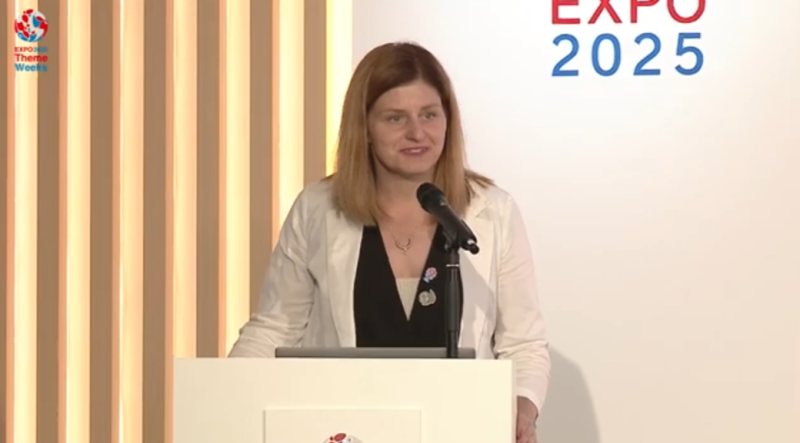
Welcome speech:Ms. Dunja MAGAŠ, State Secretary, Ministry of
Physical Planning, Construction and State Assets, Croatia
Keynote speech: Prof. Haruo HAYASHI, President of the
National Research Institute for Earth Science and Disaster
Resilience, Japan
Central Government Policy, System and Law:Prof. Satoru
NISHIKAWA, JICA Senior Advisor for Disaster Risk Reduction
Policy and Recovery, Japan
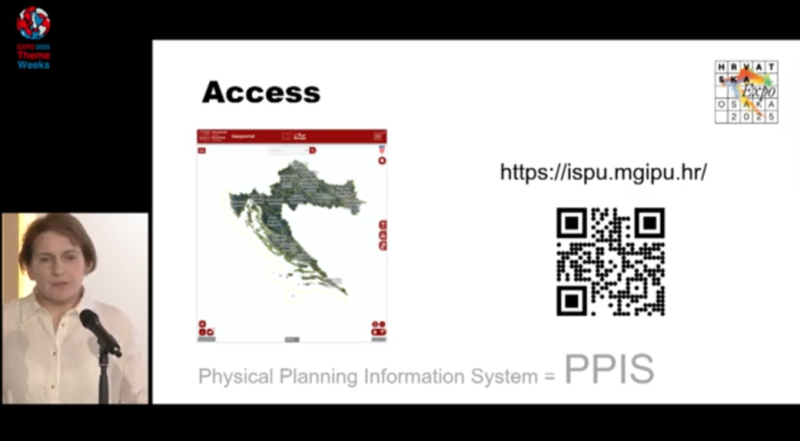
Physical Planning Information System – an Overview:Ms.
Sunčana HABRUN, Head of Sector, Ministry of Physical Planning,
Construction and State Assets, Croatia
Management of Croatia's protected urban heritage sites in
the digital age:Mr. Aljoša ŠPALETA, Deputy Project Manager,
Ministry of Culture and Media, Croatia
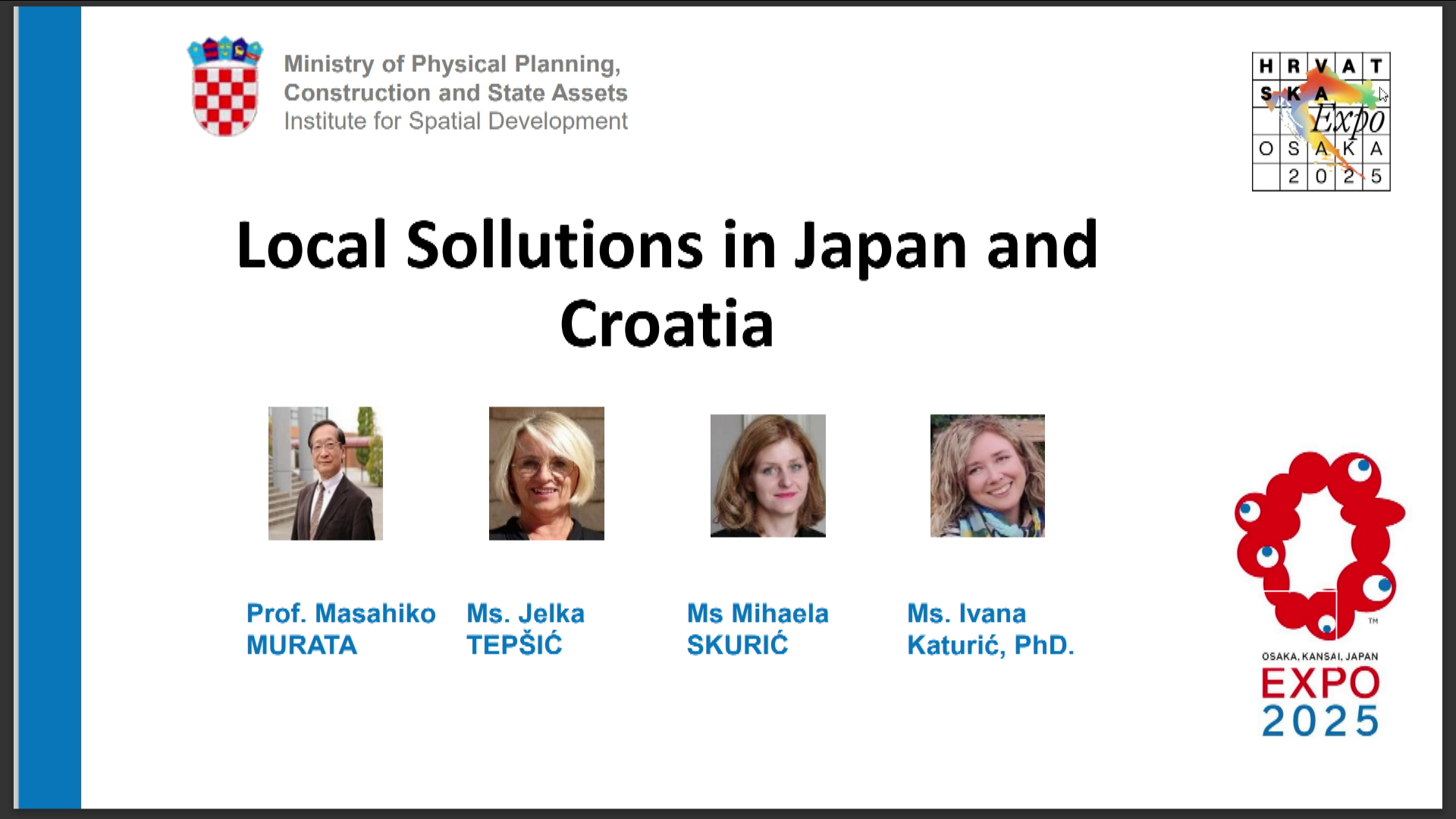
SESSION II - Resilient settlements – local sollutions in Japan
and Croatia
Tbd. Prof. Masahiko MURATA, Specially Appointed Professor,
Kansai
International University, Hyogo Prefecture, Japan
How to work at UNESCO World Heritage
sites:Ms. Jelka TEPŠIĆ, Deputy Mayor, City of Dubrovnik,
Croatia
The City of Dubrovnik and resilience Long-term processes of
heritage restoration:Ms. Mihaela SKURIĆ, Director, Institute
for the restoration of Dubrovnik, Croatia
Croatian case studies of resilient settlement development
Petrinja Post-Earthquake Urban Regeneration:Ms. Ivana Katurić
PhD., Director, Urbanex Ltd. Croatia
Discussion, Q&A:Moderator: Ms. Ingrid Gojević, Ministry
of Physical Planning,
Construction and State Assets, Croatia
While the first session will bring an overview on how to deal
and focus to policy making and activities at national level,
the second will bring experience at regional and local
level.
We are going to get an insight on preventive measures, the
importance of early warning systems, resilient infrastructure
and community education in reducing the impact of natural
disasters. Challenges of Reconstruction, the difficulties of
rebuilding after disasters, with an emphasis on the social,
economic, and environmental considerations that affect
long-term recovery, will present th Japanese approach of
"build back better" and Croatian strategies for
integrating local knowledge into the reconstruction
process.
Collaboration and Innovation in public-private partnerships,
government policies, and international collaboration
contribute to communities that are more resilient. Real-world
case studies highlight the role of community-led initiatives
and technology in accelerating recovery.
Reports
【Reflection】
Croatia has faced significant challenges related to both
natural disasters and the legacy of conflict, particularly in
the context of preserving its rich cultural heritage. The 2020
Zagreb earthquake served as a major turning point, prompting
urgent reassessment of the country's disaster
preparedness and response, especially in urban areas where
cultural assets are concentrated.
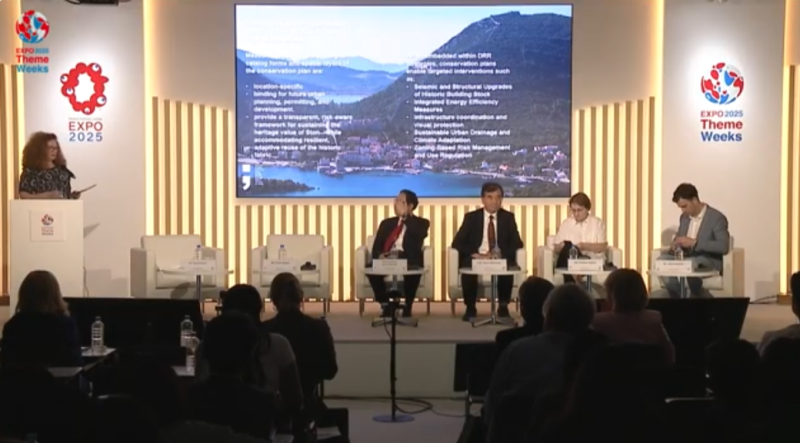
During the panel discussion, Croatian speakers shared how the
earthquake exposed the vulnerability of historic buildings
such as churches, museums, and public institutions. These
structures, many of which date back centuries, were heavily
damaged due to inadequate seismic reinforcement. In response,
the Croatian government, with support from the Ministry of
Culture and international partners, launched a large-scale
recovery program aimed at not only restoring buildings but
reimagining them for a more resilient future.
A key feature of Croatia’s recovery approach is the
integration of cultural restoration with long-term urban
planning. Rather than treating heritage protection and
disaster recovery as separate efforts, the Croatian Ministry
of Culture emphasized “revitalization through culture.” This
means post-disaster reconstruction is seen as an opportunity
to enhance the cultural and social life of communities while
safeguarding historic identity.
Public engagement was highlighted as another central pillar.
Since the earthquake, Croatia has increased its focus on
disaster education and citizen involvement. Regular evacuation
drills, awareness workshops, and school-based disaster
preparedness programs have been introduced to create a culture
of shared responsibility. This shift reflects a growing
understanding that resilience is not only about infrastructure
but also about fostering informed, engaged communities.
International cooperation, particularly with Japan, played an
important role in shaping Croatia’s strategies. The panel
emphasized how Japanese experiences with earthquake recovery
and cultural heritage protection have informed Croatia’s
policies. Dialogue with Japanese experts helped Croatian
institutions consider how to balance structural reinforcement
with the preservation of authenticity in historical buildings.
The discussion also showcased projects where communities
participated in decision-making for reconstruction, ensuring
that cultural heritage remained accessible and meaningful. One
notable example was the restoration of earthquake-damaged
churches, which became symbols of local resilience and pride.
These efforts were supported by both national funding and
European Union recovery mechanisms.
Croatia’s case demonstrates that disaster resilience in
cities—especially those with deep historical and cultural
layers—requires a holistic, inclusive, and forward-looking
strategy. Rather than viewing disasters solely as crises,
Croatia has begun to frame them as catalysts for cultural
renewal, policy reform, and citizen empowerment.
Through a unique blend of cultural stewardship, technical
innovation, and cross-sector collaboration, Croatia is
developing a model for disaster-resilient urban development
that integrates past, present, and future. Its efforts serve
as a compelling example for other countries seeking to protect
cultural identity while preparing for an increasingly
uncertain world.
【Post-EXPO Initiatives】
Following the conclusion of EXPO 2025, the focus will shift
towards sustaining and building upon the collaborative spirit
and innovative ideas generated during the event. Key
initiatives will include:
1. **Cultural Exchange Programs**: Continued promotion of
cultural interaction among participating nations to foster
long-term relationships and knowledge sharing, building upon
the connections established during the EXPO.
2. **Community Engagement Projects**: Initiatives aimed at
promoting citizen involvement and awareness will be expanded.
This may involve workshops, educational programs, and local
events that encourage ongoing participation in cultural and
environmental initiatives.
3. **Sustainability and Innovation Strategies**: Implementing
strategies inspired by new technologies and sustainable
practices showcased at EXPO 2025. This includes integrating
innovative solutions into urban planning and disaster
resilience efforts similar to those seen in Croatia’s
approach.
4. **Disaster Preparedness Enhancements**: Following lessons
learned from previous crises, such as the impacts of natural
disasters, a strong emphasis will be placed on improving
disaster resilience in cities. This may involve developing
comprehensive urban planning frameworks that prioritize both
cultural preservation and strengthened infrastructure.
5. **International Collaborations**: Continued partnerships
with countries that participated in the EXPO, particularly to
share best practices in areas such as cultural heritage
protection and disaster recovery, reflecting the successful
models demonstrated.
6. **Research and Development Initiatives**: Investing in
research projects and pilot programs that explore new
methodologies for integrating culture with technology,
enhancing urban resilience, and promoting a shared sense of
responsibility among communities.
These initiatives are designed to ensure that the
transformative experiences and insights gained during EXPO
2025 lead to sustainable development, cultural enrichment, and
enhanced resilience in urban areas, ultimately paving the way
for a more connected and proactive global community.
Cast
Moderator

INGRID GOJEVIĆ
Ministry of Physical Planning, Construction and State Assets, Croatia
Architect with 30 years of experience, specialized in
spatial planning,architectural and landscape policies,
focused in global, European and EU cooperation in
those fields. She is a national contact point for UN
HABITAT, Council of Europe Landscape Convention, ESPON
contact point, takes part in EU cooperation on
territorial cohesion,urban development, implementation
of the New European Bauhaus, also participating in the
work of the Greening Cities Partnership of the Urban
Agenda for the EU.
View Profile
Close
close
Speakers

DUNJA MAGAŠ
State Secretary, Ministry of Physical Planning, Construction and State Assets, Croatia
State Secretary at the Ministry of Physical Planning,
Construction and State Assets, with over 40 years of
experience in the construction sector. Actively
involved
in policy making on building and construction,
utilities, housing and mostly in physical planning.
Serves as a head of National Implementing Body for
implementation of the European Solidarity Fund and
activities on recovery and rebuilding after series of
Croatia earthquakes in 2020.
View Profile
Close
close
Haruo HAYASHI
Ex-president of the National Research Institute for Earth Science and Disaster Resilience, Japan
He is Professor Emeritus of Disaster Prevention Research Institute, Kyoto University where he has taught since 1994. The general focus of Dr. Hayashi's work is on societal and human reactions to disasters, risk communication and education, information system for disaster management, standardization of emergency operations, and multi-hazard risk assessment.
View Profile
Close
close
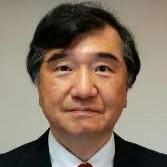
Satoru NISHIKAWA
JICA Senior Advisor for Disaster Risk Reduction Policy and Recovery, Japan
JICA Senior Advisor for Disaster Risk Reduction Policy and Recovery, full professor at Disaster Mitigation Research Center of Nagoya University. His obtained various positions in Government service and other institutions (UN-DHA, ADRC, MLIT etc.) and at the wake of the Indian Ocean Tsunami in December 2004, coordinated the Japanese Government technical assistance to the affected countries, all related to disaster risk management.
View Profile
Close
close

SUNČANA HABRUN
Head of Sector, Ministry of Physical Planning, Construction and State Assets, Croatia
Architect with 30 years of experience in private sector and within national bodies responsible for physical planning. Key responsibilities comprise analytical work, and reporting, as well as the development, enhancement, and redesign of the Physical Planning Information System and its various components. Professional interests include application of GIS-tools for improvement and standardization of the spatial planning system in Croatia, and the monitoring of spatial situation.
View Profile
Close
close

ALJOŠA ŠPALETA
Deputy Project Manager, Ministry of Culture and Media, Croatia
Architect and policy specialist working on the issues
of cultural heritage, urban planning, and digital
transformation. Engaged in the project management
of
Croatia’s Recovery and Resilience investment in public
sector innovation, including the development of
national GIS-based digital system for heritage.
Professional focus includes heritage-led regeneration,
GIS integration, and regulatory frameworks that align
cultural preservation with sustainability,
accessibility, and innovation.
View Profile
Close
close

Masahiko MURATA
Specially Appointed Professor, Kansai International University, Hyogo Prefecture, Japan
Specially Appointed Professor, Kansai International University, Hyogo Prefecture. As a civil engineer working for the Hyogo Prefecture, mainly worked in urban development and have contributed to the reconstruction of disaster-stricken areas and disaster prevention and mitigation sharing his experience of reconstruction after the Great Hanshin-Awaji Earthquake. Utilizing his work experience in the field of disaster prevention, he provide safety and security education to university students.
View Profile
Close
close

JELKA TEPŠIĆ
Deputy Mayor, City of Dubrovnik, Croatia
Deputy Mayor of Dubrovnik City from 2017, responsible
for tourism, sustainability, and culture. Serves as
honorary consul of Spain since 2014. By training
professor of the Spanish language, literature, and
comparative literature with over 30
years’ experience in tourism, communication, media,
and marketing. During her work in past years, the city
has been developing strategic, long-term project
called “Respect the
City”.
View Profile
Close
close

Mihaela SKURIĆ
Director, Institute for the restoration of Dubrovnik, Croatia
Civil engineer and university specialist in architecture and urbanism with 20 years of experience in heritage building restoration. As the director of the Institute for the Restoration of Dubrovnik since 2018, she manages cultural heritage reconstruction projects funded by governmental and local authorities and EU funds. As Chair of the executive management board for the WHS the Old City of Dubrovnik, she is successfully implementing its first Management Plan.
View Profile
Close
close

Ivana Katurić
Director, Urbanex Ltd. Croatia
Associate Professor at the University of Rijeka, director of Urbanex- independent think tank, consultancy and research organisation in the field of sustainable urban development. Works in the field of urban regeneration, spatial planning and resilience for the World Bank, the EBRD, the Joint Research Centre of the Europea Commission and many others. She is a member of ICOMOS and the Climate Heritage Network and has worked on the topics of resilient settlements for WHS.
View Profile
Close
close
The Future of Community and Mobility Week
"RESILIENT SETTLEMENT: PREVENTION AND RECONSTRUCTION LESSONS LEARNED FROM JAPAN AND CROATIA" (panell discussion)
The resilience of settlements to natural disasters is key to
reducing long-term damage and ensuring faster recovery. This
workshop explores strategies and approaches to disaster
prevention and reconstruction
through the lens of Japan and Croatia, two countries that have
faced significant challenges and developed innovative
solutions in response to various natural hazards. Japan, often
hit by earthquakes, tsunamis and
typhoons, has become a global leader in disaster preparedness
and recovery. Croatia, located in a seismically active zone
and with a history of devastating floods, offers valuable
insight into reconstruction efforts after natural disasters.
The special focus of the workshop will be on cultural heritage
and UNESCO's guidelines for sites on the World Heritage
List. By examining the experiences of both countries, the
event aims to identify key lessons that can be applied
globally to build more resilient communities, where the
development and implementation of new solutions are supported
by smart systems of publicly available data.
-
2025.05.26[Mon]
14:00~16:30
(Venue Open 13:30)
- Theme Weeks Studio
OTHER PROGRAM
The Future of Community and Mobility Week