The Future of Community and Mobility Week
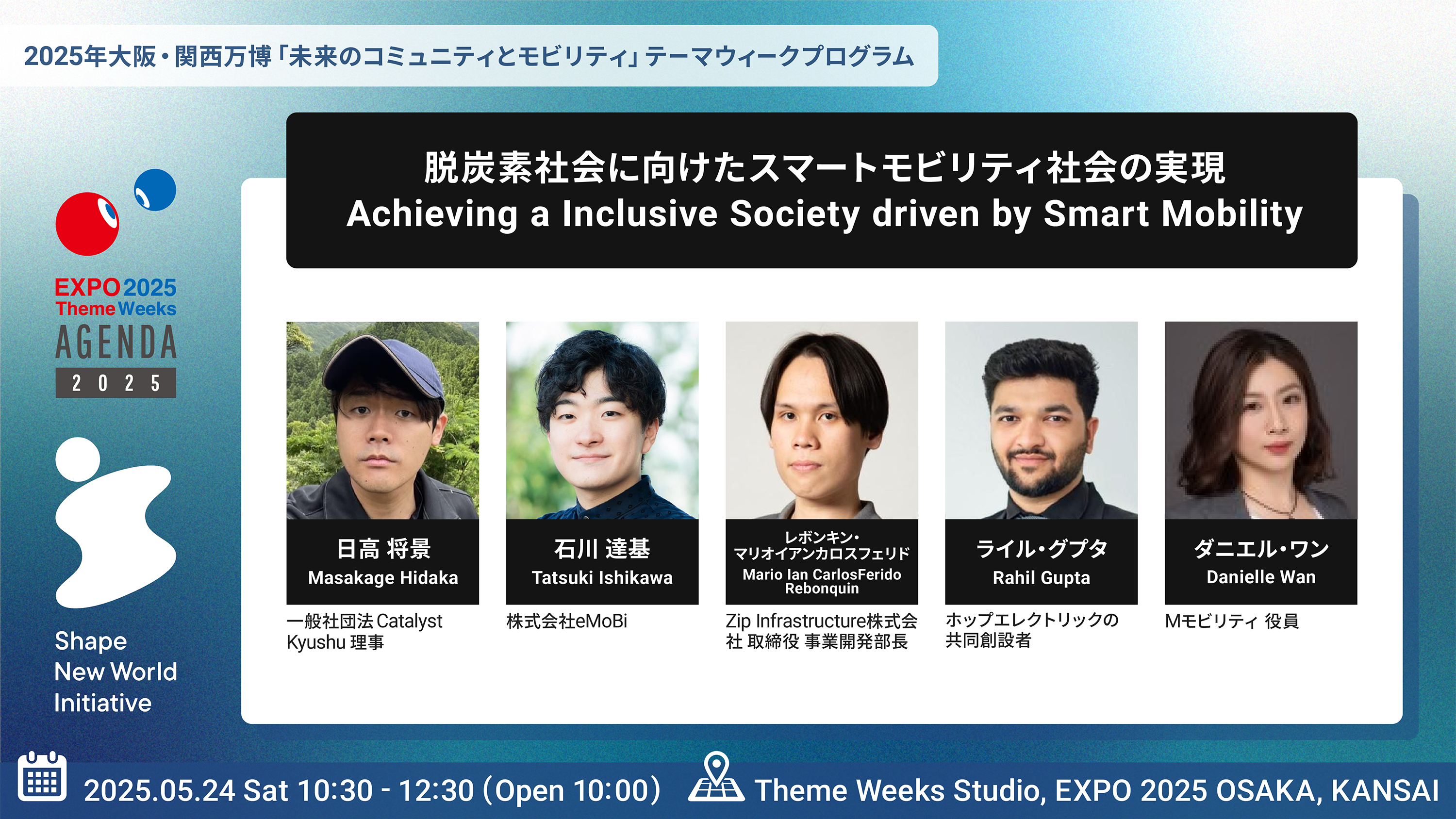
Achieving a Inclusive Society driven by Smart Mobility
Agenda 2025 Co-created Programme
Shape New World Initiative
[The Vision for 2050]
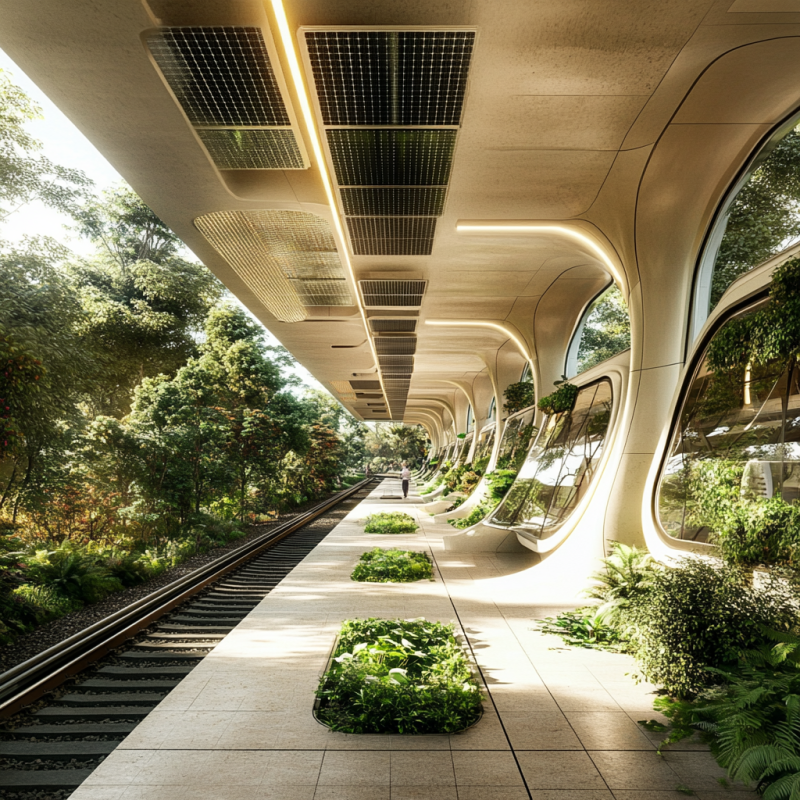
A smart mobility society for a decarbonized society
envisions a world where people's mobility and
lifestyles are supported while minimizing environmental
impact, enabling diverse and affluent lifestyles. Autonomous
driving, electrification, and mobility systems linked to
urban data will realize “human-centered mobility” that
fosters not only efficiency but also connection and
creativity among residents. A way of mobility that is in
tune with individual lifestyles and in harmony with local
individuality and culture will form a society that
seamlessly links urban and rural areas. Aiming for such a
future, mobility will evolve from being merely a means of
transportation to a platform that brings out the richness of
society and humanity.
Recorded video available
Discussion
- Smart cities
- EV/FCV
- Digital garden cities
| Transmission of simultaneous interpretation | Provided |
|---|---|
| Language of interpretation | Japanese and English |
-

Agenda2025
Co-created Programme
-
Time and
Date of
the event -
-
2025.05.24[Sat]
10:30 ~ 12:30
(Venue Open 10:00)
-
- Venue
- Theme Weeks Studio
Programme details
*Subtitles: Choose “Subtitles/CC” in the “Settings” (gear
icon) at the bottom right of the YouTube video.
*Subtitles may not show with multiple languages or overlapping
audio.
Looking ahead to a decarbonized society in 2050, we will
consider how smart mobility will transform society and enrich
our daily lives. In this program, discussions will focus not
only on the latest technological trends and possibilities for
data utilization, but also on harmonization with local culture
and human values. We will delve deeply into the role of
“mobility” as a key to shaping the future and to realize a
sustainable and inclusive society.
1. Smart Mobility Status and Challenges: The latest trends in
smart mobility technologies will be introduced and the current
challenges and possibilities will be discussed. It will
explain how technological advancements such as autonomous
vehicles, electric mobility, and mobility-as-a-service (MaaS)
are transforming the way we get around. It will also discuss
the challenges posed by these technologies (cost,
infrastructure development, data security, etc.) and
approaches to solving them.
2. Harmonization with local culture and environment: We will
consider the integration of smart mobility with the unique
local culture and natural environment. While efficiency is
required in urban areas, it is important for rural areas to
provide mobility options that take advantage of local
attractions and characteristics. This session will discuss how
mobility design can seamlessly connect urban and rural areas
and respect local lifestyles and cultures. Using real-life
examples, we will explore how technology can contribute to
local sustainability and community revitalization.
3. Building an inclusive and creative mobility society: This
is the key to realizing a society where all people can enjoy
the freedom of movement equally. This session will discuss
designs and services that are accessible to diverse
populations, including the elderly, people with disabilities,
and children. We will also discuss specific ideas for
improving the quality of the mobility experience.
Agenda
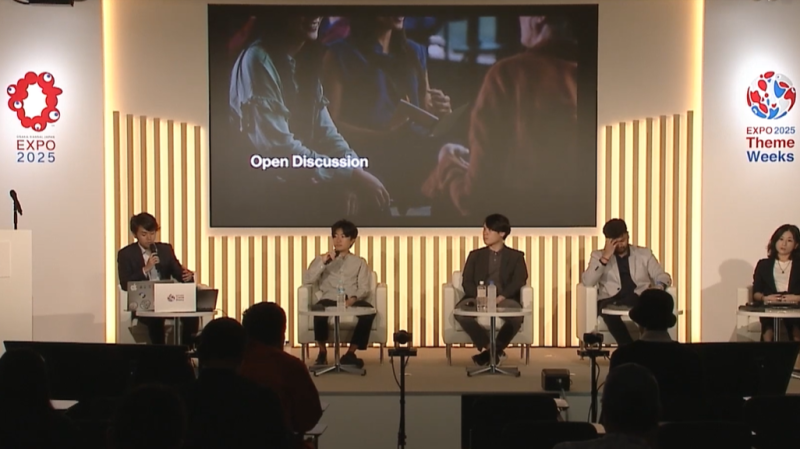
1. Introduction (5 minutes)
2. Panel Discussion: Achieving Smart Mobility for a
Decarbonized Society (90 minutes)
・Panelist introductions (10 minutes each × 5)
・Talk sessions (10 minutes each × 4 sessions)
3. Q&A Session (20 minutes)
4. Closing Remarks (5 minutes)
Reports
【Reflection】
In this programme, ‘Realising a Smart Mobility Society for a
Decarbonised Society,’ discussions were held from a
multifaceted perspective on the role and potential of mobility
in building a decarbonised society with a view to 2050. The
theme was ‘Future Communities and Mobility,’ and the
discussion explored human-centred mobility using the latest
technologies such as autonomous driving, electrification, and
the use of urban data.
Speakers included entrepreneurs and experts from Japan and
overseas who are at the forefront of EV, ropeway-type
transportation systems, smart infrastructure, and mobility
design. What was particularly impressive was the perspective
of ‘human-centred mobility,’ which emphasises not only
efficiency but also harmony with local culture and the natural
environment. This made it clear that smart mobility can
contribute not only to urban areas but also to the sustainable
development of rural areas.
Additionally, through examples from Southeast Asia and Taiwan,
approaches to the social implementation of mobility tailored
to diverse national and regional contexts were introduced,
deepening global-level issue-sharing and mutual understanding.
Discussions on the quality and inclusivity of mobility
experiences provided important insights for mobility design
that supports the lives of diverse people.
This dialogue served as an opportunity to reaffirm the
potential of mobility as a ‘co-creation platform’ that
supports social inclusion, regional revitalisation, and
cultural preservation, rather than merely a means of
transportation.
【Post EXPO Initiatives】
Based on the discussions in this programme, the organisers and
speakers shared their plans to promote the following
initiatives after the Expo, with the aim of realising a
sustainable and inclusive society centred on smart
mobility.
First, promoting projects for the social implementation of
mobility that harmonises with regional culture and the
environment. Companies and start-ups that are already engaged
in such initiatives will collaborate with local governments
and research institutions to conduct demonstration experiments
of mobility services and design systems through co-creation
with local residents. This is expected to lead to the
establishment of sustainable mobility infrastructure rooted in
the community.
Second, the development and dissemination of technologies for
a decarbonised society. In addition to the introduction of EVs
and smart infrastructure, the development of
low-environmental-impact mobility systems will be accelerated
through the integration of renewable energy and the
utilisation of MaaS. Furthermore, with a view to the
international expansion of these technologies, efforts are
underway to strengthen cooperation with Asian countries.
Thirdly, the promotion of ‘inclusive design’ that allows
everyone to enjoy freedom of mobility. Emphasis is being
placed on the design of mobility that can be used safely by
everyone, including the elderly, people with disabilities, and
children, as well as research and development of UX that
improves the quality of the mobility experience. Companies,
local governments, and civic groups are collaborating to
create a universal mobility environment.
Furthermore, as an educational approach for the younger
generation who will lead the next generation, workshops and
outreach lectures on the themes of mobility and
decarbonisation are also being planned. This is expected to
enhance young people's understanding of climate change
and their awareness of participation, fostering a foundation
for co-creating the future society.
These initiatives go beyond mere technological innovation,
representing the first step toward the social implementation
of a ‘new way of mobility’ that connects people and harmonises
with culture and the environment. It is anticipated that these
efforts will continue to evolve through ongoing collaboration
and practice even after the Expo.
*Part or all of this report was generated by AI.
Cast
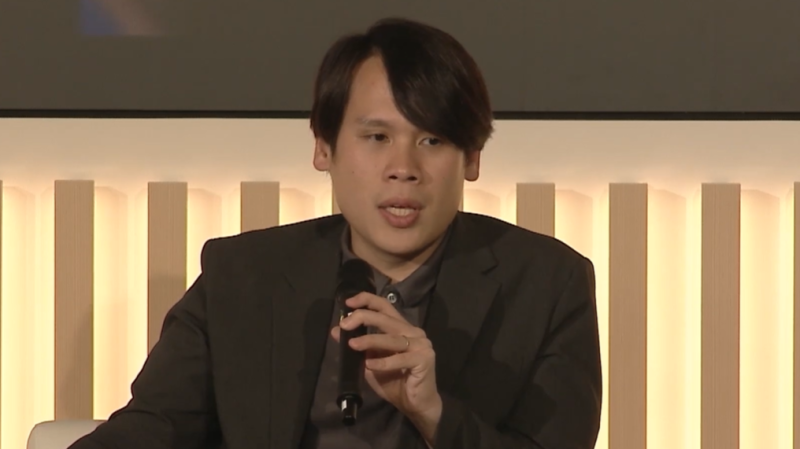
Moderator

Masakage Hidaka
Director, Catalyst Kyushu (General Incorporated Association)
Born in Nagasaki, 2000. After entering the University of Tokyo, while studying at the University of Tokyo, he founded eMoBi Inc. in December 2020, providing a three-seater electric vehicle (EV) rental service called eMoBi.
View Profile
Close
close
Speakers

Tatsuki Ishikawa
eMoBi Co., Ltd.
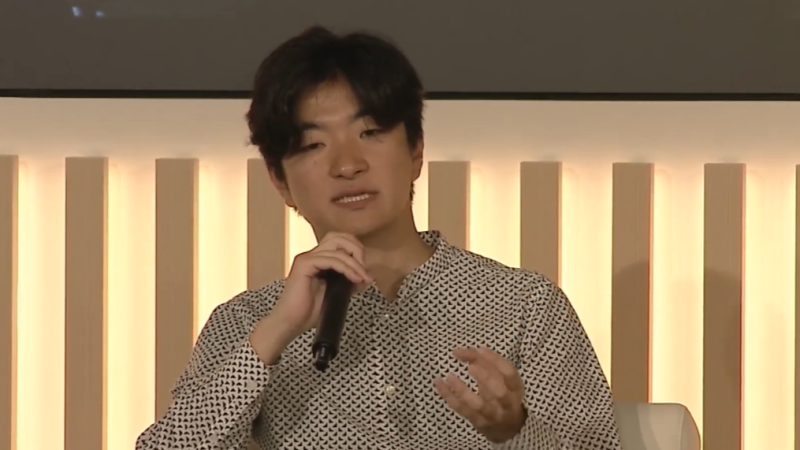
Tatsuki Ishikawa's company, which he started while studying at Tokyo University in 2020, manufactures electric versions of Thailand's three-wheeled "tuktuk" auto rickshaws and offers them for rent in over a dozen Japanese tourist destinations including Kamakura and Okinawa. On weekends, the fee is $33.55 (¥5,000) for two hours and $13.40 for another hour, less on weekdays. In September, eMoBi received ¥100 million ($700,000) from the venture arm of credit card giant Credit Saison, Saison Ventures, bringing total funds raised to ¥295 million.
View Profile
Close
close

Mario Ian Carlos Ferido Rebonquin
Director & Head of Business Development
Born in the Philippines in 1997 and moved to Japan at the age of 10. Graduated from Aoyama Gakuin University’s School of Business and began a career at Mitsubishi Heavy Industries, Ltd. Contributed to various domestic and international transportation projects, including the Yurikamome New Transit Line and the Macau Light Rail Transit (LRT). Joined Zip Infrastructure in 2022, currently focusing on the social implementation of Zippar, with the aim of alleviating traffic congestion in the Philippines and around the world.
View Profile
Close
close

Rahil Gupta
Co-Founder at Hop Electric
Rahil Gupta is a seasoned professional in energy transition and sustainable mobility, with extensive experience in climate tech and innovative solutions for a low-carbon future. He has been instrumental in supporting Hop Electric’s mission to transform last-mile mobility in India by providing accessible, affordable, and smart electric two-wheelers. These solutions have empowered Indian customers with sustainable and cost-effective mobility options while addressing critical environmental challenges. With a focus on innovation and collaboration, Rahil envisions a future where mobility is more engaging, interconnected, and sustainable, driven by partnerships that integrate clean energy and cutting-edge technology to reshape the way we move.
View Profile
Close
close

Danielle Wan
M Mobility Ltd.
Danielle Wan is Director of Business Development at M Mobility Ltd., leading EV and ecosystem projects in Japan with plans to scale across Asia. She brings over a decade of experience from Foxconn Group, where she headed key business accounts and led a 20+ local management team during long-term assignments in Ireland and the Czech Republic. A graduate of the University of Warsaw, Danielle blends global perspective with operational expertise. From 2- to 4-wheeler EVs and infrastructure, she is shaping scalable, sustainable mobility solutions to be replicated in Taiwan and beyond.
View Profile
Close
close
The Future of Community and Mobility Week
Achieving a Inclusive Society driven by Smart Mobility
Agenda 2025 Co-created Programme
[The Vision for 2050]
A smart mobility society for a decarbonized society envisions
a world where people's mobility and lifestyles are
supported while minimizing environmental impact, enabling
diverse and affluent lifestyles. Autonomous driving,
electrification, and mobility systems linked to urban data
will realize “human-centered mobility” that fosters not only
efficiency but also connection and creativity among residents.
A way of mobility that is in tune with individual lifestyles
and in harmony with local individuality and culture will form
a society that seamlessly links urban and rural areas. Aiming
for such a future, mobility will evolve from being merely a
means of transportation to a platform that brings out the
richness of society and humanity.
-
2025.05.24[Sat]
10:30~12:30
(Venue Open 10:00)
- Theme Weeks Studio
OTHER PROGRAM
The Future of Community and Mobility Week