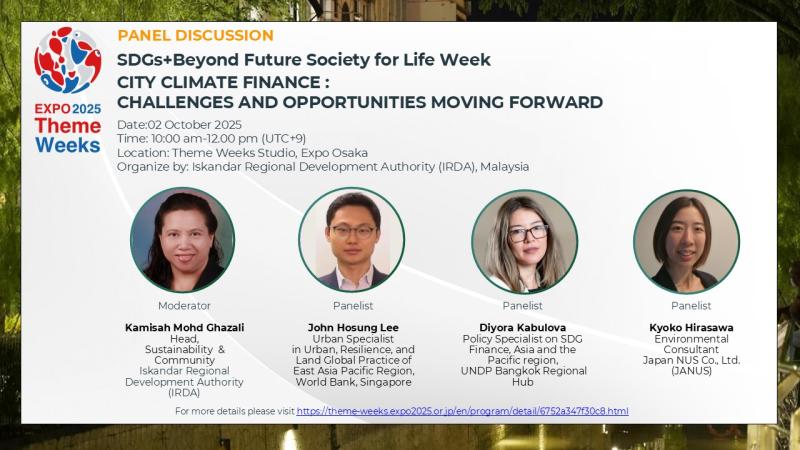
SDGs+Beyond Future Society for Life Week
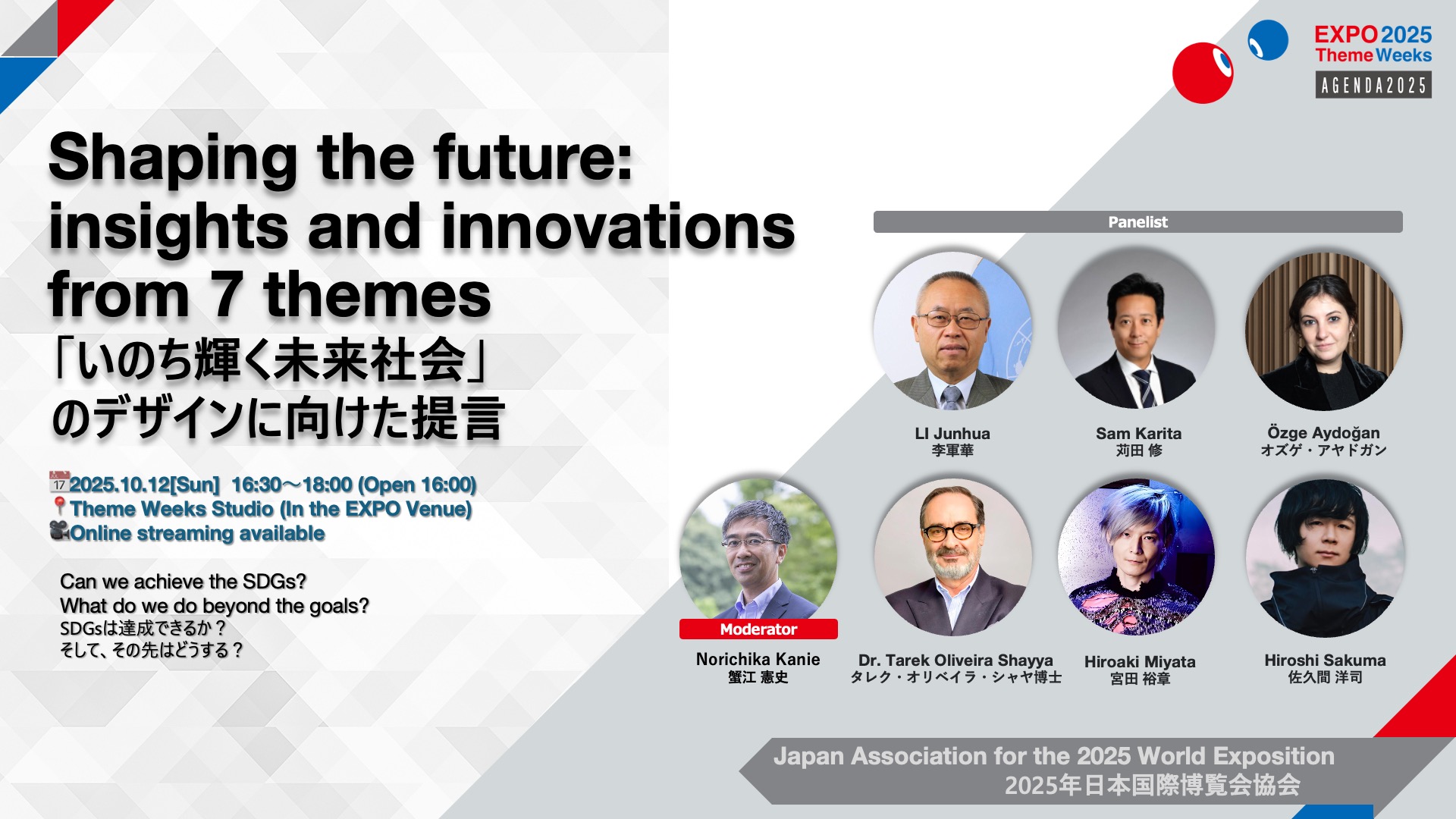
Shaping the future: insights and innovations from 7 themes
Japan Association for the 2025 World Exposition
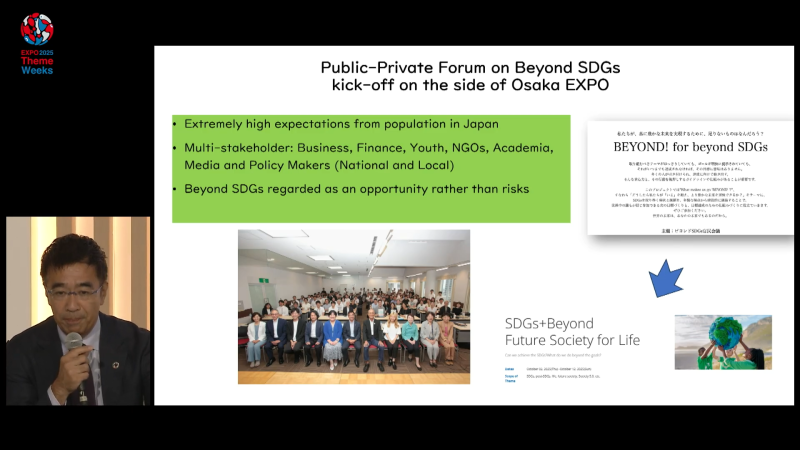
The programme, together with the General Sponsors, explores: 'Can we achieve the SDGs? What do we do beyond the goals?'
Recorded video available
Discussion
- Others
| Transmission of simultaneous interpretation | Provided |
|---|---|
| Language of interpretation | Japanese and English |
-

Agenda2025
Organised Programme
-
Time and
Date of
the event -
-
2025.10.12[Sun]
16:30 ~ 18:00
(Venue Open 16:00)
-
- Venue
- Theme Weeks Studio
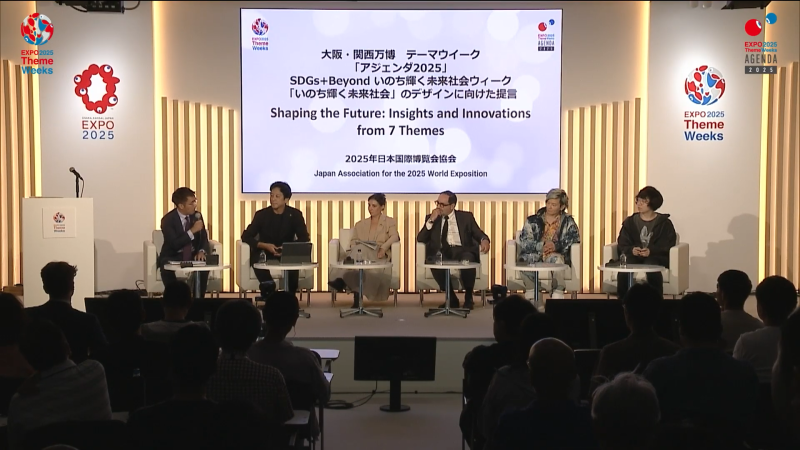
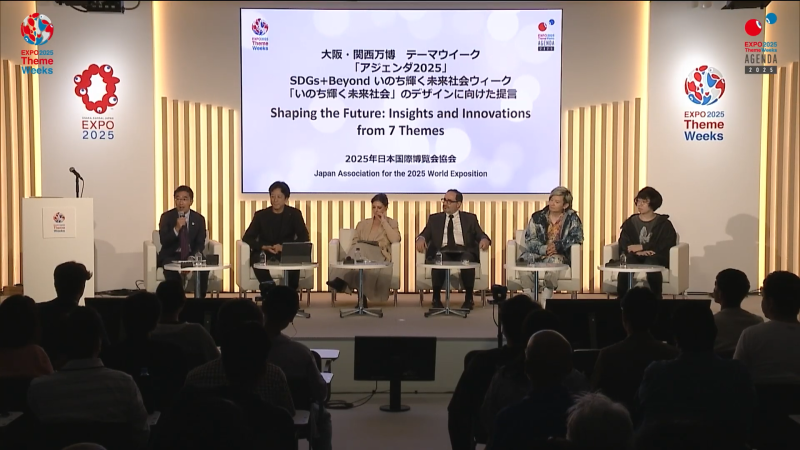
Programme details
*Subtitles: Choose “Subtitles/CC” in the “Settings” (gear
icon) at the bottom right of the YouTube video.*Subtitles may
not show with multiple languages or overlapping audio.
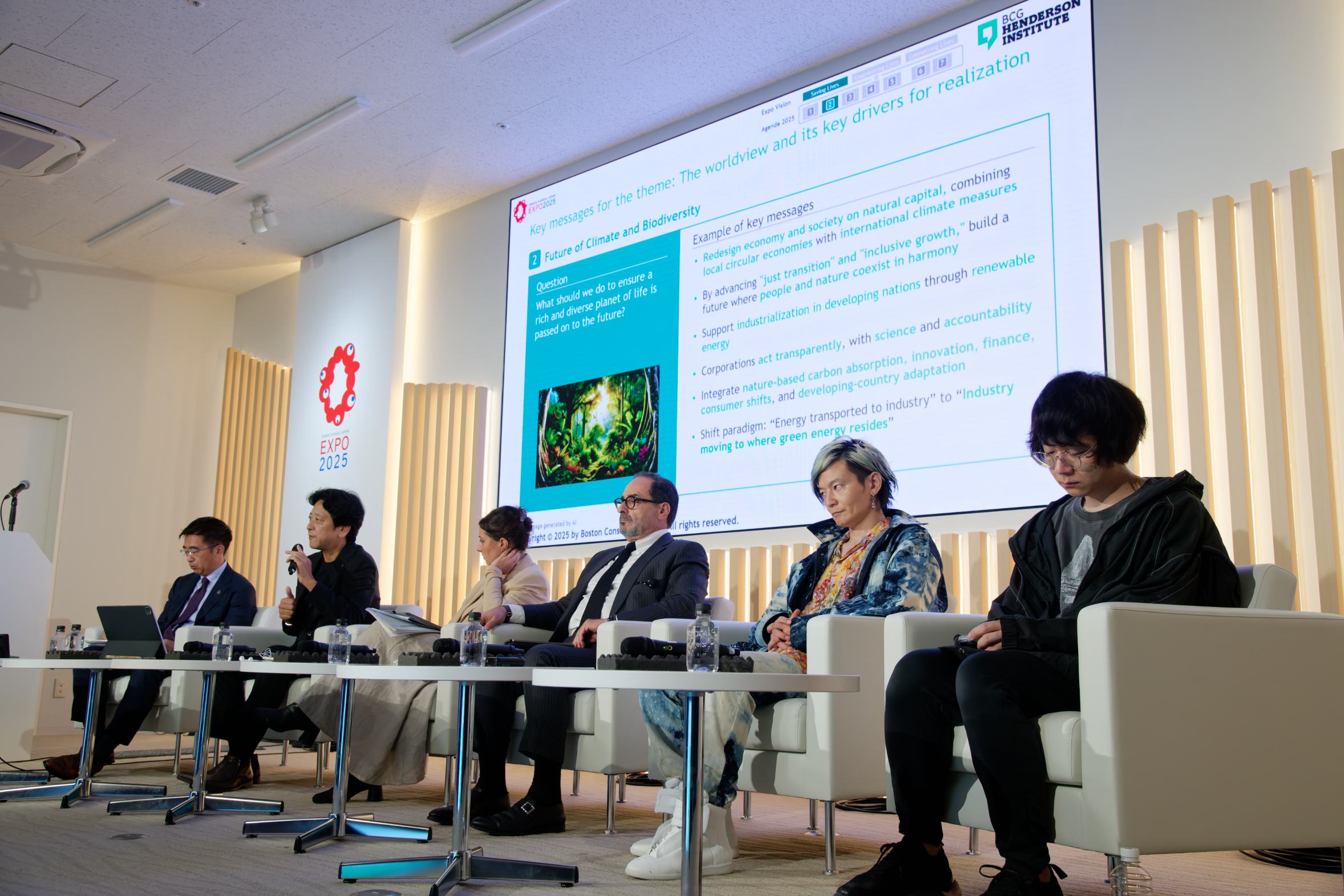
In this session, we will summarize the discussions from the
seven Theme Weeks and present recommendations for
"Designing Future Society for Our Lives." Beginning
with a keynote speech by a senior UN official, we will share
the outcomes demonstrated in the Theme Weeks and highlight key
messages for the future society. Furthermore, under the banner
of “SDGs+Beyond,” we will organize what new values and
perspectives can be presented for the world beyond the SDGs.
Finally, diverse speakers—including international
organizations, researchers, companies, and next-generation
leaders—will come together to discuss how the knowledge
gathered can be translated into concrete social impact.
Reports
【Program Summary】
This session was held as a platform to re-examine both the
challenges and hopes facing humanity as the year 2030—the
target year of the SDGs—approaches, and to share the
fundamental question of how to design the society that lies
beyond. Beginning with a keynote address by UN
Under-Secretary-General LI Junhua, the session featured
discussions among corporate leaders, researchers, cultural
figures, and youth representatives on building a “Regenerative
Society” that transcends the idea of sustainability.
Five key themes emerged from the discussions: well-being,
culture, co-creation, technology, and intergenerational
solidarity. The speakers agreed that the post-2030 society
should not focus solely on economic growth or environmental
protection, but rather on reconstructing relationships between
humanity and nature, the individual and the community, and the
present and the future. The Expo, as a space for experiential
learning, is a symbolic experiment in enabling visitors to
feel and co-create the future through their senses.
【Speaker Summary: LI Junhua】
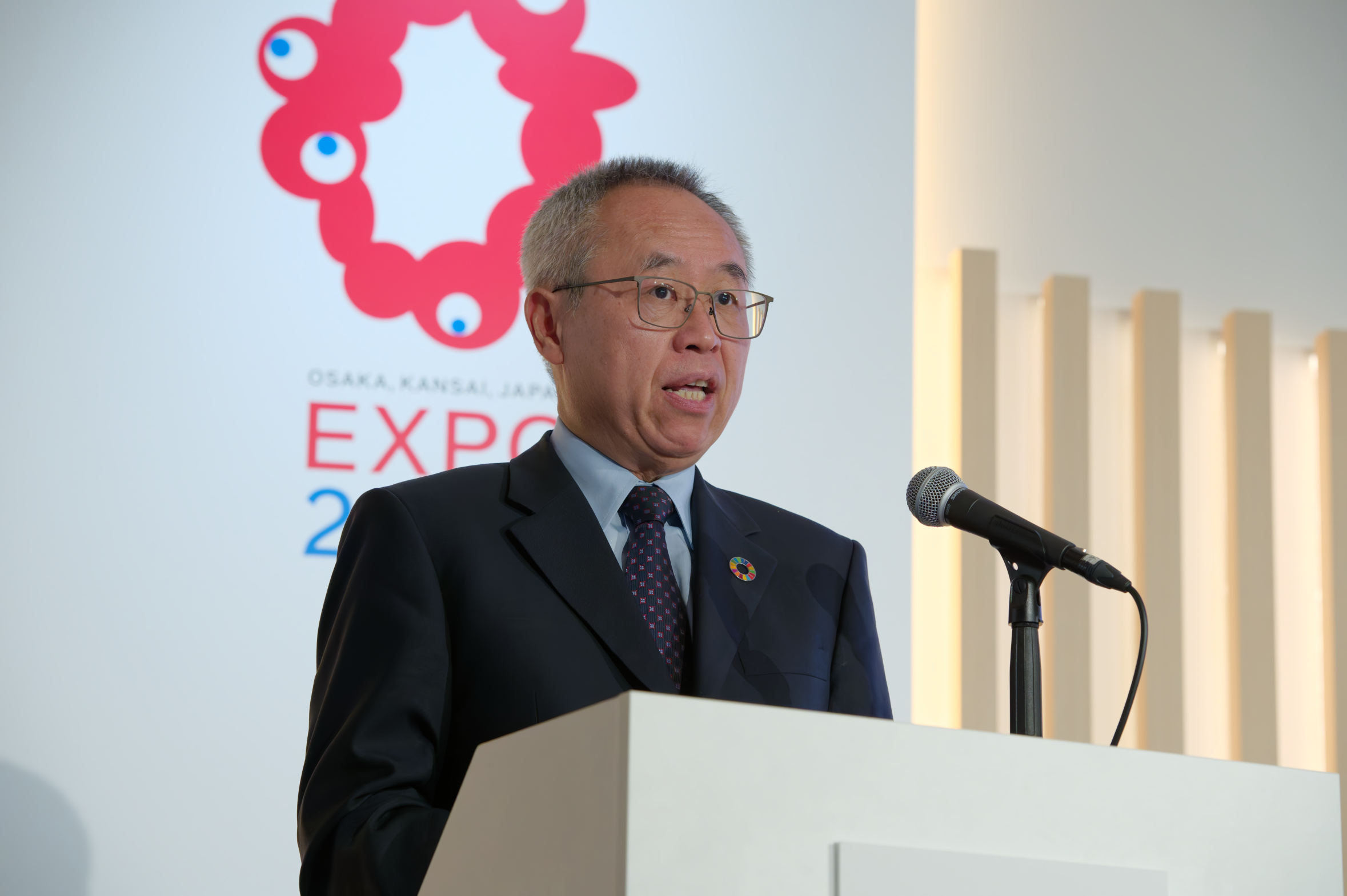
Under-Secretary-General LI Junhua analyzed the current state
of the 2030 Agenda based on the UN’s latest report, presenting
a clear picture of the multilayered crises facing humanity.
“We are living in an age of unprecedented transformation,” he
began, listing the intensification of the climate crisis,
geopolitical tensions, economic inequality, social distrust,
and the entrenchment of post-pandemic disparities. According
to the SDGs Progress Report, only 35% of the 17 goals are on
track or making moderate progress, nearly half are stagnant,
and around 18% are regressing. “At this rate, many of the
goals promised by the international community will remain
unachieved by 2030,” he warned.
Yet, amidst this pessimism, Li found seeds of hope. “Crisis is
also a catalyst for transformation,” he said, highlighting
local initiatives in Japan and beyond—municipal SDG Future
Cities, corporate innovation, SDG education in schools, and
youth-led social entrepreneurship. He emphasized that “it is
not systems or frameworks but human passion and collaboration
that will realize sustainability.”
He went on to explain the significance of the Pact for the
Future, adopted in 2024, founded on three
principles—solidarity, inclusion, and sustainability—as a new
guideline for international cooperation beyond 2030. “The Pact
calls not only for institutional reform but also for the
reconfiguration of our thinking and relationships,” he said,
stressing a shift from state-driven development to
network-based collaboration across local governments,
corporations, civil society, and academia.
Li also highlighted the role of the Independent Group of
Scientists, which supports evidence-based policymaking, and
praised the contribution of Japanese researchers, including
Professor Kanie. “The bridge between science and policy is not
merely about knowledge transfer but about catalyzing social
transformation,” he said, calling for a “human-centered
science” that harmonizes evidence and values. He concluded
with three guiding principles: Share, Shape, and Shine—sharing
knowledge and experience, shaping society collaboratively, and
allowing the outcomes to shine as human well-being. “This
philosophy, emanating from Osaka-Kansai, is a beacon of hope
in an era of division and a compass for our shared future,” he
concluded to strong applause.
【Speaker Summary: Norichika Kanie】
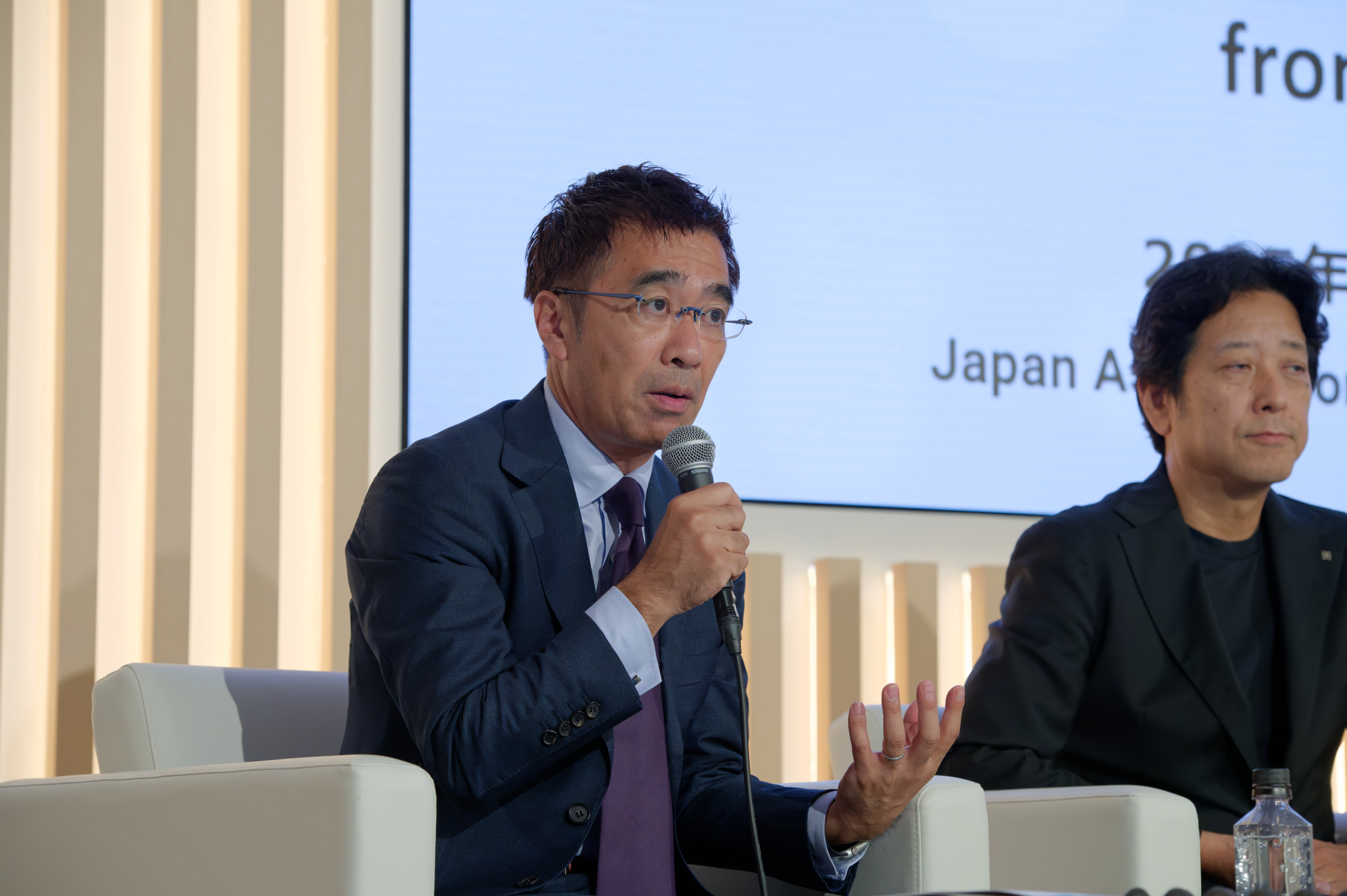
Professor Norichika Kanie (Keio University), as moderator, set
the direction and framework of the session, clarifying the
significance of entering an era of “co-creation” that goes
beyond 2030 on the basis of the SDGs. “It is human
relationships that will shape the post-2030 society,” he said
at the outset, framing the session’s theme.
Summarizing insights from across the Theme Weeks, he observed
that “the EXPO clarified the importance of co-creation and
co-being, which are wanted by many, as well as the very
importance of dialogue.’” He emphasized that we must move to
the stage of sharing and respecting diverse values across
culture, science, and ethics. He defined conceptual basis in
the era of “SDGs + Beyond” as a shift from human-centered to
life-centered approaches, aligning with the Expo’s philosophy
of “Designing Future Society for Our Lives.”
Throughout the session, Kanie linked the remarks of other
speakers: echoing Li’s global perspective, he noted that
“global challenges can only be solved through local action,”
stressing collaboration among municipalities, businesses, and
citizens. In response to Sam Karita’s point on culture and
co-creation, he said, “Culture transcends systems; it is the
strongest catalyst for social change.” Referring to Özge
Aydoğan’s vision of a regenerative society, he added, “A
society aiming for regeneration that goes beyond
sustainability embodies the true spirit of the beyondSDGs
era.”
He concluded by positioning the Expo as a “laboratory for
social experimentation,” where technology and humanity,
emotion and reason, and individuality and community intersect.
“Data expands our knowledge, and culture expands our heart.
Only when the two are connected does society evolve,” he said,
advocating the fusion of science and culture.
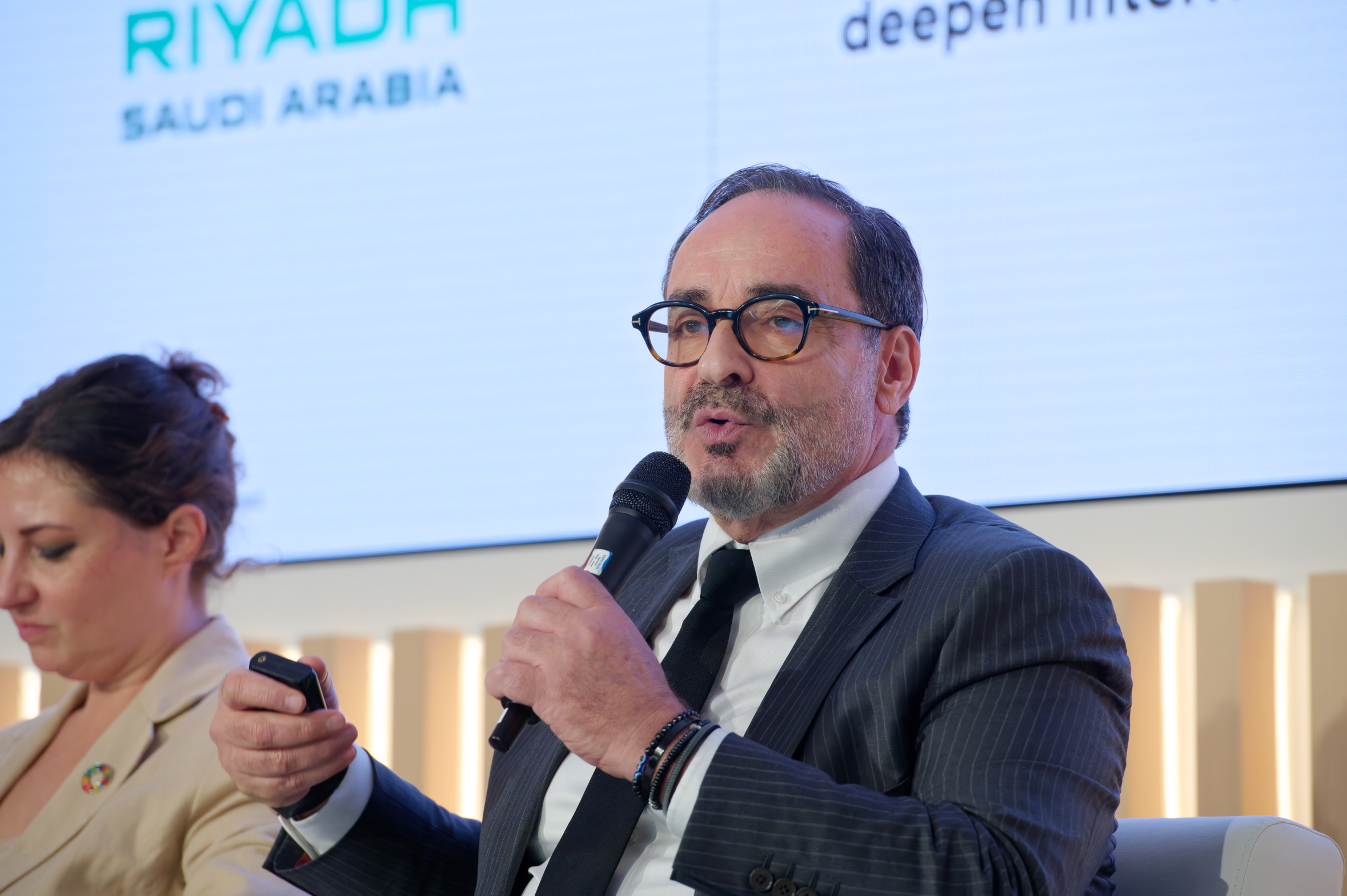
【Speaker Summary: Sam Karita】
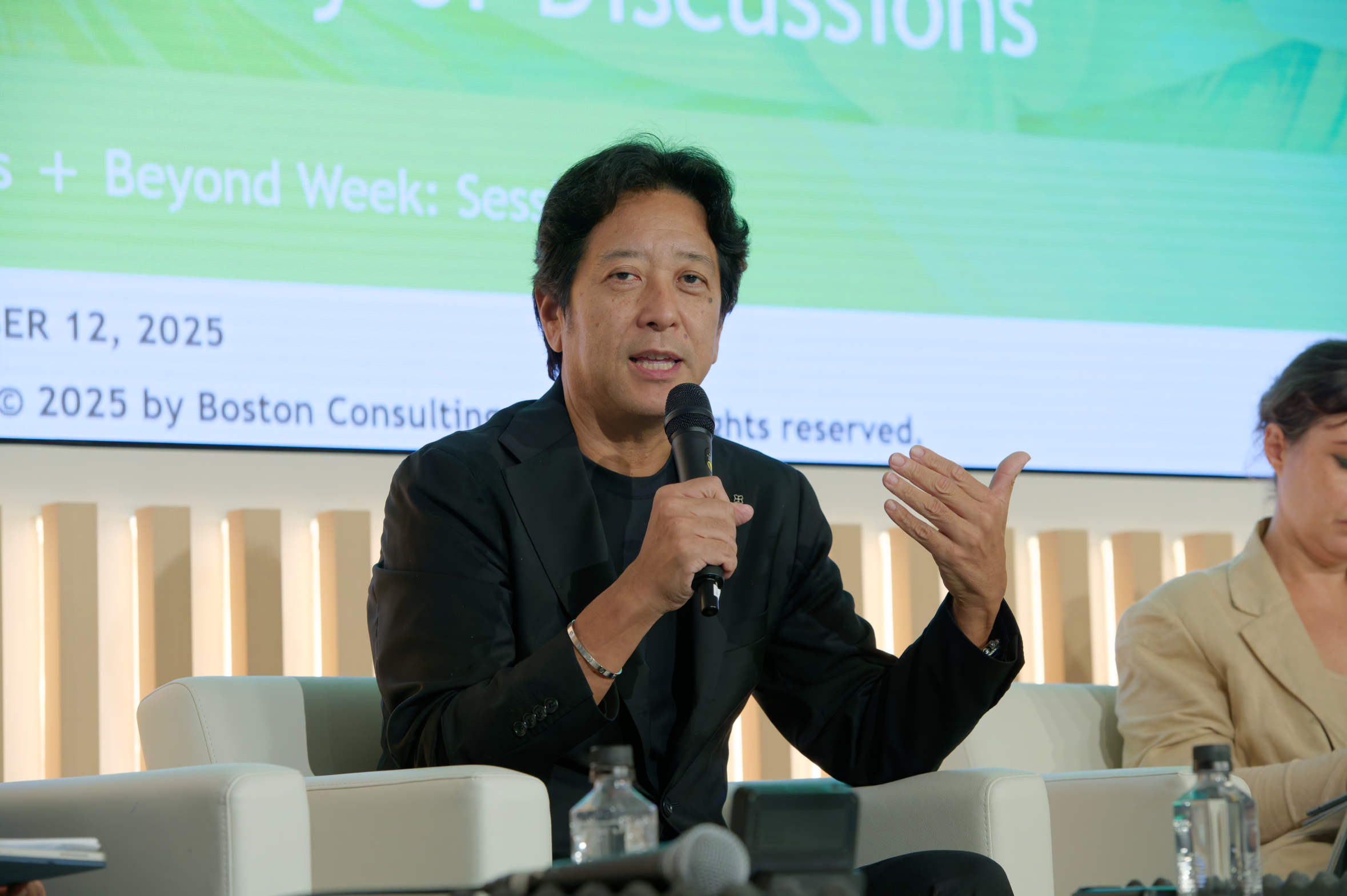
As overall coordinator of the Theme Weeks, Sam Karita
reflected on the insights gained from 24 programs involving
127 speakers. He began by presenting the Expo’s three core
principles—saving life, nurturing life, and connecting
life—and noted that each Theme Week had embodied these
principles in its unique way. “Expo 2025 Osaka, Kansai is not
an exhibition but a dialogue—a shift from sharing issues to
co-creating actions,” he stated.
In sessions addressing peace, human rights, and dignity, he
highlighted the central theme of designing a “society of
coexistence based on diversity.” In discussions on climate
change and biodiversity, a paradigm shift was proposed to
connect regional circular economies with global supply
chains—“In the coming era, industries will gather where energy
exists, not transport it.”
In health and well-being, he pointed out the transition from
“curing disease to cultivating happiness,” enabled by advances
in digital technology. In learning and play, he summarized
that the essence of human learning lies not in acquiring
knowledge but in nurturing empathy and creativity. In food and
ethical living, a “symbiotic model between culture and
economy” was proposed through ethical consumption and local
resource cycles.
Integrating these discussions, Karita derived four keywords:
culture, empathy, solidarity, and co-creation. “It is culture,
not systems, that transforms society,” he stressed, concluding
that when people connect through culture, true transformation
occurs. “Designing a future society means linking science and
culture to enhance the total sum of life,” he said, defining
Expo 2025 as an “experimental ground for social transformation
based on cultural solidarity.”
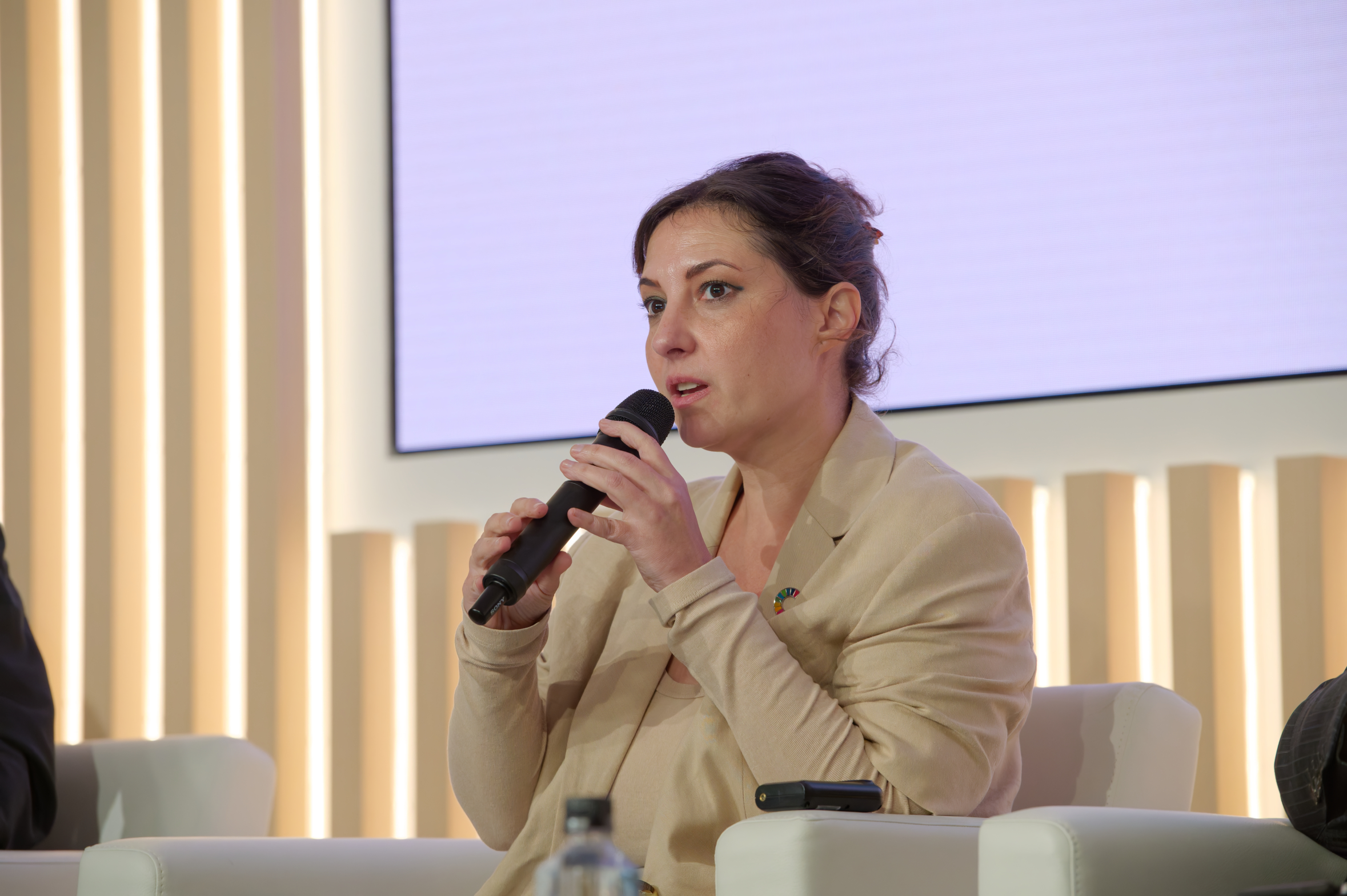
【Speaker Summary: Özge Aydoğan】
Özge Aydoğan, Director of Beyond Lab at the United Nations in
Geneva, proposed a new framework for a “Regenerative Future,”
which inherits and evolves the spirit of the SDGs. “The SDGs
represent humanity’s most comprehensive agreement in history,
yet they now require renewal,” she said, emphasizing the need
to evolve the goals rather than merely preserve them.
Aydoğan described the evolution of sustainability in three
phases: (1) the MDGs, focused on economic growth; (2) the
SDGs, promoting integration and inclusion; and (3) the
post-SDGs era, characterized by regeneration. “We must move
beyond sustaining what exists to healing and revitalizing what
has been damaged,” she stated.
Based on youth research by Beyond Lab, she noted that
Generation Z and Millennials prioritize well-being, empathy,
slow living, cultural inclusion, and intergenerational
ethics—valuing the quality of connection over material
affluence. “Young people seek not numbers but meaning,” she
said, calling for the development of “Beyond GDP” indicators
and policies protecting cultural diversity.
She also raised the issue of ethical technology use: “AI and
data must serve human happiness; unchecked efficiency breeds
new inequality.” She called for “value-driven innovation”
through collaboration among science, culture, and policy,
presenting Beyond Lab’s international cooperation model. “The
future is not to be predicted but to be designed together,”
she said, concluding that building a regenerative society
founded on empathy and solidarity is humanity’s next great
task.
【Speaker Summary: Tarek Oliveira Shayya】
Drawing from his experience as former Vice Chairman of Expo
2020 Dubai, Dr. Tarek Shayya passionately described the role
of Expos as an “architecture of human co-creation.” “An Expo
is not an exhibition but a platform for humanity to converse
and build hope together,” he emphasized, recalling the guiding
vision of Expo 2020 Dubai—Connecting Minds, Creating the
Future—which naturally connects to Osaka’s theme of “Designing
Future Society for Our Lives.”
He reflected that Expo 2020 brought together 192 nations—a
convergence of the world’s most diverse cultures and values.
What mattered most, he said, was not competition but “dialogue
based on empathy and trust.” “The Expo’s mission is to
visualize our collective willingness to act together across
borders,” he said, quoting an African proverb: “If you want to
go fast, go alone. If you want to go far, go together.”
Shayya proposed that future Expos should aim not only for
sustainability but for regeneration. “Sustainability may
preserve the status quo, but regeneration repairs what was
broken and nurtures new relationships through empathy,” he
said. “True innovation lies not in technology itself but in
how it supports human happiness and solidarity.” He emphasized
that innovation emerges at the intersection of technology,
renewable energy, and cultural exchange.
Expressing his expectations for Osaka-Kansai Expo, he stated,
“Japan’s long-cultivated spirit of Wa—harmony—has the power to
reconnect a divided world.” “The challenge that began in Dubai
will be carried forward in Osaka and then passed to Riyadh.
This relay of hope is the true legacy of the Expo,” he
concluded. His words reflected a deep philosophy that frames
Expos not merely as international events but as “acts of
dialogue that sustain humanity’s belief in the future.”
【Speaker Summary: Hiroaki Miyata】
As General Producer of the Theme Projects, Hiroaki Miyata
articulated a vision of the future society based on the
philosophy of “experience, not exhibition” and “empathy, not
knowledge.” “The future is not designed by someone but emerges
from the relationships between people and between lives,” he
said, proposing a shift from human-centered to
relationship-centered design.
He introduced his cross-disciplinary project Design for
Empathy, which bridges science, design, art, and social
practice. It aims to restore the “capacity to feel others,”
which tends to be lost in the age of AI and data. “The more
technology evolves, the more essential empathy becomes,” he
emphasized. He described his approach as integrating “the
structure of the world” revealed by data with “the meaning of
the world” expressed through art.
Referring to the architectural design of the Expo’s Grand Roof
and tranquil spaces, he said, “In an age of information
overload, silence and empty space awaken emotion.” For him,
the Expo is not a display venue but a “space of connection,”
where visitors encounter the future through sensory and
emotional experience—a “device for empathy.”
He described data as “the nervous system of society” and
empathy as “its heart,” proposing a society of well-being that
integrates the digital and the emotional. “By accumulating
data on human experiences, cities and policies should evolve
around empathy,” he said, positioning technology as a “medium
of connection” rather than a tool of efficiency. He concluded,
“A future society that lets life shine is sustained by
imagination that feels others’ pain and empathy that bridges
differences. The future is transformed not by technology but
by the design of empathy.”
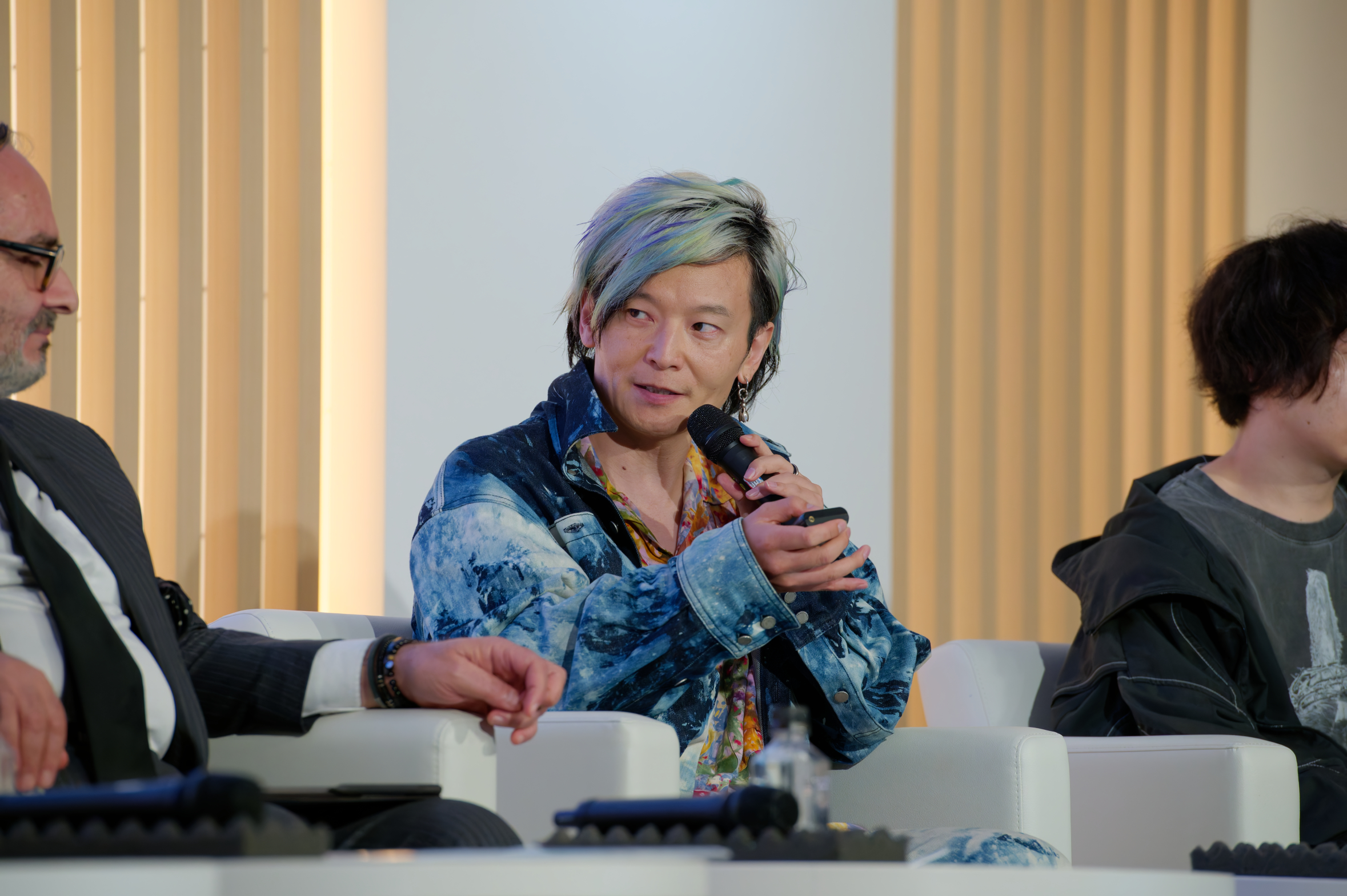
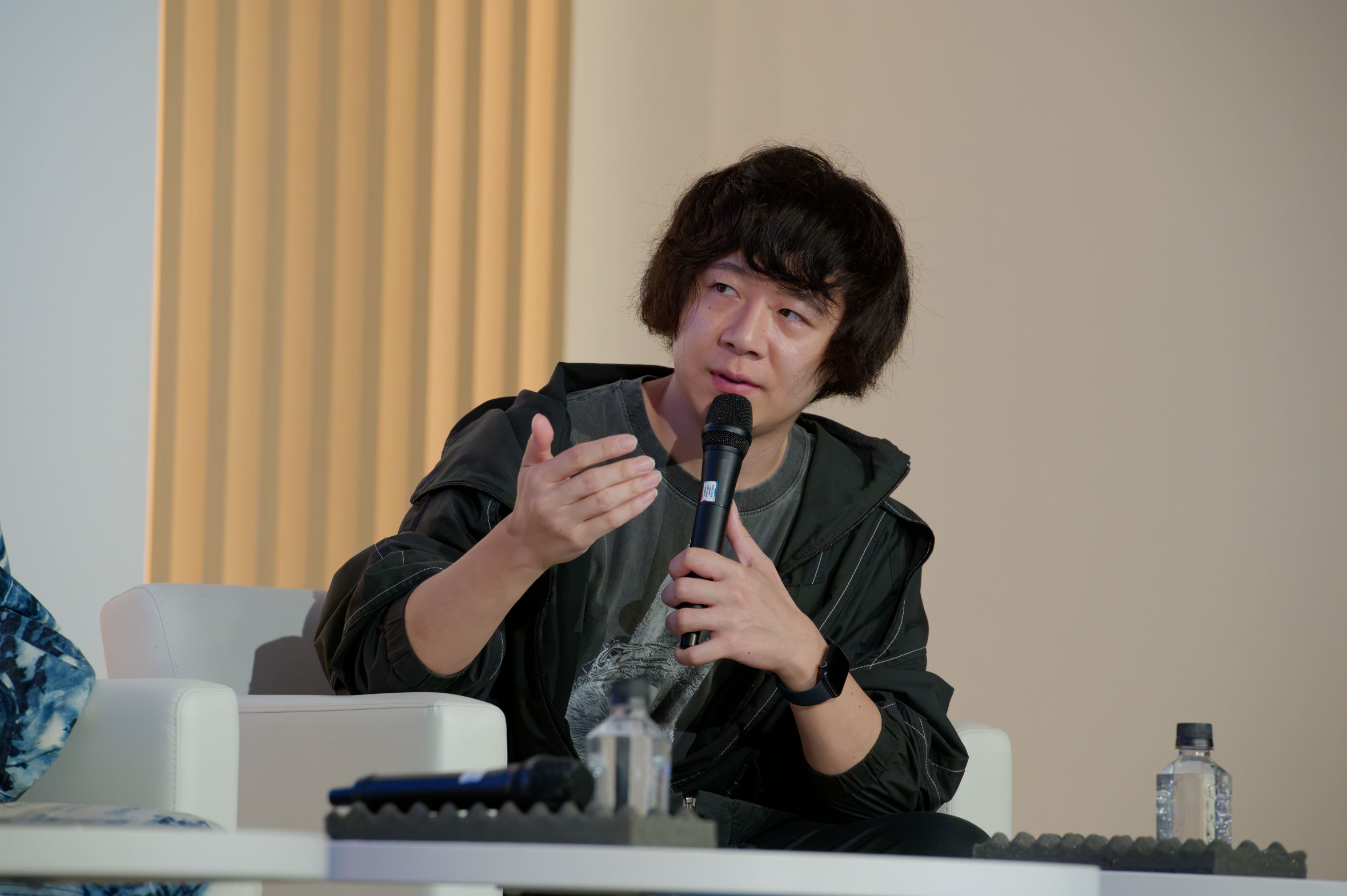
【Speaker Summary: Yoji Sakuma】
Representing the younger generation, Yoji Sakuma delivered a
powerful message: “The future is not inherited—it is
co-created.” Introducing his Shape New World Initiative, where
young people around the world co-create policy proposals and
art projects online, he emphasized that youth are no longer
passive commentators but active agents of change.
He argued that realizing “a future society where life shines”
requires rebuilding a culture of solidarity led by youth. The
digital-native generation, unconstrained by borders or
institutions, has the ability to build new social relations
through empathy and creativity. “In the age of AI, our
uniquely human ability to imagine, feel, and connect becomes
the source of hope,” he said.
Sakuma discussed the roles of youth in environmental,
educational, and peace initiatives, citing global youth
networks and regional projects in Africa and Asia. “We must
design systems that enable youth to speak with their own
voices and act with their own hands,” he said, urging
companies, governments, and international organizations to
form partnerships for co-creation.
He challenged the notion of “entrusting the future,”
declaring, “The future is not something given to us—it is
something we create through our choices and actions today.” He
concluded that nurturing ethical and imaginative
next-generation leaders is the most vital social investment.
“Empathy is the most sustainable energy,” he said. “Not
technology or economics, but a culture of empathy and
solidarity will lead humanity toward regeneration.”
【Discussion Summary】
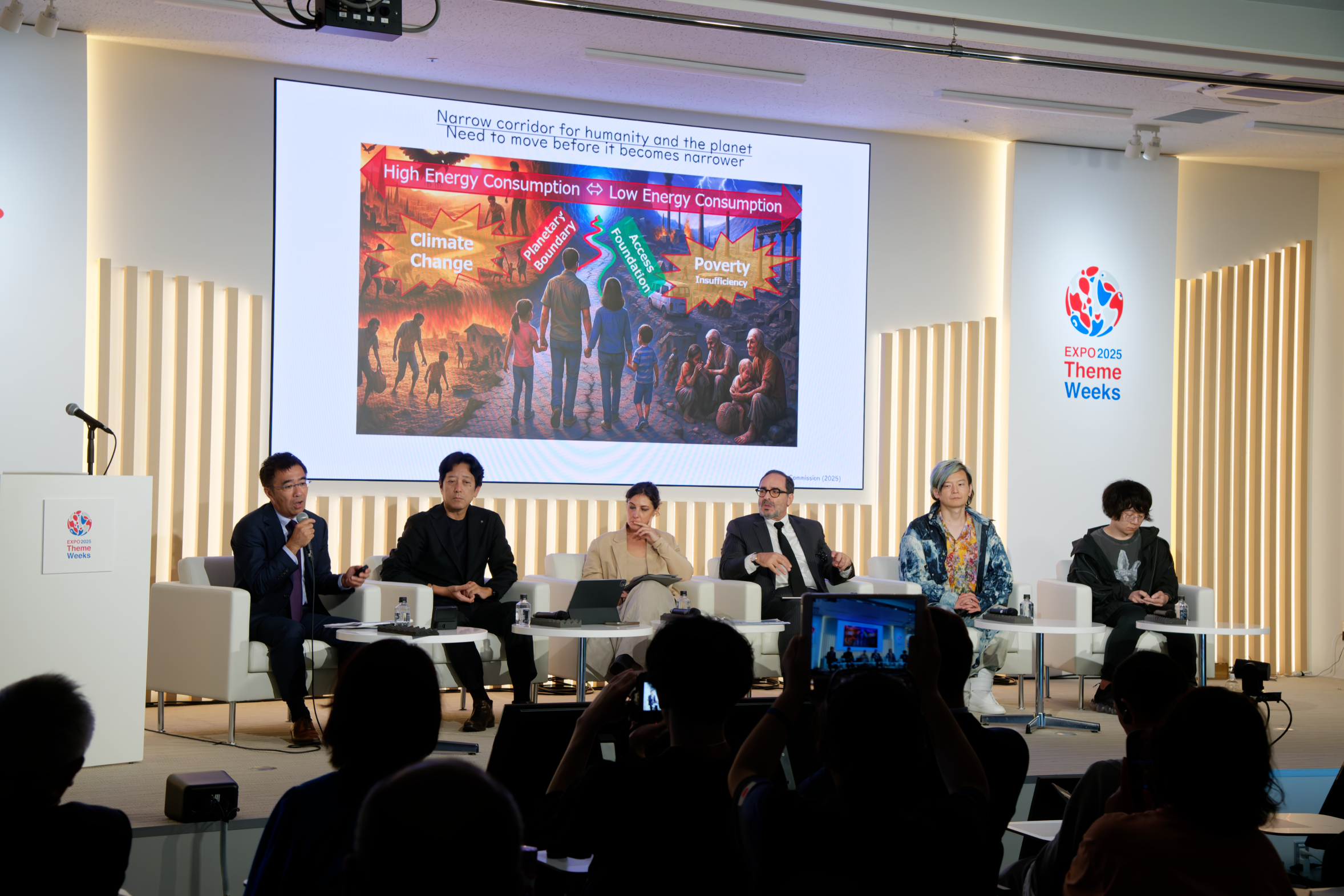
In the latter half of the session, speakers engaged in a
lively dialogue on redefining values in the “SDGs + Beyond”
era and designing a life-centered future society. Moderator
Kanie led the discussion, asserting that “the organizing
principle of the post-2030 world lies not in economic or
technological indicators but in relationships themselves.” LI
Junhua reiterated that life-related issues transcend borders
and require a shared foundation, reintroducing the ideals of
the Pact for the Future and emphasizing “co-creative
governance” linking scientific evidence with ethical
imagination.
Sam Karita stated that “a co-creative ecosystem grounded in
diversity and culture is the paradigm that follows the SDGs,”
emphasizing the need to visualize “social resonance” among
corporations, academia, municipalities, and citizens. “Japan’s
greatest contribution to the world is not technological power
but cultural power,” he said. “A society designed through
empathy can become the starting point of new value
creation.”
Özge Aydoğan revisited the concept of regeneration, asserting
that “beyond maintaining sustainability, we must heal lost
relationships and circulate life anew through cultural
imagination.” She proposed new metrics such as an “Empathy
Index” and “Social Regeneration Score.” Dr. Shayya emphasized
the Expo’s international significance, describing Osaka-Kansai
as “a venue that will demonstrate to the world a culture of
dialogue beyond division.” He called the sequence of Expos
from Dubai to Osaka to Riyadh “a relay of hope.”
Hiroaki Miyata focused on integrating technology and emotion:
“AI should enhance not our intellect but our capacity for
empathy,” he said, envisioning a future where data reconnects
humanity. He concluded, “Design for empathy is the foundation
for humanity’s transition to a regenerative society.” Finally,
Yoji Sakuma declared from a youth perspective that “empathy is
the most sustainable resource,” urging all generations to
actively create the future rather than wait for it. His
message resonated as a symbol of intergenerational
responsibility and hope.
Overall, the discussion clarified that “designing future
society” is not the blueprint of experts or institutions but a
co-creation of relationships where culture, ethics, science,
and sensibility intersect. Empathy, regeneration,
collaboration, and hope—these were the session’s key pillars
and guiding coordinates toward the post-2030 world.
Cast
Moderator
Norichika Kanie
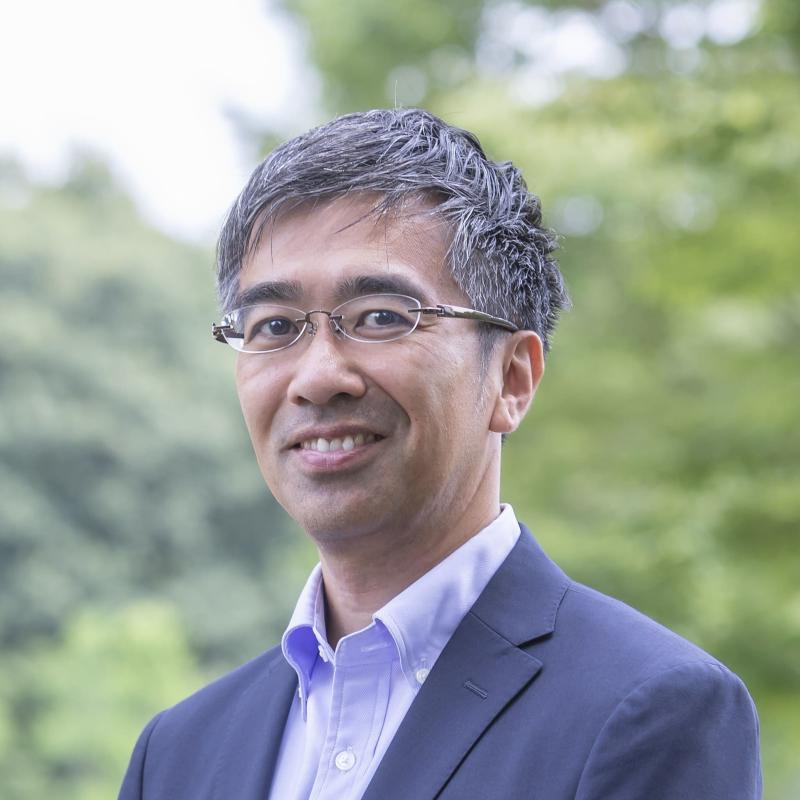
Professor, Graduate School of Media and Governance, Keio University; Vice Director of Keio STAR (Sustainable and Transformative Actions for Regeneration); Director of xSDG Laboratory, SFC Research Institute
He served as a lecturer and assistant professor at the
University of Kitakyushu and as an associate professor
at the Tokyo Institute of Technology before assuming
his current position in 2015. Appointed by the UN
Secretary-General as one of fifteen independent
scientists tasked with preparing the 2023 Global
Sustainable Development Report, which was published in
September 2023.
He is a member of the Roundtable on the SDGs Promotion
Headquarters of the Government of Japan, a member of
the Cabinet Secretariat’s Expert Group on Municipal
SDGs Promotion. He serves as an ambassador of the
Earth Commission. He is actively engaged in various
international and domestic research and policy-related
activities focusing on the SDGs and global
environmental issues.
View Profile
Close
close
Speakers
LI Junhua
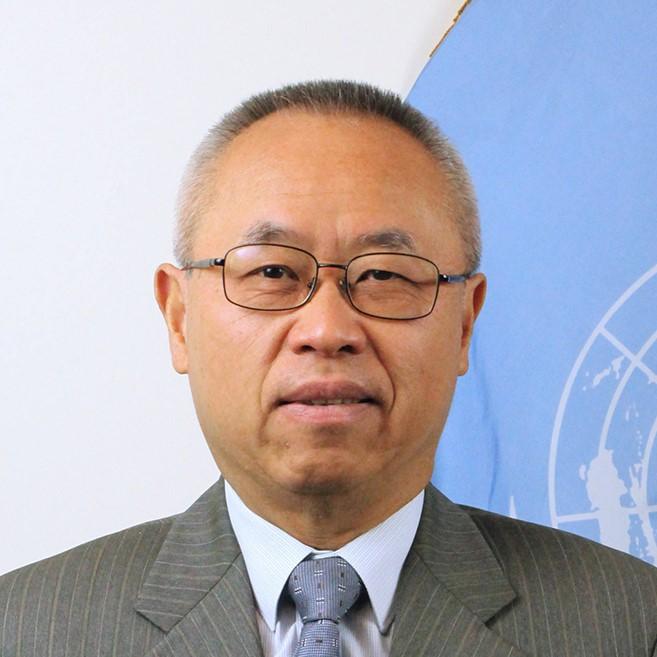
Under-Secretary-General for Economic and Social Affairs, United Nations
United Nations Secretary-General António Guterres has
appointed Mr. Li Junhua of China as the
Under-Secretary-General for Economic and Social
Affairs effective 25 July 2022.
Prior to his appointment, Mr. Li was Ambassador
Extraordinary and Plenipotentiary of China to Italy
and San Marino. He brings to the position perspectives
and visions on fostering multilateral economic and
social cooperation, with a commitment to engage with
all parties to further implement the 2030 Agenda
including dedication to serve Member States. He has
contributed to numerous meetings of the Economic and
Social Commission for Asia and the Pacific (ESCAP),
the United Nations General Assembly and Security
Council, as well as other multilateral meetings
including the G20, Asia-Pacific Economic Cooperation
(APEC), Asia–Europe Meeting (ASEM), BRICS etc.
As Under-Secretary-General for Economic and Social
Affairs, Mr. Li guides UN Secretariat support for the
follow-up processes of the 2030 Agenda for Sustainable
Development, including the High-level Political Forum
on Sustainable Development. He also oversees the
substantive services to many intergovernmental
processes, including the annual meetings of the Second
and Third Committees of the General Assembly, the
meetings of the Economic and Social Council, including
its Development Cooperation Forum, and the work of the
subsidiary bodies of ECOSOC. In addition to
intergovernmental processes, Mr. Li oversees DESA’s
policy analysis and capacity development work. He also
serves as the Convenor of the Executive Committee on
Economic and Social Affairs, and advises the United
Nations Secretary-General on all development-related
issues, including climate change, internet governance,
and financing for development.
Mr. Li began his career at the Foreign Affairs
Ministry in 1985. Since then, he has served in various
capacities, including as Director General of the
Department of International Organizations and
Conferences, Ministry of Foreign Affairs of China
(2013-2019), Ambassador Extraordinary and
Plenipotentiary of China to Myanmar (2010-2012),
Deputy Director General of the Department of
International Organizations and Conferences
(2008-2010), Minister Counselor (Political), Permanent
Mission of the People’s Republic of China to the
United Nations (2003-2008), Division Director and
Counselor in charge of UN General Assembly and
Security Council Affairs (2001-2003), Second and First
Secretary, Permanent Mission of the People’s Republic
of China to the United Nations (1997-2001). Third and
Second Secretary, the Department of International
Organizations and Conferences (1992-1997) and
Assistant to the Permanent Representative, Permanent
Mission of China to the UN Economic and Social
Commission for Asia and the Pacific, Bangkok
(1986-1992).
Mr. Li holds a Master’s in International Public
Policy, School of Advanced International Studies,
Johns Hopkins University. Mr. Li is married.
View Profile
Close
close
Sam Karita
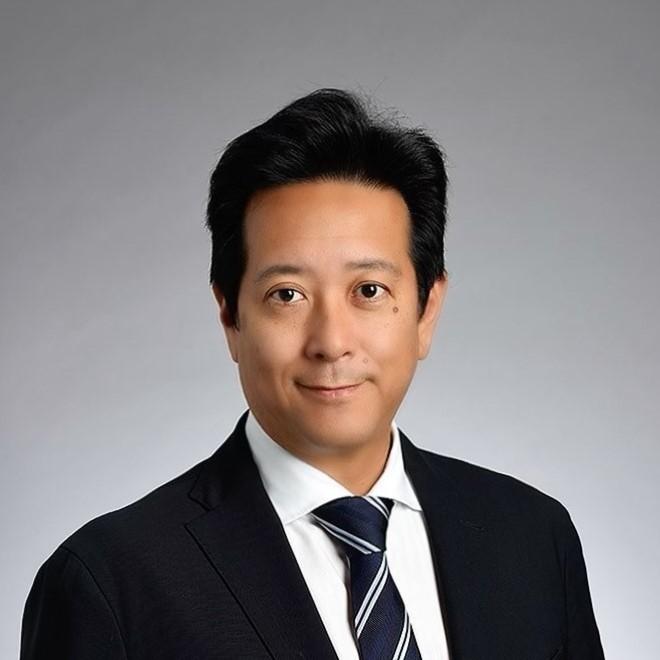
Boston Consulting Group Managing Director & Senior Partner
He is BCG Henderson Institute (BHI) Japan Lead, and named Global BHI Fellow for his pioneering thought leadership. He provides consulting to top management of leading corporations in various industries such as Healthcare, Consumer goods, Media, Entertainment on multiple agenda including Strategy, Innovation, DX, Productivity Enhancement and M&A.
View Profile
Close
close
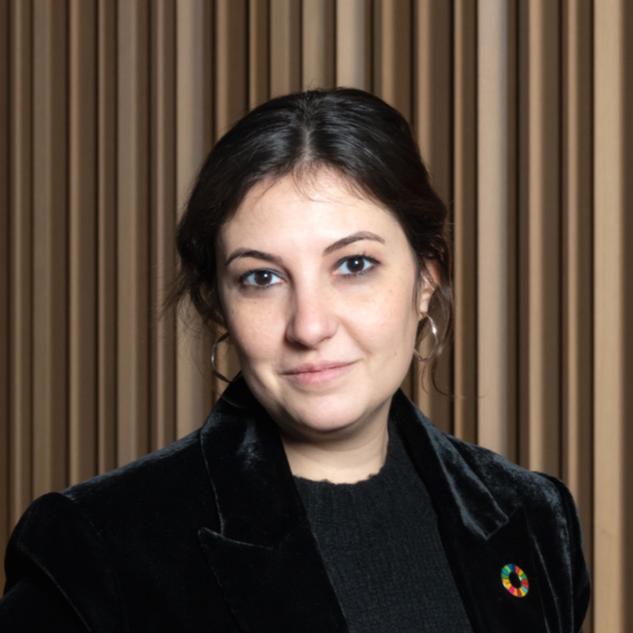
Özge Aydoğan
Beyond Lab Director & curator in chief
Driven by her commitment for positive societal change, Özge makes sure the Lab continues designing and contributing to creative, systemic solutions for the shift we need towards finding a balance between current and future generations, as well as the human and the natural world. An experienced navigator of the multilateral system, she uses her experience and creative imagination to build bridges between the United Nations, other multilateral organizations, academia, the private sector, and civil society to come together as a movement for defining what’s next for sustainable development, with a focus on promoting a values-based, regenerative approach to redefining systems.
View Profile
Close
close
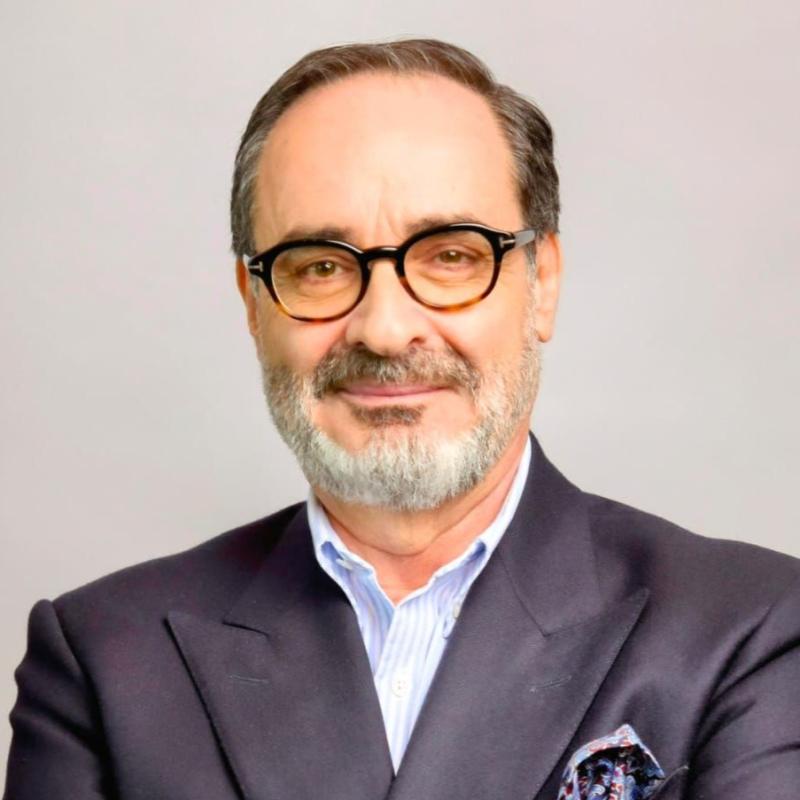
Dr. Tarek Oliveira Shayya
Founder & Managing Director, Gratiya Advisory, Former Executive Vice Chairman of Expo 2020 Dubai
Dr. Tarek Oliveira Shayya is a Global South strategist
and bridge-builder to states and boards, focused on
government and corporate transformation, corporate
diplomacy, and geo-economics. His career spans the
United Nations, national government, and the
boardroom. After 14 years with UN agencies, he joined
the UAE Government as Director of International
Affairs (2008–2017) in the Political Affairs Office of
the Vice President, where he led cross-government
strategy, scenario planning, and international
engagement. In 2016 he was appointed to the Expo 2020
Dubai Board and subsequently became Chief
International Participants Officer, responsible for
securing and managing participation by 192 countries
and numerous international organisations. From 2020 he
served as Executive Vice-Chairman with duties over
political affairs, domestic government engagement, and
transition and legacy planning for Expo City Dubai.
In 2022 he founded Gratiya Advisory, a boutique born
in the Global South to support governments, sovereign
investors, and companies on national transformation,
reputation and nation branding, sports and cultural
diplomacy, and growth via international expansion and
corporate diplomacy. Dr. Shayya holds a PhD in
International Relations (Northwestern University), a
Master’s Degree in Global Business (University of
Oxford, Saïd Business School), and INSEAD’s
International Directors Programme Certification. A
Brazilian national of Lebanese origin who has lived
and worked across Brazil, Syria, Russia, the United
States, and the Middle East—including two decades in
Dubai—he speaks 4 foreign languages.
View Profile
Close
close
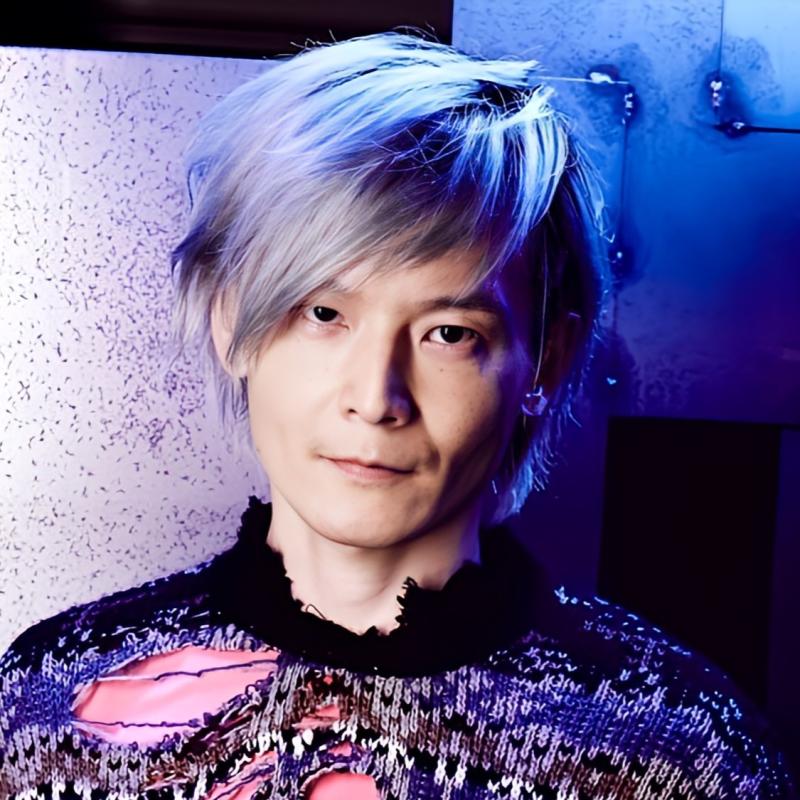
Hiroaki Miyata
Professor, Keio University
Specialises in data science, scientific methodology,
and value co-creation;
His research revolves around promoting social reform
through utilising data science and other scientific
methods to change society for the better. Is involved
in a range of projects in and outside the field of
medicine, such as the National Clinical Database
involving 5,000 hospitals around Japan in
collaboration with the medical specialist system and
the nationwide COVID-related LINE surveys led by the
Ministry of Health, Labour, and Welfare. Also works
with the Keidanren and World Economic Forum to develop
a new vision of society. One of the visions of society
that Miyata has co-created is a “resonant society”
characterised by vibrancy and diversity where each
individual shines through experiencing that world with
others.
View Profile
Close
close
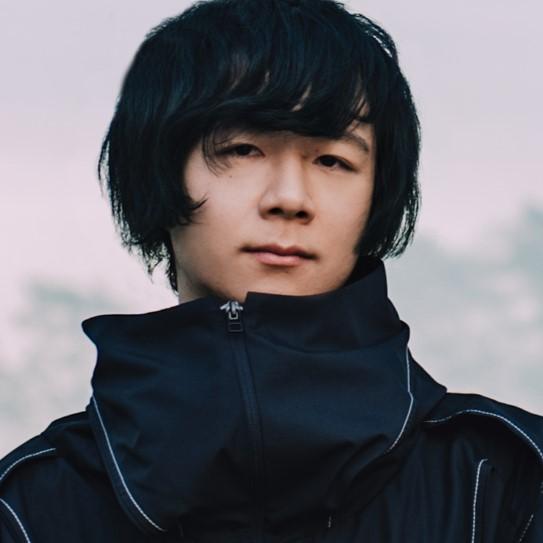
Hiroshi Sakuma
Specially Appointed Researcher at the Social Solutions Initiative, Osaka University, Head of the Shape New World Initiative
Born in 1996. Mr. Sakuma has been engaged in the research on the new form of communication using avatars and agents at Osaka University. At Expo 2025 Osaka, Kansai, Japan, he is in charge of the exhibition "Future Virtual Being" as a director of Osaka Pavilion. He is also a principal investigator of the research on the design of future societies, a joint research project between Osaka University and the Japan Science and Technology Agency. In addition to his current position as a chairperson of Shape New World Committee, Osaka Chamber of Commerce and Industry and he is also a member of Science Fiction and Fantasy Writers of Japan. In 2021, he was appointed as a team leader for a research study on the Moonshot Research and Development Program. He was selected as one of the Forbes 30 Under 30 Japan 2023 and is a recipient of the Minister of Education, Culture, Sports, Science and Technology Award of the Japan Open Innovation Prize.
View Profile
Close
close
SDGs+Beyond Future Society for Life Week
Shaping the future: insights and innovations from 7 themes
The programme, together with the General Sponsors, explores: 'Can we achieve the SDGs? What do we do beyond the goals?'
-
2025.10.12[Sun]
16:30~18:00
(Venue Open 16:00)
- Theme Weeks Studio
OTHER PROGRAM
SDGs+Beyond Future Society for Life Week