SDGs+Beyond Future Society for Life Week
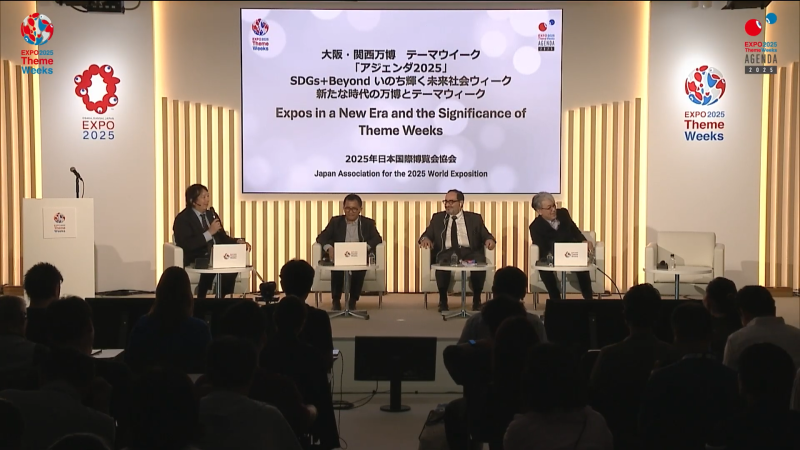
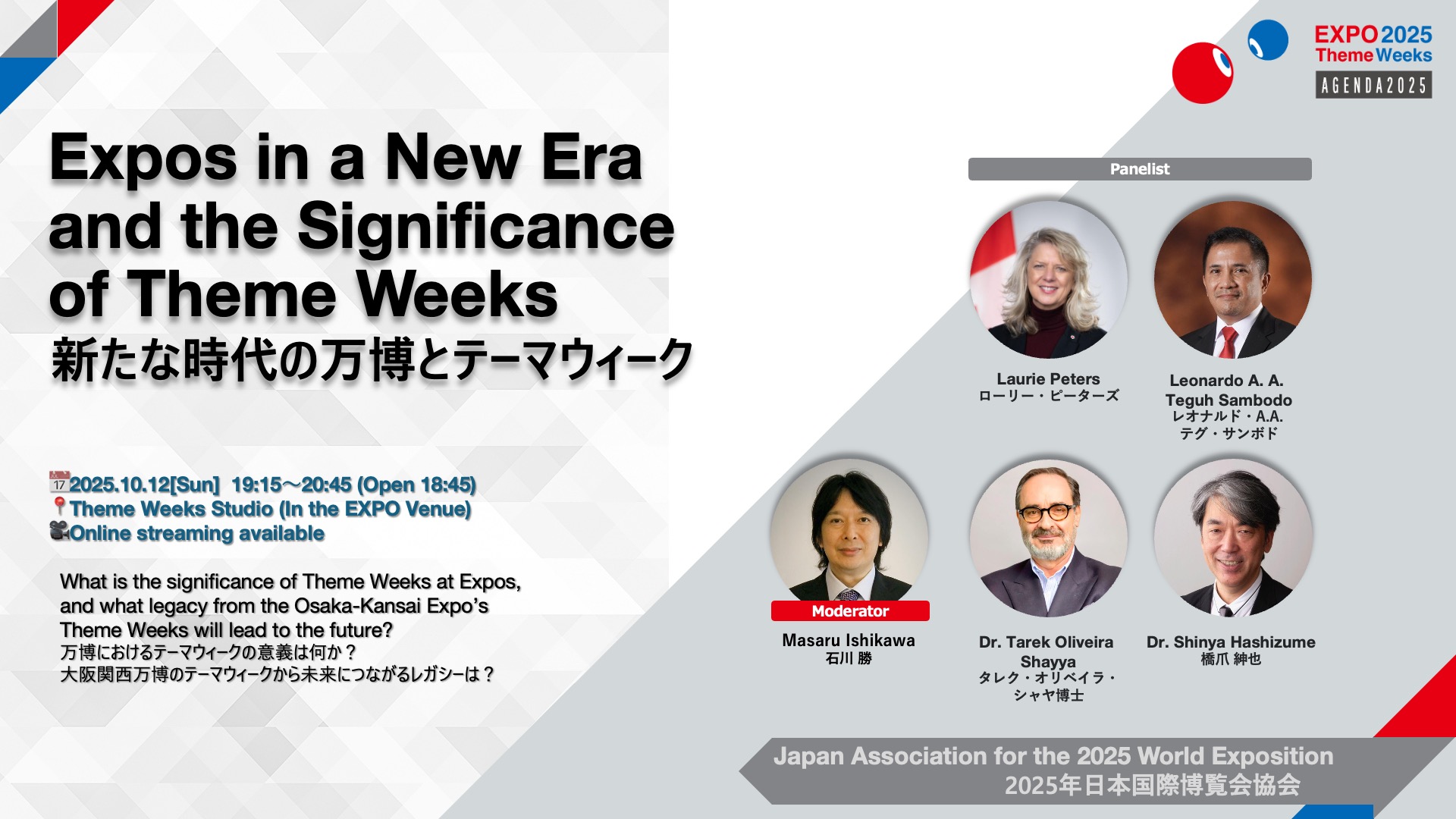
Expos in a New Era and the Significance of Theme Weeks
Japan Association for the 2025 World Exposition
The programme, together with the General Sponsors, explores: 'What is the significance of Theme Weeks at Expos, and what legacy from the Osaka-Kansai Expo’s Theme Weeks will lead to the future?'
Recorded video available
Discussion
- Others
| Transmission of simultaneous interpretation | Provided |
|---|---|
| Language of interpretation | Japanese and English |
-
Agenda2025
Organised Programme
-
Time and
Date of
the event -
-
2025.10.12[Sun]
19:15 ~ 20:45
(Venue Open 18:45)
-
- Venue
- Theme Weeks Studio
Programme details
*Subtitles: Choose “Subtitles/CC” in the “Settings” (gear
icon) at the bottom right of the YouTube video.
*Subtitles may not show with multiple languages or overlapping
audio.
The eighth and final Theme Week of Expo 2025 Osaka,
Kansai—“SDGs + Beyond: Designing a Future Society for Our
Lives ”—will culminate in a landmark panel discussion that
brings this journey to a close.
The session will revisit the significance of “Theme Weeks” as
an innovative approach within Expos, and explore how they can
shape both present and future dialogues. Joining the
discussion are official participants of Expo 2025 Osaka,
Kansai; representatives from Expo 2020 Dubai, where Theme
Weeks were first introduced; and stakeholders from Expo 2030
Riyadh, the next World Expo host. Together, they will reflect
on the lessons learned, the value created through global
dialogue, and the pathways toward future collaboration.
This conversation will not only consolidate the legacy of
Theme Weeks at Expo 2025 but also set the stage for their
continuation and evolution in Riyadh and beyond. It is an
invitation to imagine how Expos can serve as platforms for
meaningful exchange and collective action in a rapidly
changing world. Join us for this culminating session, and be
part of shaping the future of international collaboration and
the next chapter of World Expos.
Reports
【Program Summary】
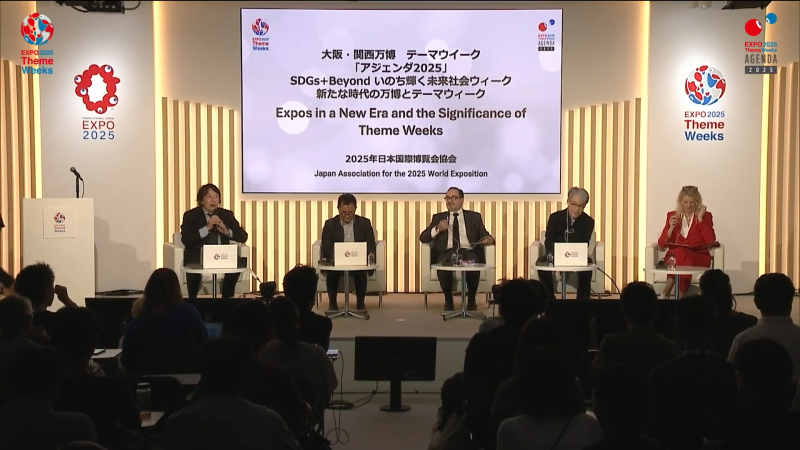
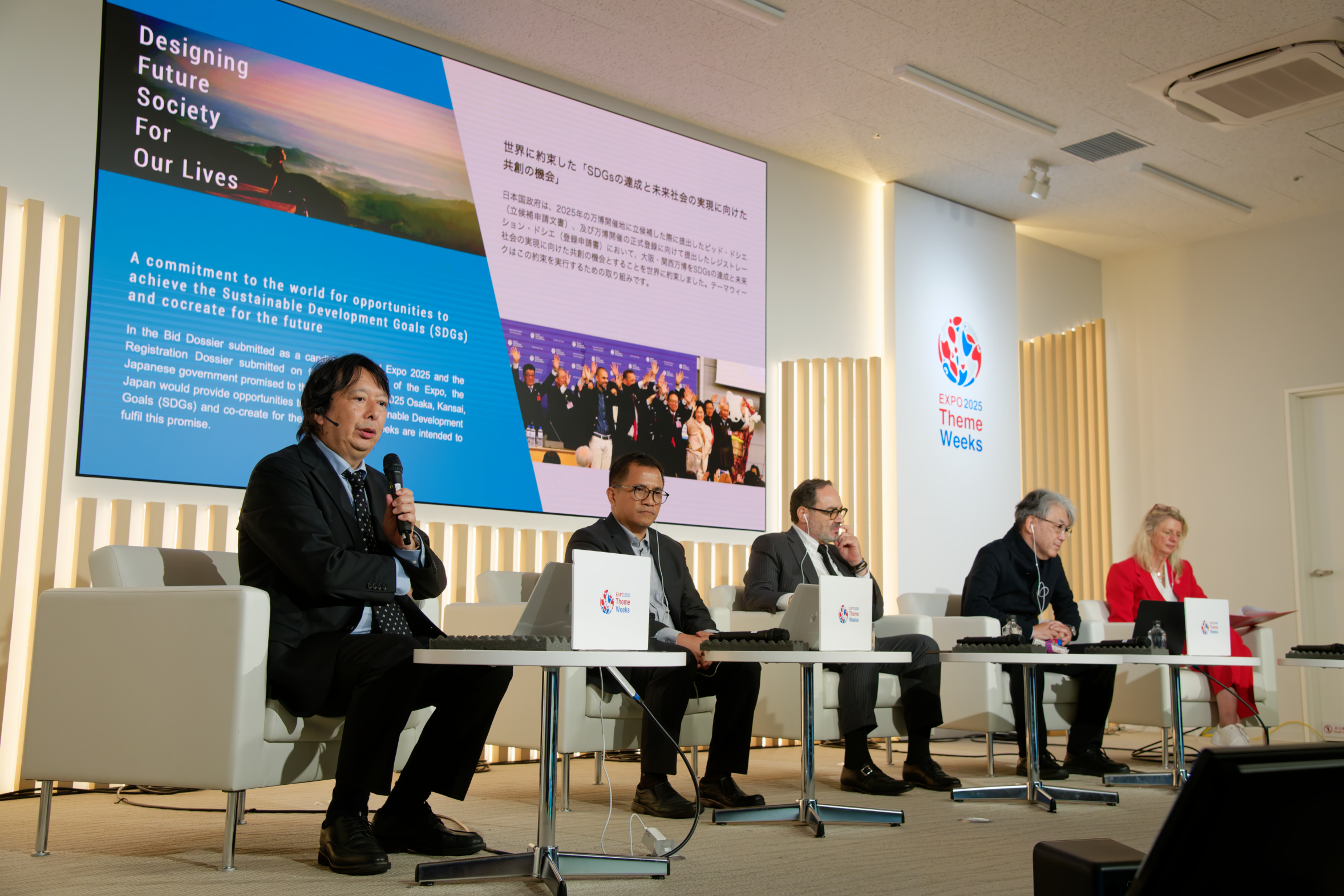
The program “Expos in a New Era and the Significance of Theme
Weeks” was held as the final session of SDGs+Beyond Future
Society for Life Week, concluding six months of the Theme
Weeks series. The session reflected on the overall outcomes of
all Theme Weeks and explored the evolving role and potential
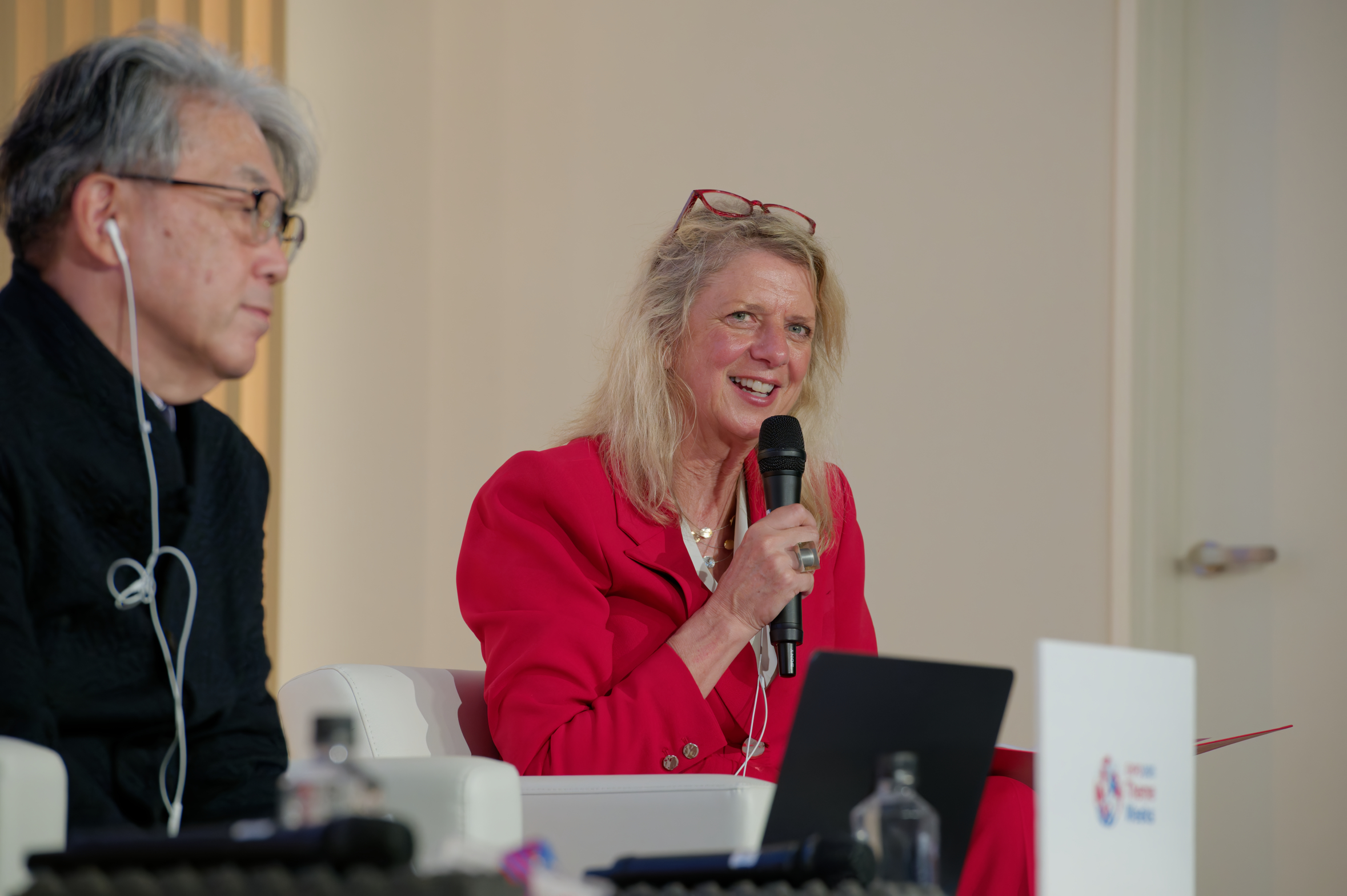
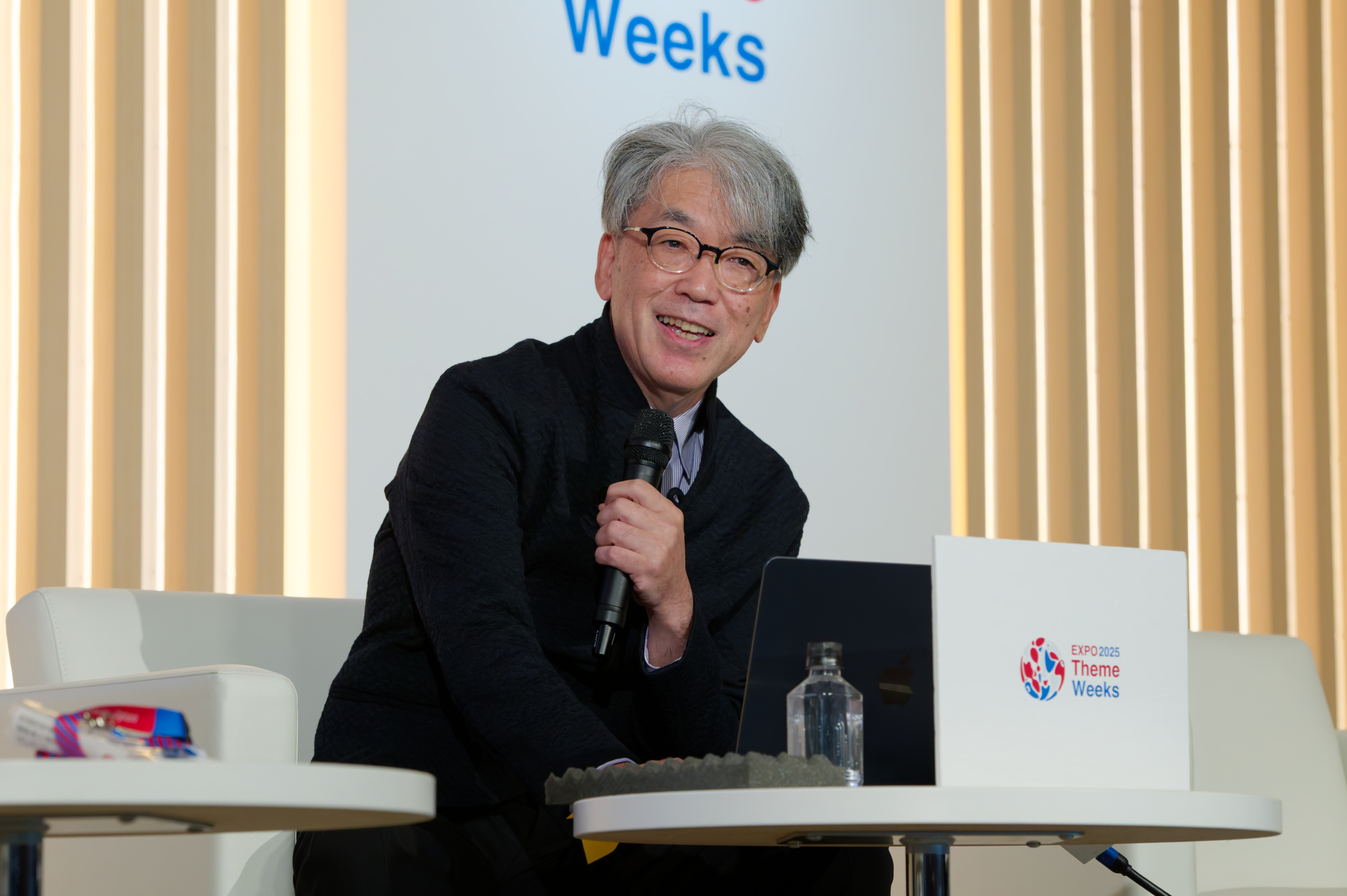
of Expos in the coming era. Moderated by Masaru Ishikawa, Site
Operation Producer of Expo 2025 Osaka, Kansai, the panel
featured Dr. Tarek Oliveira Shayya (Founder & Managing
Director of Gratiya Advisory; Former Executive Vice Chairman
of Expo 2020 Dubai), Leonardo A. A. Teguh Sambodo (Deputy
Minister for Food Affairs, Natural Resources, and Environment,
National Development Planning Agency, Indonesia), Laurie
Peters (Commissioner General, Canada Pavilion at Expo 2025),
and Dr. Shinya Hashizume (Distinguished Professor, Osaka
Metropolitan University; Theme Week Supervisor, Japan
Association for the 2025 World Exposition). Discussions
unfolded from three key perspectives — the historical
evolution of Expos, national practices, and intergenerational
legacies.
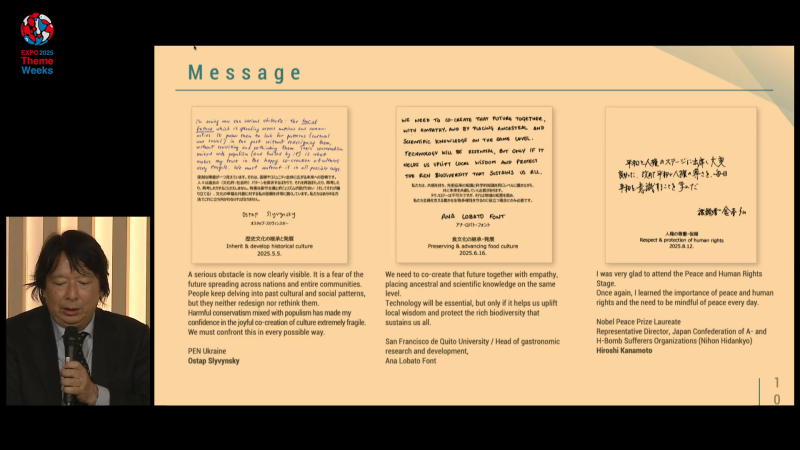
【Speaker Summary: Masaru Ishikawa】
Ishikawa began by expressing deep gratitude to all
participating nations and partners for their collaboration
throughout the six months of Theme Weeks. Reflecting on his
visit to Expo 2020 Dubai, he described it as both “the
culmination of the past Expos” and “a creative challenge for a
new era.” He highlighted Dubai’s introduction of the
innovative Theme Weeks framework, which accelerated global
knowledge exchange and cooperation, emphasizing Japan’s
commitment to inherit and advance this spirit in Osaka.
At the Osaka–Kansai Expo, a collaborative framework was
adopted in which a wide range of stakeholders—including
government, industry, local authorities, and citizens—worked
together around three core pillars: Exhibition, Business
Exchange, and Dialogue.
The implementation of the Theme Weeks was described as the
embodiment of Japan’s international commitment to “achieving
the SDGs and co-creating the future society.” Under the
framework of Agenda 2025, a three-tiered structure was
established, comprising Hosting, Co-creation, and
Participation.
Furthermore, it was reported that over the course of six
months, eight thematic areas were presented, encompassing more
than 430 individual programs. The process in which each theme
posed its own questions and sought answers through dialogue
was said to exemplify the very concept advocated by the
Osaka–Kansai Expo — “People’s Living Lab.”
Tracing the historical evolution of world expositions,
Ishikawa noted that from the 1851 London Expo through the
postwar science-centered era, Expos have since 1994 evolved
into arenas for tackling shared human challenges. With Expo
2005 Aichi as a turning point, Expos began centering around
social issue resolution. Building on this legacy, Expo 2025
Osaka, Kansai defines itself as a global platform for
collective thinking and action.
He concluded that “Theme Weeks are not merely in-session
events but legacy-building mechanisms for co-creating the
future society.” Ishikawa emphasized the need to archive and
perpetuate their intellectual assets and called for sustained
international collaboration toward Expo 2030 Riyadh.
【Speaker Summary: Laurie Peters】
Peters, representing the Government of Canada, underscored how
Theme Weeks provided a common language connecting diverse
national pavilions. Rooted in Canada’s values of diversity and
creativity, she explained that following Expo 2020 Dubai,
Canada has advocated for Theme Weeks as a standard structural
framework for future Expos. Drawing inspiration from Dubai’s
Women’s Pavilion, she highlighted Japan’s focus on gender
equality and co-creation as central principles for its
programs.
She introduced several of Canada Pavilion’s initiatives. The
Canada Live program, themed on cultural creativity, featured
over 150 artists delivering more than 200 performances,
symbolizing the richness of cultural diversity. Meanwhile, the
Regeneration series at the Women’s Pavilion explored women’s
leadership in sustainable societies and reaffirmed the value
of social innovation.
During the Mobility and Community week, Canada promoted
sister-city partnerships, academic exchanges, and youth
engagement — notably through programs such as JET, fostering
mutual understanding among future generations. In the Learning
and Playing week, Canada organized street dance battles and
collaborative art events, showcasing inclusion and creativity
through culture. In the Peace and Human Rights week, Canada
featured Tareq Hadhad, a Syrian refugee turned Canadian
entrepreneur, whose story “Peace by Chocolate” conveyed a
universal message of hope, peace, and human dignity.
Ms. Peters emphasized that Theme Weeks functioned as
equalizers, fostering cooperation rather than competition.
They transformed the Expo into a “Living Laboratory” for
Society 5.0, transcending national and disciplinary
boundaries. Concluding, she stated, “Diversity is the driving
force that powers global dialogue and innovation.”
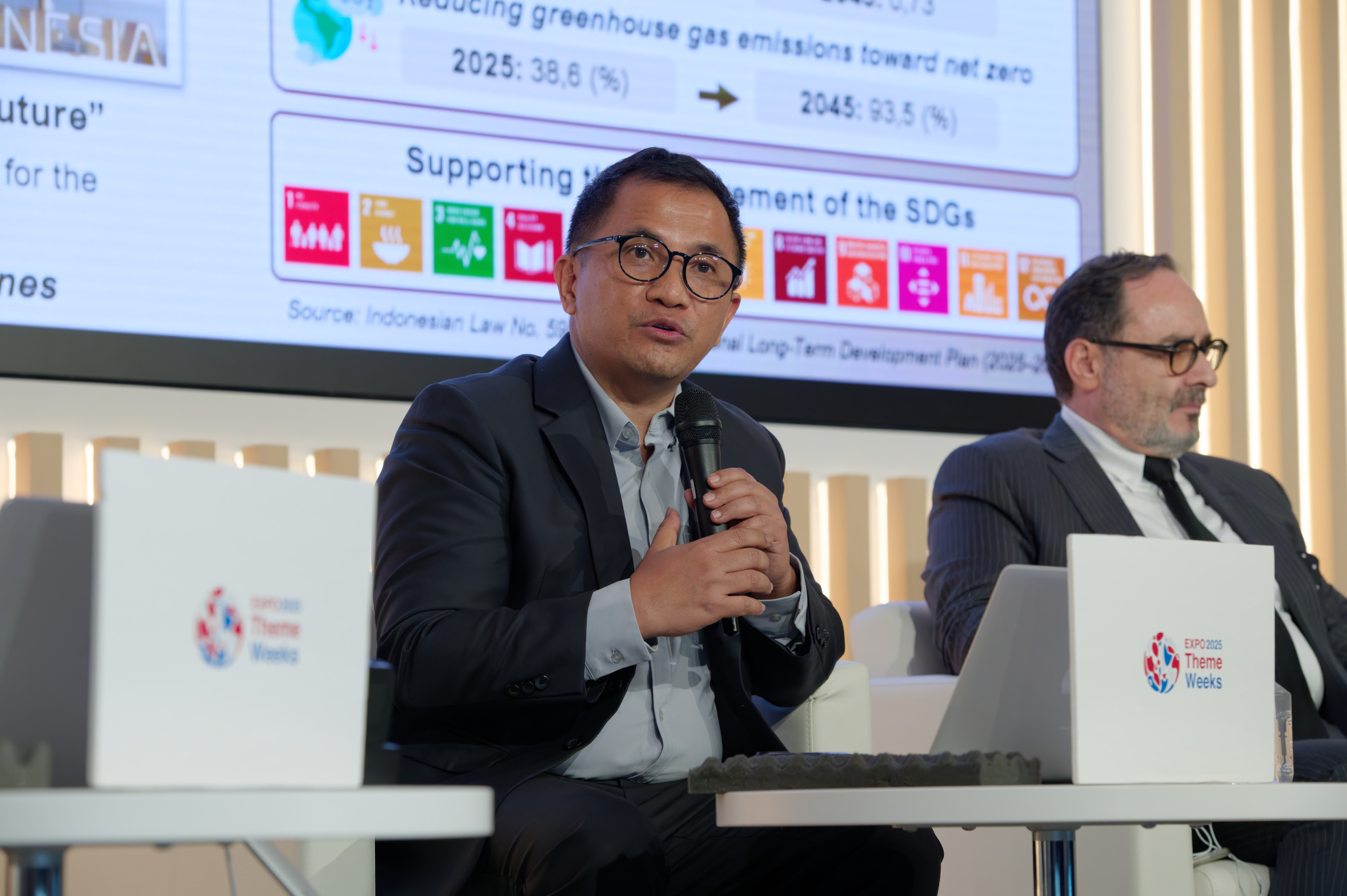
【Speaker Summary: Leonardo A. A. Teguh Sambodo】
Sambodo characterized Indonesia’s participation as “a
declaration of the nation’s future vision, not merely a
cultural exhibition.” He introduced Vision 2045, aiming to
build an United, sovereign, advanced, and sustainable
Indonesia. He stressed Indonesia’s commitment to low-carbon
development and greenhouse gas reduction through international
collaboration, positioning Expos as platforms for
demonstrating such initiatives.
Indonesia’s Pavilion, themed Harmony of Culture, Nature, and
Future, was designed around four objectives: promoting
investment, strengthening trade, enhancing tourism, and
showcasing national branding. With a strong focus on
interactive engagement, the pavilion hosted over 300 business
forum, exhibition and cultural events, attracting 3.5 million
participants and generating over USD 28 billion in investment
commitments.
Highlighting achievements across various Theme Weeks, he noted
that the Culture and Creative Economy Week empowered women and
youth-led SMEs, illustrating a model of economic growth
through cultural diplomacy. During Mobility and Community
Week, Indonesia advanced smart city infrastructure projects,
concluding agreements worth USD 23 billion. Under Food and
Life Week, the nation presented its universal health insurance
system — covering 240 million people, the world’s largest
single national insurance scheme. In Future of Earth and
Biodiversity Week, mangrove restoration, as well as
biodiversity and peatland conservation demonstrated
Indonesia’s commitment to natural capital investment and
planetary stewardship.
Sambodo concluded that “Theme Weeks are not merely forums for
dialogue, but catalysts for action.” He emphasized the
collaborative model uniting governments, academia, the private
sector, and civil society, and invited all participants to
“move forward together toward the future.” His closing words —
“Advance, together into the future” — echoed powerfully
throughout the venue.
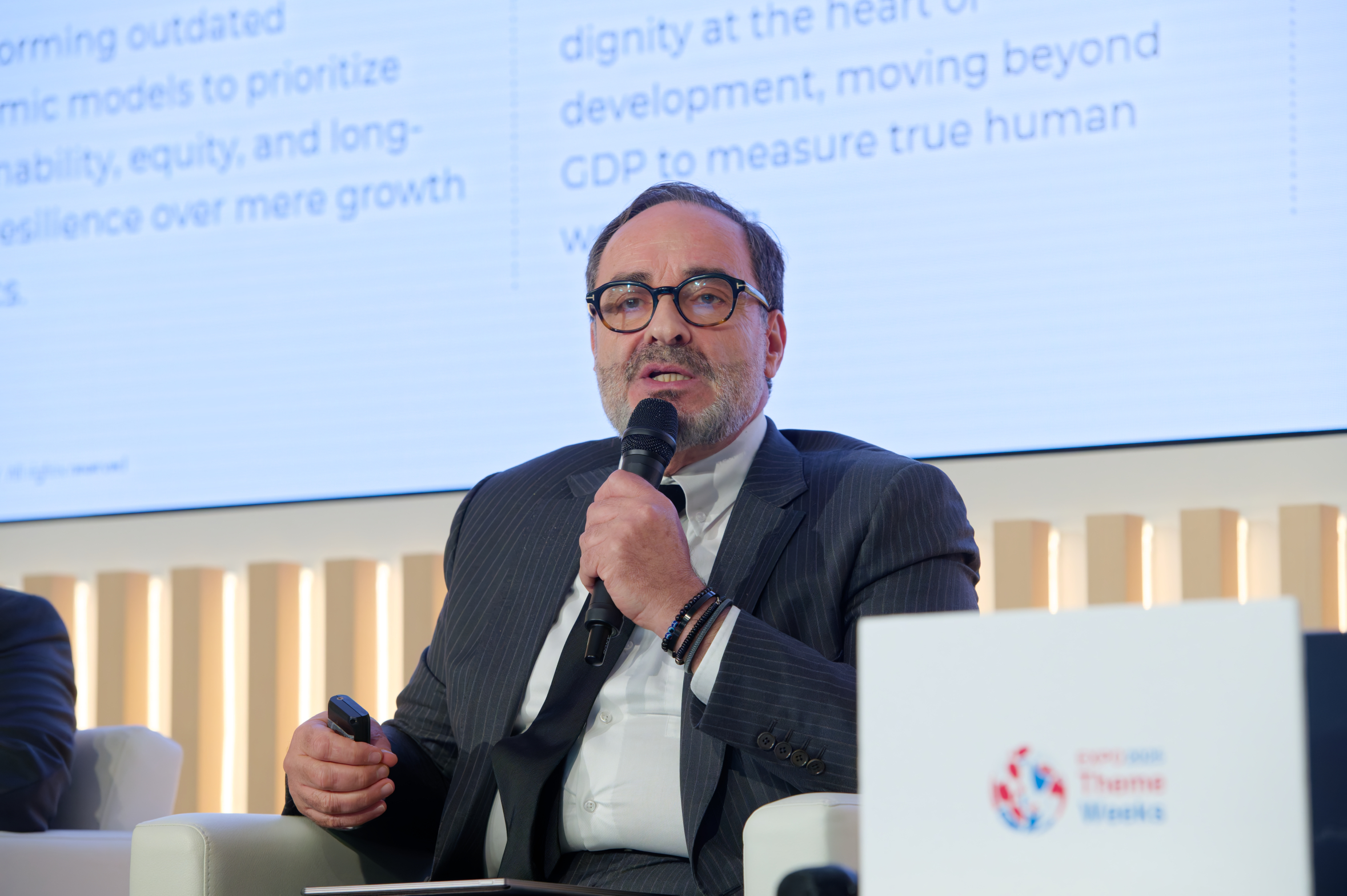
【Speaker Summary: Tarek Oliveira Shayya】
Drawing upon his experience as Executive Vice Chairman of Expo
2020 Dubai, Dr. Shayya narrated the origin story of the Theme
Weeks concept. The Dubai Expo, themed “Connecting Minds,
Creating the Future,” was the first World Expo held in the
Global South, requiring inclusive representation of diverse
voices worldwide.
He recalled that prior to 2020, governments, businesses,
academia, and civil society often worked in isolation, without
platforms for collective dialogue. To bridge these silos,
Theme Weeks were conceived as a unifying framework enabling
diverse stakeholders to discuss shared global issues. Dubai
introduced ten Theme Weeks, including Climate &
Biodiversity, Urban Development, Inclusion & Tolerance,
Knowledge & Learning, Food & Agriculture, and Space
Exploration, organizing 229 events over six months with
participation from 204 countries and organizations, 19,000
speakers, and an audience exceeding 29 million.
He introduced Dubai’s People and Planet Program as a
cross-sectoral platform linking economic, social, and cultural
spheres. In the post-pandemic context, the guiding principle
“Leave No One Behind” became a cornerstone across all events.
To ensure long-term legacy, Dubai established the physical
Expo City Dubai and the intellectual Expo Dubai Group,
fostering continuing collaboration among global cities through
initiatives such as the Asia-Pacific Mayors Summit.
Dr. Shayya emphasized, “Dubai planted the seed, Osaka nurtured
it, and Riyadh will bear the fruit.” He urged the continuation
and evolution of the Theme Weeks model toward Expo 2030
Riyadh, concluding: “We began a movement; now it must be
sustained. Expos must remain humanity’s ultimate platform for
global dialogue.”
【Speaker Summary: Shinya Hashizume】
Speaking from his role as overall supervisor of Theme Weeks,
Dr. Hashizume reflected on the philosophy and historical
continuity of the Expo concept. Recalling his childhood
experience at the 1970 Osaka Expo, he noted how its pavilions
still stand as cultural heritage, symbolizing the endurance of
both physical and intellectual legacies.
He described the early conception of Expo 2025 in 2014,
emphasizing that “Expos are microcosms of society —
experimental laboratories for the future, People’s Living
Labs.” By 2015, the vision aligned with the UN’s SDGs, leading
to the proposal of the “SDGs + Beyond” concept — Japan’s
mission not only to achieve goals but to envision what lies
beyond them.
He elaborated on the site’s architectural symbolism: the
circular Ring Structure representing interconnectedness and
diversity, embodying the idea of “A Resonating World.” He also
highlighted Kansai’s traditional philosophy of “Sanpō-yoshi”
(“good for seller, buyer, and society”), reinterpreted
globally as a Win-Win-Win Philosophy, calling it “the very
spirit of the SDGs.”
Defining true legacy not as physical structures but as
contributions to the global community, Hashizume cited the
enduring BIE emblem born from Expo ’70 as a symbolic example.
He affirmed that “Expo 2025 Osaka, Kansai is not an Expo for
Japan, but an Expo for the world — a platform for dialogue
among humanity.” He concluded that “Theme Weeks became an
intellectual laboratory where diverse actors intersected to
co-create the vision of a future society. The challenge now
lies in how the next generation will inherit and advance this
legacy.”
【Discussion Summary】
In the discussion, panelists shared perspectives on “The
Mission of the Next Expo.” Ishikawa identified the most
significant achievement of the Theme Weeks as establishing the
SDGs as a shared global language. Beyond a sequence of events,
the Expo fostered a systematic global dialogue where nations
presented their own visions for the future through culture and
policy.
Peters described the Expo as marking a shift from competition
to collaboration among nations, calling it “the
democratization of Expos.” She emphasized that inclusive
participation and co-creation are the most effective
approaches to addressing global challenges today.
Sambodo highlighted action as the key outcome, noting that
Indonesia had already launched concrete investment and
technological partnerships inspired by the Expo dialogues.
“Trust built through dialogue becomes the foundation for new
industrial, environmental, and social collaborations,” he
said.
Dr. Shayya discussed the symbolic relay of Theme Weeks from
Dubai to Osaka and onward to Riyadh, portraying it as a
continuous global dialogue mechanism. He argued that Theme
Weeks are “not transient events but infrastructures of
knowledge for humanity’s future,” urging the development of
digital archives and inter-Expo collaboration networks.
Dr. Hashizume concluded by defining Expos as “humanity’s
collective experiment.” From the material to the intellectual,
the Osaka legacy represents an evolution in the philosophy of
world expositions. He described Theme Weeks as an
institutionalized dialogue enabling cross-sectoral and
intergenerational co-creation of a future society where life
shines. He proposed that this constitutes a new model of Expo
that Osaka should present to the world.
Closing the session, Mr. Ishikawa declared, “Osaka is not the
destination, but the departure point,” calling for
intellectual and human legacy to be passed forward to Expo
2030 Riyadh. Collectively, the panelists affirmed a shared
recognition: Expos have evolved from sites of exhibition to
platforms of co-creation — and now, to arenas of collective
action. Theme Weeks thus stand as the emblem of this
evolution, offering the world a new vision of the Expo in the
21st century.
Cast
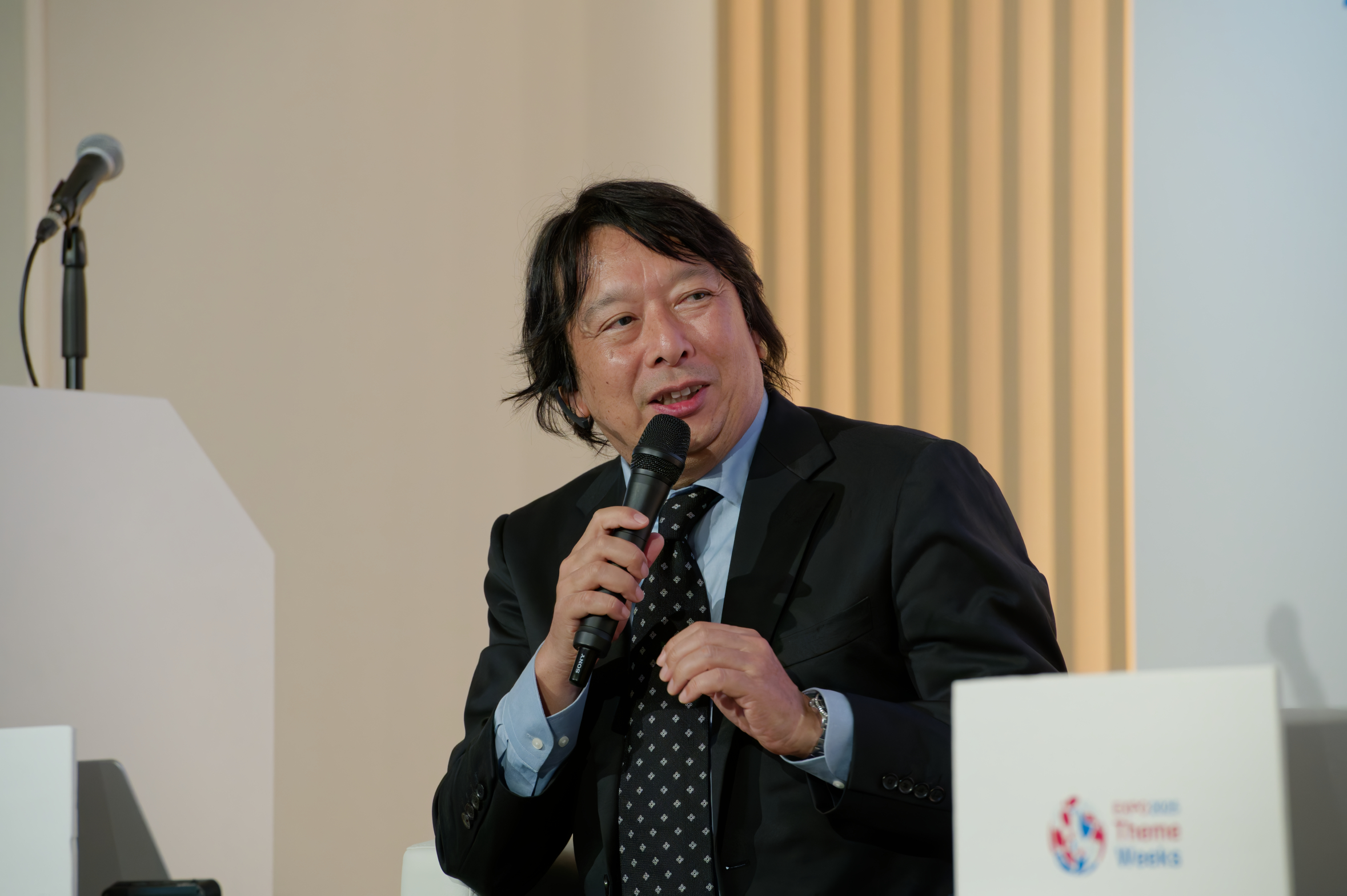
Moderator
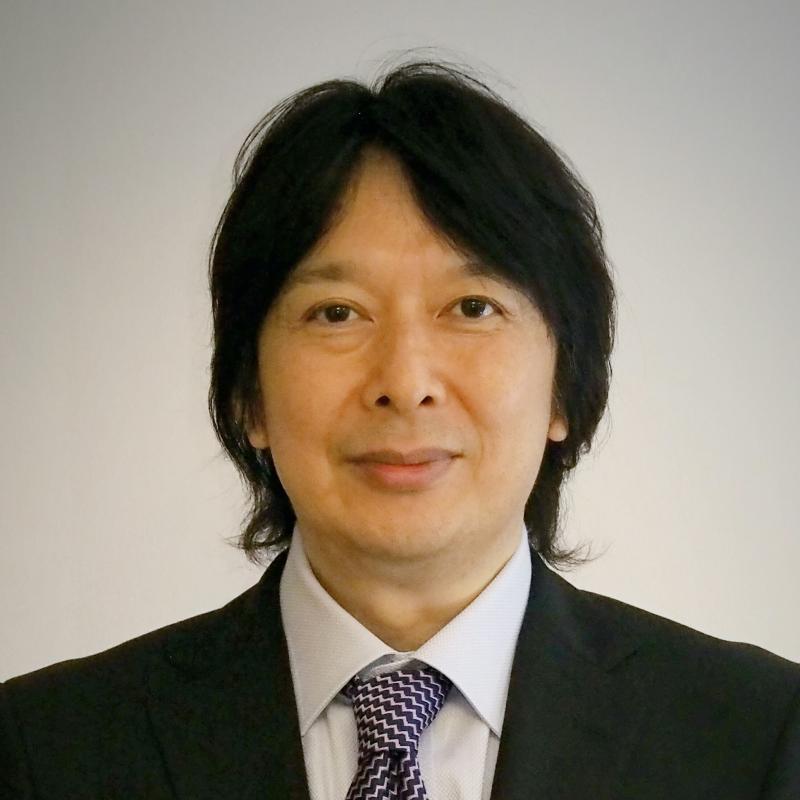
Masaru Ishikawa
Planner, Producer Osaka Kansai Expo Site Operation Producer
CEO of Think Communications, Co., Ltd.
Born in Sapporo, 1963. As a planner, he has ample
experiences in the fields of event promotion, cultural
and commercial facility development, and communication
designs, and established Think Communications Co.,
Ltd. in 2004.
He has worked on many expositions and exhibitions, and
was involved in the basic planning of the EXPO 2005
AICHI, JAPAN as assistant chief producer, producing
the Robot Project, the Aichi Earth Plaza, and the
micro IC entrance ticket.
With expertise in the fields of robotics and content
technology, he was the Project Manager and Head of the
IRT Content Division of the IRT Research Organization
at the University of Tokyo for 10 years from 2006 to
2016.
He promoted industry-academia collaborative projects
such as the “Innovation Center for Advanced
Interdisciplinary Research Areas Program (Creation of
IRT Infrastructure to Support an Aging Society with
Low Fertility and People).
Executive Director of “Robot Award of the Year,”
Ministry of Economy, Trade and Industry (2006-2008);
Committee Member of “Technology Strategy Map (Content
Field)” (2008-2015); Chairman of the Executive
Committee of “Robot Exhibition Project of Japan
Government Pavilion in Expo 2010 Shanghai,” (2010);
Executive Producer of “Digital Content EXPO”
(2008-2017); Producer of “Aichi Robot Showcase”
(2019-2020).
Expo Site Operation Assistant Producer
View Profile
Close
close
Speakers
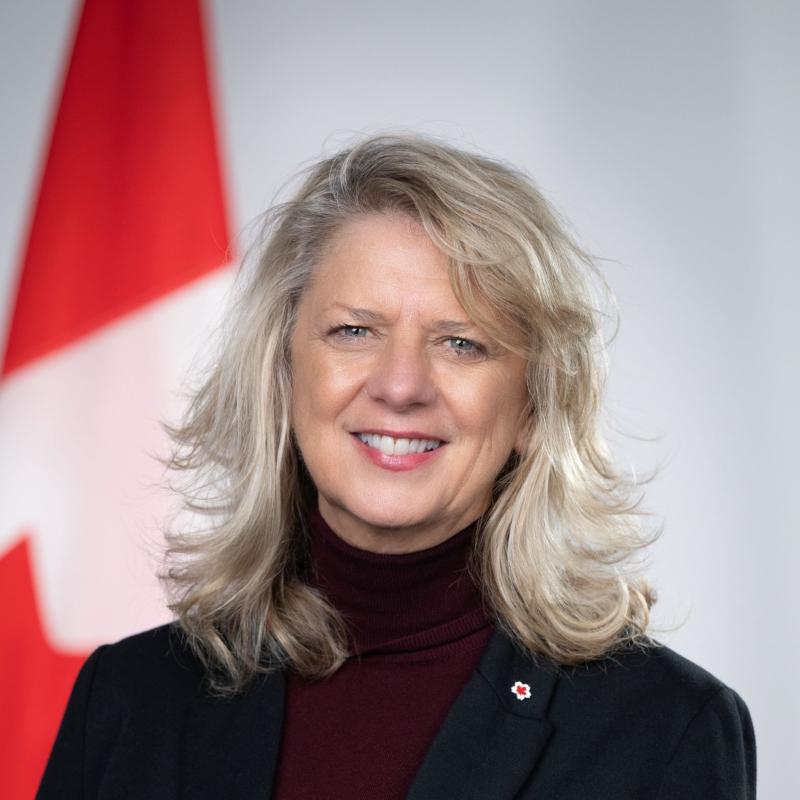
Laurie Peters
CG, Canada Pavilion, Osaka, Kansai EXPO 2025
Laurie Peters joined Foreign Affairs and International Trade Canada (now Global Affairs Canada) in 2011 as head of public affairs at the Embassy of Canada to Japan. During her 4-year posting, she also served as a trade commissioner overseeing the international education and culture industry portfolios. At Headquarters in Ottawa, Ms. Peters led the international dimension of Canada’s 150th anniversary of Confederation for Global Affairs Canada from 2015 to 2017. In this capacity, she established a team to advance a revitalized public diplomacy for Canada. Ms. Peters served as Canada's High Commissioner to Jamaica and the Bahamas from 2017 to 2020 with accreditation to The Cayman and Turks and Caicos Islands. Upon her return she acted as Senior Advisor on the Expo 2020 Dubai project and has been appointed as Commissioner General of Canada to Expo 2025 Osaka. Before joining Global Affairs Canada, Ms. Peters worked with the Department of Canadian Heritage as the director of public affairs for the Canada Pavilion at the 2005 World Exposition in Aichi, Japan. Prior to embarking on her 30+ years in Canada’s public service, she was a member of the first cohort of Canadians to participate in the Japan Exchange Teaching Program (JET) where she made life-long friends in the Tohoku region of Japan.
View Profile
Close
close
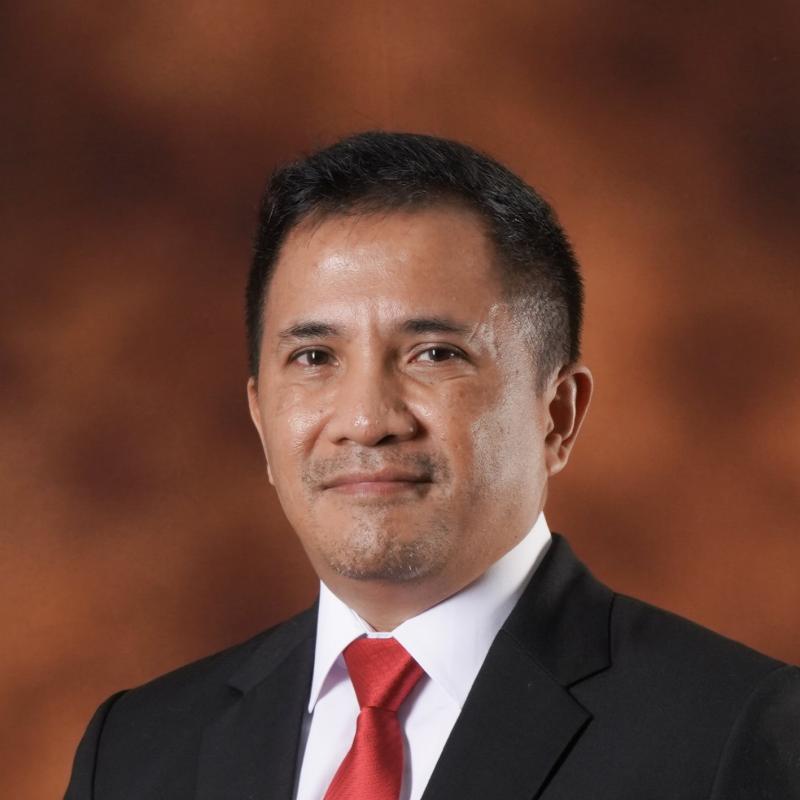
Leonardo A. A. T. Sambodo
Leonardo A. A. Teguh Sambodo
Deputy Minister for Food Affairs, Natural Resources, and Environment of the National Development Planning Agency (Bappenas),Indonesia
Leonardo A. A. Teguh Sambodo, Ph.D is the Deputy Minister for Food Affairs, Natural Resources and the Environment who has the responsibily for policy coordination and formulation, synchronization, monitoring, evaluation, and control, and formulation of strategic cross-sectoral national development planning in the fields of food affairs, natural resources (blue economy, forestry, water, mineral resources, and energy), and the environment (environment, biodiversity, climate change, low carbon development, green economy, circular economy). He is also the National Coordinator for Sustainable Development Goals Implementation. For Expo 2025 Osaka, He is assigned as the Person Responsible and Head of the Technical Team for the Preparation and Implementation of the Republic of Indonesia's Participation in Expo 2025 Osaka in Japan.
View Profile
Close
close
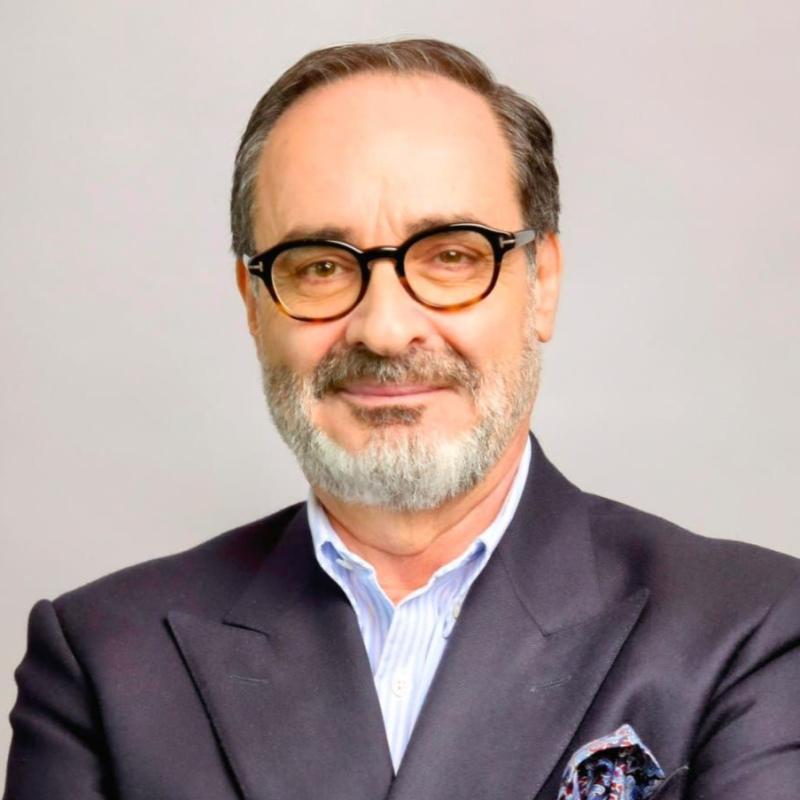
Dr. Tarek Oliveira Shayya
Founder & Managing Director, Gratiya Advisory, Former Executive Vice Chairman of Expo 2020 Dubai
Dr. Tarek Oliveira Shayya is a Global South strategist
and bridge-builder to states and boards, focused on
government and corporate transformation, corporate
diplomacy, and geo-economics. His career spans the
United Nations, national government, and the
boardroom. After 14 years with UN agencies, he joined
the UAE Government as Director of International
Affairs (2008–2017) in the Political Affairs Office of
the Vice President, where he led cross-government
strategy, scenario planning, and international
engagement. In 2016 he was appointed to the Expo 2020
Dubai Board and subsequently became Chief
International Participants Officer, responsible for
securing and managing participation by 192 countries
and numerous international organisations. From 2020 he
served as Executive Vice-Chairman with duties over
political affairs, domestic government engagement, and
transition and legacy planning for Expo City Dubai.
In 2022 he founded Gratiya Advisory, a boutique born
in the Global South to support governments, sovereign
investors, and companies on national transformation,
reputation and nation branding, sports and cultural
diplomacy, and growth via international expansion and
corporate diplomacy. Dr. Shayya holds a PhD in
International Relations (Northwestern University), a
Master’s Degree in Global Business (University of
Oxford, Saïd Business School), and INSEAD’s
International Directors Programme Certification. A
Brazilian national of Lebanese origin who has lived
and worked across Brazil, Syria, Russia, the United
States, and the Middle East—including two decades in
Dubai—he speaks 4 foreign languages.
View Profile
Close
close
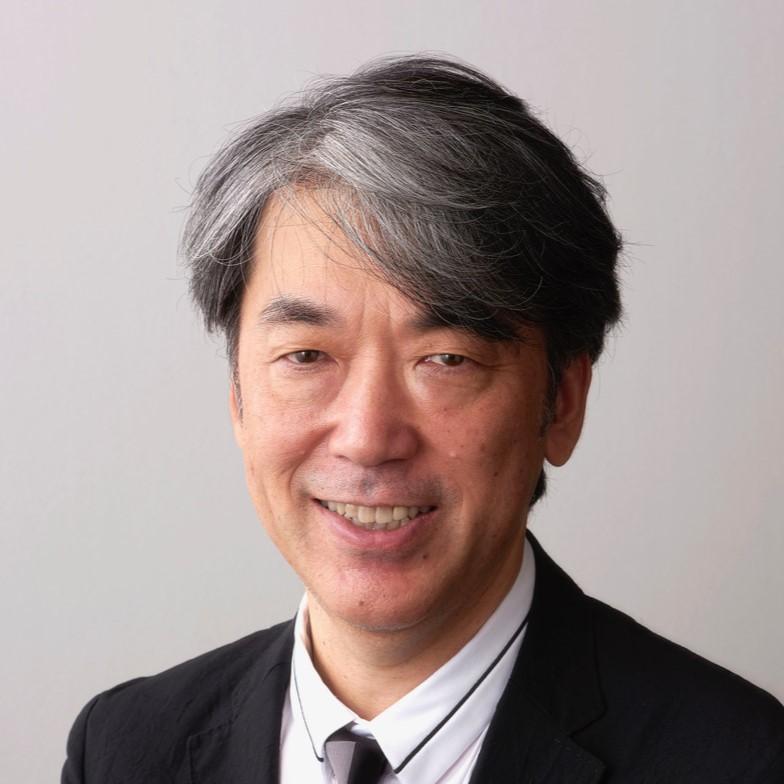
Dr. Shinya Hashizume
Distinguished Professor of Osaka Metropolitan University; Special Adviser to Osaka Prefectural Government and Osaka City Government, Vice-President of Japan Academy of Eventology, Theme Week Supervisor for Japan Association for the 2025 World Exposition, Doctor of Engineering
Distinguished Professor of Osaka Metropolitan
University; Director, Tourism Industry Strategy
Research Institute, Osaka Metropolitan University.
Born in Osaka City in 1960. Graduated from the
Department of Architecture, Faculty of
Engineering.Kyoto University; completed the
Master's Program at the Graduate School of
Engineering, Kyoto University; completed the Doctoral
Program at the Graduate School of Engineering, Osaka
University. Specializes in architectural history and
urban culture. Doctor of Engineering.
Conducts comprehensive research on creative cities,
urban cultural facilities, entertainment districts,
and commercial facilities. Also actively involved in
formulating tourism policies, citizen-participatory
town planning, regional branding, and event production
across various locations.
Serves as Special Advisor to Osaka Prefecture, Special
Advisor to Osaka City, Vice President of the Event
Society, and Vice President of the IR Gaming Society.
Also serves concurrently as Vice Chair of the Osaka
Chamber of Commerce and Industry Urban Revitalization
Committee, Vice Chair of the Osaka Chamber of Commerce
and Industry Tourism Promotion Committee, Advisor to
the Hikone Chamber of Commerce and Industry, Chair of
the Osaka City Urban Planning Council, and Chair of
the Osaka Prefecture and City Cultural Promotion
Council. Played a key role in the bid for the 2025
Japan International Exposition (Osaka-Kansai Expo).
Author of over 100 books, including: Clubs and the
Japanese, The Labyrinth City of Meiji, Japan's
Amusement Parks, The City that Attracts Visitors, The
Birth of the Modern City, Airplanes and Imagination,
History of Japan's Electrification, Modern
Architecture of Greater Osaka, Touring Setouchi
Modernism, Touring Modern Kyoto, Walking Through the
Era of Greater Osaka, Walking Through the Era of the
1970 Osaka Expo. Recipient of numerous awards
including the Display Design Research Grand Prize,
Energy Forum Award Excellence Prize, Osaka Vitality
Grand Prix Special Prize, Japan Tourism Research
Association Award, Architectural Institute of Japan
Award, and Japan Institute of Urban Planning Ishikawa
Award.
View Profile
Close
close
SDGs+Beyond Future Society for Life Week
Expos in a New Era and the Significance of Theme Weeks
The programme, together with the General Sponsors, explores: 'What is the significance of Theme Weeks at Expos, and what legacy from the Osaka-Kansai Expo’s Theme Weeks will lead to the future?'
-
2025.10.12[Sun]
19:15~20:45
(Venue Open 18:45)
- Theme Weeks Studio
OTHER PROGRAM
SDGs+Beyond Future Society for Life Week