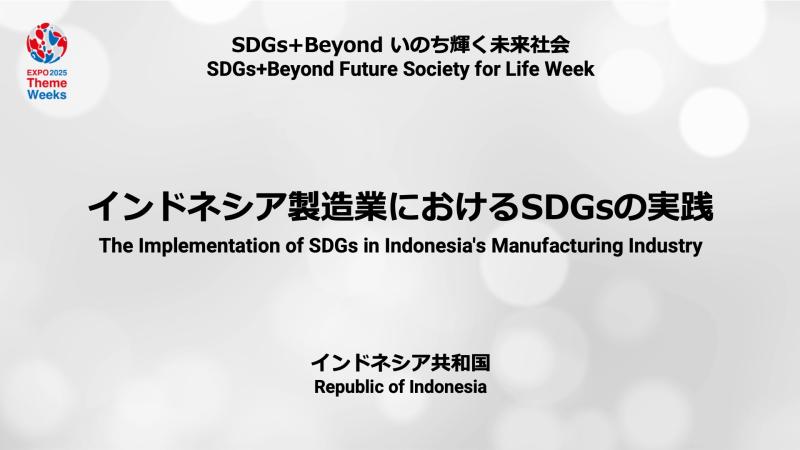
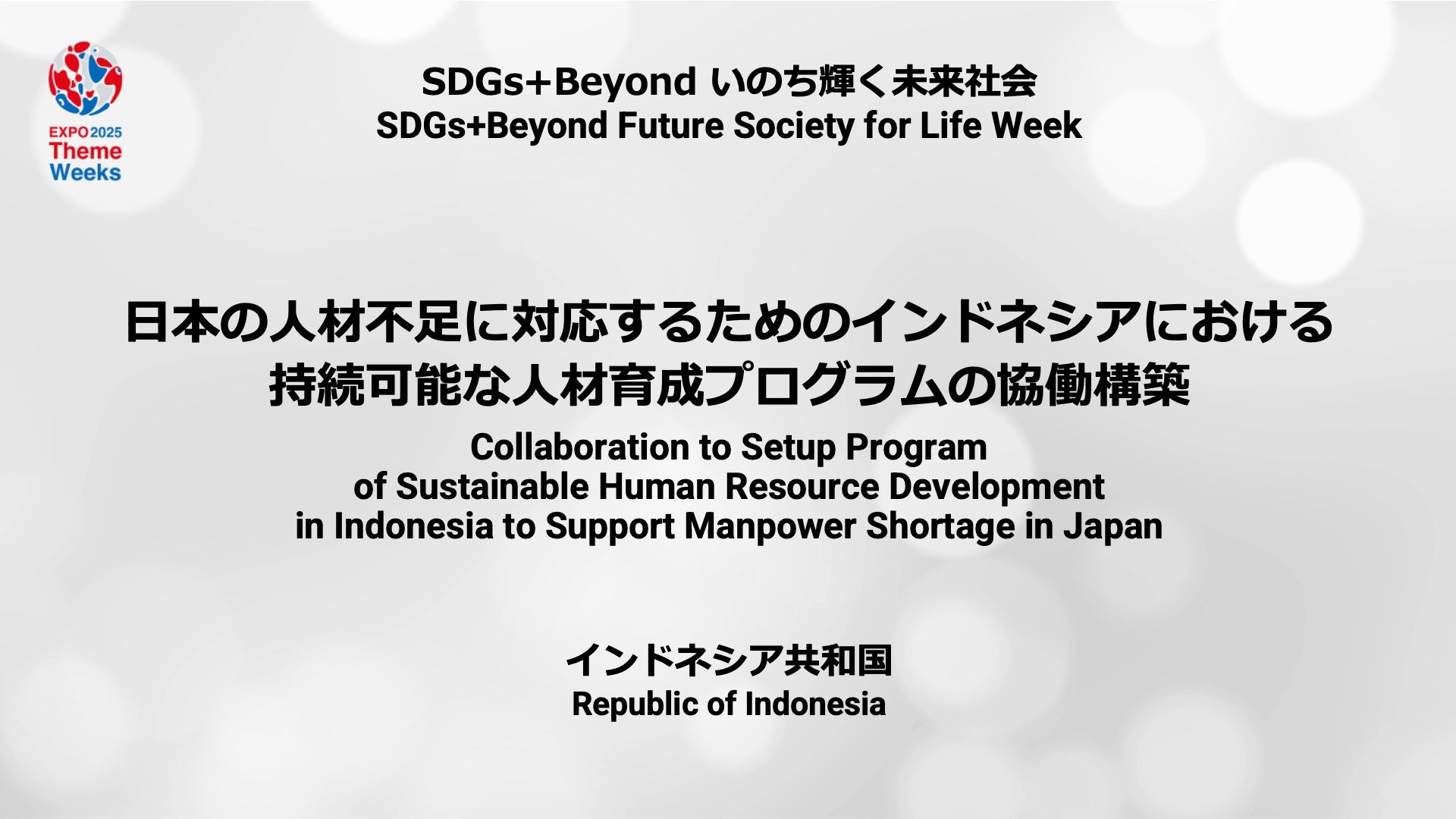
SDGs+Beyond Future Society for Life Week
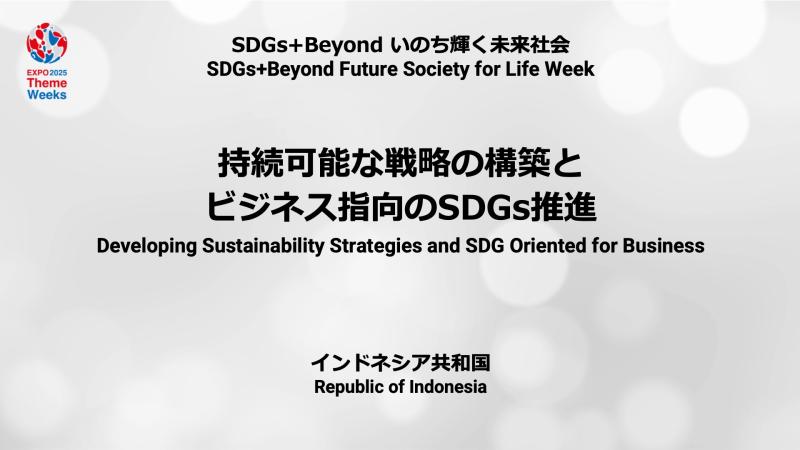
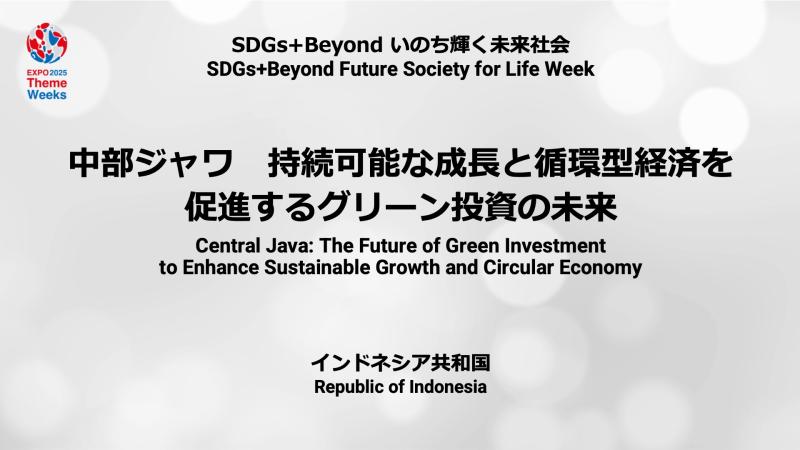
Collaboration to Setup Program of Sustainable Human Resource Development in Indonesia to Support Manpower Shortage in Japan
Republic of Indonesia
This programme is organised by IJBNet (Indonesia–Japan
Business Network), in collaboration with Gakken and JOBAGUS,
and supported by the Indonesian Ministry of Manpower
(Kemnaker) and the Overseas Workers Protection Agency
(KemP2MI). It responds to the Japanese government’s national
target of accepting 8.2 million specified skilled workers by
March 2029, aiming to establish a sustainable workforce
training system through bilateral cooperation between
Indonesia and Japan.
The initiative focuses on enhancing the quality and
cost-efficiency of Japanese language education, establishing
recruitment and training systems via regionally rooted
vocational training institutions (LPKs), and creating an
environment where Indonesian workers can live and work
safely in Japan. Through these measures, the programme seeks
not only to alleviate Japan’s serious labour shortage but
also to contribute to employment creation in Indonesia.
Recorded video available
Discussion
| Transmission of simultaneous interpretation | To be determined |
|---|---|
| Language of interpretation | To be determined |
-

Track Programme
-
Time and
Date of
the event -
-
2025.10.08[Wed]
16:00 ~ 18:00
(Venue Open 15:30)
-
- Venue
- Pavilion
- Indonesia Pavilion
Programme details
*Subtitles: Choose “Subtitles/CC” in the “Settings” (gear
icon) at the bottom right of the YouTube video.
*Subtitles may not show with multiple languages or overlapping
audio.
The session will begin with a presentation by the Indonesian
Ministry of Manpower on policies for the development and
evaluation of sending institutions (LPKs), followed by an
overview of support measures for workers travelling to Japan,
presented by the Overseas Workers Protection Agency.
Subsequently, Gakken Holdings will introduce a bilateral
Indonesia–Japan platform for accepting skilled foreign
workers, and JOBAGUS will outline the selection criteria and
recruitment procedures for Japanese language training
institutions (LPKs).
Exemplary sending institutions, namely SAITAMA in Central Java
and HADETAMA in West Java, will also be showcased,
highlighting concrete support frameworks provided by the
Ministry and relevant agencies.
Finally, comments and proposals from sending institutions
(P3MI) and Japanese host companies will be discussed,
fostering practical, two-way dialogue and envisioning the
future of sustainable workforce development and international
talent exchange. Delivered in a talk-show format, this
programme provides host companies, support organisations,
vocational training institutions, and local and educational
authorities with valuable insights and opportunities for
discussion.
Reports
【Reflection】
This programme focused on establishing a sustainable human
resource development system through collaboration with
Indonesia to address Japan’s serious labour shortage,
facilitating exchange of views among a wide range of
stakeholders.
The opening address was delivered by the Chair of the
Indonesia–Japan Business Network (IJBNet), highlighting the
organisation’s activities, which were established mainly by
young professionals and former international students. Against
the backdrop of economic and social challenges in both Japan
and Indonesia, the importance of bilateral cooperation in
human resource development was emphasised. Toru Goromaru,
Executive Director and Senior Managing Officer of Gakken
Holdings Co., Ltd., shared the current status and challenges
of accepting foreign workers, particularly in Japan’s care
sector, and presented initiatives such as pre-arrival Japanese
language training, etiquette education, and career support.
The Indonesian Ministry of Manpower and the Ministry of
Migrant Worker Protection provided specific explanations of
institutional arrangements, including quality management and
digitalisation of community-based vocational training
institutions (LPK) and systems for worker protection,
confirming that frameworks are in place to enable safe
deployment.
JOBAGUS introduced its human resource deployment ecosystem and
presented proposals for inter-university collaboration and
scholarship programmes, clarifying the potential for
integrated education and employment support and the
development of highly skilled personnel. This demonstrated
that bilateral cooperation is gradually taking shape in
practical terms.
During the Q&A session, the discussion highlighted the
need for Japanese companies to use language that foreign
workers can easily understand, emphasising the importance of
mutual learning. Overall, the programme provided a meaningful
opportunity for diverse stakeholders to converge perspectives
from policy, education, and industry, and to envision the
future of sustainable human resource exchange.
【Post EXPO Initiatives】
Following the programme, Indonesian and Japanese stakeholders
have been advancing concrete initiatives to strengthen
sustainable human resource development and deployment
systems.
On the Indonesian side, standardisation of community-based
vocational training institutions (LPK) and the introduction of
digital learning environments are promoting efficient,
high-quality Japanese language education and vocational
training. Government and private sector educational support
and instructor capacity-building initiatives continue, aiming
to produce talent aligned with industry needs. On the Japanese
side, the expansion of foreign worker intake, particularly in
the care sector, is being planned, alongside pre-arrival
education, living support, and measures to improve workplace
communication.
Organisations such as JOBAGUS and LPK Alpha are establishing
an integrated digital support system covering education,
deployment, and post-employment follow-up, to facilitate
information sharing and improve learning environments. Efforts
to develop highly skilled personnel through inter-university
collaboration and scholarship programmes are also progressing,
expected to contribute to the foundation for sustainable
cooperation between the industrial and educational sectors of
both countries.
Through ongoing collaboration among stakeholders, continued
coordination across education, labour, and living support is
anticipated to strengthen mutual understanding between Japan
and Indonesia and promote effective human resource
exchange.
*Part or all of this report was generated by AI.
Co-organiser
IJBNet(Indonesia–Japan Business Network)
GAKKEN
JOBAGUS
Kemnaker
KemP2MI
SDGs+Beyond Future Society for Life Week
Collaboration to Setup Program of Sustainable Human Resource Development in Indonesia to Support Manpower Shortage in Japan
This programme is organised by IJBNet (Indonesia–Japan
Business Network), in collaboration with Gakken and JOBAGUS,
and supported by the Indonesian Ministry of Manpower
(Kemnaker) and the Overseas Workers Protection Agency
(KemP2MI). It responds to the Japanese government’s national
target of accepting 8.2 million specified skilled workers by
March 2029, aiming to establish a sustainable workforce
training system through bilateral cooperation between
Indonesia and Japan.
The initiative focuses on enhancing the quality and
cost-efficiency of Japanese language education, establishing
recruitment and training systems via regionally rooted
vocational training institutions (LPKs), and creating an
environment where Indonesian workers can live and work safely
in Japan. Through these measures, the programme seeks not only
to alleviate Japan’s serious labour shortage but also to
contribute to employment creation in Indonesia.
-
2025.10.08[Wed]
16:00~18:00
(Venue Open 15:30)
- Pavilion
OTHER PROGRAM
SDGs+Beyond Future Society for Life Week