SDGs+Beyond Future Society for Life Week
City Climate Finance GAP Fund : Challenges and Opportunities Moving Forward
Malaysia
To highlights cities' critical role in combating
climate change, as they consume 78% of global energy and
produce over 60% of greenhouse gas emissions. With 68% of
the global population projected to live in urban areas by
2050, transforming cities is essential. The Global Covenant
of Mayors, with 11,500 local governments, emphasizes this,
but stronger international collaboration is needed for
timely decarbonization.
In 2023, eight Malaysian cities, including Iskandar
Malaysia, received the City Climate Finance GAP Fund for
low-carbon initiatives and flood risk management, supported
by the World Bank. At Expo 2025 Osaka, experts from the
World Bank and other organizations will discuss these
initiatives, exploring partnerships to help Malaysia achieve
its net-zero goals through international collaboration and
knowledge exchange. *All speakers are scheduled to
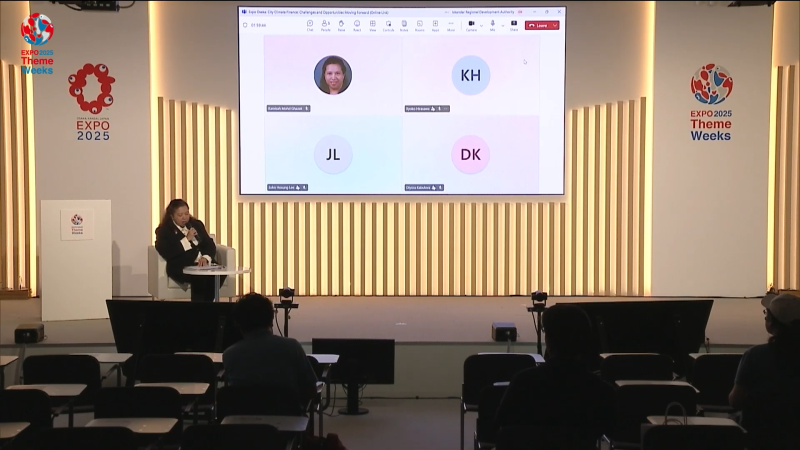
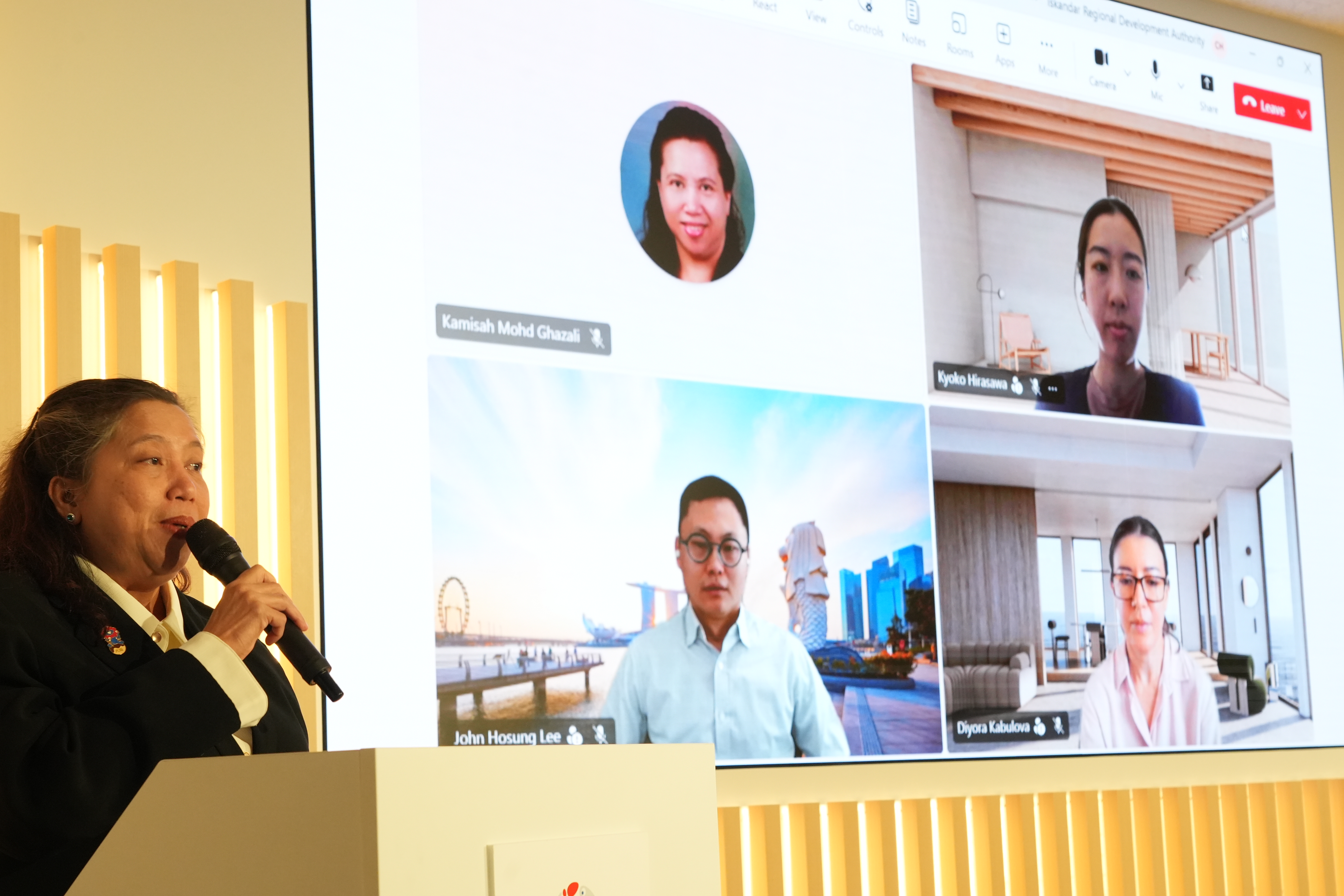
participate online.
Recorded video available
Discussion
- SDGs
- post-SDGs
- life
| Transmission of simultaneous interpretation | Not provided |
|---|---|
| Language of interpretation | English |
-

Track Programme
-
Time and
Date of
the event -
-
2025.10.02[Thu]
10:00 ~ 12:30
(Venue Open 09:30)
-
- Venue
- Theme Weeks Studio
Programme details
*Subtitles: Choose “Subtitles/CC” in the “Settings” (gear
icon) at the bottom right of the YouTube video.
*Subtitles may not show with multiple languages or overlapping
audio.
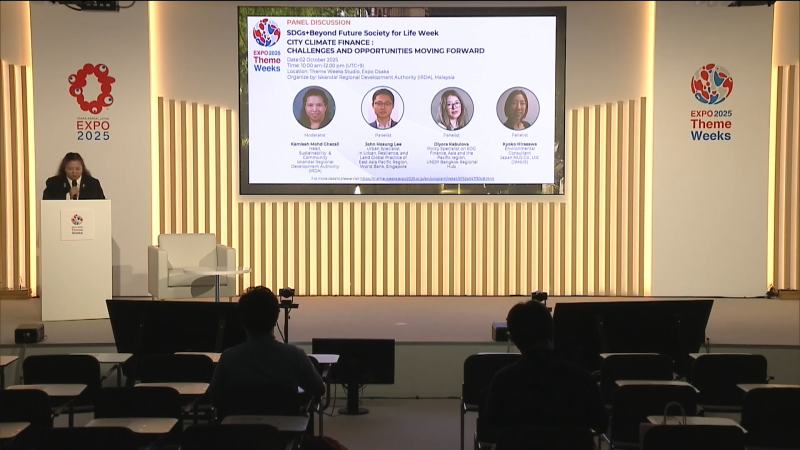
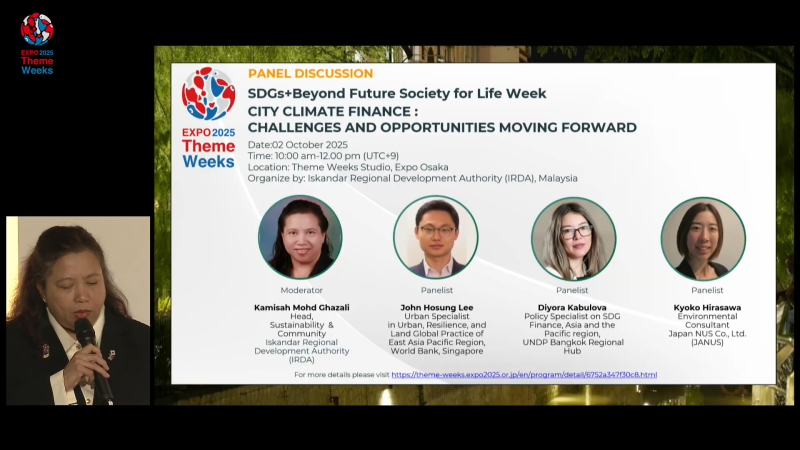
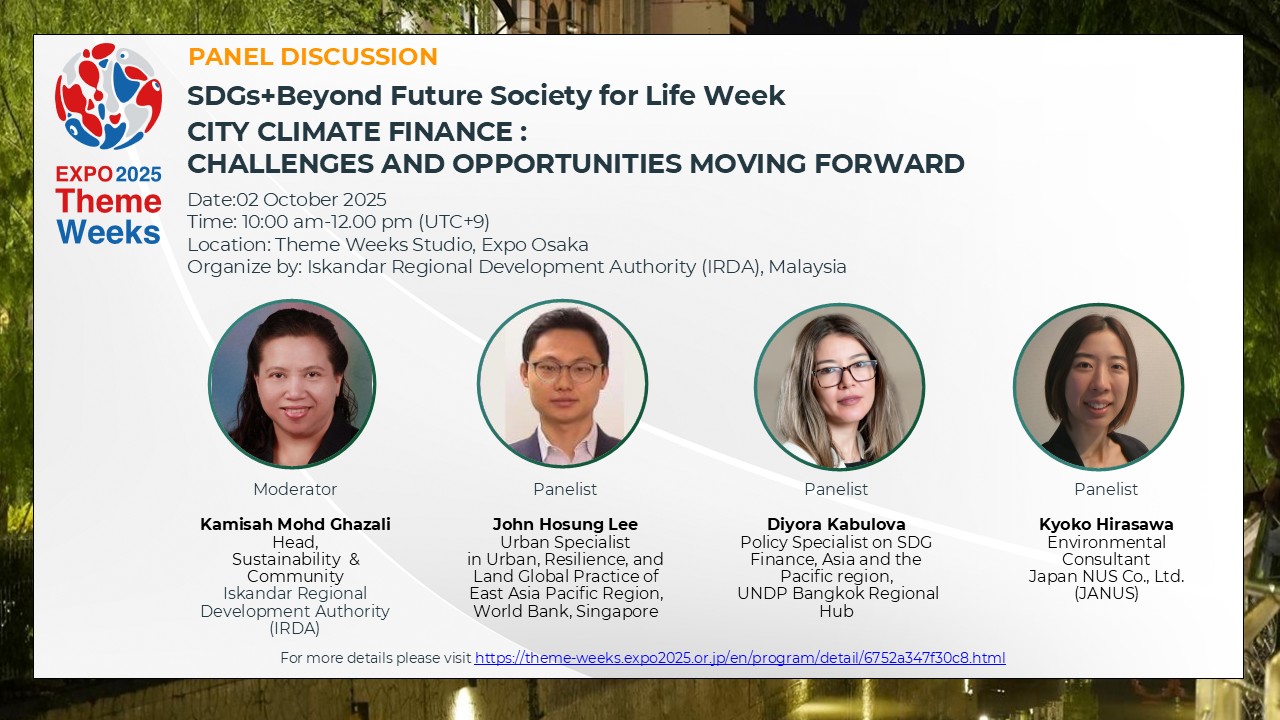
Topic: City Climate Finance GAP Fund : Challenges and
Opportunities Moving Forward
Organize by: Iskandar Regional Development Authority (IRDA)
Format: Panel Discussion
Moderator:Moderator:Kamisah Mohd Ghazali
Head,Sustainability & Community Iskandar Regional
Development Authority (IRDA)
Online Speakers:
-John Hosung Lee, Urban Specialist
in Urban, Resilience, and Land Global Practice of East Asia
Pacific Region, World Bank, Singapore
-Diyora Kabulova, Regional SDG Finance Policy Specialist
UNDP Bangkok Regional Hub
-Kyoko Hirasawa, Environmental Consultant
Japan NUS Co., Ltd. (JANUS)
Reports
【Reflection】
The session successfully gathered national, multilateral, and
local perspectives on advancing urban climate finance,
featuring speakers from the World Bank, UNDP, and Japan NUS
Co., Ltd. (JANUS). The programme opened with an introductory
presentation highlighting the Johor–Singapore Special Economic
Zone (JS-SEZ) as a testbed for green investments and
low-carbon collaboration.
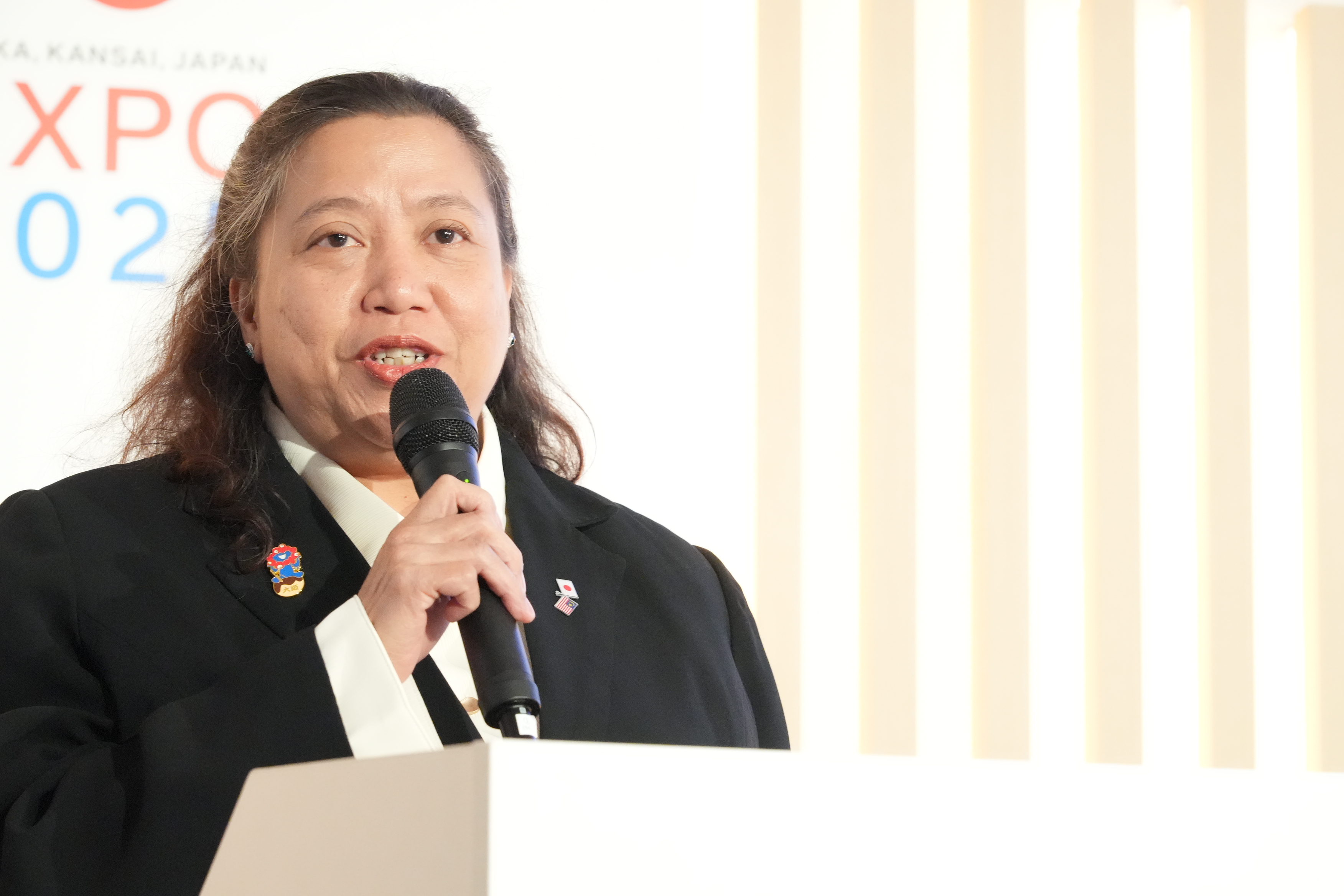
Mdm. Kamisah Mohd Ghazali, Head of Sustainability &
Community at IRDA, set the scene by outlining global climate
finance needs and opportunities for cities. This was followed
by expert presentations:
• Mr. John Hosung Lee (World Bank) highlighted the City
Climate Finance Gap Fund and the Malaysia Low Carbon and
Resilient Cities Programme, emphasizing the importance of
technical assistance moving from planning to bankable
projects.
• Ms. Diyora Kabulova (UNDP) discussed financing trends,
challenges, and instruments, including Malaysia’s Climate
Finance Innovation Lab, stressing municipal capacity building
and innovative financial tools.
• Ms. Kyoko Hirasawa (JANUS) presented Japan’s City-to-City
Collaboration Programme experience, showcasing decarbonization
feasibility studies and technology transfer in Malaysian
cities.
A moderated deep-dive panel dialogue enabled rich exchanges on
practical solutions to unlock climate finance, institutional
readiness, and the role of city partnerships. Speakers
explored pathways for improving project bankability, aligning
local initiatives with international financing frameworks, and
leveraging partnerships for innovation.
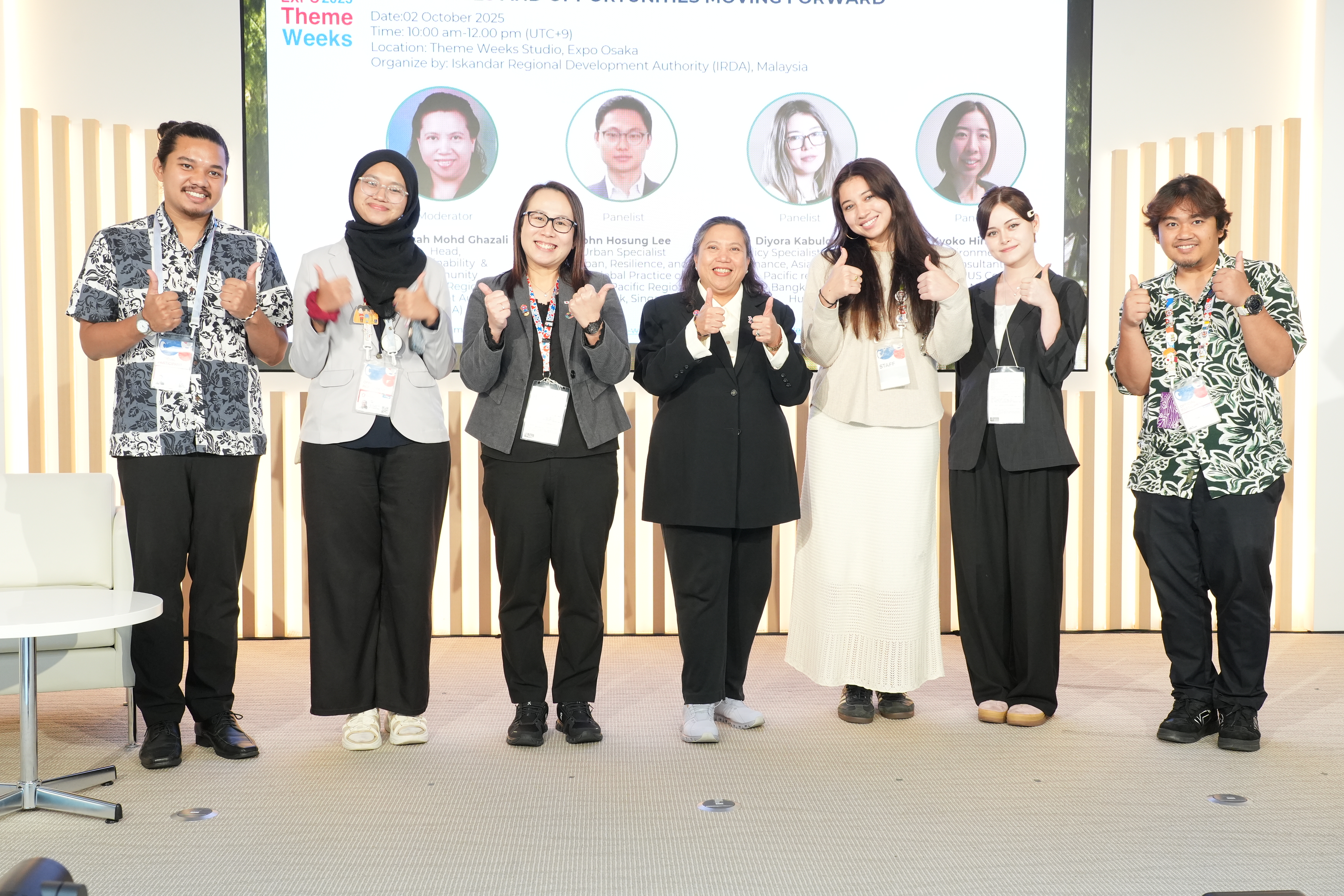
The programme achieved its objective of facilitating
cross-sectoral dialogue, building awareness of financing
mechanisms, and strengthening collaboration among cities,
development partners, and technical institutions.
【Post EXPO Initiatives】
After Expo 2025 Osaka, IRDA will continue building on the
momentum of this session to deepen international partnerships
and advance climate finance initiatives in Johor and Iskandar
Malaysia.
IRDA will take the lead in coordinating follow-up actions,
which include:
• Strengthening collaboration with multilateral and
international partners to support the development of a robust
pipeline of bankable urban climate projects in Johor,
especially within the JS-SEZ.
• Enhancing institutional readiness by improving financial
planning tools such as climate budget tagging,
climate-informed investment management, and exploring
innovative financing strategies at the local level.
• Expanding city-to-city collaborations and facilitating
knowledge and technology exchange with international cities to
accelerate decarbonization in areas such as sustainable
transport, renewable energy, and smart infrastructure.
• Positioning the Johor–Singapore Special Economic Zone
(JS-SEZ) as a demonstration site for innovative climate
finance approaches and low-carbon urban development models
that can be adapted and scaled to other regions in Malaysia
and beyond.
Importantly, IRDA currently has several projects in the
pipeline for which funding opportunities are being explored.
Through these initiatives, IRDA will work to translate
discussions into tangible projects, attract diverse sources of
financing, and accelerate the transition toward net-zero,
climate-resilient urban development in Johor.
Cast
Moderator

Kamisah Mohd Ghazali
Head, Sustainability & Community Iskandar Regional Development Authority (IRDA)
View Profile
Close
close
Speakers
John Hosung Lee
Urban Specialist in Urban, Resilience, and Land Global Practice of East Asia Pacific Region, World Bank, Singapore
View Profile
Close
close
Diyora Kabulova
Regional SDG Finance Policy Specialist, UNDP Bangkok Regional Hub
View Profile
Close
close
Kyoko Hirasawa
Environmental Consultant Japan NUS Co., Ltd. (JANUS)
View Profile
Close
close
SDGs+Beyond Future Society for Life Week
City Climate Finance GAP Fund : Challenges and Opportunities Moving Forward
To highlights cities' critical role in combating climate
change, as they consume 78% of global energy and produce over
60% of greenhouse gas emissions. With 68% of the global
population projected to live in urban areas by 2050,
transforming cities is essential. The Global Covenant of
Mayors, with 11,500 local governments, emphasizes this, but
stronger international collaboration is needed for timely
decarbonization.
In 2023, eight Malaysian cities, including Iskandar Malaysia,
received the City Climate Finance GAP Fund for low-carbon
initiatives and flood risk management, supported by the World
Bank. At Expo 2025 Osaka, experts from the World Bank and
other organizations will discuss these initiatives, exploring
partnerships to help Malaysia achieve its net-zero goals
through international collaboration and knowledge exchange.
*All speakers are scheduled to participate online.
-
2025.10.02[Thu]
10:00~12:30
(Venue Open 09:30)
- Theme Weeks Studio
OTHER PROGRAM
SDGs+Beyond Future Society for Life Week