The Future of Earth and Biodiversity Week
Big Data and Biodiversity - how should the latest
information technologies including AI be used and developed
by 2050 to achieve nature positive?
Agenda 2025 Co-created Programme
Shape New World Initiative
Discussion points for the future vision in 2050: To what
extent should humankind be able to acquire and track the
vast amounts of biological and environmental data? Who
should be able to use the data and for what purpose? How
much of this data should be incorporated into daily lives
and corporate activities and evaluations? How should society
be designed to handle invisible and unpredictable aspects of
the ecosystem that cannot be fully captured by existing
technologies?
Biodiversity is in decline at an alarming rate. Although the
biological information on the earth is vastly diverse, what
we can access is only a handful. In this time when AI and
other information technologies are transforming our society
at an unprecedented speed, we ask young change-makers how we
should utilize and manage information-related technologies
towards 2050 for biodiversity conservation and our planet.
Recorded video available
Discussion
- Biodiversity
- Nature Positive
- Big Data
| Transmission of simultaneous interpretation | Provided |
|---|---|
| Language of interpretation | Japanese and English |
-

Agenda2025
Co-created Programme
-
Time and
Date of
the event -
-
2025.09.27[Sat]
10:30 ~ 12:00
(Venue Open 10:00)
-
- Venue
- Theme Weeks Studio
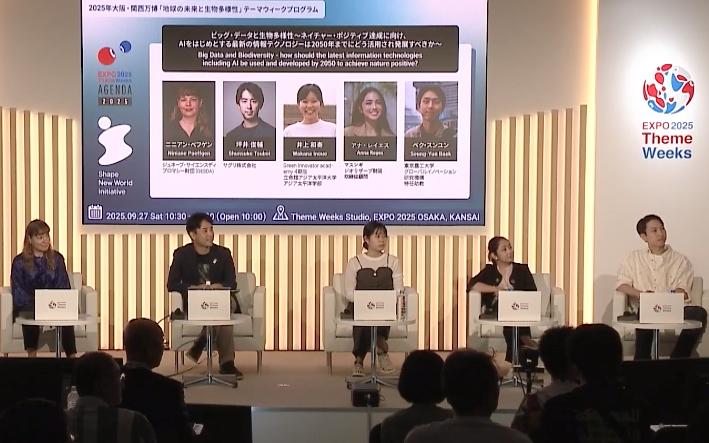
Programme details
*Subtitles: Choose “Subtitles/CC” in the “Settings” (gear
icon) at the bottom right of the YouTube video.
*Subtitles may not show with multiple languages or overlapping
audio.
The data on biodiversity is enormous, and what we know today
is only a fraction of it. Biodiversity data is complex and has
been limited in its ability to be collected on a large scale.
In the world of 2050, to what extent will it be possible to
collect such information, decipher it, and take action based
on it? How far should we be able to collect such information,
decipher it, and take action based on it in the world of 2050?
We will hear frank opinions from young leaders of the world,
including CEO of an AI startup, a biologist, and a nature
conservationist.
Reports
【Reflection】
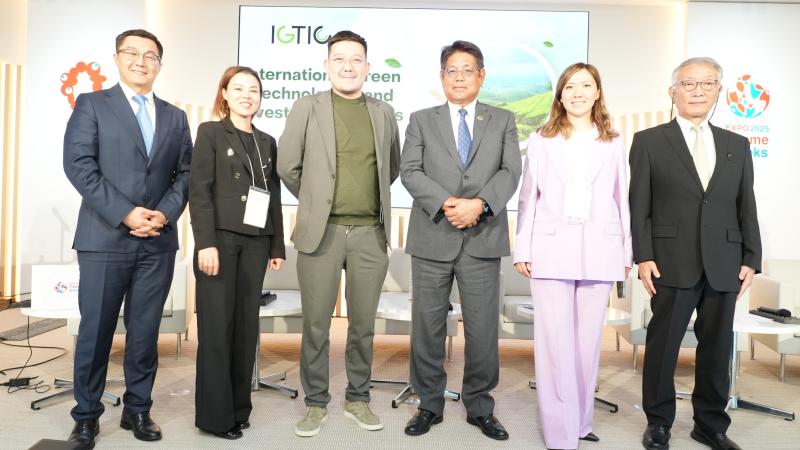
This session featured in-depth discussions on how to implement
Nature Positive by 2050 using AI and big data, drawing on
diverse field knowledge and perspectives from research and
business. The moderator first guided the audience and speakers
through a “visualizing 2050 concretely” exercise, encouraging
them to imagine details like colors, shapes, and smells before
returning to the present reality of 2025. This established a
clear stance: even when discussing technology, the
relationship between humans and nature remained central. This
introduction established a shared premise: data and AI can
serve not as tools for top-down management of nature, but as
mediators supporting symbiosis rooted in human sensibilities
and ethics.
The first point of discussion was clarifying the utility and
limitations of big data/AI. Wakana Inoue, drawing from
mangrove conservation practices in Fiji and Kiribati,
emphasized that while satellite data is effective for
assessing the health and growth potential of planted forests
across wide areas, it should not replace local experiential
knowledge but rather support it. For example, the approach
should respect residents' intuitive judgment about “where
to plant” and use data to reinforce that. She also introduced
an initiative where sales from crayons made from fallen leaves
are reinvested in reforestation, noting that visualizing the
joy of participation itself can become a driving force for
sustainability.
Shunsuke Tsuboi presented concrete examples of optimizing
soil, crop planting, and fertilization using satellite data
combined with AI, while stressing the importance of
translating this into actionable forms for field use. He
explained that in developing regions, where purchasing power
is constrained, companies and governments must bear the costs
and design schemes that deliver incentives to farmers. He also
mentioned low-barrier implementation scenarios, such as AI
providing individual farmers with fertilization and
cultivation advice simply by capturing audio or photos during
meetings or gatherings. Regarding the distance created by
technology's energy demands and abstract nature, he
stressed that design must convey value to users. Responding to
the moderator's question, he repeatedly highlighted the
dual pillars of “access” and “incentives.”
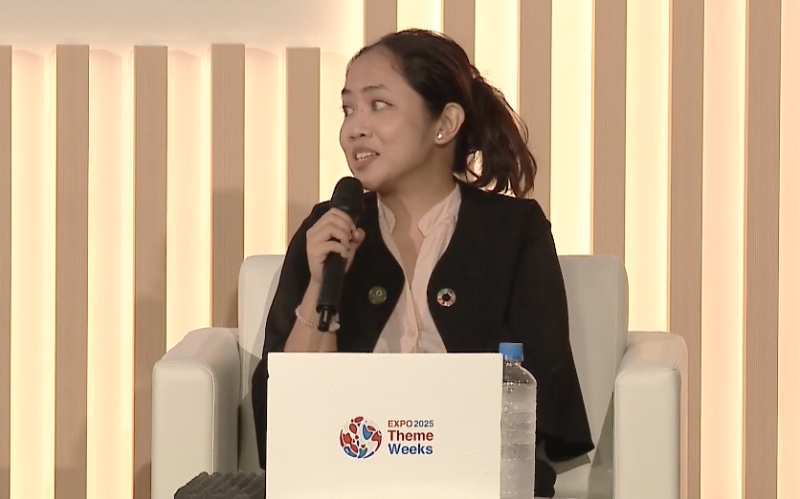
Anna Reyes, drawing on conservation experience in the Masungi
Geopark in the Philippines, raised the importance of data
sovereignty and equitable governance. She noted that AI and
sustainability frameworks often rely on Western-centric norms,
risking the exclusion of cultural contexts from the Global
South. She argued for a bottom-up framework that curbs the
arbitrariness of corporate reporting through third-party
verification while avoiding top-down “false solutions.”
Furthermore, he urged audience engagement with the message
that “what is unknown and unmeasured is undervalued,”
emphasizing that “measuring” is the starting point for
fostering affection and protection.
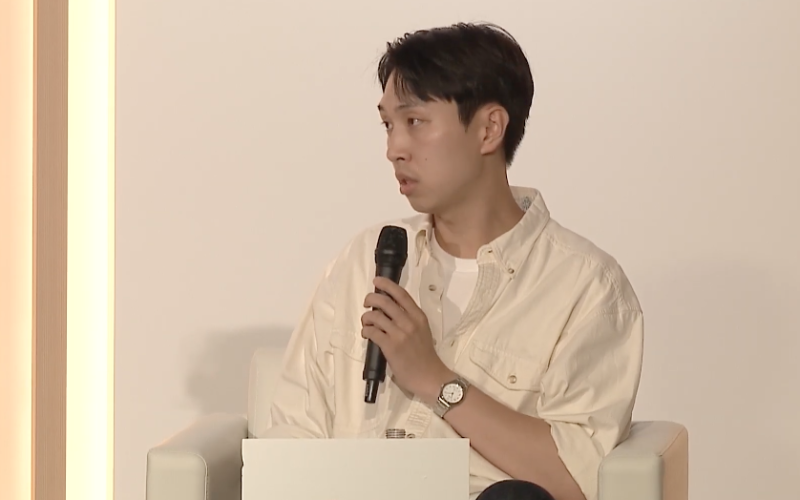
Wildlife expert Seung-Yun Baek introduced practical
applications using GPS tracking, camera traps, and AI image
recognition to understand animal movements and food resource
availability, enabling the prediction of human-wildlife
conflict risks in advance. However, he emphasized that while
the causes of conflicts are largely understood, society's
failure to act remains the core issue. He stressed the need
for mechanisms linking data value to tangible action.
Midway through the discussion, the moderator deliberately
raised the “danger of viewing the world solely through a
technological lens.” In response, the panelists carefully
addressed both the potential of AI (visualizing patterns,
early warning, efficient resource use, etc.) and the
requirements for its “use” to amplify connections with nature
and local communities. Inoue repeatedly stated, “Data is
support, not replacement.” Tsuboi touched on a future vision
where employment and on-the-ground connections in rural areas
increase, positioning AI as a tool that encourages humans to
return to the field.
During the Q&A, attendees posed sharp questions about
decolonizing data. Concerns centered on how to safeguard
decision-making authority and prevent the erosion of agency
and discretion for Global South stakeholders within structures
where data infrastructure and AI are predominantly designed by
English-speaking, developed nations.Anna Reyes acknowledged
that many existing frameworks rely on Western norms, while
reiterating the need to transition towards locally-driven
frameworks. Through the exchange with the audience, a deeper
understanding emerged that the key to implementation lies in
balancing governance—including ownership, verifiability, and
accountability—with the visualization of emotions like joy and
pride.
Through the discussion, speakers indicated a direction where
the use of big data/AI should be designed as a tool supporting
the “co-education” of people and nature, by creating a
back-and-forth between measuring (quantification) and sensing
(relationships/narratives). The discussion also highlighted
risks such as the energy demands of technology, privacy
concerns, and regional disparities. It was shared that we must
refine effective “uses” for 2050 through incentive design and
bottom-up consensus building.
【Post EXPO Initiatives】
The speakers highlighted the following as key perspectives for
their respective research and business development after the
conference:
(1) Strengthening efforts to provide data and technology in
ways that are meaningful for local communities.
・Develop accessible dashboards and actionable metrics aligned
with local priorities and traditional knowledge, connecting
them to decision-making by residents, field practitioners, and
policymakers
・Advance responsible and equitable data governance
frameworks, embedding data sovereignty, fair benefit
distribution, third-party verification, and accountability
into operational rules.
・Foster collaboration among businesses, startups,
governments, and regions to clarify incentive structures,
creating an environment where optimized practices can be
adopted without overburdening agriculture or conservation
sites.
(2) Research and Technology Development
・Integrate data from satellites, sensors, camera traps, GPS,
etc., using AI to advance monitoring that enhances ecosystem
understanding and protection while minimizing the
system's own environmental impact
・In urban areas, expand models that incorporate biodiversity
value and ecosystem services (flood mitigation, heat island
reduction, physical and mental health) into design and
operational KPIs alongside aesthetic considerations for green
spaces, enabling evaluation from the planning stage
・In education and outreach, implement programs fostering
wonder and emotional connection to nature, particularly among
younger generations. Provide accessible information to shift
consumer and voter choices toward biodiversity-conscious
options. Through these efforts, strengthen collaboration among
stakeholders and implement nature-positive outcomes in
society.
*Part or all of this report was generated by AI.
Cast
Moderator

Niniane Paeffgen
Geneva Science and Diplomacy Anticipator (GESDA) Foundation
Niniane is the Program Lead for the Public Portal to Anticipation, an interactive platform at the intersection of arts, science and diplomacy, empowering citizens from diverse backgrounds to anticipate possible futures based on the GESDA Science Breakthrough Radar. Previously, she was Managing Director of the Swiss Digital Initiative and a member of the WEF Global Shapers Community.
View Profile
Close
close
Speakers

Shunsuke Tsuboi
Sagri Co,.Ltd
Graduated from the Department of Mechanical
Engineering, Yokohama National University.
Founded 'Sagri Co,.Ltd' in 2018.
As an impact startup from Gifu University, working to
solve global agricultural and environmental issues
through visualization of farmland using satellite data
and AI.
Forbes 30 under 30 Japan and Asia.
Received the Prime Minister's Award at the 6th
Space Development and Utilization Awards
View Profile
Close
close
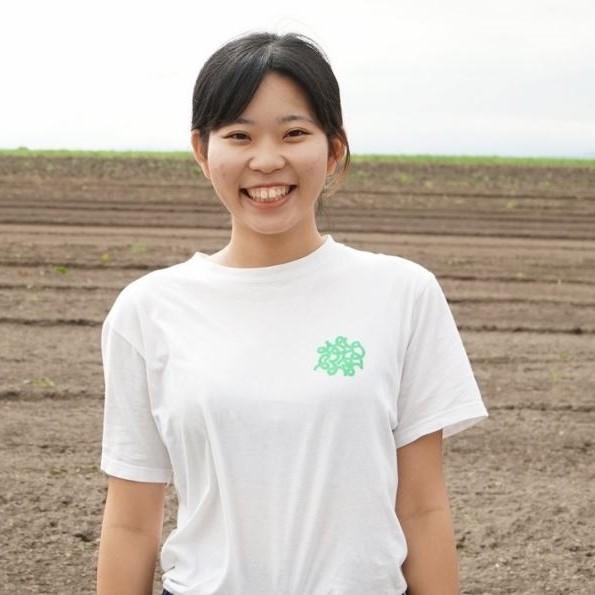
Wakana Inoue
Green innovator academy 4th generation, Ritsumeikan Asia Pacific University 3rd grade.
Wakana is from Yokkaichi, Mie and currently studying
at the College of Asia Pacific Studies at Ritsumeikan
Asia Pacific University in Oita.
Her fascination with mangroves and dedication to
reforestation efforts in response to rising sea levels
in Pacific Island nations began when she watched a
video about Pacific island countries in junior high
school. While studying in Fiji and Kiribati as a 15th
batch of the Tobitate! Study Abroad Initiative of the
Japanese government,she founded a project called
WAKA., which produces crayons from mangrove leaves and
allocates a portion of the proceeds to support
mangrove reforestation in Pacific Island nations. This
initiative successfully raised 1 million JPY and
continues to make impact. She is also actively
involved in organizing Chikyu Ryugaku, a residential
program held in Toya, Hokkaido, that invites youth
from across Japan to engage with the region in
sustainable agriculture, encouraging them to reflect
deeply on the meaning of life, their paths, and
broader societal issues.
View Profile
Close
close

Anna Reyes
Masungi Georeserve Foundation
Anna Reyes is a sustainability leader and strategy
consultant with over 10 years of experience driving
transformative environmental and business outcomes
across multinational organizations, social
enterprises, and international institutions. She
specializes in social, environmental and economic
impact, working extensively with the United Nations
system and International Financial Institutions across
New York, Geneva, and Istanbul.
As Co-Founder and Executive Director of the Philippine
Sustainability Intelligence Association (Sustina),
Anna establishes Filipino sustainability standards and
leads anti-greenwashing advocacy. She serves as
Secretariat of the Upper Marikina Watershed Coalition,
leading critical biodiversity protection initiatives,
and is Special Advisor to the Board of the Masungi
Georeserve Foundation, a conservation project and
biodiversity hotspot that has become a
internationally-acclained environmental protection
project.
Previously Climate and Sustainability Lead at Boston
Consulting Group in Southeast Asia, Anna combines deep
expertise in ESG frameworks, AI integration, and
systems thinking with operational excellence to scale
sustainability solutions. She regularly represents
organizations at major global conferences, including
UN COP, CBD, GWP, and NYC Climate Week.
View Profile
Close
close

Seung-Yun Baek
Assistant Professor, Institute of Global Innovation Research, Tokyo University of Agriculture and Technology
Seung-Yun Baek is an Assistant Professor at the Tokyo University of Agriculture and Technology, focusing on wildlife ecology and human–wildlife coexistence. Since his Ph.D. studies in Ecology at the Tokyo University of Agriculture and Technology, he has studied how large mammals—particularly Asian black bears—adapt to human-modified landscapes. His research uses GPS tracking, behavioral modeling, and species distribution analysis to better understand wildlife ecology and develop effective approaches to coexistence with humans.
View Profile
Close
close
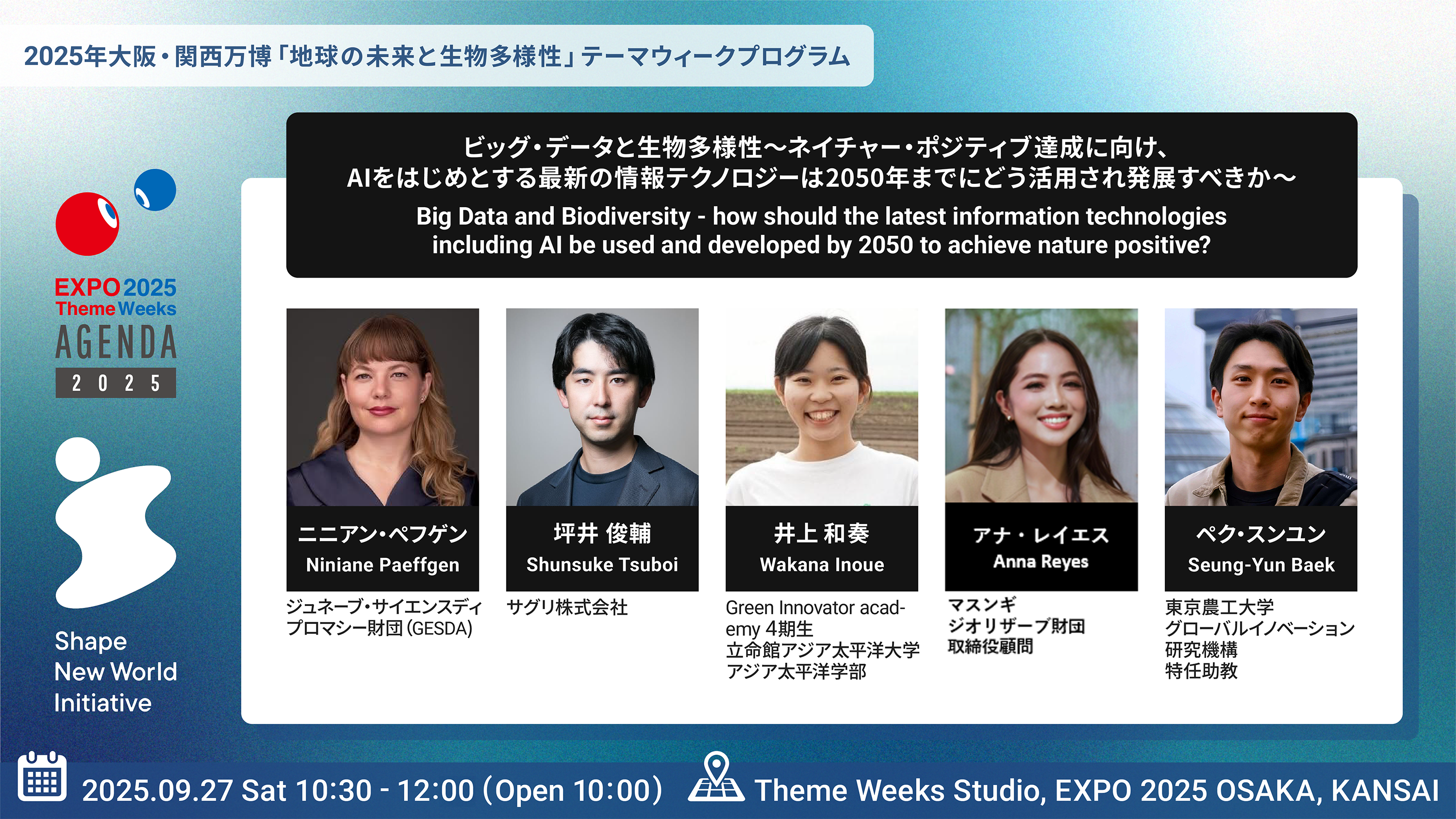
The Future of Earth and Biodiversity Week
Big Data and Biodiversity - how should the latest information
technologies including AI be used and developed by 2050 to
achieve nature positive?
Agenda 2025 Co-created Programme
Discussion points for the future vision in 2050: To what
extent should humankind be able to acquire and track the vast
amounts of biological and environmental data? Who should be
able to use the data and for what purpose? How much of this
data should be incorporated into daily lives and corporate
activities and evaluations? How should society be designed to
handle invisible and unpredictable aspects of the ecosystem
that cannot be fully captured by existing technologies?
Biodiversity is in decline at an alarming rate. Although the
biological information on the earth is vastly diverse, what we
can access is only a handful. In this time when AI and other
information technologies are transforming our society at an
unprecedented speed, we ask young change-makers how we should
utilize and manage information-related technologies towards
2050 for biodiversity conservation and our planet.
-
2025.09.27[Sat]
10:30~12:00
(Venue Open 10:00)
- Theme Weeks Studio
OTHER PROGRAM
The Future of Earth and Biodiversity Week