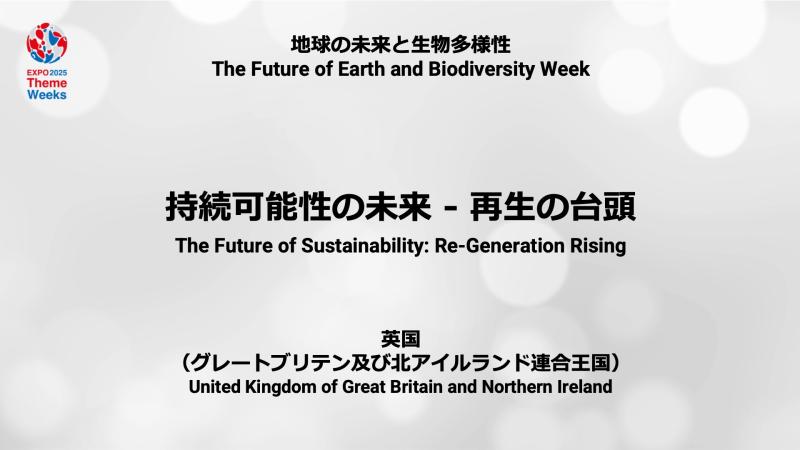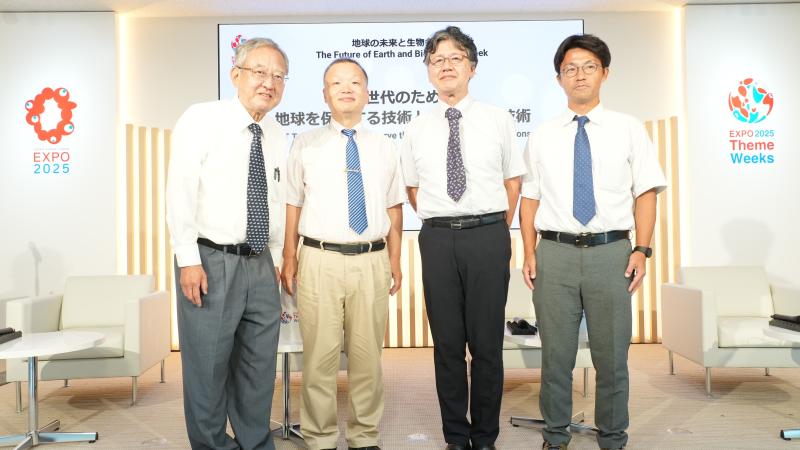
The Future of Earth and Biodiversity Week
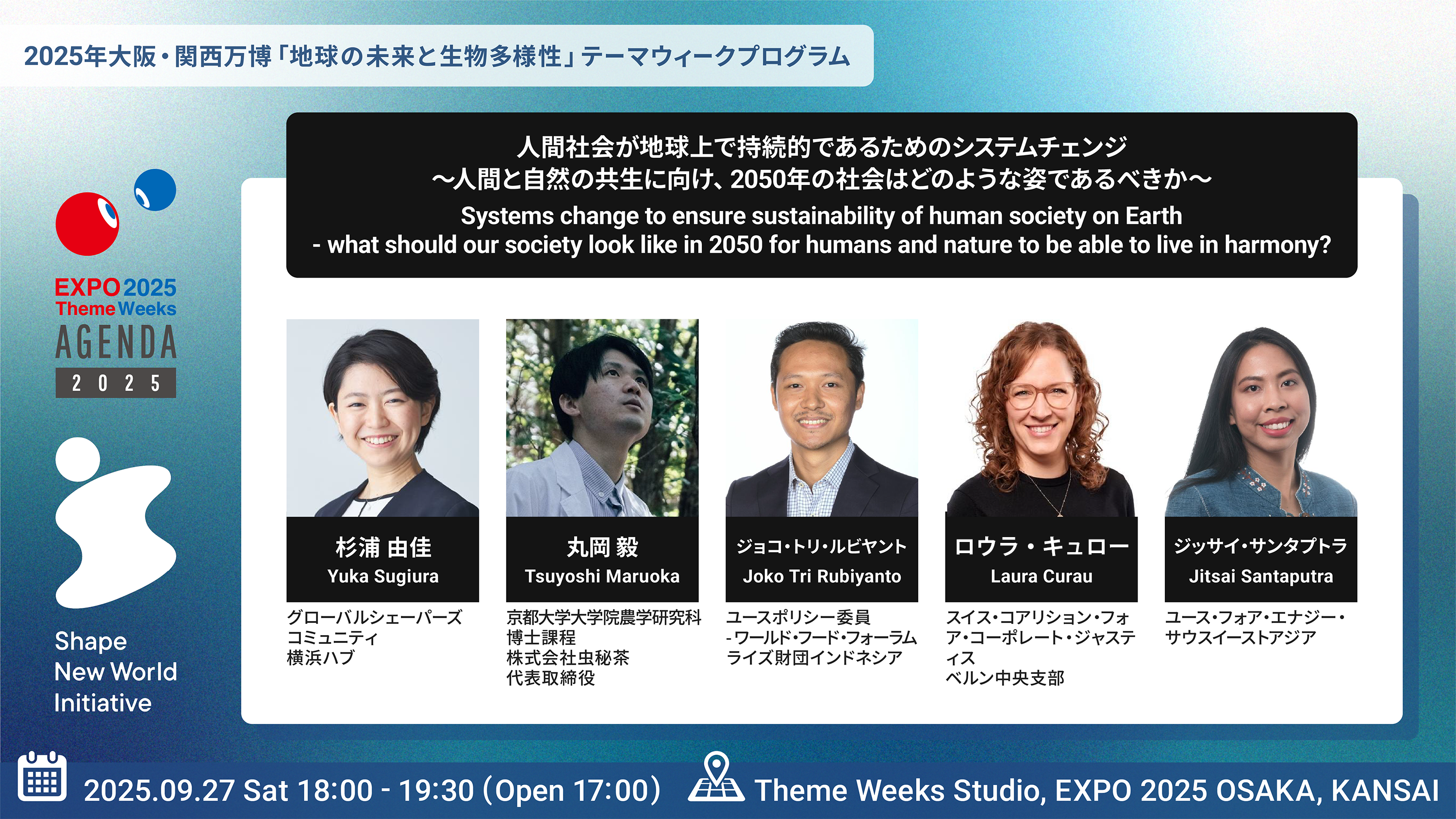
Systems change to ensure sustainability of human society on
Earth - what should our society look like in 2050 for humans
and nature to be able to live in harmony?
Agenda 2025 Co-created Programme
Shape New World Initiative
Discussion points for the future in 2050: How should
government, corporate, and individual money be distributed
to conserve the natural environment? Among many political
issues, whose voice should be included and how should policy
decisions be made to achieve the coexistence of nature and
human beings? How should development and conservation be
balanced? What kind of education should be provided to
children, youth, and adults regarding nature, and what kind
of leaders should be developed?
As we see more and more environmental challenges becoming
prominent, the existence of human society on Earth is being
questioned and it is clear that fundamental social changes
need to be made. What is the form of society that will allow
us to live on Earth for a long time to come? What kinds of
updates should be made by 2050 in the areas of economy,
politics, community development, and education, among
others? We will ask honest opinions of young leaders
actioning for our future planet.
Recorded video available
Discussion
- Biodiversity
- Nature Positive
- Systems Change
| Transmission of simultaneous interpretation | Provided |
|---|---|
| Language of interpretation | Japanese and English |
-

Agenda2025
Co-created Programme
-
Time and
Date of
the event -
-
2025.09.27[Sat]
18:00 ~ 19:30
(Venue Open 17:00)
-
- Venue
- Theme Weeks Studio

Programme details
*Subtitles: Choose “Subtitles/CC” in the “Settings” (gear
icon) at the bottom right of the YouTube video.
*Subtitles may not show with multiple languages or overlapping
audio.
What should our society look like in 2050 for humans and
nature to coexist? In our attempt to find an answer to this
huge question, we will explore different elements of society
through discussions;
-What kind of changes should be seen in company operation and
the way of consumption to properly incorporate impacts on the
natural environment into our lifestyles, which has long been
overlooked and deprioritized?
-Whose voices should be heard and what processes should be
taken when it comes to policy-making?
-In this world where more and more populations live in urban
areas, what are the roles urban and rural environments should
play, and how should they complement each other?
-What kind of education and communities are necessary to
nurture future leaders?
Panelists coming from a wide range of sectors including
governments, international organizations, NGOs, research
institutions, and the private sector, will discuss the topic
from their unique perspectives.
Reports
【Reflection】
This session examined system change for implementing
“human-nature symbiosis” by 2050 from multifaceted
perspectives including politics, food, energy, regional
industries, and indigenous communities.
Moderator Yuka Sugiura encouraged participants to concretely
envision society in 2050, presenting a framework for
cross-cutting discussions on the quality of democracy,
regional voices, and economic structures.
Laura Curau introduced the strengths of her country's
direct democracy system. She then illustrated the
environmental and human rights impacts Swiss companies have
overseas, advocating for the need to legally ensure corporate
responsibility across borders. She envisioned a 2050 society
where companies respect human rights and the environment
throughout their entire supply chains, and where citizens can
make informed decisions based on access to information.
Jitsai Santaputra pointed out that the core of a “fair energy
transition” is the question of fairness for whom. Using the
example of the risk of resident relocation and cultural
heritage loss associated with hydropower development on the
Mekong River, he visualized the trade-off between “expanding
clean power” and “conserving biodiversity and culture,”
clarifying that justice issues differ between Europe and
Africa/Asia. He further emphasized the importance of
intergenerational dialogue bridging old and new technologies,
such as decentralization, energy storage, and demand
response.
Joko Tri Rubiyanto proposed shifting from extractive
relationships to partnerships, based on Indonesia's
reality of massive waste of non-standard agricultural products
and palm oil dependency in certain regions. He introduced
practices co-created with women's groups and farmers to
improve incomes through adding value to non-standard crops,
intercropping (e.g., palm + coffee), and utilizing trunk wood
for saccharification. He stated that consumer choices
(purchasing certified products) drive market transformation.
Tsuyoshi Maruoka presented a circular model through the “Bug
Secret Tea” case study, demonstrating how science and culture
can rediscover the value of overlooked natural resources,
leading to the utilization of abandoned farmland and job
creation. Simultaneously, he emphasized the need for education
that helps people overcome preconceptions like “I dislike
bugs” through hands-on experience, fostering a personal
connection to nature.
During the Q&A, key discussion points included: ① How to
reflect minority voices in systems (the role of independent
media and discussion spaces), ② Pricing and profit
distribution for equal partnerships between large corporations
and local communities, ③ Bridging energy security with the
variability risks of renewable energy, and ④ Education and
creating spaces to increase citizens' opportunities for
contact with nature. Speakers agreed that while hasty change
risks leaving people behind, a “phased and inclusive” approach
can minimize resistance and achieve a transition involving
behavioral change.
Overall, the 2050 vision was outlined as integrating: the
internationalization of corporate responsibility, a just
energy transition, community-led food and resource cycles, the
centralization of indigenous knowledge, and experiential
learning.
【Post EXPO Initiatives】
The speakers highlighted the following as key perspectives for
their respective research and business development after the
conference.
(1) To translate discussions into implementation, it is
necessary to advance the following in a phased and inclusive
manner: First, strengthen the effective operation and
third-party verification across the entire supply chain, based
on international standards for corporate responsibility (such
as human rights and environmental due diligence). In the
energy sector, expand the societal implementation of
distributed power generation, energy storage, and flexible
demand-side management. Institutionalize a Just Transition by
incorporating dialogue between regions and generations into
the design.
(2) Regarding food and regional economies, it is necessary to
add high value to non-standard and underutilized resources,
expand knowledge of intercropping and circular utilization to
other regions, and establish mechanisms for fair price
determination and profit distribution premised on the
participation of women and youth.
For indigenous communities, frameworks must be expanded to
respect their data sovereignty and decision-making authority,
ensuring their core involvement in designing conservation and
adaptation measures.
(3) From an education and outreach perspective, opportunities
for direct encounters with nature and moments of “wonder”
should be increased through outdoor experiences and programs
at museums, schools, and community centers. Information
provision should be strengthened to encourage behavioral
change among consumers and voters.
By integrating these elements, we proposed building a
collaborative platform linking law, markets, and communities.
Standardizing transition designs that minimize
resistance—through phased approaches, compensation,
reskilling, etc.—could embed true symbiosis between humans and
nature in society by 2050.
*Part or all of this report was generated by AI.
Cast
Moderator
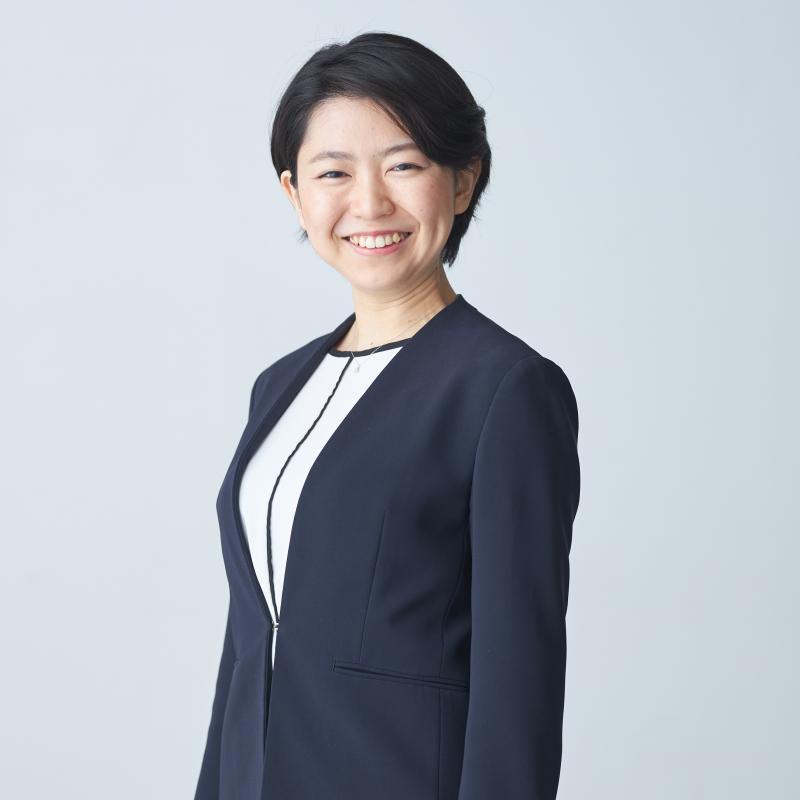
Yuka Sugiura
Global Shapers Community Yokohama Hub
As a member of Global Shapers Community Yokohama Hub, Yuka works as a biodiversity communicator. With experience in nature conservation across Japan, India, and the Netherlands, she provides unique perspectives gained from her work in the business, NGO and academic sectors. Yuka is also the founder and former leader of Mend It Mine, a sustainable fashion movement promoting mending to address adverse impacts of the fashion industry.
View Profile
Close
close
Speakers
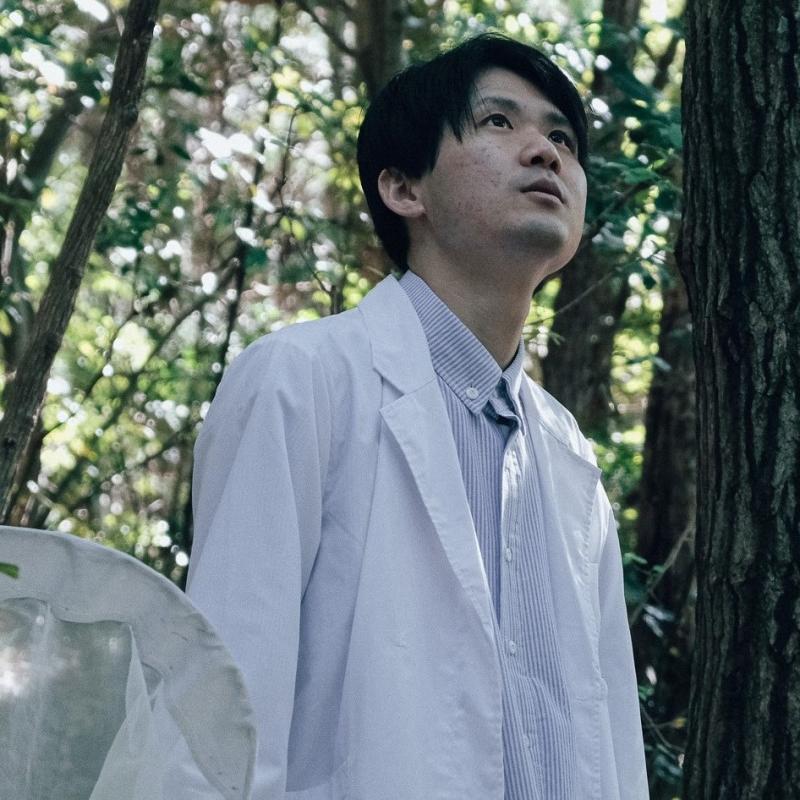
Tsuyoshi Maruoka
PhD student at Graduate School of Agriculture, Kyoto University Founder of Chu-hi-cha (Insect Secret Tea) Co., Ltd.
Tsuyoshi Maruoka is a Ph.D. candidate at the Graduate School of Agriculture, Kyoto University, specializing in chemistry and ecology. Alongside his research, he has pioneered the business "Insect Secret Tea," inspired by his discovery that the droppings of moth larvae, which feed on specific plants, can produce remarkably delicious tea. By pairing different insects with plants, he collects and explores how their droppings’ aroma and flavor change, delving into the fascinating complexity of biological processes. His company also works directly with Michelin three-star restaurants and has developed spirits using insect droppings as a key ingredient. Through this business, Maruoka aims to rediscover the economic value of natural resources and contribute to regional revitalization.
View Profile
Close
close

Joko Tri Rubiyanto
Youth Policy Board - World Food Forum, RISE Foundation Indonesia
Joko Tri Rubiyanto is a dedicated advocate for youth engagement in advancing sustainable food systems and shaping future food policies. He is pursuing a master’s degree in Food Studies at Wageningen University and Research. His work emphasizes sustainable agriculture, healthier food habits, and food innovation among young people. Recently awarded the Food Sustainability Award by the International Union of Food Science and Technology, Joko has also gained recognition for his academic and leadership achievements. Selected to the Youth Policy Board of the World Food Forum for 2023-2025, he advocates for youth involvement in the agrifood system. In collaboration with the Commonwealth Scientific and Industrial Research Organisation, he contributed to creating innovation brokering modules for Asia-Pacific farmers. Joko also promotes healthier and sustainable food consumption among youth in Indonesia and the broader Asia-Pacific region, amplifying youth voices in inclusive, forward-thinking agrifood policies.
View Profile
Close
close

Laura Curau
Swiss Coalition for Corporate Justice, Center Party of the City of Berne
Laura Curau (35), Head of Policy at the Swiss Coalition for Corporate Justice, leads lobbying for a corporate responsibility law in Switzerland.
View Profile
Close
close

Jitsai Santaputra
Youth for Energy Southeast Asia
Jitsai Santaputra is the co-founder of Youth for Energy Southeast Asia, and member of the Thailand Youth Climate Council. Her background lies in the renewable energy sector with a particular interest in carbon neutrality, circular economy, and sustainability. Jitsai champions the inclusion of women and youth in decision making roles and works to raise awareness of the opportunities and challenges of the just energy transition in Asia Pacific region. In 2023, she co-founded a youth-led non-profit organization called Youth for Energy Southeast Asia. She was appointed by Sustainable Energy for All and TED Countdown as the SDG7 Global Youth Ambassador for Southeast Asia for 2023-24. She served as the Lead Youth Delegate for Thailand to COP28 Dubai and COP29 Baku, and is a founding member of Thailand Youth Climate Council. In recognition of her advocacy work, Jitsai received the prestigious Revolutionaries Steve Sawyer Memorial Award from Global Wind Energy Council in 2024.
View Profile
Close
close
The Future of Earth and Biodiversity Week
Systems change to ensure sustainability of human society on
Earth - what should our society look like in 2050 for humans and
nature to be able to live in harmony?
Agenda 2025 Co-created Programme
Discussion points for the future in 2050: How should
government, corporate, and individual money be distributed to
conserve the natural environment? Among many political issues,
whose voice should be included and how should policy decisions
be made to achieve the coexistence of nature and human beings?
How should development and conservation be balanced? What kind
of education should be provided to children, youth, and adults
regarding nature, and what kind of leaders should be
developed?
As we see more and more environmental challenges becoming
prominent, the existence of human society on Earth is being
questioned and it is clear that fundamental social changes
need to be made. What is the form of society that will allow
us to live on Earth for a long time to come? What kinds of
updates should be made by 2050 in the areas of economy,
politics, community development, and education, among others?
We will ask honest opinions of young leaders actioning for our
future planet.
-
2025.09.27[Sat]
18:00~19:30
(Venue Open 17:00)
- Theme Weeks Studio
OTHER PROGRAM
The Future of Earth and Biodiversity Week