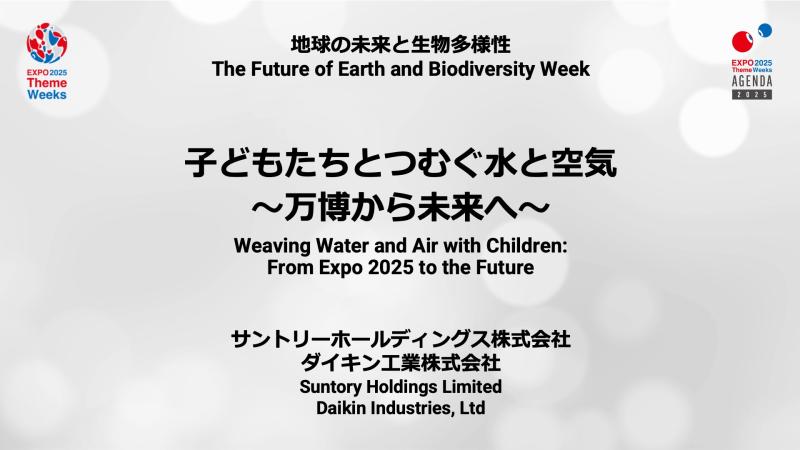
The Future of Earth and Biodiversity Week
Knowledge as the Key to Protection -Part II-
Italian Republic
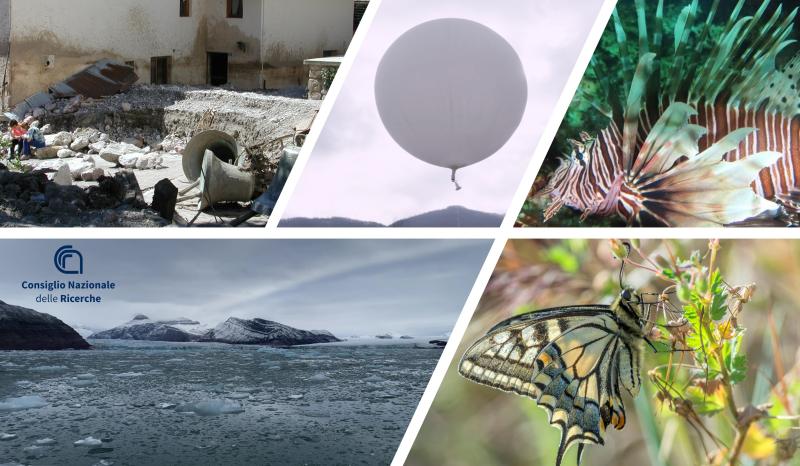
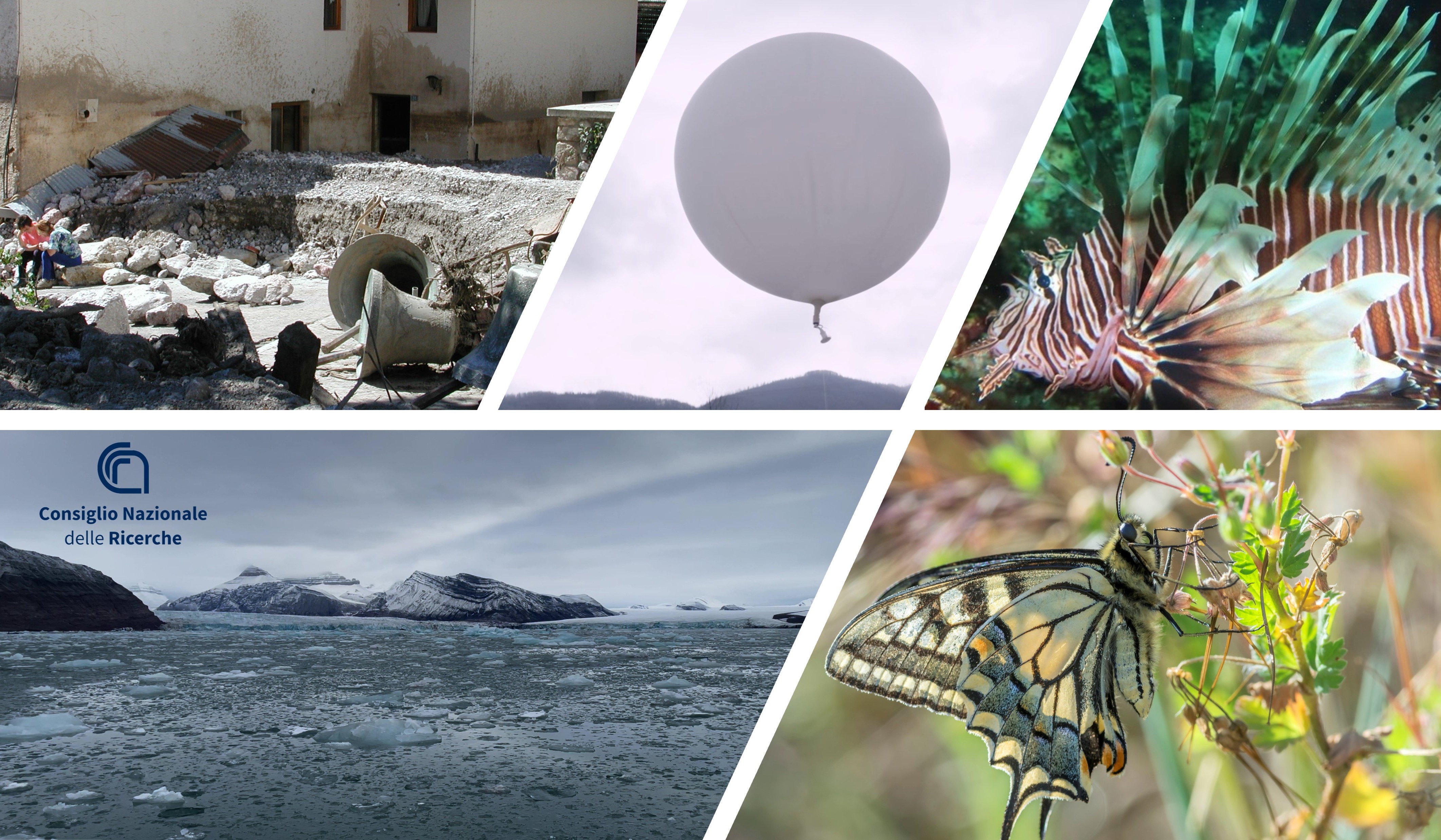
Japanese and Italian scientists will engage in a bilateral exchange of research experiences on five key environmental themes: biodiversity, sea, polar regions, climate change, and natural hazards. Organised by the Department of Earth System Sciences and Technologies for the Environment of Italy’s National Research Council (CNR), the programme highlights how scientific knowledge—anchored in memory and data—is essential for understanding environmental changes and increasing resilience to global challenges.
Recorded video available
Discussion
- Climate change
- Biodiversity
| Transmission of simultaneous interpretation | To be determined |
|---|---|
| Language of interpretation | To be determined |
-

Track Programme
-
Time and
Date of
the event -
-
2025.09.19[Fri]
14:20 ~ 19:30
(Venue Open 14:00)
-
- Venue
- Pavilion
- Italy Pavilion
Programme details
*Subtitles: Choose “Subtitles/CC” in the “Settings” (gear
icon) at the bottom right of the YouTube video.
*Subtitles may not show with multiple languages or overlapping
audio.
The event will facilitate the exchange of research experiences
between Japanese and Italian scientists, focusing on five key
environmental issues: biodiversity, the sea, the polar
regions, climate change, and natural hazards. These themes
reflect the core research domains of Italy’s CNR – Department
of Earth System Sciences and Technologies for the
Environment.
Each session reflects how knowledge, grounded in scientific
observation and cultural memory, can be harnessed to better
understand and respond to global environmental threats. The
day begins with high-level greetings and the signing of
bilateral memoranda, followed by thematic panels that
highlight both nations’ complementary strengths and shared
research efforts.
・Biodiversity is addressed from both European and Japanese
cultural perspectives, and includes insights into biosynthesis
and bioprospecting for future medicine.
・Seas and Oceans focuses on local ecological knowledge,
particularly “fishers’ memories,” as a practical tool for
marine ecosystem management.
・In Polar Regions, ice core data and remote observation offer
a vivid record of past climates, while stressing the urgency
of international cooperation in a rapidly warming Arctic.
・The Climate Change panel examines long-term observational
networks such as SKYNET and GRUAN, emphasising collaborative
monitoring of solar radiation and atmospheric conditions.
・The final panel on Natural Hazards and Deep Exploration
delves into disaster memory, earth observation, and seafloor
dynamics, highlighting efforts to understand and mitigate
geophysical risks.
The programme concludes with a curated artistic video
presentation, open to Expo visitors, designed to evoke public
interest in the morning’s scientific topics and foster a
broader understanding of environmental protection through
knowledge.
Reports
【Reflection】
The event cantered on five key environmental themes that
reflect the core research activities carried out by the
Research Institutes within the Department of Earth System
Sciences and Environmental Technologies of the National
Research Council of Italy (CNR). The day was marked by the
signing of two significant Memorandums of Cooperation: one
between CNR and JAMSTEC, and another between CNR and the
University of Tsukuba, reinforcing strategic scientific ties
between Italy and Japan.
Panel 3: Polar Regions
The third panel addressed the Polar Regions as environmental
archives. Time series data from instruments and ice
cores—collected through global collaborations like EPICA and
IPICS—provide evidence of climate evolution. Speakers included
Tommaso Tesi and Chiara Venier (ISP-CNR), Takashi Kikuchi
(JAMSTEC), Ayako Abe-Ouchi (Tokyo University), and Kenji
Kawamura (National Institute of Polar Research). Research
platforms such as RV Mirai II and Antarctic drilling projects
aim to uncover ancient ice records dating back 1.2 million
years.
Panel 4: Climate Change
This panel focused on observational networks and
infrastructure essential for monitoring climate change.
Systems like the GRUAN Reference Network and the International
Skynet Network track atmospheric composition, pollution, and
solar radiation. Key contributors included Francesco Cairo
(ISAC-CNR), Kazumi Aoki (Skynet), Domenico Cimini (IMAA-CNR),
and Masatomo Fujiwara (Hokkaido University).
Panel 5: Natural Hazards and Deep Observations
The final panel explored memory as a tool for risk mitigation.
By preserving knowledge of past disasters through historical
records and illustrations, researchers can better anticipate
future risks. Speakers included Alessandro Pasuto and Paola
Salvati (IRPI-CNR), Hiroyuki Ohno (Sabo), Taro Uchida (Tsukuba
University), Shinichi Kusano, and Masaru Kunitomo (Sabo,
MLITT). The session concluded with “Deep Observations,”
featuring Marco Cuffaro (CNR-IGAG) and Yasuhiko Ohara
(Hydrographic and Oceanographic Department of Japan), who
shared deep-sea exploration experiences focused on tectonic
dynamics and seafloor composition. These records serve as a
memory of Earth’s evolution and help assess natural hazards
and geosphere–hydrosphere interactions.
Art Segment: Liquid Cartographies
The day was enriched by an artistic segment titled Liquid
Cartographies, featuring a collective video installation by
Elena Bellantoni, Elena Mazzi, Pamela Pintus, and Mariagrazia
Pontorno. The six videos, projected together as a large-scale
mosaic, offered fluid and poetic reinterpretations of natural,
marine, and urban landscapes through the artists’ gaze.
【Post EXPO Initiatives】
The discussions held during the program have continued to
foster concrete collaboration between Italian and Japanese
research institutions following the Expo. Scientists from both
countries are advancing the sharing of long-term observational
data and research outcomes across five key themes:
biodiversity, marine environments, polar regions, climate
change, and natural hazards.
In particular, the two agreements signed by CNR with JAMSTEC
and the University of Tsukuba represent a strategic milestone
in fostering long-term scientific collaboration between Italy
and Japan.
The Memorandum of Cooperation (MoC) with JAMSTEC lays the
groundwork for joint research in Marine Science and
Biotechnology, Polar Science, and Scientific Infrastructure.
These areas will be explored through interdisciplinary studies
on ocean ecosystems, climate-related contaminant cycles,
microbial diversity, and advanced simulation techniques for
polar ice dynamics. The agreement also enables shared access
to research platforms, including vessels within the IODP3
framework, and promotes the exchange of scientific personnel.
Over the coming years, this cooperation is expected to evolve
into joint research projects, co-authored publications, and
coordinated field campaigns, contributing to global efforts in
marine and polar science.
The Memorandum of Understanding (MoU) with the University of
Tsukuba focuses on building a robust academic and research
partnership. It includes the development of joint research
programs, staff exchanges, and the creation of a permanent
platform for strategic dialogue. This platform will serve as a
hub for identifying and launching new initiatives in higher
education and scientific research, with the aim of
strengthening ties not only between the two institutions but
also between Italy, Europe, and Japan. The agreement also
supports student and researcher mobility, encouraging
training, workshops, and collaborative learning experiences.
In the coming years, this partnership is expected to lead to
new collaborative projects, joint funding applications, and
shared educational programs, fostering innovation and capacity
building across borders.
Together, these agreements signal a shared commitment to
advancing science through international cooperation, and they
pave the way for a dynamic portfolio of joint activities that
will grow and evolve in the years ahead.
Cast
Speakers

Francesco Cairo (on behalf of Monica Campanelli)
Institute of Atmospheric Sciences and Climate (ISAC), CNR
View Profile
Close
close
Kazuma Aoki
University of Toyama, SKYNET Promotional Activity Network Coordination
View Profile
Close
close
Domenico Cimini
Institute of Methodologies for Environmental Analysis (IMAA), CNR
View Profile
Close
close
Masatomo Fujiwara
Hokkaido University, Co-Chair of GRUAN
View Profile
Close
close
Alessandro Pasuto
Research Institute for Geo-Hydrological Protection (IRPI), CNR
View Profile
Close
close
Paola Salvati
Research Institute for Geo-Hydrological Protection (IRPI), CNR
View Profile
Close
close
Taro Uchida
University of Tsukuba
View Profile
Close
close
Shinichi Kusano
Director General, Ministry of Land, Infrastructure, Transport and Tourism (MLIT)
View Profile
Close
close
Masaru Kunitomo
Ministry of Land, Infrastructure, Transport and Tourism (MLIT)
View Profile
Close
close
Hiroyuki Ohno
Ministry of Land, Infrastructure, Transport and Tourism (MLIT)
View Profile
Close
close
Marco Cuffaro
Institute of Environmental Geology and Geoengineering (IGAG), CNR
View Profile
Close
close
Yasuhiko Ohara
Hydrographic and Oceanographic Department of Japan, Nagoya University, JAMSTEC
View Profile
Close
close
Angelo Volpi
CNR Liaison Office in Brussels
View Profile
Close
close
Marino Hiraoka
Associate Professor, Department of Environment and Sustainability, Mukogawa Women’s University
View Profile
Close
close
Co-organiser
National Research Council
The Future of Earth and Biodiversity Week
Knowledge as the Key to Protection -Part II-
Japanese and Italian scientists will engage in a bilateral exchange of research experiences on five key environmental themes: biodiversity, sea, polar regions, climate change, and natural hazards. Organised by the Department of Earth System Sciences and Technologies for the Environment of Italy’s National Research Council (CNR), the programme highlights how scientific knowledge—anchored in memory and data—is essential for understanding environmental changes and increasing resilience to global challenges.
-
2025.09.19[Fri]
14:20~19:30
(Venue Open 14:00)
- Pavilion
OTHER PROGRAM
The Future of Earth and Biodiversity Week