The Future of Earth and Biodiversity Week
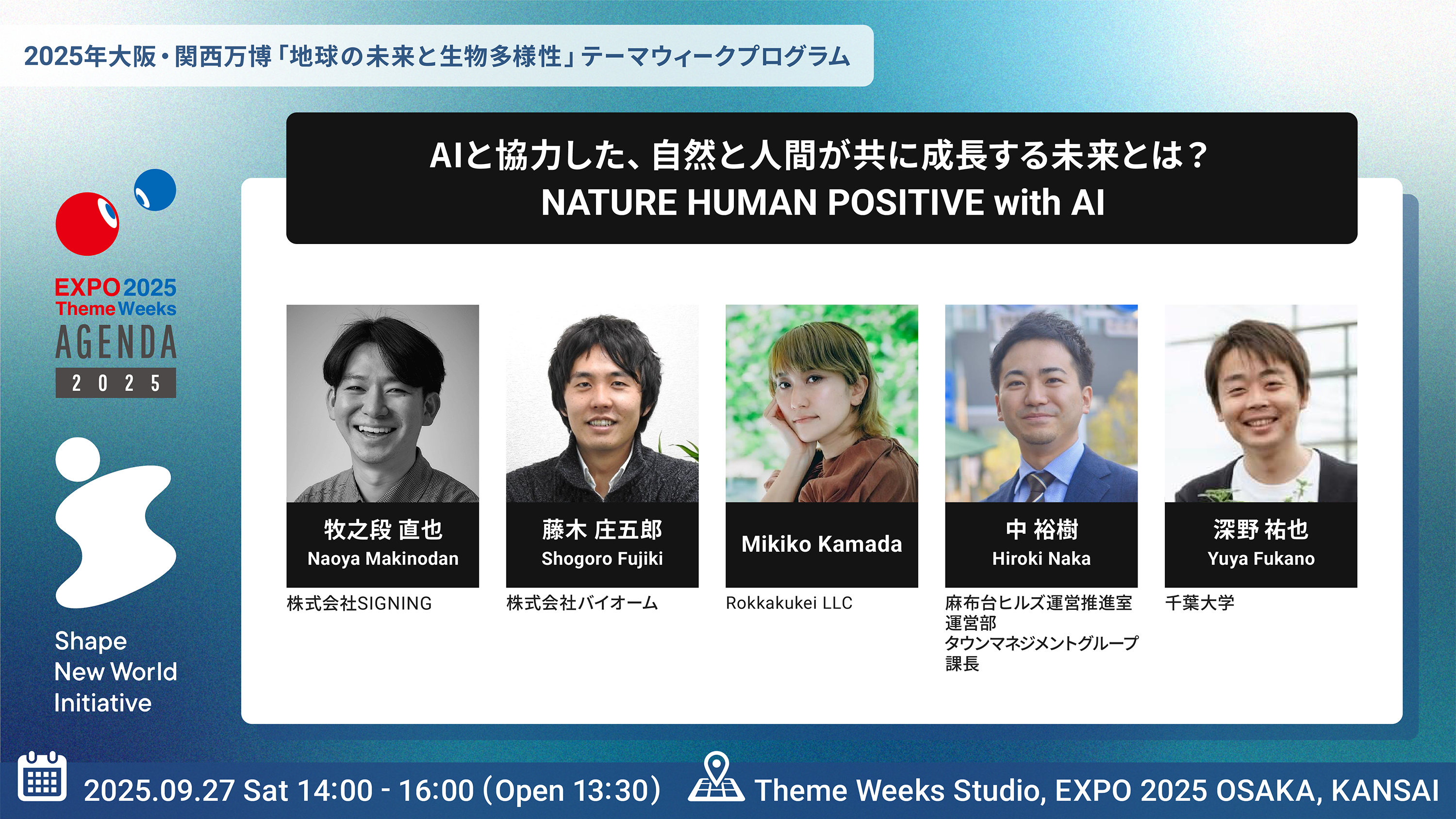
NATURE&HUMAN POSITIVE with AI
Agenda 2025 Co-created Programme
Shape New World Initiative
[Hypothesis of the Future in 2050]
A future where nature and humans grow together with AI
“Nature Positive” is a concept that aims to eliminate the
decline in biodiversity and make it even richer. In fact,
making nature richer is also making us, humans, richer. We
have envisioned a future where Nature Positive and Human
Positive meet through AI technology from a variety of
perspectives, including business, the natural environment,
and cultural creation. We propose actions to help make such
a future a reality.
Recorded video available
Discussion
- Nature Positive
- Social Design #Well-being #Innovation #AI
| Transmission of simultaneous interpretation | Provided |
|---|---|
| Language of interpretation | Japanese and English |
-

Agenda2025
Co-created Programme
-
Time and
Date of
the event -
-
2025.09.27[Sat]
14:00 ~ 16:00
(Venue Open 13:30)
-
- Venue
- Theme Weeks Studio
Programme details
*Subtitles: Choose “Subtitles/CC” in the “Settings” (gear
icon) at the bottom right of the YouTube video.
*Subtitles may not show with multiple languages or overlapping
audio.
Despite the fact that the term “biodiversity” is becoming more
widely used in the world, many people still don't really
know what it refers to. However, nature-positive activities
that enrich nature are also deeply connected to human-positive
activities that enrich people. For example, activities that
nurture nature can lead to innovative ideas, and the natural
environment is closely connected to human health. Culturally,
Japan has a deep-rooted spirituality of coexistence between
nature and people. In this session, we will shift our thinking
to consider whether we can enrich nature and enrich people by
enlisting the help of AI and technology, at a time when the
global environment has reached a critical point from which
there is no turning back. Planners aiming to solve social
issues and create future value will take the lead in proposing
a vision of the future in which nature and humanity are
positive, making the most of their unique methods and
creativity.
Reports
【Reflection】
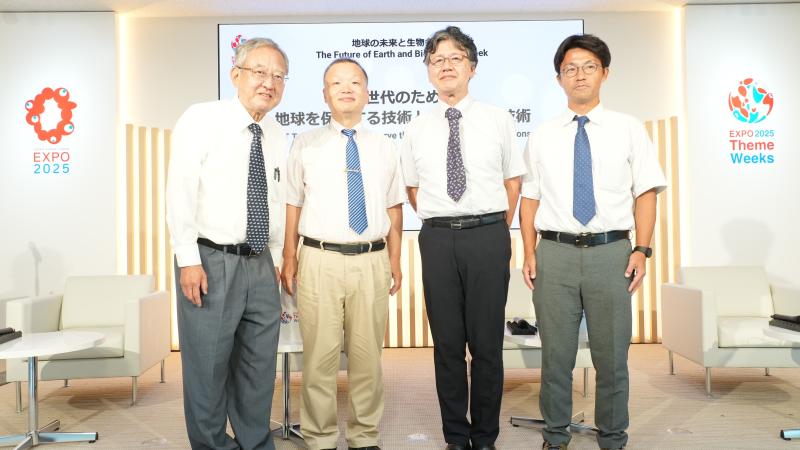
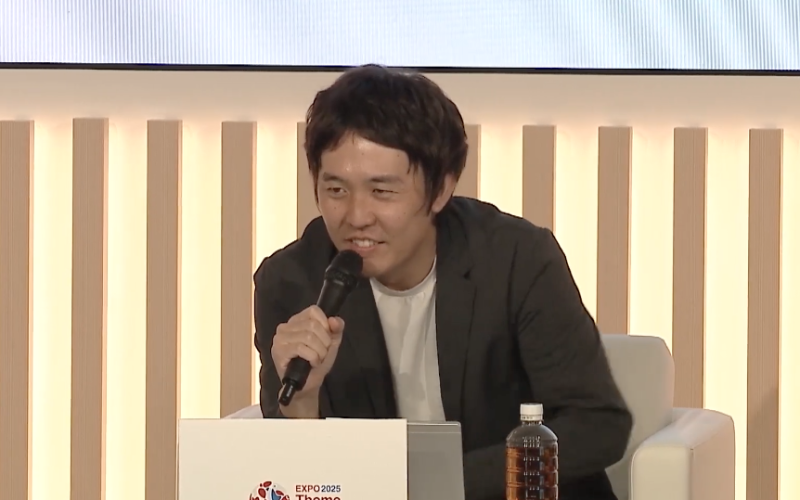
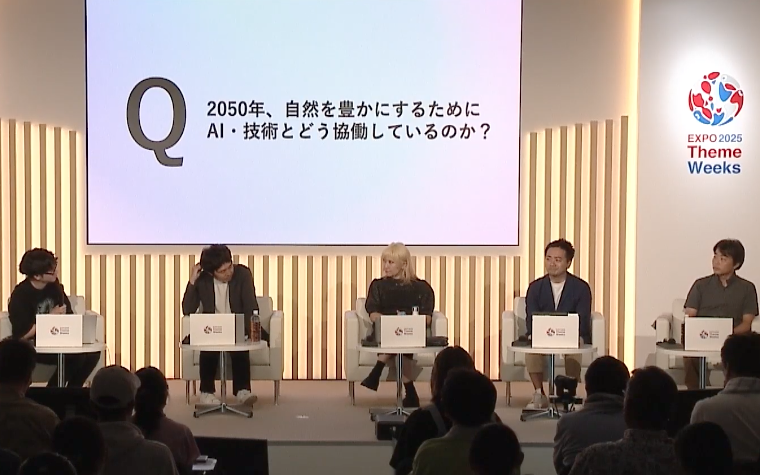
The session aligned on building a Nature & Human Positive
future by integrating quantitative metrics with qualitative
engagement. Fujiki highlighted that biodiversity, unlike
carbon, lacks unified units and metrics, which makes its
evaluation inherently difficult. He explained initiatives that
use AI-powered species identification from photos and gamified
citizen-science applications to expand biodiversity
observation. By leveraging these digital tools, Fujiki
collaborates with more than eighty municipalities and seven
hundred companies to enhance biodiversity monitoring and
conservation planning.
Kamada discussed artworks that reveal invisible natural
processes, such as microbial decomposition and the role of
cyanobacteria in Earth’s early evolution. Through these works,
she seeks to restore a sense of wonder and emotional
connection to the natural world. She emphasized that
technology and AI can recreate and visualize natural
environments, providing new pathways for conservation
awareness and engagement.
Naka introduced urban development projects such as Azabu
Hills, which integrate far more greenery than conventional
redevelopment schemes. He explained that these projects aim
not only for aesthetic value but also to enhance and evaluate
biodiversity within urban green spaces. AI and data are used
to support the optimization of plant selection, maintenance,
and ecosystem performance, helping cities reconnect with
living systems.
Fukano reflected on the uncertainty of baseline conditions for
ecological restoration and the need to quantify ecosystem
services to guide policymaking and investment. He also noted
that technology and art can visualize and share visions of
desired future environments, bridging science and imagination.
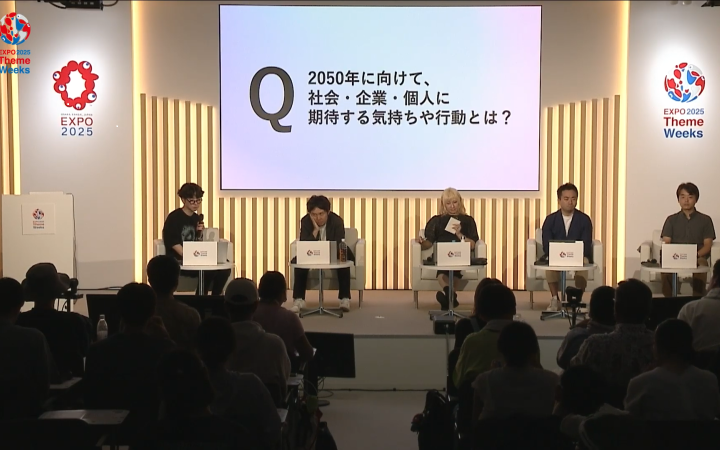
During the Q&A, participants raised questions about data
standards, privacy protection, and the trade-off between
maintenance effort and biodiversity outcomes in urban
settings. Discussion also addressed how to engage young
generations more deeply in biodiversity initiatives. A shared
understanding emerged that AI should not act as a top-down
manager of nature but rather as a tool that supports the
co-growth of people and natural systems.
【Post EXPO Initiatives】
The speakers highlighted the following as key perspectives for
their respective research and business development after the
conference:
(1) After the conference, efforts should be made to ensure
discussions are not short-lived, but rather to advance
initiatives that enhance implementation resolution. First,
further promote the digitization, visualization, and analysis
of biodiversity data. Continuously accumulate observation data
through AI image recognition combined with citizen science.
Expand collaboration with local governments and companies.
Establish a foundation to support decision-making for
conservation and restoration through indicator development and
dashboard implementation.
(2) In the urban sector, generalize insights gained from cases
like Azabudai Hills. Validate models that incorporate
algorithms for optimizing plant selection and management,
along with biodiversity value assessments, from the design
phase. Concurrently, reflect the quantification of ecosystem
services (flood mitigation, heat island mitigation, mental
health, etc.) in procurement requirements and operational
KPIs. Promote evaluations of urban green spaces that go beyond
aesthetic appeal alone.
(3) To accelerate societal implementation, fostering an
emotional connection to nature is essential. We will expand
participation among younger generations by organizing
exhibitions and workshops that integrate art and data at
schools, museums, and community hubs. Furthermore, to
encourage shifts in consumer and voter behavior, we will
provide accessible information that supports choosing
biodiversity-conscious products and services and endorsing
related policies.
Finally, speakers proposed establishing collaborative
frameworks that align economic incentives with biodiversity
goals, enabling researchers, artists, businesses, and
policymakers to operate under shared objectives. This
framework will incorporate operational rules ensuring data
openness, interoperability, privacy considerations, and
accountability, while advancing the implementation of a
“Nature & Human Positive” future through new metrics and
narratives. It was proposed that efforts be sustained to pass
on the principles of Agenda 2025 to the next generation.
*Part or all of this report was generated by AI.
Cast
Moderator
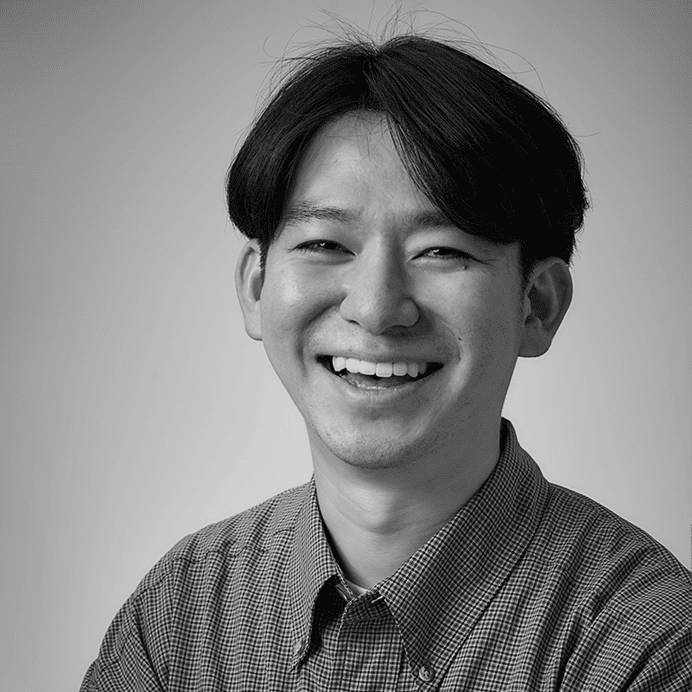
Naoya Makinodan
SIGNING Ltd.
Born in 1997, he joined Hakuhodo in 2020. With experience ranging from product development to future insights, he became a member of the Social Business Studio “SIGNING” in 2023. He focuses on promoting global agendas for future generations and researches the integration of virtual and real worlds, aiming to realize a future society that is both nature-positive and human-positive.
View Profile
Close
close
Speakers

Shogoro Fujiki
Biome Ltd.
D. from Kyoto University, established Biome Inc. and
became its representative director. He is engaged in
the business of converting biodiversity into big data,
aiming for a society where biodiversity conservation
and economic rationality are compatible.
He is an expert member of the Behavioral
Transformation WG of the Japan Council for the
Realization of the 2030 Biodiversity Framework,
Ministry of the Environment. Additionally, he serves
as a councilor of the Nature Conservation Society of
Japan.
He is also a member of the domestic deliberative
committee of ISO/TC331 (Biodiversity).
View Profile
Close
close

Mikiko Kamada
Rokkakukei LLC
D. from the Graduate School of Horticultural Science,
Chiba University.
After a background in life sciences and working as a
developer for a manufacturer, she started her career
as a plant director and artist.
Currently working to reconstruct the ‘relationship
between plants and humans’ and research the importance
of soil and plants in urban areas, with the aim of
creating nature-positive urban environments.
View Profile
Close
close
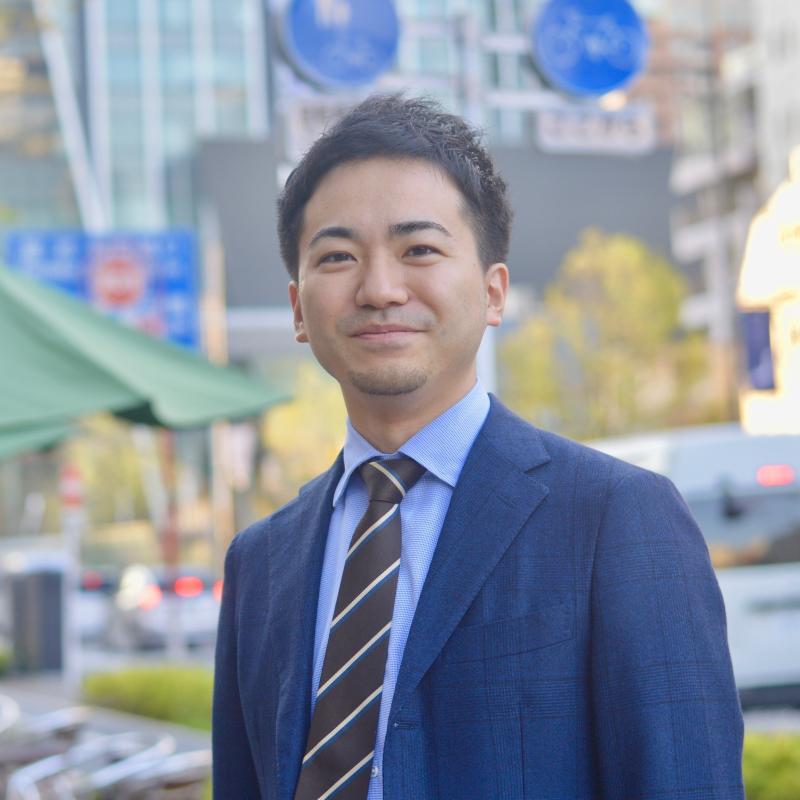
Hiroki Naka
MORI BUILDING Co., Ltd. Senior Manager Town Management Group, Operations Unit, Azabudai Hills Operations Development Department
After working in the Office Leasing Division and the Urban Development Division, I joined the Town Management Division in 2014. I was initially in charge of operations for the Toranomon Hills area, and later became involved in planning public spaces and green areas for Azabudai Hills. Currently, I serve in the Planning and Strategy Office of Azabudai Hills, where I lead the development and implementation of city-wide planning strategies focused on green spaces and wellness.
View Profile
Close
close
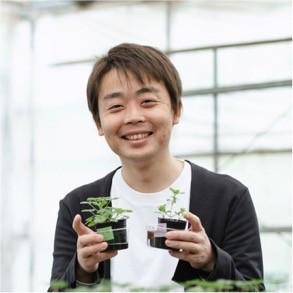
Yuya Fukano
Chiba University
Associate Professor at the Graduate School of Horticulture, Chiba University. Specializes in ecology, with a broad focus on the relationships between human activities, biological evolution, and biodiversity. Recipient of multiple awards, including the Miyadi Award from the Ecological Society of Japan (2022), Commendation for Science and Technology (2023), Japan Prize for Agricultural Science Advancement (2024), and the Young Scientists’ Prize from the Minister of Education, Culture, Sports, Science and Technology (2025). A science fiction enthusiast.
View Profile
Close
close
The Future of Earth and Biodiversity Week
NATURE&HUMAN POSITIVE with AI
Agenda 2025 Co-created Programme
[Hypothesis of the Future in 2050]
A future where nature and humans grow together with AI
“Nature Positive” is a concept that aims to eliminate the
decline in biodiversity and make it even richer. In fact,
making nature richer is also making us, humans, richer. We
have envisioned a future where Nature Positive and Human
Positive meet through AI technology from a variety of
perspectives, including business, the natural environment, and
cultural creation. We propose actions to help make such a
future a reality.
-
2025.09.27[Sat]
14:00~16:00
(Venue Open 13:30)
- Theme Weeks Studio
OTHER PROGRAM
The Future of Earth and Biodiversity Week