The Future of Earth and Biodiversity Week
Scaling Circularity: Empowering SMEs for a Sustainable Future
European Union
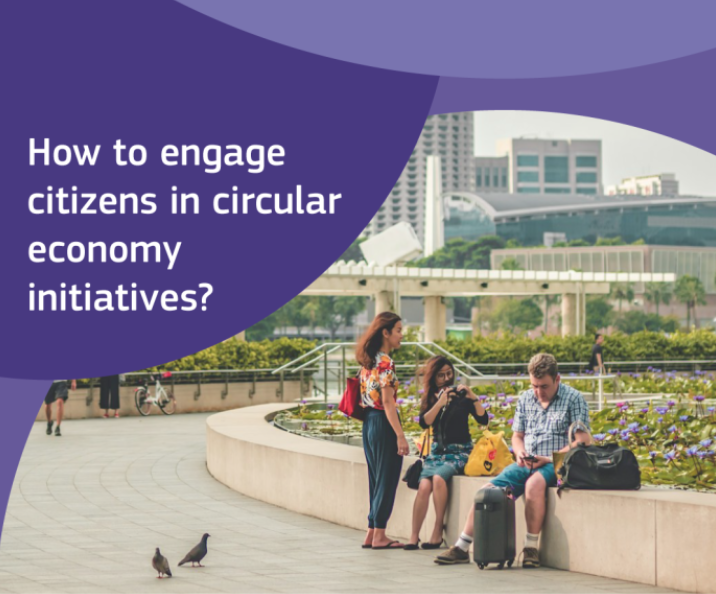
Circular business models are vital for a healthy economy worldwide. They enhance resource efficiency, economic resilience and environmental sustainability. These models offer SMEs opportunities to innovate, reduce costs and improve competitiveness.
Recorded video available
Discussion
- Circular economy
| Transmission of simultaneous interpretation | Provided |
|---|---|
| Language of interpretation | English |
-

Track Programme
-
Time and
Date of
the event -
-
2025.09.23[Tue]
15:00 ~ 16:30
(Venue Open 14:45)
-
- Venue
- Pavilion
- Belgian Pavilion
Programme details
*Subtitles: Choose “Subtitles/CC” in the “Settings” (gear
icon) at the bottom right of the YouTube video.
*Subtitles may not show with multiple languages or overlapping
audio.
SMEs are crucial for this transition as they drive innovation,
employment and growth. Their involvement is essential for a
broader shift to a circular economy. By adopting circular
practices, SMEs can create sustainable, resilient and
competitive economies.
This seminar aims to bring together European and Japanese SMEs
to share insights, tools and best practices for adopting
circular economy principles. By highlighting the importance of
the circular economy, showcasing innovative business models
and facilitating knowledge exchange, we can help SMEs
transition towards sustainable practices.
This event will promote collaboration and networking
opportunities, fostering a community of businesses committed
to sustainability.
Reports
【Reflection】
The session focused on scaling circularity through SMEs,
emphasising that circular business models can improve resource
efficiency, enhance economic resilience and strengthen
environmental performance while creating opportunities to
innovate, cut costs and boost competitiveness.
Key findings
Value proposition.
Circular models can lower input costs and serve as a
competitive advantage by enabling product differentiation and
entry into new markets.
Pathways to scale.
Practical SME levers include design and sourcing adjustments
(light-weighting, material shifts, reuse schemes), partnering
for collection/sorting, and basic data housekeeping on
products and materials; typical constraints are capabilities,
finance and information.
Ecosystem support.
Public support, shared platforms and external finance are
pivotal to move from pilots to scale.
Conclusion
The discussion underlined a pragmatic route for SMEs to
translate circularity into competitiveness, combining
incremental implementation with ecosystem partnerships to
scale.
【Post EXPO Initiatives】
Implementation focus
Translate insights into a SME-ready package of actions that is
fast to start and easy to scale.
Priority actions
Design & sourcing pilots: pick priority SKUs and trial
light-weighting, material shifts and reusable packaging; run
quick checks on yield, quality and cost.
Material/accounts housekeeping: set up a simple
product/material ledger to quantify key inputs and identify
substitutions.
Collection partnerships: explore joint take-back/sorting
schemes with local operators or industry groups suitable for
small volumes.
Leverage support & finance: map public programmes and
financing options; designate an internal contact to engage
external support.
Customer communication: display before/after metrics (weight
reduction, reuse rate, take-back availability) at point of
sale and online.
Conclusion
By combining minor design changes, basic data discipline and
external partnerships, SMEs can start small and scale
circularity with manageable cost and risk.
Cast
Moderator
Freek van Eijk
CEO, Holland Circular Hotspot
View Profile
Close
close
Speakers
Anders Ladefoged
EESC member, ECESP
View Profile
Close
close
Shiko Hayashi
Programme Director Institute for Global Environmental Strategies, Kitakyushu Urban Centre
View Profile
Close
close
Takahiro Iwaya
Project Manager for Sustainability, Toyota
View Profile
Close
close
Ngawang Gyelthsen
Young Entrepreneur
View Profile
Close
close
Rosa Strube
Head of Sustainable Lifestyles, CSCP
View Profile
Close
close
Matteo Ward
CEO and co-founder of WRÅD
View Profile
Close
close
Dounia Wone
Chief Impact Officer, Vestiaire Collective
View Profile
Close
close
Hubert Bukowski
Research Director, INNOWO
View Profile
Close
close
The Future of Earth and Biodiversity Week
Scaling Circularity: Empowering SMEs for a Sustainable Future
Circular business models are vital for a healthy economy worldwide. They enhance resource efficiency, economic resilience and environmental sustainability. These models offer SMEs opportunities to innovate, reduce costs and improve competitiveness.
-
2025.09.23[Tue]
15:00~16:30
(Venue Open 14:45)
- Pavilion
OTHER PROGRAM
The Future of Earth and Biodiversity Week