The Future of Earth and Biodiversity Week
ICT Technologies to Preserve the Earth for Future Generations
Republic of Korea
We will hold a panel discussion with ICT experts to explore the potential of ICT (information and communications technology) as an essential tool for preserving the global environment and realising a better society for future generations.
Recorded video available
Discussion
- Renewable energy
- Circular economy
- Climate change
| Transmission of simultaneous interpretation | Not provided |
|---|---|
| Language of interpretation | Japanese |
-

Track Programme
-
Time and
Date of
the event -
-
2025.09.17[Wed]
14:00 ~ 16:30
(Venue Open 13:30)
-
- Venue
- Theme Weeks Studio
Programme details
*Subtitles: Choose “Subtitles/CC” in the “Settings” (gear
icon) at the bottom right of the YouTube video.
*Subtitles may not show with multiple languages or overlapping
audio.
Based on the history of human science and technology, it is
essential to utilise various ICT technologies in order to pass
on a rich and diverse Earth to future generations and to
continuously realise a world that is better than the one we
have today.We will discuss how the sixth-generation mobile
communication system (6G), which is expected to be realised in
2030, next-generation satellite technologies such as remote
sensing, digital twin technologies that link virtual and
physical spaces, and technologies that integrate networks and
mobility will solve global issues in the future.
In addition, we will take the promotion of closer cooperation
between Japan and South Korea as an example of international
cooperation and discuss how these global issues should be
addressed through international cooperation.
【Schedule】
14:00 - 14:05 Greetings
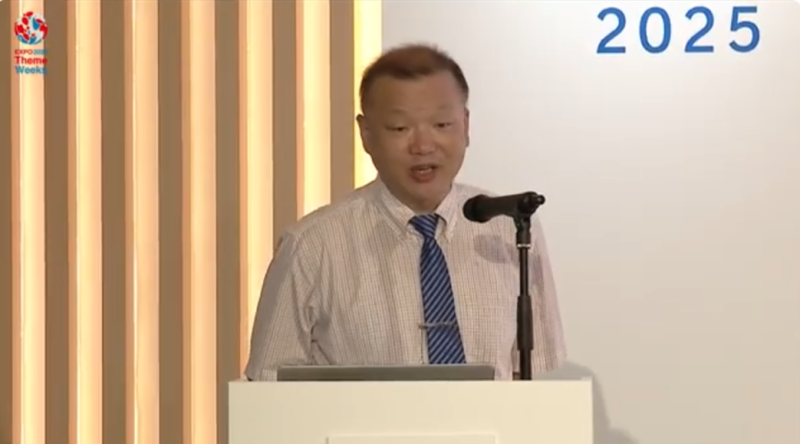
14:05 - 14:25 Presentation (1) ; Moo Wan Kim (KICS Japan
Branch Manager)
- History and Future of Science and Technology
- ICT Technologies for Earth Preservation
(6G, AI, IoT, Satellites, Big Data, Sensors, Bio, etc.)
- Strategic Japan-Korea Cooperation and Its Future
14:25 - 14:45 Presentation (2): JongGeol Park (Tokyo
University of Information Sciences)
- Applications of Satellite Technology
(Responding to Various Earth Preservation Issues, Remote
Sensing, etc.)
- Prospects for Space Development
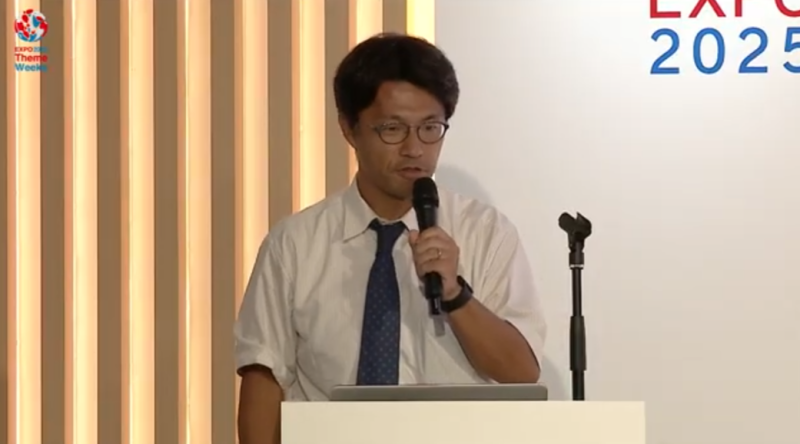
14:45–15:05 Presentation (3): Hidehiro Kanemitsu (Waseda
University)
- 6G Digital Twin Technology (Integrating Virtual and Physical
Spaces) for Circular Economy
15:05 - 15:25 Presentation (4): Shintaro Uno(Nippon Institute
of Technology)
- Addressing various environmental issues by integrating
networks and mobility
- Realising energy conservation across entire regions through
traffic control, etc.
15:25 - 15:35 Break
15:35–16:30 Panel Discussion
<Example Themes>
- Strategic Japan-Korea Cooperation and the Future of East
Asia
- Realising Free Roaming Services in East Asia
- Utilising Active Senior Citizens Who Have Overcome Ageing
Reports
【Reflection】
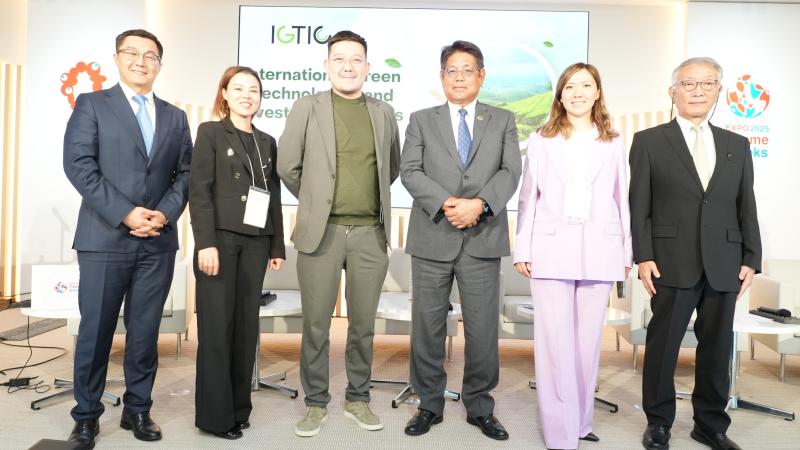
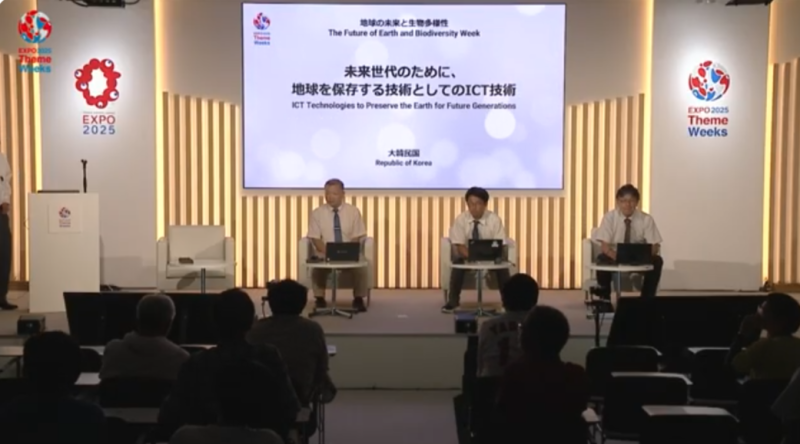
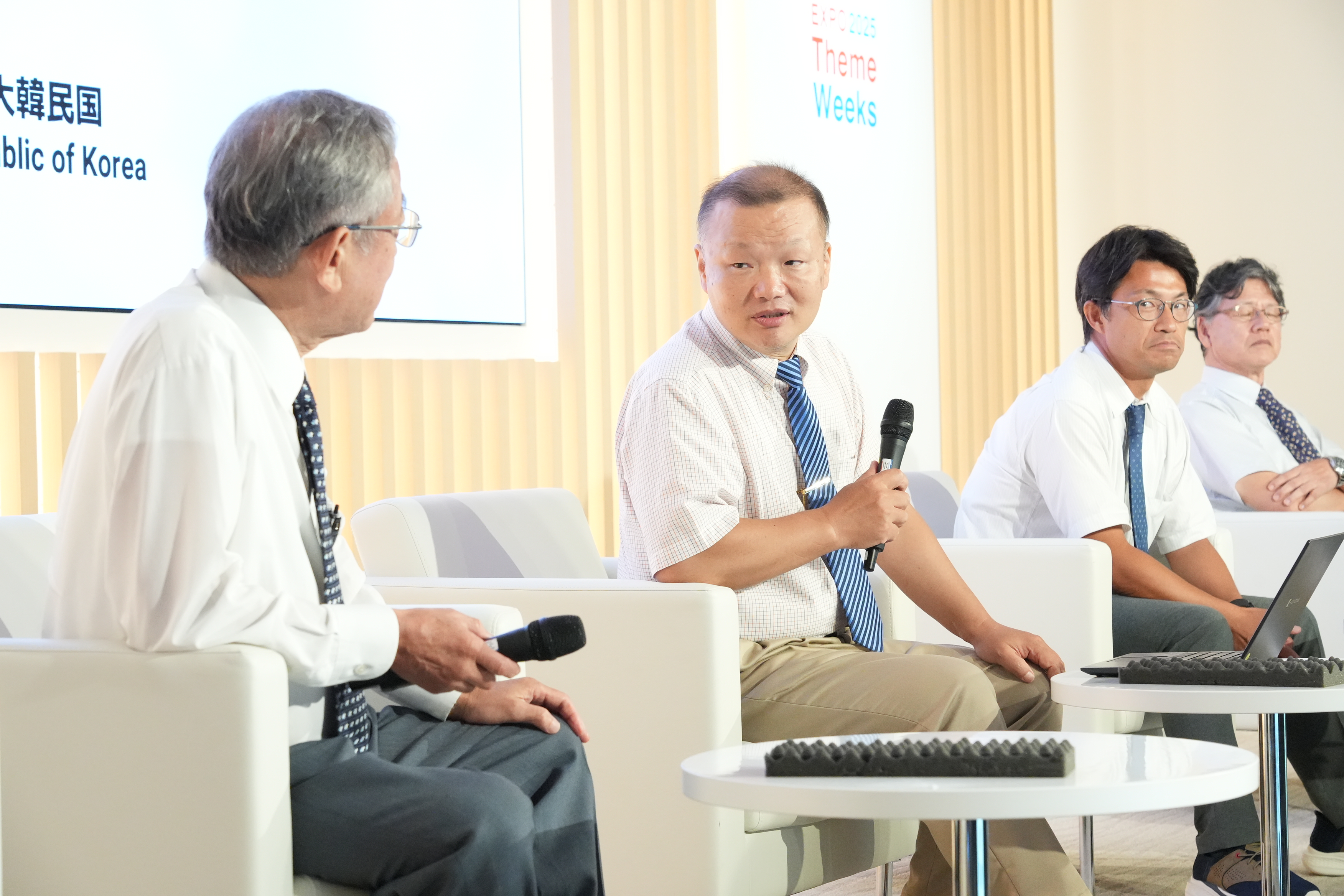
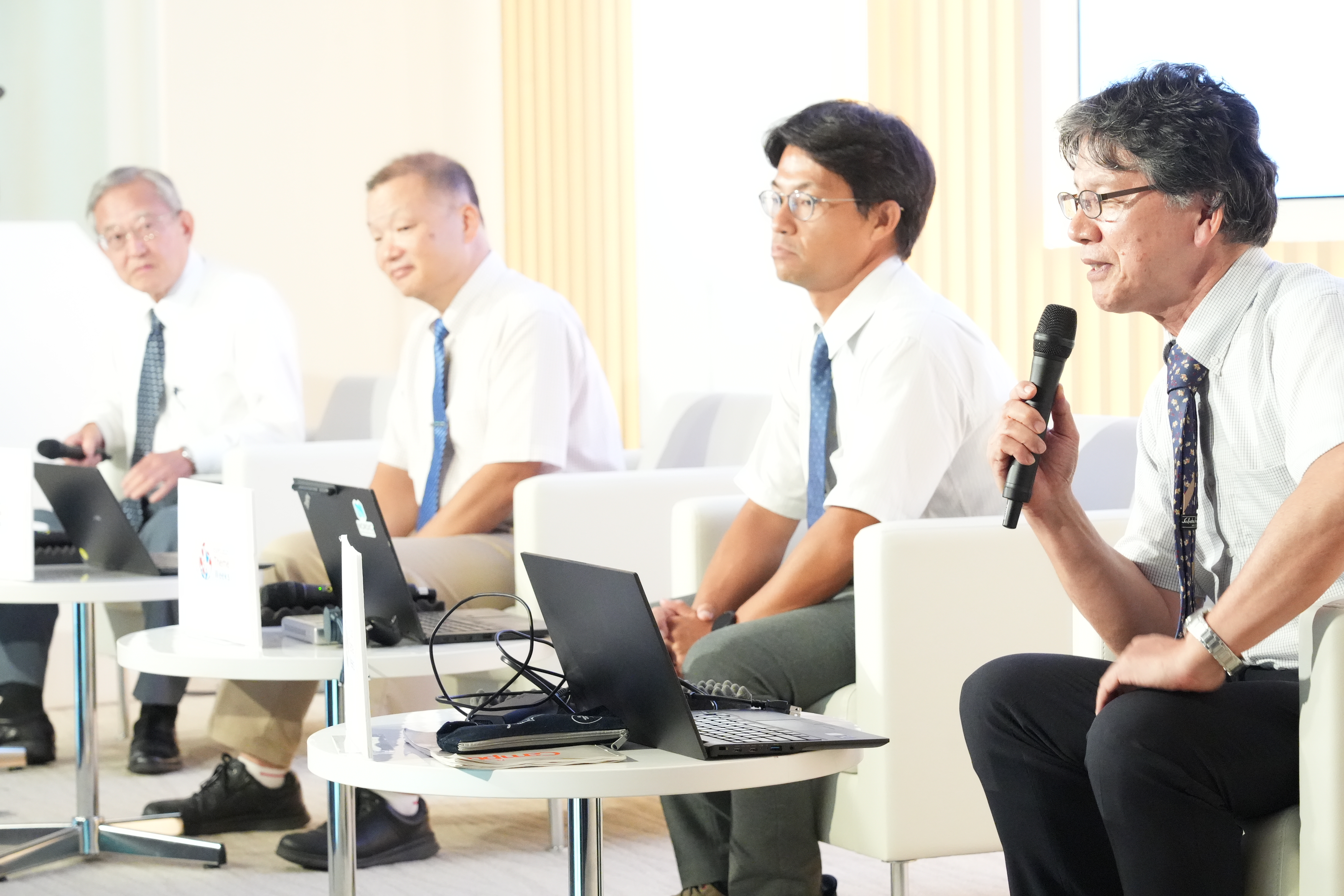
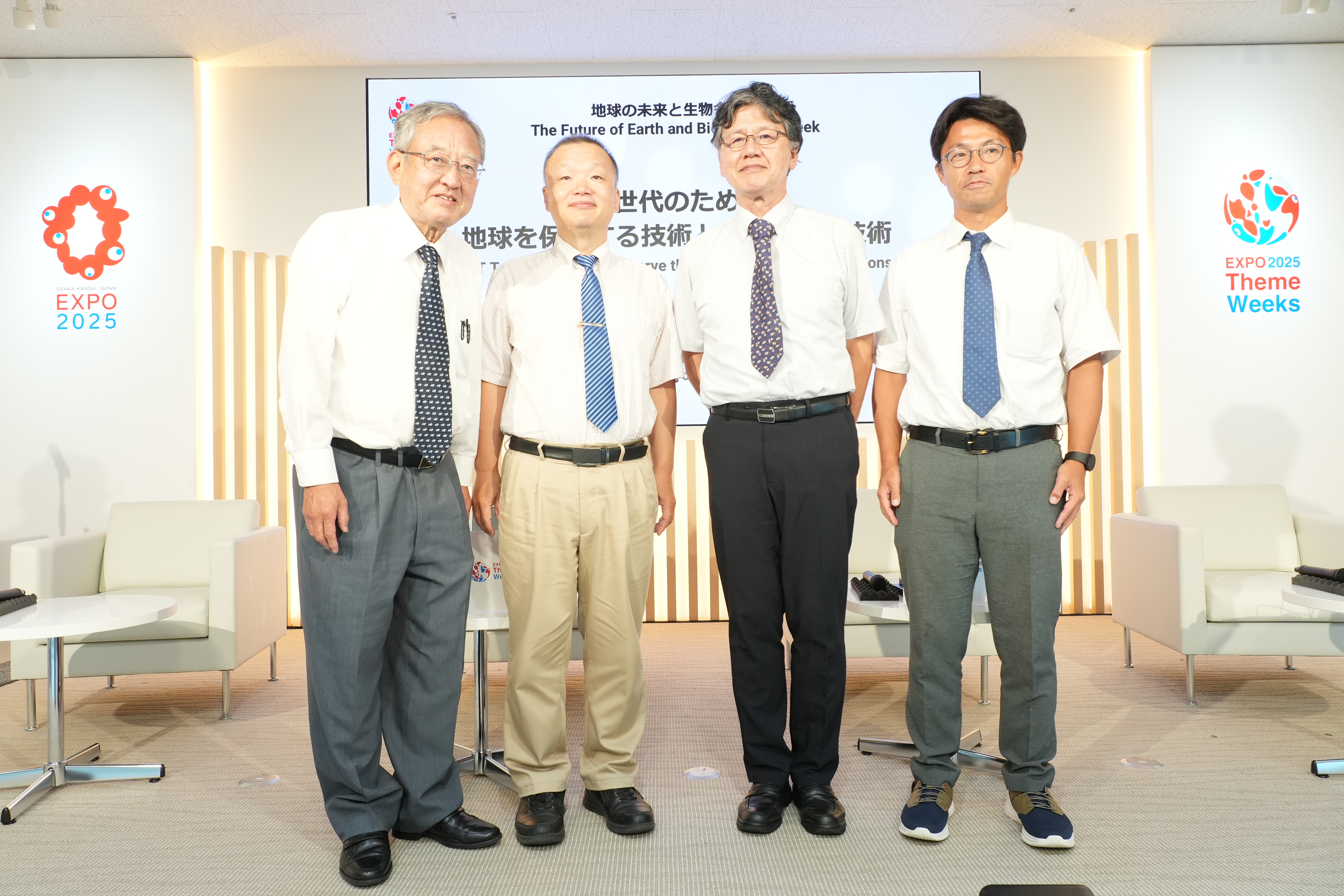
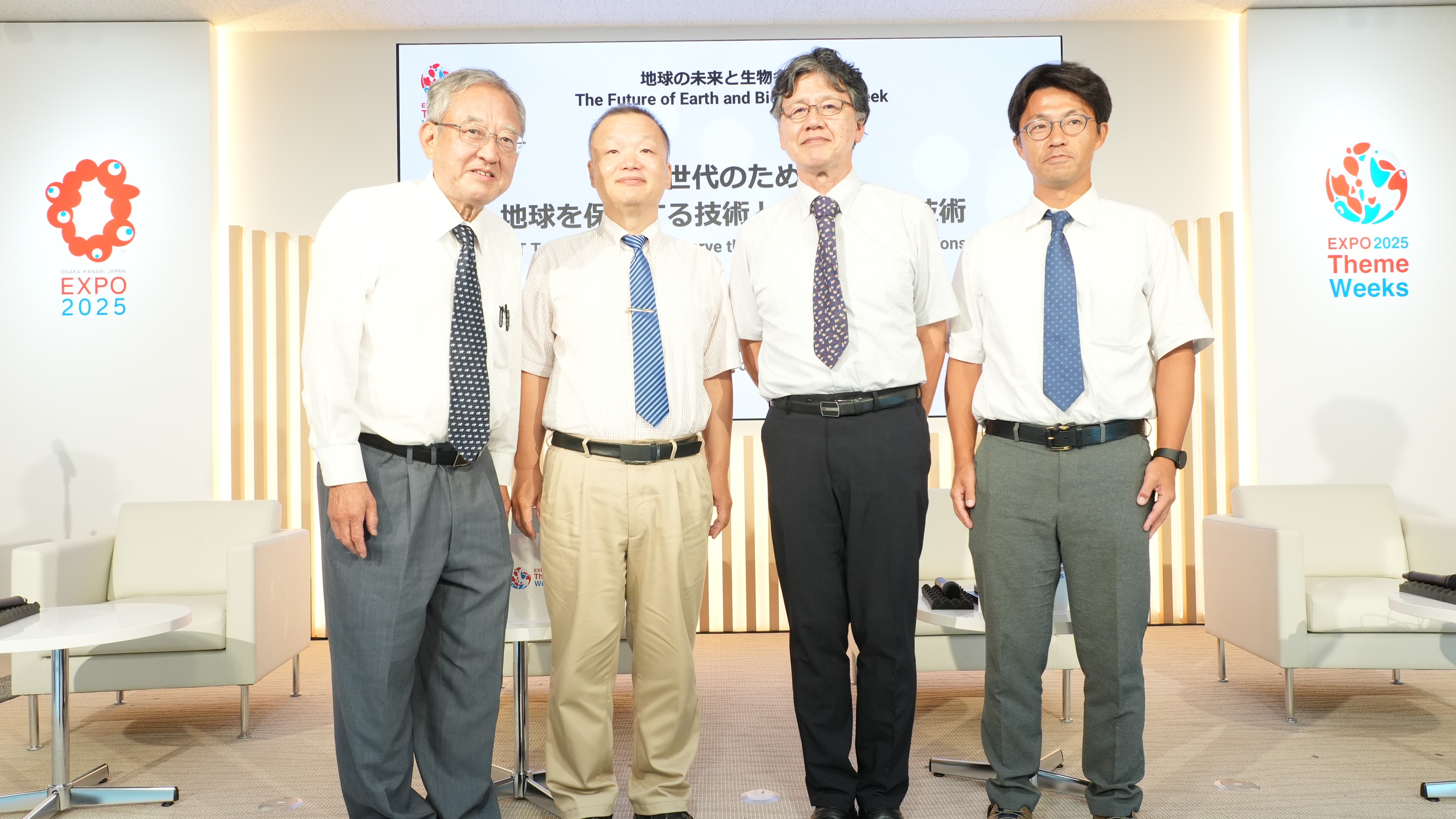
A session entitled ‘ICT Technology as a Means to Preserve the
Earth for Future Generations’ was held at the Theme Week
Studio of the Osaka-Kansai Expo 2025. This session, featuring
ICT experts as speakers, explored the potential of ICT
technology as indispensable for preserving the global
environment and realising a better society for future
generations. Hosted by the Korea Pavilion and the Japan Branch
of the Korea Institute of Communications and Electronics
(KICS), the session featured presentations and a panel
discussion with four ICT experts. It emphasised that utilising
ICT technology is crucial for passing on a planet rich in
diverse life to future generations and for continuously
realising a better world than we have today. Furthermore,
fundamental approaches for advancing closer Japan-Korea
cooperation in the future were introduced.
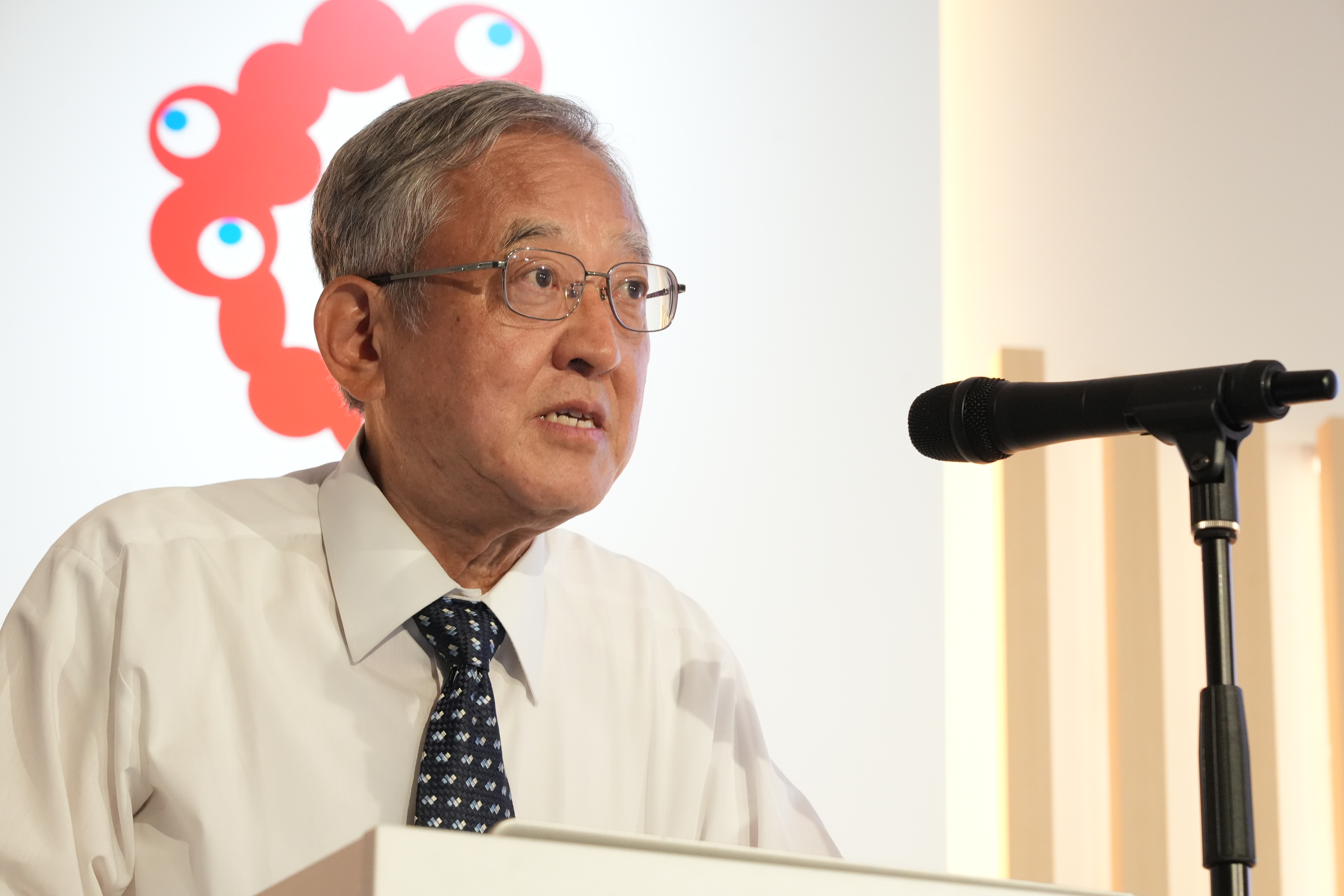
The first speaker, Mr Kim Moo-wan of the KICS Japan Chapter,
explained human history from the perspective of science and
technology. He then introduced ICT technologies with the
potential to solve various global challenges and outlined
fundamental approaches for advancing closer Japan-Korea
cooperation.
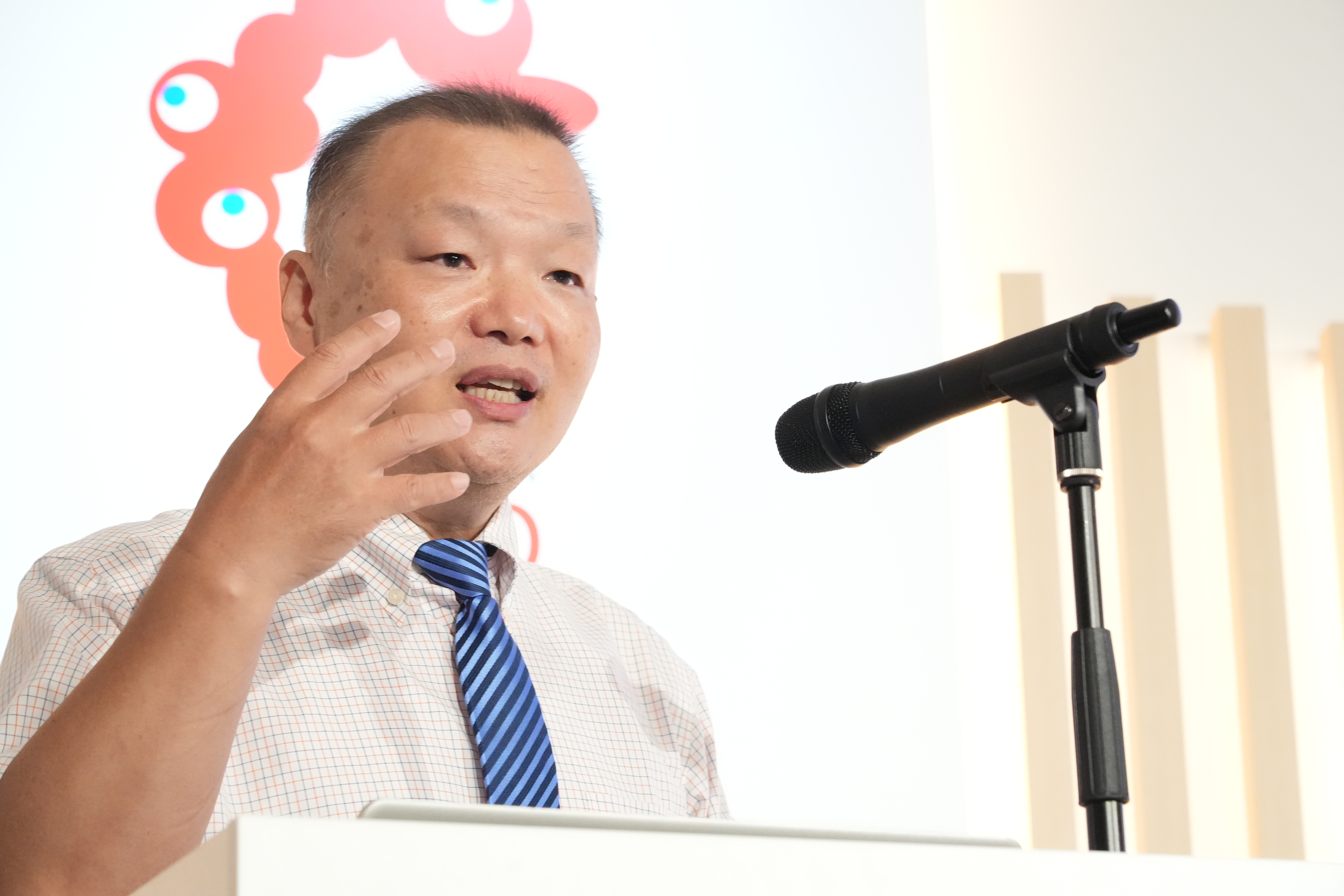
The second speaker, Mr Park Jong-gyeol of Tokyo University of
Information Sciences, explained the current state and future
prospects of satellite remote sensing, which can address
various global preservation challenges such as global warming.
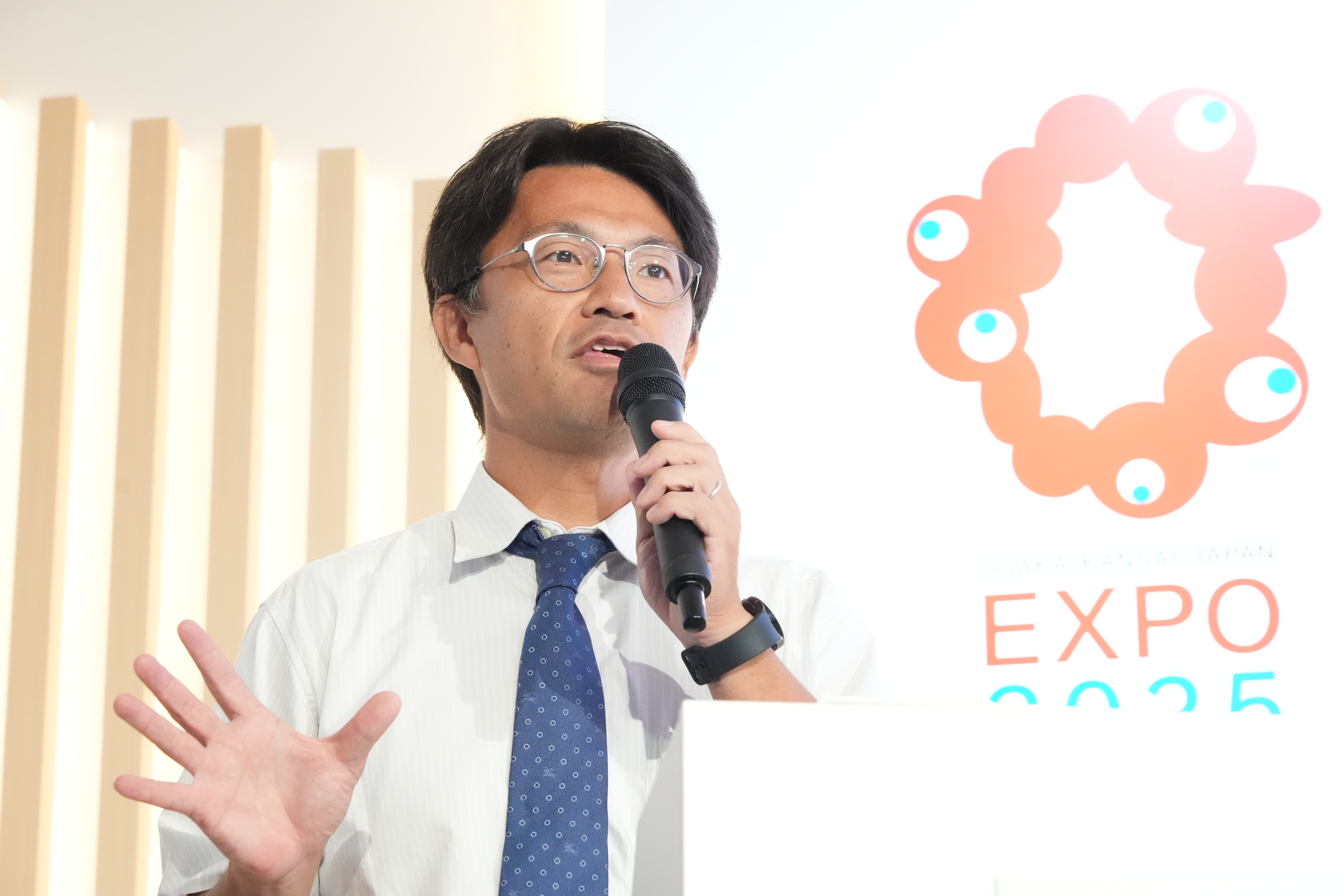
The third speaker, Mr Kim Kwang-young of Waseda University,
demonstrated the potential for 6G (sixth-generation mobile
systems) digital twin technology (linking virtual and physical
spaces) to support the Circular Economy.
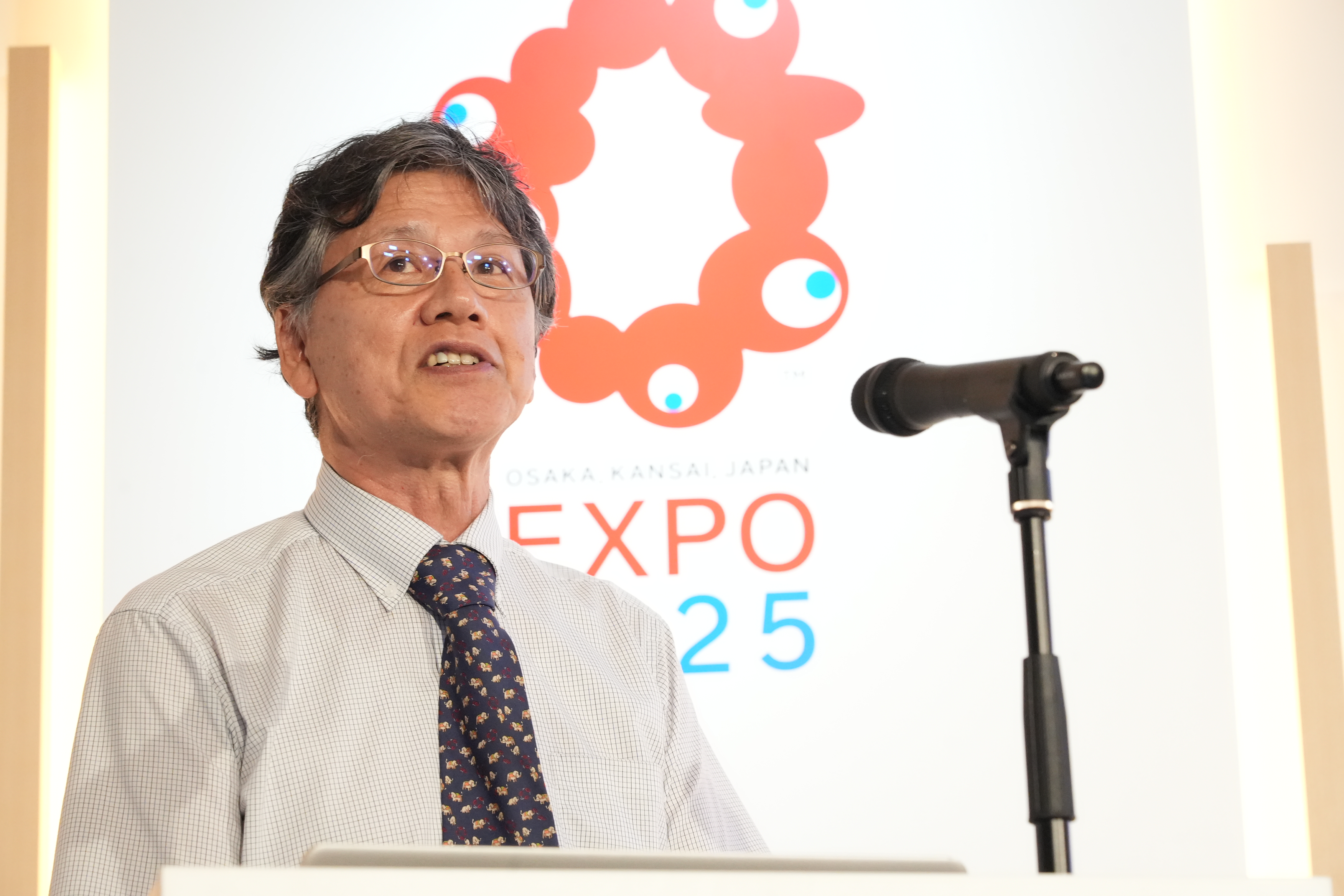
The final speaker, Mr Shintaro Uno of Aichi System, outlined
the research and development status of autonomous driving
technology. He also demonstrated the potential for addressing
various environmental issues by integrating network and
mobility technologies. Furthermore, he explained the
possibility of achieving energy savings across entire regions
by controlling traffic flow.
Following the four presentations, a lively discussion ensued
with questions from the audience regarding the current state
and future prospects of various ICT technologies. Vigorous
exchanges of views took place on topics including the
limitations and prospects of autonomous driving, the limits of
LSI microfabrication technology (i.e., the outlook for
Moore's Law), methane concentration issues, the research
and development schedule and prospects for 6G, the current
strengths and limitations of AI, and the feasibility of
quantum computers. Discussions also covered specific examples
of Japan-Korea cooperation and future prospects.
【Post-Conference Initiatives】
The KICS Japan Chapter believes that Japan-Korea cooperation
in the ICT field should be pursued more closely and will
promote the various approaches outlined below.
(1) 6G-related
International standards are critically important for mobile
systems such as mobile phones. As 3GPP and ITU are driving
international standards in this field, we will promote close
Japan-Korea cooperation within these bodies. Furthermore, as
organisations promoting 6G in Japan and Korea, XGMA (Japan)
and the 6G Forum (Korea) exist. We will ensure these
organisations exchange information closely and engage in
active mutual exchange. Additionally, as relevant academic
societies, the Institute of Electronics, Information and
Communication Engineers (IEICE) in Japan and KICS exist. These
societies will cooperate, holding joint symposia and workshops
to promote collaboration at various levels.
(2) Telecommunications Services
Within the EU, a service enabling users to utilise
telecommunications services contracted in their home country
(e.g., Germany) in another country (e.g., France) as if they
were in their home country (‘Roam like at Home’) has been
operational since June 2017. We will promote the
implementation of such a service between Japan and South Korea
in the future. As the aforementioned 6G is scheduled to
commence around 2030, we intend to engage with relevant
departments (government, companies, organisations, etc.) to
achieve this (i.e., mobile roaming freedom) at that juncture.
(3) Mobility
The Japanese Ministry of Land, Infrastructure, Transport and
Tourism (MLIT) already holds regular ‘Japan-Korea Road
Exchange Meetings’ with the Korean Ministry of Land,
Infrastructure and Transport. These meetings share insights on
autonomous driving infrastructure/ITS, decarbonisation
policies, road paving technology, and traffic safety, while
confirming continued technical exchange. Furthermore, in
August 2025, a Japanese trading company announced plans to
deploy autonomous driving technology held by a Korean start-up
in Japan, aiming for test runs within the year. The technology
possesses “Level 4” capability, requiring no driver under
specific conditions. Its introduction aims to address the
challenge of labour shortages in regional transport. Building
on such activities, we will promote closer Japan-South Korea
cooperation going forward.
(4) Satellite Remote Sensing
The field of satellite remote sensing inherently knows no
borders. It can be considered an area where international
coordination is most readily achievable. We will therefore aim
for cooperation in various forms, including joint Japan-South
Korea research, moving forward.
Cast
Speakers
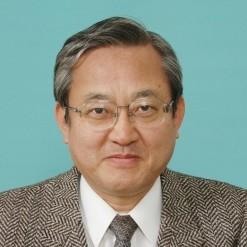
Moo Wan Kim
Branch Director of the Japan Branch of the Korean Institute of Communications and Information Sciences (KICS)
Graduated from Osaka Prefectural Tennoji High School in 1970, earned a Bachelor of Engineering in Electronics Engineering from Osaka University in 1974, and completed a Ph.D. in Engineering at Osaka University in 1980. Joined Fujitsu Laboratories in 1980, and joined Lucent Technologies Japan in 2000, where he engaged in research and development of Intelligent Networks (IN), ATM switching systems, third-generation mobile communication systems (3G), and IMS.In 2005, he was appointed Professor at Tokyo Information University, where he has been engaged in research and education in mobile communication applications, environmental issues integrated with remote sensing technology, and ad hoc wireless LAN networks. In 2023, he was appointed Branch Director of the Japan Branch of the Korean Institute of Communications and Information Sciences (KICS). His publications include “Detailed Explanation of IMS Control Technology,” “Evolving Mobile Phone Technology,” and “History and Prospects of Information and Communication Technology.”
View Profile
Close
close
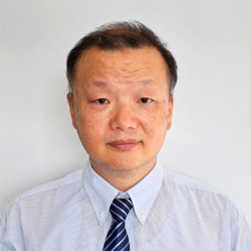
JongGeol Park
Professor at Tokyo University of Information Sciences, Department of Information Science, Systems Science
A leading expert in the field of image analysis and recognition using AI. Since 1995, he has been conducting research on global environmental issues, vegetation changes, and natural disasters using the US weather observation satellite NOAA at the Chiba University Center for Environmental Remote Sensing.Since 2000, he has advanced disaster prevention and mitigation research utilizing satellite image recognition, including the creation of flood hazard maps for Southeast Asia using MODIS satellites (Terra and Aqua), early detection of desertification in China, sandstorms, and forest fires in Russia, and automatic extraction of earthquake-affected areas using high-resolution satellites.Additionally, by analyzing data from the European satellite SCIAMACHY using proprietary theories, the center has revealed that significant amounts of methane are emitted not only in rice paddies in Asia but also in tropical rainforests, contributing to research on greenhouse gases.In recent years, the institute has also focused on solving social issues using AI. It is developing a system that analyzes the movements of vehicles and motorcycles and provides voice guidance to help visually impaired people safely cross pedestrian crossings, as well as a support system that enables hearing-impaired people to practice pronunciation by visualizing speech. The institute continues to explore the potential of AI across a wide range of application fields, from satellite remote sensing to human support technology.
View Profile
Close
close
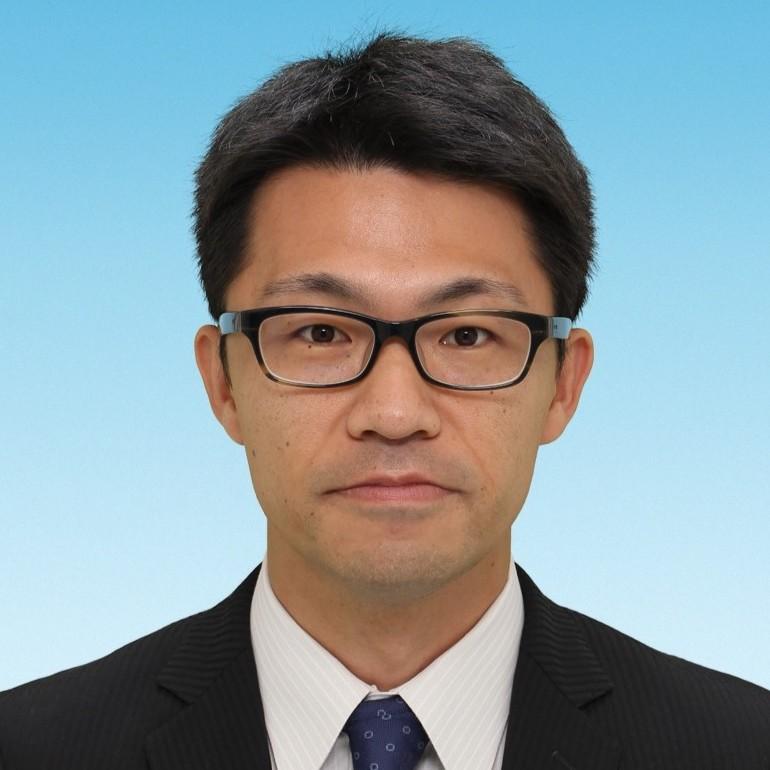
Hidehiro Kanemitsu
Associate Professor at Waseda University, Information Department, Global Education Center (GEC)
Hidehiro Kanemitsu has been engaged in commissioned and joint research on B5G and Web3, focusing on communication technology, peer-to-peer (P2P), and parallel distributed processing.Recently, he has been working on mechanisms to realize IPFS (InterPlanetary File System) and digital twins in an industry-leading manner, ensuring safe and user-autonomous participation. To achieve this, he is conducting research and development on algorithms to reliably enable content sharing among an unspecified number of users and resource allocation methods to process arbitrary applications quickly among an unspecified number of users.
View Profile
Close
close
Shintaro Uno
Technical advisor at Aichi System Co., Ltd.
Toshiba Corporation, Toshiba Research Institute, and other organizations, where he engaged in research and development of communication control and management software for satellite communication systems and optical communication systems. Subsequently, at the Future Engineering Research Institute, he conducted research and development on CTI (Computer Telephony Integration) and Internet telephony. He then worked at Nokia Research Center Tokyo, Motorola Japan Research Laboratory, and Huawei Japan, where he was involved in research and development and standardization of mobile networks and ITS (Intelligent Transport Systems).In 2011, he was appointed Professor at the Department of Information Media, Faculty of Engineering, Aichi Institute of Technology, where he has been engaged in research and development of intersection safety support systems using short-range wireless technology.Since 2024, he has served as a technical advisor at Aichi System Co., Ltd. (Toyota City, Aichi Prefecture), receiving research and development support from Aichi Prefecture. He is conducting pilot tests of a simple intersection safety support system to prevent collisions at intersections without traffic signals and crosswalks in collaboration with Takahama City, Aichi Prefecture, with the aim of commercialization. He is also an adjunct lecturer at the Department of Electrical Engineering, Faculty of Science and Engineering, Nihon University. His publications include “Fundamentals of Information and Communication Networks” (Morikita Publishing).
View Profile
Close
close
The Future of Earth and Biodiversity Week
ICT Technologies to Preserve the Earth for Future Generations
We will hold a panel discussion with ICT experts to explore the potential of ICT (information and communications technology) as an essential tool for preserving the global environment and realising a better society for future generations.
-
2025.09.17[Wed]
14:00~16:30
(Venue Open 13:30)
- Theme Weeks Studio
OTHER PROGRAM
The Future of Earth and Biodiversity Week