The Future of Earth and Biodiversity Week
Knowledge as the Key to Protection -Part I-
Italian Republic
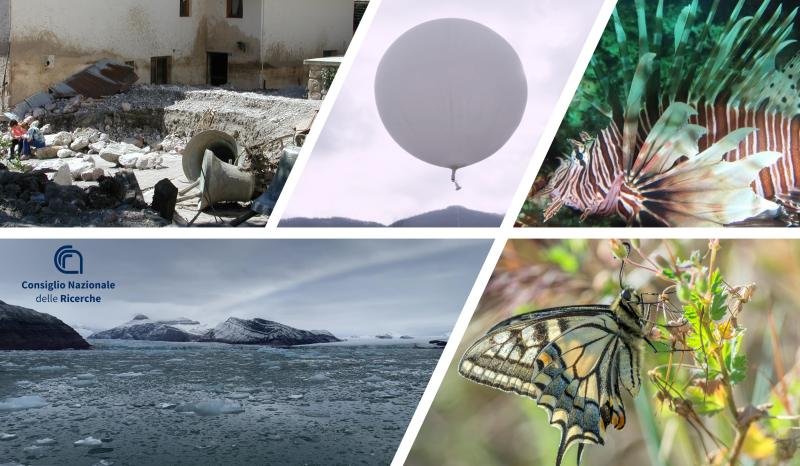
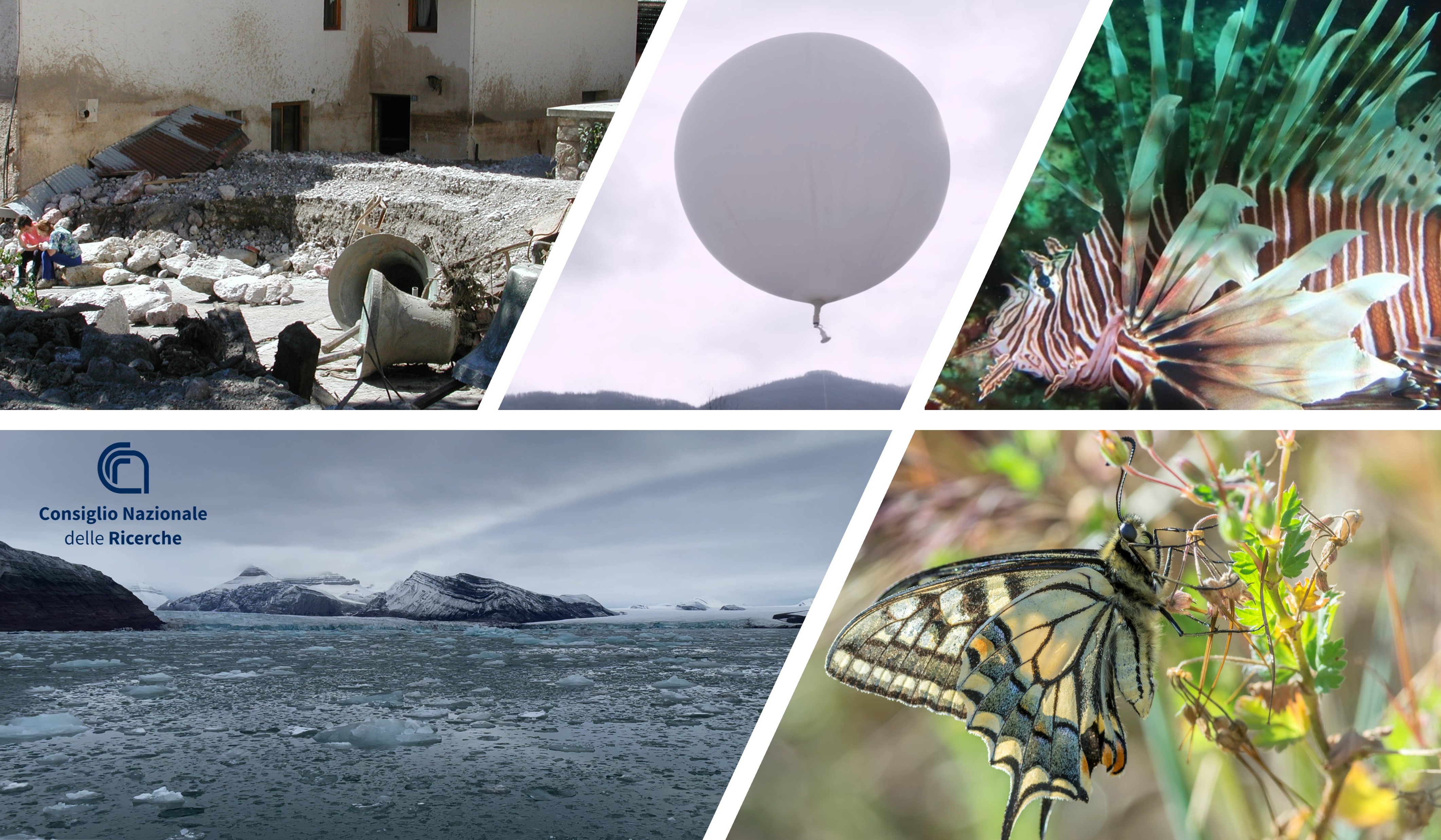
Japanese and Italian scientists will engage in a bilateral exchange of research experiences on five key environmental themes: biodiversity, sea, polar regions, climate change, and natural hazards. Organised by the Department of Earth System Sciences and Technologies for the Environment of Italy’s National Research Council (CNR), the programme highlights how scientific knowledge—anchored in memory and data—is essential for understanding environmental changes and increasing resilience to global challenges.
Recorded video available
Discussion
- Climate change
- Biodiversity
| Transmission of simultaneous interpretation | To be determined |
|---|---|
| Language of interpretation | To be determined |
-

Track Programme
-
Time and
Date of
the event -
-
2025.09.19[Fri]
10:00 ~ 13:30
(Venue Open 09:30)
-
- Venue
- Pavilion
- Italy Pavilion
Programme details
*Subtitles: Choose “Subtitles/CC” in the “Settings” (gear
icon) at the bottom right of the YouTube video.
*Subtitles may not show with multiple languages or overlapping
audio.
The event will facilitate the exchange of research experiences
between Japanese and Italian scientists, focusing on five key
environmental issues: biodiversity, the sea, the polar
regions, climate change, and natural hazards. These themes
reflect the core research domains of Italy’s CNR – Department
of Earth System Sciences and Technologies for the
Environment.
Each session reflects how knowledge, grounded in scientific
observation and cultural memory, can be harnessed to better
understand and respond to global environmental threats. The
day begins with high-level greetings and the signing of
bilateral memoranda, followed by thematic panels that
highlight both nations’ complementary strengths and shared
research efforts.
・Biodiversity is addressed from both European and Japanese
cultural perspectives, and includes insights into biosynthesis
and bioprospecting for future medicine.
・Seas and Oceans focuses on local ecological knowledge,
particularly “fishers’ memories,” as a practical tool for
marine ecosystem management.
・In Polar Regions, ice core data and remote observation offer
a vivid record of past climates, while stressing the urgency
of international cooperation in a rapidly warming Arctic.
・The Climate Change panel examines long-term observational
networks such as SKYNET and GRUAN, emphasising collaborative
monitoring of solar radiation and atmospheric conditions.
・The final panel on Natural Hazards and Deep Exploration
delves into disaster memory, earth observation, and seafloor
dynamics, highlighting efforts to understand and mitigate
geophysical risks.
The programme concludes with a curated artistic video
presentation, open to Expo visitors, designed to evoke public
interest in the morning’s scientific topics and foster a
broader understanding of environmental protection through
knowledge.
Reports
【Reflection】
The event cantered on five key environmental themes that
reflect the core research activities carried out by the
Research Institutes within the Department of Earth System
Sciences and Environmental Technologies of the National
Research Council of Italy (CNR). The day was marked by the
signing of two significant Memorandums of Cooperation: one
between CNR and JAMSTEC, and another between CNR and the
University of Tsukuba, reinforcing strategic scientific ties
between Italy and Japan.
Scientific knowledge—anchored in memory and data—emerged as a
vital tool for understanding environmental transformations and
enhancing resilience to global challenges. Japanese
researchers already involved in collaborative projects were
invited to participate, fostering a bilateral dialogue through
thematic panels that explored the intersection between
research and protection of life.
Opening Panel: Marine Infrastructure and International
Cooperation
The first panel, inspired by the newly signed agreement
between CNR and JAMSTEC, focused on strategic marine
infrastructure and international collaboration. It highlighted
the joint use of advanced technologies for ocean observation
and deep-sea exploration, showcasing expeditions from the
International Ocean Discovery Program and its evolution into
IODP3. The panel also introduced Japan’s upcoming Arctic
research vessel Mirai II, designed for international
scientific missions. CNR’s Mediterranean-based infrastructure
was presented as a model for advancing ocean science,
informing policy, and contributing to global initiatives such
as the UN Decade of Ocean Science.
Panel 1: Biodiversity
This panel explored biodiversity through cross-cultural and
scientific lenses. Diego Fontaneto (IRSA-CNR) and Jotaro Urabe
(Tohoku University) examined cultural memories of
biodiversity, from prehistoric cave art to manga and modern
mascots. Angelo Fontana (ICB-CNR) and Toshiyuki Wakimoto
(Hokkaido University) discussed the link between biodiversity
and chemodiversity, emphasizing the role of natural compounds
in drug discovery and the risks posed by biodiversity loss to
ecosystems and human health.
Panel 2: Seas & Oceans
Focusing on memory as ecological knowledge, this panel
highlighted the lived experience of fishers as a valuable
resource for ecosystem management. Ernesto Azzurro (CNR
IRBIM), Takehito Yoshida, and Mayumi Fukunaga (Tokyo
University) shared insights on transforming traditional
knowledge into scientific understanding. Fishers’ observations
offer a broader viewpoint on ocean change and support
collaborative, sustainable marine governance.
【Post EXPO Initiatives】
The discussions held during the program have continued to
foster concrete collaboration between Italian and Japanese
research institutions following the Expo. Scientists from both
countries are advancing the sharing of long-term observational
data and research outcomes across five key themes:
biodiversity, marine environments, polar regions, climate
change, and natural hazards.
In particular, the two agreements signed by CNR with JAMSTEC
and the University of Tsukuba represent a strategic milestone
in fostering long-term scientific collaboration between Italy
and Japan.
The Memorandum of Cooperation (MoC) with JAMSTEC lays the
groundwork for joint research in Marine Science and
Biotechnology, Polar Science, and Scientific Infrastructure.
These areas will be explored through interdisciplinary studies
on ocean ecosystems, climate-related contaminant cycles,
microbial diversity, and advanced simulation techniques for
polar ice dynamics. The agreement also enables shared access
to research platforms, including vessels within the IODP3
framework, and promotes the exchange of scientific personnel.
Over the coming years, this cooperation is expected to evolve
into joint research projects, co-authored publications, and
coordinated field campaigns, contributing to global efforts in
marine and polar science.
The Memorandum of Understanding (MoU) with the University of
Tsukuba focuses on building a robust academic and research
partnership. It includes the development of joint research
programs, staff exchanges, and the creation of a permanent
platform for strategic dialogue. This platform will serve as a
hub for identifying and launching new initiatives in higher
education and scientific research, with the aim of
strengthening ties not only between the two institutions but
also between Italy, Europe, and Japan. The agreement also
supports student and researcher mobility, encouraging
training, workshops, and collaborative learning experiences.
In the coming years, this partnership is expected to lead to
new collaborative projects, joint funding applications, and
shared educational programs, fostering innovation and capacity
building across borders.
Together, these agreements signal a shared commitment to
advancing science through international cooperation, and they
pave the way for a dynamic portfolio of joint activities that
will grow and evolve in the years ahead.
Cast
Speakers
Francesco Petracchini
Director, Department of Earth System Sciences and Technologies for the Environment, CNR
View Profile
Close
close
Amb. Mario Vattani
Ministry of Foreign Affairs and International Cooperation, General Commissioner Expo Osaka 2025, Ambassador
View Profile
Close
close
Elena Sgarbi
talian Commissioner’s Office for Osaka
View Profile
Close
close
Maria Elena Martinotti
Head of Institutional Affairs, Department of Earth System Sciences and Technologies for the Environment, CNR
View Profile
Close
close
Gianluigi Serianni
Scientific Attaché, Embassy of Italy in Tokyo
View Profile
Close
close
Shuichi Kodaira
Japan Agency for Marine-Earth Science and Technology (JAMSTEC)
View Profile
Close
close
Giuseppe Magnifico
Director, Research Infrastructure Office, CNR
View Profile
Close
close
Diego Fontaneto
Institute of Water Research (IRSA), CNR
View Profile
Close
close
Jotaro Urabe
Macroecology Lab, Graduate School of Life Sciences, Tohoku University
View Profile
Close
close
Angelo Fontana
Director, Institute of Biomolecular Chemistry (ICB), CNR
View Profile
Close
close
Toshiyuki Wakimoto
Hokkaido University
View Profile
Close
close
Ernesto Azzurro
Institute for Marine Biological Resources and Biotechnology (IRBIM), CNR
View Profile
Close
close
Takehito Yoshida
The University of Tokyo
View Profile
Close
close
Mayumi Fukunaga
The University of Tokyo
View Profile
Close
close
Co-organiser
National Research Council
The Future of Earth and Biodiversity Week
Knowledge as the Key to Protection -Part I-
Japanese and Italian scientists will engage in a bilateral exchange of research experiences on five key environmental themes: biodiversity, sea, polar regions, climate change, and natural hazards. Organised by the Department of Earth System Sciences and Technologies for the Environment of Italy’s National Research Council (CNR), the programme highlights how scientific knowledge—anchored in memory and data—is essential for understanding environmental changes and increasing resilience to global challenges.
-
2025.09.19[Fri]
10:00~13:30
(Venue Open 09:30)
- Pavilion
OTHER PROGRAM
The Future of Earth and Biodiversity Week